
 Worksheets
End of year review
Total questions: 153
Worksheet time: 2hrs 55mins

View Figure 1 (if not visible)

View Figure 3 (if not visible)







GAT-TAC-AGA-TTA-CAT?


What is the simple definition of photosynthesis?
A process that is made by animals
A process that exchanges Oxygen to make ATP
A process that exchanges Oxygen to make CO2
A process that exchanges sunlight to make glucose

What are the reactants of photosynthesis?
Sugar and Water
Sugar, light, Oxygen
CO2, Water & light
CO2 and Oxygen

What are the products of photosynthesis?
Water and CO2
Sugar and Water
Sugar and Oxygen
Oxygen and Water

What is the green substance that absorbs solar engergy for photosynthesis?
Hemoglobin
Myoglobin
Chlorophyll
Chloroplast
What processes are taking place in a plant at night?
Photosynthesis and Cellular Respiration
Photosynthesis only
Cellular Respiration only
None of these
What can do cellular respiration?
plants
animals
plants and animals
Which of the following is NOT a part of cellular respiration?
Calvin cycle
Krebs cycle
ETC
Glycolysis
The process that requires oxygen is called...
anaerobic respiration
aerobic respiration
respiration
Where does anaerobic respiration take place?
cytoplasm
mitochondria
cell
Where does aerobic respiration take place?
cytoplasm
mitochondria
cell
Glycolysis goes through...
aerobic respiration
anaerobic respiration
both
Water and carbon dioxide are waste products of...
the Krebs cycle and ETC
ETC
Krebs cycle
glycolysis
What are the reactants of cellular respiration?
water and carbon dioxide
sugar and oxygen
water and oxygen
sugar and carbon dioxide


An animal cell has a 2% percent salt concentration. It is placed into a solution with a 0.05% percent salt concentration. What will happen to the animal cell?
Water will move out of the animal cell, causing it to shrivel
Water will move into the animal cell, causing it to shrivel
Water will move out of the animal cell, causing it to swell and burst
Water will move into the animal cell, causing it to swell and burst
What does "hydrophobic" mean?
water loving, associates with water
water fearing, does not associate with water
a world war II submarine
an example would be solutes like sugar or salt
Which are example is hydrophobic in nature.
Oil
Sugar
Salt
Water
What is the "big idea" of the fluid mosaic model of plasma membranes?
the plasma membrane creates a specialized FLUID that looks like a MOSAIC.
the plasma membrane is a MOSAIC.
the fluid mosaic model is NOT related to the plasma membrane.
a plasma membrane is a MOSAIC of components that move FREELY and FLUIDLY.

Where can PROTEINS be found when part of a plasma membrane?
On the outside of the membrane
On the inside of the membrane
Embedded part of the way into the membrane
Embedded the whole way through the membrane
All of the above

This image is an example of a phospholipid. Which part of a phospholipid is HYDROPHILIC?
the phosphate "head"
the lipid "tails"
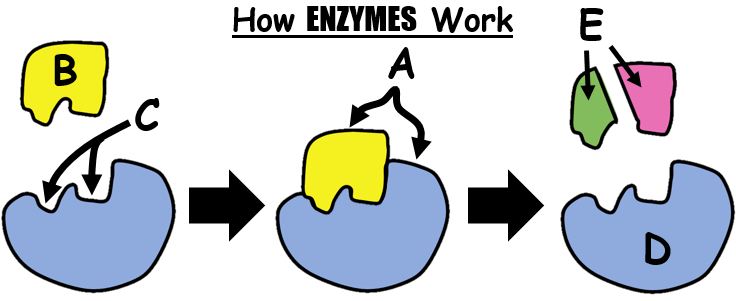
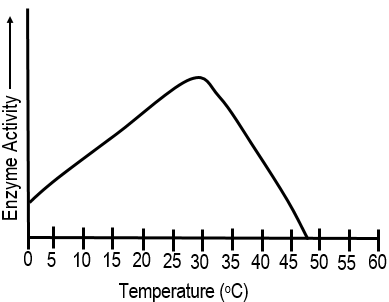
What happens to the reaction rate if an enzyme is denatured or nonfunctional?
No change in the reaction rate
Increase in reaction rate
Decrease in reaction rate
Decrease then increase in reaction rate
Which of the following would NOT denature an enzyme?
HIGH temperature
LOW pH
HIGH pH
LOW temperature
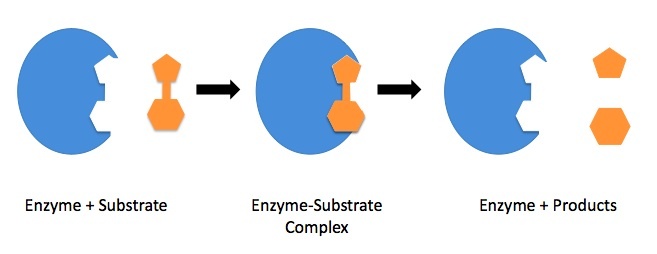
Which of the following can be used to determine the rate of an enzyme-catalyzed reaction?
The rate of substrate formed
The decrease in temperature in the system
The rate of enzyme used up
The rate of substrate used up

This animal cell is in a ____________ solution.
hypertonic
hypotonic
isotonic

This animal cell is in a __________________ solution.
hypertonic
hypotonic
isotonic

This animal cell is in a ____________ solution.
hypertonic
hypotonic
isotonic

The plant cell on the right is in a _____________ solution.
hypertonic
hypotonic
isotonic
DNA is what kind of Macromolecule?
Protein
Lipid
Carbohydrate
Nucleic Acid
Label the Nucleotide
5 Carbon Sugar
Nitrogen Base
Phosphate Group
DNA's Shape is known as a
A Ladder
A Double Helix
A Single Helix
A Backbone

DNA is related to
Carbohydrates
Photosynthesis
Cellular Respiration
Genetics

What is "A"?
Nucleotide
Deoxyribose Sugar
Nitrogenous base
Phosphate
What is "C"?
Nucleotide
Deoxyribose Sugar
Nitrogenous base
Phosphate
What is "B"?
Nucleotide
Deoxyribose Sugar
Nitrogenous base
Phosphate
What is the complimentary sequence of the following sequence:
GATCAG
TGACAT
GACATG
CTAGTC
CGACTA

What do the dotted lines between the nitrogenous bases (A,T,C,G) represent in the image provided?
Covalent bonds
Ionic bonds
Peptide bonds
Hydrogen bonds
What determines the specific traits in an organism?
The number of carbons in the DNA molecule.
The number of hydrogen bonds that hold the strands of DNA together.
The sequence of nucleotide bases in the DNA molecule.
The sequence of phosphates along each DNA strand.
This gene segment codes for a peptide in humans.
GCT GTG TGA GGC AGA
What is the expected mRNA sequence when the gene segment is transcribed in transgenic mice?
GCT GTG AGG CAG AAC
CGA CAC UCC GUC UUG
CGA CAC ACU CCG UCU
GCU GUG AGG CAG AAC
Which best explains why DNA replication in the human body is significant?
it is needed for cell division
it is necessary for protein synthesis
it replaces any damaged DNA cells
it produces RNA strands
What aspect of the DNA molecule encodes hereditary information concerning an organism’s traits?
the molecular mass
the sequence of base pairs
the distribution of electrical charges
the folded three-dimensional shape
Transcription (the process of producing RNA) of the sequence TTAAG produces which sequence?
TTAAG
UUAAG
AAUUC
AATTC
A DNA strand undergoing replication contains the bases TACGTT. Which complementary strand does it produce?
AUCGAA
ATGCAA
ATCGAA
AUCGTT
The enzyme that is responsible for adding the correct nucleotides to a replicating strand of DNA.
Okazaki Fragments
DNA Polymerase
DNA Nuclease
DNA Peptidase
The nucleotides that form on the lagging strand.
Okazaki Fragments
Leading Strand
Lagging Strand
Replication Fork
Which viral cycle takes the longest to show symptoms?
Lysogenic
Lytic
When the viral DNA becomes active in the lysogenic cycle, which life cycle does it enter?
lytic
lysogenic
cell cycle
DNA replication
Which is the smallest out of the following?
eukaryotic cell
prokaryotic cell
viruses
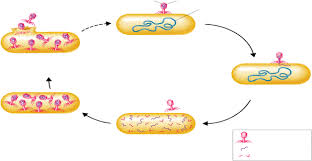
Viruses are considered
living things
non-living things
partially living things
viruses are non-living because
they cannot reproduce on their own
they do not evolve
they have no genetic material
they cannot be destroyed
What is the protective protein coat of a virus?
Two groups of prokaryotes are (a) (can be found everywhere) and (b) (can be found in extreme environments)
Viruses are bacteria.
True
False

Which of the following pictures is NOT a example of a virus?
a
b
c
d

Observe the diagram of the two viruses.
Part C is the ______________
Genetic material
Capsid
Ligand
Envelope
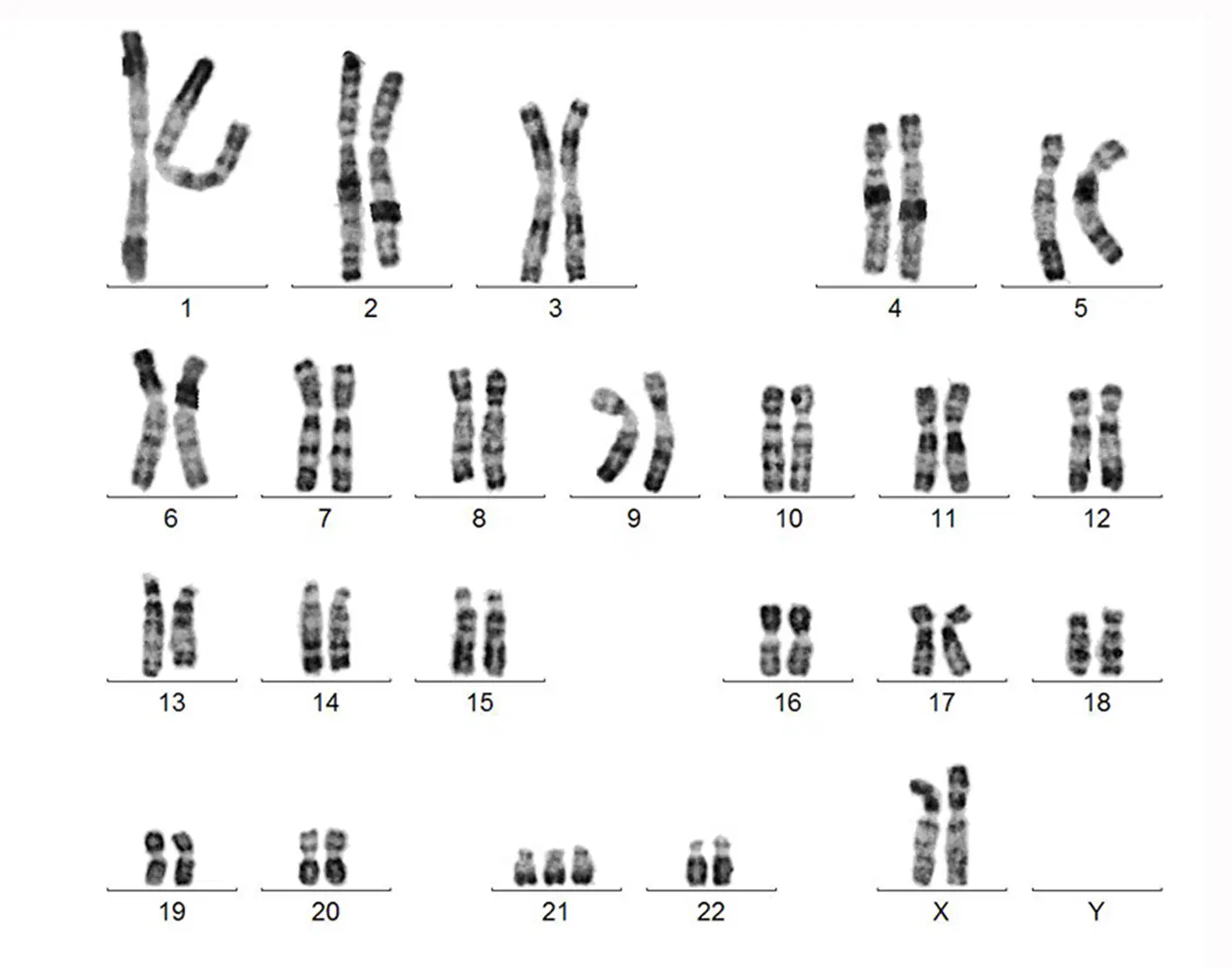
A karyotype shows 23 pairs of DNA "packages" called ________.
genomes
genes
chromosomes
proteins
Using Chargaff's Rules, choose the correct DNA strand based on this template strand:
AATCGGATTAG
TTAGAAGGTA
UUAGCCUAAUC
TTAGCCTAATC
AATCGGATTAG
Label the diagram with the 2 steps of protein synthesis.
translation
transcription
Label the diagram.
cytoplasm
amino acids
polypeptide chain
ribosome
mRNA
tRNA

True or False: mRNA contains anticodons and tRNA contains codons.
True
False
What are the two steps to protein synthesis?
Transcription and translation

A calico cat shows both the traits for orange fur and black fur. What kind of allele expression is this?
Incomplete dominance
Codominance
Complete dominance
Mendelian inheritance

Aabb
Abab
AAbb
aaBb

incomplete dominance
co-dominance
complete dominance
recessive pattern


What would be the gametes for the YyRr plant?
YR, YR, yR, yR
YR, Yr, yR, yr
Yy, Rr, YY, RR
yy, rr, yy, rr
YR, Yr, yR, yr, Rr, Yy
If one of your parents is blood type A and the other is type B, which of the following blood types could you be?
O
AB
A or B
Any of these

What does A indicate?
A male that has the trait.
A female that has the trait.
A female that does not have the trait.
A male that does not have the trait.

How many generations are represented in the pedigree?
2
3
4
5

In the diagram, individual II-1 indicates
a female with no freckles
a male with no freckles
a male with freckles
a female with freckles
What is the Genotype of individual I-1?
FF
Ff
ff
Can't know for sure
A phenotype that improves an organism’s chance of survival in their environment is considered a(n) ____________.
natural selection
adaption
speciation

Many different groups of organisms have wings, even though they do not share a recent common ancestor. This is because they evolved in environments with similar selective pressures. Wings are an example of a(n) ______________ structure.
vestigial
analogous
homologous
Which best describes the phrase survival of the fittest?
strongest in a population are most successful
fastest in a population are most successful
those that can survive and reproduce are most successful
those that can live the longest are most successful
Homologous structures and vestigial structures show evidence of
divergent evolution
convergent evolution
both divergent and convergent evolution
analogous structures

What is speciation?
when a population reaches a balance and change is no longer occuring
when populations move away from each other
when species begin to pass on acquired traits and change their behavior
when two species can no longer interbreed
In a population of ladybugs, black bugs are more successful in escaping predators. Overtime, this gene becomes more popular in the population and the ladybug population loses its red color. This is an example of?
Natural Selection
Mutation
Genetic Drift
Gene Flow

According to the diagram, crocodiles evolved from dinosaurs and birds.
True
False

Humans evolved from chimpanzees
True
False
How do populations change due to genetic drift?
A random event occurs that reduces the population, and the new surviving population has a different allele frequency from the original population.
The population undergoes competition with each other for limited resources changing allele frequency from the original population.
The organism/animal with the most favorable trait will be able to produce more offspring than others creating the new population.
organisms within a population undergo symbiotic relationships with each other due to mutations

