wayground logo

Free Printable Worksheets

Font size

S
M
L
XL
Worksheets

Biology: 1st Semester Exam 2022

Total questions: 150

Worksheet time: 4hrs 45mins

Name
Class
Date
1.
A series of steps used by scientists to solve a problem or answer a question. 
a)
scientific method
b)
recipe
c)
data collection
d)
metric system
2.
A testable explanation to a problem that has not yet been tested. 
a)
data
b)
theory
c)
hypothesis
d)
fact
3.
Testing a hypothesis often involves a(n):
a)
answer
b)
experiment
c)
problem
d)
safety check
4.
The summary at the end of an experiment that explains the results. 
a)
conclusion
b)
procedures
c)
materials
d)
responding variable
5.
The name of the information that you get from your experiment (you organize it into charts and graphs).
a)
observations
conclusion
b)
data
c)
variables
d)
hypothesis
6.
Dependent variable means
a)
the scientist controls what to test
b)
educated guess
c)
ask a question
d)
what is being measured
7.
Why do scientists use the scientific method?
a)
To make sure they get credit for their discoveries.
b)
To make sure their results are valid and can be performed by other scientists.
c)
So that other scientist don't get mad at them
8.
True or False: Your hypothesis can never be wrong.
a)
True
b)
False
9.
If plants are exposed to sunlight, then they will grow taller.
What part of the scientific method is this an example of?
a)
Procedure
b)
Hypothesis
c)
Question
d)
Results
10.
The independent variable is the ONE thing you _____.
a)
change on purpose
b)
control or keep constant
c)
measure
11.
An experiment is performed on plants to see how different liquids affect plant growth. Each plant in the experiment is given a different liquid: water, apple juice, or milk. What variables should be kept constant/controlled? 
a)
type of plant, flower pot,  soil, and amount of sunlight
b)
water, apple juice, milk
c)
only the amount of sunlight
d)
type of plant only
12.
Why do we want to test one variable at a time?
a)
Because it is hard to setup a data table with more
b)
To know what is causing the changes. This helps us understand cause and effect.
c)
It is what has always been done
13.
What is being changed in this experiment?
a)
ramp height
b)
the speed that the ball rolls
c)
type of ball
14.
What is being measured or the result/effect of this experiment?
a)
ramp height
b)
the speed that the ball rolls
c)
type of ball
15.
What is being kept constant?
a)
ramp height
b)
speed of the ball rolling
c)
type of ball
16.

The part of the experiment that remains unaffected by the independent variable. Used to compare dependent variable to.

a)

constants

b)

control group

c)

independent

d)

dependent

17.
The ability of a living thing to get bigger is known as _______________.
a)
Development
b)
Growth
c)
Adaptation
d)
Response
18.
A/An ____________is the smallest unit of life.
a)
atom
b)
stimulus
c)
cell
d)
DNA
19.
The ability of an organism to create offspring is ___________________________________.  
a)
reproduction
b)
evolution
c)
development
d)
growth
20.
To maintain stable internal conditions is  __________________________________.
a)
growth
b)
adaptation
c)
homeostasis
d)
development
21.
______________________ is the scientific term for a living thing.
a)
organism
b)
cell
c)
photosynthesis
d)
DNA
22.
Type of reproduction that produces two genetically identical offspring from one parent is _________________.
a)
Sexual
b)
Asexual
c)
reproduction
d)
homeostasis
23.
A reaction to a stimulus is a ______________.
a)
hiccup
b)
response
c)
metabolism
d)
homeostasis
24.
Every organism must pass on its ________________, stored in DNA.
a)
metabolism
b)
response
c)
growth
d)
genetic code
25.
_________________is a signal to which a living thing responds.
a)
Stimulus
b)
Reaction
c)
Development
d)
Homeostasis
26.
An organism that makes its own food is 
a)
an omnivore
b)
a heterotroph
c)
an autotroph
d)
a carnivore
27.
Which of these is not true about all organisms?
a)
all living things have many cells
b)
all living things need water
c)
all living things respond to stimuli
d)
all living things reproduce
28.
What is another way of saying organism?
a)
living thing
b)
organ system
c)
tissue team
d)
critter
29.
Most single-celled organisms...
a)
reproduce asexually
b)
reproduce sexually
c)
have complex tissues
d)
can be seen without a microscope
30.
When a baby kitten becomes an adult cat, this is an example of...
a)
energy metabolism
b)
growth and development
c)
response to stimuli
d)
having cells
31.
Your body shivers when you are cold. This is because of the concept of...
a)
homeostasis
b)
heredity
c)
energy metabolism
d)
cellular organization
32.

Reproduction that involves two cells from different parents unite to produce the first cell of a new organism.

a)

Asexual

b)

Sexual

c)

Budding

d)

Division

33.

The combination of chemical reactions through

which an organism builds up or breaks down

materials as it carries out its life processes is called ...

a)

absorption

b)

metabolism

c)

digestion

d)

consumption

34.

A stimulus can be external or internal.

a)

False

b)

True

35.
Rocks are not living because
a)
they never move
b)
they aren't needed for humans
c)
they are not made of cells
d)
they don't break down
36.
Water is polar and oil is nonpolar.
a)
True
b)
False
37.
What is the main function of nucleic acids?
a)
To function in insulation.
b)
To store and transmit hereditary information.
c)
To provide energy
38.
Enzymes are lipids.
a)
True
b)
False
39.
Most enzymes — 
a)
Speed up the chemical reaction
b)
Have no effect on the rate of the chemical reaction 
c)
Keep the rate of the chemical reaction the same
d)
Slow the rate of the chemical reaction 
40.
All carbohydrates are —
a)
composed of carbon, hydrogen and oxygen atoms
b)
are made of amino acids
c)
composed of carbon, hydrogen, oxygen and nitrogen atoms
d)
composed of carbon, hydrogen, oxygen, nitrogen and phosphorus atoms
 D are made of fatty acids 
41.
Which structure in the figure would most likely be used to form muscles and connective tissue? 
a)
4
b)
1
c)
2
d)
3
42.
Which is NOT one of the four elements that make up over 90% of the human body
a)
Carbon
b)
Nitrogen
c)
Chlorine 
d)
Oxygen
43.
A negatively charged particle moving around the nucleus of an atom
a)
neutron
b)
proton
c)
electron 
d)
ion
44.
What particle is found in the nucleus and has no charge?
a)
electron
b)
neutron
c)
proton
d)
atom
45.
The space surrounding the nucleus of an atom contains
a)
protons
b)
electrons
c)
neutrons
d)
ions
46.
Number of protons that an atom has
a)
Atomic symbol
b)
Atomic Number
c)
Atomic Mass
d)
Mass Number
47.
Atoms having the same number of protons but different numbers of neutrons
a)
molecule
b)
atom
c)
compound
d)
isotopes
48.
Attractions between molecules of the same substance
a)
adhesion
b)
cohesion
c)
mixture
d)
acid
49.
Who am I? I'm a polymer composed of amino acids that are linked by peptide bonds. Amino acid bonds determine my folds. 
a)
Lipid
b)
Carbohydrate
c)
Protein
d)
Sugar
50.
What is the smallest unit of matter that cannot be broken down by chemical means?
a)
Atom
b)
Element
c)
Ion
d)
Isotope
51.
What are the four elements that all life is made up of?
a)
Hydrogen, Oxygen, Nitrogen and Carbon
b)
Helium, Oxygen, Neon and Carbon
c)
Hydrogen, Titanium, Carbon, Nitrogen
d)
Oxygen, Chlorine, Iron, Nitrogen
52.
Examples of these biomolecules are DNA and RNA...
a)
Nucleic Acids
b)
Carbohydrates
c)
Lipids
d)
Proteins
53.
These biomolecules are fats, oils, waxes and steroids. They are also a result if we eat too many carbohydrates and why we don't melt in water.
a)
Carbohydrates
b)
Lipids
c)
Nucleic Acids
d)
Enzymes
54.
Nucleic Acids are made up of smaller subunits called....
a)
Nucleotides
b)
Lipids
c)
Monosaccharides
d)
Subunits
55.
These biomolecules are the main building blocks of you. They are large and complex and special ones do jobs all over your body as catalysts.
a)
Proteins
b)
Carbohydrates
c)
Lipids
d)
Nucleic Acids
56.
How many Amino Acids does our body use to make proteins?
a)
20
b)
10
c)
6
d)
2
57.
Proteins are made of monomers called ___________
a)
Nucleotides
b)
Monosaccharides
c)
Amino Acids
d)
Glycerol and fatty acids
58.
The element _______is found in all of the organic compounds.
a)
Iron
b)
Nitrogen
c)
Carbon
d)
Oxygen
59.
Monosaccharides are monomers of
a)
Carbohydrates
b)
Lipids
c)
Proteins
d)
Nucleic Acids
60.
Waxes, oils and fats are examples of
a)
Carbohydrates
b)
Lipids
c)
Proteins
d)
Nucleic Acids
61.
Glycerol and fatty acids are the monomers of
a)
Carbohydrates
b)
Lipids
c)
Proteins
d)
Nucleic Acids
62.
The organic compounds that have many structural purposes and are used in many processes within the
cell are called ____________________.
a)
Carbohydrates
b)
Lipids
c)
Proteins
d)
Nucleic Acids
63.
Which of the following organic compounds is the main source of energy for living things?
a)
carbohydrates
b)
lipids
c)
nucleic acids
d)
proteins
64.
Which macromolecule stores energy, insulates us, and makes up the cell membrane?
a)
lipids
b)
proteins
c)
carbohydrates
d)
nucleic acids
65.
What are the four macromolecules?
a)
proteins, nucleic acids, carbohydrates, and lipids
b)
monosaccharides, lipids, polysaccaharides, and proteins
c)
RNA, DNA, proteins, and carbohydrates
d)
proteins, DNA, RNA, and steroids
66.
What is the primary function of carbohydrates in your body?
a)
Speed up chemical reactions.
b)
Give immediate energy.
c)
Help to store energy.
d)
Build cell walls in plants.
67.
Which macromolecule stores energy, insulates us, and makes up the cell membrane?
a)
lipids
b)
proteins
c)
carbohydrates
d)
nucleic acids
68.
Every living organism is made up of one or more cells
a)
True
b)
False
69.
A cell is...
a)
the basic unit of structure and function in living organism
b)
an organism
c)
a basic part of everything that we see
d)
found only in animals, not plants
70.
Which of the following are NOT found in animal cells
a)
chloroplasts and cytoplasm
b)
chloroplasts and cell wall
c)
cell wall and cell membrane
d)
mitochondria and nucleus
71.

Which of the following converts food into energy for the cell?

a)

vacuole

b)

mitochondria

c)

cytoplasm

d)

cell membrane

72.

The fluid that surrounds the organelles is... (hint... "Try to pull a fast one and..."

a)

chloroplast

b)

cytoplasm

c)

vacuole

d)

cell wall

73.

Which organelle takes in "sun showers" and helps plants with the process or photosynthesis?

a)

Vacuole

b)

Mitochondria

c)

Cytoplasm

d)

Chloroplast

74.
If you were some bad guy trying to sneak into an animal cell, who would be there to stop you?
a)
nucleus
b)
mitochondria
c)
cell membrane
d)
cell wall
75.
Which of the following, found ONLY in plant cells, provides structure?
a)
cell wall
b)
chloroplast
c)
mitochondria
d)
vacuole
76.

Has membrane bound organelles

a)

Prokaryote

b)

Eukaryote

c)

Both

77.

Which type of cell?

a)

Prokaryote

b)

Eukaryote

78.

Where is the DNA found in a prokaryotic cell?

a)

In the nucleus

b)

In the mitochondria

c)

Floating around in the cytoplasm

d)

In the ribosome

79.

In what organelle is the genetic material found inside?

a)

Nucleus

b)

endoplasmic reticulum

c)

Mitochondria

d)

Lysosome

80.

What is the function of this organelle?

a)

Sac that stores water, nutrients, and waste products

b)

Regulates what enters and leaves the cell

c)

Structures that transport and ship proteins like UPS

d)

Cite of cellular respiration also known as the powerhouse of the cell

81.

What can only be found in plant cells?

a)

Chloroplast

b)

Vacuole

c)

Nucleus

d)

Cell membrane

82.

The two kinds of cells are Prokaryotes and Eukaryotes. How are they different?

a)

Prokaryotes are plant cells

b)

Eukaryotes have a nucleus

c)

Prokaryotes have a nucleus

d)

There is no difference

83.

Bacteria are a type of...

a)

Prokaryote

b)

Eukaryote

c)

Both

84.

What is the function of this part of the cell?

a)

Structure

b)

Flexability

c)

Regulates what comes in and out of the cell

d)

Stores genetic information

85.

Where are proteins made?

a)

Golgi Body

b)

Ribosomes

c)

Chromosomes

d)

Mitochondria

86.

Which are componets of Cell Theory?

a)

All organisms are composed of one or more cells

b)

The cell is the basic unit of life

c)

All cells come from preexisting cells

d)

Alll of the above

87.

What is something that Prokaryotes and Eukaryote both have in common?

a)

small in size

b)

bacteria

c)

have DNA

d)

complex cells

88.

Mitochondria is ______.

a)

Responsible for making energy (ATP) needed for the cell

b)

the site of cell respiration

c)

Found in animal and plant cells

d)

All of the above

89.

Chloroplasts are the site of photosynthesis and are found only in _____.

a)

the ocean

b)

in green plants

c)

animals

d)

rocks

90.

Flagella are found in Prokaryotes and animal cells and have a ________ shaped tail used for locamotion.

a)

whip like

b)

star

c)

heart

d)

triangle

91.

Nucleolus is found inside the nucleus, of Eukaryotes only, and makes _____.

a)

ribosomes

b)

cilia

c)

flagella

d)

prokaryotes

92.

There are two types of Endoplasmic Reticulum, smooth and rough. They ______.

a)

make energy

b)

protect the cell

c)

carry out chemical reactions and transports materials

d)

make the ribosomes

93.

Golgi Apparatus (Golgi Bodies) are found in Eukaryotes only. They _____.

a)

Sorts, packages, and modifies proteins to be sent in or out of the cell

b)

Excretes stuff in and out using transport membranes called vesicles

c)

a and b

d)

a only

94.

Lysosomes are found in Eukaryotes only. They ____.

a)

Carries out chemical reactions and transports materials

b)

Excretes stuff in and out using transport membranes called vesicles

c)

Sorts, packages, and modifies proteins to be sent in or out of the cell

d)

Contain enzymes which digest waste materials

95.

Cytoskeleton are found only in Eukaryotes. They

a)

provide internal support structure

b)

are made of protein fibers

c)

a and b

d)

b only

96.

Centrioles are found only in animal cells. They ____.

a)

Help with cell division

b)

make the ribosomes

c)

carry out chemical reactions and transports materials

d)

are used for locamotion

97.
The movement of molecules across a membrane from high concentration to low concentration is called:
a)
Osmosis
b)
Diffusion
c)
Endocytosis
d)
Active Transport
98.
The movement of molecules across a membrane from high concentration to low concentration is called:
a)
Osmosis
b)
Diffusion
c)
Endocytosis
d)
Active Transport
99.
The molecule responsible for increasing the fluidity of the membrane are:
a)
Glycolipids
b)
Glycoproteins
c)
Cholesterols
d)
Aquaporins
100.
The molecule responsible for allowing water to flow across the membrane is:
a)
Glycolipids
b)
Glycoproteins
c)
Aquaporins
d)
Cholesterol
101.
The molecule below that will not easily enter the cell by simple diffusion is:
a)
CO2
b)
O2
c)
Water
d)
Methane
102.
Active Transport typically uses ______ to transport materials across the cell membrane.
a)
ATP
b)
Glucose
c)
Na+
d)
K+
103.
The red blood cells in solution A are in a ____________ environment
a)
Acidic
b)
Isotonic
c)
Hypotonic
d)
Hypertonic
104.
The red blood cells in solution C are in a ____________ environment
a)
Acidic
b)
Isotonic
c)
Hypotonic
d)
Hypertonic
105.
A Hypotonic solution contains an excess amount of:
a)
Na+
b)
H+
c)
Solute
d)
Water
106.
Molecules that need to come through channels into the cell are typically...
a)
Polar
b)
Hydrophobic
c)
Non-Polar
d)
Di-Atomic
107.
Molecules that come through into the cell by simple diffusion are typically...
a)
Polar
b)
Hydrophilic
c)
Non-Polar
d)
Carbohydrates
108.
A macrophage engulfing and digesting a bacterial cell is an example of:
a)
Exocytosis
b)
Endocytosis
c)
Co-Transport
d)
Osmosis
109.

What is the definition of OSMOSIS?

a)

Diffusion of water through a selectively permeable membrane

b)

Molecular structure that surrounds the cell and controls what enters and leaves the cell

c)

Movement of molecules across the cell membrane against the concentration gradient

d)

Movement of molecules across the cell membrane from an area of high concentration to low concentration

110.

What is the definition of LIPID BILAYER?

a)

Molecular structure that surrounds the cell and controls what enters and leaves the cell

b)

Movement of molecules across the cell membrane against the concentration gradient

c)

Diffusion of water through a selectively permeable membrane

d)

Movement of molecules across the cell membrane from an area of high concentration to low concentration

111.

What is the definition of ACTIVE TRANSPORT?

a)

Movement of molecules across the cell membrane against the concentration gradient

b)

Diffusion of water through a selectively permeable membrane

c)

Molecular structure that surrounds the cell and controls what enters and leaves the cell

d)

Movement of molecules across the cell membrane from an area of high concentration to low concentration

112.

Identify the following structure

a)

Phospholipid

b)

Cell

c)

Cell membrane

d)

Protein

113.

Which answer correctly describes the lipid bilayer?

a)

lipids are hydrophobic; phosphates are hydrophobic

b)

lipids are hydrophilic; phosphates are hydrophilic

c)

lipids are hydrophobic; phosphates are hydrophilic

d)

lipids are hydrophilic; phosphates are hydrophobic

114.

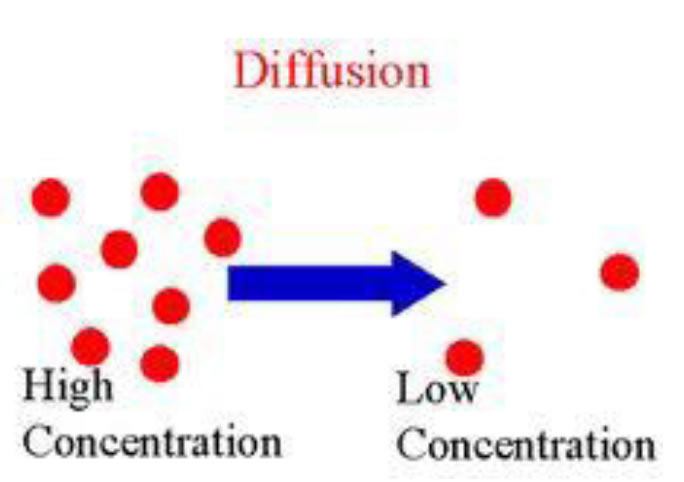
In passive diffusion, substances always move...

a)

from an area of higher concentration to an area of lower concentration

b)

from an area with more of the molecules to an area with fewer of the molecules

c)

from an area of lower concentration to an area of higher concentration

d)

from an area with fewer of the molecules to an area with more of the molecules
115.
What does selectively-permeable mean?
a)
The cell controls what passes in and out of the cell
b)
Nothing gets through
c)
The cell lets only large substances through
116.
Permeable means
a)
things can pass through
b)
the concentration levels are different
c)
it is permanent
d)
things are stuck
117.
Movement of particles from high to low concentration. 
a)
Passive Transport
b)
Active Transport
118.

The correct sequence of mitosis:

a)

metaphase, anaphase, telophase, prophase

b)

prophase, metaphase, anaphase, telophase

c)

prophase, anaphase, metaphase, telophase

d)

telophase, metaphase, prophase, anaphase

119.

During which cycle can you identify chromosomes

a)

G1 phase

b)

G2 phase

c)

S phase

d)

M phase

120.

Identical halves of a chromosome are called?

a)

Cousins

b)

Chromatids

c)

Centromere

d)

Centrosome

121.

Chromosomes are visible and spindle fibers start to appear

a)

prophase

b)

metaphase

c)

telophase

d)

anaphase

122.

Sister Chromatids separate from each other

a)

prophase

b)

telophase

c)

anaphase

d)

metaphase

123.

Chromosomes line along the center of the cell

a)

anaphase

b)

prophase

c)

metaphase

d)

telophase

124.

There are 2 nucli in one cell

a)

telophase

b)

prophase

c)

anaphase

d)

metaphase

125.

After mitosis the number of chromosomes in the newly created cells will be:

a)

Half the number of the original cell

b)

The same number as the original cell

c)

Twice as much as the original cell

126.

The division of chromosomes is called?

a)

anaphase

b)

mitosis

c)

cytokineses

d)

G0

127.

The division of the cytoplasm is called?

a)

anaphase

b)

mitosis

c)

cytokineses

d)

G0

128.

What type of cell will form a cell plate during mitosis?

a)

Haploid cells

b)

Plant Cells

c)

Animal Cells

d)

Diploid Cells

129.

Non dividing state of the cell cycle

a)

Interphase

b)

Mitosis

c)

Telophase

d)

Cytokinesis

130.

Uncontrolled growth can result in:

a)

G0 phase

b)

S phase

c)

Replication

d)

Cancer

131.

Responsible for making sure that the cell is ready to divide

a)

G1 checkpoint

b)

G2 checkpoint

c)

M checkpoint

d)

G0 checkpoint

132.
During which phase of the cell cycle does the cell spend the most time?
a)
Mitosis
b)
Cytokinesis
c)
Interphase
133.
During which parts of the cell cycle does the cell grow?
a)
G1 and G2
b)
G1 and S
c)
M phase and cytokinesis
134.
Which phase of mitosis is shown in the picture?
a)
Prophase
b)
Anaphase
c)
Telophase
135.
Which phase of mitosis is shown in the picture?
a)
Interphase
b)
Metaphase
c)
Telophase
136.
Which phase of mitosis is shown in the picture?
a)
Prophase
b)
Metaphase
c)
Anaphase
137.
Which phase of mitosis is shown in the picture?
a)
Prophase
b)
Telophase
c)
Metaphase
138.
What is shown in the picture?
a)
Mitosis
b)
Interphase
c)
Cytokinesis
139.
What is the purpose of the cell cycle?
a)
To create new daughter cells
b)
To prevent cancer from developing
c)
To help the body fight viruses and bacteria
140.

Which type of cell divides most frequently?

a)

Liver cell

b)

Skin cell

c)

Blood cell

d)

Nerve cell

141.

Cells of organisms must go through cell division for?

a)

growth

b)

repair of damaged cells

c)

replacement of dying cells.

d)

All of these

142.

DNA is replicated during ______ of the cell cycle.

a)

Gap 1

b)

Synthesis (S phase)

c)

Gap 2

d)

Gap 0

143.
What is cytokinesis?
a)
This is when two cells merge together to make one giant cell.
b)
The stage where chromosomes migrate to the opposite ends of the cell. 
c)
The stage of the cell cycle where the rest of the cell divides after mitosis is complete.
d)
The stage in which DNA condenses into chromosomes.
144.
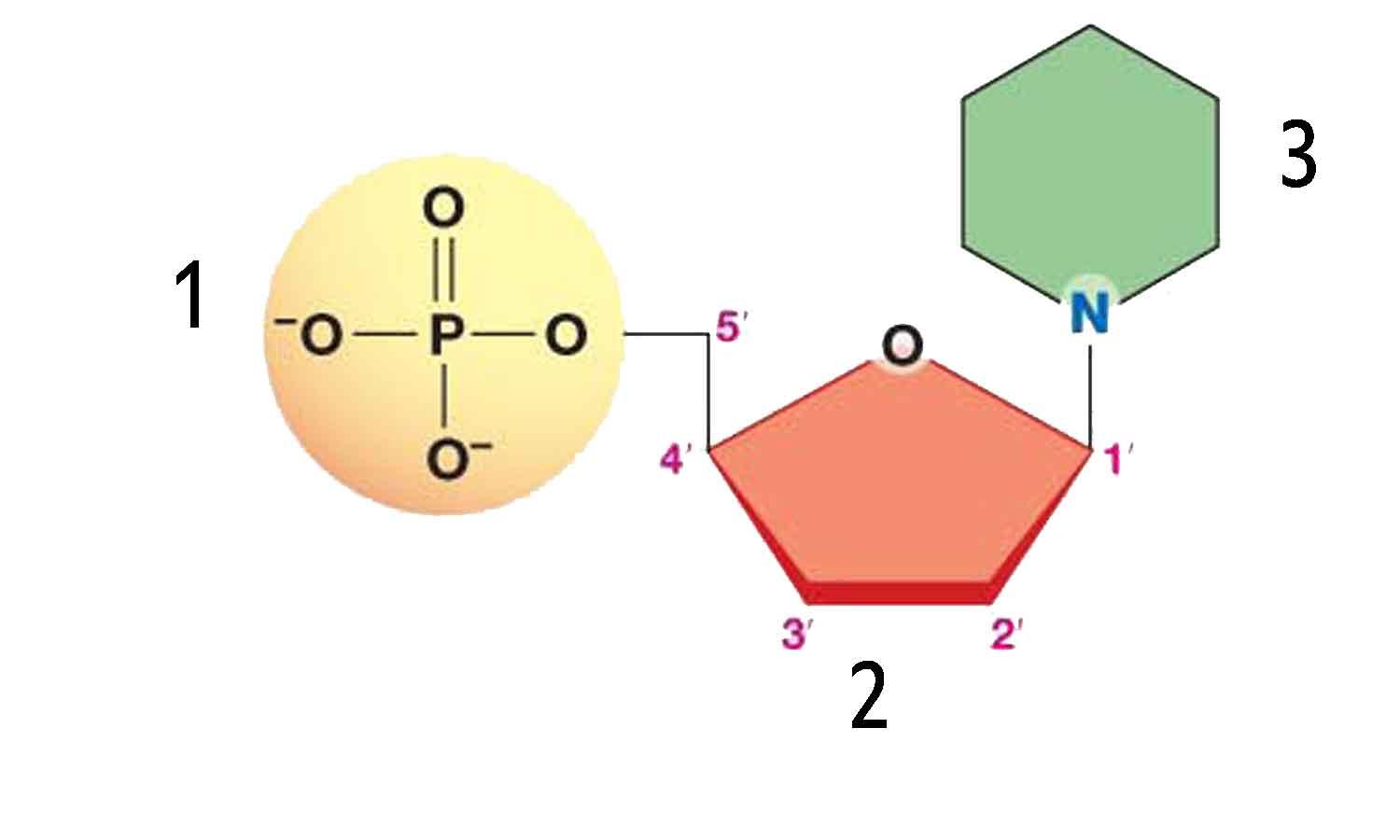
Identify the parts of the nucleotide shown:
a)
1) Ribose Sugar      2) Phosphate 
3)  Nitrogen Base
b)
1) Deoxyribose Sugar
2) Phosphate
3) Nitrogen Base
c)
1) Phosphate
2) Ribose Sugar
3) Nitrogen Base
d)
1)  Phosphate
2) Deoxyribose Sugar
3)  Nitrogen Base
145.
What occurs during G1?
a)
Checkpoint after S phase
b)
Chromosomes line up at the equator.
c)
The cell grows and develops.
d)
Spindle fibers separate chromosomes to opposite poles of the cell. 
146.

During most of interphase, DNA is found in a relaxed form called

a)

chromosome

b)

centromere

c)

centriole

d)

chromatin

147.

During mitosis, DNA is found in the condensed form called a

a)

chromosome

b)

centromere

c)

centriole

d)

chromatin

148.

In prophase of mitosis, chromosomes

a)

form and the nuclear envelope disappears.

b)

are pulled toward opposite ends of the cell.

c)

chromosomes line up along the equator of the cell

d)

chromosomes begin to decondense and the two new nuclei begin to form.

149.

The cell cycle is regulated by this

a)

cyclins

b)

stem cells

c)

cyclin-dependent kinases

d)

both cyclins and cyclin-dependent kinases

150.

When cells go through mitosis repeatedly without entering interphase, this may result.

a)

arthritis

b)

cancer

c)

mutation

d)

diabetes