wayground logo

Free Printable Worksheets

Font size

S
M
L
XL
Worksheets

DNA/RNA/Protein Synthesis

Total questions: 149

Worksheet time: 2hrs 22mins
Name
Class
Date
1.
The scientists who created an accurate model of the DNA double helix and won a Nobel Prize for this discovery
a)
Watson & Crick
b)
Watson, Crick, and Wilkins
c)
Wilkins & Crick
d)
Watson, Crick, Wilkins, and Franklin
2.
Which of the following best describes a DNA molecule?
a)
double helix
b)
contains ribose
c)
made of amino acids
d)
contains Uracil
3.
Which of the following units are repeatedly joined together to form a strand of DNA?
a)
amino acids
b)
nucleotides
c)
fatty acids
d)
polysaccharides
4.

In eukaryotes, DNA is usually found in the​ (a)   , while in prokaryotes, DNA is found in the ​ (b)   .

Choose from the below words
nucleus
cytoplasm
5.
Nitrogenous bases are joined by which type of bond?
a)
polar bonds
b)
ionic bonds
c)
covalent bonds
d)
hydrogen bonds
6.
What are the three components of a nucleotide?
a)

ribose, hydrogen, nitrogen base

b)

deoxyribose, oxygen, nitrogen base

c)

deoxyribose, phosphate, nitrogen base

d)

ribose, phosphate, protein

7.
DNA and RNA are macromolecules in the category of
a)
Proteins
b)
Lipids
c)
Nucleic Acids
d)
Carbohydrates
8.
Which of the following is a base that is NOT contained in DNA?
a)
Adenine
b)
Thymine
c)
Uracil
d)
Guanine
9.
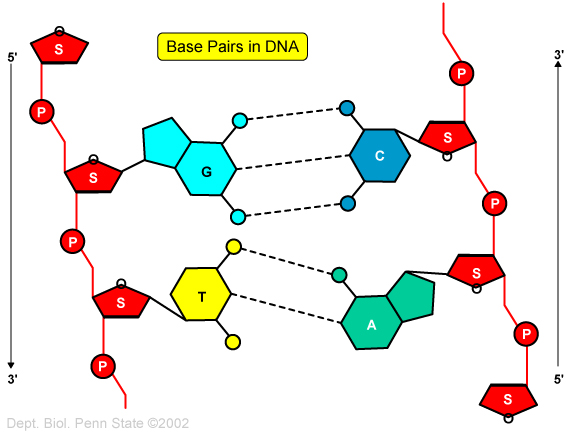
Which 2 molecules form the sides (backbone) of the DNA ladder?
a)
deoxyribose sugar and adenine
b)
deoxyribose sugar and a hydrogen bond
c)
deoxyribose sugar and the nucleus
d)
deoxyribose sugar and phosphate
10.
If there is 37% guanine how much cytosine is there?
a)
77%
b)
47%
c)
37%
d)
57%
11.
What does DNA stand for?
a)
Deoxyribonucleic acid
b)
Denitrogenous acid
c)
Deribonucleic acid
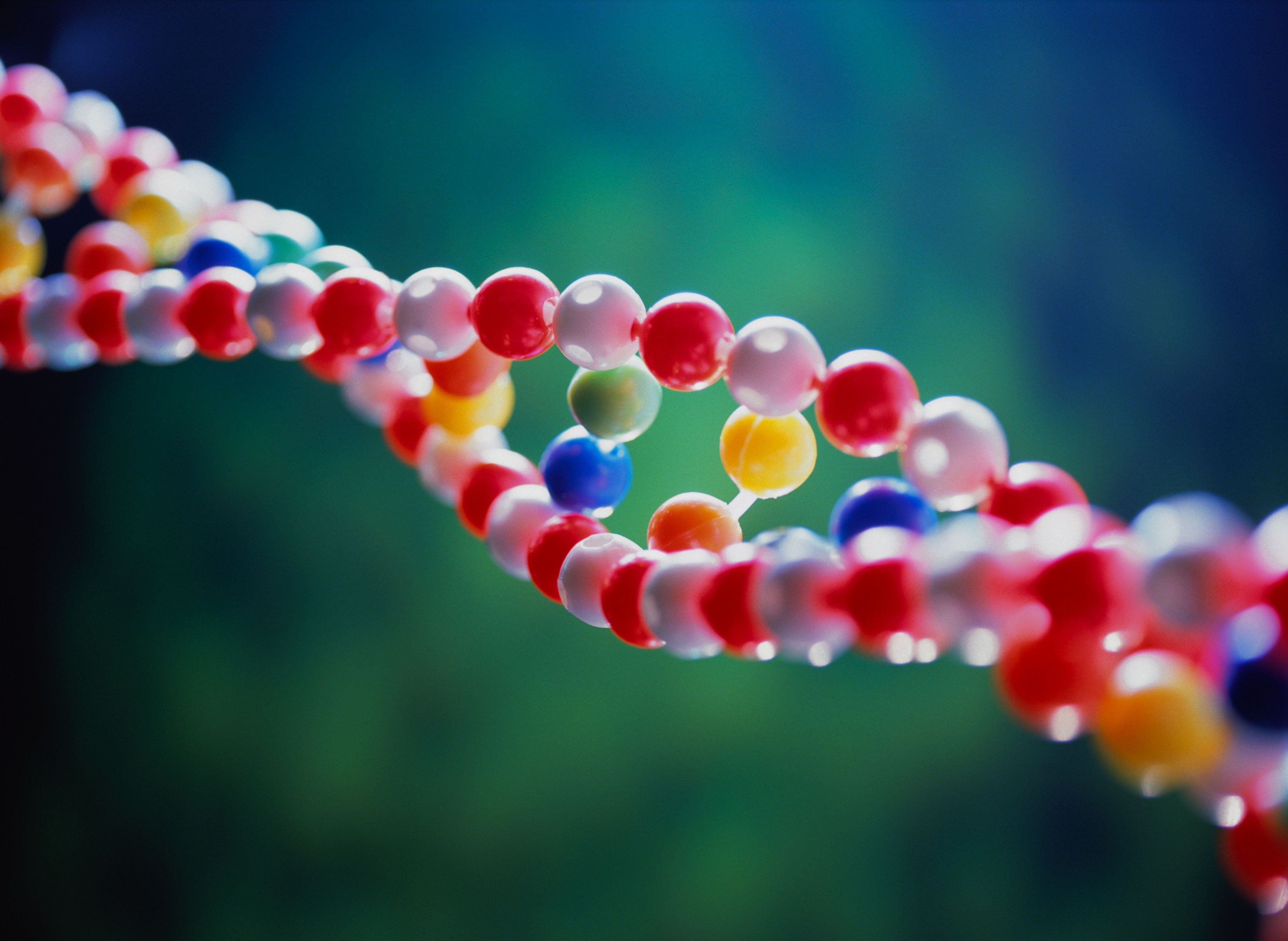
d)
Diribonucleic acid
12.
How did Rosalind Franklin's photo 51 affect th work of Watson and Crick?
a)
It was used to determine the physical structure of DNA
b)
It was used to identify the four bases that make up DNA
c)
It was used to determine the theory of independent assortment
d)
It was used to show DNA was the molecule of inheritance
13.
Franklin used x-ray crystallography to determine the shape of the DNA molecule is
a)
a cloverleaf
b)
a braided rope
c)
a pleated sheet
d)
a twisted ladder
14.
Who was responsible for determining the structure of DNA?
a)
Watson and Crick
b)
Chargaff
c)
Rosalind Franklin
d)
All of the above
15.

Which of these are purines (larger nitrogenous bases?) CHOOSE 2

a)

Adenine

b)

Thymine

c)

Cytosine

d)

Guanine

16.

Which of these are pyrimidines (smaller nitrogenous bases?) CHOOSE 2

a)

Adenine

b)

Thymine

c)

Cytosine

d)

Guanine

17.

The sugar in DNA is called

a)

glucose

b)

deoxyribose

c)

ribose

d)

phosphate

18.

Match the following

a)

Avery

1.

Genetic material is DNA (not protein)

b)

Hershey & Chase

2.

Viruses have DNA too

c)

Miescher

3.

Discovered the DNA molecule

d)

Chargaff

4.

discovered the base pairing rules for DNA

e)

Griffith

5.

Discovered transformation using pneumonia bacteria

19.

Chargraff's Rule says that

a)

A pairs with C

b)

C pairs with G

c)

G pairs with T

d)

T pairs with A

20.
What is the sugar in DNA called?
a)
Deoxyribose
b)
Dantein
c)
Diglyceride
d)
Dalvin
21.
Which of the following bases would not be found in DNA?
a)
Adenine
b)
Uracil
c)
Cytosine
d)
Guanine
22.
Adenine pairs with...
a)
Thymine
b)
Cytosine
c)
Guanine
d)
It does not pair with any of them
23.
Which part of DNA is considered the "genetic code"?
a)
Bases
b)
Sugar
c)
Phosphate
d)
Hydrogen bonds
24.
The shape of DNA is...
a)
Twisted helix
b)
Flat helix
c)
Hexagon
d)
Pentagon
25.
DNA, in eukaryotes, is found within the...
a)
Nucleus
b)
Golgi apparatus
c)
Cytosol
d)
Outside the plasma membrane
26.

What does DNA stand for?

a)

Deoxyribonucleic acid

b)

Denitrogenous acid

c)

Deribonucleic acid

d)

Dexoyribonucic acid

e)

Deoxyribonuclic acid

27.
What is the monomer of nucleic acids?
a)
Glycerol
b)
Monosaccharides
c)
Amino Acids
d)
Nucleotides
28.

What are the components of a nucleotide?

a)

nitrogen base, phosphate group, and 5-carbon sugar

b)

5 carbon sugar, purine, and pyrimidine

c)

nitrogen base and a phosphate group

d)

DNA, phosphate group, monosaccharide

29.
In a molecule of double-stranded DNA, the amount of Adenine present is always equal to the amount of
a)
cytosine
b)
guanine
c)
thymine
d)
uracil
30.
Guanine bonds with ______________.
a)
Adenine
b)
Guanine
c)
Cytosine
d)
Thymine
31.
Which 2 molecules form the sides (backbone) of the DNA ladder?
a)
deoxyribose sugar and adenine
b)
deoxyribose sugar and a hydrogen bond
c)
deoxyribose sugar and the nucleus
d)
deoxyribose sugar and phosphate
32.
What will the matching sequence be on a strand that reads AAGCTAT?
a)
AACGATA
b)
TTCGTTA
c)
CCTGATA
d)
TTCGATA
33.

What are the four nitrogen bases?

a)

adenine, thymine, guanine, cytosine

b)

adenine, lysine, prolene, guanine

c)

arganine, cytosine, lysine, purine

d)

lysine, cytosine, lucine, guanine

34.

In the Mammoth documentary, researchers were trying to find intact __________ that could be extracted and used to clone the extinct animal.

a)

protein

b)

bones

c)

DNA

d)

hair

35.

One basic unit of a Nucleic Acid is a​ (a)  

Choose from the below words
nucleotide
amino acid
fatty acid
monosaccharide
36.

Three Nucleotides in a row of DNA or mRNA are called a...

(a)  

Choose from the below words
Codon
Sugar
Ribosome
acid
Protein
37.

Given this DNA Sequence:

TAC TAG CCG AGT

What is the correct amino acid sequence?

4 lines
38.

What is the difference between the effect of a point mutation and a frameshift mutation?

4 lines
39.

If one nucleotide is affected in a point mutation can this change the amino acid made?

a)

Yes, always

b)

No, never

c)

Sometimes

40.

If more than one nucleotide are affected in a frameshift mutation, can this change an amino acid made? How many?

a)

Yes, only one

b)

No, none

c)

Sometimes, possibly many

41.

Match the following Mutations

a)

Deletion

1.

Entire sequence shifts to the left

b)

Insertion

2.

Entire sequence shifts to the right

c)

Substitution

3.

One Nucleotide is swapped for another

d)

Point

4.

Only one nucleotide is affected

e)

Frameshift

5.

More than one nucleotide is affected and entire sequence shifts

42.

Match the following Mutations

a)

Missense

1.

Causes chance in amino acid sequence ; results in different protein

b)

Nonsense

2.

Causes an amino acid to change into a "STOP" codon

c)

Silent

3.

Has no effect on amino acids or proteins

43.

Circle the Mutation

44.

What was the new amino acid made by this mutation?

(a)  

45.

What type of mutation is this?

a)

Point

b)

Frameshift

46.

What type of mutation is this?

a)

Substitution

b)

Deletion

c)

Insertion

47.

What type of mutation is this?

a)

Nonsense

b)

Missense

c)

Silent

48.

What is the difference between the effect of a point mutation and a frameshift mutation?

4 lines
49.

Match the following

a)
1.

Chromosome

b)
2.

Gene

c)
3.

DNA

d)
4.

Nucleotide

e)
5.

Nucleus

50.

Match the following DNA Nitrogen Bases

a)

Guanine

1.

Cytosine

b)

Adenine

2.

Thymine

c)

Cytosine

3.

Guanine

d)

Thymine

4.

Adenine

51.

Replicate this DNA Template Strand based on Chargaff's Rule

5' AAGTGCTACC 3'

(a)  

52.

Which Nucleic Acid does not leave the Nucleus?

a)

DNA

b)

RNA

53.

Which of the following do both DNA and RNA have?

a)

Nucleotides

b)

Phosphate

c)

Sugar

d)

Nitrogen Base

54.

True of False: RNA is smaller than DNA

a)

True

b)

False

55.

Draw the basic shape of DNA in the first box then the basic structure of RNA in the second box

56.

Which Nitrogenous Bases can be found in RNA?

a)

Guanine

b)

Cytosine

c)

Adenine

d)

Thymine

57.

Which Nitrogenous Base matches in RNA with Adenine from DNA?

a)

Guanine

b)

Cytosine

c)

Uracil

d)

Thymine

58.

True or False: Adenine will always pair up with Thymine in DNA and RNA

a)

True

b)

False

59.

Turn to your nearest neighbor: Discuss what are differences between the 5-Carbon Sugars, Deoxyribose and Ribose. Type in your response

4 lines
60.

Identify one difference between DNA and RNA

4 lines
61.

Eight components present in nucleic acids are listed in the box.

Which components bond with adenine in a section of double-stranded DNA?

a)

1,3,5, and 6 only

b)

3 and 5 only

c)

2 and 4 only

d)

3, 4, 7, and 8 only

62.

Which of the following are the bases for RNA?

a)

adenine, uracil, thymine, and guanine

b)

adenine, uracil, guanine, and cytosine

c)

adenine, thymine, guanine, and cytosine

d)

adenine, uracil, thymine, and cytosine

63.

Which of the following is a type of RNA?

a)

mRNA

b)

tRNA

c)

rRNA

d)

All of these are types of RNA

64.

Which statement is true about RNA?

a)

RNA is usually single stranded and contains the base uracil

b)

RNA is usually double stranded and contains the base thymine

c)

RNA is made in the nucleus and stays there to carry out its function

d)

All of the above are true.

65.

True or False: RNA uses deoxyribose sugar.

a)

True

b)

False

66.

RNA and DNA have different structures. Which of the following statements are correct?

a)

RNA is double stranded and DNA is single stranded.

b)

RNA and DNA are both single stranded.

c)

RNA is single stranded and DNA is double stranded.

d)

RNA and DNA are both double stranded.

67.

RNA and DNA are composed of different sugars. Which of the following statements are true?

a)

RNA uses ribose and DNA uses deoxyribose.

b)

RNA uses deoxyribose and DNA uses ribose.

c)

DNA and RNA both use ribose sugars.

d)

DNA and RNA both use deoxyribose sugars.

68.

RNA is double-stranded.

a)

true

b)

false

c)

it depends on the type

69.
Where does transcription take place?
a)
nucleus
b)
cytoplasm
c)
ribosome
70.
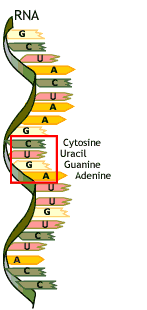
What is occurring in this picture?
a)
Translation
b)
Replication
c)
Translocation
d)
Transcription
71.
What does mRNA do?
a)
provides information from DNA to ribosomes
b)
transfers amino acids to the ribosomes
c)
makes up ribosomes
d)
builds proteins
72.

Using this DNA sequence ATA CGA GGA TTT, what is the complementary RNA sequence will be

a)

UAU GCU CCU AAA

b)

UAU GCU CCU TTT

c)

TAT GCT CCT AAA

d)

TAT GCT CCT TTT

73.

Through the process of transcription, DNA makes a complimentary strand of

a)

DNA

b)

RNA

c)

CNA

d)

PLB

74.
RNA has how many strands?
a)
one
b)
two
75.

Name the 3 types of RNA

a)

mRNA

dRNA

rRNA

b)

mRNA

tRNA

rRNA

c)

mRNA

tRNA

cRNA

d)

mRNA

dRNA

tRNA

76.

What does a promoter do?

a)

binds RNA polymerase for transcription

b)

binds DNA polymerase for replication

c)

binds the operator

d)

binds the repressor

77.
In eukaryotes, functional messenger RNA molecules are made from
a)
exons spliced together after introns are removed
b)
introns spliced together after eons are removed
c)
exons spliced together with introns
d)
long pieces of RNA shortened by the Dicer enzyme
78.
Which sequence of DNA bases would pair with this partial strand
ATG TGA CAG
a)
ATG TGA CAG
b)
TAC ACT GTC
c)
GTA AGT GAC
d)
CAT TCA CTG
79.
In a molecule of double-stranded DNA, the amount of Adenine present is always equal to the amount of
a)
cytosine
b)
guanine
c)
thymine
d)
uracil
80.
Adenine bonds with ______________.
a)
Guanine
b)
Thymine
c)
Cytosine
d)
Adenine
81.
Guanine bonds with ______________.
a)
Adenine
b)
Guanine
c)
Cytosine
d)
Thymine
82.
Which 2 molecules form the sides (backbone) of the DNA ladder?
a)
deoxyribose sugar and adenine
b)
deoxyribose sugar and a hydrogen bond
c)
deoxyribose sugar and the nucleus
d)
deoxyribose sugar and phosphate
83.
Which organelle is DNA usually found in?
a)
cell membrane
b)
vacuole
c)
chloroplast
d)
nucleus
84.
Nitrogenous bases are joined by which type of bond?
a)
polar bonds
b)
ionic bonds
c)
covalent bonds
d)
hydrogen bonds
85.
Replicate the following strand of DNA: 
AATCATGGA
a)
AATCATGGA
b)
TTAGTACCT
c)
UUAGUACCU
d)
GGATAUCUA
86.
The enzyme that unzips the DNA to prepare for replication
a)
helicase
b)
replicase
c)
polymerase
d)
synthase
87.
DNA replication results in two DNA molecules,
a)
each one with two original strands
b)
each one with two new strands
c)
each one with one new strand and one original strand
d)
one with two new strands and the other with two original strands
88.
order of replication
a)
3, 2, 1, 4
b)
2, 1, 4, 3
c)
2, 3, 1, 4
d)
3, 4, 1, 2
89.
What is the correct complimentary strand for the following DNA?ATCGAG
a)
TACGAG
b)
ATCGAG
c)
TAGCTG
d)
TAGCTC
90.
In what phase of the cell cycle does DNA replication take place?
a)
G1
b)
S
c)
G2
d)
M
91.
What are the 4 nitrogen bases?
a)
adenine, thymine, cytoplasm, and guanine
b)
adenine, thymine cytosine, and guanine
c)
adenine, thymine, cytosine, and gylcerol
d)
adenine, thymine, cytosine, and glucose
92.
In the diagram strand I and II represent portions of DNA molecule. Strand II would normally include...
a)
AGC
b)
TCG
c)
TAC
d)
GAT
93.
Diagram represents a portion of DNA molecule. The letters represent different types of
a)
sugar molecules
b)
molecular bases
c)
enzymes
d)
proteins
94.
Four different segments of a DNA molecule are represented below. There is an error in the DNA molecule in 
a)
Segment 1 only
b)
segment 3 only
c)
Segment 2 and 3
d)
segment 2 and 4 
95.
In a molecule of double-stranded DNA, the amount of Adenine present is always equal to the amount of
a)
cytosine
b)
guanine
c)
thymine
d)
uracil
96.
Why is DNA important?
a)
it is very small and very complicated
b)
it's in everything
c)
it serves as the blueprint for traits of all living things
d)
because we eat it every day for energy
97.
The enzyme that unzips the DNA to prepare for replication
a)
helicase
b)
replicase
c)
polymerase
d)
synthase
98.
DNA replication results in two DNA molecules,
a)
each one with two original strands
b)
each one with two new strands
c)
each one with one new strand and one original strand
d)
one with two new strands and the other with two original strands
99.
A process in which DNA has the unique ability to make an exact copy of itself.
a)
Replication
b)
Translation
c)
Transcription
100.
In what phase of the cell cycle does DNA replication take place?
a)
G1
b)
S
c)
G2
d)
M
101.
Which organelle is DNA usually found in?
a)
cell membrane
b)
vacuole
c)
chloroplast
d)
nucleus
102.
The concept that DNA is made of two strands running in opposite directions is called:
a)
Antiparallel
b)
Isomerism
c)
Enantiomerism
d)
S/R Chirality
103.
Small segments of DNA made on the lagging strand are called:
a)
Okazaki Fragments
b)
ERVs
c)
Transposable Elements
d)
Telomeres
104.
The term used to describe DNA Replication is:
a)
Semi-Conservative
b)
Conservative
c)
AntiParallel
d)
Dispersive
105.
During DNA replication, the enzyme _____ bonds together the new side of the DNA 
a)
helicase
b)
ligase
c)
synthase
d)
polymerase
106.
The enzyme that comes first temporarily gets the single strand ready to add new nucleotides is called "The Initializer" or 
a)
Helicase
b)
Primase
c)
Polymerase
d)
Nuclease
107.
Which enzyme is responsible for gluing and connecting parts of newly created DNA fragments together ("The Gluer")? 
a)
Topoisomerase
b)
DNA Polymerase
c)
Ligase
d)
Primase
108.
This Y shaped region where DNA is unwound to start replication is called...
a)
replication fork
b)
Leading strand
c)
Lagging strands
d)
replication splicing
109.
On the lagging strand in replication, the Okazaki fragments must be joined by which enzyme?
a)
DNA polymerase
b)
primase
c)
ligase
d)
helicase
110.
In RNA, Uracil pairs with ______. 
a)
cytosine
b)
adenine
c)
guanine
d)
thymine
111.
The process to go from DNA to mRNA is _______
a)
translation
b)
transcription
c)
replication
112.
The process to go from mRNA to a protein is called ____
a)
transcription
b)
rRNA
c)
replication
d)
translation
113.
DNA holds the code for
a)
lipids
b)
carbohydrates
c)
protein
d)
sugar
114.
Choose the nucleotide sequence of the RNA strand that would be complementary to the following strand: 
GTAGTCA
a)
UATUAGA
b)
ACGACTG
c)
CAUCAGU
d)
CATCAGT
115.
The main function of tRNA is to...
a)
carry a message that, when translated, forms proteins
b)
form a portion of ribosomes
c)
string together complementary RNA and DNA strands
d)
bring amino acids from the cytoplasm to the ribosomes
116.
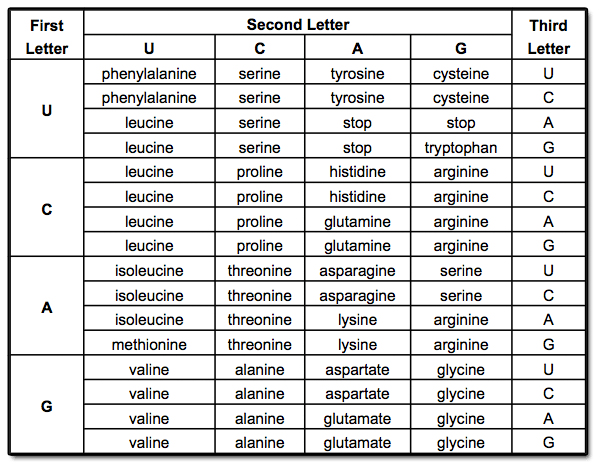
What amino acid is represented by the codon UUA?
a)
Phenylalanine
b)
Tyrosine
c)
Leucine
d)
Stop codon
117.
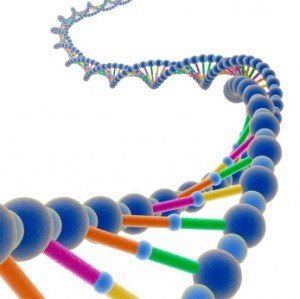
What process is going on in this photo? 
a)
Transcription 
b)
Translation 
c)
Replication 
d)
All the above 
118.
Which component of DNA determines the traits of an organism? 
a)
Nitrogen Bases
b)
Sugar-Phosphate Backbone
c)
Hydrogen bonds
119.

What is the location in the cell for translation?

a)

nucleus

b)

mitochondria in cytoplasm

c)

ribosome in cytoplasm

d)

chloroplast in cytoplasm

120.
What is the three base sequence of mRNA that codes for a single amino acid?
a)
Anticodon
b)
Codon
c)
Protein
121.
What is the location in the cell for transcription?
a)
nucleus
b)
cytoplasm
c)
ribosome
d)
mitochondria
122.
Translation is the process where
a)
mRNA is created in the Nucleus
b)
mRNA is decoded to form a protein 
c)
glucose molecules are made
d)
is where lipids are synthesised
123.
Does the order of amino acids in a protein matter?
a)
YES!
b)
NO!
124.

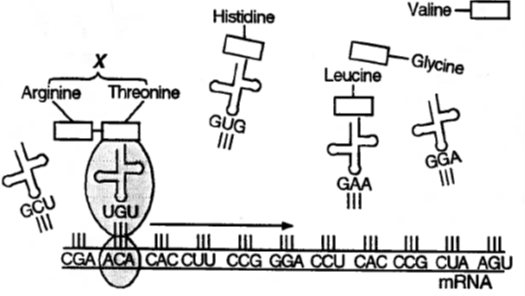
What process is happening in the diagram?

a)

transcription

b)

translation

c)

dna replication

d)

mitosis

125.

In what process is mRNA synthesized?

a)

Transcription

b)

Translation

c)

DNA Replication

d)

Mitosis

126.

Where does TRANSCRIPTION occur?

a)

Nucleus

b)

Ribosome

c)

Cytoplasm

d)

Mitochondria

127.

Why must transcription occur where DNA can be found?

a)

because DNA can't leave

b)

because ribosomes are in the nucleus

c)

because DNA polymerase is found there

d)

because helicase unzips the DNA

128.

Which of the following is a codon?

a)
b)

ATG

c)

AUG

d)

AUT

129.

How many codons equals 1 amino acid?

a)

1

b)

2

c)

3

d)

4

130.

How many nucleotides equal 1 amino acid?

a)

1

b)

2

c)

3

d)

4

131.

On which molecule can an anticodon be found?

a)

mRNA

b)

DNA

c)

tRNA

d)

rRNA

132.

Where is the anticodon located?

a)

at the top of the molecule it's found on

b)

at the bottom of the molecule it's found on

c)

on the right of the molecule it's found on

d)

on the left of the molecule it's found on

133.

What is the purpose for anti-codons?

a)

to ensure the correct amino acid is dropped off

b)

to match the strand of DNA

c)

to decode a sequence of 4 nucleotides into an amino acid

d)

to make me hate biology

134.

A polypeptide is a sequence of ____________________ held together by a ______________ bond.

a)

amino acids; peptide

b)

fatty acids; ionic

c)

proteins; hydrogen

d)

fatty acids; covalent

135.

Which two thing are found on a molecule of tRNA?

a)

amino acids; anticodons

b)

amino acids; codons

c)

ribose sugar; proteins

d)

deoxyribose sugar; codons

136.

How do you know when to begin translating a strand of mRNA?

a)

look for AUG

b)

start at the beginning

c)

look for ATG

d)

when Ms. H tells me to

137.

How do you know when to STOP translating a strand of mRNA?

a)

look for STOP on the decoder

b)

stop at the end of the strand

c)

you don't

d)

when Ms. H tells me to

138.

TRANSCRIBE this DNA sequence: TACGTTACT

a)

AUGCAAUGA

b)

ATGCAATGA

c)

AUGGATUGA

d)

TACGTTACT

139.

TRANSLATE this RNA sequence: AUGCAAUGA

a)

Met-Glu-Stop

b)

Met-His-Stop

c)

Thr-Glu-Stop

d)

Thr-Pro-Stop

140.
What process is going on in this photo? 
a)
Transcription 
b)
Translation 
c)
Replication 
d)
All the above 
141.
Does the order of amino acids in a protein matter?
a)
YES!
b)
NO!
142.

A DNA nucleotide may be made up of a phosphate group, along with

a)

deoxyribose sugar and uracil

b)

ribose sugar and cytosine

c)

deoxyribose sugar and thymine

d)

ribose sugar and adenine

143.

Which of the following units are repeatedly joined together to form a strand of DNA? (This is the MONOMER of DNA.)

a)

amino acids

b)

nucleotides

c)

fatty acids

d)

polysaccharides

144.

The important enzyme related with transcription is;

a)

gyrase

b)

DNA polymerase

c)

RNA polymerase

d)

ligase

145.

Enzyme that connects the DNA to the backbone (glues)

a)

Ligase

b)

Polymerase

c)

Helicase

d)

Primase

146.

Role of DNA polymerases?

a)

Synthesis DNA

b)

Denature DNA

c)

Synthesis RNA

d)

Denature RNA

147.

___________are DNA repair enzymes that repair damage caused by exposure to UV light

a)

Photolyases

b)

Gyrases

c)

Helicases

d)

Topoisomerases II

148.

UV light induce

a)

T=T

b)

A=T

c)

G=T

d)

T=C

149.

Absence of Nucleotide excision repair leads to

a)

Xeroderma pigmentosum

b)

Down syndrome

c)

Turner's syndrome

d)

Klinefilter syndrome