wayground logo

Free Printable Worksheets

Font size

S
M
L
XL
Worksheets

HBS EOC Review

Total questions: 153

Worksheet time: 1hrs 26mins

Name
Class
Date
1.

The divisions of the nervous system (choose all terms that apply)

a)

central

b)

peripheral

c)

sensory

d)

motor

2.

The part of the brain responsible for processing sight

a)

frontal

b)

temporal

c)

occipital

d)

cerebellum

3.
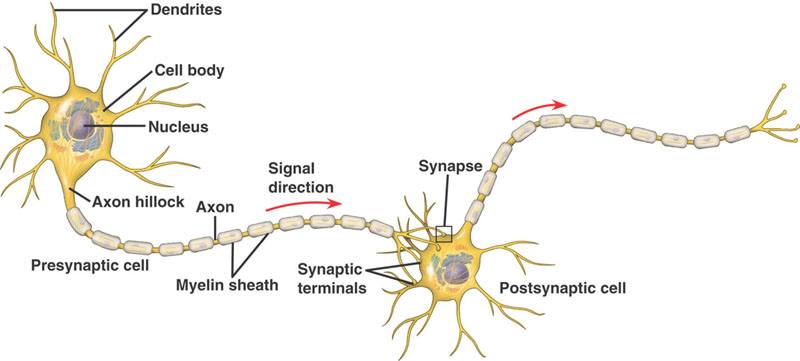
Which part of the neuron is a long fiber that send information to other cells?
a)
dendrite
b)
terminal
c)
cell body
d)
axon
4.
If I step on a nail...what type of neuron take that signal TO the CENTRAL NERVOUS SYSTEM?
a)
interneurons
b)
motor
c)
sensory 
d)
receptors
5.
Which part of the brain controls vital functions such as breathing and heart rate?
a)
Diencephalon
b)
Frontal Lobe
c)
Brain Stem
d)
Cerebellum
6.
Neurons send signals in the brain and body via...
a)
neurotransmitters only
b)
electrical impulses only
c)
wifi
d)
neurotransmitters AND electrical signals
7.

Phineas Gage suffered a traumatic brain injury to his _________ that changed his personality and impulse control.

a)

frontal lobe

b)

parietal lobe

c)

temporal lobe

d)

cerebellum

8.

The 'master gland' that controls all the other endocrine glands in the body is the _________ gland

a)

thyroid

b)

pituitary

c)

adrenal

d)

thymus

9.

This hormone, released by the pancreas, helps RAISE blood glucose levels

a)

insulin

b)

glucagon

10.
The purpose of the endocrine system is to
a)
maintain homeostasis by reacting quickly to stimuli
b)
produce substances that protect the body from bacteria 
c)
maintain metabolism, growth and development in homeostasis 
d)
transport molecules throughout the body
11.
The purpose of the endocrine system is to
a)
maintain homeostasis by reacting quickly to stimuli
b)
produce substances that protect the body from bacteria 
c)
maintain metabolism, growth and development in homeostasis 
d)
transport molecules throughout the body
12.
targets bone and muscle to promote growth and development
a)
growth hormone
b)
prolactin
c)
oxytocin
d)
ADH (antidiuretic hormone)
13.
a disease by which people cannot control sugar levels in the blood
a)
hypertension
b)
sleep apnea
c)
diabetes
d)
hyperthyroidism
14.
The correct order of the glands/organs shown in the diagram is 
a)
hypothalamus, thyroid, pancreas, kidneys, ovaries, testes
b)
pituitary, thyroid, adrenal, pancreas, ovaries, testes
c)
pituitary, parathyroid, pancreas, adrenal, testes, ovaries
d)
non are correctly ordered
15.

Which ions are involved in the electrical nerve impulse (action potential)?

a)

Iodine and Sodium

b)

Potassium and Sodium

c)

Iron and Sodium

d)

Calcium and Iodine

16.
Known as the "Little Brain" and is in charge of balance and coordinating movements
a)
Thalamus
b)
Reticular Formation
c)
Hypothalamus
d)
Cerebellum
17.
Damage this and you won't form new memories
a)
Hypothalamus
b)
Hippocampus
c)
Amygdala
d)
Thalamus
18.
Possesses the Motor Cortex
a)
Temporal Lobe
b)
Parietal Lobe
c)
Occipital Lobe
d)
Frontal Lobe
19.
Possesses the Sensory Cortex
a)
Frontal Lobe
b)
Occipital Lobe
c)
Temporal Lobe
d)
Parietal Lobe
20.
Controls hearing, and language comprehension
a)
Frontal Lobe
b)
Temporal Lobe
c)
Occipital Lobe
d)
Parietal Lobe
21.
Damage to the cerebellum would most affect the career of
a)
an architect
b)
a teacher
c)
an athlete
d)
a librarian
22.
The amygdala, the hypothalamus and the hippocampus are parts of
a)
limbic system
b)
cerebral cortex
c)
hindbrain
23.
The white portion of the eye (In Humans).
a)
Pupil
b)
Sclera
c)
Dyslexia
d)
Retina
24.
Cornea is abnormally curved, causes blurry vision because it is unable to focus.
a)
Temporarily Blind 
b)
Blindness
c)
Eye
d)
Astigmatism
25.
What light sensitive cells are stimulated in dim light?
a)
rods
b)
cones
26.
Which nerve transmits information from the eye to the brain?
a)
Optic
b)
Olfactory
c)
Occulomotor
d)
Trigeminal
27.
What is letter B
a)
Optic nerve
b)
Lens
c)
Cornea
d)
Retina
28.
What is letter G?
a)
Sclera
b)
Retina
c)
Lens
d)
Vitreous humor
29.
What is letter I?
a)
Cornea
b)
Lens
c)
Vitreous humor
d)
Optic nerve
30.
What part of the eye are the cones located
a)
Iris
b)
lens
c)
retina
d)
pupil
31.
What is the function of the pupil?
a)
Sends messages picked up by the retina to the brain
b)
The hole that controls the different amounts of light
c)
the colored part of the eye that controls the size of the pupil
d)
transparent jelly like fluid that fills the eye and refracts light
32.
Light entering the eye is focused behind the retina instead of directly on it, objects close to the eye look blurry
a)
Iris
b)
Near Sighted
c)
Astigmatism
d)
Far Sighted
33.
a junction at which a neuron meets another cell
a)
axon
b)
dendrites
c)
myelin sheath
d)
synapse
34.
part of a neuron that receives information from other neurons
a)
axon
b)
dendrites
c)
myelin sheath
d)
synapse
35.
Label the Neuron-What does the letter "H" represent?
a)
Schwann Cell
b)
Axon
c)
Axon Terminal
d)
Dendrite
36.
Label the Neuron-What does the letter "G"
represent?
a)
Axon Terminal
b)
Node of Ranvier
c)
Nucleus
d)
Myelin Sheath
37.
Label the Neuron-What does the letter "B" represent?
a)
Myelin Sheath
b)
Schwann Cell
c)
Cell Body
d)
Nucleus
38.
Label the Neuron-What does the letter "A" represent?
a)
Axon
b)
Dendrite
c)
Axon Terminal
d)
Cell Body
39.
What number on the graph represents the Depolarization phase?
a)
1
b)
2
c)
3
d)
4
40.
What number on the graph represents the Hyperpolarization phase?
a)
1
b)
2
c)
3
d)
4
41.
What is the insulating membrane that surrounds parts of the axon that helps to protect & propagate action potential?
a)
Axon
b)
Dendrites
c)
Node of Ranvier
d)
Myelin Sheath
42.
These connect Sensory and Motor Neurons to each other and are located in the brain and spinal cord
a)
Sensory Neurons
b)
Motor Neurons
c)
Interneurons
d)
Afferent Neurons
43.
Letter G
a)
Thalamus
b)
Hypothalamus
c)
Pituitary Gland
d)
Midbrain
44.
Letter K
a)
pons
b)
medulla oblongata
c)
cerebellum
d)
midbrain
45.
condition in which abnormal, rapid impulses are released by brain cells, causing skeletal muscles to contract violently and uncontrollably
a)
encephalitis
b)
aphasia
c)
coma
d)
epilepsy
46.
loss of myelin; result in loss of muscle function, double vision, loss of balance, poor coordination, tremors, tingling, numbness
a)
Parkinson's
b)
cerebral palsy
c)
Belle's palsy
d)
Multiple Sclerosis
47.
A sudden change in the polarity of the membrane of a neuron, gland cell, or muscle fiber that causes the transmission of electrical impulses
a)
Action potential
b)
Membrane potential
c)
Resting potential
d)
Threshold
48.
Brain disorder that results in loss of neuromuscular function, including loss of ability to swallow, speak
a)
Alzheimer
b)
Parkinson
c)
ALS
d)
Multiple sclerosis
49.
What is the blind spot
a)
Produces aqueous humor and controls the lense shape
b)
Whites of the eye and provides structure
c)
The area where the optic nerve  attaches , and no retina is located
, so there is no information to be picked up
50.
Stimulates the pituitary gland
a)
testes
b)
Hypothalamus
51.
What is FSH help with?
a)
milk production 
b)
stress
c)
egg and sperm production
d)
maintain blood pressure
52.
Which eye care professional does corrective surgery?
a)
Opthalmologist
b)
Optician
c)
Optometrist
53.
What is the central nervous system (CNS) made up of?
a)
brain & spinal cord
b)
sensory neurons
c)
motor neurons
d)
sensory receptors
54.

Name the Lobe:

a)

frontal

b)

parietal

c)

occipital

d)

temporal

55.

Name the Lobe:

a)

frontal

b)

parietal

c)

occipital

d)

temporal

56.

Name the structure:

a)

transverse sulcus

b)

occipital lobe

c)

cerebellum

d)

frontal lobe

57.
The maintenance of relatively stable internal physiological conditions (as body temperature or the pH of blood) in higher animals under fluctuating environmental conditions.
a)
Equillibrium
b)
Static Equilibrium
c)
Homeosapiis
d)
Homeostasis
58.
A very large molecule (as of a protein, nucleic acid, or carbohydrate) built up from smaller chemical structures.
a)
Macrophage
b)
Micromolecule
c)
Macroroni
d)
Macromolecule
59.
An adenine-containing nucleoside triphosphate that releases free energy when its phosphate bonds are hydrolyzed. This energy is used to drive endergonic reactions in the cell.
a)
Adenosine cophosphate (ACT)
b)
Adenosine monophosphate (AMP)
c)
Adenosine triphosphate (ATP)
d)
Adenosine diphosphate (ADP)
60.
Synthetic, energy-requiring reactions whereby small molecules are built up into larger ones.
a)
Catabolism
b)
Metabolism
c)
Anabolism
d)
Canabolism
61.
A measure of body fat that is the ratio of the weight of the body in kilograms to the square of its height in meters.
a)
Basal Metobolic Rate (BMR)
b)
Body Mass Index (BMI)
c)
Body weight index (BWI)
d)
Basal Mass Index (BMI)
62.
A soft mass of chewed food.
a)
Boolus
b)
Bolus
c)
Bowlus
d)
Bolous
63.
The amount of heat energy required to raise the temperature of 1 g of water by 1 degree C. 
a)
Calorie
b)
calorie
c)
kilocalorie
d)
kalorie
64.
Chemical reactions that break down complex organic compounds into simple ones, with the net release of energy.
a)
Catabolism
b)
Anabolism
c)
Metabolism
d)
Canabolism
65.
A substance that enables a chemical reaction to proceed under different conditions (as at a lower temperature) than otherwise possible.
a)
Catalyst
b)
Synthesist
c)
Product
d)
Reactant
66.
The process of making food absorb-able by mechanically and enzymatic-ally breaking it down into simpler chemical compounds in the alimentary canal.
a)
Digestion
b)
Metabolism
c)
Anabolism
d)
Catabolism
67.
A protein serving as a catalyst, a chemical agent that changes the rate of reaction without being consumed by the reaction.
a)
Energy Molecule
b)
Enzyme
c)
Synthesist
d)
Accelorator
68.
A membranous muscular sac in which bile from the liver is stored.
a)
Kidney
b)
Bile Duct
c)
Gallbladder
d)
Sphincter
69.
The stomach and intestine as a functional unit.
a)
Digestive Tract
b)
Gastric by-pass
c)
Gastrointestinal tract
d)
Gastric tract
70.
The largest internal organ in the vertebrate body; performs diverse functions such as producing bile, preparing nitrogenous wastes for disposal, and detoxifying poisonous chemicals in the blood.
a)
Stomach
b)
Skin
c)
Lungs
d)
Liver
71.
The totality of an organism's chemical reactions, consisting of catabolic and anabolic pathways.
a)
Digestion
b)
Excretion
c)
Cellular Respiration
d)
Metabolism
72.
A molecule that can combine with others to form a polymer.
a)
Unomer
b)
Polymer
c)
Duonomer
d)
Monomer
73.
A gland with dual functions: The non-endocrine portion secretes digestive enzymes and an alkaline solution into the small intestine via a duct; the endocrine portion secretes the hormones insulin and glucagon into the blood.
a)
Stomach
b)
Spleen
c)
Pancreas
d)
Kidney
74.
Successive muscular contractions along the wall of a hollow muscular structure.
a)
Peralysis
b)
Periostasis
c)
Peristalsis
d)
Peristylus
75.
A large molecule composed of repeating structural units or monomers.
a)
Monomer
b)
Polymer
c)
Multimer
d)
Diameter
76.
A salivary gland enzyme that hydrolyzes starch.
a)
Alpha amylase
b)
Salivary amylase
c)
Lipase
d)
Salivary Tryptase
77.
The part of the intestine that lies between the stomach and colon, consists of duodenum, jejunum, and ileum, secretes digestive enzymes, and is the chief site of the absorption of digested nutrients.
a)
Small intestine
b)
Duodenum
c)
Ascending colon
d)
Transverse colon
78.
A substance acted upon by an enzyme.
a)
Amylase
b)
Substrate
c)
Accelerator
d)
Lipase
79.
Pair of breathing tubes that branch from the trachea into the lungs.
a)
Brochioles
b)
Alveoli
c)
Bronchi
d)
Trachiae
80.
A sheet of muscle that forms the bottom wall of the thoracic cavity in mammals; active in ventilating the lungs.
a)
Cardiac Notch
b)
Pulmonary Vein
c)
Diaphragm
d)
Pulmonary Muscle
81.
A sheet of muscle that forms the bottom wall of the thoracic cavity in mammals; active in ventilating the lungs.
a)
Cardiac Notch
b)
Pulmonary Vein
c)
Diaphragm
d)
Pulmonary Muscle
82.
Muscle located between the ribs.
a)
Rectus Abdominus
b)
Serratus Anterior
c)
Intercostal Muscle
d)
Internal Obliques
83.
An instrument for measuring the air entering and leaving the lungs.
a)
Lung Volume Meter
b)
Air Flow Meter
c)
Spirometer
d)
Aerometer
84.
The total volume of air that can be exhaled after maximal inhalation.
a)
Total Lung Capacity
b)
Exhalation Total Volume
c)
Inspiratory Volume
d)
Vital Capacity
85.
A mineralcortocoid produced by the adrenal cortex that promotes sodium and water reabsorption by the kidneys and potassium excretion in urine.
a)
Hypothyroid
b)
Testosterone
c)
Hypothalamus 
d)
Aldosterone
86.
Hormone produced by the neurosecretory cells in the hypothalamus that stimulates water reabsorption from kidney tubule cells into the blood and vasoconstriction of arterioles.
a)
Estrogen
b)
Cortisol
c)
Antidiuretic Hormone 
d)
Insulin
87.
The disposal of nitrogen-containing waste products of metabolism.
a)
Exhalation
b)
Absorbtion
c)
Excretion
d)
Filtering
88.
In the vertebrate kidney, the extraction of water and small solutes, including metabolic wastes, from the blood by the nephrons.
a)
Reabsorption
b)
Asbsorption
c)
Filtration
d)
Purification
89.
A ball of capillaries surrounded by Bowmans capsule in the nephron and serving as the site of filtration in the vertebrate kidney.
a)
Bowman's Filter
b)
Glomerulus
c)
Loop  of Henle
d)
Distal Tubual
90.
The tubular excretory unit of the vertebrate kidney.
a)
Nephron
b)
Distal Tubule
c)
Proximal Tubule
d)
Gomerulus
91.
Chemical analysis of urine.
a)
UTI
b)
Urinalysis
c)
Renal Analysis
d)
Urinitus
92.
Identify Letter A
a)
Adrenal Gland
b)
Renal Artery
c)
Renal Vein
d)
Renal Pelvis
93.
Identify Letter D
a)
Adrenal Gland
b)
Renal Artery
c)
Renal Vein
d)
Renal Pelvis
94.
Identify Letter E
a)
Ureter
b)
Renal Capsule
c)
Renal Coretx
d)
Renal Medulla
95.
A major waste product located in urine
a)
urea
b)
urologist
c)
UTI
d)
polyuira
96.

What is the main function of the kidney?

a)

extract waste from blood, balance body fluid & form urine

b)

break down and digest food in order to extract necessary nutrients from what you have eaten

c)

stores urine, allowing urination to be infrequent and voluntary

d)

plays an essential role in converting the food we eat into fuel for the body's cells

97.

Identify

a)

Proximal convoluted tubule

b)

Distal convoluted tubule

c)

Glomerulus

d)

Glomerular capsule

98.

Identify

a)

Proximal convoluted tubule

b)

Distal convoluted tubule

c)

Loop of Henle

d)

Collecting duct

99.
Identify Letter A
a)
Bowman's Capsule
b)
Afferent Arteriole
c)
Efferent Arteriole
d)
Glomerulus
100.
Identify Letter C
a)
Bowman's Capsule
b)
Afferent Arteriole
c)
Efferent Arteriole
d)
Glomerulus
101.
Identify Letter G
a)
Renal Artery
b)
Renal Vein
c)
Descending Loop of Henle
d)
Proximal Convoluted Tubule
102.
Identify Letter H
a)
Renal Artery
b)
Renal Vein
c)
Descending Loop of Henle
d)
Proximal Convoluted Tubule
103.

In the collecting duct, what is reabsorbed in the presence of ADH?

a)

Ions like Na+ and Cl-

b)

Nutrients like glucose and amino acids

c)

Substances like drug metabolites and waste

d)

Water

104.

After the process of filtration, the filtrate enters into the proximal convoluted tubule where most of the water, amino acids, and glucose are...

a)

stored in the bladder

b)

excreted through the ureters

c)

reabsorbed

d)

concentrated in the urine

105.
What is diffusion?
a)
when molecules move 
b)
when molecules move from a high concentration to a low.
c)
no movement 
d)
molecules move everywhere
106.

Glucose/sugar and oxygen are...

a)

products of cell respiration

b)

reactants of cell respiration

107.

carbon dioxide and water are

a)

reactants of cell respiration

b)

products of cell respiration

108.

Cells do cell respiration in order to make

a)

water

b)

glucose

c)

energy (ATP)

d)

oxygen

109.
Where is the bronchi?
a)
A
b)
B
c)
C
d)
D
110.
What is #6?
a)
Aveoli
b)
Lung
c)
Vocal Cord
d)
Trachea
111.
Name the structure labeled 8 
a)
lungs 
b)
trachea 
c)
diaphragm 
d)
alveoli 
112.
Nutrients from digested food are absorbed in which digestive organ?
a)
Small Intestine
b)
Stomach
c)
Large Intestine
d)
Gallbladder
113.
Number 3 is pointing to the...
a)
Small intestine
b)
Rectum
c)
Large intestine
d)
Stomach
114.
Which organ pushes food down to the stomach?
a)
Mouth
b)
Esophagus
c)
Rectum
d)
Large intestine
115.
Which body system gets ride of solid waste?
a)
Excretory (Urinary)
b)
Digestive
c)
Circulatory
d)
Respiratory
116.
As waste moves through the digestive system, the ______ absorbs water before storing waste in the rectum.
a)
Small intestine
b)
Stomach
c)
Esophagus
d)
Large intestine
117.
Which is NOT a function of the Digestive System?
a)
To rid the body of solid waste
b)
Absorb nutrients for energy & growth
c)
Break down nutrients from food
d)
Pump blood around the body
118.
Where does digestion begin?
a)
Mouth
b)
Esophagus
c)
Stomach
d)
Small Intestine
119.

What is the correct order of digestion?

a)

Mouth - stomach - esophagus - Large intestine - Small intestine - anus - rectum

b)

Mouth - esophagus - stomach - gall bladder - small intestine - rectum - anus - large intestine

c)

Mouth - pancreas - stomach - rectum - gall bladder - small intestine - rectum - anus

d)

Mouth - esophagus - stomach - small intestine - large intestine - rectum - anus

120.
The knee joint is
a)
Hinge
b)
Gliding
c)
Ball and socket
d)
Pivot
121.
What type of tissue is bone?
a)
Nerve
b)
Muscle
c)
Epithelium
d)
Connective
122.
Connects bone to bone
a)
Ligament
b)
Tendon
c)
Cartilidge
123.
This type of joint allows the C1 and C2 to rotate as in shaking your head no
a)
condyloid
b)
gliding
c)
pivot
d)
saddle
124.
What is the name for the connector that attaches muscle to bone?
a)
ligament
b)
tendon
c)
patella
d)
string
125.
Muscles always work in _____
a)
pairs
b)
groups of 3
c)
bones
d)
joints
126.
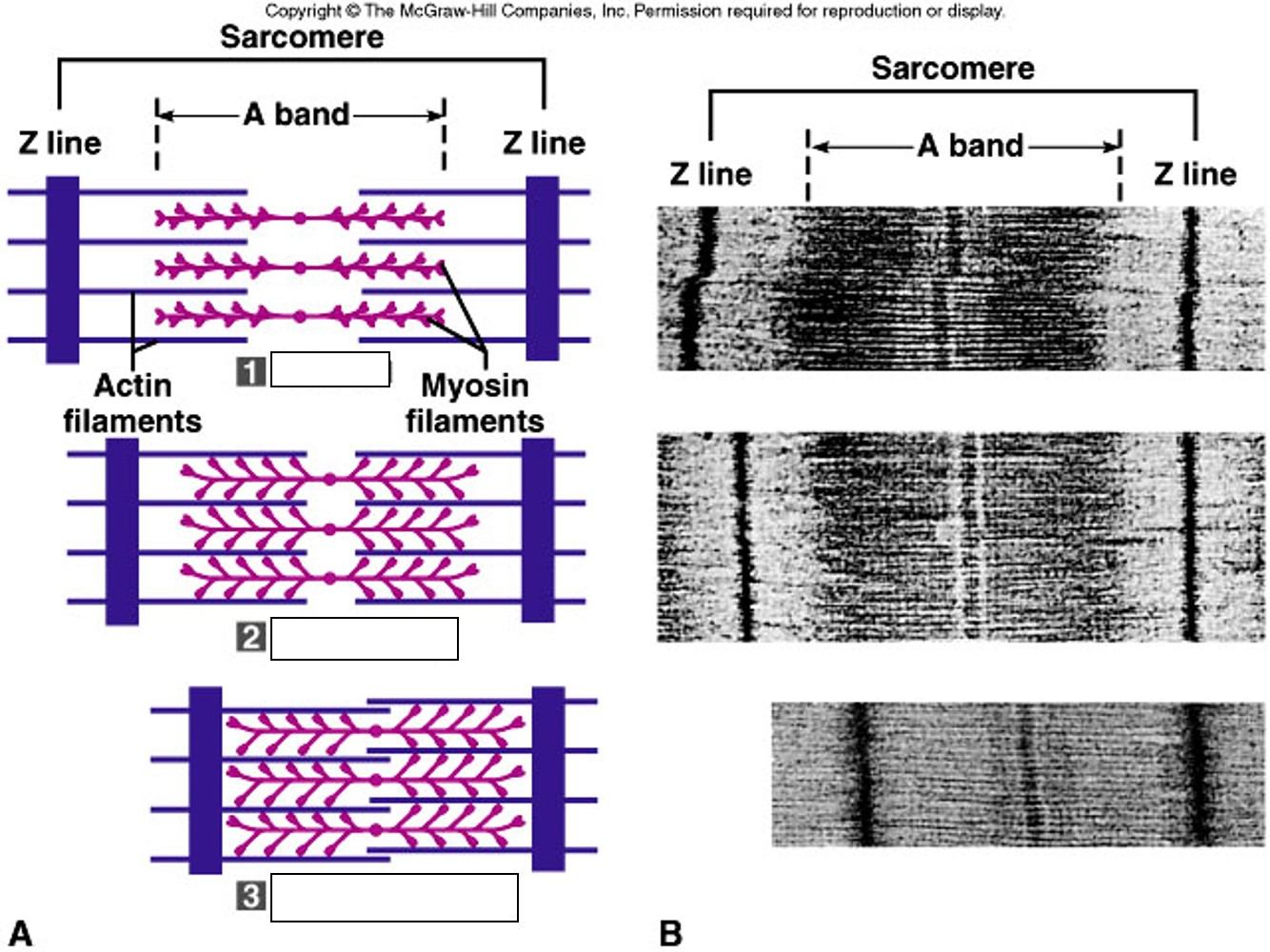
What state is the sarcomere in #1
a)
Relaxed
b)
Contracting
c)
Fully Contracted
d)
None of the above
127.
What two chemicals are necessary for muscle contraction to occur?
a)
Niacin and Potassium
b)
Calcium and ATP
c)
Sodium and Potassium
d)
Ach and Potassium
128.
the thin filament in muscle cells
a)
myosin
b)
actin
c)
myoglobin
d)
hemoglobin
129.
What is required in order to allow the myosin head to bind to the actin binding site?
a)
glucose
b)
glycogen
c)
ATP
d)
the Na+/K+ pump
130.
What is the function of the cardiovascular system 
a)
carries oxygen and nutrients to body
b)
carries waste to excretory system
c)
defense against disease
d)
all of the above
131.
Bicuspid valve is also called __________
a)
tricuspid
b)
mitral
c)
pulmonary
d)
aortic
132.
The flow of blood between the heart and cells of body
a)
Systemic circulation
b)
Pulmonary circulation
c)
Oxygenated blood
d)
Deoxygenated blood
133.

The flow of blood between the heart and the lungs

a)

systemic circulation

b)

oxygenated circulation

c)

Pulmonary circulation

d)

none of the above

134.
________carry blood back to the heart
a)
arteries
b)
capillaries
c)
veins
d)
arterioles
135.
blood vessels that carry blood to the heart; have valves to prevent the backflow of blood
a)
arteries 
b)
veins
c)
capillaries
136.
Identify
a)
Left atrium
b)
Right atrium
c)
Left ventricle
d)
Right ventricle
137.
What is the pressure inside the arteries during contraction called.
a)
systolic
b)
diastolic
138.
A group of disorders that cause a thickening and hardening of the arteries
a)
Heart Disease
b)
Arteriosclerosis
c)
Hypertension
d)
Stroke
139.
A condition in which the pressure of the blood on the walls of the blood vessels stays at a level that is higher than normal
a)
Stroke
b)
Heart Attack
c)
Blood Pressure
d)
Hypertension
140.
Which of the following is a possible long-term side effect of smoking?
a)
Heart Disease
b)
Cancer
c)
Stroke
d)
All of these
141.
Enlarged, twisted, superficial veins, most commonly seen in the lower extremities.
a)
thrombophlebitis
b)
athreosclerosis
c)
arteriosclerosis
d)
varicose veins
142.

Smoking increases the risk of this condition, in which an artery is completely blocked and blood flow is compromised.

a)

myocardial infarction

b)

peripheral artery disease

c)

stroke

d)

congestive heart failure

143.

Arteries are more efficient than veins in blood flow

a)

true

b)

false

144.
Which types of muscle tissue are voluntary
a)
Cardiac Muscle
b)
Smooth Muscle
c)
Skeletal Muscle
d)
Skeletal Muscle and Smooth Muscle
145.
What are the THREE types of Muscles?
a)
cold, hot, and warm
b)
Smooth, Rough, and Skeletal
c)
Skeletal, Smooth, and Cardiac
146.
fingers and toes
a)
phalanges
b)
metacarpals
c)
metatarsals
d)
fibula
147.
My nose is ______________ to my shoulders
a)
inferior
b)
superior
148.
What term means AWAY from the midline of the body?
a)
Medial
b)
Lateral
c)
Contralateral
d)
Ipsilateral
149.
A nucleotide includes...?
a)
pentose sugar
b)
nitrogenous base
c)
phosphate group
d)
all of the above
150.
What does DNA stand for?
a)
Deoxyribonucleic acid
b)
Denitrogenous acid
c)
Deribonucleic acid
d)
Diribonucleic acid
151.
Fingerprint scan, vein recognition, and facial recognition are just a few examples of
a)
biometrics
b)
forensic anthroplogy
c)
bioinformatics
d)
epigenetics
152.
Tissue that is used to transmit messages throughout the body is _____ tissue.
a)
muscle
b)
nervous
c)
connective
d)
adipose
153.
Tissue that is used to transmit messages throughout the body is _____ tissue.
a)
muscle
b)
nervous
c)
connective
d)
adipose