wayground logo

Free Printable Worksheets

Font size

S
M
L
XL
Worksheets

Biology - Second Semester Pre-test

Total questions: 152

Worksheet time: 2hrs 50mins

Name
Class
Date
1.

Which of the following are products of photosynthesis? (Select 2)

a)

glucose

b)

light

c)

water

d)

oxygen

2.

What is the purpose of photosynthesis?

a)

To release energy

b)

To create glucose

c)

To grow

d)

To get oxygen for respiration

3.

Which of these are limiting factors for photosynthesis? Choose 3 answers.

a)

Light intensity

b)

CO2 concentration

c)

Temperature

d)

Light

e)

CO2 low levels

4.
Where do the light reactions happen?
a)
mitochondria membrane
b)
thylakoid membrane
c)
stroma
d)
central vacuole
5.

The Calvin Cycle occurs in the

a)

Thylakoid

b)

Grana

c)

Inner membrane of chloroplast

d)

Stroma

6.

Light reactions occur in the ______________________of the chloroplast

a)

thylakoids

b)

stroma

c)

outer membrane

7.

Light-independent reactions occur in the ______________________of the chloroplast

a)

thylakoids

b)

stroma

c)

outer membrane

8.
__________ is a stack of thylakoids
a)
Granum
b)
Stomata
c)
Stroma
d)
Chloroplast
9.
The formula for glucose is...
a)
C12 H22 O11
b)
NaCl
c)
NaOH
d)
C6 H12 O6
10.
What gas goes into the plant before photosynthesis?
a)
Carbon Dioxide
b)
Carbon Monoxide
c)
Oxygen
d)
Nitrogen
11.
This process releases chemical energy from sugars and other carbon-based molecules to make ATP when oxygen is present.
a)
photosynthesis
b)
light-independent reaction
c)
cellular respiration
d)
light-dependent reaction
12.
Glucose is broken down during which process
a)
Krebs cycle
b)
Calvin cycle
c)
Glycolysis
d)
Photosynthesis
13.
What is the correct equation for cellular respiration?
a)
6O2 + C6H12O6 -> 6CO2 + 6H2O + Energy
b)
6O2 + C6H12O6 + Energy -> 6CO2 + 6H2O
c)
6CO2 + 6H2O -> 6O2 + C6H12O6 + Energy
d)
6CO2 + 6H2O + Energy -> 6O2 + C6H12O6
14.
The energy in ATP is stored 
a)
in the bond between the second and third phosphate
b)
in the bond between the first and second phosphate
c)
in the bond between the adenosine and the first phosphate
d)
I like turtles
15.

Which of the following is a reactant of cellular respiration?

a)

Glucose

b)

Carbon Dioxide

c)

Water

d)

ATP

16.

In which way are photosynthesis and cellular respiration similar?

a)

Both processes destroy energy.

b)

Both create energy.

c)

Photosynthesis breaks down sugar while cellular respiration produces sugar.

d)

Both processes transfer energy from one form to another.

17.

One molecule produced by animals during cellular respiration is

a)

carbon dioxide

b)

glucose

c)

oxygen

d)

chlorophyll

18.
Where does aerobic respiration take place?
a)
Cytoplasm
b)
Mitochondria
c)
Stroma
d)
Thylakoid
19.
Which type of respiration occurs in the presence of oxygen?
a)
Aerobic
b)
Anaerobic
20.
Which phase of mitosis is this?
a)
Prophase
b)
Metaphase
c)
Telophase
d)
Anaphase
21.
Which phase of mitosis is this?
a)
Prophase
b)
Metaphase
c)
Anaphase
d)
Telophase
22.
Which phase of mitosis is this?
a)
Prophase
b)
Metaphase
c)
Anaphase
d)
Telophase
23.
Which phase of mitosis is this?
a)
Prophase
b)
Anaphase
c)
Metaphase
d)
Telophase
24.
Which step in the cell cycle is this?
a)
Interphase
b)
G1
c)
Cytokinesis
d)
DNA synthesis
25.
Which is the shortest phase in mitosis?
a)
interphase
b)
prophase
c)
anaphase
d)
G1
26.
What is the result of mitosis?
a)
two identical cells
b)
two identical nuclei
c)
two identical mitochondria
d)
two identical cytoplasms
27.
Why do cells copy their DNA before mitosis occurs?
a)
so the two new cells have identical DNA
b)
so one cell can have two copies of each DNA
c)
so each new DNA has a chromosome to be part of
d)
in case some of them die
28.
What is the result of mitosis and cytokinesis
a)
two identical cells
b)
two identical chromosomes
c)
two identical nuclei
d)
two identical mitochondria
29.
The part labeled 2 is the
a)
centromere
b)
sister chromatid
c)
long arm 
d)
chromosome
30.
Why are stem cells important?
a)
they have specialized DNA.
b)
they are incapable of becoming cancer cells
c)
they have the potential to undergo cell division
d)
they have the potential to develop into other cell types
31.

During normal mitotic cell division, a parent cell that has four chromosomes will produce two daughter cells, each containing

a)

Two chromosomes.

b)

Four chromosomes.

c)

Eight chromosomes.

d)

Sixteen chromosomes.

32.
Fruit fly body cells have 8 chromosomes. After mitosis, you would expect a resulting fruit fly daughter cell to have ...
a)
16 chromosomes.
b)
46 chromosomes.
c)
8 chromosomes.
d)
4 chromosomes.
33.
Which of these lists presents the stages of the cell cycle in the correct order?
a)
interphase, mitosis, cytokinesis
b)
cytokinesis, mitosis, interphase
c)
mitosis, interphase, cytokinesis
d)
interphase, cytokinesis, mitosis
34.
The process by which the nuclear material is divided equally between two new cells
a)
mitosis
b)
cancer
c)
spindle
d)
centromere
35.
The stages of mitosis in order
a)
Metaphase, Anaphase, Prophase, Telophase
b)
Prophase, Anaphase, Metaphase, Telophase
c)
Prophase, Metaphase, Anaphase, Telophase
d)
Anaphase, Prophase, Telophase, Metaphase
36.

which is heterozygous ?

a)

Tt

b)

TT

37.

Which is homozygous ?

a)

Zz

b)

SS

38.

the genetic makeup of an organism

a)

heterozygous

b)

punnet square

c)

genotype

39.

Genotype refers to the ...

a)

physical expression of the genes

b)

the possible combination of alleles in a gene

c)

whether an allele is dominant or recessive

d)

how an organism will appear

40.

An offspring will receive how many alleles from each parent to determine a specific trait?

a)

one

b)

two

c)

three

d)

five

41.

What is a phenotype

a)

The genetic make up (code)

b)

The physical trait

42.

G = green, g = yellow

This gene shows complete dominance. The genotype for a yellow plant is...

a)

GG

b)

Gg

c)

gg

d)

all of the choices result in yellow

43.

An allele whose trait only shows up when no dominant allele is present.

a)

hidden allele

b)

dominant allele

c)

recessive allele

d)

present allele

44.
B=brown eyes
b= blue eyes
What is true about two brothers that have brown eyes?
One has genotype BB the other Bb.
a)
they have same phenotype and genotype
b)
they have different genotypes and phenotypes
c)
they have same phenotype but different genotypes
d)
they have same genotype but different phenotypes
45.
What does heterozygous mean?
a)
An organism that has the same genes for a trait (TT or tt)
b)
An organism that has different genes for a trait (Tt)
c)
When neither gene is fully dominant; offspring is a mixture of both
d)
the different forms of a trait (hair color--> brown, blonde, red
46.
A heterozygous yellow pea plant's genotype would be:
a)
YY
b)
yy
c)
Yy
d)
Yg
47.
Who is called the "Father of Genetics"?
a)
Walter Sutton
b)
Albert Einstein
c)
Gregor Mendel
d)
Charles Darwin
48.
The different forms of genes are known as
a)
environment
b)
probability
c)
traits
d)
alleles
49.

G = dominant green and g = recessive yellow

A fish has a Gg genotype, what will its phenotype be?

a)

yellow

b)

green

c)

greenish-yellow

d)

red

50.
Dominant alleles are represented by a:
a)
Male gene
b)
lowercase letter
c)
recessive trait
d)
capital letter
51.
Why are your chromosomes arranged in pairs?
a)
Scientists have no idea
b)
Because you get one from your mom and one from your dad
c)
Because pairs can divide easier
d)
Because DNA is awesome
52.
What kind of cells are made in MEIOSIS?
a)
Haploid Gametes
b)
Diploid Somatic Cells
c)
Skin Cells
d)
Liver Cells
53.
If red flowers (R) are dominant over white, what is the probability that the offspring will be red? 
a)
1 out of 4
b)
2 out of 4
c)
3 out of 4
d)
4 out of 4
54.
When two or more alleles for a trait exist in a population.  Ex: Different hair colors
a)
Polyploidy
b)
Multiple Genes
c)
Multiple Alleles
d)
Polysaccharide
55.
Mark is heterozygous. If B is for brown hair, and b is for blonde hair, what is Mark's phenotype?
a)
Brown Hair
b)
Blonde Hair
c)
Brown and Blonde Hair
d)
Black Hair
56.
A nucleotide consists of...
a)
A nitrogen base
b)
A nitrogen base and a sugar
c)
A nitrogen base, sugar, and phosphate
d)
Two nitrogen bases, a sugar, and phosphate
57.
The "rungs" of the DNA ladder are made of...
a)
Phosphates and Bases
b)
Sugars
c)
Sugars and Phosphate
d)
Bases
58.
A DNA Strand has the following bases...A A G C C A...What are the bases on its complimentary strand?
a)
A A G C C A
b)
A C C G A A 
c)
T T C G G T
d)
C C A T T A
59.
DNA replication results in...
a)
2 completely new DNA molecules
b)
2 DNA molecules that each contain a strand of the original
c)
1 new molecule of RNA
d)
1 new DNA, 1 old molecule is conserved
60.
A stretch of chromosome that codes for a trait can be called a...
a)
Chromatid
b)
Replication FOrk
c)
Gene
d)
Base-pair
61.
The base pair rules state that...
a)
A pairs with T, G pairs with C
b)
DNA is a double helix held together by hydrogen bonds
c)
Replication is seiconservative
d)
A pairs with G, T pairs with C
62.
What is the long name for DNA?
a)
Deoxynucleic Acid
b)
Denatured Nucleic Acid
c)
Deoxyribonucleic Acid
d)
Deoxyribonuclear Acid
63.
The process by which DNA makes a copy of itself.
a)
Replication
b)
Synthesis
c)
Transcription
d)
Translation
64.
The DNA molecule is held together by:
a)
Magnetism
b)
Glucose
c)
Glue
d)
Hydrogen Bonds
65.
The twisted ladder shape of DNA is called a...
a)
Hydrogen Twist
b)
Deoxyribose Flip
c)
Double Helix
d)
Double Membrane
66.
The two men who established the structure of DNA were...
a)
Hershey and Chase
b)
Berkley and Fry
c)
Watson and Crick
d)
Schleiden and Schwann
67.
Which 2 molecules form the sides (backbone) of the DNA ladder?
a)
deoxyribose sugar and adenine
b)
deoxyribose sugar and a hydrogen bond
c)
deoxyribose sugar and the nucleus
d)
deoxyribose sugar and phosphate
68.
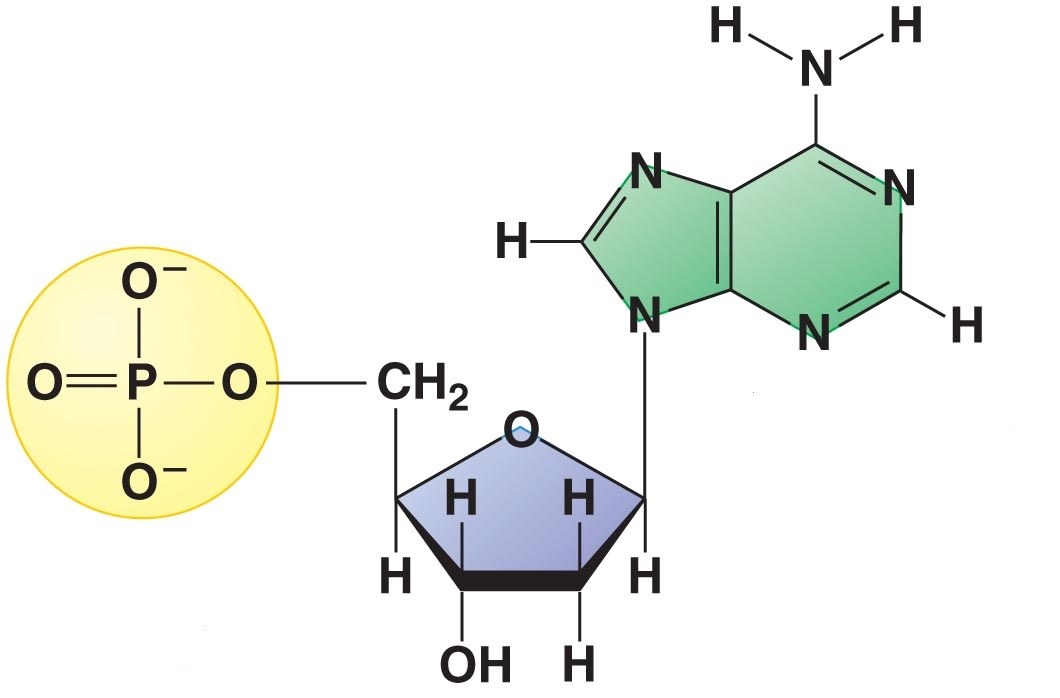
Name this structure
a)
double helix
b)
nucelotide
c)
twisted ladder
d)
hydrogen bond
69.
Which of the following is not a nitrogen base found in DNA?
a)
Thymine
b)
Uracil 
c)
Guanine
d)
Adenine
70.

According to Chargaff's rule, Cytosine always pair with

a)

Adenine

b)

Uracil

c)

Thymine

d)

Guanine

71.

What are the 4 nitrogen bases?

a)

adenine, thymine, cytoplasm, and guanine

b)

adenine, thymine cytosine, and guanine

c)

adenine, thymine, cytosine, and gylcerol

d)

adenine, thymine, cytosine, and glucose

72.

Which enzyme is responsible for adding nucleotides?

a)

Topoisomerase

b)

DNA Polymerase

c)

Ligase

d)

Primase

73.

Which sequence of DNA bases would pair with this partial strand

CAT TCA CTG

a)

ATG TGA CAG

b)

TAC ACT GTC

c)

GTA AGT GAC

d)

CAT TCA CTG

74.
Which sequence of DNA bases would pair with this partial strand
CAT TCA CTG
a)
ATG TGA CAG
b)
TAC ACT GTC
c)
GTA AGT GAC
d)
CAT TCA CTG
75.

Which is the first step?

a)

DNA Helicase unwinds original DNA strand

b)

RNA Primase lays down RNA primer for new nucleotide bases.

c)

DNA polymerase builds new strands by bring in new nucleotide bases.

d)

Ligase knits together fragments on lagging strand

76.
Which enzyme has the job of unzipping the double helix?
a)
Helicase
b)
Polymerase
c)
Ligase
d)
Primerase
77.

The picture below shows the steps of DNA replication beginning with step one and ending with step three.


​Because you are reusing the old, or parent, DNA strand DNA replication is said to be

a)

Semi- Conservative

b)

Semi-discontinuous

c)

Continuous

d)

Fully-Conserveative

78.

The picture below shows an enzyme unwinding and unzipping DNA.

​What is the name of this enzyme?

a)

DNA Helicase

b)

DNA Ligase

c)

DNA polyermase

d)

RNA Polymerase

79.
Which of the following best describes a DNA molecule?
a)
double helix
b)
contains ribose
c)
made of amino acids
d)
contains Uracil
80.
Unlike DNA, RNA contains
a)
adenine
b)
uracil
c)
phosphate groups
d)
thymine
81.
mRNA is made in the process called....
a)
mitosis
b)
replication
c)
translation
d)
transcription
82.
Which type of RNA brings the information in the genetic code from the nucleus to other parts of the cell?
a)
rRNA
b)
tRNA
c)
mRNA
d)
RNA polymerase
83.
From which molecules are mRNA molecules transcribed?
a)
tRNA
b)
rRNA
c)
DNA
d)
proteins
84.
What happens during translation?
a)
Messenger RNA is made from a DNA code.
b)
The cell uses a messenger RNA code to make proteins
c)
Transfer RNA is made from a messenger RNA code.
d)
Copies of DNA molecules are made.
85.
Which is the correct sequence of the transfer of information in most organisms?
a)
protein to DNA to RNA
b)
RNA to DNA to protein
c)
DNA to RNA to protein
d)
RNA to protein to DNA
86.
The genetic code is always read
a)
3 bases at a time in the same direction.
b)
4 bases at a time in the same direction.
c)
3 bases at a time and the direction varies.
d)
4 bases at a time and the direction varies.
87.
In RNA,    is the sugar in the nucleotide.
a)
ribose
b)
RNA polymerase
c)
stop codon
d)
lactose
88.
What is molecule B in Figure 13–1?
a)
mRNA
b)
tRNA
c)
rRNA
89.
RNA contains which bases?
a)
adenine, guanine, uracil, cytosine
b)
thymine, guanine, cytosine, uracil
c)
thymine, uracil, cytosine, guanines
d)
adenine, uracil, guanine, thymine
90.

The process by which the cell uses information from mRNA to produce proteins.

a)

translation

b)

transcription

c)

replication

d)

association

91.

In RNA, which nucleotide base pairs with adenine?

a)

thymine

b)

guanine

c)

uracil

d)

cytosine

92.

Which cell organelle is the cite of protein synthesis?

a)

ribosome

b)

nucleus

c)

mitochondria

d)

endoplasmic reticulum

93.

Which between these two best explains why the DNA CANNOT travel outside of the nucleus?

a)

It is not permitted by the nuclear membrane.

b)

It is too large to travel outside.

94.

Which of the following organelles reads or translates the code from mRNA?

a)

ribosome

b)

mitochondria

c)

cytoplasm

d)

nucleues

95.

The portion or segment of the DNA strand that codes for a particular protein is called a _____________________.

a)

gene

b)

chromosome

c)

codon

d)

anticodon

96.

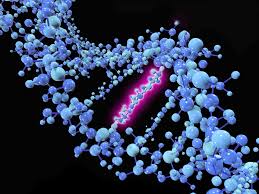
Which statement best defines a mutation?

a)

a physical trait that negatively impacts the organism

b)

an adaptive trait that allows the individual to be better fit for survival

c)

a change in the order, number, or type of bases in the genetic code

d)

an identical copy of the original DNA strand
97.

Mutations are always bad/harmful.

a)

True

b)

False

98.

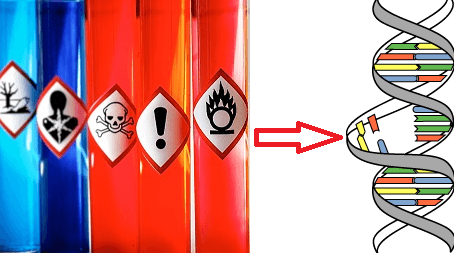
Possible negative consequences of mutations could be genetic ____________________ and cancer.

a)

diversity

b)

disorders

c)

dominance

d)

duplication

99.

Chemical or physical agents in the environment that may cause mutations are called:

a)

mutants

b)

mutagens

c)

chromosomal mutations

d)

missense mutations

100.

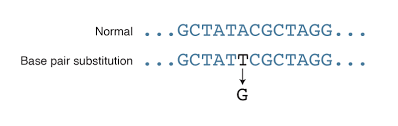
Mutations that change a single base pair, usually involving a substitution of one base for another:

a)

chromosomal mutation

b)

polyploidy

c)

translocation

d)

point mutation

101.

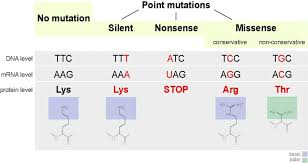
If a point mutation does not change the order of the amino acid sequence, this is called a:

a)

nonsense mutation

b)

silent mutation

c)

missense mutation

d)

frameshift mutation

102.

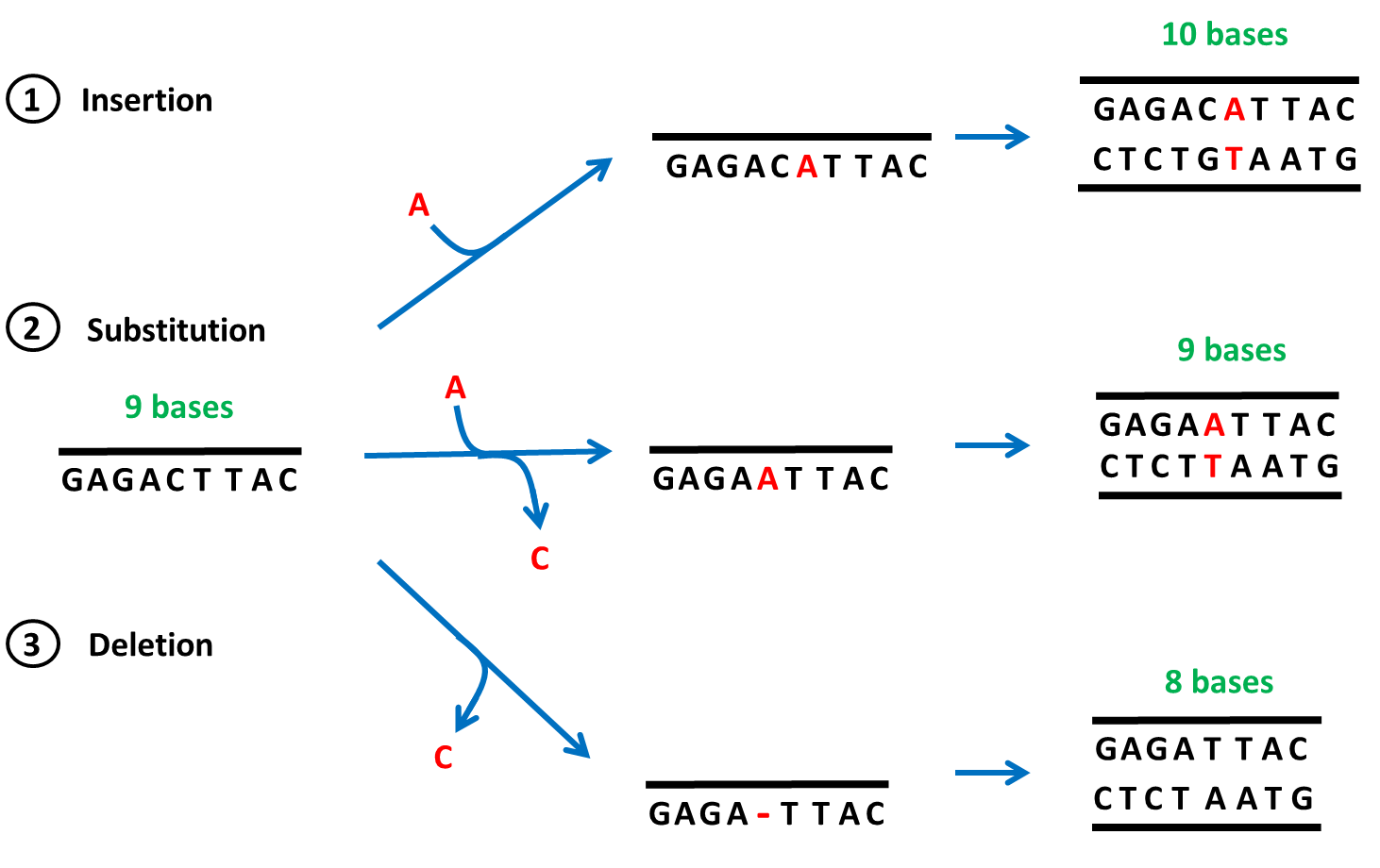
Insertions and deletions are also known as:

a)

frameshift mutations

b)

chromosomal mutations

c)

silent mutations

d)

polyploidy

103.

If UCU is changed to UCC, this is a _______________________________.

a)

silent mutation

b)

missense mutation

c)

nonsense mutation

d)

frameshift mutation

104.

Which of the following mutations would be the most likely to affect the resulting protein?

a)

substitution

b)

silent mutation

c)

frameshift mutation

d)

all mutations affect the resulting protein
105.

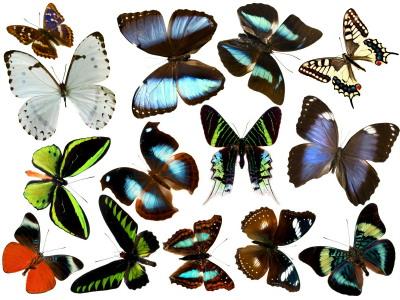
Mutations can be beneficial because they increase genetic _____________________ and can make the individual and species more likely to survive.

a)

diseases

b)

complications

c)

disorders

d)

diversity

106.
What is an autosome?
a)
automobile built for one person
b)
chromosome that does not determine gender
c)
chromosome that does determine gender
d)
a plant because they do photosynthesis
107.
Which of these statements is true?
a)
Humans have the highest number of chromosomes among mammals.
b)
All mammals have the same number of chromosomes.
c)
Different species have a different number of chromosomes.
d)
More than one choice is true.
108.
Looking at the karyotype, is this person male or female, and how do you know?
a)
There is no way to tell from a karyotype.
b)
Male - has two X's
c)
female - has two X's
d)
Male - has an X and Y
109.
Looking at this karyotype, what atypical chromosome grouping do you observe?
a)
This is a male without a y chromosome.
b)
This is a female without a second X chromosome.
c)
Nothing atypical
110.
Looking at this karyotype, what atypical chromosome grouping do you observe?
a)
lack of a y chromosome
b)
trisomy 13 (3 copies of 13)
c)
just a typical girl
d)
just a typical boy
111.
How is colorblindness inherited and what would be a colorblind male's genotype?
a)
x-linked recessive; Xhy
b)
autosomal recessive; hh
c)
autosomal dominant; HH or Hh
d)
x-linked dominant; XHy
112.
How is sickle cell disorder inherited, and what would a be a genotype for a female with sickle cell?
a)
x-linked recessive; XaXa
b)
x-linked dominant; XAXA or XAXa
c)
autosomal dominant AA or Aa
d)
Autosomal recessive aa
113.
How is Huntington's disorder inherited, and what would be a genotype for a female with it?
a)
X-linked dominant; XHXH or XHXh
b)
X-linked recessive; XhXh
c)
autosomal dominant; HH or Hh
d)
autosomal recessive hh
114.

A chart that shows the presence or absence of a trait according to the relationships between parents, siblings, and offspring.

a)

Karyotype

b)

Genome

c)

Barr body

d)

Pedigree

115.

is the full set of genetic information that an organism carries in its DNA.

a)

Karyotype

b)

Genome

c)

Barr body

d)

Pedigree

116.

a photograph that shows the complete diploid set of chromosomes grouped together in pairs, arranged in order of decreasing size.

a)

Karyotype

b)

Genome

c)

Barr body

d)

Pedigree

117.

Trisomy 21; three copies of chromosome 21 instead of 2

a)

Down Syndrome

b)

Klinefelter's syndrome

c)

Turner's syndrome

d)

Sickle cell disease

118.

Caused by a mutation that affects hemoglobin, the oxygen-carrying protein in red blood cells.

a)

Down Syndrome

b)

Klinefelter's syndrome

c)

Turner's syndrome

d)

Sickle cell disease

119.
Structures with the same parts have different functions; suggests that organisms share a common ancestry
a)
vestigial structures
b)
homologous structures
c)
adaptive radiation
d)
fossil
120.
If an organism has a vestigial structure, that structure likely once had a function in a(n)
a)
close relative
b)
early ancestor
c)
unrelated organism
d)
embryological stage
121.
Some organisms that share a common ancestor have features that have different functions, but similar structures.  These are known as
a)
vestigial structures
b)
analogous structures
c)
homologous structures
d)
fossil structures
122.
Study of embryos of various organisms to show a common ancestor because of similarities in development
a)
natural selection
b)
embryology
c)
speciation
d)
evolution
123.
Which of the following is an example of a vestigial structure?
a)
the wings of a red-tailed hawk
b)
the hind limbs of a house cat
c)
the fins of sharks
d)
the tailbone of a human
124.
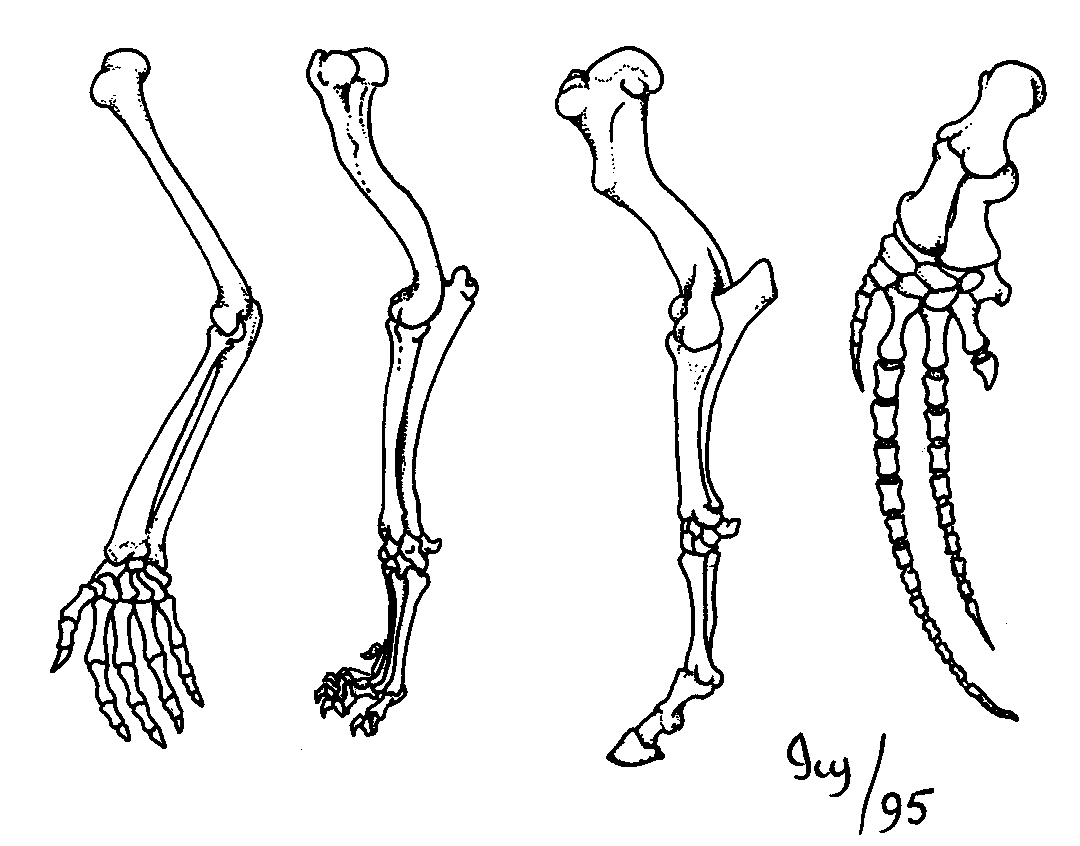
What type of structures are these?
a)
homologous
b)
vestigial 
c)
analogous
d)
fossil
125.
Two organisms that are closely related would have
a)
very similar DNA sequence
b)
exactly the same DNA sequences
c)
no proteins in common
d)
completely different DNA sequence
126.
The diagram shows fossils in different rock layers. Which of these statements about the age of these fossils is most likely correct?
a)
Fossil A and C are the same age
b)
Fossil B is older than fossil C
c)
Fossils A is older than fossil B
d)
Fossil D is older than fossil C
127.
Which best describes these fossils?
a)
The oldest fossils can be found on the lower layers
b)
The oldest fossils can be found at the top layers
c)
The youngest fossils are always found on the bottom layers
d)
You can not tell the age of any of these fossils
128.
How would you describe this evolution?
a)
Homologous structure
b)
Analogous structure
c)
Structural adaption
d)
Functional adaption
129.
When scientists compare animals currently living on different continents, they often find those with similar characteristics, who are not actually close relatives, living in similar environmental conditions even though they are geographically very distant. One example is the Anteater/Armadillos of the Americas and the Pangolin of Africa. What can we deduce from this evidence?
a)
Living things can adapt similarly to similar environments over time.
b)
Living things do not change over time
c)
They must all have the same recent common ancestor
d)
I don’t know
130.
Which three animals are most distantly related?
a)
The elephant, Manatee, and Yellow Frog
b)
The Yellow Frog, Salamander, and Bird
c)
The Lungfish, Crocodile, and Bird
d)
The Elephant, Lungfish, and Crocodile
131.
The founder of modern evolution theory is considered to be _____.
a)
Charles Darwin
b)
Gregor Mendel
c)
Charles Lyell
d)
Alec Jefferies
132.

Which of the following would an animal breeder use to increase the number of cows that give the most milk?

a)

overproduction

b)

genetic isolation

c)

acquired characteristics

d)

artificial selection

133.

An inherited characteristic that increases an organism's ability to survive and reproduce in its specific environment is called a(n)

a)

vestigial structure

b)

speciation

c)

analogous structure

d)

adaptation

134.

How well an organism survives and reproduces in its environment is described as

a)

common descent

b)

descent with modification

c)

fitness

d)

tolerance

135.

Which of the following is the correct way to summarize natural selection?

a)

overproduction, competition, variations, fitness, survive and reproduce

b)

overproduction, variations, competition, fitness, survive and reproduce

c)

competition, fitness, survive and reproduce

d)

variations, competition, fitness, survive and reproduce

136.

Structures that have different mature forms but develop from the same embryonic tissue are called

a)

analogous

b)

homologous

c)

adaptations

d)

vestigial

137.

What series of islands off the coast of South America did Darwin spend considerable amount of time and greatly influence Darwin's work.

a)

Hawaiian Islands

b)

Galapagos Islands

138.

Which can be used as evidence for evolution (change over time)?

a)

Fossils

b)

Homologous Structures

c)

Embryo Similarities

d)

Biochemical Analysis

e)

All are examples of evidence of evolution

139.

What is the result of "Survival of the Fittest"?

a)

Evolution (populations change over time)

b)

Genetic Equilibrium (populations remain unchanged over time)

140.

Wrote "Principles of Geology". Geologic events that occurred in the past will continue to occur in the future.

a)

Malthus

b)

Hutton

c)

Lyell

d)

Lamarck

e)

Wallace

141.

Stated earth is millions of years old.

a)

Malthus

b)

Hutton

c)

Lyell

d)

Lamarck

e)

Wallace

142.

The female peahen continues to choose the male peacock with the brightest, most beautiful feathers. This is an example of?

a)

Natural Selection

b)

Artificial Selection

143.

Wrote the book "On the Origin of Species"

a)

Charles Lyell

b)

Charles Darwin

144.

Change over time?

a)

Evolution

b)

Homeostasis

145.

Mimicry is

a)

Long Time evolutionary events

b)

Short time evolutionary events

c)

Mistakes in the genetic code

d)

When an organism looks very similar win physical resemblance to other objects

146.

Natural selection is the process that passes down ____________________ traits.

a)

Same

b)

Old

c)

Useless

d)

Favorable

147.

The process in which an animal cannot reproduce any more and dies out is known as _________________________.

a)

Speciation

b)

Extinction

c)

Evolution

d)

Natural Selection

148.
Which of the following is an example of the founder effect?
a)
Bald Eagles are hunted until near extinction, population recovers.
b)
Small group of iguanas floats to an island, starts a new population.
c)
Red fox pups are more likely to survive in a snowy environment if they are born white.
d)
Farmer chooses seeds from largest apples to plant next year.  This results in larger apples from year to year.
149.
A few deer wander out of their native woods into a completely new park where no deer had ever been before. They go on to create an entirely new population.
a)
Genetic Drift
b)
Natural Selection
c)
Non-random mating
d)
Mutation
150.
7 Wild Mustangs were taken from the prairies of Iowa after a Texan Rancher purchased them and provided them with their own pasture. Those 7 Mustangs eventually became 122.
a)
Genetic Drift (small popultaion)
b)
Non-random mating
c)
Gene flow
d)
Mutations
151.
Which of the following is an example of the bottle neck effect?
a)
Bald Eagles are hunted until near extinction, population recovers.
b)
Small group of iguanas floats to an island, starts a new population.
c)
Red fox pups are more likely to survive in a snowy environment if they are born white.
d)
Farmer chooses seeds from largest apples to plant next year.  This results in larger apples from year to year.
152.
Which of the following is an example of the founder effect?
a)
Bald Eagles are hunted until near extinction, population recovers.
b)
Small group of iguanas floats to an island, starts a new population.
c)
Red fox pups are more likely to survive in a snowy environment if they are born white.
d)
Farmer chooses seeds from largest apples to plant next year.  This results in larger apples from year to year.