
 Worksheets
Chemistry in Living Systems Review
Total questions: 148
Worksheet time: 5hrs 56mins
What is a subatomic particle with a positive charge that is in the nucleus of an atom?
neutron
proton
electron
valence electron
What is a subatomic particle without an electric charge, located in the nucleus of an atom?
neutron
proton
electron
valence electron
What is a subatomic particle with a negative charge? It is found in the electron cloud surrounding the nucleus.
neutron
proton
electron
electron cloud
What is the center of an atom containing protons and neutrons?
nucleus
neutron
proton
electron cloud
What is the number of protons in the nucleus of an atom that determines the chemical properties of an atom?
mass number
atomic mass
atomic number
atomic symbol
What is the combined mass of all the protons and neutrons of an atom and is approximately equal to the number of protons and neutrons?
atomic mass
atomic number
subatomic particles
nucleus weight
What is material that has mass and takes up space?
volume
mass
matter
density
What mass does a neutron have?
1 amu
0 amu
-1 amu
+2 amu
The mass number of an element that has 18 protons, 18 electrons, and 19 neutrons is _____.
12.5
13
25
37
If an atom has 7 protons and 7 electrons, its electric charge is ---
-7
-14
0
+7

Atoms gain lose, gain, or ______electrons to get a stable outer energy level.
share
split
create
destroy

A _______ is the force that holds atoms together in a compound.
Chemical Formula
Chemical Reaction
Chemical Bond
Synthesis Reaction

An atom with a different number of electrons than it should have (more or less) is called an ---
isotope
valence electron
ion
octet
Which of the following describes covalent bonds?
Bonds form because of opposite charges
electrons are shared to fill outer electron shells
Electrons are transferred between atoms
Covalent bonds are magical
Which statement best describes the relationship between atoms & molecules.
molecules are made of atoms that are chemically bonded together.
atoms are made of molecules that are chemically bonded together.
molecules are made of a mixture of atoms and compounds.
atoms are made of protons, neutrons & electrons.

Molecules can ONLY be made of one type of atom - True or False?
True
False

The building blocks of all matter are...
atoms
molecules

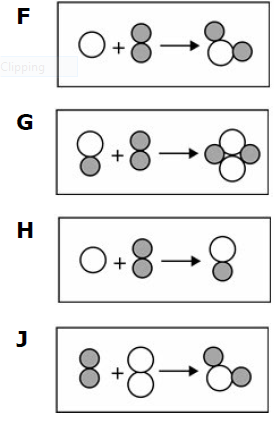
Based on the picture shown, what can you conclude about water and hydrogen peroxide?
Since water and hydrogen peroxide are both made of oxygen and hydrogen atoms, they have the same properties.
Water and hydrogen peroxide have a different number of oxygen atoms, which means they are different substances and may have different properties.

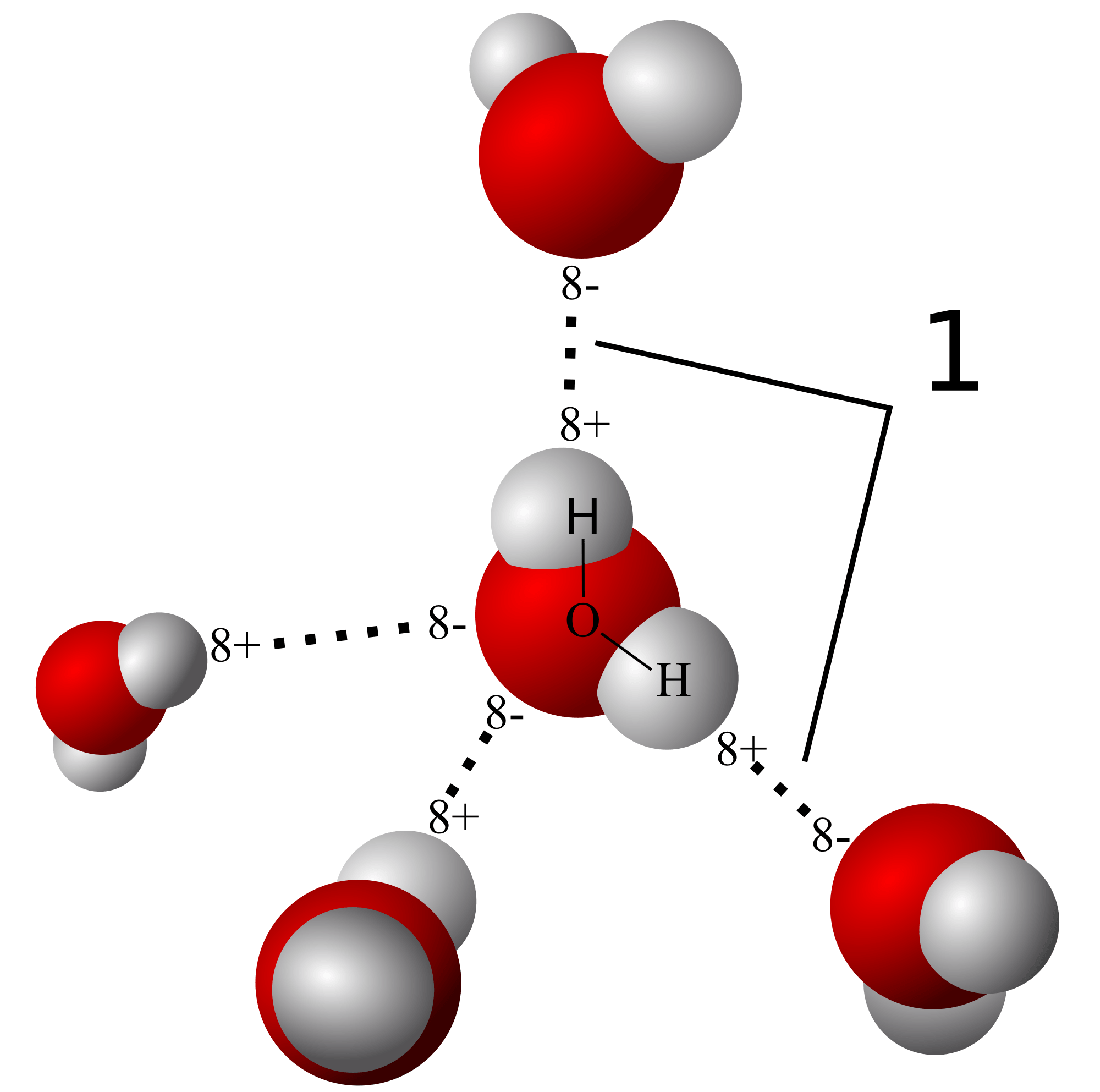
The bond that holds the Oxygen and Hydrogen atoms together in a water molecule is a ________ bond.
ionic
Hydrogen
Covalent
Weak

Water is a polar molecule, which means it has a positive and a negative side. Hydrogen bonds form when:
The positive end of one water molecule bonds to the positive end of another water molecule.
The negative end of one water molecule bonds to the negative end of another water molecule.
The positive end of one water molecule bonds to the negative end of another water molecule.

The ability of water molecules to stick to each other, creating surface tension is called:
Cohesion
Adhesion
Insulation
Ph

When salt is dissolved in water, water is the
solvent
solute
solution
reactant

A substance with a pH of 6 is called a....
Base
Acid

Oil and water don't mix because oil is
hydrophilic
hydrophobic
an emulsifier
a buffer

Water in a cup will help prevent the cup from burning up over a flame due to this property of water
high specific heat
capillary action
surface tension
greatest density at 4 oC
H2O
Which are the reactants in the following reaction?
2Mg + O2 ---> 2MgO
Mg and O2
MgO
Mg and MgO
O2 and MgO

In the equation shown, what are the reactant(s)?
N2 + H2
NH3
In the equation shown, what are the product(s)?
N2 + H2
NH3

Is this equation balanced?
Yes
No

Is this equation balanced?
Yes
No

Are the products or reactants of this reaction storing more energy in their chemical bonds?
Both storing the same
No way to tell
Products
Reactants
What type of reaction is this?
Exothermic
Endothermic
Energy Producing
No way to tell
In an endothermic reaction, energy is _________.
absorbed
released
_____ reactions usually feel hot!
endothermic
exothermic
____ reactions usually feel cold.
endothermic
exothermic

The graph above is from which type of reaction?
Endothermic reaction
Exothermic Reaction

The graph above is from which type of reaction?
Endothermic reaction
Exothermic reaction
The minimum amount of energy needed for colliding particles to react is called the
Chemical Energy
Kinetic Energy
Activation Energy
Potential Energy
What is the name given to a catalyst in the human body?
Biology
Catalyst
Chemical
Enzyme

Which of the reaction pathway shows the catalysed reaction?
1
2
When a catalyst is added to a reaction the rate of reaction,,,
Increases
Decreases
Does not change
A catalyst be regenerated or used again and again
False
True

How many bonds will a C atom form?
1
2
3
4

What type of compounds have at least 1C atom bonded to at least 1H atom?
inorganic
organic
ionic

6 Carbon atoms can form many different compounds.
TRUE
FALSE


Building block of ...
nucleic acids
proteins
lipids
polysaccharides
waxes
A chain of repeating units (called monomers)
monomer
dimer
replicate
polymer
Define polymer
circular molecule made with many repeating units
short molecule made of a few repeating units
long, chain-like molecule made of repeating units
chain-like molecule that contains hydrogen and oxygen
What kind of chemical bonds create polymers?
ionic
covalent
hydrogen
metallic
Which of the following does NOT belong to the classification of lipids?
a. hemoglobin
b. phospholipids
c. steroid
d. triglyceride
Proteins are composed of four elements, namely: carbon, hydrogen, oxygen and what other element?
a. magnesium
b. nitrogen
c. phosphorous
d. sulfur
Which is not a part of a nucleotide?
a. nitrogenous base
b. phosphate group
c. ribonucleic acid
d. sugar

1.) They act like gatekeepers, only let certain things in.
2.) Enzyme receptors embedded in the membrane.
when some molecules can cross the membrane while others cannot.
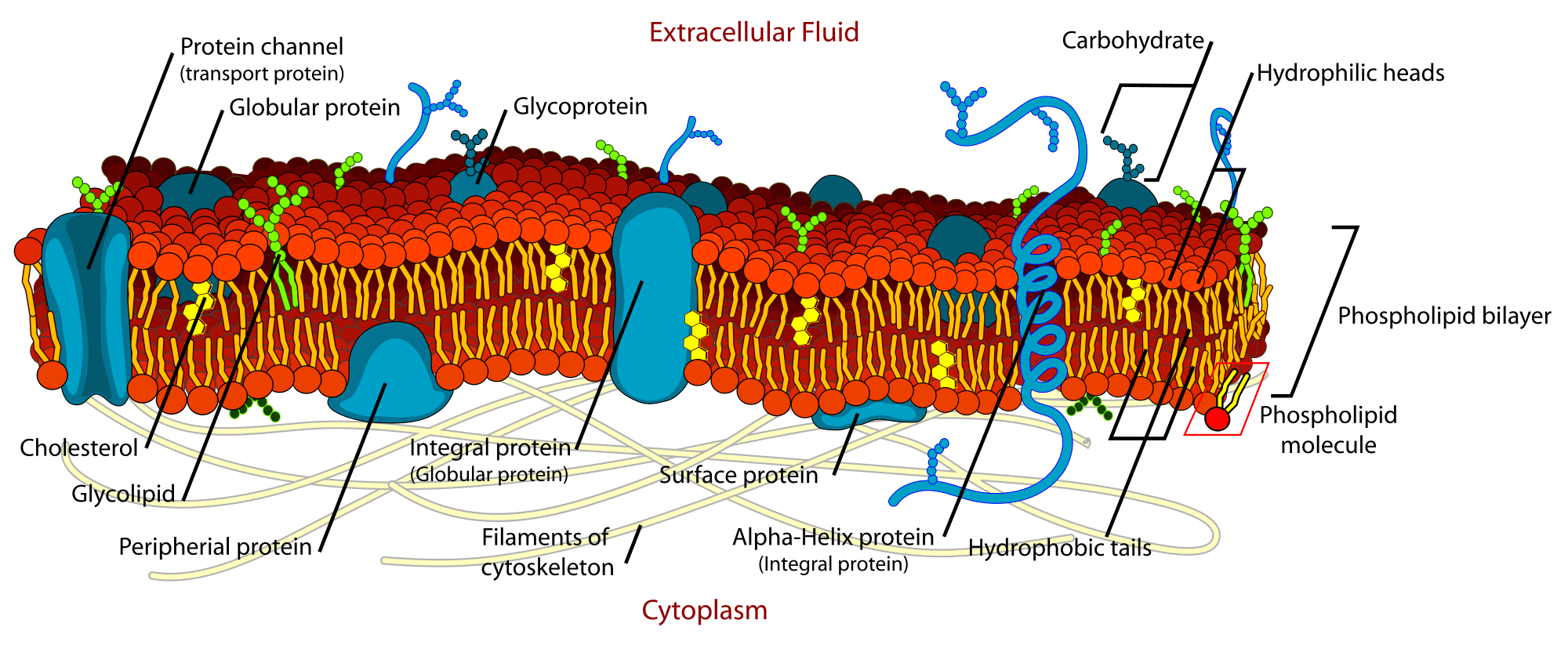


When the number of water molecules outside of the cell is greater than inside the cell, which will most likely occur?
Molecules of water will NOT MOVE either way.
Molecules of water will move OUT of the cell.
Molecules of water will move INTO the cell.
Molecules of water will EVAPORATE.
Cell membranes are described as selectively permeable.
Four students were asked to explain what this means. Which one is correct?
Student 1: Cell membranes prevent all materials from entering the cell.
Student 2: Cell membranes only provide structural support for the cell.
Student 3: Cell membranes regulate which substances can enter and exit the cell.
Student 4: Cell membranes allow water and water-soluble substances to enter the cell.
The processes of diffusion AND active transport are both used to...
break down molecules to release energy
move molecules into or out of cells of the body
bring molecules into cells ONLY when they are more concentrated outside of the cell
move molecules ONLY against a concentration gradient, using ATP molecules

Passive Transport means
Energy is used
No energy is used
Energy is created
Which is not a form of passive transport?
Osmosis
Facilitated diffusion
Active transport
Diffusion
Passive transport moves molecules from...
low concentration to high concentration
high concentration to low concentration
Which type of Passive transport uses the help of a transport protein?
Osmosis
Facilitated diffusion
Simple diffusion
Active transport is the movement of large materials across a cell membrane from ______ to ______ concentration
high to low
low to high
high to high
low to low
Active transport across a cell membrane from low to high concentration, requires
energy (ATP)
no energy
water
oxygen
Large particles (or large quantities of smaller particles) are moved across the cell membrane with the use of energy.
pump transport
osmosis
bulk transport
CO2 + O2 Transport
A general term for the various types of active transport that move particles into a cell by enclosing them in a vesicle made out of plasma membrane.
Endocytosis
Exocytosis
Osmosis
Diffusion
A form of bulk transport in which materials are transported from the inside to the outside of the cell in membrane-bound vesicles that fuse with the plasma membrane.
Endocytosis
Exocytosis
Osmosis
Diffusion
white blood cells engulfing invading bacteria is an example of
Endocytosis
Exocytosis
Diffusion
Facilitated Diffusion
nerve cells release neurotransmitters across gaps
and secretion of proteins and wastes
Exocytosis
Endocytosis
Diffusion
Facilitated Diffusion
small compartment enclosed by a membrane formed during transport of material during endo + exocytosis
vesicles
large vacuole
mitochondria
lysosome
Active transport is movement of particles through the cell membrane from a region of ...1... to a region of ...2... using energy in the form of ...3...
1: lower concentration, 2: higher concentration, 3: NADPH
1: higher concentration, 2: lower concentration, 3: NADPH
1: higher concentration, 2: lower concentration, 3: ATP
1: lower concentration, 2: higher concentration, 3: ATP


What might happen if a cell did not have any ATP/energy?
It would not have enough energy to do active transport
It's cell membrane would break
The transport proteins would not be needed.

