
 Worksheets
Exam 1 Review Exam 1 BIO1306
Total questions: 151
Worksheet time: 1hrs 18mins
What is Biology?
The study of non-living things
The science that studies life
The study of chemical reactions
The science that studies the universe
How do we define life?
Through 5 characteristics
Through 10 characteristics
Through 8 characteristics
Through 12 characteristics
Which of the following is NOT a property of life?
Order
Sensitivity or response to stimuli
Reproduction
Inertia
What property of life involves maintaining a stable internal environment?
Growth and development
Regulation
Homeostasis
Energy processing
Which property of life is associated with the ability to produce offspring?
Order
Reproduction
Evolution
Energy processing
What property of life involves the transformation of energy from one form to another?
Sensitivity or response to stimuli
Growth and development
Regulation
Energy processing
Which property of life refers to the ability to change over time in response to the environment?
Evolution
Homeostasis
Order
Regulation
In multicellular organisms, what do similar cells form?
Organs
Organ systems
Tissues
Molecules
What do tissues collaborate to form in multicellular organisms?
Cells
Molecules
Organ systems
Organs
What is the broadest level of organization?
Cells
Tissues
Organ systems
Molecules
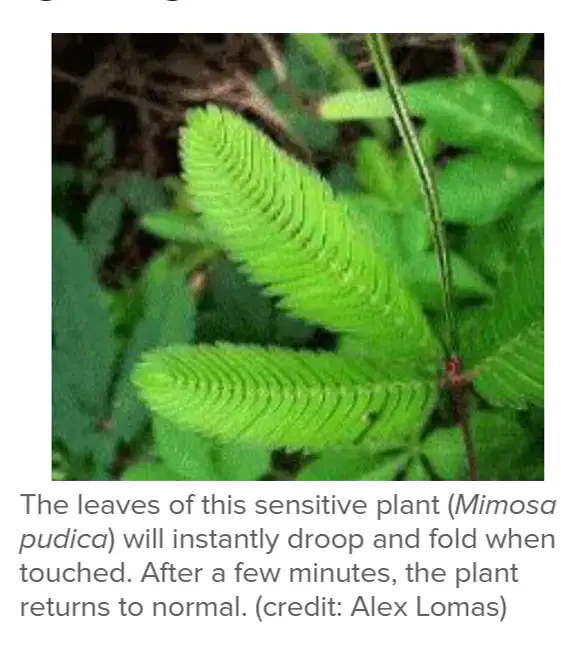
What happens to the leaves of the Mimosa pudica plant when touched?
They change color
They grow larger
They droop and fold
They produce flowers
What is a consequence of evolution by natural selection?
Adaptation
Extinction
Migration
Mutation
How do adaptations enhance the reproductive potential of individuals?
By allowing them to survive and reproduce
By making them more intelligent
By increasing their size
By changing their color
What allows individuals in a population to track environmental changes?
Natural selection
Genetic drift
Gene flow
Mutation
What is homeostasis?
The process of cell division
The relatively stable internal environment required to maintain life
The breakdown of glucose for energy
The process of photosynthesis
Which of the following is NOT a condition required by cells to maintain homeostasis?
Proper temperature
Proper pH
Proper concentration of chemicals
High levels of glucose
What is ATP?
Adenosine Triphosphate
Adenosine Diphosphate
Adenosine Monophosphate
Adenosine Tetraphosphate
What is the result of mutations or random changes in hereditary material over time?
Decrease in life diversity on Earth
Increase in life diversity on Earth
No change in life diversity on Earth
Extinction of species
How do mutations help organisms?
By making them weaker
By allowing them to adapt to changes in their environment
By reducing their reproductive success
By causing them to evolve into a different species
Which of the following is the most basic level of organization in biological systems?
Cells
Molecules
Atoms
Tissues
Which level of organization includes structures that perform functions within a cell?
Organelles
Tissues
Ecosystems
Organs
Human blood cells are an example of which level of organization?
Tissues
Cells
Organs
Molecules
Organs such as the stomach and intestine make up part of which level of organization?
Organelles
Organs and organ systems
Ecosystems
Biosphere
Which level of organization encompasses all the ecosystems on Earth?
Biosphere
Ecosystems
Organisms, populations, and communities
Organs and organ systems
Which domain does a dog belong to in the taxonomic hierarchy?
Animalia
Chordata
Eukarya
Mammalia
In which class is a dog categorized according to the taxonomic hierarchy?
Carnivora
Mammalia
Canidae
Chordata
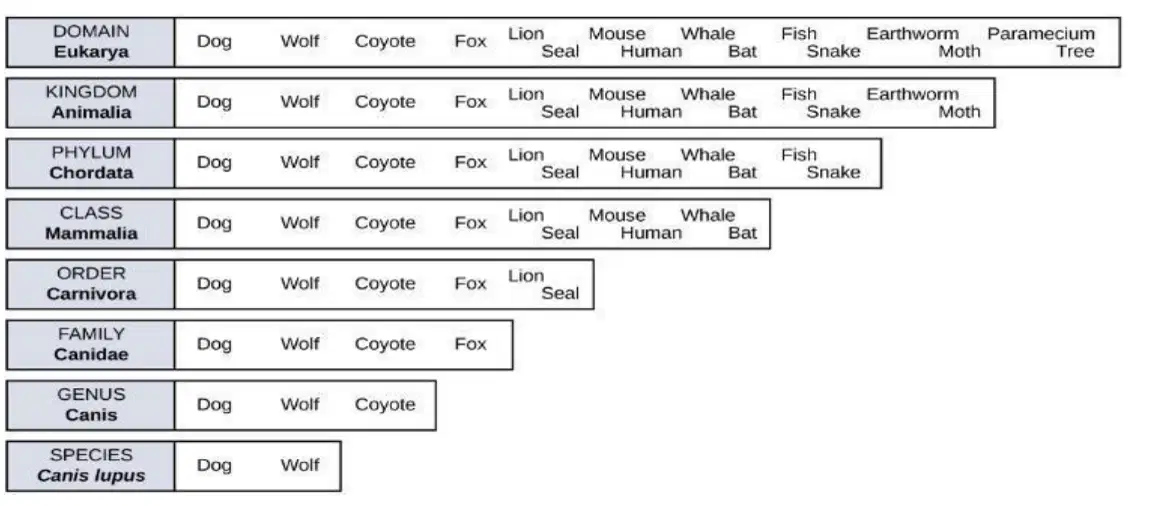
What is the species name for a dog in the taxonomic hierarchy?
Canis
Canis lupus
Canidae
Mammalia
Into how many domains does the phylogenetic tree of life separate living organisms?
Two
Three
Four
Five
Which of the following is the correct order of taxonomic ranks from highest to lowest?
Domain, Kingdom, Phylum, Class, Order, Family, Genus, Species
Kingdom, Domain, Phylum, Class, Order, Family, Genus, Species
Domain, Kingdom, Class, Phylum, Order, Family, Genus, Species
Kingdom, Domain, Class, Phylum, Order, Family, Genus, Species
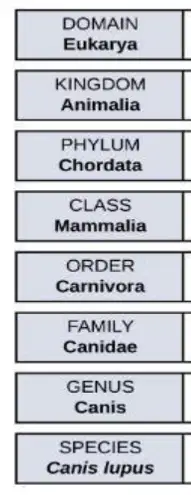
Which taxonomic rank does 'Chordata' belong to in the given hierarchy?
Kingdom
Phylum
Class
Order
Which of the following is a step in the scientific method?
Formulating a hypothesis
Making a guess
Ignoring data
Drawing random conclusions

A possible explanation to a problem that has not yet been tested.
data
theory
hypothesis
fact

This variable in an experiment is the one being deliberately changed by the scientist.
dependent variable
independent variable
data
control group

The part of the experiment that remains the same for the control and experimental group.
constants
control
independent
dependent
The variable that is being measured or observed is called the _______________. Hint: this is the variable that is the result or effect
independent variable
dependent variable
control variable
What are the most abundant elements in living organisms?
Carbon, hydrogen, nitrogen, oxygen, sulfur, phosphorus
Helium, neon, argon, krypton, xenon, radon
Iron, copper, zinc, magnesium, calcium, sodium
Gold, silver, platinum, palladium, rhodium, iridium
Why is it important to understand the laws of physics and chemistry in biological processes?
To predict weather patterns
To understand the flow of blood and energy conversion
To calculate the speed of light
To design architectural structures
What is the role of chemical bonds in biological systems?
They create magnetic fields
They allow for the formation of cells, tissues, and organs
They produce electrical energy
They determine the color of organisms
What is the smallest unit of matter that retains all of the element's chemical properties?
Molecule
Atom
Compound
Mixture
Which four elements are common to all living organisms?
Oxygen, Carbon, Hydrogen, Nitrogen
Helium, Neon, Argon, Krypton
Sodium, Potassium, Calcium, Magnesium
Iron, Copper, Zinc, Manganese
What is the primary component of the atom's nucleus?
Electrons
Protons and Neutrons
Neutrons and Electrons
Protons and Electrons
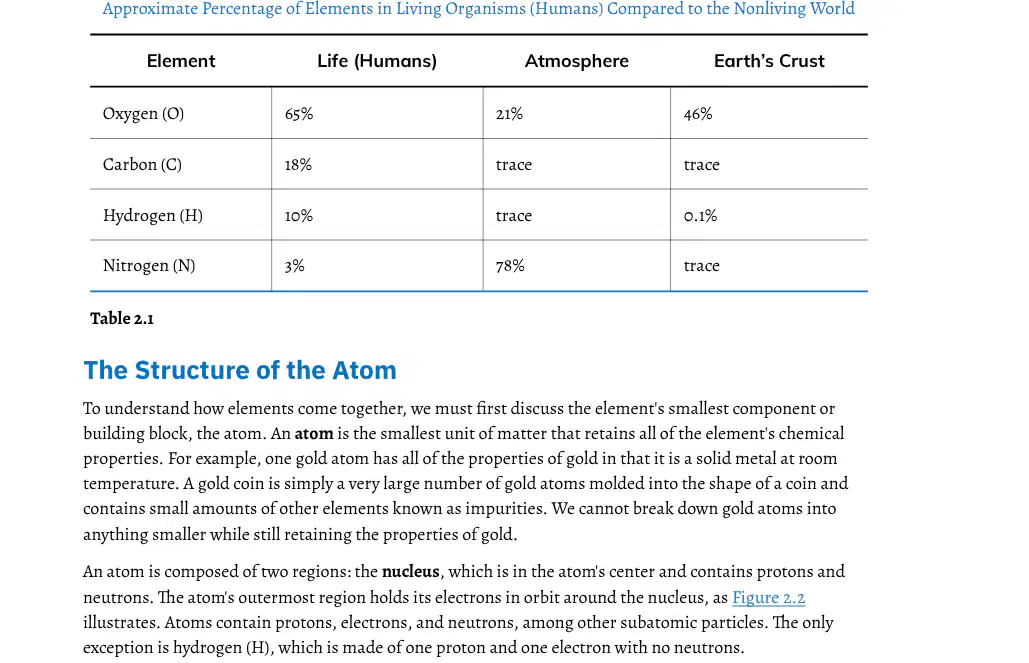
Which element is unique in that it is made of one proton and one electron with no neutrons?
Helium
Carbon
Hydrogen
Oxygen
What is the charge of a proton?
+1
0
-1
+2
Where are electrons located in an atom?
Nucleus
Orbitals
Neutrons
Protons
How does the mass of an electron compare to that of a proton?
Electrons are much larger
Electrons are slightly larger
Electrons are much smaller
Electrons have the same mass
What determines the atomic number of an element?
Number of neutrons
Number of electrons
Number of protons
Mass number
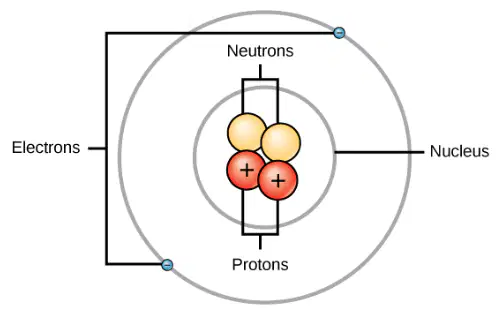
How can you calculate the number of neutrons in an element?
Add the number of protons and electrons
Subtract the number of protons from the mass number
Subtract the number of electrons from the mass number
Add the number of protons and neutrons
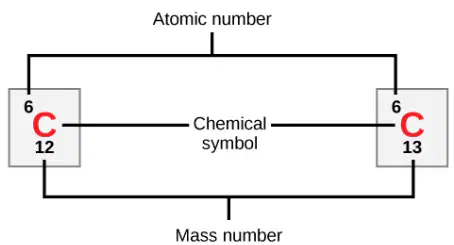
How many neutrons do carbon-12 and carbon-13 have, respectively?
6 and 7
6 and 6
7 and 6
7 and 8
What is an isotope?
An element with a different number of protons
An element with a different number of electrons
An element with the same number of protons but a different number of neutrons
An element with the same number of neutrons but a different number of protons
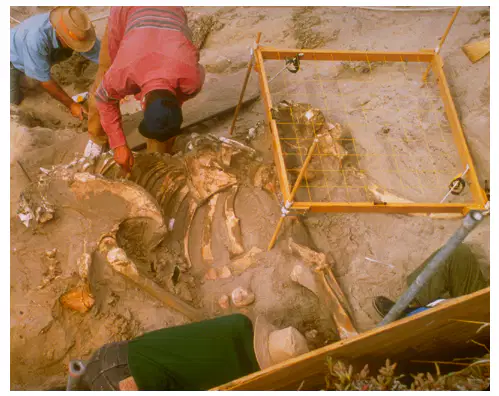
What is the half-life of carbon-14?
1,000 years
5,730 years
10,000 years
50,000 years
What process describes the energy loss when an unstable atom's nucleus releases radiation?
Nuclear fusion
Radioactive decay
Chemical reaction
Photosynthesis
Why is carbon-14 used in dating formerly living objects?
It is abundant in the atmosphere
It has a long half-life
It is stable and does not decay
It is the only isotope found in living organisms
Who devised the periodic table in 1869? His table is the foundation modern periodic table.
Albert Einstein
Isaac Newton
Dmitri Mendeleev
Marie Curie
What does the periodic table display for each element besides its atomic number?
Element's color
Element's atomic mass
Element's density
Element's volume
What is the atomic number of carbon as shown in the periodic table?
8
12
6
14
What is the atomic mass of carbon according to the periodic table?
14.01
6.01
12.01
10.01
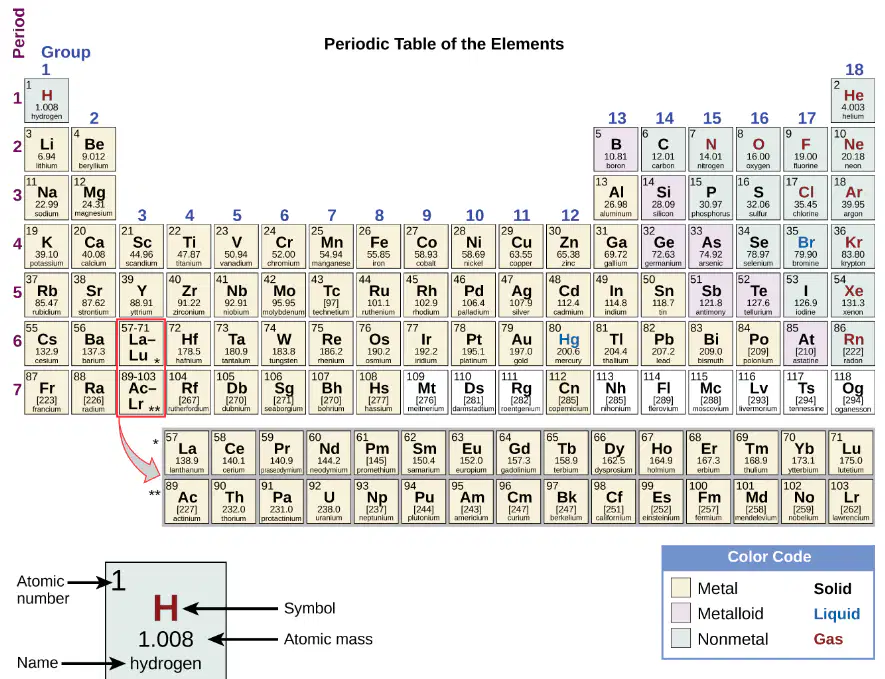
What does the periodic table group elements according to?
Atomic mass
Chemical properties
Number of neutrons
Physical state
What is the relationship between the number of protons and electrons in an electrically neutral atom?
Protons are double the electrons
Electrons are double the protons
They are equal
Protons are half the electrons
What does the atomic number of an element represent?
Number of neutrons
Number of protons
Atomic mass
Number of electron shells
What is the significance of the outermost electrons in atoms?
They determine the atomic mass
They form chemical bonds
They define the atomic number
They are not significant
What is the maximum number of electrons that the innermost shell can hold?
4
2
8
6
What is the octet rule in chemistry?
Atoms are stable with eight protons
Atoms are stable with eight neutrons
Atoms are stable with eight electrons in their valence shell
Atoms are stable with eight molecules
What is the main reason atoms form chemical bonds with other atoms?
To increase their mass
To attain a stable electron configuration
To change their color
To decrease their energy levels
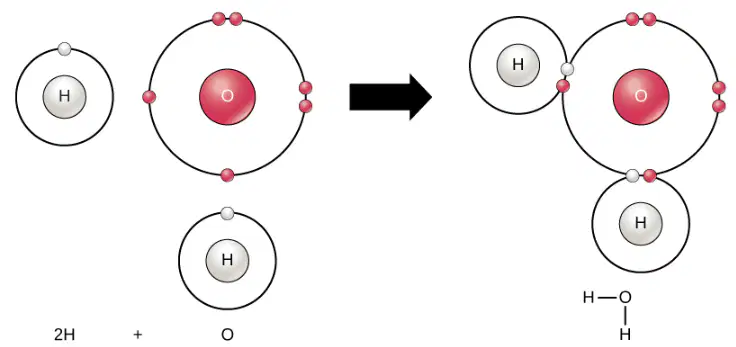
What does the chemical equation 2H + O → H₂O represent?
The formation of oxygen gas
The formation of hydrogen gas
The formation of water
The formation of hydrogen peroxide
In a balanced chemical equation, what must be equal on both sides?
The number of molecules
The number of atoms
The number of compounds
The number of electrons
What is a compound?
A substance made of one type of element
A substance made of two or more types of elements
A substance made of only hydrogen
A substance made of only oxygen
What is the main characteristic of reversible reactions?
They proceed in one direction until all reactants are used.
They can go in either direction.
They are always exothermic.
They do not reach equilibrium.
In the context of ions, what is a cation?
A negative ion formed by gaining electrons.
A positive ion formed by losing electrons.
A neutral atom with no charge.
An ion with an equal number of protons and electrons.
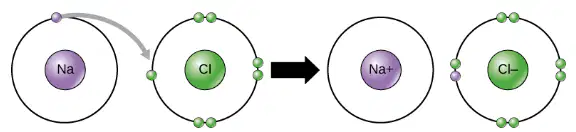
What is required for a sodium atom to lose an electron?
Presence of a suitable recipient like a chlorine atom.
Absence of any other elements.
High temperature conditions.
Low pressure environment.
What is a covalent bond?
A bond formed by the transfer of electrons between atoms
A bond formed by the sharing of electrons between atoms
A bond formed by the sharing of protons between atoms
A bond formed by the transfer of protons between atoms
Which type of covalent bond is stronger?
Single bond
Double bond
Triple bond
Ionic bond
What is a characteristic of polar covalent bonds?
Equal sharing of electrons
Unequal sharing of electrons
Sharing of protons
Transfer of electrons
Why is molecular oxygen (O₂) considered nonpolar?
Because it has a triple bond
Because the electrons are shared unequally
Because the electrons are distributed equally
Because it has a double bond
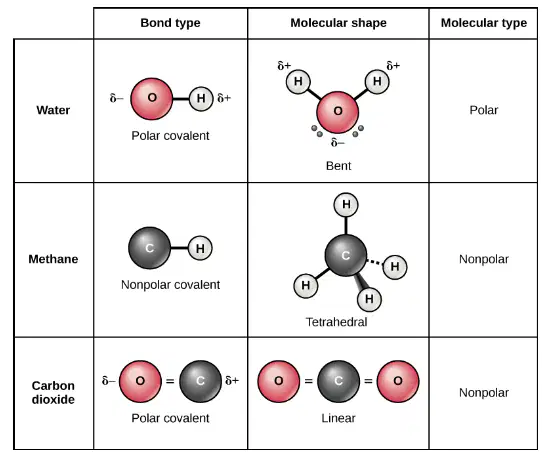
What determines whether a molecule is polar or nonpolar?
Only the bond type
Only the molecular shape
Both bond type and molecular shape
Neither bond type nor molecular shape
What type of bond is formed when hydrogen bonds with a more electronegative atom?
Ionic bond
Covalent bond
Hydrogen bond
Van der Waals interaction
Which of the following interactions are considered weak attractions between molecules?
Ionic bonds
Covalent bonds
Hydrogen bonds
Van der Waals interactions
What role do hydrogen bonds play in biological systems?
They are the strongest type of bond in proteins.
They stabilize the structures of proteins and DNA.
They are responsible for the primary structure of proteins.
They are the main component of cell membranes.
Which of the following is an example of a drug originally discovered in a living organism?
Ibuprofen
Paclitaxel (Taxol)
Paracetamol
Aspirin
What is a characteristic of water that makes it essential for life?
High density
Low boiling point
High heat capacity
Low surface tension
What does the term "hydrophilic" refer to?
Substances that repel water
Substances that dissolve in water
Substances that are neutral to water
Substances that evaporate quickly
Why does water have cohesive and adhesive properties?
Due to its nonpolar nature
Because of its high density
Due to hydrogen bonding
Because of its low heat capacity
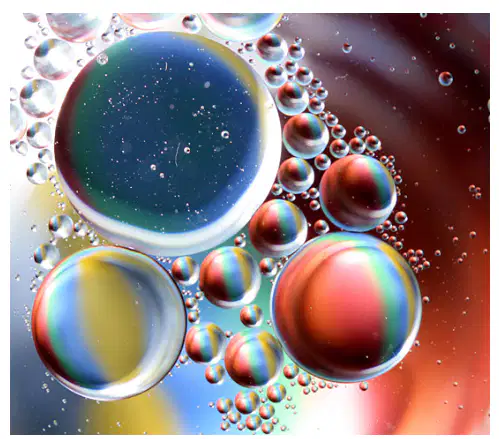
What is a key characteristic of water that is crucial to life as we know it?
Water's ability to dissolve all substances
Water's formation of hydrogen bonds
Water's high density in solid form
Water's lack of chemical reactions
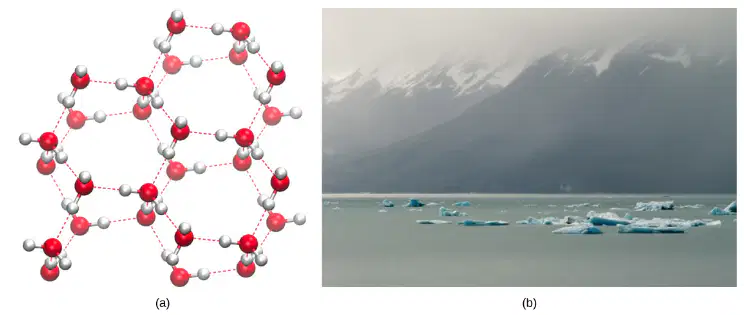
Why does ice float on the surface of liquid water?
Ice is denser than liquid water
Ice has a higher temperature than liquid water
Ice has a lower density than liquid water
Ice forms stronger hydrogen bonds than liquid water
What happens to water molecules when the temperature rises and water boils?
Water molecules form a crystalline structure
Water molecules break hydrogen bonds and escape as gas
Water molecules become more tightly packed
Water molecules freeze and expand
How does the expansion of ice affect living organisms in a pond?
It increases the temperature of the pond
It creates an insulating layer that protects life
It causes the pond to freeze completely
It allows more sunlight to penetrate the water
What property of water allows it to absorb or lose heat without a significant change in temperature?
Low heat capacity
High heat capacity
Low heat of vaporization
High heat of vaporization
What is the process called when water molecules escape from the liquid as a gas?
Condensation
Freezing
Evaporation
Sublimation
Why is water considered a good solvent?
It has a high boiling point
It can dissolve polar molecules and ionic compounds
It has a low freezing point
It is non-polar
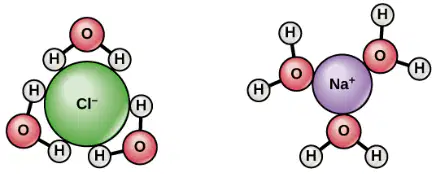
What happens when NaCl is added to water?
NaCl molecules remain intact
Na+ and Cl- ions form
NaCl evaporates
NaCl forms a solid
What property of water allows it to form a dome-like shape above the rim of a glass?
Adhesion
Evaporation
Cohesion
Dissociation
What is surface tension?
The ability of a substance to dissolve in water
The capacity to withstand rupturing under tension
The process of water evaporating
The attraction between different substances
What is capillary action?
Water molecules evaporating
Water molecules forming a solid
Water climbing up a tube due to adhesion
Water molecules repelling each other
What role do cohesive and adhesive forces play in plants?
They help plants absorb sunlight.
They assist in the transport of water from roots to leaves.
They provide structural support to plant cells.
They aid in photosynthesis.
What phenomenon allows insects like the water strider to stay afloat on water?
High density of water
Surface tension
Water's high temperature
Water's color
What does the pH of a solution indicate?
The temperature of the solution
The color of the solution
The acidity or basicity of the solution
The density of the solution
What is the chemical equation for the dissociation of water?
H2O(l) ↔ H2(g) + O2(g)
H2O(l) ↔ H+(aq) + OH−(aq)
H2O(l) ↔ H2O2(aq)
H2O(l) ↔ H2O(s)
What is the concentration of hydrogen ions in pure water?
1 x 10^{-5} moles H⁺ ions per liter
1 x 10^{-7} moles H⁺ ions per liter
1 x 10^{-9} moles H⁺ ions per liter
1 x 10^{-3} moles H⁺ ions per liter
What is the pH of a solution with a hydrogen ion concentration of 1×10⁻⁷ ?
5.0
7.0
9.0
3.0
Which of the following substances is highly alkaline and can raise the pH when dissolved in water?
Hydrochloric acid (HCl)
Sodium hydroxide (NaOH)
Vinegar
Tomato juice
How often does the human body completely replace the stomach lining?
Every 3 to 5 days
Every 7 to 10 days
Every 15 to 20 days
Every 30 days
What is the pH range considered acidic?
0.0 to 6.9
7.1 to 14.0
6.0 to 8.0
7.0 to 14.0
What is the pH level of distilled water?
7
5
9
3
Which substance has a pH level of 1?
Gastric acid
Baking soda
Sea water
Tomato juice
What role do buffers play in the human body?
They absorb excess H⁺ or OH⁻ to maintain pH balance.
They increase the acidity of the blood.
They remove carbon dioxide from the body.
They convert water into carbonic acid.
What happens when bicarbonate ions combine with free hydrogen ions in the body?
They form carbonic acid.
They increase the blood's acidity.
They release oxygen.
They produce ammonia.

How many protons are in Sodium?
11
22
12
33

How many electrons are in Aluminium?
40
27
13
14

How many neutrons are in Magnesium?
36
12
24
6

How many neutrons are in Phosphorus?
16
15
31
46

How many electrons are in Sulfur?
32
16
48
8

How many neutrons are in Argon?
18
40
58
22

How many electrons are in Potassium?
19
20
58
39

How many protons, neutrons, and electrons are in Oxygen?
Protons = 8; Neutrons = 16; Electrons = 8
Protons = 8; Neutrons = 8; Electrons = 8
Protons = 16; Neutrons = 8; Electrons = 16
Protons = 16; Neutrons = 24; Electrons = 16

What is the atomic number of silicon?
14
28
42
7

How many neutrons are in magnesium?
12
24
25
36
A carbohydrate polymer is composed of ___
amino acids
nucleotides
monosaccharides
fatty acids
A nucleic acid is composed of ____
fatty acids
amino acids
nucleotides
monosaccharides
A protein is composed of ____
fatty acids
amino acids
nucleotides
monosaccharides
A chain of amino acids is called a ____
polypeptide
nucleic acid
polysaccharide
fatty acid
A ____ reaction releases water molecules while ____ a molecule.
dehydration; building
dehydration; breaking down
hydrolysis; building
hydrolysis; breaking down
A hydrolysis reaction is ____
catabolic
anabolic
A dehydration reaction is ____
catabolic
anabolic
A ____ reaction uses a water molecule to ___ a molecule.
dehydration; build
hydrolysis; build
dehydration; break down
hydrolysis; break down
The linkages formed between amino acids are called ___ bonds.
peptide
ester
phosphodiester
glycosidic
The linkages formed between monosaccharides are called ___ bonds.
peptide
ester
phosphodiester
glycosidic
The linkages formed between fatty acids and the glycerol backbone of a triglyceride are called ___ bonds.
peptide
ester
phosphodiester
glycosidic
The linkages formed between nucleotides are called ___ bonds.
peptide
ester
phosphodiester
glycosidic
If a protein is composed of multiple separate polypeptides, it has ____ structure.
primary
secondary
tertiary
quaternary
If a protein is a linear chain of amino acids, it has ____ structure.
primary
secondary
tertiary
quaternary
If a protein contains disulfide bonds between different amino acid side chains, it has ____ structure.
primary
secondary
tertiary
quaternary
Secondary structure is produced by ___ bonding between amino acid backbones.
hydrogen
disulfide
covalent
ionic
Which of the following is a gene product?
enzyme
cellulose
starch
phospholipids

To which class of macromolecules does this molecule belong?
carbohydrates
lipids
proteins
nucleic acids

To which class of macromolecules does this molecule belong?
carbohydrates
lipids
proteins
nucleic acids

To which class of macromolecules does this molecule belong?
carbohydrates
lipids
proteins
nucleic acids

To which class of macromolecules does this molecule belong?
carbohydrates
lipids
proteins
nucleic acids

To which class of macromolecules does this molecule belong?
carbohydrates
lipids
proteins
nucleic acids

To which class of macromolecules does this molecule belong?
carbohydrates
lipids
proteins
nucleic acids

To which class of macromolecules does this molecule belong?
carbohydrates
lipids
proteins
nucleic acids

To which class of macromolecules does this molecule belong?
carbohydrates
lipids
proteins
nucleic acids

What functional group is shown in red?
carboxyl group
hydroxyl group
amino group
phosphate group

What functional group is shown in red?
carboxyl group
hydroxyl group
amino group
phosphate group

Which functional group is shown in red?
carboxyl group
hydroxyl group
amino group
phosphate group

Which functional group is shown?
carboxyl group
hydroxyl group
amino group
phosphate group

Which functional group is shown in red?
amino group
phosphate group
carbonyl group
sulfhydryl group

What functional group is shown in yellow?
amino group
phosphate group
carbonyl group
sulfhydryl group
Which functional group makes di-sulfide bridges in protein formation?
amino group
phosphate group
carbonyl group
sulfhydryl group
Which functional group contains ketones and aldehydes?
amino group
phosphate group
carbonyl group
sulfhydryl group
Alcohols have this functional group:
carboxyl group
hydroxyl group
amino group
phosphate group
Proteins contain this functional group:
carboxyl group
hydroxyl group
amino group
phosphate group

