
 Worksheets
Skeletal System Final Review
Total questions: 150
Worksheet time: 1hrs 20mins

Which letter is pointing to the ulna?
A
K
L
M

Which letter is pointing to the fibula?
F
G
H
N

Which letter is pointing to the sternum?
B
C
D
J

Which letter is pointing to the femur?
E
F
G
N

Which letter is pointing to the humerus?
B
E
K
L

Which letter is pointing to metacarpals?
A
B
C
D
E

Which letters represent the phalanges?
C and D
B and E
A and F

Which letter is pointing to the lumbar vertebrae?
A
B
C
D
E

Which letter is pointing to the floating ribs?
A
B
C
D
E

Which letter is pointing to the costal cartilage of the rib cage?
A
B
C
D
E

Which letter is pointing to the ischium?
A
B
C
F

Which letter is pointing to the sacrum?
A
B
C
D
E

Which letter is on the parietal bone?
A
B
C
D

Which letter is on the mandible?
E
F
G
H

Which letter is on the temporal bone?
A
B
C
D

Structure A is the mastoid process and structure B is the styloid process?
True
False

Which letter is pointing to the ethmoid bone?
A
B
C
D
E

Which bone is represented with the asterisk?
Sternum
Clavicle
Sphenoid
Scapula

Identify the bone shape of the bone marked A.
long bone
short bone
flat bone
irregular bone
sesamoid bone
Identify the bone shape of the bone marked B.
long bone
short bone
flat bone
irregular bone
sesamoid bone
Identify the bone shape of the bone marked C.
long bone
short bone
flat bone
irregular bone
sesamoid bone
Identify the bone shape of the bone marked E.
long bone
short bone
flat bone
irregular bone
sesamoid bone

All of the labeled bones in the image are:
long bones
short bones
flat bones
irregular bones


Which of the following is NOT a function of the skeletal system?
Helps your body move
Send oxygen to the body
Protect your organs
Give your body shape and structure
The skeletal system works with the ______________ to help your body move.
digestive system
circulatory system
respiratory system
muscular system
The skull protects which organ?
heart
lungs
brain
stomach
How many bones are in an adult?
200
203
206
209
Which of the following best describes the job of the skeletal system?
Gives shape and support to the body.
Sends messages from the stomach to the brain.
Brings in and breaks down all nutrients for the body
This is at the end of a bone, cushions/tough
cartilage
tendon
ligament


Which set of bones is in your back and holds up your body?
skull
spine
joint
arm
Your skeleton
supports & shapes the body
works with muscles to help you move
helps protect important organs
makes blood
all of the above
Bones are alive and can heal.
True
False
What protects the spinal cord?
vertebrae
body
ribcage
What mineral helps keep your bones healthy and strong?
iron
zinc
calcium
The smallest bone in your body is inside your ear. Which is the biggest bone?
a rib in your ribcage
the thighbone in your leg
the jawbone in your skull
a wrist bone in your wrist
Bones are living things.
True
False
Bone cells are known as
Lacunae
Osteocytes
Collagen
Osteon
The bones at the end of our fingers and toes are known as _______________.
Tarsals
The phalanges
What is the scientific name of the 'jaw bone'?
Maxilla
Mandible
The scientific name for the skull is the _____________.
Cranium
Zygomatic process
The scientific name of the collar bone is the ____________.
Scapula
Clavicle
The shoulder and hip are ball and socket joints.
True
False
The patella is commonly known as your knee cap.
True
False
The scapula is commonly known as your shoulder blade.
True
False
What is in the center of a bone?
cream filling
compact bone
cancellous bone
bone marrow
Which of these is NOT a function of bones?
To support the body
To help us move
To send messages around the body
To protect our organs
What is in the center of a bone?
cream filling
compact bone
cancellous bone
bone marrow
_____________myeloid (marrow) functions in fat storage.
Red
Spongy
Lacunae
Yellow
__________ myeloid (marrow) functions in hematopoiesis.
Red
Spongy
Lacunae
Yellow
Which of the following is NOT a function of the skeleton?
Support
Blood formation
Glucose release
Movement

What mineral helps keep bones strong and healthy?
Gold
Silver
Calcium

What bone is broken here?
Elbow
Humerus
Wrist
Clavicle

the lower-arm bone on the same side as the pinky finger
radius
ulna
metatarsal
rib cage

What bone is this?
humerus
radius
ulna
tibia
What are the bones that make up the forearm?
radius and humerus
ulna and humerus
radius and ulna
fibula and ulna
The bones in the wrist are called?
phalanges
tarsals
carpals
metacarpals

What is the vertebral body?
Red Portion
Blue Portion
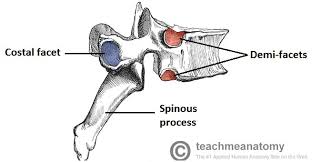
This vertebra is from what portion of the spine?
Cervical
Thoracic
Lumbar
None of these

What curves are located in the cervical and lumbar spine?
Lordosis
Kyphosis
Scoliosis
What curves are located in the thoracic spine?
Lordosis
Kyphosis
Scoliosis

Which segment is purple?
cervical
thoracic
lumbar
sacrum
cocyccx
Which segment is green?
cervical
thoracic
lumbar
sacrum
cocyccx
Which segment is red?
cervical
thoracic
lumbar
sacrum
cocyccx
Which segment is blue?
cervical
thoracic
lumbar
sacrum
cocyccx
Which segment is pink?
cervical
thoracic
lumbar
sacrum
cocyccx

Ischium
Illium
Coccyx
Sacrum
Sciatic Notch

Ischium
Illium
Coccyx
Acetabulum
Sacrum
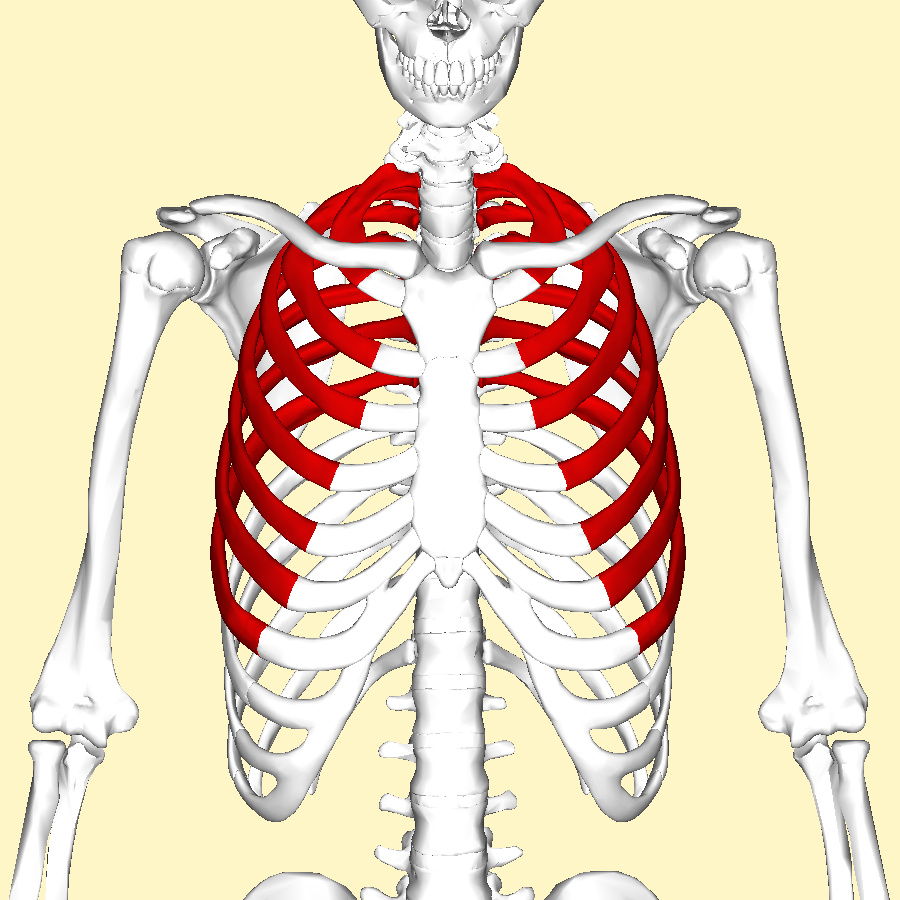
Which ribs are highlighted
true ribs
false ribs
floating ribs
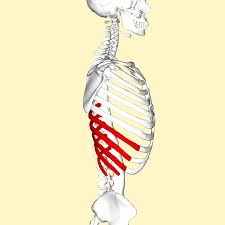
Which ribs are highlighted
true ribs
false ribs
floating ribs
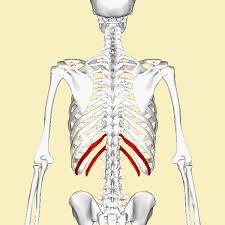
Which section of the rib cage is highlighted
true ribs
false ribs
floating ribs
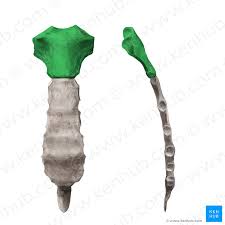
Which part of the sternum is highlighted
xiphoid procces
body
manubrium
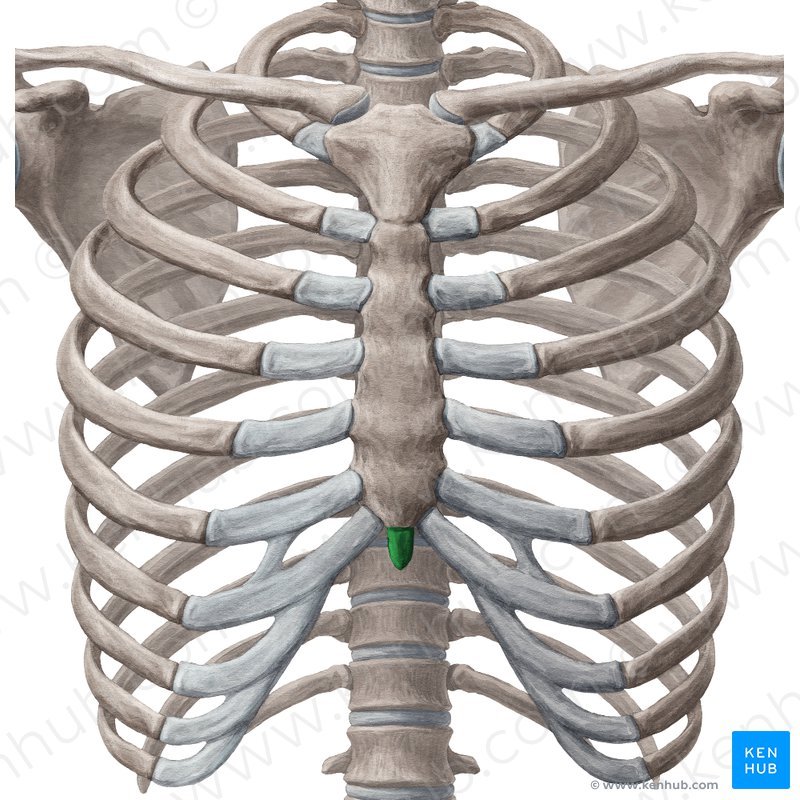
Which section of the sternum is highlighted in green
manubrium
body
xiphoid process

Tibia
Femus
Sternum
Mandible

identify the skeletal bone in the picture that is highlighted green and blue; also known as the breastbone
clavilce
Sternum
Rib Cage
verterbrae

Ribs
Cranium
Sacrum
Hipbone

The cartilage that connects ribs to the sternum is known as
fibrocartilage discs
costal cartilage
elastic cartilage
dense regular connective tissue

Sacrum
Thorax
Pelvis
Metacarpals

What part of the thorax is "D"?
Body
Manubrium
Xiphoid Process
Sternum

How many ribs do you have total?
24
12
7
5
Ribs _________ are known as false ribs and floating ribs
1-7
8-12
1-12
11-12
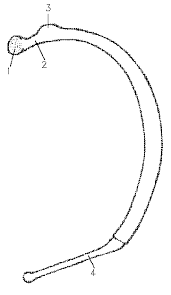
What is number 1?
neck
head
tubercle
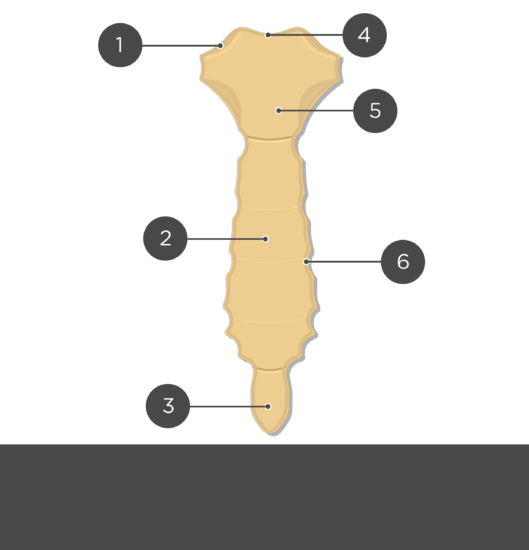
What is number 4?
jugular notch
clavicular notch
xiphoid process
body
Rib number 5 would be a ____ rib.
true
false
floating
Rib number 10 would be a ____ rib.
true
false
floating

an exaggerated thoracic curve
kyphosis
lodosis
scoliosis
osteoporosis

lateral curvature of the spine
osteoporosis
kyphosis
lordosis
scoliosis

The person in the following picture most likely suffers from
Kyphosis
Lordosis
Sway Back
Scoliosis

The person in the following picture most likely suffers from
Kyphosis
Lordosis
Sway Back
Scoliosis
What is one example of a non-surgical treatment?A. BracingB. Physical Therapy C. StretchingD. All of the above
Brace
PT
Stretching
All of the Above
In order from top to bottom, what is the order of the spine
Clavicle, tibia, lumbar, sacrum, cranium
Cervical, thoracic, lumbar, sacrum, coccyx
Clavicle, thoracic, lumbar, sacrum, coccyx
Cervical, thoracic, Lower back, sacrum, coccyx
Define lordosis
The spinal column when you sit, stand and lie down
Excessive outward curve of thoracic region
Excessive inward curve of lumbar region
The spine twists and curves to one side
Which region of the spine supports the neck to tilt the head forwards and backwards?
Cervical
Clavicle
Thoracic
The region upper back, where some people are "hunchback" is called the...
Cervical
Thoracic
Lumbar
The bones at the end of our fingers and toes are known as _______________.
Tarsals
The phalanges
The scientific name of the collar bone is the ____________.
Scapula
Clavicle
The forearm bone closest to the thumb is the __________.
Ulna
Radius
The bone that spans from the shoulder to the elbow is known as the ___________________.
Humerus
Ulna
Femur
Tibia

What bone is highlighted?
Skull (Mandible)
Clavicle
Mandible
Scapula

What bone is highlighted?
Radius
Ulna
Humerus
Carpals

What bone is highlighted?
Radius
Ulna
Humerus
Carpals

What bone is highlighted in red?
metatarsals
phalanges
metacarpals
ulna

What bones is highlighted in green?
tarsals
metacarpals
carpals
metatarsals

What is the name of the bones highlighted in blueish purple?
phalanges
carpals
tarsals
metatarsals

What bone is highlighted?
Radius
Ulna
Humerus
Carpals
Which 3 bones make up the shoulder complex?
Tibia, Humerus, Ulna
Humerus, Scapula, Clavicle
Clavicle, Ulna, Humerus
Scapula, Humerus, Sternum

How many total phalanges (bones) in the hand? (on 1 hand)
4
14
24
12

_________ is a complex hinge joint formed between the end of the humerus and the ends of the ulna and radius in the forearm.
wrist joint
elbow joint
glenohumeral joint


What is the highlighted area
Frontal
Maxilla
mandible
zygomatic
Which system of the human body provides protection to most of the major organs?
skeletal system
circulatory system
respiratory system
muscular system


this bone is the
scapula bone
clavicle bone
mandible bone
pelvic bone
The scientific name for "backbone" is
sternum
femur
tarsal
vertebra

This cell lays down new bone and helps repair damage.
Osteoblast
Osteoclast
Osteocyte
Osteobuddies


Bone tissue is also called what kind of tissue?
osseous
ossetic
osticeous
osseum
osmosis
Which cell is a stem cell and is the only cell that does mitosis?
Osteogenic cell
Osteocyte
Osteoblast
Osteoclast
Mature bone cells that maintain the bone matrix on a daily basis
Osteogenic cells
Osteocytes
Osteoblasts
Osteoclasts
Name literally means "bone break"
Osteogenic cells
Osteocytes
Osteoblasts
Osteoclasts

