wayground logo

Free Printable Worksheets

Font size

S
M
L
XL
Worksheets

year 12 2026 revision

Total questions: 151

Worksheet time: 2hrs 39mins

Name
Class
Date
1.

Genotype or Phenotype: Freckles

a)

Genotype

b)

Phenotype

2.

Homozygous or Heterozygous: ff

a)

Homozygous

b)

Heterozygous

3.

Genotype or Phenotype: ff

a)

Genotype

b)

Phenotype

4.

In a Punnett square, a lower case letter stands for a ____________ allele.

a)

dominant

b)

recessive

c)

homozygous

d)

heterozygous

5.

In animals, shaggy fur is dominant to short fur. The Punnett Square shows the genotypes of the offspring of a shaggy fur animal and a short fur animal. What were the genotypes of the parents?

a)

FF and FF

b)

Ff and ff

c)

ff and ff

d)

Ff and Ff

6.

In animals, shaggy fur is dominant to short fur. According to the genotypes shown, what percent of offspring will have short fur?

a)

0

b)

25

c)

50

d)

75

e)

100

7.

Heterozygous is when...

a)

the alleles are the same.

b)

the alleles are different.

c)

the alleles are absent.

d)

the alleles are present.

8.
What causes genetic variation in meiosis?
a)
chromosomes lining up
b)
crossing over of chromosomes
c)
separation of chromosomes
d)
chromosomes pulling apart
9.
What kind of cells are made in MEIOSIS?
a)
Haploid cells
b)
Diploid Cells
c)
Skin Cells
d)
Liver Cells
10.
Diploid Cells are represented by
a)
2n
b)
n
c)
4n
d)
1/2 n
11.
If the Diploid number of Carrots is 18, the haploid number is
a)
18
b)
9
c)
27
d)
36
12.
The process of crossing over occurs in what phase of meiosis?
a)
anaphase 1
b)
prophase 1
c)
prophase 2
d)
telophase 1
13.
The chromosomes that pair up during meiosis, are called __________ chromosomes.  
a)
homozygous 
b)
asexual
c)
homologous
d)
genes
14.
When homologous chromosomes match up, they form a structure call a ___________.
a)
tetrad (pair of chromosomes, one from mom and one from dad)
b)
triad
c)
diploid
d)
quad (group of 4 replicated chromosomes, 2 from mom and 2 from dad)
15.
Crossing over creates
a)
male genotype
b)
genetic variation (differences)
c)
DNA replication
d)
mitosis
16.
Which cellular process is shown?
a)
meiosis
b)
endocytosis
c)
mitosis
d)
phagocytosis
17.
Which of the following best describes meiosis?
a)
It is carried out in all tissues theat require cell replacement
b)
It occurs only in cells in the reproductive structures of an organism
c)
It happens in all of the tissues except the brain and spinal cord
d)
It is the first stage of mitosis
18.
What phase is represented?
a)
metaphase 1
b)
metaphase 2
c)
anaphase 1
d)
anaphase 2
19.
What phase is  shown in the picture?
a)
metaphase 2
b)
anaphase 2
c)
metaphase 1
d)
telophase 1
20.
products of meiosis are genetically
a)
different
b)
identical
21.
A human zygote should have _____ chromosomes inside.
a)
46
b)
23
c)
92
d)
64
22.
Which of the following represents chromosome # during fertilization?
a)
n+n=2n
b)
n=n
c)
2n=n+n
d)
2n=2n
23.

Which descibes a relationship between two organisms in which one benefits and the other is not affected?

a)

symbiosis

b)

mutualism

c)

commensalism

d)

parasitism

24.

A resource so scarce that it limits the size of a population is

a)

symbiosis

b)

mutualism

c)

limiting factor

d)

prey

25.

A relationship in which two different organisms live in close association with each other is called

a)

parasitism

b)

mutualism

c)

symbiosis

d)

prey

26.

An organism that is killed and eaten by another organism is

a)

parasite

b)

limiting factor

c)

population

d)

prey

27.

A relationship between two species in which both species benefit is

a)

parasitism

b)

mutualism

c)

commensalism

d)

limiting factor

28.

The largest population an environment can support is its

a)

carrying capacity

b)

limiting factor

c)

population

d)

symbiosis

29.

One type of competition involves individuals competing for resoources. The other involves competition between different

a)

schools

b)

populations

c)

environments

d)

relaltioships

30.

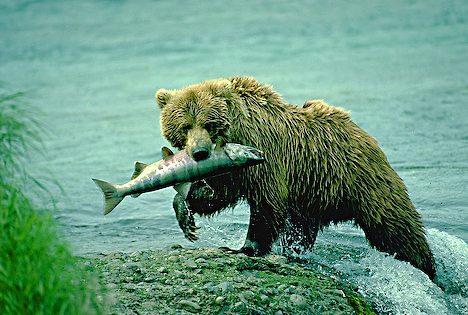
A grizzly bear survives because he is well-adapted to his environment. When he reproduces he passes on those traits to his offspring. this process is called

a)

Natural Selection

b)

Selective Breeding

c)

Random mutations

d)

Variations in a species

31.

It took millions of years for giraffes to develop long necks. Slow evolution is called:

a)

Punctuated equilibrium

b)

Survival of the fittest

c)

Gradualism

d)

Selective Breeding

32.

Which is the best example of punctuated equilibrium

a)

The evolution of the whale over many millions of years.

b)

The extinction of the dinosaurs

c)

Bacteria mutating from one year to the next.

d)

Amphibians evolving into reptiles over millions of years

33.

Genetic mutations are the direct cause of which of the following?

a)

Aliens

b)

Super heroes

c)

Variations

d)

8th grade behaviors

34.

If Easter eggs were living species of organisms, their different colors would be considered:

a)

Adaptations

b)

Variations

c)

Different species

d)

Extinct species

35.

The peppered moth's color camouflaged it on the light colored tree bark. It's color was an example of a/n

a)

Variation

b)

Dominant trait

c)

Recessive trait

d)

Adaptation

36.

Where are hereditary traits stored in all organisms?

a)

In the blood

b)

In the brain

c)

In the DNA

d)

In the heart

37.

If a sick person takes an antibiotic but it doesn't kill all of the bacteria causing the sickness, what might explain this?

a)

Variations in the bacteria allowed some organisms to be less affected by the antibiotic?

b)

Bacteria cannot be killed by antibiotics

c)

You cannot cure a bacterial infection

d)

Bacteria do not cause sicknesses

38.

Changes in inherited characteristics can cause a species to change into a new one. This change over time is called?

a)

Graduation

b)

Selective Breeding

c)

Revolution

d)

Evolution

39.
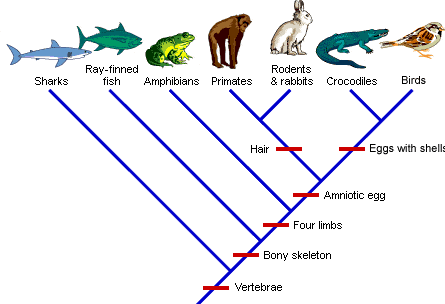
According to this cladogram, primates are most closely related to -
a)
Amphibians
b)
Rodents and rabbits
c)
Crocodiles
d)
Birds
40.
According to this cladogram, birds are LEAST related to -
a)
Amphibians
b)
Sharks
c)
Ray Finned Fish
d)
Crocodiles
41.
Which trait do only humans have, according to the cladogram?
a)
jaws
b)
mammary glands & hair
c)
terrestrial during all life stages
d)
opposable thumbs
42.
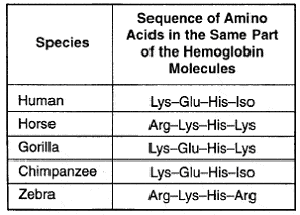
You look at two species and see very similar amino acid sequences. What does this likely tell you?
a)
These are the same animal.
b)
These animals have a common ancestor.
c)
These animals are not likely related.
d)
These animals are likely becoming one species.
43.
A flash flood carried a raft of Amazon ants away from their original population. There is enough distance between the two groups, that they will never meet in nature again. What type of reproductive barrier is this?
a)
behavioral isolation
b)
temporal isolation 
c)
gametic isolation
d)
geographic isolation 
44.
Some female peacocks prefer males with large, colorful tales while other female peacocks prefer males with no tail at all. Females are beginning to only mate with the type of males with the tail they prefer. What type of reproductive barrier is this?
a)
behavioral isolation
b)
hybrid sterility 
c)
temporal isolation
d)
mechanical isolation 
45.
The term for the formation of new and distinct species over the course of evolution is...
a)
speciation
b)
biological species concept
c)
reproductive barrier
d)
natural selection
46.
What is a species? 
a)
A group of organisms that can mate with each other and produce fertile offspring. 
b)
A group of organisms that can mate and produce offspring even if those offspring are infertile.
c)
A group of organisms that genetically are very different from each other. 
d)
Indivual organisms that live in the same environment. 
47.

A new river forms and splits two populations, causing ______________ speciation

a)

Sympatric

b)

Allopatric

c)

Extreme

d)

Convergent

48.

Orcas occur in the same habitat but some are avoiding each other and do not interbreed. They have different diets, vocal behavior, and social structures. What type of speciation is this?

a)

Allopatric

b)

Sympatric

c)

Complex

d)

Covergent

49.

when the organism develops different courtship rituals which do not attract main population this is a part of ____________ speciation.

a)

Allopatric

b)

Sympatric

c)

Simple

d)

Temporal

50.

The emergence of new rivers or streams is a type of ____________ isolation.

a)

Temporal

b)

Mechanical

c)

Behavioral

d)

Geographic

51.

The emergence of a mountain range is an event that would lead to _______________ speciation

a)

Allopatric

b)

Sympatric

c)

Temporal

d)

Behavioral

52.

When the Grand Canyon in Arizona formed, two populations of one squirrel species were separated by the giant canyon. This is an example of _____________ speciation.

a)

Allopatric

b)

Sympatric

c)

Simple

d)

Divergent

53.

The presence of islands represents what type of reproductive isolation

a)

allopatric speciation

b)

sympatric speciation

54.

Which of the following is NOT true in the formation of a new species?

a)

A mutation causes a population to breed with a different species.

b)

Reproductive isolation can occur by the formation of a mountain range.

c)

A population needs to become reproductively isolated.

d)

An isolated population has adapted to new ecological niches eventually result in the inability to reproduce with the original population.

55.

In order to be considered a true species, an organism must be…

a)

Naturally-occurring

b)

Naturally-reproducing

c)

Able to produce fertile offspring

56.

You are researching reptiles and encounter two garter snakes on a hike. Both snakes are brown and white, but their patterns are slightly different. You bring them back to the lab for further study. What is the BEST way to determine if these two are the same species?

a)

Their appearance - if they look similar, they must be the same species

b)

Their adaptations - if they have the same traits, they must be the same species

c)

A breeding experiment - if they are able to produce offspring, they must be the same species

d)

DNA testing - if their DNA/genes are the same, they must be the same species

57.
1. Oxygen exists in the atmosphere as which state of matter?
a)
solid
b)
liquid 
c)
gas
d)
plasma
58.
In the nonliving environment, carbon exists as a gas in _____.
a)
cells
b)
geosphere
c)
atmosphere
59.
Earth has a fixed amount of _____.
a)
trees
b)
carbon
c)
carbon dioxide
60.
Carbon enters the living world through the process of _____.
a)
photosynthesis
b)
respiration
c)
combustion
d)
decomposition
61.
What is the process of combining nitrogen gas with other elements to make nitrogen into usable compounds?
a)
nitrogen composition
b)
ammonia 
c)
nitrogen fixation
d)
denitrification
62.
How much of the atmosphere is composed of nitrogen gas?
a)
87%
b)
38%
c)
78%
d)
21%
63.
Organisms that break down dead plants & animals and release nitrogen back into atmosphere...
a)
bacteria
b)
plants
c)
animals
d)
producers
64.
Organisms that need nitrogen to survive
a)
only plants
b)
only animals
c)
only bacteria
d)
all living organisms
65.
After plants and animals contain nitrogen, what puts it back into atmosphere and soil?
a)
decomposition
b)
precipitation
c)
condensation
d)
bacteria
66.
What happens when organisms die and decay? 
a)
Their bodies are lifted up
b)
Their nitrogen returns to the soil
c)
they keep their nitrogen
d)
They stay on earth forever
67.
The process in which Nitrogen circulates and is recycled is called ____________
a)
The nitrogen cycle
b)
The water cycle
c)
The carbon cycle
d)
Nitrogen Fixation 
68.
Nitrification happens in the ______
a)
Air 
b)
Soil 
c)
Ground Water 
d)
Plants 
69.
Plants and animals need nitrogen to make __________.
a)
Protein
b)
Carbohydrates
c)
Lipids
d)
Minerals
70.
What converts nitrogen gas into a useable form for plants and animals?
a)
bacteria
b)
fungi
c)
rain
d)
car exhaust 
71.
The process where excess nutrients enter a body of water causing overgrowth of aquatic plants and algae...
a)
Eutrophication
b)
Acid Precipitation
c)
Nitrogen Fixation
d)
Decomposition
72.

A species form that supports an entire ecosystem.

a)

Keystone Species

b)

Herbivores

c)

Umbrella Species

d)

Predators

73.

What is a keystone species?

a)

A species that helps to hold an ecosystem together

b)

A species that lives in or around rocks

c)

Keys and stones have nothing to do with ecology

d)

A keystone isn't a living thing, it's just a stone

74.

Why are bees considered a keystone species?

a)

The honey they make supports the bear population

b)

They pollinate flowers that produce fruit which supports the ecosystem

c)

They sting when threatened

d)

They live in hives

75.

Why are some sharks considered a keystone species?

a)

Because they are a top predator

b)

They scare off smaller fish that may overgraze an area of sea grass

c)

They are tertiary consumers

d)

They are cartilaginous

76.

If 50 crabs were captured and marked and then released and then a few days later 25 were caught and of those 5 were marked. What would the estimate of the population be?

a)

500

b)

250

c)

75

d)

200

77.

Conservationists want to find the population of a species of mountain goat. On one day they capture 12 goats, tag them and release. A week later they capture 8 goats, 5 of which are tagged. What would the estimate of the population be?

a)

19

b)

40

c)

72

d)

30

78.
What are the nucleotides made of?
a)
Sugar, Phosphate, nitrogen base
b)
Phosphate, Adenine, nitrogen base
c)
Thymine, Adenine, Cytomine
d)
Phosphate, Nitrogen, Adenine
79.
Which of the following best describes a DNA molecule?
a)
double helix
b)
contains ribose
c)
made of amino acids
d)
contains Uracil
80.
Adenine bonds with ______________.
a)
Guanine
b)
Thymine
c)
Cytosine
d)
Adenine
81.
Guanine bonds with ______________.
a)
Adenine
b)
Guanine
c)
Cytosine
d)
Thymine
82.
Why is DNA important?
a)
it is very small and very complicated
b)
it's in everything
c)
it serves as the blueprint for traits of all living things
d)
because we eat it every day for energy
83.
What are the 4 nitrogen bases?
a)
adenine, thymine, cytoplasm, and guanine
b)
adenine, thymine cytosine, and guanine
c)
adenine, thymine, cytosine, and gylcerol
d)
adenine, thymine, cytosine, and glucose
84.
Which sequence of DNA bases would pair with this partial strand
ATG TGA CAG
a)
ATG TGA CAG
b)
TAC ACT GTC
c)
GTA AGT GAC
d)
CAT TCA CTG
85.
Which organelle is DNA usually found in?
a)
cell membrane
b)
vacuole
c)
chloroplast
d)
nucleus
86.
Which 2 molecules forms the sides (backbone) of the DNA ladder?
a)
deoxyribose and adenine
b)
deoxyribose and a hydrogen bond
c)
sugar and the nucleus
d)
deoxyribose (sugar) and phosphate
87.
Which shows the correct complementary base pairing for DNA?
a)
C-A, T-G
b)
A-G, C-T
c)
C-G, U-A
d)
T-A, G-C
88.
Replicate the following strand of DNA: 
AATCATGGA
a)
AATCATGGA
b)
TTAGTACCT
c)
UUAGUACCU
d)
GGATAUCUA
89.

How many chromosomes do human cells have?

a)

46

b)

23

c)

2

d)

44

90.
What is a gene?
a)
A bundle (like a hot dog bun) that the DNA is packed into
b)
something inside the nucleus
c)
a piece of DNA
d)
all of your DNA
91.

Bundled up, organized DNA is called a

a)

gene

b)

trait

c)

chromosome

d)

nucleotide

92.
Which of the following units are repeatedly joined together to form a strand of DNA?
a)
amino acids
b)
nucleotides
c)
fatty acids
d)
polysaccharides
93.
How does RNA differ from DNA?
a)
RNA contains uracil and deoxyribose
b)
RNA contains ribose and thymine
c)
RNA contains uracil and ribose
d)
RNA contains adenine and ribose
94.
How would the DNA sequence GCTATA be transcribed to mRNA?
a)
GCUAUA
b)
CGATAT
c)
CGAUAU
d)
GCUTUT
95.
The process by which the genetic code of DNA is copied into a strand of RNA is called
a)
translation
b)
transcription
c)
transformation
d)
replication
96.
Which of the following describes RNA?
a)
RNA is usually double-stranded and contains the base thymine
b)
RNA is usually single-stranded and contains the base uracil
c)
RNA is longer than DNA and uses five bases to encode information
d)
RNA is made in the nucleus of eukaryotic cells and stays there to carry out its functions
97.
In messenger RNA, each codon specifies a particular
a)
nucleotide
b)
enzyme
c)
amino acid
d)
promoter
98.
Which of the following statements about the genetic code is true?
a)
A codon can specify more than one amino acid
b)
Every codon specifies a different amino acid
c)
Some codons specify the same amino acid
d)
Some codons have no function at all
99.
The process of making proteins on the ribosome based on instructions from messenger RNA is called
a)
transcription
b)
transformation
c)
translation
d)
molecular biology
100.
Changes is DNA sequences that affect genetic information are known as
a)
replications
b)
mutations
c)
transformations
d)
translations
101.
A single-base mutation in a messenger RNA molecule could transcribe the DNA sequence CAGTAT into
a)
GTCATA
b)
GUCAUA
c)
GTCUTU
d)
GUAAUA
102.
A substance that can cause a change in the DNA code of an organism is called a 
a)
toxin
b)
mutagen
c)
nitrogenous base
d)
nucleotide
103.
An expressed gene
a)
functions as a promoter
b)
is transcribed into RNA
c)
codes for just one amino acid
d)
is made of mRNA
104.
What type of cells are spermatids?
a)
diploid
b)
Haploid 
c)
somatic
d)
stem
105.

Spermatogenesis involves...

a)

Mitosis only

b)

Meiosis only

c)

Mitosis followed by meiosis

106.

Are spermatogonia Diploid or haploid?

a)

Diploid

b)

Haploid

107.

How many secondary spermatocytes are produced after the first round of meiosis?

a)

1

b)

2

c)

4

108.
Oogenesis results in the formation of:
a)
1 ovum; 3 polar bodies
b)
2 ova; 2 polar bodies
c)
1 ovum; 3 secondary oocytes
d)
4 ova
109.

Which of the following enzymes catalyzes the linkage together of RNA nucleotides to form RNA?

a)

polymerase

b)

ligase

c)

ribozyme

d)

reverse transcriptase

110.

The RNA codon AUG means

a)

add amino acid methionine

b)

start the protein here

c)

add the amino acid tyrosine

d)

end the polypeptide chain here

111.

The transfer of genetic info from DNA to RNA is called

a)

translation

b)

transcription

c)

initiation

d)

elongation

112.

Which of the following sequences best describes the flow of information that takes place when a gene directs the synthesis of a cellular component?

a)

RNA-DNA-RNA-PROTEIN

b)

DNA-RNA-PROTEIN

c)

PROTEIN-RNA-DNA

d)

DNA-AMINO ACID-RNA-PROTEIN

113.

Translation consists of which of the following?

a)

conversion of genetic info from the language of nucleic acids to the language of proteins

b)

conversion of genetic info from DNA to RNA

c)

addition of nucleotides to a DNA template

d)

DNA replication

114.

Which of the following is required for translation to occur?

a)

energy

b)

ribosomes

c)

tRNA

d)

all of these

115.

The info carried by DNA is in

a)

an amino acid sequence

b)

the sugars and phosphates that form the backbone

c)

the order of bases in the molecule

d)

the total number of nucleotides

116.

During the process of translation, ____ matches a nucleic acid codon with the proper amino acid.

a)

a ribosome

b)

ATP

c)

polymerase

d)

mRNA

117.

When RNA is being made, the RNA base ____ always pairs with the base ___ in DNA.

a)

U-T

b)

T-G

c)

U-A

d)

A-U

118.

tRNA plays a role in which of the following ?

a)

picking up the amino acid specified by the anticodon

b)

recognizing the appropriate codons in mRNA

c)

translating codons into amino acids

d)

all of these are correct

119.

What is the first step in Transcription?

a)

Transcription factors attach to DNA

b)

Ribosomal subunit locates the AUG sequence and binds there

c)

RNA polymerase finds the TATA box and binds there

d)

tRNA's transfer amino acids to the ribosome for assembly into protein

120.
What is the purpose of transcription?
a)
To replicate DNA.
b)
To produce a copy of DNA that can leave the nucleus.
c)
To produce enzymes.
d)
To make gametes.
121.

What base replaces the Thymine in RNA?

a)

Uracil

b)

Urindine

c)

Cytosine

d)

Adenine

122.

The nucleotides are aligned with their complementary partners on which strand of DNA?

a)

DNA antisense strand

b)

DNA sense strand

123.

Which region of DNA is edited out of mRNA and recycled into nucleotides?

a)

introns

b)

exons

124.

The sequence of DNA that serves as the attachment point for RNA polymerase is called what?

a)

promoter

b)

enhancer

c)

silencer

125.

An example of something impacted by environment is

a)

Human skin color

b)

Human hair color

c)

Pigment in the fur of Himalayan rabbits

d)

All of the above

126.
A biological ____________ is a group of interbreeding populations that is reproductively isolated from other groups.
a)
species
b)
family
c)
phylogeny
d)
hybrid
127.
______ _________ explains how two or more organisms could evolve similar traits even though they are not related to each other.
a)
convergent evolution
b)
reproductive isolation
c)
derived characters
d)
hybrid vigor
128.
A __________ is a branching diagram that shows evolutionary relationships.
a)
cladogram
b)
table
c)
derived character
d)
relationship tree
129.
The system of binomial nomenclature was developed by ___________
a)
Linneaus
b)
Mayr
c)
Darwin
d)
Mr. King
130.
_________ characters may or may not be similar between two organisms but they developed from a common ancestor.
a)
homologous
b)
analogous
c)
cladistic
d)
phylogenic
131.
______________ is the process by which populations change in response to their environment.
a)
natural selection
b)
adaptation
c)
reproductive isolation
d)
divergence
132.

Over time, animals may change behavior or physical appearance in response to changes in the environment. What is this called?

a)

resistance

b)

genetic change

c)

adaptation

d)

genetic variation

133.
Darwin wrote that organisms with traits that are best suited to the environment will ________________
a)
increase in number
b)
become extinct
134.
What is the advantage of having different shaped beaks?
a)
To look different from other species.
b)
To be able to eat the food readily available in the environment.
c)
To protect itself against predators.
d)
To protect itself against prey.
135.
A virus killed most of the seals in the North Sea (e.g. dropped the population from    8000 to 800).  In an effort to help preserve the species, scientists caught 20 of the   remaining seals and used them to start a new population in the northwest Pacific   Ocean.  Which of the following statements would accurately describe the new   population?  
a)
The new seal population is genetically less diverse than the original population 
b)
The new seal population is genetically more diverse than the original population
c)
There is equal genetic variety compared  to the original population 
d)
None of the answers
136.
 Genetic Drift is more likely to happen in... 
a)
aquatic populations
b)
small populations
c)
terrestrial populations
d)
older populations
137.
Happens only in small populations, and is the change in the frequency of a gene variant (allele) in a population due to random sampling of organisms.
a)
Extinction
b)
Genetic Drift
c)
Bottleneck Effect
d)
Founder Effect
138.
This mechanism of evolution occurs when populations migrate.
a)
Extinction
b)
Gene flow
c)
Genetic drift
d)
Natural Selection
139.
The model below shows a how populations of organisms can change. Which of the   following concepts is best illustrated by this demonstration?                                          
a)
 Evolution of a predatory species
b)
Genetic drift 
c)
 Environmentally induced genetic mutations 
d)
Gene flow 
140.
Which of the following is true?
a)
Gene pool frequencies do not change as a result of migration in or out of a population.
b)
Gene flow occurs only as a result of isolation of a small population.
c)
Gene flow can cause new alleles to enter a population's gene pool.
d)
Gene flow is due the the selection of the most favorable traits.
141.
Which of the following cannot introduce new alleles into a population's gene pool?
a)
Mutataion
b)
Natural selection
c)
Gene Flow
d)
All of the above introduce new alleles into the population
142.

What type of evolution is described in the following scenario: Porcupines in the United States have quills (spines) that are attached to their skins. When they feel threatened, they can tense up their bodies, causing the quills to “shoot out.” These spiny quills can pierce the skin of attacking animals, causing injury and pain. Although not closely related to the porcupine, hedgehogs that live throughout parts of Europe also have protective spines that they use to defend themselves from attacking animals.

a)

Coevolution

b)

Divergent Evolution

c)

Convergent Evolution

143.

What type of evolution is described in the following scenario: King Snakes are a family of snakes that usually eat other snakes in the wild. Even though many of the snakes they eat are very poisonous, King Snakes have adapted the ability to not be affected by their poisons. In response, some of these poisonous snakes, like rattlesnakes, have adapted other defensive behaviors (other than biting) to try and “scare off” the King Snakes.

a)

Coevolution

b)

Divergent Evolution

c)

Convergent Evolution

144.

What type of evolution is described in the following scenario: Chameleons, a type of lizard (reptile), have two eyes they can move in completely different directions, so they can see all the way around themselves. Sand lances are a type of fish that can also move their eyes like the chameleon, even though they are not related to one another.

a)

Coevolution

b)

Divergent Evolution

c)

Convergent Evolution

145.

What type of evolution is described in the following scenario: A kit fox lives in the desert and has large ears with greater surface area that keep the fox from getting overheated. The red fox lives in the forest and has a red coat that keeps it camouflaged.

a)

Coevolution

b)

Divergent Evolution

c)

Convergent Evolution

146.

What type of evolution is described in the following scenario: The Galloti atlantica and Galloti galloti lizards evolved through natural selection from a common ancestor into a wide variety of different looking lizards.

a)

Coevolution

b)

Divergent Evolution

c)

Convergent Evolution

147.
In convergent evolution, organisms share physical similarities because they 
a)
have a common ancestor
b)
live in the same enviornment
c)
develop homologous structures
d)
are closely related 
148.
Flying fish, flying birds, and bats are examples of which of the following?
a)
convergent evolution & homologous structures
b)
convergent evolution & analogous structures
c)
divergent evolution & homologous structures
d)
divergent evolution & analogous structures
149.
a)

The image shows convergent evolution.

b)

The image shows divergent evolution.

c)

The image shows coevolution

d)

The image shows related species

150.
What type of evolution where there is a sudden, rapid change then no change for a long time?
a)
Co-Evolution
b)
Punctuated Equilibrium
c)
Divergent Evolution
d)
Convergent Evolution
151.

Evolution occurring gradually and slowly over long periods of time

a)

Homeostasis

b)

Stasis

c)

Punctuated Equilibrium

d)

Gradualism