wayground logo

Free Printable Worksheets

Font size

S
M
L
XL
Worksheets

Living Environment Regents Vocabulary

Total questions: 150

Worksheet time: 5hrs 0mins

Name
Class
Date
1.
An organism that makes its own food.
a)
Consumer
b)
Producer
2.
An organism that cannot make its own food.
a)
Consumer
b)
Producer
3.
Highest level of biological organization-all parts of the Earth.
a)
Biosphere
b)
Ecosystem
c)
Population
d)
Community
4.
Community and the abiotic factors that affect it.
a)
Population
b)
Ecosystem
c)
Biosphere
d)
Organism
5.
A single individual from a population.
a)
Organism
b)
Population
c)
Community
d)
Ecosystem
6.
Non-living factors within an environment
a)
Abiotic
b)
Biotic
7.
Living factors within an environment.
a)
Abiotic
b)
Biotic
8.
Model used to describe a series of overlapping food chains.
a)
Food Chain
b)
Food Web
c)
Energy Pyramid
d)
Energy Chain
9.
Role an organism plays in an environment.
a)
Niche
b)
Nice
c)
Quiche
d)
Habitat
10.
Largest population an environment can support at any time.
a)
Indicator Species
b)
Limiting Factors
c)
Carrying Capacity
d)
Limiting Capacity
11.
Physical location where an organism lives.
a)
Ecosystem
b)
Population
c)
Niche
d)
Habitat
12.
Factors that can limit or decrease the size of a population.
a)
Carrying Capacity
b)
Limiting Factors
c)
Photosynthesis
d)
Respiration
13.
Process by which plants convert sunlight to produce food and oxygen.
a)
Niche
b)
Habitat
c)
Respiration
d)
Photosynthesis
14.
Process by which animals convert sugars into energy and Carbon Dioxide.
a)
Photosynthesis
b)
Respiration
c)
Limiting Factors
d)
Carrying Capacity
15.
Disease-causing microorganism, such as a bacterium or virus.
a)
pathogen 
b)
allergen
c)
prion 
d)
antigen 
16.

A vaccine contains...

a)

cow pox

b)

a small amount of the pathogen that is weakened or dead

c)

a large amount of the pathogen

d)

small pox

17.
This part of the experiment serves as a basis of comparison; the one variable being tested has been omitted. 
a)
experimental group
b)
control group
c)
data
d)
variables
18.
An error in DNA copying that results in a new trait
a)
Homeostasis
b)
Mutation
c)
Natural Selection
d)
Selective Breeding
19.

If body temperature is too high, some blood vessels increase in size and sweat glands will excrete sweat, resulting in a lower body temperature. These changes are an example of

a)

a learned behavior

b)

feedback mechanisms

c)

an inherited disorder

d)

genetic mutations

20.

Jellylike substance inside cells that contains molecules and in some cells organelles

a)

Cytoplasm

b)

Organelle

c)

Cytoskeleton

d)

Nucleus

21.

Organelle composed of a double membrane that acts as the storehouse for most of a cell's DNA

a)

Ribosome

b)

Nucleus

c)

Mitochondrio

d)

Golgi Apparatus

22.

Organelle that links amino acids together to form proteins

a)

Ribosome

b)

Mitochondrion

c)

Vesicle

d)

vacuole

23.

Bean-shaped organelle that supplies energy to the cell and has its own ribosomes and DNA

a)

Mitochondrion

b)

Vesicle

c)

Lysosome

d)

Vacuole

24.

Organelle that is used to store materials, such as water, food, or enzymes, that are needed by the cell

a)

Lysosome

b)

Vacuole

c)

Centriole

d)

Cell Wall

25.

Rigid structure that gives protection, support, and shape to cells in plates, algae, fungi, and bacteria

a)

Cell Membrane

b)

Chloroplast

c)

Membrane

d)

Cell Wall

26.

Organelle composed of numerous membranes that are used to convert solar energy into chemical energy; contains chlorophyll

a)

Chloroplast

b)

Centriole

c)

Cell Membrane

d)

Phospholipid

27.

Double-layer of phospholipids that forms a boundary between a cell and the surrounding environment and controls the passage of materials into and out of the cell

a)

Cell Membrane

b)

Phospholipids

c)

Receptor

28.

Movement of molecules across the cell membrane without energy input from the cell

a)

Passive Transport

b)

Diffusion

c)

Osmosis

d)

Isotonic

29.

Movement of dissolved molecules in a fluid or gas from a region of higher concentration to a region of lower concentration

a)

Diffusion

b)

Passive Transport

c)

Isotonic

d)

Osmosis

30.

Diffusion of water molecules across a semipermeable membrane from an area of high water concentration to an area of low concentration

a)

Osmosis

b)

Isotonic

c)

Diffusion

d)

Passive Transport

31.

What is an organelle?

a)

A type of cell

b)

A large molecule that doesn't break down in water

c)

Specialized parts of a cell that do different jobs for the cell.

d)

A type of element

32.

What is passive transport?

a)

The movement of a substance through a cell membrane without using energy.

b)

The movement of a substance through a cell membrane using energy.

c)

A material that does not break down in water.

d)

Genetic information for a cell.

33.

What is a characteristic of active transport?

a)

Not using energy

b)

Using energy

c)

Not breaking down

d)

Building protein

34.

Nitrogen rich base; forms pair with Thymine

a)

Adenine

b)

Nucleotide

c)

Guanine

d)

DNA

35.

Nitrogen rich base; forms pair with Cytosine

a)

Adenine

b)

Nucleotide

c)

Guanine

d)

DNA

36.

the building blocks of DNA; comprised of deoxyribose sugar, a phosphate group and a nitrogen rich base

a)

Adenine

b)

Nucleotide

c)

Guanine

d)

chromosome

37.

thread-like structures in the nucleus; composed of DNA and proteins; contains the genetic information in the form of genes

a)

alleles

b)

Nucleotide

c)

diploid

d)

chromosome

38.

nitrogen-rich base; forms pair with guanine

a)

adenine

b)

cytosine

c)

nucleotide

d)

ribose

39.

a section of DNA that carries the genetic code for a particular characteristic

a)

haploid

b)

chromosome

c)

nucleotide

d)

gene

40.

the type of cell division that produces two daughter cells identical to the parent cell

a)

meiosis

b)

mitosis

c)

replication

d)

translation

41.

the process of making copies of DNA

a)

meiosis

b)

mitosis

c)

replication

d)

translation

42.

the type of cell division that produces gametes with half the number of chromosomes of the parent cell

a)

meiosis

b)

mitosis

c)

replication

d)

translation

43.

the number of chromosomes in gametes; one set or n

a)

genome

b)

diploid

c)

haploid

d)

zygote

44.

The monomer, or building blocks, of proteins

a)

Lipids

b)

Saccharides

c)

Nucleotides

d)

Amino acids

45.

The process by which offspring are produced from a single parent; does not involve the joining of gametes

a)

Sexual reproduction

b)

Asexual reproduction

c)

Apoptosis

d)

Biogeography

46.

The variety of life within a specific area

a)

Bioluminesence

b)

Biodiversity

c)

Biogeography

d)

Biology

47.

Process by which unspecialized cells develop into their mature form and function

a)

Cell differentiation

b)

Centriole

c)

Mitosis

d)

Cell theory

48.

An organism that breaks down dead organisms into smaller compounds and returns the nutrients to the soil

a)

Decomposer

b)

Diaphragm

c)

Cytoplasm

d)

Nucleogenesis

49.

The process by which large, complex molecules are broken down into smaller molecules that can be used by the body/cells

a)

Digestion

b)

Differentiation

c)

Absorption

d)

Meiosis

50.

Change over time within a population

a)

Evolution

b)

Classification

c)

Taxonomy

d)

Ecology

51.

The elimination of a species from earth

a)

Extinction

b)

Founder effect

c)

Food web

d)

Gel electrophoresis

52.

A sex cell; either an egg or a sperm

a)

Somatic cell

b)

Gamete

c)

Asexual

d)

Gene

53.

A chemical signal sent through the blood

a)

Red blood cell

b)

White blood cell

c)

Neural transmission

d)

Hormone

54.

Cell division that results in the production of gametes, or sex cells

a)

Meiosis

b)

Mitosis

c)

Nuclear fission

d)

Nuclear fusion

55.

The monomer, or building block, of DNA and RNA

a)

Amino acid

b)

Saccharides

c)

Nucleotides

d)

Fatty acids

56.

Cell that attacks pathogens in your body

a)

Red blood cell

b)

White blood cell

c)

Neuron

d)

Liver cell

57.

Which on of these represents from smallest to largest in which all organisms are organized?

a)

Organism, cell, organ, organ system, tissue

b)

Cell, tissue, organ, organ system, organism

c)

Cell, organism,organ system, organ, tissue

d)

Tissue, organ, organ system, cell, organism

58.

The system that provides oxygen to the cells is the

a)

digestive system

b)

muscular system

c)

urinary system

d)

respiratory system

59.
Where in the cell does cell respiration occur?
a)
chloroplast 
b)
central vacuole 
c)
mitochondria
d)
cell membrane
60.
If you place a freshwater cell in a salt water solution, what happens to the cell?
a)
nothing
b)
stays the same
c)
swells
d)
shrinks
61.
Where in the cell does photosynthesis occur?
a)
chloroplast 
b)
mitochondria 
c)
plasma membrane
d)
none of these 
62.
This molecule stores and transmits our genetic information and remains in the nucleus 
a)
rRNA
b)
trna 
c)
DNA
d)
mRNA
63.
The factor being tested in an experiment, the one that *I* change, is the
a)
independent variable
b)
dependent variable
c)
control group
d)
hypothesis
64.
Science is evidence-based. It uses data to support or reject hypotheses.
a)
True
b)
False.
65.

Ultimate energy source for most life on Earth

a)

structure

b)

temperature

c)

sun

d)

wind

66.

Scientists use a series of steps called ____to solve problems

a)

Guesses

b)

Tips

c)

Theories

d)

Scientific Method

67.

Recorded facts or measurements from an experiment is

a)

Variable

b)

Experiment

c)

Data

d)

Celscius

68.

A hypothesis that has been tested again and again by many scientists with similar results each time

a)

Temperature

b)

Theory

c)

Problem

d)

Conclusion

69.
Sugar, starch and cellulose are examples of
a)
Lipids
b)
Carbohydrates
c)
Proteins
d)
Nucleic Acids
70.
Diffusion is the movement of molecules from____
a)
an area of low concentration to an area of high concentration
b)
an area of high concentration to an area of low concentration
c)
an area of equilibrium to an area of high concentration
d)
no movement at all
71.
The basic unit of life is
a)
photon
b)
nutron
c)
organism
d)
cell
72.
Why are most enzymes destroyed by high temperature? 
a)
Changes their shape 
b)
Changes their pH 
c)
Changes their amino acid sequence 
d)
Causes them to break into pieces 
73.
What do you call all of the chemical reactions of a living thing?
a)
Metabolism
b)
Homeostasis
c)
Energy
d)
Photosynthesis
74.

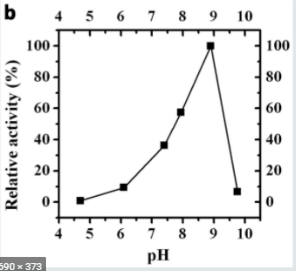
What is the optimal pH for this enzyme?

a)

6

b)

10

c)

9

d)

7

75.

What is the purpose of an enzyme?

a)

control how many reactions occur

b)

raise activation energy

c)

give permission for the reaction

d)

speed up chemical reactions

76.

What is the optimal temperature of this enzyme?

a)

60

b)

40

c)

70

d)

30

77.
Enzymes are...
a)
nucleic acids
b)
proteins
c)
lipids
d)
carbohydrates
78.
An enzyme speeds up a chemical reaction in the cell but can only be used once.  True or False? 
a)
true
b)
false
79.
What happens when enzymes are heated to a high temperature?
a)
The enzymes die.
b)
The shapes of the enzyme are altered denature
c)
The enzymes' amino acid sequence changes.
d)
The enzymes remain the same
80.
Each enzyme only has 1 substrate that will fit its active site.  What is this called?
a)
reusable
b)
catalyst
c)
specific
d)
fragile
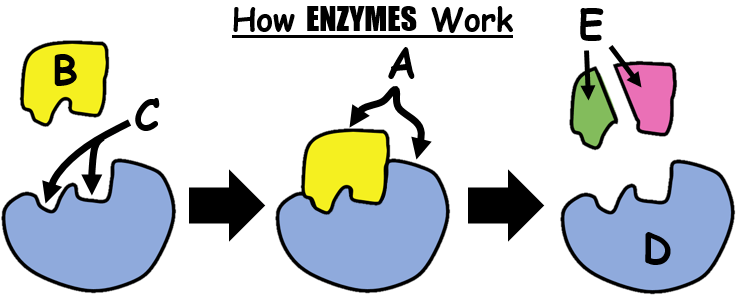
81.
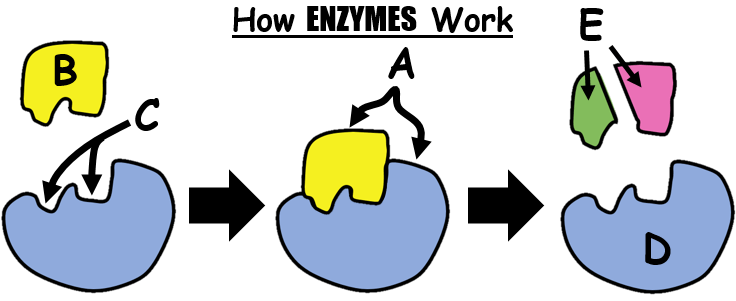
Letter D...
a)
active site
b)
enzyme
c)
substrate
d)
products
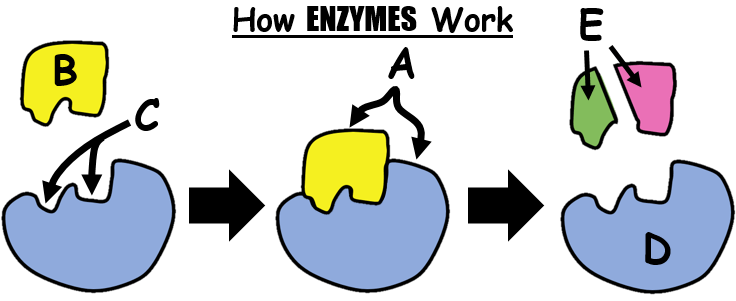
82.
Letter B...
a)
active site
b)
enzyme
c)
substrate
d)
products
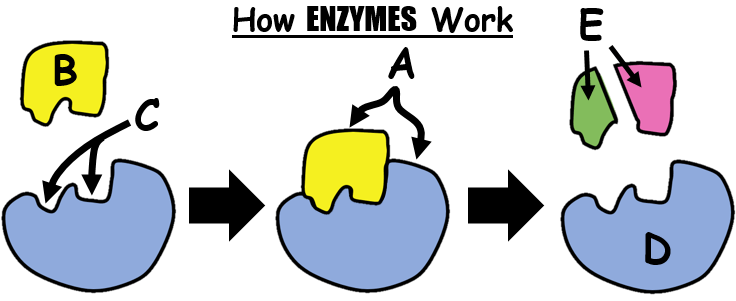
83.
Letter C...
a)
active site
b)
enzymes
c)
substrate
d)
products
84.
Letter E...
a)
active site
b)
enzyme
c)
substrate
d)
products
85.

In a chemical reaction, ________ are what you have at the end

a)

Products

b)

Molecules

c)

Reactants

d)

Substances

86.
What makes an enzyme substrate specific?
a)
Size
b)
Shape
c)
Name
d)
Location it is found in
87.

Where does fertilisation happen?

a)

Uterus

b)

Ovary

c)

Oviduct/Fallopian Tube

d)

Urethra

88.

Where are sperm cells produced?

a)

Ovary

b)

Testes

c)

Bladder

d)

Balls

89.

What are gonads?

a)

Gonads are sex organs that produce gametes

b)

Gonads are gorillas found in Tasmania

c)

Gonads are sex cells

d)

Gonads are fusion of gametes

90.

Where does an offspring get its DNA in asexual reproduction?

a)

from both parents

b)

from only one parent

c)

from neither parent

91.

Sexual reproduction requires ______ parent(s) and asexual reproduction requires ______ parent(s).

a)

one, one

b)

two, two

c)

two, one

d)

one, two

92.
What is an advantage of sexual reproduction?
a)
Allows genetic variation
b)
Only needs one parent
c)
Happens very quickly
d)
Offspring are exact copies of parent
93.
What is one disadvantage of sexual reproduction?
a)
Only one parent needed
b)
Off spring are exact copies of parents
c)
Happens very quickly
d)
Needs two parents
94.

Which of the following are advantages of asexual reproduction? Select all that apply.

a)

Overcrowding possible

b)

Inability to adapt to new environments

c)

Quicker process

d)

Produces more offspring

95.

Which of the following are disadvantages of asexual reproduction? Select all that apply.

a)

Overcrowding possible

b)

Inability to adapt to new environments

c)

Quicker process

d)

Produces more offspring

96.

What do you call the cell that forms from fertilization?

a)

fertilized egg

b)

sperm cell

c)

zygote

d)

egg cell

97.
_____________________ is a process that produces cells with HALF the chromosomes.
a)
Budding
b)
Fragementation
c)
Regeneration
d)
Meiosis
98.
A male shark has 40 chromosomes in each of its sex cells. How many would be present in its BODY cells?
a)
20
b)
40
c)
80
d)
160
99.
What characteristic did Darwin observe about the finches on the Galapagos Islands?
a)
Their feathers 
b)
Genotypes 
c)
Their beaks
d)
Their body sizes
100.
Which term refers to the process by which individuals that are better suited to the environment survive and reproduce therefore passing down their genes to their offspring? 
a)
Evolution 
b)
Variation 
c)
Adaptation
d)
Natural Selection 
101.
When an organism completely dies out, it is called.....
a)
Adaption
b)
Extinction
c)
Fossilization
d)
Mutation
102.
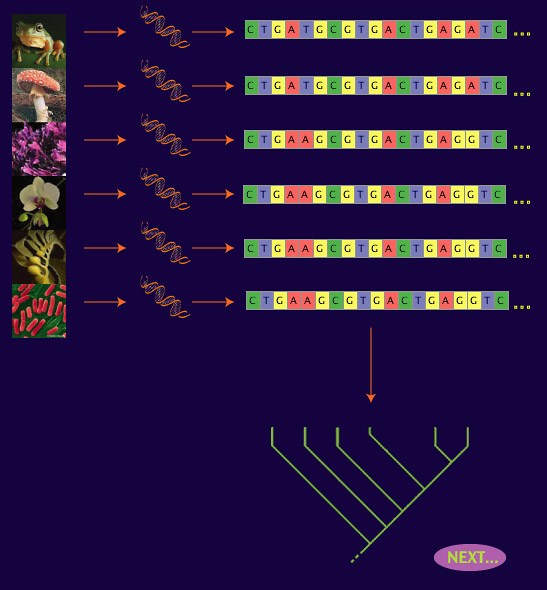
Two organisms that are closely related would have
a)
very similar DNA sequence
b)
exactly the same DNA sequences
c)
no proteins in common
d)
completely different DNA sequence
103.

A physical or behavioral trait that helps an organism survive and reproduce in its environment is called a what?

a)

An adaptation

b)

A response to a stimulus

c)

A mutation

d)

Evolution

104.
Which of the following is a term for a group of similar organisms that can reproduce fertile offspring?
a)
individual
b)
population
c)
species
d)
fossil
105.
If species A and B have very similar genes and proteins, what is probably TRUE?
a)
species A and B share a relatively recent common ancestor
b)
species A evolved independently of species B for a long period
c)
species A is younger than species B
d)
species A is older than species B
106.
Farmers breed cows to produce high amounts of milk. This is an example of...
a)
Natural Selection 
b)
Variations in a species 
c)
Selective Breeding 
d)
inbreeding
107.
Genetic differences between organisms of the same species
a)
Variation
b)
Adaptation
c)
Behavior
d)
Environment
108.
The struggle for existence against other members of an organisms species is
a)
Competition
b)
Natural Selection
c)
gene flow
d)
genetic drift
109.
Which of the following is NOT a factor that affects the process of natural selection?
a)
Overpopulation
b)
Fossils
c)
Competition
d)
Variations
110.
Where the better adapted organisms survive to pass traits along to offspring.
a)
Evolution
b)
Natural Selection
c)
Extinction
d)
Artifical Selection
111.
Why are advantageous traits more likely to be passed onto offspring?
a)
Because they are more likely to survive and reproduce.
b)
Because they come from dominant alleles.
c)
Because they come from recessive alleles.
d)
Because the trait is an acquired phenotype.
112.

1. What are renewable resources?

a)

. Resources that are used faster than they form

b)

resources that can replenish themselves over time

c)

resources that formed over millions of years

d)

resources that exist only in rural areas

113.

1. Why might an introduced animal species overrun native species in an ecosystem?

a)

. Its population size is smaller than those of native species.

b)

. It is more energy efficient, so it eats less food.

c)

It is a predator of the native species.

d)

It often has no natural enemies

114.
What is deforestation?
a)
Clearing Earth's forests on a massive scale
b)
Eating too much vegetables
c)
Going to a forest and pulling weeds
d)
Clearing the five trees in my backyard
115.

When human-made chemicals and garbage find their way into nature and harm the air, soil, and water it is called

a)

pollution

b)

habitat destruction

c)

overexploitation

d)

climate change

116.

The largest threat to biodiversity is

a)

bacteria

b)

fungi

c)

humans

d)

plants

117.
What does conserving resources mean?
a)
Use as much of the resources as you can
b)
Only use the resources at school
c)
Protecting the resource so it does not run out
118.
Which group includes ALL renewable resources?
a)
Coal, trees, water, oil
b)
Water, wind, sun, plants
c)
Minerals, sun, natural gas, water
119.
What is the major cause for air pollution? 
a)
factories and cars
b)
cigarretes 
c)
deforestation
d)
oil spills
120.
Concentration of toxins in an organism as a result of ingesting other plants/animals in which the toxins are widely distributed
a)
biomagnification
b)
point-source pollution
c)
artificial eutrofication
d)
consumable pollution
121.

Many products are made from trees. Which is the BEST way to manage the use of trees?

a)

plant a tree each time one is cut down.

b)

build more lumber mills.

c)

cut down more trees.

d)

reduce the amount of recycled paper.

122.
Abiotic factors would include all but...
a)
Sunlight
b)
Plants
c)
Pollution
d)
Temperature
123.
Biotic factors would include all but..
a)
humans
b)
fish
c)
Trees
d)
soil
124.

Burning fossil fuels creates air pollution.

a)

True

b)

False

125.
Pollution _________________________.
a)
is harmful materials put into the environment
b)
found in air, water, and land
c)
effects plants, animals, and people
d)
All of the above
126.

Which of these is an example of a human activity that causes climate change?

a)

A. burning fossil fuels

b)

B. removing greenhouse gases

c)

C. using alternative energy sources

d)

D. increasing ash particles from volcanoes

127.

Which activity would reduce human sources of greenhouse gases?

a)

A. increasing the size of livestock herds

b)

B. monitoring worldwide volcanic activity

c)

C. using wind energy to generate electricity

d)

D. researching ways to add methane to the atmosphere

128.

Which action can humans do to help reduce the rate of global warming?

a)

A. outlaw alternative energy

b)

B. increase energy consumption

c)

C. decrease energy consumption

d)

D. make computer models of emissions

129.
Which biomolecule is a main source of quick energy?
a)
Nucleic Acid
b)
Protein
c)
Lipid
d)
Carbohydrate
130.
A monomer is ...
a)
a single atom
b)
a building block for polymers
c)
a single element
d)
is an inorganic molecule
131.

Which biomolecule is made of nucleotides and contains your DNA?

a)

Carbohydrate

b)

Lipids

c)

Protein

d)

Nucleic Acid

132.

The pancreas produces _____ when your blood sugar level is high.

a)

Thyroxin

b)

Melatonin

c)

Glucagon

d)

Insulin

133.

What causes blood glucose levels to rise?

a)

eating

b)

vigorous exercise

c)

sleeping

d)

going to the toilet

134.

What causes blood glucose levels to fall?

a)

eating

b)

vigorous exercise

c)

sleeping

d)

going to the toilet

135.

What do cells need glucose for?

a)

photosynthesis

b)

respiration

c)

protein synthesis

d)

combustion

136.
What are the single sugars that are the building blocks of carbohydrates?
a)
monosaccharides
b)
disaccharides
c)
polysaccharides
d)
amino acid
137.
DNA and RNA are examples of 
a)
Carbohydrates
b)
Lipids
c)
Proteins
d)
Nucleic Acids
138.
Which macromolecule stores energy, insulates us, and makes up the cell membrane?
a)
lipids
b)
proteins
c)
carbohydrates
d)
nucleic acids
139.
What are the four macromolecules?
a)
proteins, nucleic acids, carbohydrates, and lipids
b)
monosaccharides, lipids, polysaccaharides, and proteins
c)
RNA, DNA, proteins, and carbohydrates
d)
proteins, DNA, RNA, and steroids
140.
Anything that triggers an immune response is a/n
a)
lymph cell
b)
antigen
c)
antibody
d)
neutrop
141.
The picture below illustrates one internal part of the body’s immune system. What process is illustrated in the picture?  
a)
a skin cell destroying germs.
b)
inflammation near an opened wound
c)
a white blood cell destroying pathogens
d)
mucus in the lungs destroying pathogens
142.
What is the Immune system?
a)
 The body's defense system
b)
A system that gives support and structure 
c)
A system that helps you breathe
d)
None of the above
143.
Which pathogen can be cured by antibiotics?
a)
Virus
b)
Bacteria
c)
Protist
d)
Fungi
144.
The part of foreign materials that cause a response from the immune system are called _____________________.
a)
Antigens
b)
Active Immunity
c)
Antibodies
d)
Antibiotics
145.
Antibodies are made by...
a)
Your own cells.
b)
The pathogen.
146.
The body detects pathogens by their...
a)
Antigens
b)
Antibodies
c)
Histamines
d)
DNA
147.
Vaccines stimulate the body to produce...
a)
autoimmune diseases
b)
helper t-cells
c)
fever
d)
antibodies
148.
A disease that is harmful to the body and is contagious is called....
a)
Non-Infectious
b)
Infectious
149.
Vaccinations are used for
a)
Curing the illness
b)
Preventing the Illness
c)
Getting the illness
150.
What type of microbe is used in a vaccine?
a)
it doesn't really matter
b)
a damaged one
c)
a weakened or inactivated one
d)
a normal one