wayground logo

Free Printable Worksheets

Font size

S
M
L
XL
Worksheets

Biology Semester 2 Final Review

Total questions: 147

Worksheet time: 1hrs 15mins

Name
Class
Date
1.
What phase of Mitosis? 
a)
Prophase
b)
Metaphase
c)
Anaphase
d)
Telophase
2.
What phase of Mitosis?
a)
Prophase
b)
Metaphase
c)
Anaphase
d)
Telophase
3.
What phase of the cell cycle does this represent if the arrow goes away from the cycle? 
a)
G1
b)
S
c)
G2
d)
G0
4.
What's this?
a)
Chromosome
b)
Centromere
c)
Sister Chromatid
d)
Chromatin
5.
What's this? 
a)
Chromosome
b)
Centromere
c)
Sister Chromatid
d)
Chromatin
6.
What's this (the stripe)? 
a)
Chromatid
b)
Gene
c)
Heterochromatin
d)
Centromere
7.
Which one is chromatin?
a)
A
b)
B
8.
SOMATIC or GAMETE? 
a)
Somatic
b)
Gamete
c)
Magic
9.
SOMATIC or GAMETE? 
a)
Somatic
b)
Gamete
c)
Because Science
10.
What are these chromosomes called? 
a)
Autosomes
b)
Sex Chromosomes
11.
What phase of Mitosis? 
a)
Prophase
b)
Metaphase
c)
Anaphase
d)
Telophase
12.
How many chromosomes would a mosquito egg have? 
a)
3
b)
6
c)
12
13.
DIPLOID OR HAPLOID? 
a)
Diploid
b)
Hapolid
14.
What are they doing in order to "cross over" genes (TANGLING)? 
a)
mitosis
b)
oogenesis
c)
independent assortment
d)
synapsing
15.
1n or 2n ? 
a)
1n
b)
2n
16.
What phase of Meiosis?
a)
Anaphase 1
b)
Anaphase 2
c)
Telophase 1
d)
Telophase 2
17.
What phase of Meiosis? 
a)
Anaphase 1
b)
Anaphase 2
c)
Metaphase 1
d)
Metaphase 2
18.
What are these chromosomes called? 
a)
Autosomes
b)
Sex Chromosomes
19.
What phase of interphase (growing,gaining weight....)?
a)
G1
b)
S
c)
G2
20.
What are the names of the proteins that DNA wraps around? 
a)
proteins
b)
histones
c)
chromatin
d)
centromere
21.
Why are the small cells laughing at the big cell? (HINT:  What do they have more of? )
a)
They have more volume
b)
They have more surface area
c)
They have more swag
22.
What phase of the cell cycle?
a)
Prophase
b)
Telophase
c)
Mitosis
d)
Cytokinesis
23.
What kinds of cells usually have a homologous pair of chromosomes? 
a)
body cells
b)
gametes
24.
What phase of Mitosis?
a)
Interphase
b)
Prophase
c)
Metaphase
d)
Anaphase
25.
What stage of the cell cycle?
a)
G1
b)
S
c)
Cytokinesis
d)
G0
26.
What is the number of  chromosomes normally present in a human egg cell?
a)
46
b)
23
c)
22
d)
44
27.
Name the monomer of a nucleic acid
a)
monosaccharide
b)
fatty acids and glycerol
c)
nucleotide
d)
amino acid
28.

What part of the nucleotide is circled?

a)

deoxyribose sugar

b)

phosphate group

c)

nitrogen base

29.

What part of the nucleotide is circled?

a)

deoxyribose sugar

b)

phosphate group

c)

nitrogen base

30.
Nucleic acids contain _______ for making proteins.
a)
information
b)
amino acids
c)
ribosomes
d)
sugars
31.
How many strands of genetic information is RNA made of?
a)
1
b)
2
c)
3
d)
4
32.
An example of a nucleic acid would be ____.
a)
cellulose
b)
lipase
c)
RNA
d)
Cholesterol
33.
Name the sugar present in DNA.
a)
deoxyribose
b)
ribose
c)
starch
d)
glucose
34.

Which part is not present in the structure of a nucleotide?

a)

phosphate group

b)

deoxyribose sugar

c)

nitrogen base

d)

amino

35.
What base switches with thymine when DNA makes mRNA?
a)
adenine
b)
guanine
c)
cytosine
d)
uracil
36.
What base switches with thymine when DNA makes mRNA?
a)
adenine
b)
guanine
c)
cytosine
d)
uracil
37.
Write the complimentary mRNA strand for the DNA strand CGA GAT
a)
GCU CUA
b)
GCC CUT
c)
GCC CTU
d)
TAG CUT
38.
What type of organic molecule is being shown here?
a)
carbohydrate
b)
protein
c)
lipid
d)
nucleic acid
39.
Write the complimentary strand of DNA for ATT GCC
a)
TAA CGG
b)
TTA CGG
c)
CGC TTA
d)
ATA GGC
40.
Which RNA is a copy of a portion of DNA, responsible for taking directions from DNA in the nucleus to the other two forms of RNA for them to read.
a)
mRNA (messenger)
b)
tRNA (transfer)
c)
rRNA (ribosomal)
41.
Use your mRNA chart. What polypeptide forms from UCU GCU CUA?
a)
Serine-Alanine-Leucine
b)
Phenylalanine-Valine-Glycine
c)
Glutamine-Alanine-Leucine
d)
Glutamine-Serine-Proline
42.
How many bases are linked together to form a codon?
a)
2
b)
3
c)
4
d)
5
43.
When amino acids are linked together in a ribosome, what is the chain called?
a)
polysaccharide
b)
polypeptide
c)
polynucleotide
d)
triglyceride
44.
This is tRNA.What goes here? 
a)
an amino acid
b)
anti-codon
c)
rRNA
d)
codon
45.
a)
amino acid
b)
anti-codon
c)
codon
d)
rRNA
46.
What's the green thing?
a)
amino acid
b)
anti-codon
c)
tRNA
d)
ribosome
47.
What's the pink thing?
a)
rRNA
b)
ribosome
c)
mRNA
d)
anti-codon
48.
Where did the pink thing just come from? 
a)
ribosome
b)
the nucleus
c)
the cytoplasm
d)
a vesicle
49.
Glow in the dark plants would be an example of what type of organism?
a)
clone
b)
vector
c)
electrophoresis
d)
transgenic
50.
Fill in each box with the correct bond name...
a)
hydrogen, phosphodiester
b)
phosphodiester, hydrogen
51.
Pick One word:
The DNA fragment"Hgb" is smaller  larger than fragment "Alb".
a)
smaller
b)
larger
52.
What kind of mutation has taken place here? 
a)
inversion
b)
substitution
c)
deletion
d)
insertion
53.
Would this cause a frame shift? 
a)
yes
b)
no
c)
maybe
54.
What is the mRNA codon for "start"?
a)
UAC
b)
AUG
c)
Met
d)
Tyr
55.
What is the mRNA codon that this tRNA matches with?
a)
CTT
b)
CAA
c)
GAA
d)
CUU
56.
Where in a cell is this scene occurring?
a)
nucleus
b)
cytoplasm
c)
golgi
d)
cell membrane
57.
Is this a scene from replication,or protein synthesis? 
a)
replication
b)
protein synthesis
58.
What is the name of segment "H"?
a)
Leading Strand
b)
Lagging Strand
c)
mRNA
d)
RNA
59.
What is the name of the enzyme that opened up this "bubble"? 
a)
DNA polymerase
b)
Helicase
c)
RNA polymerase
d)
Ligase
60.
What is the name of the enzyme that put complementary (matching) nucleotides on the other sides of the original DNA strand?  
a)
DNA polymerase
b)
RNA polymerase
c)
Helicase
d)
Ligase
61.
Why is the lagging strand built in fragments, instead of one long strand?
a)
A. Because it doesn't have access to building materials
b)
 B.  Because DNA polymerase is               moving away from Helicase
c)
Because the enzymes have not arrived yet. 
62.
What is the name of the molecules that only cut at specific sequences of DNA bases? 
a)
vectors
b)
purines
c)
restriction enzymes
d)
RFLP's
63.

This picture shows...

a)

Endocytosis

b)

Protein transport

c)

Protein Synthesis

d)

Replication

64.
Find the amino acid that comes from the DNA sequence "TTT"
a)
Lys
b)
Phe
65.

How can there be so many proteins when there are only 20 amino acids?

a)

chemical composition of one single amino acid could have several forms.

b)

size of a given amino acid can vary.

c)

same amino acid can have many different properties.

d)

sequence and number of amino acids is different.

66.

What kind of nucleic acid replicates during interphase?

a)

DNA only

b)

RNA only

c)

mRNA only

d)

mRNA & tRNA

e)

DNA, mRNA and tRNA and rRNA

67.

The DNA sequence ATA would translate to what anticodon on a tRNA molecule?

a)

TAT

b)

UAU

c)

AUA

68.
Who is considered the "Father of Genetics?"
a)
James Watson
b)
Francis Crick
c)
Gregor Mendel
d)
Albert Einstein
69.
Which of the following is an example of a homozygous recessive genotype?
a)
RR
b)
Rr
c)
rr
70.
Which of the following is an example of a GENOTYPE?
a)
25%
b)
Blue
c)
1:2:1
d)
Bb
71.
Which of the following is an example of a PHENOTYPE?
a)
25%
b)
Blue
c)
1:2:1
d)
Bb
72.
Which of the following is an example of a heterozygous genotype?
a)
RR
b)
Rr
c)
rr
73.
You can tell a tall plant's genotype just by looking at it.
a)
True
b)
False
74.
What is another name for heterozygous?
a)
Hybrid
b)
Purebred
c)
Codominant
d)
Mixed Breed
75.
What is another name for heterozygous?
a)
Hybrid
b)
Purebred
c)
Codominant
d)
Mixed Breed
76.
True or False: If a dominant allele is present, the trait will always appear in the organism.
a)
True
b)
False
77.
How many alleles do you get from each parent?
a)
1
b)
2
c)
23
d)
46
78.
The different forms of a gene are known as _____________.
a)
Codons
b)
Proteins
c)
Alleles
d)
Nucleotides
79.
Which of the following does NOT describe the flowers in the F1 Generation?
a)
Hybrid
b)
Heterozygous
c)
Homozygous
80.
For each trait you may only inherit how many alleles?
a)
1
b)
2
c)
23
d)
46
81.
A __________ is a segment of DNA that codes for a particular protein, which leads to a particular trait.
a)
Gene
b)
Allele
c)
Codon
d)
Nucleotide
82.
If these parents have four babies, three of them will show the dominant phenotype.
a)
True, 75% of the offspring will always show the dominant phenotype. Punnett squares show exact numbers in offsping.
b)
False;  a punnett square only shows probabilities. Each offspring has a 75% chance of having the dominant phenotype.
83.
What is the phenotypic ratio found in the F2 Generation? (Remember the dominant phenotype is listed first).
a)
1:1
b)
1:2:1
c)
3:1
d)
1:0
84.
This picture shows what the red blood cell of someone with sickle cell anemia.  This disorder is carried on the X chromosome and is most common in sub-saharan populations.  What type of inheritance pattern must it follow?
a)
codominance
b)
sex-linked inheritance
c)
multiple allele inheritance
d)
incomplete dominance
85.
This diagram represents what type of inheritance pattern?
a)
sex-linked inheritance
b)
complete dominance
c)
codominance
d)
incomplete dominance
86.
How many phenotypes are there in ABO blood types?
a)
3
b)
4
c)
6
d)
12
87.
What is this tool used for?
a)
to compare DNA of two individuals
b)
read braille
c)
analyze genetic disorders in many generations of individuals
d)
analyze genetic disorders in one individual
88.
ABO blood types are an example of what type of inheritance?
a)
multiple alleles
b)
incomplete dominance
c)
polygenic inheritance
d)
genetic mutations
89.
There are many variations in skin color that can be inherited based on the combination of alleles that you inherit from your mom and dad.  This is an example of
a)
incomplete dominance
b)
codominance
c)
multiple alleles
d)
polygenic inheritance
90.
What gender of offspring are most often affected by sex-linked inheritance?  What gender are usually carriers of the trait?
a)
males, males
b)
females, males
c)
males, females
d)
females, females
91.
What gender is this individual?
a)
male
b)
female
c)
we cannot tell using a karyotype?
92.
Chromosome pairs #s 1-22 are called
a)
mutations
b)
genosomes
c)
sex chromosomes
d)
autosomes
93.
The image shows the pattern of inheritance for colorblindness.  From this diagram we can tell that colorblindness is
a)
a codominant trait
b)
a sex-linked trait
c)
carried on the Y chromosome
d)
is associated with a dominant allele
94.
How many genotypes can a person with type A blood have? 
a)
1
b)
2
c)
3
d)
4
95.
Who is the founder of the idea of natural selection to explain evolution?
a)
Darwin
b)
Mendel
c)
Newton
d)
Einstein
96.
What is a change in an organism that allows for it to survive in its environment?
a)
homologous
b)
vestigial
c)
variation
d)
adaptation
97.
What is the study of organisms at the early stages of development?
a)
DNA studies
b)
embryology 
c)
extinction
d)
fossil record
98.
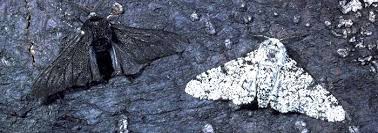
Predict which moth would increase in population
a)
light 
b)
dark
99.
When the DNA of an organism is altered it is referred to as…
a)
Mutation
b)
Gene Flow
c)
Genetic Drift
d)
Sexual Selection
100.
Which of the following is NOT an example of natural selection? 
a)
People selectively breeding hamsters.
b)
Insect populations developing resistance to certain pesticides.
c)
Bacteria becoming resistant to antibiotics.
d)
Male birds of certain species developing colorful feathers to attract female mates.
101.
Which term refers to the process by which individuals that are better suited to the environment survive and reproduce therefore passing down their genes to their offspring? 
a)
Evolution 
b)
Variation 
c)
Adaptation
d)
Natural Selection 
102.
Which species’ is more closely related to the toothed whale? 
a)
Hippopotamus 
b)
Baleen Whale
c)
Grazing Mammals
d)
Camels
103.
Two organisms that are closely related would have
a)
very similar DNA sequence
b)
exactly the same DNA sequences
c)
no proteins in common
d)
completely different DNA sequence
104.
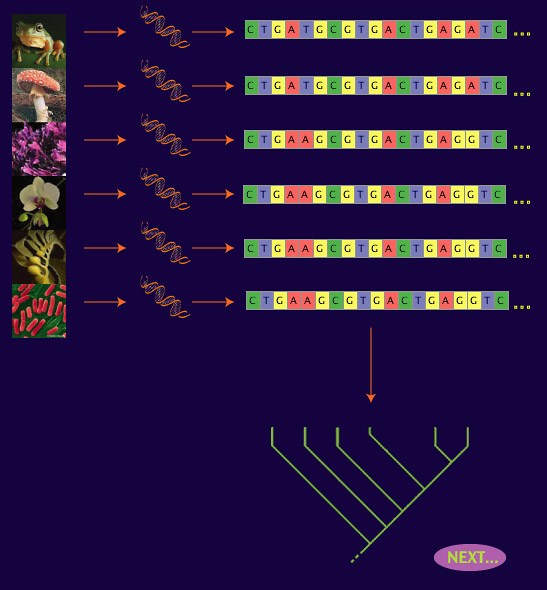
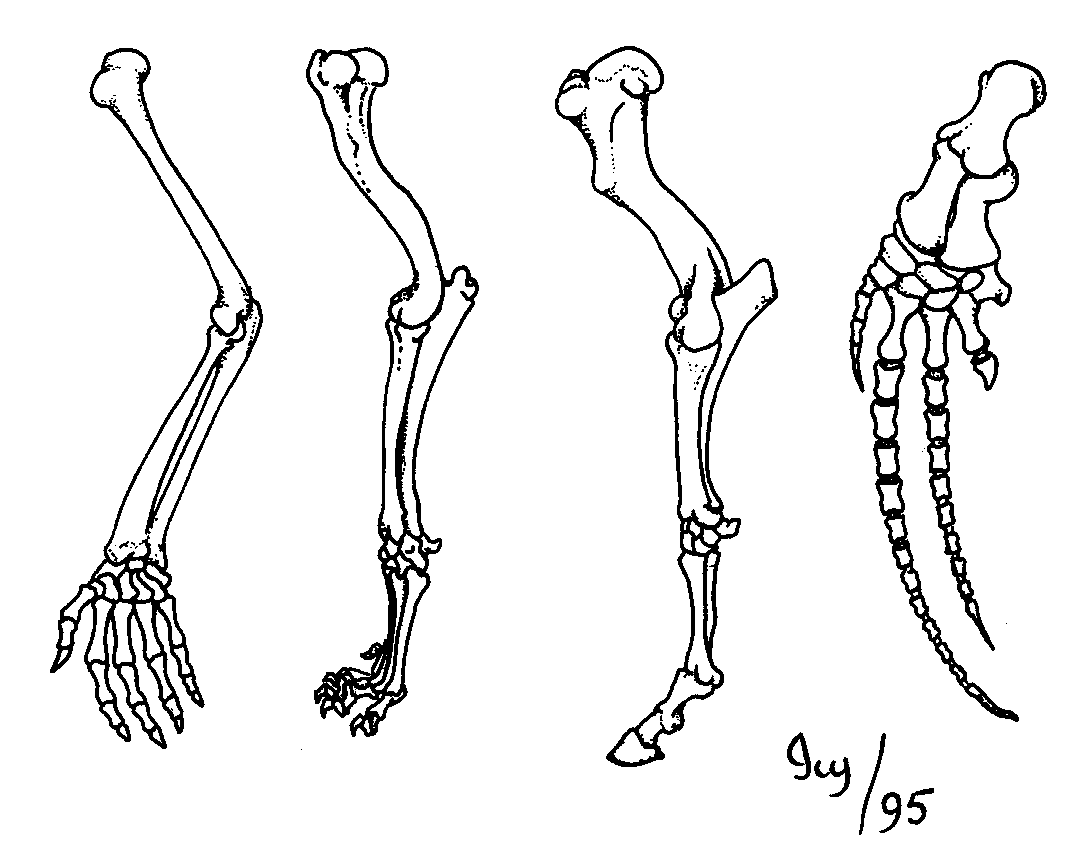
Structures with the same parts have different functions; suggests that organisms share a common ancestry
a)
vestigial structures
b)
homologous structures
c)
adaptive radiation
d)
fossil
105.
Which of the following is a term for a group of similar organisms that can reproduce fertile offspring?
a)
individual
b)
population
c)
species
d)
fossil
106.
Why are advantageous traits more likely to be passed onto offspring?
a)
Because the organisms that have them are more likely to survive and reproduce.
b)
Because they come from dominant alleles.
c)
Because they come from recessive alleles.
d)
Because the trait is an acquired phenotype.
107.
Is this picture showing Genetic Drift, or Gene Flow? 
a)
Genetic Drift
b)
Gene Flow
108.
T or F:  A salamander has lungs
a)
T
b)
F
109.
T or F: The shark evolved earlier than the lizard.
a)
T
b)
F
110.
This is a story about....
a)
How my life got flipped turned upside down
b)
Mutations due to pollution
c)
Natural Selection
d)
Catastrophism
111.
Calculate the allele frequency of "G"in the form of a ratio/fraction.
a)
5/8
b)
3/8
c)
3/4
d)
1/4
112.
What part of the environment selected these finches for survival?
a)
Available food
b)
The soil, trees, and rocksfor survival
c)
The types of diseases that affect birds on the Galapagos
113.
What is the word that means:?
"The elephant has a ____________  trait, since the size of  trunk has not changed for 6 million years."
a)
conserved
b)
adapative
c)
advantageous
d)
fitness
114.

Check all that are factors in natural selection

a)

large populations that have variation

b)

competition for resources

c)

adaptations

d)

Produce more offspring than can survive

e)

catastrophism

115.

What does it mean if a population is in Hardy-Weinberg equilibrium?

a)

equilibrium is coming to an end

b)

genetic drift is occurring

c)

the population is evolving rapidly

d)

the population is not evolving

116.

A few birds migrate to a new island and start a new colony. This is an example of...

a)

more variety in the population

b)

the bottleneck effect

c)

the founder effect

d)

disruptive selection

117.

What type of natural selection does this graph represent?

a)

directional

b)

stabilizing

c)

disruptive

118.

What type of natural selection does this graph represent?

a)

directional

b)

stabilizing

c)

disruptive

119.
What is the original source of almost all energy in most ecosystems?
a)
carbohydrates
b)
sunlight
c)
water
d)
carbon
120.
A symbiotic relationship in which both organisms benefit
a)
competition
b)
Mutualism
c)
nitrogen fixation
d)
energy pyramid
121.
A living relationship between two species in which one organism is harmed is called...
a)
mutualism
b)
commensalism
c)
parasitism
d)
niche
122.
The amount of energy that usually transfers from one trophic level to the next...
a)
10%
b)
20%
c)
80%
d)
50%
123.
Water temperature would be an example of ...
a)
A biotic factor
b)
An abiotic factor
124.
A collection of organisms that belong to different populations but all live in the same area and interact with one another.
a)
Population
b)
Ecosystem
c)
Community
d)
Ecosphere
125.
A collection of organisms that make up a community as well as all of the nonliving aspects of the environment.
a)
Population
b)
Community
c)
Habitat
d)
Ecosystem
126.
Organisms that feed on both living producers and other consumers.
a)
Carnivores
b)
Omnivores
c)
Herbivores
d)
Detritivores
127.
a)
Producer
b)
Primary Consumer
c)
Secondary Consumer
d)
Decomposer
128.
a)
Producer
b)
Primary Consumer
c)
Secondary Consumer
d)
Tertiary Consumer
129.
a)
Primary
b)
Tertiary
130.
a)
Biomes
b)
Ecosystems
131.
a)
Logistic
b)
Exponential
132.
What is the arrow pointing to?
a)
A circle
b)
Density dependent
c)
Carrying Capacity
d)
Logistic
133.
What's this type of growth curve called?
a)
Logistic Growth
b)
Exponential Growth
c)
Steady Growth
d)
Limited Growth
134.
a)
Ecosystem
b)
Habitat
135.
a)
Primary Succession
b)
Secondary Succession
136.
a)
ecosystem, phenotype
b)
biome, habitat
c)
habitat, niche
d)
niche, species
137.
Photosynthetic algae in a ocean food web would be a 
a)
Producer
b)
Detritivore
c)
Primary Consumer
d)
Secondary Consumer
138.

What is this picture depicting?

a)

primary succession

b)

secondary succession

c)

a biome

d)

abiotic factors

139.
What are the Abiotic factors in this image? 
a)
water, sunlight, dirt, air
b)
birds and plants
c)
birds, water, dirt
d)
plants, water
140.

Which of the following are density dependent factors?

a)

competition for resources

b)

predation

c)

disease

d)

natural disasters

141.

Which of the following are examples of a density independent factors?

a)

forest fire

b)

seasonal cycles

c)

storms

d)

disease

142.

Which population growth model most closely describes the human population in the modern age?

a)

logistic growth

b)

exponential growth

c)

upward growth

d)

tumor growth

143.
Which kind of dispersion is #1?
a)
clumped
b)
random
c)
uniform
144.

What is the biggest contribution of the carbon cycle?

a)

provide building blocks for DNA

b)

Recycle nutrients & break down waste

c)

Central member to all biogeochemical cycles

d)

regulating atmospheric temperature

145.

A group of squirrels living in Yosemite is an example of

a)

a biome

b)

a community

c)

an ecosystem

d)

a population

146.

What would decrease the size of a population

a)

emigration & births

b)

immigration & births

c)

emigration & deaths

d)

immigration & deaths

147.

Which would have the highest growth rate?

a)

A

b)

B

c)

C