
 Worksheets
Bio Ecology
Total questions: 150
Worksheet time: 7hrs 57mins


What is the correct order for this food chain?
Owl, Mouse, Grasshopper, Grass
Grass, Mouse, Owl, Grasshopper
Grass, Owl, Grasshopper, Mouse
Grass, Grasshopper, Mouse, Owl

Which of these organisms is the secondary consumer?
Owl
Mouse
Grass
Grasshopper

Which of these organisms is the producer?
Owl
Mouse
Grasshopper
Grass
What do herbivores eat?
Animals
Plants and Animals
Plants
Dead Animals
What do omnivores eat?
Animals
Plants and Animals
Plants
Dead Animals
Place the levels of environment in the correct order.
biome, biosphere, population, organism, ecosystem,community
organism, ecosystem, biosphere, population, community, biome
organism, population, community, ecosystem, biome, biosphere
population, community, organism, biome, ecosystem, biosphere

What is the hawk in the food web?
Producer
Primary consumer
Secondary consumer
Tertiary consumer
Which of these is an aquatic biome?
Savanna
Tropical Rainforest
Marine
Tundra
How much energy is transferred between trophic levels?
25%
20%
10%
90%
Which of these is an autotroph?
Consumer
Producer
Decomposer
Volcano erupting would be an example of what type of succession?
Primary
Secondary
Tertiary
What was NOT a part of the water cycle?
Condensation
Precipitation
Decompostition
Evaporation
Group of the same species.
Community
Ecosystem
Population
All of the biotic and abiotic factors.
community
ecosystem
population


What is the correct order for this food chain?
Owl, Mouse, Grasshopper, Grass
Grass, Mouse, Owl, Grasshopper
Grass, Owl, Grasshopper, Mouse
Grass, Grasshopper, Mouse, Owl
Volcano erupting would be an example of what type of succession?
Primary
Secondary
Tertiary
All of the biotic and abiotic factors.
community
ecosystem
population
What are plants that convert energy from the sun called?
decomposer
primary consumer
secondary consumer
producer


What would happen within a few months after the formation of a volcanic island?
pioneer species would grow
no pioneer species would grow
trees and large plants would grow
rich, organic soil would be present

Which organisms would be at the top or last trophic level?
plant
herbivore
omnivore
carnivore

The monkey would be a
decomposer
producer
primary consumer
secondary consumer
Which is an example of where primary succession could occur?
a glacier melts and exposes new rocks
natural fire burns a prairie
a corn field is abandoned and left to overgrow
flood covers a piece of land

Mice might grow in population and destroy the community by eating all of the berry bushes if
wolves and snakes were removed from the food web
another predator migrated in to the community
the snake population grew
none of these

These organisms are often not shown in a food chain, but are important for recycling nutrients
producers
decomposers
primary consumers
carnivores
Which event would not cause secondary succession?
forest fire
flooding of a valley
volcanic lava flow
tornado
A lion that eats a zebra that eats grass is a
primary consumer
secondary consumer
tertiary consumer
quaternary consumer

90% of the energy that gets lost as you move up a food pyramid or chain gets lost as
pollution to the environment
heat to the environment
energy for decomposers
gets recycled
What percentage of energy is passed on to the next trophic level?
5%
10%
50%
90%


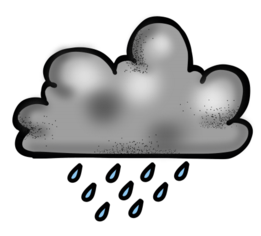
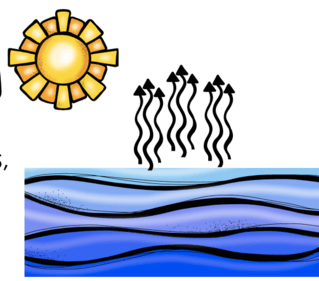


What are formed when water vapor condenses?
Clouds
Mountains
Transpiration
Valleys
The process of eroding or being eroded by wind, water, or other natural agents. _______________________
Runoff
Sun
Landforms
weathering
The draining away of water from the surface of an area of land.
weathering
transpiration
run-off
precipitation

The process where plants absorb water through the roots and then give off water vapor through pores in their leaves. __________________________
Transpiration
Condensation
Evaporation
Precipitation
What cycle are fossil fuels part of ?
carbon
oxygen
nitrogen
phosphorus
What is the largest reservoir for nitrogen?
the ocean
rocks and minerals
the atmosphere
bacteria
The carbon in coal, oil, and natural gas came from
the combustion of fossil fuels
the remains of dead organisms
carbon-fixing bacteria in swamp soil
carbon dioxide dissolved in ocean water
Nitrogen fixation is the process in which certain bacteria convert nitrogen gas into
liquid nitrogen
nitrates
nitrites
ammonia
Law of conservation of mass states that
matter is neither created nor destroyed
matter is destroyed
matter is created
matter does not change
12. When water is heated in the ocean by the sun and turns into water vapor
Condensation
Transpiration
Evaporation
All of the above
13. After condensation, the droplets of water in the clouds fall to Earth in different forms...
precipitation
evaporation
condensation


How do animals get the nitrogen they need?
From the air they breathe
From the water they drink
From the food they eat
From the sun
What process occurs when dead plant and animal matter decomposes and nitrogen is released back into the atmosphere?
Assimilation
Fixation
Ammonification
Denitrification
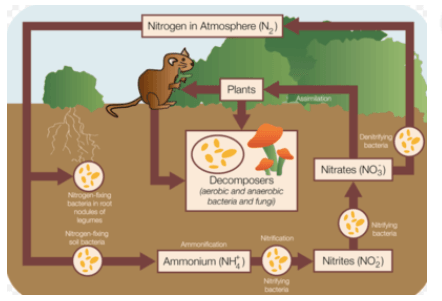
A correct path that nitrogen could take would be
air -> animals -> plants -> bacteria
animals -> air -> bacteria -> plants
bacteria -> air -> plants -> animals
air -> bacteria -> plants -> animals
This is NOT a part of the phosphorus cycle.
Phosphate is incorporated into sedimentary rocks
Phosphate bound to soil
Atmospheric phosphate
Phosphate is absorbed from the soil by plants
True or false: Phosphorous can enter the atmosphere
True
False
Too much phosphorus in waterways (rivers, lakes) can lead to___________.
eutrophication
Nothing
Death
diseases
This is NOT a part of the phosphorus cycle.
Phosphate is incorporated into sedimentary rocks
Phosphate bound to soil
Atmospheric phosphate
Phosphate is absorbed from the soil by plants
Too much phosphorus in waterways (rivers, lakes) can lead to___________.
eutrophication
nothing
decreased pH levels
diseases
The major sink for phosphorus is
sedimentary rock
atmospheric gases
seawater
plants
Which nitrogen cycle process is occurring when bacteria convert ammonium to nitrite and then into nitrate?
nitrogen fixation
nitrification
denitrification
ammonification
assimilation
Which of these nitrogen molecules would be present in the atmosphere?
NH3
NH4+
NO3-
N2
Which of these nitrogen cycle processes converts atmospheric nitrogen to a soil form of nitrogen that is usable by plants?
nitrogen fixation
nitrification
denitrification
ammonification
assimilation
Which of these nitrogen cycle processes takes nitrogen from its largest reservoir?
nitrogen fixation
nitrification
denitrification
ammonification
assimilation
When deciduous trees shed their leaves, specialized soil bacterial will consume the leaf material for energy and, in the process, will return some of the leaf nitrogen to the soil. What nitrogen cycle process is taking place?
nitrogen fixation
nitrification
denitrification
ammonification
assimilation
This can transform nitrogen in the atmosphere into a usable form of nitrogen
rain
ice
lightning
sun
What is the role of denitrifying bacteria
change nitrate back into nitrogen gas
change nitrogen gas into nitrate
absorb carbon dioxide in the soil
release oxygen gas into the atmosphere
We need nitrogen to make
proteins
enzymes
cells
all of these

What is the role of the sun in the water cycle?
provide heat energy for evaporation
provide heat energy for condensation
dry out the soil for runoff to occur
provide thermal energy for accumulation
Which of the following is NOT a way water moves from the land to the air?
transpiration
respiration
evaporation
precipitation
Which of the following is an example of precipitation?
sleet
hail
snow
all of the above
What do we call water in its gas state?
rain
snow
ice
water vapor
If groundwater reaches earth's surface, how does it reenter the water cycle?
by transpiration
by evaporation
by accumulation
it can't
During evaporation, water changes from a _________ to a __________.
solid, liquid
gas, liquid
liquid, gas
liquid, solid
The water cycle starts at....
evaporation
condensation
precipitation
it has not beginning or ending
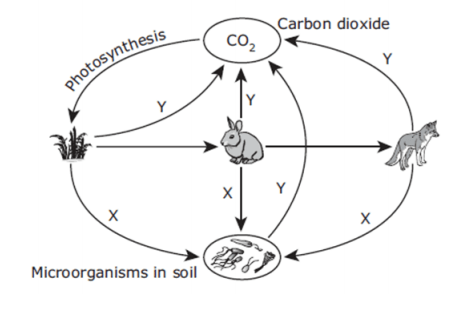
Y : Predation
Y : Decomposition
Y : Nitrogen Fixation
Y : Respiration
If the plant population decreased, the amount of carbon in the atmosphere would _________.
Stay the same
Increase
Decrease
Which of the following are fossil fuels?
Coal, water, oil
Oxygen, coal, oil
Coal, Oil, Natural Gas
None of the above

