wayground logo

Free Printable Worksheets

Font size

S
M
L
XL
Worksheets

Biology Semester A Review

Total questions: 159

Worksheet time: 3hrs 38mins

Name
Class
Date
1.
A possible explanation to a problem that has not yet been tested. 
a)
data
b)
theory
c)
hypothesis
d)
fact
2.
This variable in an experiment is the one being deliberately changed by the scientist. 
a)
dependent variable
b)
independent variable
c)
data
d)
control group
3.
Should experiments be repeated over and over to see if the results are the same each time?
a)
yes
b)
no
4.
There are two types of data. Which type of data involves numbers that are obtained by counting or measuring?
a)
quantitative
b)
qualitative
5.
There are two types of data. Which type of data involves descriptions that cannot be counted or measured?
a)
qualitative
b)
quantitative
6.
A series of steps used by scientists to solve a problem or answer a question. 
a)
scientific method
b)
recipe
c)
data collection
d)
metric system
7.
In a controlled experiment, how many variables can be worked with at a time? 
a)
one
b)
none
c)
two or more
d)
how ever many makes sense.
8.
The part of the experiment that remains the same for the control and experimental group.
a)
constants
b)
control
c)
independent
d)
dependent
9.
Which statement is an inference about this picture?
a)
The van is tan.
b)
The  van ran into KFC. 
c)
The driver was hungry. 
d)
Red and white are part of the KFC building. 
10.
Measuring the number of times a person breathes after exercise involves ____ data. 
a)
quantitative
b)
qualitative
11.
Jane Goodall recorded chimpanzees hunt bushpigs, this type of data is called ___
a)
qualitative
b)
quantitative
c)
field study
d)
observation
12.
The weather is cold.
a)
inference
b)
observation
13.
Mr. S. sets up an experiment to see how the mass of a ball affects the distance it rolls off a ramp.  Identify the independent variable.
a)
distance traveled by the ball
b)
height of the ramp
c)
mass of the ball
d)
weight of the ball
14.
Mr. S. sets up an experiment to see how the mass of a ball affects the distance it rolls off a ramp.  Identify the dependent variable.
a)
height of the ramp
b)
 distance traveled by the ball
c)
mass of the ball
d)
weight of the ball
15.
A student is planning an experiment to find out how the height from which he drops a ball affects how high the ball bounces. The dependent variable is the _____.
a)
Diameter of the ball
b)
Force acting on the ball
c)
Height that the ball bounces
d)
Height from which the ball is dropped
16.
When experimenting with the growth of a plant, a scientist uses three (of the same type of) plants, two different fertilizers, equal light, and equal water. What type of variable is the fertilizer?
a)
Dependent
b)
Independent
c)
Control
d)
Compound
17.
An experiment is performed on plants to see how different liquids affect plant growth. Each plant in the experiment is given a different liquid; water, apple juice, or milk. Each plant has the same amount of soil, sunlight, and listens to the same music. In this investigation, what is the dependent variable?
a)
Type of plant
b)
Water, apple juice, milk
c)
Plant growth
d)
Color of the plant's leaves
18.
If plants are exposed to sunlight, then they will grow taller.
What part of the scientific method is this an example of?
a)
Procedure
b)
Hypothesis
c)
Question
d)
Results
19.
The independent variable is the ONE thing you _____.
a)
change on purpose
b)
control or keep constant
c)
measure
20.
The variable that is being measured or observed is called the _______________. Hint: this is the variable that is the result or effect 
a)
independent variable
b)
dependent variable
c)
control variable
21.
An experiment is performed on plants to see how different liquids affect plant growth. Each plant in the experiment is given a different liquid: water, apple juice, or milk. What variables should be kept constant/controlled? 
a)
type of plant, flower pot,  soil, and amount of sunlight
b)
water, apple juice, milk
c)
only the amount of sunlight
d)
type of plant only
22.
The digestion of food requires enzymes.
a)
True
b)
False
23.
What do the building blocks represent?
a)
(1) Carbohydrates
b)
(2) Proteins
c)
(3) Lipids
d)
(4) Amino Acids
24.
What do carbohydrates provide for the body?
a)
Helps build and repair body tissue
b)
Helps hydrate your body
c)
Provides your body's main source of energy
d)
Helps vital processes 
25.
Which is the monomer (building block) for lipids?
a)
fatty acids & glycerol
b)
nucleotide
c)
amino acids
d)
monosaccharide
26.
What is the function of nucleic acids?
a)
store genetic information
b)
store energy (long-term)
c)
store energy (short-term)
d)
build skin, hair, nails, muscles
27.
___________ are some functions of lipids.
a)
storing energy and  cell membrane structure
b)
providing actin & providing myosin
c)
cellulose structure and digestive assistance
d)
storing & transferring genetic info
28.
________ are the main components of fats and oils.
a)
lipids
b)
amino acids
c)
nucleic acids
d)
carbohydrates
29.
Examples of nucleic acids?
a)
DNA and RNA
b)
carbohydrates
c)
potatoes
d)
meats
30.
Amino acids are the monomers of
a)
Carbohydrates 
b)
Lipids
c)
Proteins 
d)
Nucleic Acids
31.
What is the purpose  of an enzyme?
a)
give permission for the reaction
b)
raise activation energy
c)
speed up reactions
d)
control how many reactions occur
32.
Which is the monomer (building block) for nucleic acids?
a)
amino acid
b)
fatty acid & glycerol
c)
nucleotide
d)
monosaccharide
33.
A large molecule made up of multiple monomers
a)
Polymer
b)
Polysaccharide
c)
Macromolecules
d)
Protein 
34.
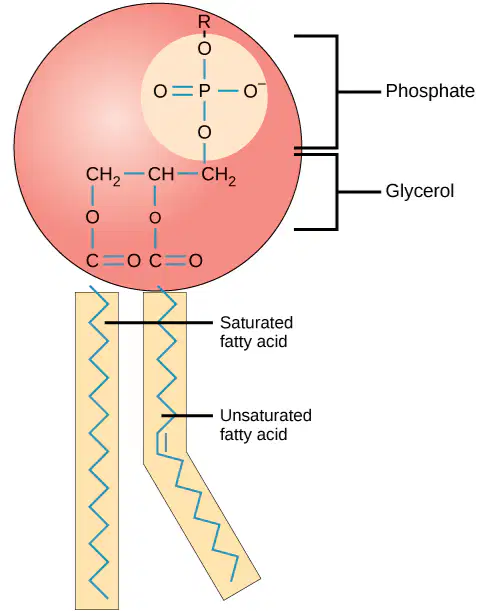
Which macromolecule is this?
a)
carbohydrates
b)
lipids
c)
proteins
d)
nucleic acids
35.
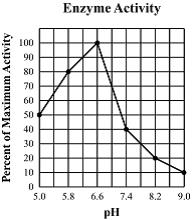
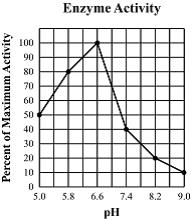
Which of the following conclusions can be drawn from this graph?
a)
The optimum pH of the enzyme is 6.6.
b)
The optimum pH of the enzyme is 5.8
c)
The enzyme’s activity increases as pH increases 5.0 to 9.0
d)
The enzyme’s activity is greater around pH of 8.0 .
36.

________________ help create proteins for eukaryotic and prokaryotic cells. 

a)
Ribosomes
b)
Endoplasmic Reticulum
c)
Golgi Bodies
d)
Lysosomes
37.
The organelles that clean animal cells by using enzymes to break down worn out cell parts are ______________.
a)
Lysosomes
b)
Mitochondria
c)
Nucleolus
d)
Cell Wall
38.
The _____________ holds the DNA, and controls the functions of eukaryotic cells.
a)
Nucleus
b)
Nuclear Membrane
c)
Nucleolus
d)
New Moon
39.
I am a protein packaging and shipping machine! Who am I?
a)
vacuole
b)
ribosome
c)
endoplasmic reticulum
d)
golgi apparatus
40.
This can be found in the nucleus.  These strands contain the instructions for directing the cell's functions.
a)
DNA/Chromatin
b)
Chloroplasts
c)
Golgi Bodies
d)
ER
41.
What does this cell structure do?
a)
Only found in Plant cells; photosynthesis
b)
Found in Plant cells; surrounds and gives support
c)
Made of phospholipids
d)
Made of proteins
42.
What does this organelle do?
a)
Makes food through photosynthesis
b)
Only found in plants, provides support
c)
Makes ATP, powerhouse of the cell
d)
Makes Ribosomes
43.
Four students examined the cells and made the following observations: 
Student 1: Cell 1 is a plant cell because it has a cell wall
Student 2: Cell 2 is an animal cell because it has a nucleus
Student 3: Cell 1 is a plant cell because it has chloroplasts
Student 4: Cell 2 is an animal cell because it has a cell membrane
Who is correct?
a)
Student 1 and Student 2
b)
Student 2 and Student 3
c)
Student 1 and Student 3
d)
Student 2 and Student 4
44.
Prokaryotic 
a)
are single celled organisms that do not have a nucleus or membrane bound organelles
b)
a protective layer that covers the the cells surface and acts as a barrier
c)
is the smallest unit that can preform all he processes necessary for life
45.
Which of the following structures is where cellular respiration occurs in the cell?
a)
nucleus
b)
cytoplasm
c)
mitochondria
d)
vacuoles
46.
This cell would be classified as a(n) ________________ cell.
a)
prokaryotic
b)
eukaryotic 
c)
plant
d)
virus
47.
Structures that allow the cell to live, grow and reproduce.  These structures have specific functions. These structures have a membrane surrounding them. 
a)
cell
b)
organs
c)
ribosomes
d)
organelles
48.
Produces fats and lipids
a)
smooth endoplasmic reticulum 
b)
cell membrane
c)
golgi complex
d)
rough endoplasmic reticulum
49.
contains enzymes for intercellular digestion
a)
lysosome
b)
ribosome
c)
nucleus
d)
golgi body
50.
This organelle is a rigid outer layer that protects plant cells.
a)
Cell Membrane
b)
Cell Wall
c)
Nucleus
d)
Chloroplast 
51.

This organelle controls what goes in and out of cells.

a)
Cell Wall
b)
Cell Membrane
c)
Cytoplasm
d)
Cytoplasm
52.
Which of the following units are repeatedly joined together to form a strand of DNA?
a)
amino acids
b)
nucleotides
c)
fatty acids
d)
polysaccharides
53.
The DNA nucleotide is composed of three parts. Which two components make up the nucleotide backbone?
a)
ribose sugar and base
b)
ribose sugar and phosphate group
c)
nitrogen base and deoxyribose sugar
d)
deoxyribose sugar and phosphate group
54.
The organelle that uses C6H12O6 and O2 to produce ATP
a)
Endoplasmic reticulum
b)
central vacuole
c)
chloroplasts
d)
mitochondria
55.
In plants, organelles that use light, CO2, and H2O to make organic compounds
a)
central vacuole
b)
chloroplasts
c)
golgi apparatus
d)
lysosomes
56.
Site of protein synthesis.
a)
nucleus
b)
mitochondria
c)
vacuole
d)
ribomsome
57.
In which way are photosynthesis and cellular respiration different?
a)
Cellular respiration stores ATP, while photosynthesis releases ATP.
b)
Cellular respiration produces oxygen, while photosynthesis uses oxygen.
c)
Photosynthesis releases energy, while cellular respiration stores energy.
d)
Photosynthesis uses carbon dioxide, while cellular respiration produces carbon dioxide.
58.
Anaerobic respiration.....
a)
doesn't require CO2
b)
requires CO2
c)
does not require oxygen
d)
requires oxygen
59.
What is cellular respiration?
a)
the breakdown of glucose  to release ATP
b)
the breakdown of glucose to release NADH
c)
the breakdown of glucose to release FADH
d)
the breakdown of glucose to release carbon
60.
The energy in ATP is stored 
a)
in the bond between the second and third phosphate
b)
in the bond between the first and second phosphate
c)
in the bond between the adenosine and the first phosphate
d)
ADP stores the energy not ATP
61.
How many ATP are produced in Alcoholic Fermentation?
a)
2
b)
33
c)
4
d)
36
62.
What are the reactants (what's needed) for photosynthesis?
a)
glucose and oxygen
b)
light, water, and carbon dioxide
c)
ATP and Carbon Dioxide 
d)
Water and ATP and Carbon dioxide 
63.
What are the products (what's made) during photosynthesis?
a)
glucose and oxygen
b)
water, light, and carbon dioxide
c)
ATP, Water, Carbon Dioxide
d)
Water and Carbon dioxide
64.
What is the gas we breath out that plants use for photosynthesis?
a)
sulfur
b)
carbon dioxide
c)
oxygen
d)
hydrogen
65.
Fruit fly body cells have 8 chromosomes. After mitosis, you would expect a resulting fruit fly daughter cell to have ...
a)
16 chromosomes.
b)
46 chromosomes.
c)
8 chromosomes.
d)
4 chromosomes.
66.
The process by which the nuclear material is divided equally between two new cells
a)
mitosis
b)
cancer
c)
spindle
d)
centromere
67.
Name the phase:
a)
Anaphase
b)
Telophase
c)
Metaphase
d)
Prophase
68.
Name the phase:
a)
Anaphase
b)
Telophase
c)
Metaphase
d)
Prophase
69.
What is the next phase of mitosis?
a)
Prophase
b)
Metaphase
c)
Anaphase
d)
Telophase
70.
What is the next phase of mitosis?
a)
Prophase
b)
Metaphase
c)
Anaphase
d)
Telophase
71.
Name the previous phase.
a)
Prophase
b)
Metaphase
c)
Anaphase
d)
Telophase
72.
Name the phase:
a)
Prophase
b)
Metaphase
c)
Anaphase
d)
Telophase
73.
Name the phase:
a)
Prophase
b)
Metaphase
c)
Anaphase
d)
Telophase
74.
Name the phase:
a)
Prophase
b)
Metaphase
c)
Anaphase
d)
Telophase
75.
Name the phase:
a)
Prophase
b)
Metaphase
c)
Anaphase
d)
Telophase
76.
Name the phase:
a)
Prophase
b)
Metaphase
c)
Anaphase
d)
Telophase
77.
The structure that helps in animal cell division and produces spindle fibers.
a)
Chromosome
b)
Centriole
c)
Cytoplasm
d)
Chloroplast
78.
The stages of mitosis in order
a)
Metaphase, Anaphase, Prophase, Telophase
b)
Prophase, Anaphase, Metaphase, Telophase
c)
Prophase, Metaphase, Anaphase, Telophase
d)
Anaphase, Prophase, Telophase, Metaphase
79.
This image shows that DNA Replication is _______.
a)
Conservative
b)
Semiconservative
c)
Dispersive
d)
Spontaneous
80.
What is the name of the shape of DNA?
a)
Single Helix
b)
Double Helix
c)
Double Stranded
d)
Semiconservative
81.
Where does DNA replication take place?
a)
Nucleus
b)
Ribosome
c)
Cytoplasm
d)
Golgi Body
82.
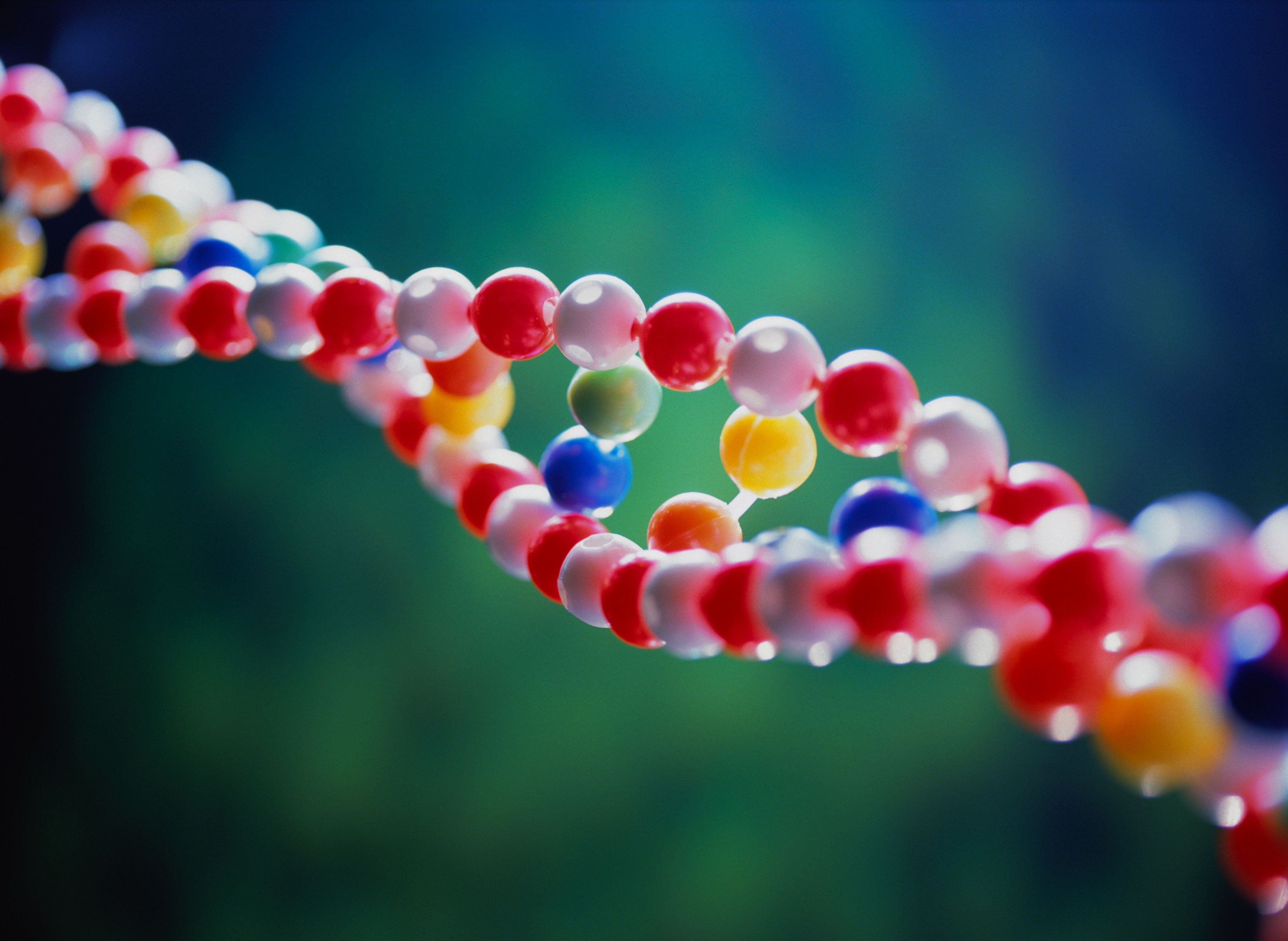
Name this structure
a)
double helix
b)
nucelotide
c)
twisted ladder
d)
hydrogen bond
83.
What is the sugar in DNA called?
a)
Deoxyribose 
b)
Ribose
c)
Glucose
d)
Nucleotides
84.
During diffusion
a)
fluids (liquid or a gas) moves from high to low concentration
b)
water moves when energy is used
c)
large or oddly shaped molecules move across a cell membrane
d)
water moves from high to low concentration
85.
Osmosis is the diffusion of _____ across a selectively permeable membrane.
a)
food
b)
air
c)
water
d)
oxygen
86.
 An animal cell placed in a hypertonic solution will
a)
Stay the same
b)
Shrink- get smaller
c)
Swell- get bigger
87.
Ideally, your cells should be in a(n) _______ solution
a)
isotonic
b)
hypertonic
c)
hypotonic
d)
isometric
88.
The picture  is an example of _________________.
a)
isotonic
b)
diffusion
c)
osmosis
d)
active transport
89.
When both inside and outside of a cell have the same amount of water it is said that the cell has reached a state of ___________.
a)
osmosis
b)
equilibrium
c)
diffusion
d)
hypertonic
90.
What does selectively-permeable mean?
a)
The cell controls what passes in and out of the cell
b)
Nothing gets through
c)
The cell lets only large substances through
d)
The cell is going to die.
91.
What does the cytoskeleton help with?
a)
cell movement (cilia and flagella)
b)
cell structure
c)
animal cell division
d)
all of the above 
92.
What process happens during the S phase of interphase?
a)
replication of organelles
b)
DNA replication 
c)
proofreading 
d)
mitosis
93.

Choose the 3 statements that is are part of the cell theory.

a)

All living things are made of cells.

b)

All cells come from other cells.

c)

Cells are the basic unit of life.

d)

Every form of matter is made of cells.

94.

How do viruses replicate (reproduce)?

a)

with a host cell

b)

with DNA

c)

with RNA

d)

with a prion

95.
When a virus invades a living cell, its _______
takes over the cell's functions.
a)
outer coat
b)
genetic material
c)
core
d)
cytoplasm
96.
A substance that is used to PREVENT viral diseases is called?
a)
Vaccine
b)
Neosporin
c)
Hydrogen Peroxide
97.
One of the reasons that viruses are nonliving is that they...
a)
Cannot reproduce by themselves
b)
Have no DNA or RNA
c)
overproduce too quickley to be attacked
98.
A substance that blocks the production of bacteria or treats bacterial infections is called?
a)
Asprin
b)
Antibiotic
c)
Band-Aid
99.
TRUE or FALSE: Viruses can be killed with an antibiotic. 
a)
TRUE
b)
FALSE
100.
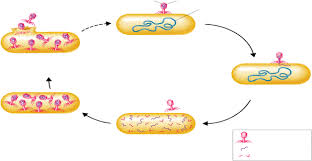
What is shown here?
a)
Lysogenic Cycle
b)
Lytic Cycle
c)
Binary Fission
d)
Conjugation
101.
What process is this?
a)
phagocytosis
b)
lytic cycle
c)
lysogenic cycle
d)
formation of antibodies
102.

Does a virus need to be specific on the type of cell it attaches to?

a)

Yes

b)

No

103.

Organisms of which kingdom have cell walls made of cellulose?

a)

Plantae

b)

Animalia

c)

Fungi

d)

Eubacteria

104.

Which Kingdom is characterized by organisms having chitin cell walls?

a)

Fungi

b)

Plantae

c)

Animalia

d)

Protista

105.

Which Eukaryotic kingdom has organisms that don't fit into other kingdoms?

a)

Protista

b)

Bacteria

c)

Archebacteria

d)

Plantae

106.

What do Kingdoms Animalia and Plantae have in common?

a)

They are both eukaryotic

b)

They are both heterotrophs

c)

They are both unicellular

d)

They both have cell walls made of cellulose

107.

Plants and some bacteria are _____________ because they create their own food from the sun through photosynthesis.

a)

Autotrophic

b)

Heterotrophic

108.

Some bacteria are _____________ because they create their own food from chemical reactions through chemosynthesis.

a)

Autotrophic

b)

Heterotrophic

109.

A cell with nucleus is

a)

Autotrophic

b)

Prokaryotic

c)

Eukaryotic

d)

Heterotrophic

110.

what kingdom?- eukaryotic, multi-celled-photosynthetic.

a)

animal

b)

plant

c)

protist

d)

fungi

111.

MUSHROOMS ARE IN WHAT KINGDOM

a)

PLANT

b)

ANIMAL

c)

FUNGI

d)

PROTIST

112.

AMOEBA-PARAMECIUM-EUGLENA-DINOFLAGELLATES BELONG TO WHAT KINGDOM

a)

PLANT

b)

PROTIST

c)

FUNGI

d)

ANIMAL

e)

ARCHAEBACTERIA

113.
I have cell walls
I am an autotroph
I am multicellular
What am I?
a)
Plant
b)
Animal
c)
Eubacteria
d)
Unicorn
114.
I am unicellular
I am prokaryotic
I am found in extreme ecosystems
What kingdom do I belong to?
a)
The Candy Kingdom
b)
Kingdom Plantae
c)
Kingdom Animalia
d)
Kingdom Archaebacteria
115.
I have no cell walls
I am eukaryotic
I reproduce sexually
I am multicellular
What kingdom do I belong to?
a)
Plantae
b)
Animalia
c)
Protista
d)
Fungi
116.
Mold, yeast, and mushrooms all belong to the Kingdom _______.
a)
Archaebacteria
b)
Fungi
c)
Eubacteria
d)
Protista
117.

Which two levels of classification are used to name organisms?

a)

family and order

b)

kingdom and domain

c)

genus and species

d)

class and order

118.

What are the 3 domains?

a)

Kingdom, Phylum, Class

b)

Archaea, Bacteria, Eukarya

c)

Class, Order, Species

d)

Genus, Species, KIngdom

119.

Of the following classifications, the smallest or least inclusive is

a)

order

b)

genus

c)

species

d)

class

120.

Which of the following organisms is most closely related to Panthera leo?

a)

Canis familiaris

b)

Ursus americanus

c)

Felis domesticus

d)

Panthera tigris

121.

Which of the following taxa would generally contain the MOST members?

a)

species

b)

class

c)

phylum

d)

order

122.

The correct order for the levels of Linnaeus's classification system, from most general to most specific is

a)

phylum, kingdom, family, class, order, genus, species

b)

kingdom, phylum, class, order, family, genus, species

c)

species, genus, kingdom, family, order, class, phylum

d)

kingdom, species, class, order, family, genus, phylum
123.
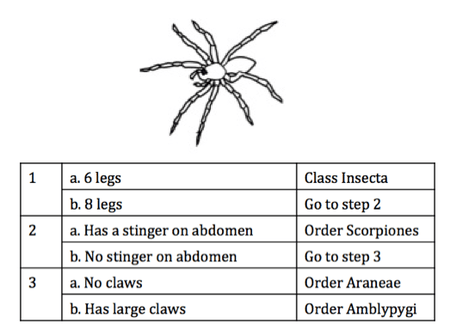
An illustration and a dichotomous key are given. What is the correct classification for this organism?
a)
Class Insecta
b)
Order Amblygygi
c)
Order Araneae
d)
Order Scorpiones
124.
A dichotomous key for trees is provided. Hikers found a tree that has large brown cones and single sharp needles. What species of tree have the hikers found?
a)
Juniper
b)
Pine
c)
Spruce
d)
Fir
125.

Which of the following are found in extreme saline conditions?

a)

Archaebacteria

b)

Eubacteria

c)

Cyanobacteria

d)

Mycobacteria

126.

When you step out into the cold, your body shivers in order to keep its temperature at 98.6F. Which characteristic of life does this represent?

a)

All living things use energy

b)

All living things contain cells

c)

All living things maintain homeostasis

d)

All living things grow

127.

A camel has eyelashes that work to keep the dust and sand out of its eyes. Which characteristic of life does this represent?

a)

All living things adapt to their environment

b)

All living things grow

c)

All living things have cells

d)

All living things use energy

128.
Rocks are not living because
a)
they never move
b)
they aren't needed for humans
c)
they are not made of cells
d)
they don't break down
129.
What forms the channels and pumps in the phospholipid bilayer?
a)
carbohydrates
b)
proteins
c)
hydrophilic heads 
d)
lipids
130.
Which statement best describes the cell membrane?
a)
The protective outer layer that controls what enters and leaves the cell.
b)
Stores information on DNA molecules / Directs and controls the activities of the cell.
c)
A folded membrane that moves materials around inside cells / Also acts as the site of manufacturing materials needed by the cell.
d)
The smallest organelle with a huge job / Makes proteins, which are the building blocks of the body.
131.
Which of the following is responsible for getting large or charged (polar) molecules across the cell membrane?
a)
E
b)
B
c)
C
d)
D
132.
A phospholipid has 2 parts. What are they called? 
a)
Hydrophilic Head, Hydrophobic Tail 
b)
Hydrophobic Head, Hydrophilic Tail 
133.

Uncontrolled cell division which usually leads to tumors and disease is called:

a)

Metaphase

b)

Cytokinesis

c)

Cancer

d)

Diabetes

134.
In the S stage of interphase_______________
a)
the cell grows
b)
the nucleus divides
c)
the cell membrane divides
d)
the DNA is replicated
135.
Which sequence of DNA bases would pair with this partial strand
ATG TGA CAG
a)
ATG TGA CAG
b)
TAC ACT GTC
c)
GTA AGT GAC
d)
CAT TCA CTG
136.
In a molecule of double-stranded DNA, the amount of Adenine present is always equal to the amount of
a)
cytosine
b)
guanine
c)
thymine
d)
uracil
137.
Why is DNA important?
a)
it is very small and very complicated
b)
it's in everything
c)
it serves as the blueprint for traits of all living things
d)
because we eat it every day for energy
138.
Which 2 molecules form the sides (backbone) of the DNA ladder?
a)
deoxyribose sugar and adenine
b)
deoxyribose sugar and a hydrogen bond
c)
deoxyribose sugar and the nucleus
d)
deoxyribose sugar and phosphate
139.
The enzyme that unzips the DNA to prepare for replication
a)
helicase
b)
replicase
c)
polymerase
d)
synthase
140.
In what phase of the cell cycle does DNA replication take place?
a)
G1
b)
S
c)
G2
d)
M
141.

After the bond depicted in the photo is broken, what will be the correct name of the molecule?

a)

ATP

b)

Glucose

c)

ADP

d)

NADPH

142.

Which statement is true

1. Xylem carries water while phloem carries food.

2. Xylem carries food while phloem carries water.

a)

1.

b)

2.

143.

Select the correct term for the following definition:

"The water transport system in plants."

a)

Villi

b)

Bronchi

c)

Bolus

d)

Xylem

144.

Recall the main function of a xylem cell.

a)

To transport nutrients (mainly sucrose) to different parts of a plant.

b)

To make energy for the plant via photosynthesis.

c)

To transport carbon dioxide to the leaves for photosynthessis.

d)

To transport water to different parts of plant.

145.

Recall the main funtion of a phloem cell.

a)

To transport nutrients (mainly sucrose) to different parts of a plant.

b)

To transport water to different parts of a plant.

c)

To make energy for the plant via photosynthesis.

d)

To provide structural support to a plant.

146.

Stomata are made of specialized cells called ______ which surround a tiny pore/opening

a)

stoma

b)

guard cells

c)

dermal cells

d)

diffusion channels

147.

The main function of stomata is to

a)

capture sunlight

b)

protect leaves from insects

c)

allow gases to move rapidly in/out of leaves

d)

release sugars into the atmosphere

148.
With what 3 letters do enzymes typically end?
a)
-ose
b)
-ase
c)
-ese
d)
-tic
149.

Enzymes are an example of

a)

Lipids

b)

Carbohydrate

c)

Protein

d)

Nucleic Acid

150.
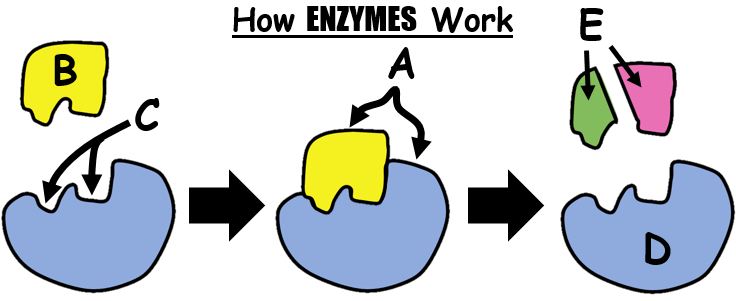
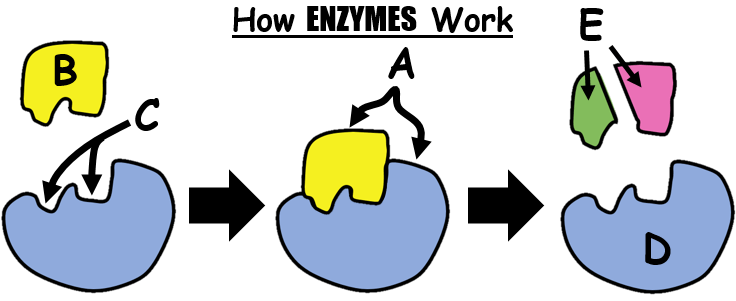
In the diagram, what is letter A? 
a)
product
b)
substrate
c)
enzyme-substrate complex
d)
active site
151.
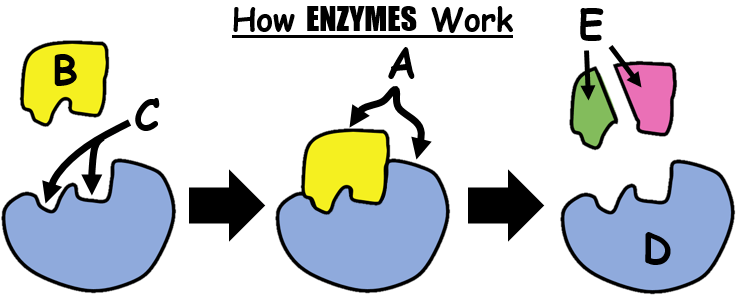
Letter D...
a)
active site
b)
enzyme
c)
substrate
d)
products
152.
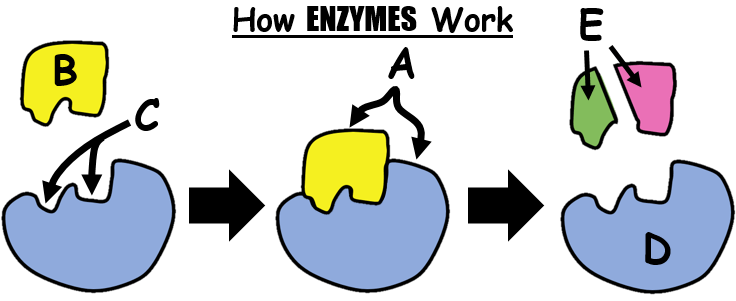
Letter B...
a)
active site
b)
enzyme
c)
substrate
d)
products
153.
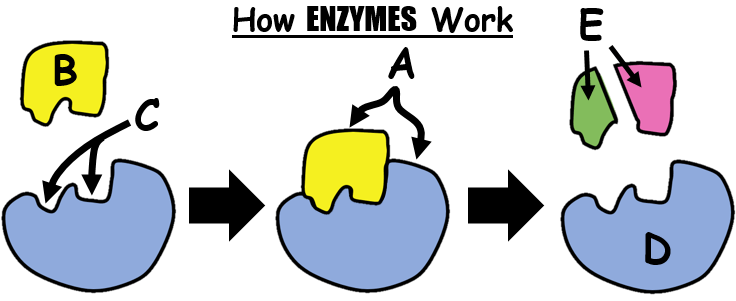
Letter C...
a)
active site
b)
enzymes
c)
substrate
d)
products
154.
Letter E...
a)
active site
b)
enzyme
c)
substrate
d)
products
155.
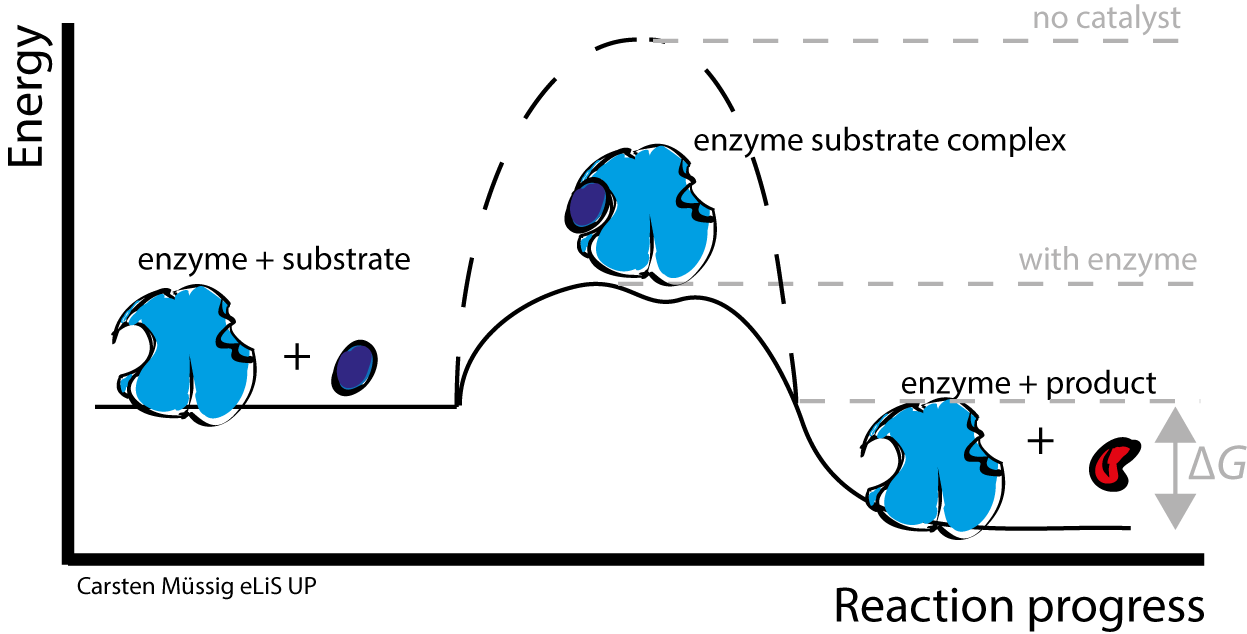
An enzyme speeds up a reaction by
a)
lowering the activation energy.
b)
raising the activation energy.
c)
releasing energy.
d)
absorbing energy.
156.

What happens when enzymes are heated to a high temperature OR put into a pH outside its normal range?

a)

The enzymes die.

b)

The shape of the enzyme are changed and it denatures

c)

The enzymes' amino acid sequence changes.

d)

The enzymes remain the same

157.
Which of the following conclusions can be drawn from this graph?
a)
The optimum pH of the enzyme is 6.6.
b)
The optimum pH of the enzyme is 5.8
c)
The enzyme’s activity increases as pH increases 5.0 to 9.0
d)
The enzyme’s activity is greater around pH of 8.0 .
158.
Any substance that is acted upon by an enzyme is called a(n)?
a)
Coenzyme
b)
Substrate
c)
Vitamin
d)
Polypeptide
159.
Which enzyme is most efficient in a basic solution?
a)
A
b)
B