wayground logo

Free Printable Worksheets

Font size

S
M
L
XL
Worksheets

Active and Passive Transport

Total questions: 119

Worksheet time: 3570secs

Name
Class
Date
1.
In passive transport, molecules move from an area of __________ concentration to an area of __________ concentraiton
a)
high, low
b)
low, high
c)
water, salt
d)
active, passive
2.
Which of the following is not a type of passive transport?
a)
Osmosis
b)
Diffusion
c)
Endocytosis
d)
Facilitated Diffusion
3.

The solution that has the highest amount of solute particles?

a)
Hyptonic
b)
Isotonic
c)
Hypertonic
4.
Which type of transport gets rid of wastes?
a)
Protein Pumps
b)
Endocytosis
c)
Exocytosis
d)
Facilitated Diffusion
5.
In which solution will water move into a cell?
a)
Hypertonic
b)
Hypotonic
c)
Isotonic
d)
Equilibrium
6.
What type of transport is this?
a)
Diffusion
b)
Osmosis
c)
Facilitated Diffusion
d)
Active Transport
7.
What type of transport is this?
a)
Endocytosis
b)
Exocytosis
c)
Diffusion
d)
Sodium-Potassium Pump
8.
What type of transport is this?
a)
Endocytosis
b)
Facilitated Diffusion
c)
Active Transport Pump
d)
Osmosis
9.
What type of transport is this?
a)
Facilitated Diffusion
b)
Exocytosis
c)
Active Transport
d)
Diffusion
10.
What type of transport is this?
a)
Endocytosis
b)
Diffusion
c)
Exocytosis
d)
Osmosis
11.
What type of organelle is used during endocytosis and exocytosis?
a)
Endoplasmic Reticulum
b)
Golgi Body
c)
Vesicle
d)
Lysosome
12.
Molecules will tend to spread out from an area of greater concentration to an area of lesser concentration.
a)
True
b)
False
13.
Active transport allows a cell to move molecules from an area of low concentration to an area of high concentration.
a)
True
b)
False
14.
Even though the concentration of salt is high in some gland cells and low in the blood, these cells can move salt out of blood and into the cells.  This is an example of
a)
passive transport
b)
active transport
c)
diffusion
d)
osmosis
15.
_____________ allows some things to enter and leave cells, while keeping other things out of the cell.
a)
Osmosis
b)
Fermentation
c)
A selectively permeable membrane
d)
Metabolism
16.
Which of the following is a job of the cell membrane?
a)
Regulates which materials enter and leave the cell.
b)
Breaks apart lipids, carbohydrates, and proteins from foods.
c)
Stores water, salt, proteins, and carbohydrates.
d)
Keeps the cell wall in place.
17.
Diffusion is the movement of molecules from
a)
an area of equilibrium to an area of high concentration.
b)
an area of low concentration to an area of high concentration.
c)
an area of high concentration to an area of high concentration.
d)
an area of high concentration to an area of low concentration.
18.
The diffusion of water across a membrane is called
a)
equilibrium.
b)
osmosis.
c)
facilitated diffusion.
d)
active transport.
19.
The roots of a plant contain a high concentration of minerals and the soil contains a lower concentration.  The roots absorb minerals from the soil.  This is an example of
a)
passive transport.
b)
active transport.
c)
diffusion
d)
osmosis
20.
Cells sometimes use energy to transport materials across the cell membrane.  This is called
a)
photosynthesis
b)
osmosis
c)
cellular respiration
d)
active transport
21.
Which of these cell processes does NOT require energy?
a)
osmosis
b)
endocytosis
c)
active transport
d)
exocytosis
22.
When does diffusion in cells stop?
a)
When vesicles burst.
b)
When equilibrium is reached.
c)
When respiration begins.
d)
When photosynthesis begins.
23.
When the concentration of molecules on both sides of a membrane is the SAME, the solution is
a)
isotonic
b)
hypertonic
c)
hypotonic
24.
What do the processes of exocytosis and endocytosis have in common?
a)
They are a way to move materials out of a cell.
b)
The are a way to move materials into a cell.
c)
They are both kinds of passive transport.
d)
They both involve a membrane surrounding material that needs to be moved in or out of a cell.
25.
Someone sprays air freshener.  The scent fills the room.  This is an example of
a)
active transport
b)
osmosis
c)
diffusion
d)
cellular respiration
26.
Which structure controls the movement of materials in and out of a cell?
a)
ribosome
b)
Golgi body
c)

mitochondrion

d)
cell membrane
27.
If a cell is placed in a hypertonic solution, what will happen?
a)
Water will move into the cell causing it to swell.
b)
Water will move out of the cell causing it to shrink.
c)
nothing.
d)
Water will move out of the cell causing it to swell.
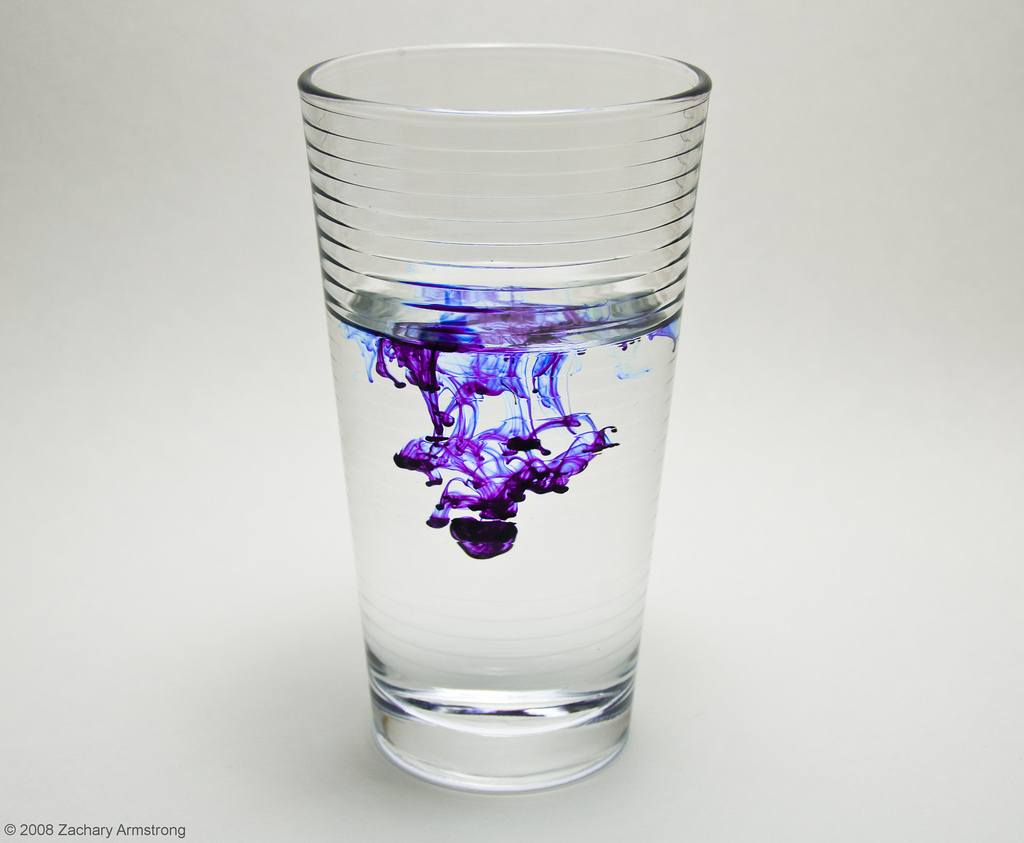
28.
Where is there a low concentration of dye?
a)
at the bottom of cup
b)
in the color
c)
at the top of cup 
d)
no concentration gradient
29.
Osmosis is the movement of _____ across a membrane.
a)
food
b)
energy
c)
oxygen
d)
water
30.
Permeable means
a)
things can pass through
b)
the concentration levels are different
c)
it is permanent
d)
things are stuck
31.
Passive transport requires no
a)
concentration gradients
b)
osmosis
c)
motion
d)
energy
32.
What is diffusion?
a)
when molecules move 
b)
when molecules move from a high concentration to a low.
c)
no movement 
d)
molecules move everywhere
33.
Which type of transport requires an input of energy?
a)
Passive Transport
b)
Osmosis
c)
Simple Diffusion
d)
Active Transport
34.
Which is NOT a form of active transport?
a)
Endocytosis
b)
Osmosis
c)
Exocytosis
d)
Pinocytosis
35.
What is the difference between active and passive transport?
a)
Active does not need energy and passive uses ATP (energy)
b)
Active uses ATP (energy) and passive does not need energy
c)
Active stores transport proteins and passive releases 
d)
Active uses hormones and passive does not 
36.
When both inside and outside of a cell have the same amount of water it is said that the cell has reached a state of
a)
Osmosis
b)
Diffusion
c)
Equilibrium
37.
Which cell is placed into a hypotonic environment? 
a)
A
b)
B
c)
C
d)
D
38.
The cell below is in a _________ solution.
a)
Hypotonic
b)
Hypertonic
c)
Isotonic
39.
The cell below is in a _____________ solution.
a)
Hypertonic
b)
Hypotonic
c)
Isotonic
40.
When cells take in a liquid through active transport, what is it called?
a)
Exocytosis
b)
Phagocytosis
c)
Pinocytosis
d)
Osmosis
41.
When cells take in food particles through active transport, what is it called?
a)
Pinocytosis
b)
Phagocytosis
c)
Exocytosis
d)
Osmosis
42.
What are 3 types of active transport?
a)
Riding a bike, Running through the mountains, walking on the beach
b)
Osmosis, Diffusion, Facilitated Diffusion
c)
Sodium/potassium Pump, Endocytosis, Exocytosis
d)
Throwing a ball, Playing tennis, driving a car
43.
The sodium potassium pump usually pumps
a)
potassium out of the cell 
b)
sodium out of the cell 
c)
sodium into the cell 
d)
both potassium and sodium into the cell 
44.
The sodium-potassium pump usually pumps
a)
only potassium ions and sugar molecules
b)
potassium ions out of the cell
c)
sodium ions into the cell
d)
 potassium ions into the cell
45.

Which process requires cellular energy to move molecules across the cellular membrane from a region of low concentration to a region of higher concentration?

a)

active transport

b)

diffusion

c)

osmosis

d)

hydrolysis

46.

A biologist diluted a blood sample with distilled water. While observing the sample under a microscope, she noticed the blood cells burst. This bursting is most likely caused by which process?

a)

staining

b)

ingestion

c)

osmosis

d)

active transport

47.

There are three different red blood cell suspensions. Which suspensions, when viewed under microscope, would contain red blood cells that appear wrinkled and reduced in volume?

a)

Solution A

b)

Solution B

c)

Solution C

48.

Three different red blood cell solutions are prepared. Which suspension, when viewed with a microscope, will contain red blood cells that had swollen and burst?

a)

Solution A

b)

Solution B

c)

Solution C

49.

Which structure, composed mainly of proteins and lipids, aids in maintaining homeostasis in a cell?

a)

chromosome

b)

centrosome

c)

cell membrane

d)

nucleolus

50.

Here is a picture of an animal cell. What organelle is the arrow pointing to?

a)

Cell Wall

b)

Mitochondrion

c)

Nucleus

d)

Cell Membrane

51.

In the picture of the animal cell, what is the function of he organelle the arrow is pointing to? (select all that apply)

a)

maintain homeostasis

b)

allow materials in and out of the cell

c)

only allows materials to enter the cell

d)

only allows materials to exit the cell

52.

Which of the following processes relies on the difference in concentrations (concentration gradient) to move materials across a semi-permeable membrane?

a)

passive transport

b)

active transport

53.

Which of the following are examples of passive transport? (Select all that apply)

a)

osmosis

b)

diffusion

c)

endocytosis

d)

exocytosis

54.
The difference in the concentration of a substance from one location to another is called a/an
a)
diffusion
b)
osmosis
c)
concentration gradient
d)
passive transport
55.
The higher the concentration of dissolved particles in a solution (solute), the _______ the concentration of water molecules in that solution. 
a)
higher
b)
greater
c)
lower
d)
smaller
56.
This solution has the highest concentration of water molecules.
a)
hypertonic
b)
hypotonic
c)
isotonic
57.
This solution has the equal concentrations of water molecules and particles.
a)
hypertonic
b)
hypotonic
c)
isotonic
58.
In facilitated diffusion, molecules move
a)
Down a concentration gradient
b)
Against a concentration gradient
59.
A solution with a higher level of solutes than the solution is called
a)
hypertonic
b)
hypotonic
c)
isotonic
60.
This is the simplest form of passive transport:
a)
osmosis
b)
diffusion
c)
facilitated diffusion
d)
endocytosis
61.
The movement of molecules against a concentration gradient
a)
simple diffusion
b)
facilitated diffusion
c)
active transport
d)
osmosis
62.
The movement of molecules down a concentration gradient is all of the following except
a)
simple diffusion
b)
facilitated diffusion
c)
active transport
63.
Most active transport proteins use energy from the breakdown of:
a)
nucleus
b)
cell membrane
c)
ATP
d)
mitochondria
64.
This is a term that means "cell eating" and describes a type of endocytosis
a)
active tranport
b)
pincocytosis
c)
phagocytosis
d)
exosytosis
65.
What is homeostasis?
a)
How the body releases oxygen
b)
Passive transportation 
c)
How the body regulates itself for survival
d)
Active transport
66.
If a red blood cell is put in a salt solution, what will happen to the cell?
a)
It will shrivel.
b)
It will swell and burst.
c)
It will shrivel and swell and burst
d)
It will do nothing at all
67.
If a red blood cell is put in distilled water, what will happen to the cell?
a)
Nothing will happen
b)
It will shrivel.
c)
It will burst and then shrivel up
d)
It will swell and burst
68.
What will happen to anything in distilled water?
a)
It will swell and possibly burst
b)
It will do nothing 
c)
It will shrink and dissipate 
d)
It will die.
69.
What does semi-permeable mean?
a)
Only some things can move through membrane
b)
Nothing can move through membrane
c)
Only oxygen can move through membrane
d)
Membrane connot be moved through
70.
How does the body control water balance? (homeostasis)
a)
IT DOESNT 
b)
Releasing insulin when levels are too high and releasing glucagon when levels are too low
c)
The body pushes energy that moves through the membrane 
d)
Releasing anti-diuretic hormones when dehydrated to prevent water loss, makes you stop peeing and more thirsty
71.
How does the body control blood sugar levels? (homeostasis) 
a)
Releasing insulin when levels are too high and releasing glucagon when levels are too low
b)
By being semi-permeable 
c)
Releasing anti-diuretic hormones when dehydrated to prevent water loss, makes you stop peeing and more thirsty
d)
Releasing insulin when levels are too low and releasing glucagon when levels are too high
72.
How does the body control temperature?
a)
Too hot- body sweats, cell activities increases
Too cold- Body shivers, cell activities decreases
b)
Too cold- Body shivers, cell activities increases
Too hot- body sweats, cell activities decreases
c)
The body can't control it's temperature
d)
Active and passive transport
73.
What is equilibrium?
a)
When concentrations cannot be balanced between two substances 
b)
When concentrations are balanced between two substances 
c)
Making the energy in the top half of your body equal the the energy in the bottom half
d)
Concentrations do not exist 
74.
what does the cell membrane consist of?
a)
Lipid Bi Layer
b)
Protein Bi Layer
c)
Lipid Tri Layer
d)
protein and lipids layers
75.
What is the definition of  Selective Permeability?
a)
The movement of materials across the cell membrane that requires NO ENERGY from the cell.
b)
The movement of materials through (or across) the cell membrane
c)
The ability of the cell membrane to allow some things to pass through while preventing other things from passing through.
76.
In the given scenario what will happen to the organism: salt is poured onto eggplant.
a)
Water will move out of the eggplant cells and the cells will swell.
b)
Water will move out of the eggplant cells and the cells will shrink.
c)
Water will move into the eggplant cells and the cells will swell.
77.
An animal cell placed in a hypertonic (salty) solution will
a)
Shrink
b)
Swell
c)
Stay the same
78.
Which way will the water molecules in the image move during osmosis?
a)
Out of the cell, so the cell shrinks.
b)
Out of the cell, so the cell swells.
c)
Into the cell, so the cell shrinks.
79.
Ideally, your cells should be in a(n) _______ solution
a)
Hypertonic
b)
Hypotonic
c)
Isotonic
d)
Cola
80.
An animal cell that is surrounded by fresh water will burst because the osmotic pressure causes
a)
water to move into the cell.
b)
water to move out of the cell.
c)
solutes to move into the cell.
81.
 If the volume of a cell increases when it is placed in a solution, that solution is said to be _______.
a)
 hypertonic
b)
hypotonic
c)
 isotonic
82.
The picture  is an example of _________________.
a)
isotonic
b)
diffusion
c)
osmosis
83.
In a solution, salt is considered the _______.
a)
solute
b)
solvent
c)
solution
84.
In a scenario, salt is placed into a bowl of water.  What is the solvent?
a)
salt
b)
saltwater
c)
water
85.
 If a cell containing 5% salt is placed into a glass of water with 20% salt, the water is _______ .
a)
isotonic
b)
hypotonic
c)
hypertonic
86.
If a cell containing 3% salt is placed into a glass of water containing 7% salt, the water is _______ .
a)
hypertonic 
b)
hypotonic
c)
isotonic
87.
A cell uses protein channels to move large sugar molecules from an area of high concentration to an area of low concentration. This is an example of _____.
a)
active transport
b)
facilitated diffusion
c)
osmosis
88.
In the image, the solution outside the cell is _____________.
a)
hypertonic
b)
hypotonic
c)
isotonic
89.
In the image, the solution outside the cell is _____________.
a)
hypertonic
b)
hypotonic
c)
isotonic
90.
In the image, the solution outside the cell is _____________.
a)
hypertonic
b)
hypotonic
c)
isotonic
91.
In the image, the solution outside the cell is _____________.
a)
hypertonic
b)
hypotonic
c)
isotonic
92.
In the image, the water will move 
a)
into the cell.
b)
out of the cell.
c)
both in and out of the cell.
93.
In the image, the water will move 
a)
into the cell.
b)
out of the cell.
c)
both in and out of the cell.
94.
In the image, the water will move 
a)
into the cell.
b)
out of the cell.
c)
both in and out of the cell.
95.
In the image, the water will move 
a)
into the cell.
b)
out of the cell.
c)
both in and out of the cell.
96.
Why does water move from the roots to the leaves of plants?
a)
Water is pushed by solutes
b)
Capillary action pulls the water molecules like a chain
c)
Water is pulled by gravity
d)
Water’s cohesion causes it to “pull” towards the leaves
97.

When salt is dissolved in water, water is the

a)

solvent

b)

solute

c)

solution

d)

reactant

98.

A solution is a(an)...

a)

chemical reaction

b)

breaking of a chemical bond

c)

combination of two or more liquids

d)

evenly distributed mixture of two or more substances

99.

Monomers of Lipids include

a)

amino acids

b)

monosaccharides

c)

nucleotides

d)

glycerol and fatty acids

100.

Lipids are made of...

a)

CHO

b)

CHON

c)

CHONP

d)

CHONS

101.

Which of the following is a main function of a lipid?

a)

source of quick energy

b)

stores energy, insulates us, and makes up the cell membrane

c)

transport substances in and out of the cell

d)

stores genetic information

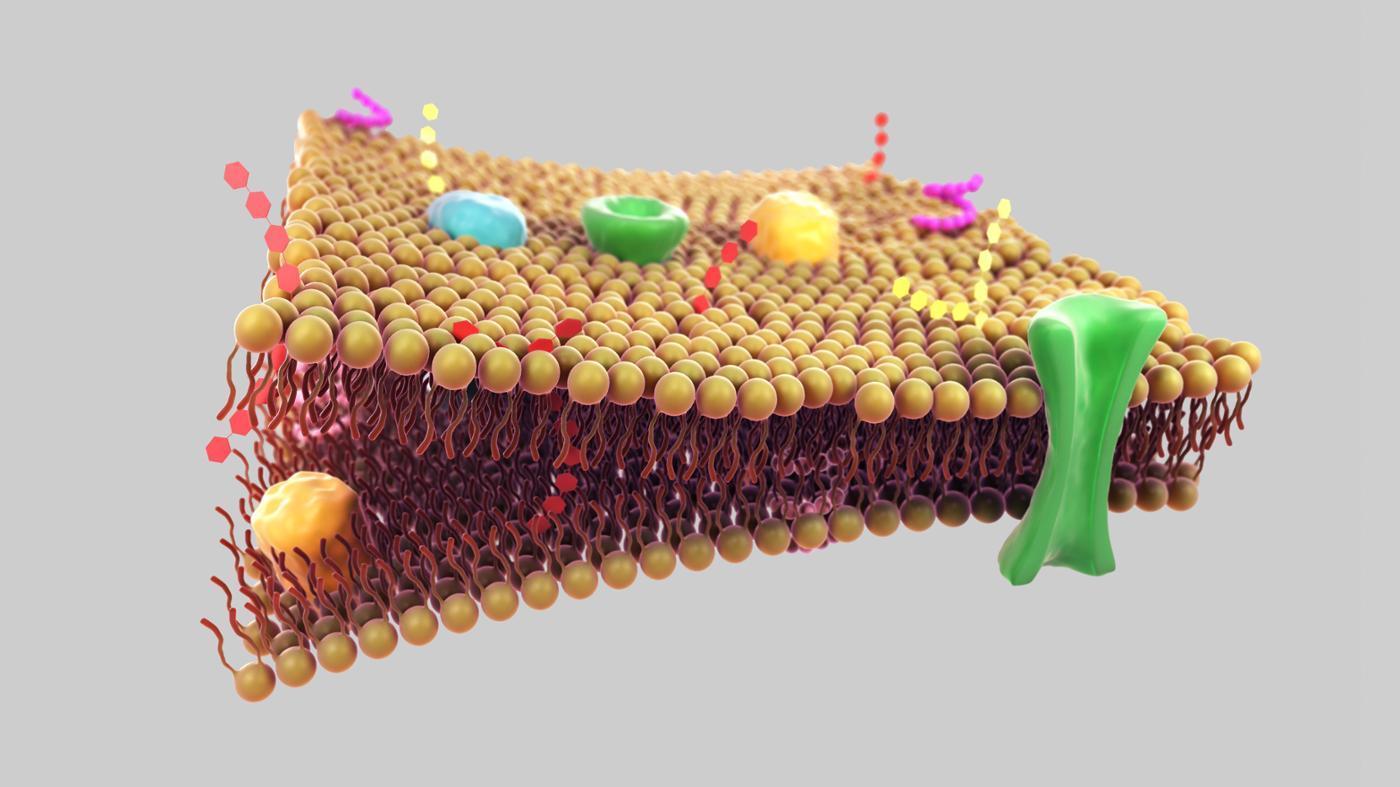
102.

Is found in the cell membrane as a bilayer.

a)

carbohydrate

b)

protein

c)

lipid

d)

nucleic acid

103.
Which of the following molecules make up the basic structure of a cell membrane?
a)
waxes
b)
steroids
c)
fatty acids
d)
phospholipids
104.
The characteristic that all lipids have in common is----
a)
made of lots of double bonds
b)
acidic when mixed with water
c)
no high energy content
d)
do not dissolve in water
105.
The phospholipid bilayer comprises what part of the cell?
a)
cytoplasm
b)
cell membrane
c)
cytoskeleton
d)
nuclear membrane
106.
In the phospholipid, the polar head is considered what type of structure?
a)
hydrophobic
b)
insoluble
c)
hydrophilic
107.
The brown paper test for lipids is positive for lipids when the test spot is
a)
dry
b)
brick red
c)
black-blue
d)
translucent
108.
What are different examples of lipids?
a)
monosaccahrides, disaccharides, starch, cellulose
b)
dipetide, polypeptide, amino acids
c)
DNA, RNA, ATP
d)
triglycerides, waxes, steroids, phospholipds
109.
Which biomolecule is often stored in the body's tissues as energy?
a)
proteins
b)
carbohydrates
c)
lipids
d)
nucleic acids
110.
Which reagent is used to test for lipids?
a)
iodine solution
b)
Benedict's solution
c)
Biuret solution
d)
Sudan III solution
111.
Which biomolecule does Sudan III solution test for?
a)
simple carbohydrate (monosaccharides)
b)
complex carbohydrates (polysaccharides)
c)
proteins
d)
lipids
112.

What color does Sudan III solution turn in the presence of a lipid?

a)

range from yellow to red

b)

blue/black

c)

purplish/violet

d)

red globules

113.

Helena and Carrie were having a healthy debate about whether nuts contain lipids. Carrie said if you tested with Sudan III you could PROVE they contained lipids, Helena said you should test with iodine. Who is correct?

a)

Carrie: Sudan III would turn red if lipids were present

b)

Carrie: Sudan III would turn blue/black if lipids were present

c)

Helena: iodine would turn blue/black if lipids were present

d)

Helena: iodine would turn red if lipids were present

114.

We need lipids to

a)

build cell walls

b)

build cell membranes

c)

make the nucleus

d)

make the cytoplasm

115.

A test for lipids is using Sudan III solution. What does a positive result look like?

a)

Turns Purple

b)

A red layer forms on top

c)

A green layer forms on top

d)

It turns black

116.
A steady or balanced state of the body
a)
Homeostasis
b)
Homeopathy
c)
Negative feedback
d)
Postive feedback
117.
This substance leaves a translucent stain on paper.
a)
Lipids
b)
Monosaccharides
c)
Proteins
d)
Carbohydrates
118.
A scientist is trying to test for lipids. What solution or indicator should he/she use?
a)
Benedict's
b)
Lugol's (Iodine)
c)
Biuret solution
d)
Sudan IV 
119.
Long-term energy storage is a function of which macro-molecule?
a)
Protein
b)
Carbohydrate
c)
Lipids
d)
Nucleic Acids