wayground logo

Free Printable Worksheets

Font size

S
M
L
XL
Worksheets

ELL Semester 2 Final Review

Total questions: 157

Worksheet time: 2hrs 49mins

Name
Class
Date
1.
Adenine bonds with ______________.
a)
Guanine
b)
Thymine
c)
Cytosine
d)
Adenine
2.
Guanine bonds with ______________.
a)
Adenine
b)
Guanine
c)
Cytosine
d)
Thymine
3.
The enzyme that unzips the DNA to prepare for replication
a)
helicase
b)
replicase
c)
polymerase
d)
synthase
4.
A process in which DNA has the unique ability to make an exact copy of itself.
a)
Replication
b)
Translation
c)
Transcription
5.
What is the correct complimentary strand for the following DNA?ATCGAG
a)
TACGAG
b)
ATCGAG
c)
TAGCTG
d)
TAGCTC
6.
Which of the following units are repeatedly joined together to form a strand of DNA?
a)
amino acids
b)
nucleotides
c)
fatty acids
d)
polysaccharides
7.
RNA contains the sugar
a)
ribose
b)
deoxyribose
c)
glucose
d)
lactose
8.
What are the nucleotides made of?
a)
Sugar, Phosphate, nitrogen base
b)
Phosphate, Adenine, nitrogen base
c)
Thymine, Adenine, Cytomine
d)
Phosphate, Nitrogen, Adenine
9.
Which of the following statements is true?
a)
DNA is single-stranded
b)
RNA is single-stranded
c)
DNA contains uracil
d)
RNA contains deoxyribose
10.
What is the difference between DNA and RNA in terms of bases?
a)
RNA contains uracil in place of thymine
b)
RNA contains uracil in place of adenine
c)
RNA contains uracil in place of guanine
d)
RNA contains uracil in place of  cytosine
11.
What is the product of translation?
a)
DNA
b)
mRNA
c)
tRNA
d)
proteins
12.
What is the product of transcription?
a)
DNA
b)
mRNA
c)
tRNA
d)
proteins
13.
How many nucleotides make a codon?
a)
1
b)
2
c)
3
d)
6
14.
Which of the following best describes a DNA molecule?
a)
double helix
b)
contains ribose
c)
made of amino acids
d)
contains Uracil
15.
Why is DNA important?
a)
it is very small and very complicated
b)
it's in everything
c)
it serves as the blueprint for traits of all living things
d)
because we eat it every day for energy
16.
What are the 4 nitrogen bases?
a)
adenine, thymine, cytoplasm, and guanine
b)
adenine, thymine cytosine, and guanine
c)
adenine, thymine, cytosine, and gylcerol
d)
adenine, thymine, cytosine, and glucose
17.
What determines the code, or information, of a DNA molecule?
a)
the shape (structure) of the nitrogen bases
b)
the order (sequence) of the nitrogen bases
c)
the color of the nitrogen bases
d)
the frequency (number) of nitrogen bases
18.
Which organelle is DNA usually found in?
a)
cell membrane
b)
vacuole
c)
chloroplast
d)
nucleus
19.
DNA codes for...
a)
cholesterol
b)
proteins
c)
fatty acids
d)
a sandwich
20.
Nitrogenous bases are joined by which type of bond?
a)
polar bonds
b)
ionic bonds
c)
covalent bonds
d)
hydrogen bonds
21.
Nucleotides are made up of a sugar, phosphate, and..?
a)
nitrogenous base
b)
nucleic acid
c)
cholesterol
d)
fatty acid
22.
Which process is shown?
a)
diffusion
b)
repiration
c)
recombination
d)
translation
23.
Which of the following is the blueprint for the production of RNA within a cell?
a)
DNA
b)
protein
c)
ATO
d)
carbohydrate
24.
What molecules do both DNA and RNA contain?
a)
uracil
b)
nucleotides
c)
thymine
d)
deoxyribose
25.
Which of the following best describes how DNA and RNA are similar?
a)
they both contain A and T
b)
They both have a double helix
c)
They are both composed of 5 different nucleotides
d)
they both have C and G
26.
The DNA sequence ATCAGCGCTGGC is part of a gene. How many amino acids are coded for by this message?
a)
4
b)
8
c)
12
d)
20
27.
DNA sequence is ACAGTGC. How would this be coded on mRNA?
a)
TGTCACG
b)
UGUCACG
c)
GUGACAU
d)
CACUGUA
28.
The diagram shows the process of
a)
Transcription
b)
Translation
c)
Replication
d)
Mitosis
29.
What nitrogen base is in DNA but NOT RNA?
a)
uracil
b)
thymine
c)
guanine
d)
adenine
30.
What is occurring in this picture?
a)
Translation
b)
DNA Replication
c)
Polymerase is unzipping the DNA
d)
Transcription
31.
Where does transcription take place?
a)
nucleus
b)
ribosome
c)
cytoplasm
d)
smooth ER
32.
Where does translation take place?
a)
Nucleus
b)
Ribosome
c)
Golgi Body
d)
Cytoplasm
33.
_______ is made during transcription and ________ is made during translation.
a)
mRNA / a protein
b)
a protein / mRNA
c)
Ribosome / Nucleus
d)
mRNA / tRNA
34.
Which process is used to make mRNA from the DNA in the nucleus?
a)
transcription
b)
translation
c)
replication 
35.
One difference between DNA and RNA is that....
a)
Only RNA has the base Uracil
b)
only RNA contains the base Thymine
c)
only RNA contains the base Cytocine
d)
only RNA contained the base Guanine
36.
Which process is used to copy DNA in the nucleus?
a)
replication
b)
transcription
c)
translation
37.
Which process is happening in this picture?
a)
Transcription
b)
Translation
c)
Replication
38.
What amino acid is represented by the codon CAG?
a)
Aspartic Acid
b)
Histidine
c)
Glutamine
d)
Methionine
39.
Codons contain ______ bases
a)
1
b)
3
c)
6
d)
9
40.
Which enzyme is responsible for making RNA?
a)
DNA polymerase
b)
RNA enzymase
c)
RNA polymerase
d)
RNA proliferase
41.
The enzyme that unzips the DNA to prepare for replication
a)
helicase
b)
replicase
c)
polymerase
d)
synthase
42.
What is TRANSCRIPTION?
a)
DNA  → mRNA
b)
mRNA → protein
c)
DNA → amino acids
d)
amino acid → sugar
43.
Transcription is the process where 
a)
DNA is replicated
b)
DNA is copied into mRNA 
c)
DNA is copied in tRNA
d)
DNA is copied
44.
In comparison to DNA, mRNA is
a)
Shorter
b)
Longer
c)
The same length
d)
Double stranded
45.
#4 is 
a)
anticodons
b)
codons
c)
ribosomes
d)
amino acids
46.
#6 is 
a)
codons
b)
anticodons
c)
ribosomes
d)
amino acids
47.
#8 is 
a)
amino acid
b)
tRNA
c)
ionic bond
d)
mitochondria
48.
1 and 2
a)
mitochondria
b)
nucleus
c)
ribosome
d)
endoplasmic reticulum
49.
In what phase of the cell cycle does DNA replication take place?
a)
G1
b)
S
c)
G2
d)
M
50.
If the percentage of DNA is made of 30% Thymine, what is the correct percentage of Guanine?
a)
30
b)
15
c)
20
d)
60
51.
DNA replication results in two DNA molecules,
a)
each one with two original strands
b)
each one with two new strands
c)
each one with one new strand and one original strand
d)
one with two new strands and the other with two original strands
52.
DNA molecule segment is : TTACGCAAG
The mutated DNA segment is TTCGCAAG. This is an example of ___ mutation.
a)
Substitution
b)
Deletion
c)
Insertion
d)
Inversion
53.
What mutation has occurred here? 
T-G-A-C-C-A
T-G-A-G-C-A
a)
Substitution
b)
Deletion
c)
Insertion
d)
Frameshift 
54.
Original: ATC CAT
Mutation: ATC GCAT
What mutation occurred?
a)
deletion
b)
insertion
c)
silent
d)
transverse
55.
An offspring will receive how many alleles from each parent to determine a specific trait?
a)
one
b)
two
c)
three
d)
five
56.
Which of the following is a phenotype?
a)
BB
b)
Bb
c)
bb
d)
Blue eyes
57.
What is a phenotype
a)
The genetic make up (code)
b)
The physical trait
58.
having two of the same genes for the trait (sometimes called purebred).
a)
homozygous
b)
hetrozygous
c)
protein
d)
chromosome
59.
having two different genes for a trait (sometimes called hybrid).
a)
protein
b)
homozygous
c)
heterozygous
d)
genotype
60.
G = green, g = yellow
The genotype for a yellow plant is...
a)
GG
b)
Gg
c)
gg
d)
all of the choices result in yellow
61.
What do the letters inside the grid of a Punnett square represent?
a)
phenotypes of parents
b)
genotypes of offspring
c)
testcrosses of offspring
d)
chromosomes of parents
62.
Recessive alleles are represented by:
a)
a ratio
b)
a percentage
c)
capital letters
d)
lower-case letters
63.
This type of inheritance pattern is a MIXTURE of both traits.
a)
incomplete dominance
b)
co-dominance
c)
complete dominance
d)
recessive pattern
64.
The different forms of a gene are called what?
a)
variable
b)
traits
c)
alleles
d)
offspring
65.
Isaiah and Nickie have three children together. If loudness is dominant and both parents are heterozygous dominant for loudness, what percent of the children will be loud?
a)
0%
b)
50%
c)
75%
d)
100%
66.
Jenna has two pitbulls, both which somehow rival her ferocity. One is chocolate, which is dominant, and the other is cream, which is recessive. These pitbulls have puppies. Half the puppies are chocolate, half are cream. What is the genotype of the  chocolate dog?
a)
Bb
b)
bb
c)
BB
d)
There is not enough information to know
67.

Elodie and Aaron are playing tennis when they accidentally knock a baby bird out of its nest with their tennis ball. If the momma bird is yellow and the dad bird red, what color should the baby bird be if yellow and red are incompletely dominant?

a)

Orange

b)

Yellow

c)

Red

d)

Both red and yellow splotches

68.

Pheonix is studying salamanders. He observers that stripes is dominant to no-stripes in salamanders. Which of the following probabilities is impossible for if a striped salamander was to mate with a no-stripe?

a)

75% no-stripe

25% stripe

b)

100% stripes

c)

50% stripes

50% no stripes

69.

Queen Victoria's son, Phillip, has hemophilia. So she blames her husband for this X-linked disorder that Phillip has. What is wrong with Victoria's logic?

a)

Males get their X from their mom

b)

We don't know for sure if the father had hemophilia

c)

She's right, the father gave Phil the disease

d)

Hemophilia is actually really easy to confuse with albinism, so maybe he has that actually
70.
Cass and Sophia are identical, colorblind twins. Cass only has boys, who are all colorblind. Meanwhile, Sophia has only girls, who are also all colorblind. What must be true about this situation?
a)
Sophia and Cass are actually fraternal twins
b)
The father of Sophia's kids must also be colorblind
c)
The father of Cass' kids must also be colorblind
d)
The fathers for both sets of kids must be colorblind
71.
Brooke and Maude break into a pet store and steal several recessive blue puppies. However, they are soon caught and forced to return the puppies back to their parents. Which of the following genotype pairs could not be the parents of the puppies?
a)
Dd x Dd
b)
Dd x dd
c)
DD x dd
d)
dd x dd
72.
Clara is investigating a murder scene. She tests the blood at the scene and finds that it contains one allele for A-type blood and one allele for B-type blood. If these traits are codominant, who is the murderer?
a)
Ian, with B-type blood
b)
Taqi, with A-type blood
c)
Bobby, with O-type blood
d)
Amy, with AB-type blood
73.
What is another name for natural selection?
a)
survival of the smartest
b)
survival of the fastest
c)
survival of the biggest
d)
survival of the fittest
74.
What is a change in an organism that allows for it to survive in its environment?
a)
homologous
b)
vestigial
c)
variation
d)
adaptation
75.
What is the study of organisms at the early stages of development?
a)
DNA studies
b)
embryology 
c)
extinction
d)
fossil record
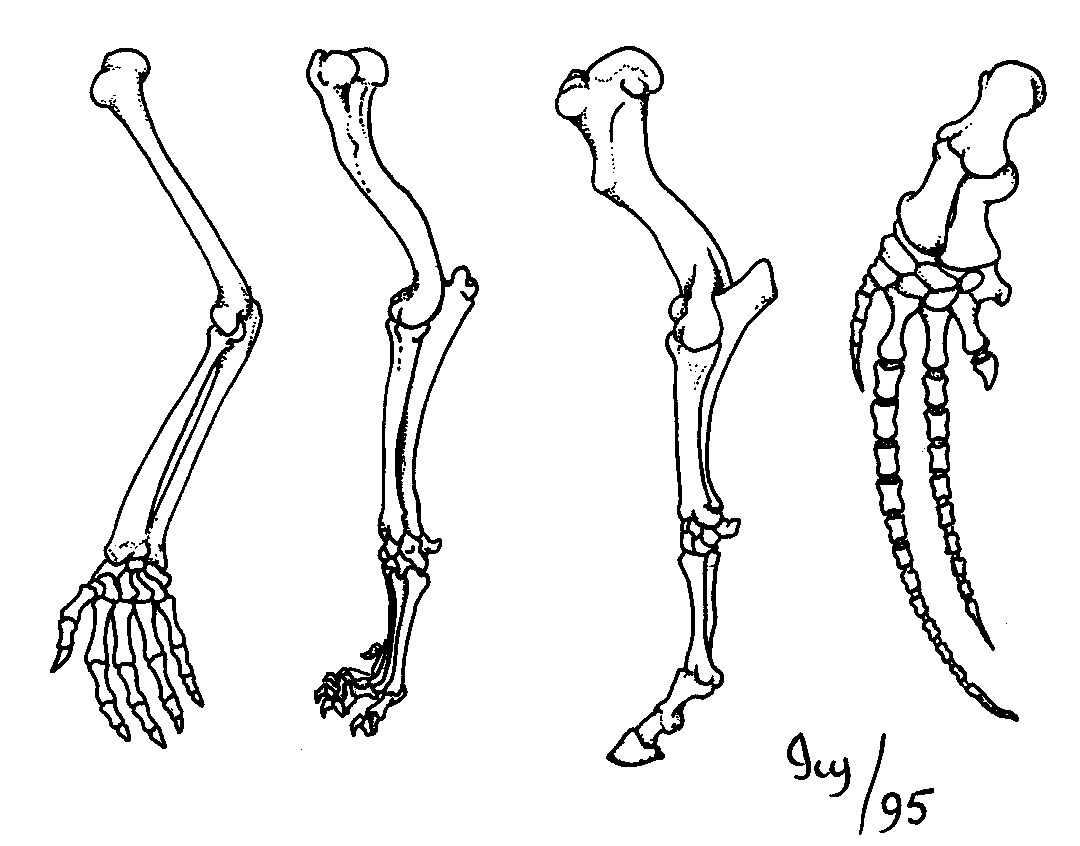
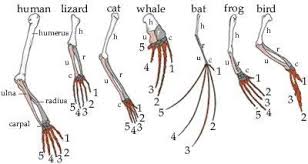
76.
What is this an example of?
a)
vestigial structures
b)
embryology
c)
homologous structures
d)
fossil record
77.
Which layer is the oldest?
a)
1
b)
2
c)
3
d)
4
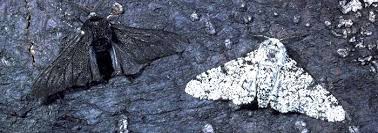
78.
Predict which moth would increase in population
a)
light 
b)
dark
79.
When the DNA of an organism is altered it is referred to as…
a)
Mutation
b)
Gene Flow
c)
Genetic Drift
d)
Sexual Selection
80.
When individuals choose traits possessed by the opposite sex it is called…
a)
Mutation
b)
Gene Flow
c)
Genetic Drift
d)
Sexual Selection
81.
Darwin wrote that organisms with traits that are best suited to the environment will ________________
a)
increase in number
b)
become extinct
82.
Which term refers to the process by which individuals that are better suited to the environment survive and reproduce therefore passing down their genes to their offspring? 
a)
Evolution 
b)
Variation 
c)
Adaptation
d)
Natural Selection 
83.
A remnant or trace of an organism from the past is called a _______.
a)
Ancestor
b)
Skeleton
c)
Fossil
d)
Imprints
84.
Inherited trait that helps an organism survive is a(n) __________.
a)
Fossil
b)
Adaptation
c)
Ancestor
d)
Natural selection
85.
Structures with the same parts have different functions; suggests that organisms share a common ancestry
a)
vestigial structures
b)
homologous structures
c)
adaptive radiation
d)
fossil
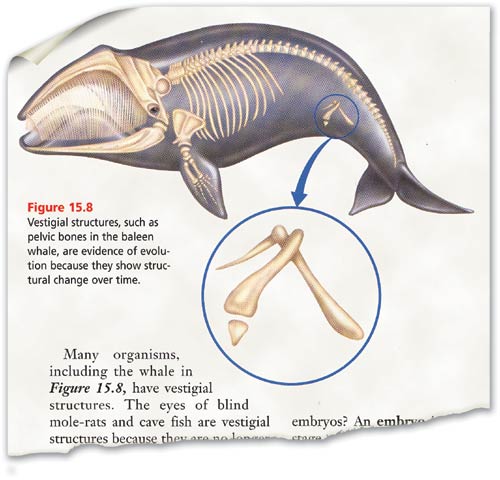
86.
Which of the following is an example of a vestigial structure?
a)
the wings of a red-tailed hawk
b)
the hind limbs of a house cat
c)
the fins of sharks
d)
the tailbone of a human
87.
The ability of an organism to survive and reproduce in its specific environment 
a)
diversity.
b)
evolution
c)
adaptation
d)
 fitness
88.
Why are advantageous traits more likely to be passed onto offspring?
a)
Because they are more likely to survive and reproduce.
b)
Because they come from dominant alleles.
c)
Because they come from recessive alleles.
d)
Because the trait is an acquired phenotype.
89.
What is Half-life?
a)
The amount of time it takes for some of the nuclei in a sample of the isotope to decay
b)
The amount of time it takes for half the electrons in a sample of the isotope to decay
c)
The amount of time it takes for half the nuclei in a sample of the isotope to decay
d)
the amount of time it takes to double the nuclei in a sample of the isotope to decay
90.
The half-life of strontium-90 is 25 years. How much strontium-90 will remain after 100 years if the initial amount is 4.0 g?
a)
3.0g
b)
0.25mg
c)
0.3g
d)
0.25g
91.
After 4 half-lives, 1g of a sample of Krypton-85 remains unchanged.  What was the original mass of the sample?
a)
16g
b)
32g
c)
0.0625g
d)
4g
92.
A flash flood carried a raft of Amazon ants away from their original population. There is enough distance between the two groups, that they will never meet in nature again. What type of reproductive barrier is this?
a)
behavioral isolation
b)
temporal isolation 
c)
gametic isolation
d)
geographic isolation 
93.
Some female peacocks prefer males with large, colorful tales while other female peacocks prefer males with no tail at all. Females are beginning to only mate with the type of males with the tail they prefer. What type of reproductive barrier is this?
a)
behavioral isolation
b)
hybrid sterility 
c)
temporal isolation
d)
mechanical isolation 
94.
The flowers of pink tulips open in the morning, while the flowers of lavender tulips open in the early afternoon. The bees that pollinate these tulips cannot carry pollen back & forth between the two types of tulips because of their flowers being closed at different times of day. What type of reproductive barrier is this?
a)
behavioral isolation
b)
hybrid sterility 
c)
temporal isolation
d)
mechanical isolation 
95.
The term for the formation of new and distinct species over the course of evolution is...
a)
speciation
b)
biological species concept
c)
reproductive barrier
d)
natural selection
96.
What is a species? 
a)
A group of organisms that can mate with each other and produce fertile offspring. 
b)
A group of organisms that can mate and produce offspring even if those offspring are infertile.
c)
A group of organisms that genetically are very different from each other. 
d)
Indivual organisms that live in the same environment. 
97.
The chewing and grinding of food into smaller pieces is an example of...
a)
Mechanical Digestion
b)
Chemical Digestion
98.
What is one secondary (helper) organ of the digestive system?
a)
Small Intestine
b)
Esophagus
c)
Gallbladder
d)
Stomach
99.
Bile is made by which digestive organ?
a)
Gallbladder
b)
Stomach
c)
Rectum
d)
Liver
100.
Which digestive organ makes digestive juices to help the small intestine absorb nutrients?
a)
Liver
b)
Gallbladder
c)
Pancreas
d)
Esophagus
101.
Nutrients from digested food are absorbed in which digestive organ?
a)
Small Intestine
b)
Stomach
c)
Large Intestine
d)
Gallbladder
102.
Number 4 is pointing to the....
a)
Anus
b)
Rectum
c)
Large Intestine
d)
Small intestine
103.
Number 5 is pointing to the...
a)
Liver
b)
Gallbladder
c)
Pancreas
d)
Stomach
104.
Number 3 is pointing to the...
a)
Small intestine
b)
Rectum
c)
Large intestine
d)
Stomach
105.
Number 2 is pointing to the...
a)
Esophagus
b)
Stomach
c)
Small intestine
d)
Anus
106.
As waste moves through the digestive system, the ______ absorbs water before storing waste in the rectum.
a)
Small intestine
b)
Stomach
c)
Esophagus
d)
Large intestine
107.
A short tube at the end of the large intestine that stores solid waste is the...
a)
Anus
b)
Rectum
108.
Bile is stored in which secondary digestive organ?
a)
Stomach
b)
Liver
c)
Gallbladder
d)
Pancreas
109.
Which is NOT a function of the Digestive System?
a)
To rid the body of solid waste
b)
Absorb nutrients for energy & growth
c)
Break down nutrients from food
d)
Pump blood around the body
110.
The opening at the end of the digestive system where solid waste comes out is the...
a)
rectum
b)
anus
c)
mouth
d)
large intestine
111.
Most chemical digestion takes place in which organ?
a)
Stomach
b)
Small intestine
c)
Rectum
d)
Esophagus
112.
Number 7 is pointing to...
a)
Mouth
b)
Esophagus
c)
Small intestine
d)
rectum
113.
Inhale!!!!
Your lungs are ___________  air
a)
taking in
b)
letting out
114.
EXHALE!!!
My lungs are __________________ air. 
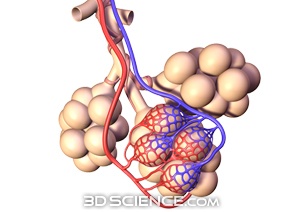
a)
taking in
b)
letting out
115.
What is the main function of the respiratory system?
a)
to provide oxygen and remove carbon dioxide from the body
b)
to bring oxygen to the body
c)
to break down food and absorb nutrients
d)
to remove oxygen from the body and deliver carbon dioxide
116.
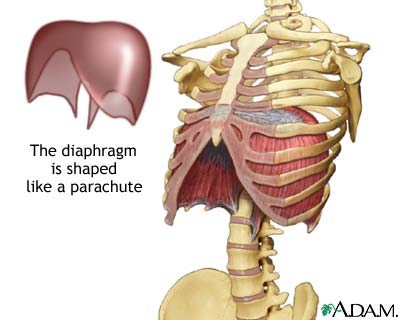
What is function of the dome-shaped diaphragm?
a)
This is where gas exchange happens.
b)
Air passes through the diaphragm on the way to the lungs.
c)
It attaches to the lungs to help in breathing.
d)
It is under the lungs and keeps them from falling down to your stomach.
117.
When you breathe, your lungs take in ___ and remove ___. 
a)
air/oxygen
b)
oxygen/carbon dioxide 
c)
carbon dioxide/waste 
d)
waste/air 
118.
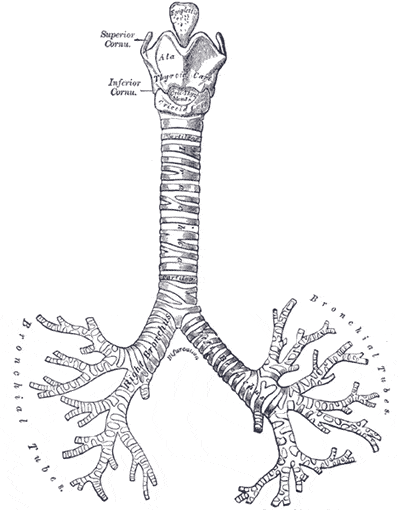
What is the function of the bronchi?
a)
Transport air from nose to lungs
b)
Transport air from trachea to lungs
c)
Transport air from lungs to alveoli
d)
Transport air from alveoli to blood
119.
The two main branches from the trachea (one to each lung)
a)
bronchi
b)
alveoli
c)
capillaries
d)
bronchioles
120.
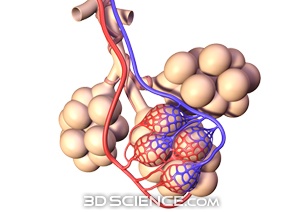
The air sacs that are covered with capillaries where gas exchange takes place
a)
bronchi
b)
lungs
c)
oxygen
d)
alveoli
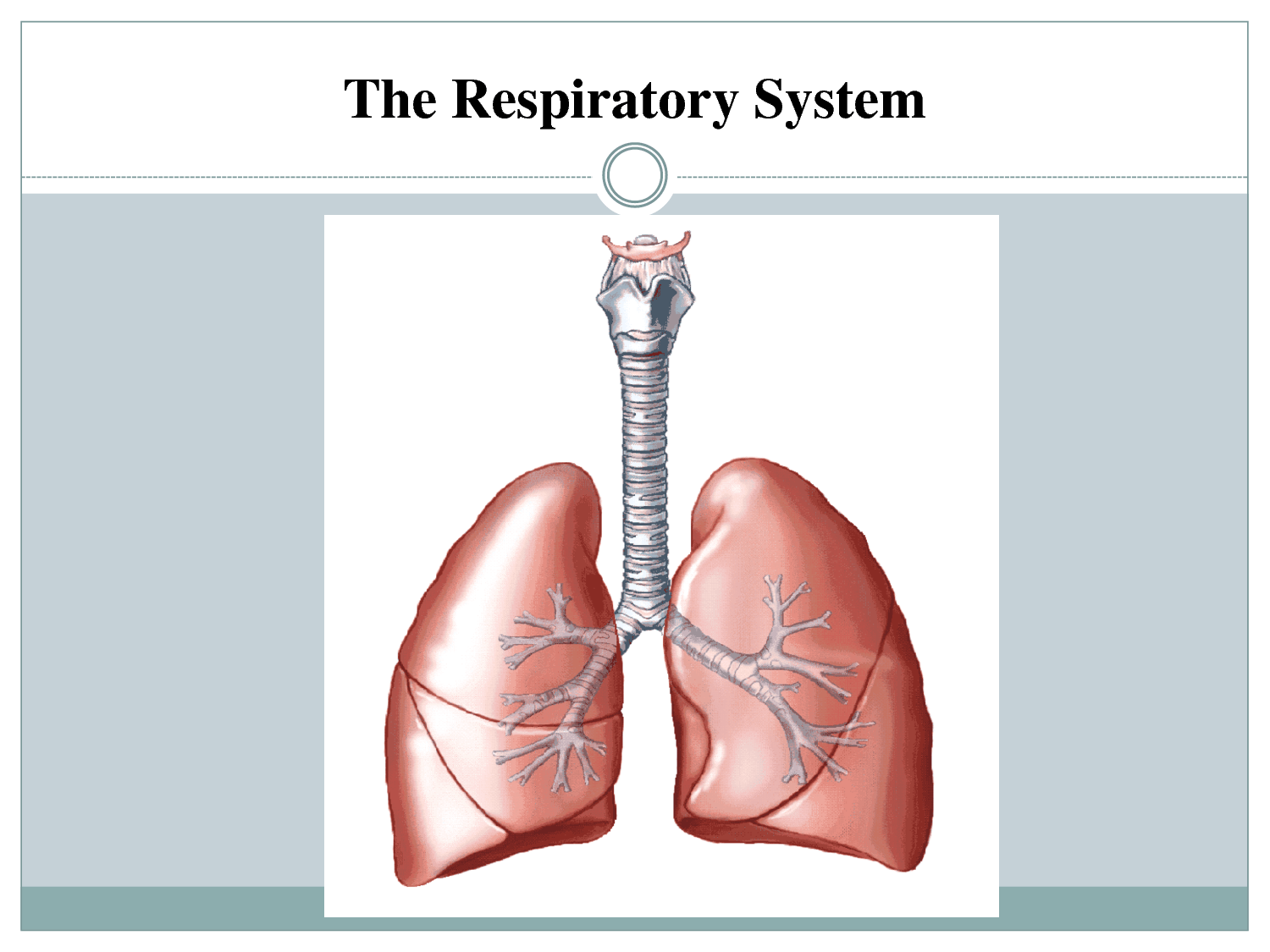
121.
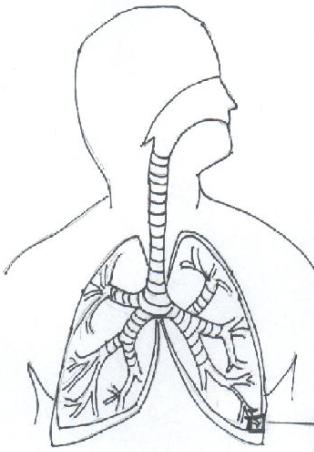
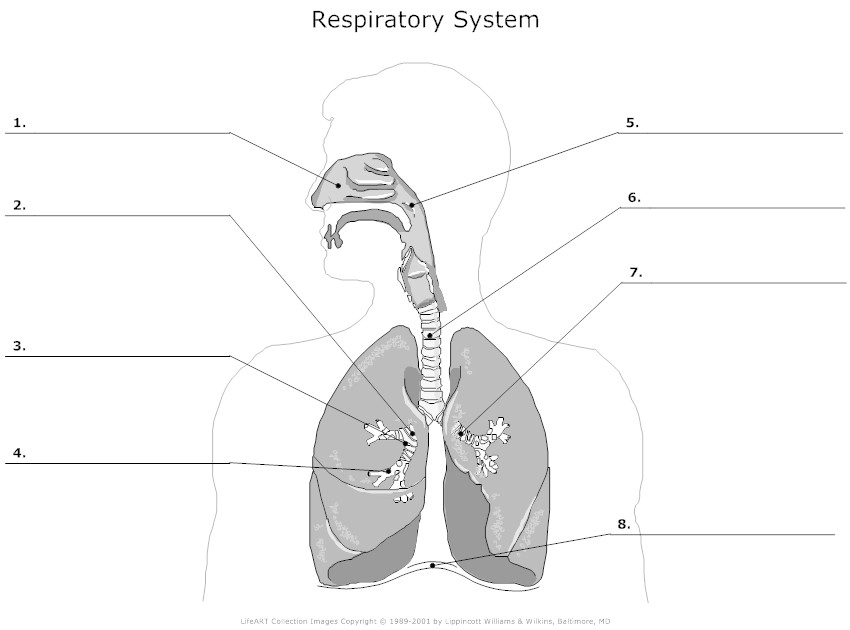
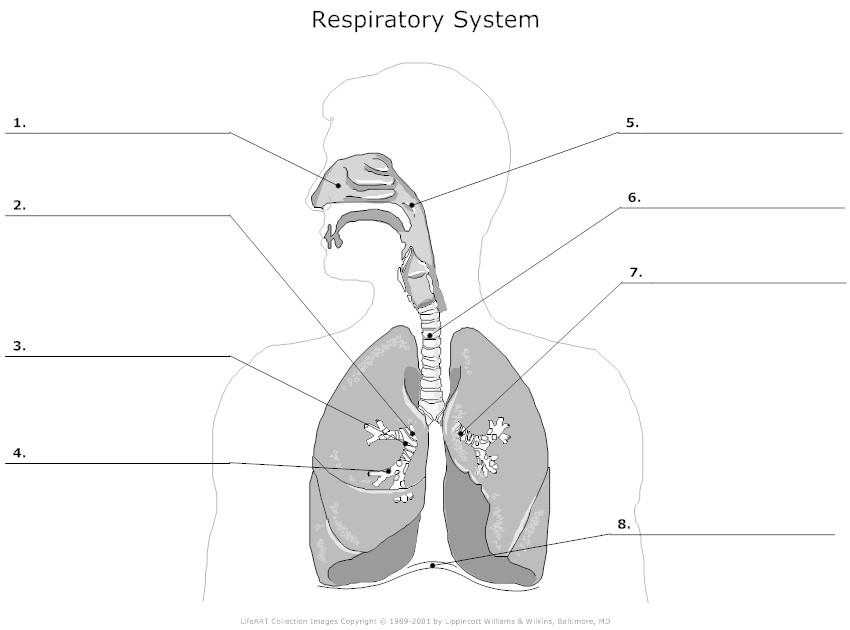
Name the organ label # 6. 
a)
alveoli 
b)
bronchi 
c)
trachea 
d)
lungs 
122.
Name the structure labeled 8 
a)
lungs 
b)
trachea 
c)
diaphragm 
d)
alveoli 
123.
Flap of skin that covers the opening to the windpipe during swallowing
a)
Stomach
b)
Trachea
c)
Pancreas
d)
Epiglottis
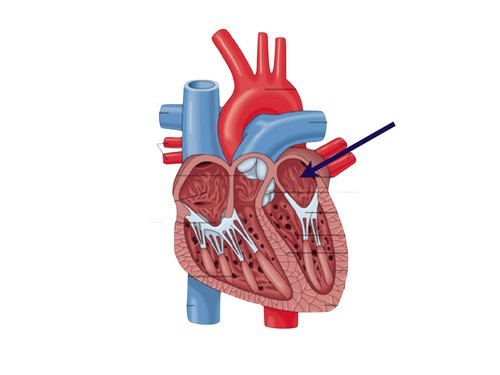
124.
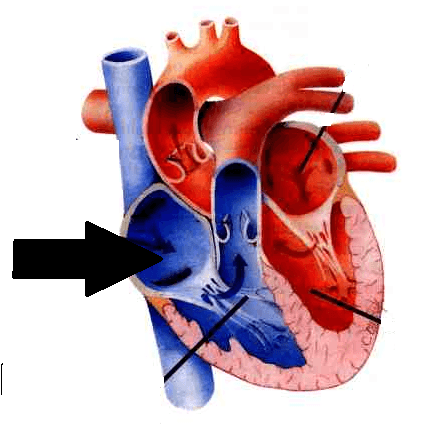
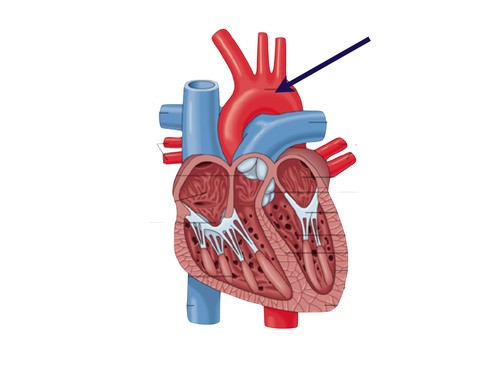
Identify
a)
Left atrium
b)
Right atrium
c)
Left ventricle
d)
Right ventricle
125.
Identify
a)
Pulmonary veins
b)
Pulmonary artery
c)
Aorta
d)
Vena cava
126.
Identify
a)
Left atrium
b)
Right atrium
c)
Left ventricle
d)
Right ventricle
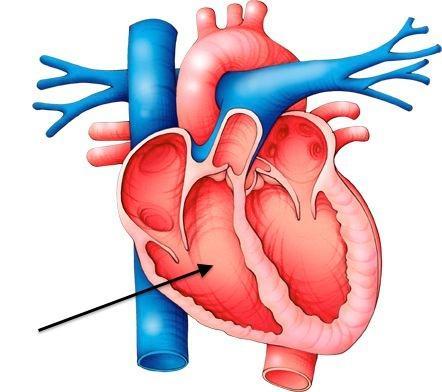
127.
Identify
a)
Left atrium
b)
Right atrium
c)
Left ventricle
d)
Right ventricle
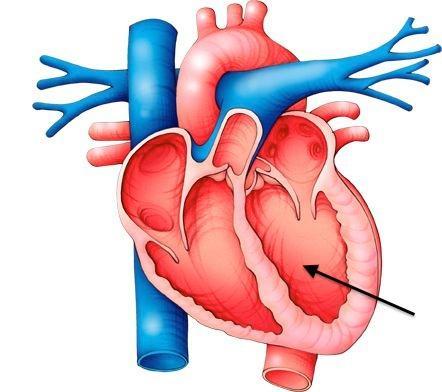
128.
Identify
a)
Left atrium
b)
Right atrium
c)
Left ventricle
d)
Right ventricle
129.
The aorta is the largest artery in the body. The blood leaving the aorta is full of?
a)
Oxygen 
b)
Carbon Dioxide 
c)
White blood Cells 
d)
Potassium 
130.
Thin-walled vessels that allow for the exchange of O2 , CO2, nutrients and wastes between blood cells or air sacs in the lungs
a)
Arteries
b)
Veins
c)
Capillaries
131.
What does Deoxygenated mean?
a)
Oxygen-rich
b)
Blood flow
c)
Oxygen-poor
d)
Water Flow
132.
A flap of tissue that prevents blood from flowing backward
a)
Aorta
b)
Atrium
c)
Septum
d)
Valve
133.
Carry blood away from heart; mostly oxygen-rich
a)
Arteries
b)
Veins
c)
Capillaries
134.
Which type of blood vessel has the thickest layer of smooth muscle in its walls?
a)
Arteries
b)
Veins
c)
Capillaries
d)
Ventricles
135.
arteries, veins, and capillaries are three types of __________
a)
heart valves
b)
blood vessels
c)
cells
d)
veins
136.
What do Red-Blood cells do?
a)
Carry oxygen from the lungs to the body cells and  transport carbon dioxide from the cells back to the lungs
b)
keeps blood flowing in one direction to the heart and prevent blood from flowing backwards
c)
Collects  blood from the capillaries and drain it into the veins
d)
Bring nutriients to the cells and carries away waste materials.
137.
An organism that produces its own food supply from inorganic compounds is called a(an)
a)
heterotroph
b)
consumer
c)
detritivore
d)
autotroph
138.
What is the original source of almost all energy in most ecosystems?
a)
carbohydrates
b)
sunlight
c)
water
d)
carbon
139.
What is the term for each step in the transfer of energy and matter within a biological community?
a)
energy path
b)
food web
c)
trophic level
d)
food pyramid
140.
Autotrophs make up the _______ level in all ecosystems.
a)
First
b)
Second
c)
Third
d)
Fourth
141.
symbiotic relationship in which both organisms benefit
a)
competition
b)
Mutualism
c)
nitrogen fixation
d)
energy pyramid
142.
A living relationship between two species in which one organism is harmed is called...
a)
mutualism
b)
commensalism
c)
parasitism
d)
niche
143.
What does a food web represent?
a)
All connections of energy flow throughout all organisms in a habitat.
b)
The specific ways that mutualism is carried out.
c)
A single pathway or energy flow between organisms. 
d)
How carnivores get their food. 
144.
The image provided is an example of a(n):
a)
Carnivore
b)
Herbivore
c)
Producer
d)
Autotroph
145.
The image provided is an example of a(n):
a)
Producer
b)
Autotroph
c)
Consumer
d)
Insect
146.
The amount of energy that usually transfers from one trophic level to the next...
a)
10%
b)
20%
c)
80%
d)
50%
147.
Which of the following would be the definition of a detritivore?
a)
Animals that eat insects.
b)
Organisms that feed on rocks, recycling the nutrients back into the ground.
c)
Organisms that eat only pants
d)
Things that feed on dead organisms, recycling the nutrients back into the ground.
148.
The nonliving aspects of an ecosystem.
a)
Abiotic factors
b)
Biotic factors
149.
The living portions of the ecosystem.
a)
Biotic factors
b)
Abiotic factors
150.
A collection of organisms that belong to different populations but all live in the same area and interact with one another.
a)
Population
b)
Ecosystem
c)
Community
d)
Ecosphere
151.
A collection of organisms that make up a community as well as all of the nonliving aspects of the environment.
a)
Population
b)
Community
c)
Habitat
d)
Ecosystem
152.
Organisms that can capture energy from inorganic, nonliving sources.
a)
Producers
b)
Consumers
c)
Detritivores
d)
Carnivores
153.
The general name for organisms like animals and fungi that get their energy from eating other organisms.
a)
Producers
b)
Consumers
c)
Detritivores
d)
Carnivores
154.
An organism at the second trophic level would be considered a...
a)
Top carnivore
b)
Producer
c)
Herbivore
d)
Carnivore
155.
What is the carrying capacity of the following graph?
a)
1000
b)
8000
c)
800
d)
600
156.
Will competition increase/decrease the carrying capacity of an ecosystem for the animal in competition?
a)
Decrease
b)
Increase
157.
When a population grows past the ecosystem's carrying capacity, what happens to the population?
a)
Continues to grow
b)
The population starts to die off to return to carrying capcity
c)
The population will go extinct due to lack of resources
d)
The population grows then finds a new carrying capacity