wayground logo

Free Printable Worksheets

Font size

S
M
L
XL
Worksheets

Tutoring Pre-Assessment

Total questions: 154

Worksheet time: 3hrs 25mins

Name
Class
Date
1.
Which of the following units are repeatedly joined together to form a strand of DNA?
a)
amino acids
b)
nucleotides
c)
fatty acids
d)
polysaccharides
2.
The enzyme that unwinds the DNA to prepare for replication
a)
helicase
b)
replicase
c)
polymerase
d)
synthase
3.
DNA replication results in two DNA molecules,
a)
each one with two original strands
b)
each one with two new strands
c)
each one with one new strand and one original strand
d)
one with two new strands and the other with two original strands
4.
In what phase of the cell cycle does DNA replication take place?
a)
G1
b)
S
c)
G2
d)
M
5.
Which enzyme is responsible for adding nucleotides?
a)
Topoisomerase
b)
DNA Polymerase
c)
Ligase
d)
Primase
6.
The process of DNA replication is called semi conservative because it results in
a)
none of these
b)
Two DNA molecules.  One original molecule and one with two new strands
c)
two exact copies with new strands
d)
two identical molecules, each with 1 original strand and one new.
7.
Based on the diagram, how many origins of replication are represented?
a)
1
b)
2
c)
3
d)
4
8.
Which of the following does DNA polymerase NOT do?
a)
connects nucleotides (in the new strand) through covalent bonds
b)
Matches the template nucleotides with free nucleotides
c)
proofreads
d)
It does all of these functions
9.
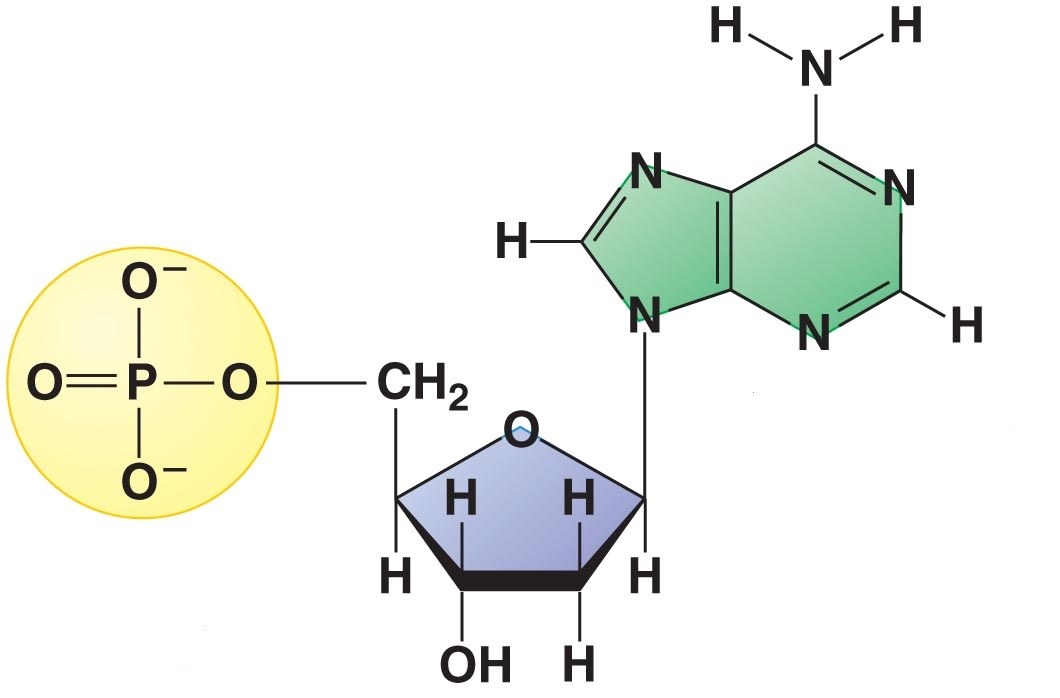
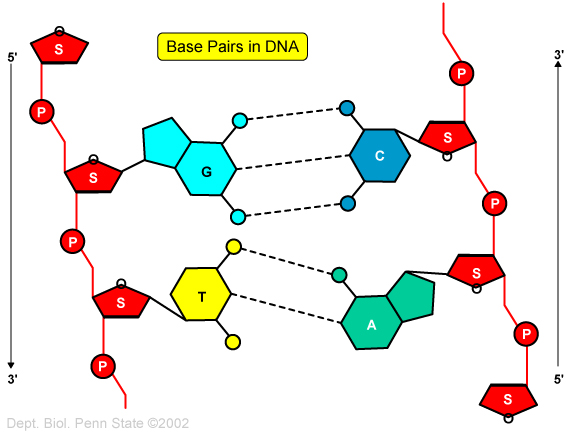
The DNA nucleotide is composed of three parts. Which two components make up the nucleotide backbone?
a)
ribose sugar and base
b)
ribose sugar and phosphate group
c)
nitrogen base and deoxyribose sugar
d)
deoxyribose sugar and phosphate group
10.
What is responsible for holding the two strands of the DNA double helix together?
a)
hydrogen bonds
b)
alleles
c)
London dispersion forces
d)
deoxyribose sugars
11.
If a strand reads:
3' A A A T T T C 5'
The matching strand would read...
a)
5' T T T A A A G 3'
b)
3' T T T A A A G 5'
c)
5' A A A T T T C 3'
d)
3' U U U A A A G 5'
12.
Which enzyme fixes the Okazaki fragments in the lagging strand?
a)
Helicase
b)
Polymerase
c)
Ligase
d)
Primerase
13.
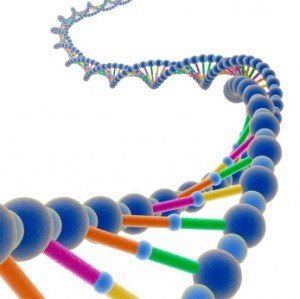
This picture is illustrating the ____ nature of DNA.
a)
anti-parallel
b)
deoxyribosic
c)
helical
d)
radioactive
14.
Place the following in sequential order
1. Recoil
2. Straightens the double helix
3. Breaks Hydrogen bonds
4. Adds Free nucleotides
a)
1, 2, 3, 4
b)
3, 4, 2, 1
c)
3, 2, 4, 1
d)
2, 3, 4, 1
15.
Why does DNA replicate?
a)
To create another copy for the new cell
b)
To create a duplicate copy in case the original gets damaged
c)
To create a new copy to replace the damaged original
16.
Which enzyme has the job of unzipping the double helix?
a)
Helicase
b)
Polymerase
c)
Ligase
d)
Primerase
17.
3' and 5' refer to...
a)
How effectively the helicase works
b)
What direction the nucleotides are pointing
c)
Where the RNA primer attaches
d)
Okazaki's famous experiment
18.
The enzyme that splits open the DNA creates what's called a fork - where the DNA separates into the lagging strand and the ______ strand.
a)
leading
b)
leveraging
c)
Okazaki
d)
ligase
19.
A DNA nucleotide contains all of the following, except...
a)
Deoxyribose
b)
Phosphate group
c)
Nitrogenous base
d)
Cholesterol
20.
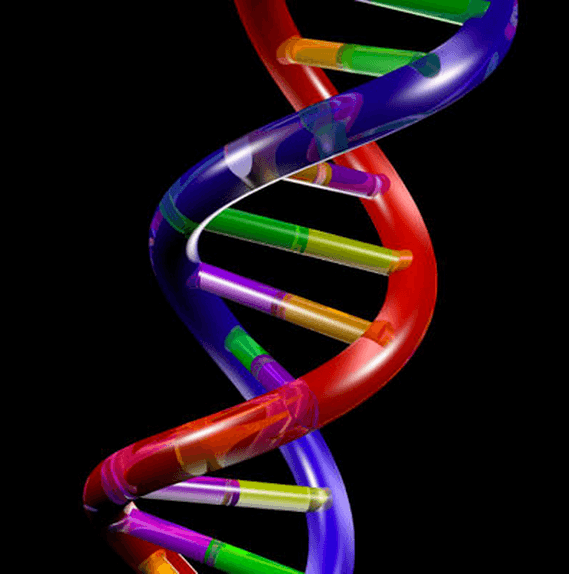
What is the shape of DNA?
a)
Double helix
b)
Triple helix
c)
Flat, bilayer
d)
Three-pronged rigid ladder
21.
DNA replication turns one strand of DNA into two new strands of DNA. What percent of each new strand is the old strand?
a)
Half of each new DNA is the old DNA
b)
The old strand of DNA was digested, so none
c)
The new DNA is entirely made up of the old DNA
d)
About every sixth base comes from the old DNA
22.
Sometimes, DNA is called "semi-conservative." Why might this be?
a)
The old strand is "conserved" and used to make the new strands
b)
Uracil is "conserved" in that it is only used to make the new strands
c)
ATP is "conserved" via the usage of facilitated diffusion
d)
Ligase is "conserved" in that it is denatured by the process
23.
Why is DNA important?
a)
it is very small and very complicated
b)
it's in everything
c)
it serves as the blueprint for traits of all living things
d)
because we eat it every day for energy
24.
Which organelle is DNA usually found in?
a)
cell membrane
b)
vacuole
c)
chloroplast
d)
nucleus
25.
Describes the twisted ladder-like shape of a DNA molecule
a)
Nitrogen Base
b)
Hexagon
c)
Double Helix
26.
In a strand of DNA, if it contains 20% of Thymine, then how much Guanine would be present?
a)
30%
b)
20%
c)
80%
d)
10%
27.
Which sequence of DNA bases would pair with this partial strand
ATG TGA CAG
a)
ATG TGA CAG
b)
TAC ACT GTC
c)
GTA AGT GAC
d)
CAT TCA CTG
28.
Which of the following best describes a DNA molecule?
a)
double helix
b)
contains ribose
c)
made of amino acids
d)
contains Uracil
29.
Which of the following units are repeatedly joined together to form a strand of DNA?
a)
amino acids
b)
nucleotides
c)
fatty acids
d)
polysaccharides
30.
Guanine bonds with ______________.
a)
Adenine
b)
Guanine
c)
Cytosine
d)
Thymine
31.
In a molecule of double-stranded DNA, the amount of Adenine present is always equal to the amount of
a)
cytosine
b)
guanine
c)
thymine
d)
uracil
32.
Why is DNA important?
a)
it is very small and very complicated
b)
it's in everything
c)
it serves as the blueprint for traits of all living things
d)
because we eat it every day for energy
33.
What determines the code, or information, of a DNA molecule?
a)
the shape (structure) of the nitrogen bases
b)
the order (sequence) of the nitrogen bases
c)
the color of the nitrogen bases
d)
the frequency (number) of nitrogen bases
34.
Which 2 molecules form the sides (backbone) of the DNA ladder?
a)
deoxyribose sugar and adenine
b)
deoxyribose sugar and a hydrogen bond
c)
deoxyribose sugar and the nucleus
d)
deoxyribose sugar and phosphate
35.
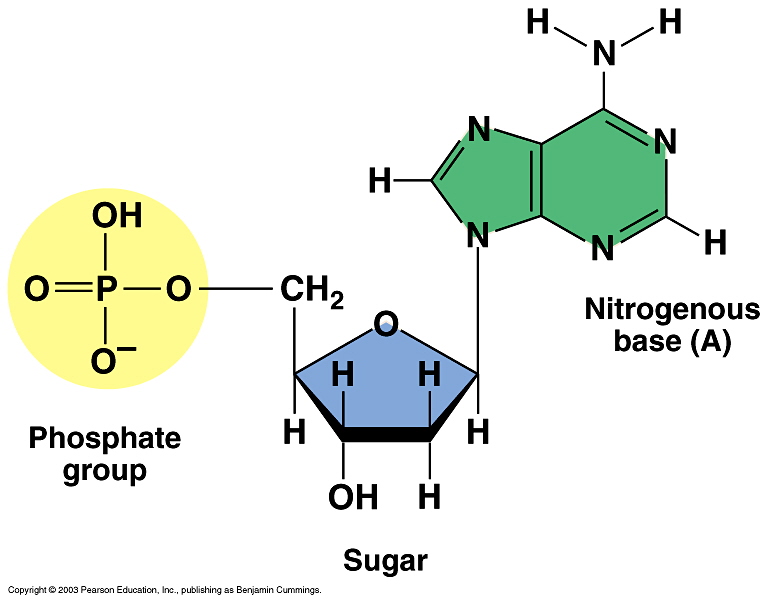
What are the three components of a nucleotide?
a)
sugar, hydrogen, nitrogen base
b)
sugar, oxygen, nitrogen base
c)
sugar, phosphate, nitrogen base
d)
sugar, phosphate, protein
36.
The sugar in DNA is ____________________.
a)
deoxyribose
b)
ribose
37.
What does DNA stand for?
a)
Deoxyribonucleic acid
b)
Denitrogenous acid
c)
Deribonucleic acid
d)
Diribonucleic acid
38.
Which of the following best describes a DNA molecule?
a)
double helix
b)
contains ribose
c)
made of amino acids
d)
contains Uracil
39.
DNA is a polymer made of:
a)
Nucleotides
b)
Ribosomes
c)
Purines
d)
Pyrimidines
40.
Why is DNA important?
a)
it is very small and very complicated
b)
it's in everything
c)
it serves as the blueprint for traits of all living things
d)
because we eat it every day for energy
41.
In a molecule of double-stranded DNA, the amount of Adenine present is always equal to the amount of
a)
cytosine
b)
guanine
c)
thymine
d)
uracil
42.
Which organelle is DNA usually found in?
a)
cell membrane
b)
vacuole
c)
ribosome
d)
nucleus
43.
Guanine bonds with ______________.
a)
Adenine
b)
Guanine
c)
Cytosine
d)
Thymine
44.
What determines the code, or information, of a DNA molecule?
a)
the shape (structure) of the nitrogen bases
b)
the order (sequence) of the nitrogen bases
c)
the color of the nitrogen bases
d)
the frequency (number) of nitrogen bases
45.
Which 2 molecules form the sides (backbone) of the DNA ladder?
a)
deoxyribose sugar and adenine
b)
deoxyribose sugar and a hydrogen bond
c)
deoxyribose sugar and the nucleus
d)
deoxyribose sugar and phosphate
46.
What will the matching sequence be on a strand that reads AAGCTAT?
a)
AACGATA
b)
TTCGTTA
c)
CCTGATA
d)
TTCGATA
47.
What are the three components of a nucleotide?
a)
sugar, hydrogen, nitrogen base
b)
sugar, oxygen, nitrogen base
c)
sugar, phosphate, nitrogen base
d)
sugar, phosphate, protein
48.
DNA codes for...
a)
bases
b)
proteins
c)
amino acids
d)
phosphates
49.
DNA polymerase is a(n)
a)
lipid
b)
enzyme
c)
sugar
d)
starch
50.
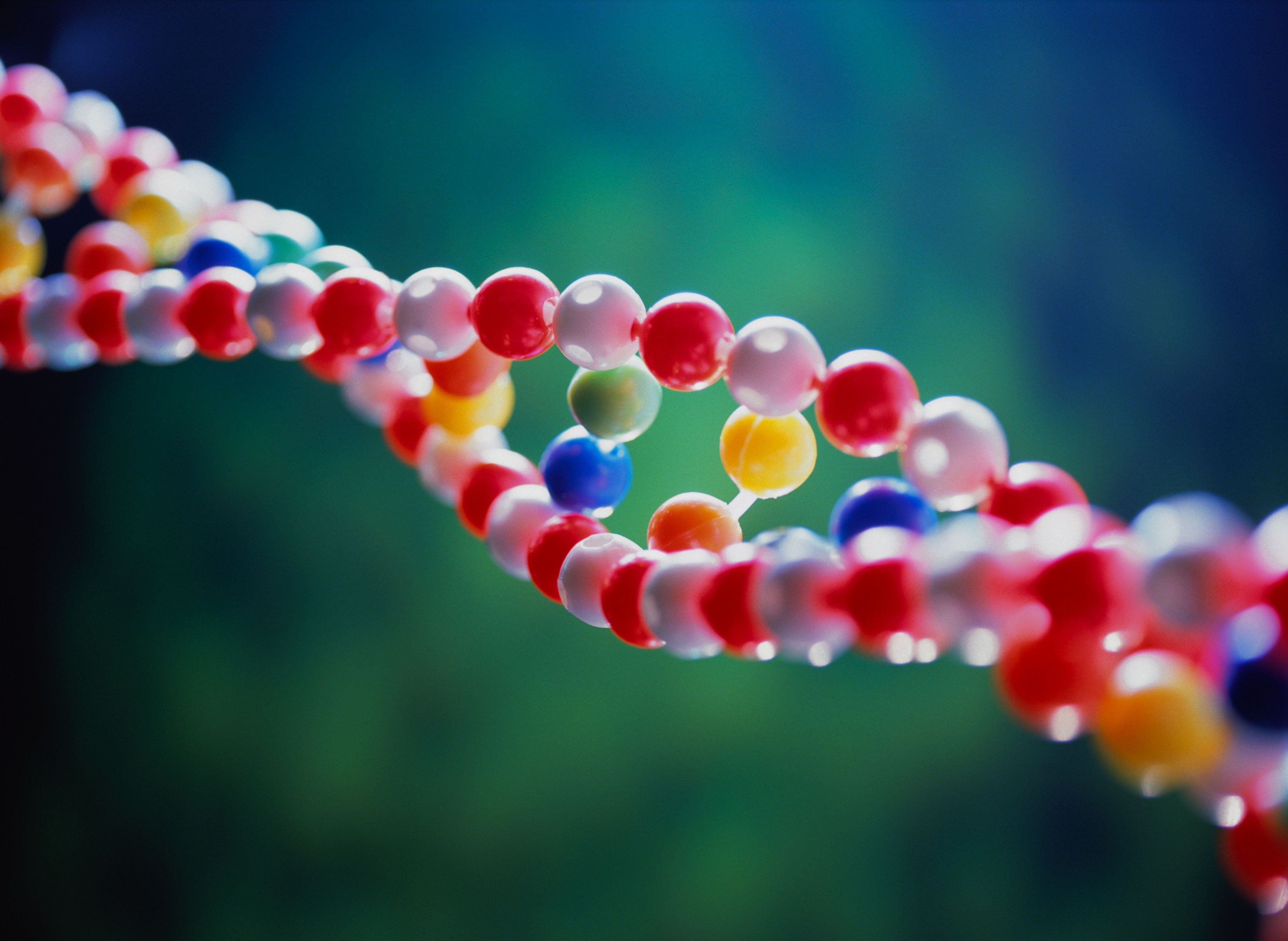
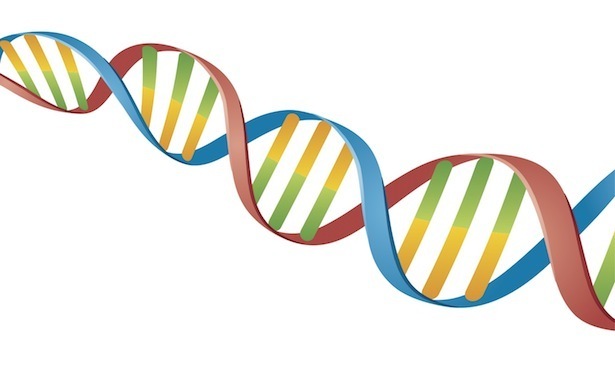
Name this structure
a)
double helix
b)
nucelotide
c)
twisted ladder
d)
hydrogen bond
51.
Which two scientists are accredited with correctly deducing the double helix model of DNA?
a)
Watson and Crick
b)
Wilkins and Franklin
c)
Wilkins and Crick
d)
Watson and Franklin
52.
Nitrogenous bases are joined by which type of bond?
a)
polar bonds
b)
ionic bonds
c)
covalent bonds
d)
hydrogen bonds
53.
What is the correct complimentary strand for the following DNA?ATCGAG
a)
TACGAG
b)
ATCGAG
c)
TAGCTG
d)
TAGCTC
54.
Kind of virus that infects bacteria
a)
Anticodon
b)
Bacteriophage
c)
Base Pairing
d)
Codon
e)
Deoxyribonucleic Acid (DNA)
55.
Principle that bonds in DNA can form only between adenine and thymine and between guanine and cytosine
a)
Anticodon
b)
Bacteriophage
c)
Base Pairing
d)
Codon
e)
Deoxyribonucleic Acid (DNA)
56.
Principle enzyme involved in DNA replication
a)
DNA Polymerase
b)
Gene Expression
c)
Genetic Code
d)
Messenger RNA (mRNA)
e)
Nucleotide
57.

Which of the following is a base pair?

a)

Adenine - Cytosine

b)

Cytosine - Thymine

c)

Deoxyribose - Cytosine

d)

Cytosine - Guanine

58.

What are the four nitrogen bases present in DNA?

a)

adenine, lysine, guanine, cytosine

b)

adenine, uracil, guanine, cytosine

c)

cytosine, thymine, lysine, adenine

d)

cytosine, guanine, thymine, adenine

59.

What are the four biomolecules?

a)

Proteins, Carbohydrates, Lipids, Nucleic Acids

b)

Fatty Acids, Amino Acids, Monosaccharides, Nucleotides

60.
Which biomolecule is also known as enzymes?
a)
Carbohydrate
b)
Lipid
c)
Nucleic Acid
d)
Protein
61.
Which biomolecule are in starches and fibers?
a)
Lipid
b)
Protein
c)
Nucleic Acid
d)
Carbohydrate
62.
Which biomolecule is made of nucleotides and contain you DNA?
a)
Carbohydrate
b)
Lipids
c)
Protein
d)
Nucleic Acid
63.

Which biomolecule helps form muscles?

a)

Nucleic Acid

b)

Carbohydrate

c)

Protein

d)

Lipids

64.
Which biomolecule is responsible for insulation and energy storage?
a)
Protein
b)
Nucleic Acid
c)
Lipid
d)
Carbohydrate
65.
Which biomolecule is made of amino acids?
a)
Nucleic Acid
b)
Carbohydrate
c)
Protein
d)
Lipid
66.
Which biomolecule is your main source of quick energy?
a)
Nucleic Acid
b)
Protein
c)
Lipid
d)
Carbohydrate
67.
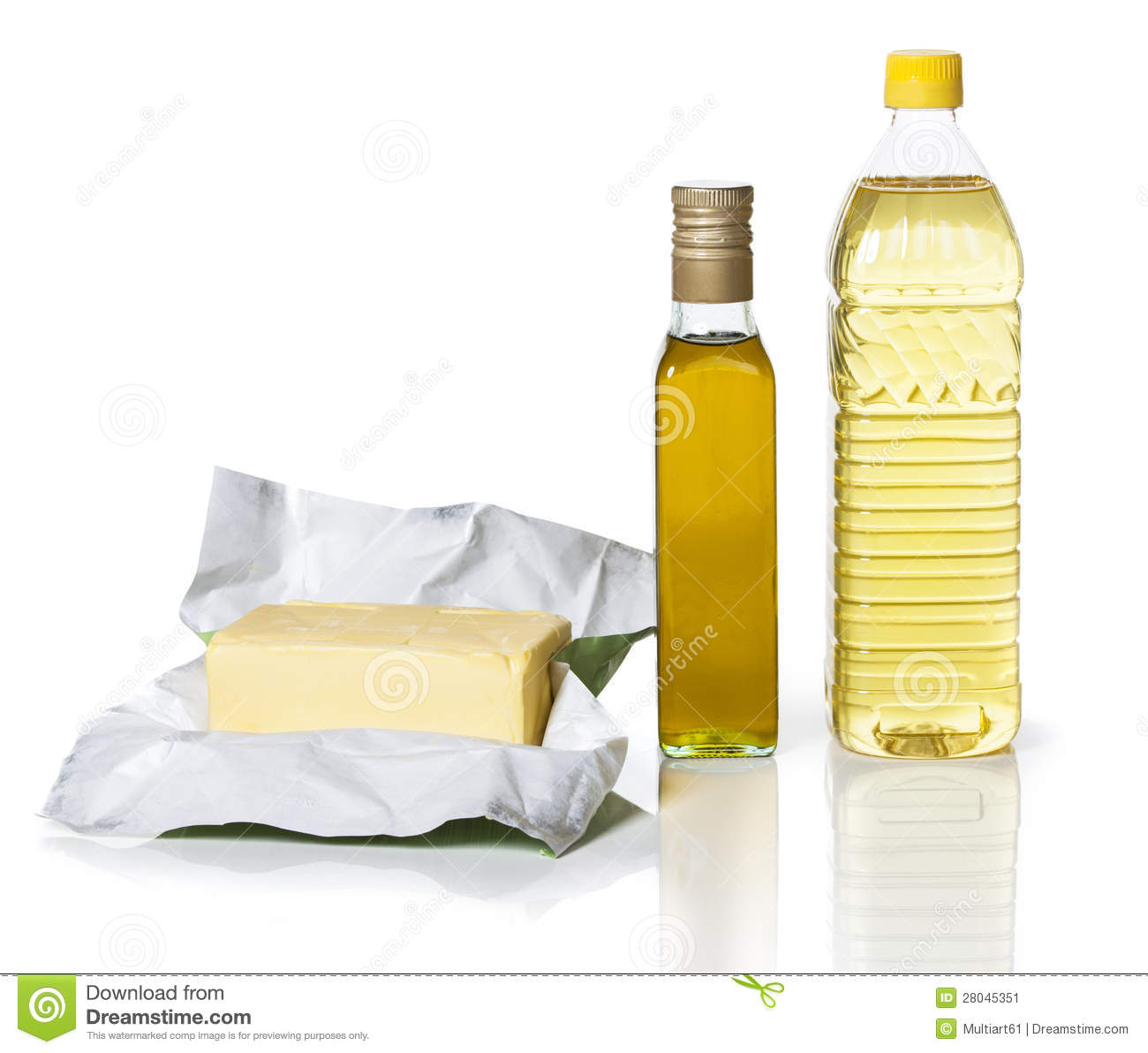
Which biomolecule contains fats and oils?
a)
Proteins
b)
Nucleic Acid
c)
Lipids
d)
Carbohydrate
68.
Which biomolecule contain your genetics?
a)
Carbohydrate
b)
Lipid
c)
Nucleic Acid
d)
Protein
69.
Which biomolecule is responsible for insulation and energy storage?
a)
Protein
b)
Nucleic Acid
c)
Lipid
d)
Carbohydrate
70.
All polymers are made up of...
a)
monosaccharides
b)
monomers
c)
proteins
d)
None of these
71.
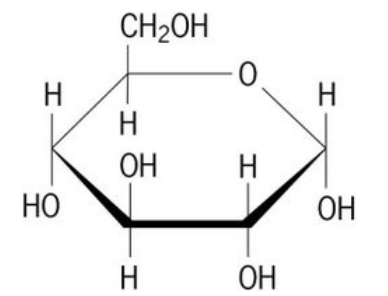
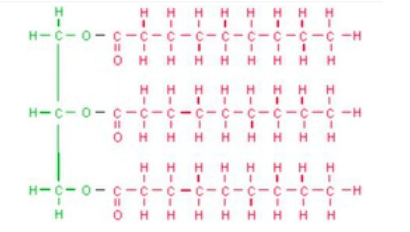
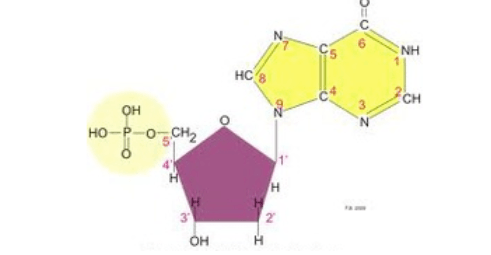
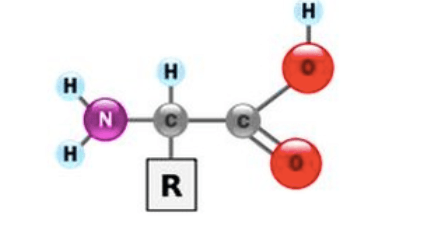
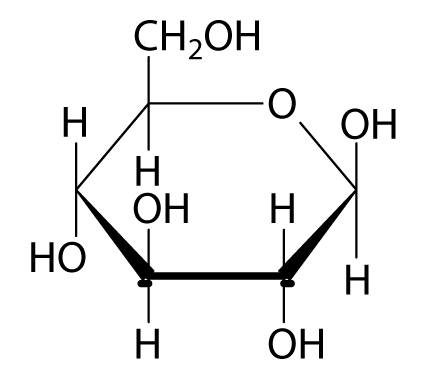
Which biomolecule is this a picture of?
a)
Protein
b)
Nucleic Acid
c)
Lipid
d)
Carbohydrate
72.
Name this biomolecule
a)
carbohydrate
b)
lipid
c)
nucleic acid
d)
protein
73.
Fats and oils are composed of what two groups of molecules?
a)
 glucose and fructose 
b)
starch and sugar 
c)
water and cellulose
d)
fatty acids and glycerol 
74.
What is the function of nucleic acids?
a)
Stores energy
b)
Stores genetic information
c)
Movement
d)
Physical structure
75.
Carbon, Hydrogen, Oxygen and Nitrogen are the elements that make up______?
a)
Carbohydrate
b)
Lipid
c)
Protein
d)
Nucleic acid
76.
Oils are which type of macromolecule?
a)
carbohydrates
b)
lipids
c)
nucleic acids
d)
proteins
77.
Which 2 molecules contains the elements C-H-O and function pertains to energy?
a)
Lipids and Protein
b)
Carbohydrates and Nucleic Acids
c)
Protein and Carbohydrates
d)
Carbohydrates and Lipids
78.
Which biomolecule is a main source of quick energy?
a)
Nucleic Acid
b)
Protein
c)
Lipid
d)
Carbohydrate
79.
Which biomolecule is found in fats, oils, and waxes and is a source of long-term energy
a)
Proteins
b)
Nucleic Acid
c)
Lipids
d)
Carbohydrate
80.
What is the function of a nucleic acid?
a)
Stores genetic information
b)
Stores energy
c)
Quick source of energy
d)
Builds structures
81.
Which biomolecule is this a picture of?
a)
Protein
b)
Nucleic Acid
c)
Lipid
d)
Carbohydrate
82.
Which biomolecule is this a picture of?
a)
Protein
b)
Nucleic Acid
c)
Lipid
d)
Carbohydrate
83.
Which biomolecule is this a picture of?
a)
Protein
b)
Nucleic Acid
c)
Lipid
d)
Carbohydrate
84.
Which biomolecule is this a picture of?
a)
Protein
b)
Nucleic Acid
c)
Lipid
d)
Carbohydrate
85.
Which biomolecule is made of nucleotides and contain you DNA?
a)
Carbohydrate
b)
Lipids
c)
Protein
d)
Nucleic Acid
86.
Which biomolecule has sugars and starches?
a)
Lipids
b)
Proteins
c)
Carbohydrates
d)
Nucleic Acid
87.
What elements are common to all 4 biomolecules?
a)
Carbon, hydrogen, nitrogen
b)
Carbon, Nitrogen, Phosphorus
c)
Carbon, Hydrogen, Oxygen
d)
Carbon, Hydrogen, Phosphorus
88.
A monomer is ...
a)
a single atom
b)
a building block for polymers
c)
a single element
d)
is an inorganic molecule
89.
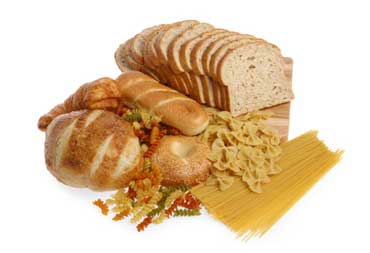
Which biomolecule is found in pasta and bread?
a)
Lipid
b)
Protein
c)
Nucleic Acid
d)
Carbohydrate
90.
Which biomolecule is made of nucleotides and contain you DNA?
a)
Carbohydrate
b)
Lipids
c)
Protein
d)
Nucleic Acid
91.
Which biomolecule has sugars and starches?
a)
Lipids
b)
Proteins
c)
Carbohydrates
d)
Nucleic Acid
92.
Which biomolecule functions include enzymes­ which speeds the rate of chemical reactions, structural components in cells, mechanical functions in muscles and cytoskeleton, cell signaling, and immune response; provides structure and helps with chemical reactions 
a)
Protein
b)
Lipids
c)
Carbohydrate
d)
Nucleic Acid
93.
Which biomolecule is important source of energy for humans; glucose for human cells, tissues, and organs; provides fiber, sugar, and starches; provides structural support, cell wall, and cell membrane maker?
a)
Nucleic Acid
b)
Lipid
c)
Carbohydrate
d)
Protein
94.
Which biomolecule includes fats, such as triglycerides, oils, waxes, and steroids (cholesterol); insoluble in water; provides energy storage, insulation, part of cell membrane, and hormones 
a)
Nucleic Acid
b)
Lipids
c)
Carbohydrate
d)
Protein
95.
Identify the biomolecule
a)
Carbohydrate
b)
Lipid
c)
Protein
d)
Nucleic Acid
96.
Identify the biomolecule
a)
Lipid
b)
Protein
c)
Carbohydrate
d)
Nucleic Acid
97.
What is the monomer for a protein?
a)
Monosaccharide
b)
Triglyceride
c)
Amino Acid
d)
Nucleotide
98.
This biomolecule would be used for
a)
Building enzymes
b)
Storing energy
c)
Key source of energy
d)
Storing genetic information
99.
Lipids are made up of which of the following?
a)
glycerol and fatty acids tails
b)
glycerol and monolipids
c)
fatty acids and phosolipids
d)
amino acids and nucleotides
100.
What is the monomer of nucleic acids?
a)
Glycerol
b)
Monosaccharides
c)
Amino Acids
d)
Nucleotides
101.
Which biomolecule is this a picture of?
a)
Protein
b)
Nucleic Acid
c)
Lipid
d)
Carbohydrate
102.
The arrangement of which three components is used to distinguish one molecule from another?
a)
carbon, hydrogen, and oxygen
b)
glucose, fructose, and ribose
c)
peptide, fatty acid, and purine
d)
water, carbon dioxide, and notrogen
103.

What happens to an enzyme when it denatures?

a)

The activation energy of the reaction is doubled.

b)

The activation energy of the reaction is lowered.

c)

It's optimal conditions for temperature of the enzyme are doubled.

d)

The shape of the enzyme molecule is changed.

104.

Most enzymes are composed of .....

a)

Lipids

b)

Carbohydrates

c)

Proteins

d)

Nucleic Acids

105.
Where do substrates bind on an enzyme?
a)
voltage-gated channels
b)
surface receptor
c)
calcium channels
d)
active site
106.
What is the purpose  of an enzyme?
a)
give permission for the reaction
b)
raise activation energy
c)
speed up reactions
d)
control how many reactions occur
107.
With what 3 letters do enzymes typically end?
a)
-ose
b)
-ase
c)
-ese
d)
-tic
108.
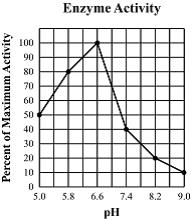
Which of the following conclusions can be drawn from this graph?
a)
The optimum pH of the enzyme is 6.6.
b)
The optimum pH of the enzyme is 5.8
c)
The enzyme’s activity increases as pH increases 5.0 to 9.0
d)
The enzyme’s activity is greater around pH of 8.0 .
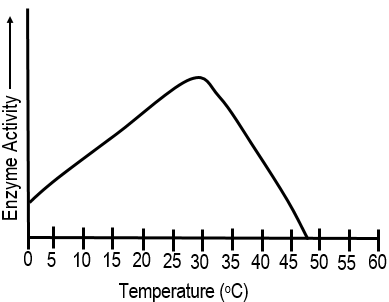
109.
Based on the graph, what is the optimal temperature for this enzyme? 
a)
15oC
b)
40oC
c)
30oC
d)
35oC
110.
What happens when enzymes are heated to a high temperature?
a)
The enzymes die.
b)
The shapes of the enzyme are altered denature
c)
The enzymes' amino acid sequence changes.
d)
The enzymes remain the same
111.
Which of these is most likely an enzyme?  
a)
Sucrose
b)
Galactose
c)
Fructose
d)
Amylase
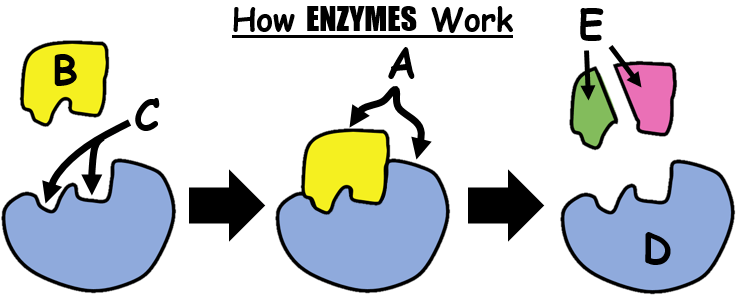
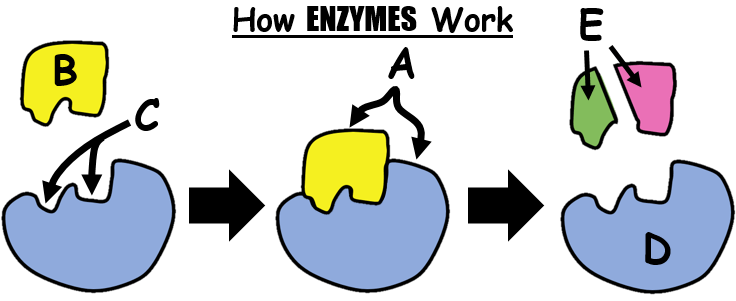
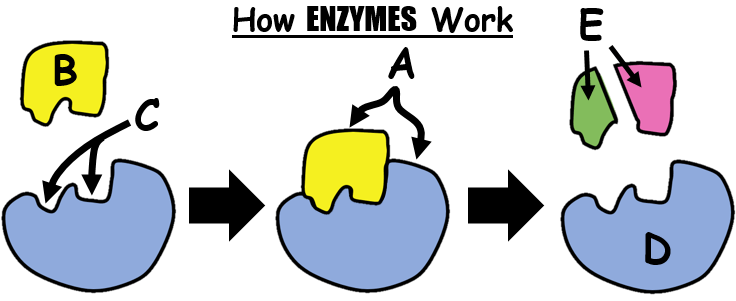
112.
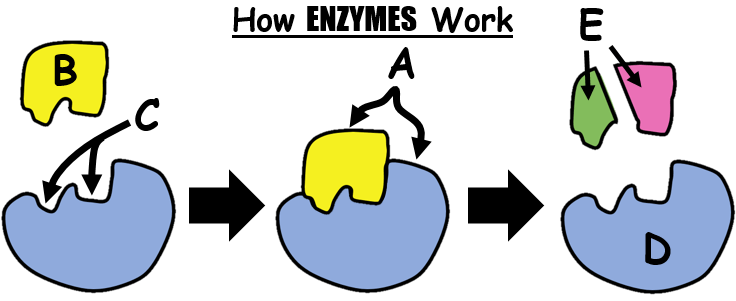
Letter D...
a)
active site
b)
enzyme
c)
substrate
d)
products
113.
Letter B...
a)
active site
b)
enzyme
c)
substrate
d)
products
114.
Letter C...
a)
active site
b)
enzymes
c)
substrate
d)
products
115.
Letter E...
a)
active site
b)
enzyme
c)
substrate
d)
products
116.
Any substance that is acted upon by an enzyme is called a(n)?
a)
Coenzyme
b)
Substrate
c)
Vitamin
d)
Polypeptide
117.

Which 2 factors can affect the rate of enzyme activity?

a)

Light intensity

b)

Temperature

c)

pH

d)

Oxygen concentration

118.
What is the energy needed to start an chemical reaction referred to?
a)
Cascading Energy
b)
Potential Energy 
c)
Kinetic Energy
d)
Activation energy
119.

The three stages of the cell cycle are __________, mitosis, and

cytokinesis.

a)

interphase

b)

anaphase

c)

metaphase

d)

prophase

120.

Identical cells formed during cell division are called:

a)

daughter organelles

b)

daughter cycles

c)

daughter nucleus

d)

daughter cells

121.

The process by which a cell nucleus divides is called:

a)

interphase

b)

mitosis

c)

cytokinesis

d)

cell cycle

122.

The phase of mitosis when chromosomes align in the

middle is called ________

a)

anaphase

b)

prophase

c)

telophase

d)

metaphase

123.

The phase of mitosis where the nuclear membrane forms

is called ________ .

a)

anaphase

b)

prophase

c)

metaphase

d)

telophase

124.

The first phase of mitosis is called _______________ .

a)

telophase

b)

metaphase

c)

anaphase

d)

prophase

125.

The final stage of the cell cycle is called:

a)

Interphase

b)

mitosis

c)

cytokinesis

d)

daughter cells

126.

A copy a chromosome made during cell division are called:

a)

daughter chromatids

b)

sister chromatids

c)

cell chromatids

d)

sister chromosome

127.

The stage of mitosis where the sister chromatids separate:

a)

prophase

b)

anaphase

c)

telophase

d)

metaphase

128.

During mitosis chromosomes meet in the middle to get divided into two daughter cells in a phase called:

a)

prophase

b)

anaphase

c)

metaphase

d)

telophase

129.

Select ALL stages of Interphase

a)

G1

b)

S

c)

G2

d)

Mitosis

130.

In which stage of the cell cycle does the DNA replicate?

a)

G1

b)

S

c)

G2

d)

Mitosis

131.

The following describes_________________________ during mitosis. The chromatin condenses and spindle fibers form at each side of the cell. The chromosomes begin to form and nuclear membrane disappears.

a)

prophase

b)

anaphase

c)

metaphase

d)

telophase

132.

The following describes_________________________ during mitosis. The chromosomes line up along the middle of the cell and the spindle fibers attach to each chromosome at the centromere.

a)

prophase

b)

metaphase

c)

anaphase

d)

telophase

133.

When you start with 1 cell, at the end of mitosis, how many identical cells will you have?

a)

1

b)

2

c)

3

d)

4

134.
Place these cells in order of mitosis.
a)
A, B, C, D, E
b)
B, E, D, A, C
c)
C, E, A, D, B
d)
B, D, A, E, C
135.
Has membrane bound organelles
a)
Prokaryote
b)
Eukaryote
c)
both
136.
Oldest type of cell
a)
Prokaryote
b)
Eukaryote
c)
both
137.
Smaller
a)
Prokaryote
b)
Eukaryote
c)
both
138.

Has cell membrane

a)

Prokaryote

b)

Eukaryote

c)

both

139.
Has cytoplasm
a)
Prokaryote
b)
Eukaryote
c)
both
140.
Has nucleus
a)
Prokaryote
b)
Eukaryote
c)
both
141.
Bacteria
a)
Prokaryote
b)
Eukaryote
c)
both
142.
more complex
a)
Prokaryote
b)
Eukaryote
c)
both
d)
both
143.
multicellular
a)
Prokaryote
b)
Eukaryote
c)
both
144.
plants
a)
Prokaryote
b)
Eukaryote
c)
both
145.
Which type of cell?
a)
Prokaryote
b)
Eukaryote
146.
Which type of cell?
a)
Prokaryote
b)
Eukaryote
147.
Which type of cell?
a)
Prokaryote
b)
Eukaryote
148.
A single-celled organism that lacks a membrane-bound nucleus, mitochondria, or any other membrane -bound organelle .
a)
Prokaryote
b)
Eukaryote
c)
Nucleus
d)
Single-celled organism
149.
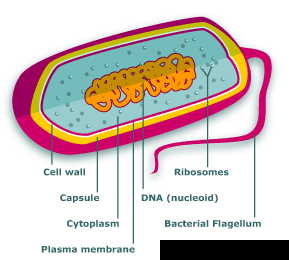
Where is the DNA found in a prokaryotic cell? 
a)
floating around in the cytoplasm 
b)
in the nucleus 
150.
What type of cell has a nucleus? 
a)
eukaryotic
b)
prokaryotic 
151.
What type of cell does not have a nucleus?
a)
eukaryotic 
b)
prokaryotic 
152.
Plants and animal cells are examples of ___ cells 
a)
prokaryotic cells 
b)
eukaryotic cells 
153.
Prokaryotes have contains membrane-bound organelles. True or False?
a)
True
b)
False
154.
Are prokaryotes multicellular or unicellular? 
a)
Multicellular
b)
Unicellular