wayground logo

Free Printable Worksheets

Font size

S
M
L
XL
Worksheets

science review

Total questions: 158

Worksheet time: 5hrs 3mins

Name
Class
Date
1.
Which of these statements correctly describes the forces acting on this statue? 
a)
The downward force of gravity affects the statue more than the table. 
b)
The downward force of gravity on the statue is balanced by the upward force of the table on the statue. 
c)
Gravity pushes down on the statue with a force greater than the upward force from the table. 
d)
Gravity pulls the table down and pushes the statue up. 
2.
Which best describes what is happening to the light?
a)
Diffracted
b)
Diffused
c)
Reflected
d)
Refracted
3.
Fish are able to survive in aquatic habitats due to
a)
Their ability to swim to the surface to breath
b)
Special structures adapted to obtain dissolved oxygen
c)
Their ability to change colors
d)
Special structures adapted to allow quick movements
4.
Terell placed two objects on s balance scale to measure their mass... Object 1 had a greater mass than object 2.  What conclusion can he make?
a)
There is less material in object 1 than object 2
b)
There is more material in object 1 than object 2
c)
They both have the same amount of material
d)
There can be no conclusion
5.
Which is soluble in water?
a)
Metal Shavings
b)
Sand
c)
Sugar
d)
Chalk Powder
6.
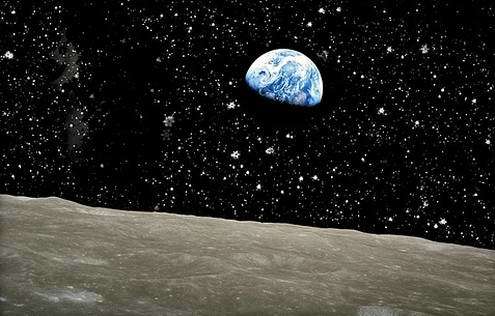
Sound does not travel through space because sound waves
a)
can only travel through gases like air
b)
expand out in circles rather than straight lines
c)
cannot move through places that are too dark
d)
must move through a substance to transfer energy
7.
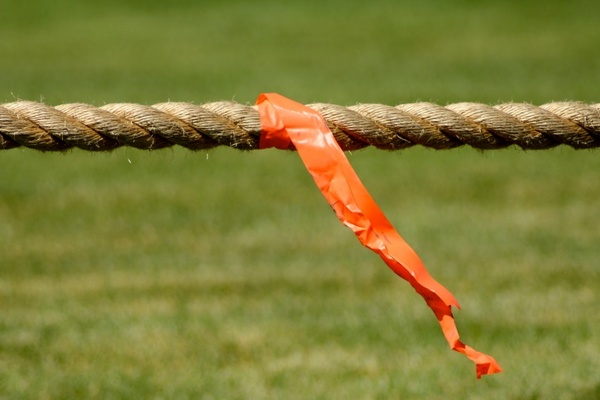
In a tug of war game, balanced forces are best represented when both teams cause the flag to 
a)
fall to the ground
b)
stay in the middle
c)
move slowly in one direction
d)
be pulled quickly in one direction
8.
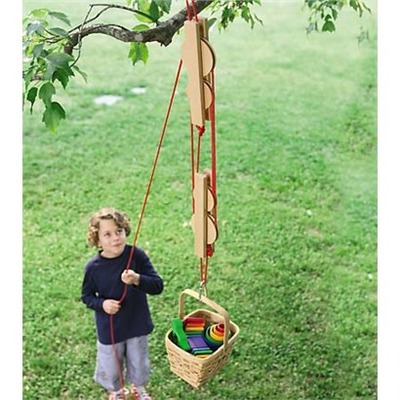
Pulleys use a wheel and a rope to lift heavy loads.  How do they make it easier?
a)
by altering the mass of the object
b)
by altering the frictional force in the rope
c)
by changing the direction of the applied force
d)
by changing the amount of gravity on the load
9.

Traits are passed from one ________ to another through the chromosomes in the reproductive cells.

a)

life

b)

generation

c)

cell

d)

body

10.

Humans have ________ chromosomes .

a)

48

b)

44

c)

46

d)

42

11.

Our DNA is located in our _______.

a)

alleles

b)

traits

c)

factors

d)

chromosomes

12.

________ are in charge of transmitting inherited traits from parents to offspring.

a)

genes

b)

alleles

c)

Punnett square

d)

traits

13.

A __________ allele makes the inherited trait appear.

a)

recessive

b)

dominant

14.

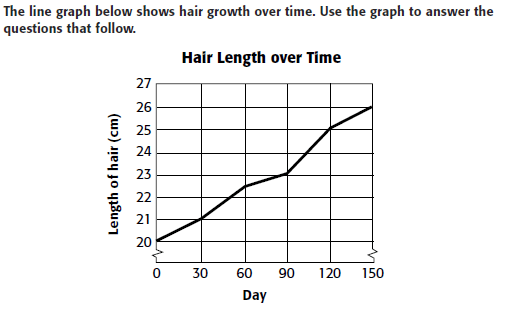
Our __________ is the physical expression of a trait.

a)

phenotype

b)

genotype

15.

A place where animals live is __________.

a)

role

b)

heredity

c)

covering

d)

habitat

16.

Animals have a __________ to protect their bodies.

a)

habitat

b)

covering

c)

role

17.

Charles Darwin was an _____________ naturalist who proposed the theory of evolution.

a)

English

b)

American

c)

Australian

d)

Irish

18.

____________ is the main mechanism of evolution.

a)

Mutation

b)

Variation

c)

Recombination

d)

Natural selection

19.

____________ generates diversity in all forms of life.

a)

Natural selection

b)

Variation

c)

Mutation

d)

Recombination

20.

Over time ______________ variations survive.

a)

unfavorable

b)

favorable

21.

____________ occurs when species have too many babies.

a)

Competition

b)

Heredity

c)

Overproduction

d)

Adaptation

22.

_____________ allow individuals to live into adulthood.

a)

Adaptations

b)

Offsprings

c)

Predators

23.

A ___________________ comes from observation and experimentation.

a)

scientific theory

b)

variation

c)

recombination

d)

mutation

24.

Which is the sequence by which natural selection works?

a)

selection → adaptation → variation

b)

selection → variation → adaptation

c)

variation → adaptation → selection

d)

variation → selection → adaptation

25.
Using Data Table 1, which organism shares a most recent common ancestor with rabbits?
a)
Fly
b)
Bat
c)
Tree
d)
Bacterium
26.
Using Data Table 1, which organism shares a most recent common ancestor with rabbits?
a)
Fly
b)
Bat
c)
Tree
d)
Bacterium
27.

Metals are

a)

poor conductors of heat and electricity

b)

great conductors of heat and electricity

28.

Nonmetals are

a)

poor conductors of heat and electricity

b)

great conductors of heat and electricity

29.

Elements found along the steplike like are referred to as

a)

nonmetals

b)

metals

c)

metalloids

30.

Which is a naturally occurring chemical?

a)

aspirin

b)

plastic

c)

salt

d)

nylon

31.

This table shows the specific heat of four substances. If each substance is exposed to the same amount of energy for one minute, which substance will get the hottest?

a)

lead

b)

glass

c)

iron

d)

ice

32.

A beaker with 100mL of water is placed on a hot plate and heated. The water boils at 100 degrees C. At what temperature would 90mL of water boil?

a)

10 degrees C

b)

100 degrees C

c)

90 degrees C

d)

110 degrees C

33.

A beaker with 200mL of water is placed on a hot plate and heated. The water boils at 100 degrees C. At what temperature would 110mL of water boil?

a)

200 degrees C

b)

100 degrees C

c)

110 degrees C

d)

210 degrees C

34.

Which of the following gases contributes to global warming and climate change?

a)

Hydrogen

b)

Helium

c)

Carbon Dioxide

d)

Oxygen

35.

Chemical X has a mass of 20 grams, and chemical Y has a mass of 30 grams. If the two chemicals are mixed and a complete chemical reaction takes place, what is most likely the mass of the product?

a)

20 grams

b)

30 grams

c)

50 grams

d)

100 grams

36.
Which of the following is not a type of rock?
a)
Igneous
b)
Divergent
c)
Sedimentary
d)
Metamorphic
37.
Which type of heat transfer can travel through the vacuum of space?
a)
Conduction
b)
Convection
c)
Radiation
d)
Igneous
38.
Which of the following is a reactant of cellular respiration?
a)
Carbon Dioxide
b)
Water
c)
Sunlight
d)
Oxygen
39.
Who first proposed the theory of continental drift?
a)
Mr. Kelley
b)
Alfred Wegner
c)
Albert Einstein
d)
Bill Nye the Science Guy
40.
What type of heat transfer does a lava lamp illustrate?
a)
Convection
b)
Conduction
c)
Radiation
d)
Divergent
41.
What time period ended with the worst mass extinction the world has ever had?
a)
Cretaceous
b)
Silurian
c)
Permian
d)
Devonian
42.
What era did the dinosaurs live during
a)
Precambrian
b)
Paleozoic
c)
Mesozoic
d)
Cenozoic
43.
What organelle inside plant cells performs photosynthesis?
a)
Nucleus
b)
Chlorophyll
c)
Mitochondria
d)
Chloroplast
44.

Dr. Smith has been reading about another scientist’s research in a physics journal. He plans to do these experiments himself and see if he gets the same result.

a)

Repetition

b)

Replication

45.

Julie goes to Silver River each week for 4 weeks and collects 5 samples of water to test the pH

a)

Repetition

b)

Replication

46.

The moon makes a complete revolution around Earth approximately once each

a)

day

b)

week

c)

year

d)

month

47.

In order to safely view the sun, a person should...

a)

view the sun while wearing sunglasses

b)

place a piece of dark paper over the lens of a telescope

c)

view an image of the sun projected onto a piece of paper

d)

place a piece of coloured glass over the lens of a telescope

48.

Using the image, which order of words identifies possible names for the missing X, Y, and Z in the picture.

a)

Universe, Solar System, Galaxy

b)

Galaxy, Solar System, Universe

c)

Milky Way, Galaxy, Solar System

d)

Solar System, Milky Way, Universe

49.
Which would most likely be produced by volcanic activity?
a)
canyon
b)
delta
c)
mountain
d)
prairie
50.
What causes rainfall on the windward side of the mountain?
a)
decreasing winds
b)
warming sunlight
c)
increasing humidity
d)
cooling temperatures
51.
Which causes a rapid change on Earth's surface?
a)
an earthquake
b)
snow storm
c)
acid rain
d)
wind
52.
Where are volcanoes and earthquakes most likely to occur?
a)
in the oceans
b)
in the center of continents
c)
at crustal plate boundaries
d)
at the center of crustal plates
53.
Which best describes an example of something that could be solved with science and technology?
a)
having better lunches at school
b)
using more alternative energy sources
c)
hiring more science teachers for schools
d)
using observation to count the number of stars in the sky
54.
Warm, moist air rises as it moves over a mountain.  Which of the numbered areas will have the most precipitation?
a)
1
b)
2
c)
3
d)
4
55.
What may result as a movement that occurs along fault lines?
a)
fossil formation
b)
hot springs
c)
volcanoes
d)
earthquakes
56.
A type of bird in Africa eats ticks off large mammals.  Which best describes the relationship between the bird and the mammals?
a)
commensalism
b)
mutualism
c)
predator-prey
d)
parasitism
57.
Which behavioral adaptation helps penguins survive in the cold Antarctic weather?
a)
streamlined body
b)
huddling close together
c)
hibernating
d)
dark black skin
58.
Which of these is a learned behavior?
a)
having a dream
b)
crying from pain
c)
throwing a ball
d)
pierced ears
59.
Toads need water to lay their eggs.  Toads lay their eggs in small puddles and ponds.  One Spring, there is a drought.  What is most likely to happen to the toads?
a)
The toads will be eaten by predators
b)
The toads will have less food
c)
The toads will have fewer offspring
d)
The toads will lay their eggs on the ground
60.

Which sentence best explains how both the cow and the grass obtain energy?

a)

The cow obtains energy from sunlight, and the grass obtains energy from the soil

b)

The cow obtains energy from water, and the grass obtains energy from sunlight

c)

The cow obtains energy from the soil, and the grass obtains energy from water

d)

The cow obtains energy from grass, and the grass obtains energy from sunlight

61.
A food chain is shown.
Plants -> Grasshoppers -> Mice -> Snakes -> Hawks
Which sentence correctly describes a relationship between two of the organisms in this food chain?
a)
The grasshoppers are producers, and the plants are consumers
b)
THe grasshoppers are prey, and the plants are predators
c)
The mice are producers, and the snakes are consumers
d)
The mice are prey, and the snakes are predators
62.
How does the climate of Destin, Florida most likely compare to the climate of Nashville, the capital of Tennessee?
a)
Destin, FL has hotter summers because it is farther south
b)
Nashville, TN has more rain because it is farther south
c)
Destin, FL has milder winters because it is closer to the ocean
d)
Nashville has the same climate because it is the same distance from the equator as Destin, FL
63.
The invention of the microscope has allowed scientists to 
a)
determine the effect of gravity on objects
b)
identify structures of cells
c)
measure the body temperatures of organisms
d)
develop maps of stars
64.

What does a seismograph measure?

a)

tornados

b)

ocean currents

c)

climate

d)

earthquakes

65.
Which measurement tool would you use to measure the length of an object in a science classroom?
a)
Triple Beam Balance
b)
Graduated Cylinder
c)
Metric Ruler or Meter Stick
d)
Thermometer
66.
Which measurement tool would you use to measure the volume of liquid in a science classroom?
a)
Triple Beam Balance
b)
Graduated Cylinder
c)
Metric Ruler or Meter Stick
d)
Thermometer
67.
Which measurement tool would you use to measure the mass of an object in a science classroom?
a)
Triple Beam Balance
b)
Graduated Cylinder
c)
Metric Ruler or Meter Stick
d)
Thermometer
68.
Which measurement tool would you use to measure the mass of an object in a science classroom?
a)
Triple Beam Balance
b)
Graduated Cylinder
c)
Metric Ruler or Meter Stick
d)
Thermometer
69.
Which measurement tool would you use to measure the temperature of an object in a science classroom?
a)
Triple Beam Balance
b)
Graduated Cylinder
c)
Metric Ruler or Meter Stick
d)
Thermometer
70.
Which unit of measurement would be used to measure length?
a)
grams
b)
mililiters
c)
millimeters/centimeters/meters
d)
Celsius/Fahrenheit
71.

A truck is carrying 10,000 pounds of supplies. How many tons of supplies is the truck carrying?

1 TON = 2,000 pounds

a)

20,000 tons

b)

5 tons

c)

5,000 tons

d)

20 tons

72.

5 yards = ________ ft

1 yard = 3 feet

a)

10

b)

5

c)

15

d)

20

73.

A balance/scale is used to measure the __________ of an object.

a)

length

b)

mass

c)

volume

74.

The amount of space an object takes up is called __________.

a)

length

b)

mass

c)

volume

75.

To measure the length of a book, you would use a ___________.

a)

graduated cylinder

b)

metric ruler

c)

scale

d)

beaker

76.

The volume of a liquid is measured in

a)

grams

b)

liters

c)

meters

d)

ounces

77.

The metric unit for mass is

a)

grams

b)

liters

c)

meters

d)

ounces

78.

What unit of measurement is used for the volume of a rectangular prism?

a)

liters

b)

cm3 (cubic centimeters)

c)

grams

d)

meters

79.
Which measurement tool would you use to measure the mass of an object in a science classroom?
a)
Triple Beam Balance
b)
Graduated Cylinder
c)
Metric Ruler or Meter Stick
d)
Thermometer
80.
Which measurement tool would you use to measure the volume of liquid in a science classroom?
a)
Triple Beam Balance
b)
Graduated Cylinder
c)
Metric Ruler or Meter Stick
d)
Thermometer
81.
Which measurement tool would you use to measure the temperature of an object in a science classroom?
a)
Triple Beam Balance
b)
Graduated Cylinder
c)
Metric Ruler or Meter Stick
d)
Thermometer
82.
Which unit of measurement would be used to measure volume?
a)
grams
b)
mililiters
c)
millimeters/centimeters/meters
d)
Celsius/Fahrenheit
83.
Which unit of measurement would be used to measure length?
a)
grams
b)
mililiters
c)
millimeters/centimeters/meters
d)
Celsius/Fahrenheit
84.
Which unit of measurement would be used to measure mass?
a)
grams
b)
mililiters
c)
millimeters/centimeters/meters
d)
Celsius/Fahrenheit
85.

What is an observation?

a)

Something you measure or detect with your senses.

b)

The way you feel about something

c)

An educated guess

d)

A theory that has been disproved

86.

A scientific observation is:

a)

Based on facts

b)

based on your personal beliefs

c)

Based on opinions

d)

Based on a rumor you heard in the bathroom

87.

An inference is based on:

a)

both scientific observations and known facts

b)

known facts

c)

scientific observations

d)

a rumor you started in the bathroom

88.

An inference is based on:

a)

both scientific observations and known facts

b)

known facts

c)

scientific observations

d)

a rumor you started in the bathroom

89.

What is the scientific method?

a)

A systematic procedure for how to conduct a scientific experiment

b)

The process of solving a problem

c)

A way of making non-scientific observations

d)

A way to summarize findings from multiple investigations

90.

Which of the following is NOT a testable question?

a)

How do rockets work?

b)

Does fertilizer help plants grow bigger?

c)

Does heart rate increase with exercise?

d)

Does the freezing point of water change at different elevations?

91.

What is a hypothesis?

a)

An educated prediction or answer to a testable question

b)

A random guess

c)

An observation based on feelings or emotions

d)
92.

What is the best way to collect and record data?

a)

In a data table

b)

On post-it notes

c)

On scrap paper

d)

interpretive dance

93.

An observation that is measurable and made with tools (such as a ruler or scale) is what type

a)

quantitative

b)

qualitative

c)

koalatative

94.

A series of steps designed to help you solve problems and answer questions is

a)

the scientific method

b)

results

c)

observations

d)

the two step

95.

After the data is analyzed the hypothesis is stated as correct or incorrect in the __________

a)

conclusion

b)

experiment

c)

hypothesis

d)

table of contents

96.
Which of the following is best shown in the picture?
a)
Earth's revolution
b)
A month on Earth
c)
A year on Earth
d)
Earth's rotation
97.
Which of the following do the blue arrows represent in the picture?
a)
A day on Earth
b)
Earth's rotation around the Sun
c)
Earth's revolution around the Sun
d)
A month on Earth
98.
Which of the following amounts of time has gone by when the Moon makes 1 revolution around the Earth?
a)
1 month on Earth
b)
1 year on Earth
c)
1 day on Earth
d)
1 week on Earth
99.
What type of orbit does the Earth have?  This was proven by astronomer Johannes Kepler.
a)
An elliptical orbit around the moon.
b)
An elliptical orbit around the Sun.
c)
A circular orbit around the moon.
d)
A circular orbit around the Sun.
100.
Day and night are caused by _______________.
a)
Earth's rotation
b)
Earth's revolution
c)
Moon's revolution
d)
Moon's rotation
101.
Earth revolves around ________, because it has the __________ in the solar system.
a)
the moon; most gravitational force
b)
the sun; least gravitational force
c)
Jupiter; most gravitational
d)
the sun; most gravitational force
102.

The earth is ______________of years old

a)

Hundreds

b)

Millions

c)

Billions

d)

Trillions

103.

Mammals are a dominant group in which era?

a)

Cenozoic

b)

Mesozoic

c)

Paleozoic

d)

Cambrianozoic

104.

What era did the formation of the earth occur?

a)

Paleozoic

b)

Precambrian

c)

Cenozoic

d)

Cambrian

105.

How old do Paleontologists believe the Earth is?

a)

2019 years old

b)

3.6 billion years old

c)

4.6 billion years old

d)

4.6 million years old

106.

What are the four eras in order from OLDEST to NEWEST?

a)

Pre-Cambrian, Paleozoic, Mesozoic, Cenozoic

b)

Pre-Cambrian, Mesozoic, Paleozoic, Cenozoic

c)

Cenozoic, Mesozoic, Paleozoic, Pre-Cambrian

d)

Mesozoic, Pre-Cambrian, Cenozoic, Paleozoic

107.

What type of event usually marks the end of an Era

a)

A Mass Extinction

b)

A Quinceanera

c)

An earthquake

d)

A Volcanic Eruption

108.

What era did trilobites, fishes, and other marine organisms dominate?

a)

Precambrian

b)

Paleozoic

c)

Mesozoic

d)

Cenozoic

109.

Describes a group of living things that are no longer living.

a)

fossil

b)

extinct

c)

endangered

d)

dinosaur

110.

The hardened remains of a living thing that died long ago.

a)

fossil

b)

extinct

c)

endangered

d)

minerals

111.

Why are there more animal fossils than plant fossils?

a)

Animals are smaller than plants.

b)

Plants have harder bodies than animals.

c)

Plans have softer bodies than animals.

d)

Animals eat plants.

112.

Which type of fossil would look just like the body part of a once-living thing?

a)

mineral

b)

footprint

c)

cast

d)

petrified wood

113.

Which is an imprint fossil?

a)

bone

b)

a cast

c)

an animal track

d)

amber fossil

114.

Which type of rock are most fossils found?

a)

sedimentary rock

b)

metamorphic rock

c)

igneous rock

d)

fossils

115.

An animal has sharp, pointy teeth, what can we infer about this animal?

a)

The animal lived in the water

b)

The animal lived near the beach.

c)

The animal is a carnivore.

d)

The animal only ate plants.

116.

If a scientist found a fish fossil in the desert, what can they infer?

a)

An animal ate the fish.

b)

The water covered the area long ago.

c)

Today's fish looks the same

d)

The fish is endangered.

117.

How are an elephant and a mammoth alike?

a)

They are both endangered.

b)

They are both extinct.

c)

They both have tusks.

d)

They both live in a warm climate.

118.

What statement is true about fossils?

a)

All living organisms leave behind fossils.

b)

Fossils show that camels never change.

c)

Some living things have not really changed in millions of years.

d)

Plant fossils have never changed.

119.

What needs to happen FIRST for a fossil to form?

a)

A plant or animal must be covered by sediment.

b)

A plant or animal must die and decompose.

c)

Sediments fill a a mold to form a cast.

d)

An earthquake shifts the land up.

120.
How much salt water covers the earth?
a)
55%
b)
65%
c)
75%
d)
85%
121.
The changes to water when it cycles the earth is called
a)
the moon cycle
b)
the sun cycle
c)
the water cycle
d)
the wind cycle
122.
When water is heated in the ocean by the sun and turns into water vapor
a)
condensation
b)
evaporation
c)
transpiration
d)
runoff
123.
Water in lakes and rivers that does not contain salt-
a)
recycled water
b)
new water
c)
salt water
d)
fresh water
124.
When water vapor s cooled and forms droplets-
a)
Condensation
b)
Evaportation
c)
Transpiration
d)
Run-off
125.
After condensation, the droplets of water in the clouds fall to the earth in different forms
a)
precipitation 
b)
condensation
c)
evaporation 
d)
ground water
126.

What does RECYCLING mean?

a)

throw away

b)

give things to other people

c)

make new things out of old ones

d)

using things again and again

127.

Where do you take your plastic bottles?

a)

into rubbish bin

b)

recycling bank

c)

buy-back centre

d)

bin

128.

What should you do with your old clothes?

a)

burn them

b)

throw them into rubbish bin

c)

give to other people

d)

nothing

129.

What does this sign mean?

a)

walk in circles

b)

reduce, reuse, recycle

c)

save the environment

d)

green is my favourite colour

130.

The three "R´s" are:

a)

Review, reuse and recycle

b)

Reduce, reuse, and recycle

131.

The bottle, the tops and the straws are made of....

a)

metal

b)

rubber

c)

plastic

d)

glass

132.

Listen and choose the correct order

a)

Plastic, rubber, paper, cardboard, glass and metal.

b)

Plastic, paper, cardboard, rubber, metal and glass.

c)

Plastic, glass, paper, cardboard, metal and rubber.

d)

Plastic, paper, rubber, cardboard, glass and metal

133.

Which of these animals is made of plastic?

a)

The rabbit

b)

The frog

c)

The Lion

d)

The tiger

134.

Where do you put magazines and newspapers?

a)

In the red bin

b)

In the green bin

c)

in the blue bin

d)

in the yellow bin

135.

Look and choose the correct sentence:

a)

There is nine cans

b)

There are ten cans

c)

There are nine cans

d)

There is eleven magazines

136.

What is the most used material?

a)

Plastic

b)

Cardboard

c)

Paper

d)

Metal

137.

What material do you need to create this artcraft?

a)

Paper, cardboard, a plastic bottle and bottle tops

b)

Paper, bags, a plastic bottle and newspapers

c)

Paper, magazines, a can and bottle tops

d)

Paper, straws, a plastic bottle and wrappers

138.

Which variable should be on the x axis?

a)

dependent variable

b)

independent variable

c)

control variable

139.
  Pick the control from the following variables..
vanilla ice cream
vanilla ice cream with sprinkles
vanilla ice cream with hot fudge & caramel
a)
Vanilla ice cream
b)
vanilla ice cream with sprinkles
c)
vanilla ice cream with hot fudge & caramel
d)
I like it all
140.
Look at the line graph.  Which statement is consistent with the line graph?
a)
The ability of air to hold moisture increases as temperature increases.
b)
The ability of air to hold moisture decreases as temperature increases.
c)
The ability of air to hold moisture decreases and then increases as temperature increases.
d)
The ability of air to hold moisture stays the same regardless of temperature. 
141.
How long was the hair on day 60?
a)
20.0 cm
b)
21.0 cm
c)
22.5 cm
d)
23.0 cm
142.
A fever is a spike in temperature.  On which day does this person have a fever?
a)
Sunday
b)
Monday
c)
Wednesday
d)
Saturday
143.
What type of graph is this?
a)
Bar Graph
b)
Line Plot
c)
Pictograph
d)
Tally Chart
144.
What is the title of the graph?
a)
Metro Bicycle Shop Weekly Sales
b)
Bicycles Sold
c)
Types of Bicycles
145.
What is the independent variable on the graph (x-axis)?
a)
Metro Bicycle Shop Weekly Sales
b)
Bicycles Sold
c)
Types of Bicycles
146.
What is the name of this graph?
a)
line plot
b)
line graph
c)
bar graph
d)
frequency table
147.
How long did it take this object to travel 10 m?
a)
0 s
b)
10 s
c)
15 s
d)
20 s
148.

What is the meaning of this hazard symbol?

a)

Corrosive

b)

Toxic

c)

Harmful

d)

Flammable

149.

Which of these hazard symbols mean radiation hazard?

a)
b)
c)
d)
150.
Using one or more of your senses to gather information.
a)
inferring
b)
classifying
c)
observing
151.
Grouping together items that are alike in some ways.
a)
quantitative observation
b)
evaluating
c)
classifying
152.

Which of these pieces of equipment is beaker?

a)
b)
c)
d)
153.

What is the name of this piece of equipment?

a)

Heat proof mat

b)

Beaker stand

c)

Gauze

d)

Tripod

154.

Which of these should be used for stirring a solution?

a)
b)
c)
d)
e)

Any of these

155.

I would like to measure 1cm3 of Hydrochloric acid, which piece of equipment should I use?

a)

Pasteur Pipette

b)

Measuring cylinder

c)

Beaker

d)

Spatula

156.

When smelling a chemical, you should hold it away from your face and ____ the air toward your nose!

a)

waft

b)

drink

c)

clean

d)

fire

157.

Dan wants to see what happens when he adds baking soda to vinegar. He was not asked to do this. Is this safe or unsafe?

a)

Safe

b)

Unsafe

158.

What is this piece of equipment?

a)

graduated cylinder

b)

beaker

c)

erlenmeyer flask

d)

florence flask