wayground logo

Free Printable Worksheets

Font size

S
M
L
XL
Worksheets

RP3 Mega Review

Total questions: 163

Worksheet time: 2hrs 2mins

Name
Class
Date
1.

What are trade winds?

a)

Winds that blow from south to north

b)

Winds that blow from north to south

c)

Winds that blow from east to west

d)

Winds that blow from west to east

2.

What happens during El Niño?

a)

Trade winds strengthen and warm surface water moves eastward

b)

Trade winds weaken and warm surface water moves westward

c)

Trade winds strengthen and warm surface water moves westward

d)

Trade winds weaken and warm surface water moves eastward

3.

What are the climate impacts of El Niño?

a)

Flooding in the Southern United States and warmer, drier conditions in the Pacific Northwest

b)

Drought in the Southern United States and cooler temperatures, heavy rains, and flooding in the Pacific Northwest

c)

Drought in the Southern United States and warmer, drier conditions in the Pacific Northwest

d)

Flooding in the Southern United States and cooler temperatures, heavy rains, and flooding in the Pacific Northwest

4.

What happens during La Niña?

a)

Trade winds weaken and warm surface water moves eastward

b)

Trade winds strengthen and warm surface water moves westward

c)

Trade winds strengthen and warm surface water moves eastward

d)

Trade winds weaken and warm surface water moves westward

5.

What are the climate impacts of La Niña?

a)

Flooding in the Southern United States and cooler temperatures, heavy rains, and flooding in the Pacific Northwest

b)

Flooding in the Southern United States and warmer, drier conditions in the Pacific Northwest

c)

Drought in the Southern United States and cooler temperatures, heavy rains, and flooding in the Pacific Northwest

d)

Drought in the Southern United States and warmer, drier conditions in the Pacific Northwest

6.

What is the relationship between El Niño and La Niña?

a)

They have no relationship

b)

El Niño and La Niña are the same phenomenon

c)

El Niño and La Niña are opposite phases of a cycle

d)

El Niño and La Niña occur simultaneously

7.

What can El Niño and La Niña influence?

a)

Only weather in Asia

b)

Only weather in the United States

c)

Only ocean temperatures

d)

Extreme weather, food production, water supply, and human health

8.

What is the impact of El Niño on the jet stream?

a)

Weakening and southward shift

b)

Intensification and southward shift

c)

Weakening and northward shift

d)

Intensification and northward shift

9.

What happens when trade winds become stronger than normal?

a)

They blow cool water back into the eastern Pacific and restart the upwelling of warm water in the western Pacific

b)

They blow cool water back into the western Pacific and restart the upwelling of warm water in the eastern Pacific

c)

They blow warm water back into the western Pacific and restart the upwelling of cool water in the eastern Pacific

d)

They blow warm water back into the eastern Pacific and restart the upwelling of cool water in the western Pacific

10.

What are El Niño and La Niña known to affect?

a)

Internet speeds globally

b)

The temperature of the sun

c)

Weather worldwide

d)

Local fishing practices only

11.

What phenomenon do scientists call the cycle of El Niño and La Niña?

a)

The Pacific Ring of Fire

b)

The El Niño-Southern Oscillation (ENSO) cycle

c)

The Atlantic Conveyor Belt

d)

The Global Warming Cycle

12.

During El Niño, what happens to the trade winds?

a)

They weaken

b)

They stop completely

c)

They become stronger

d)

They change direction

13.

What is another name for La Niña?

a)

El Viejo

b)

El Hijo

c)

La Madre

d)

El Hermano

14.

What is the typical peak time for El Niño?

a)

Early spring

b)

Around December

c)

Late fall

d)

In the middle of summer

15.

What is the primary consequence of La Niña on weather patterns in the United States?

a)

Increased snowfall in the tropical regions

b)

No significant change in weather patterns

c)

Colder and wetter conditions across the entire country

d)

Warmer and drier conditions in the South

16.

During El Nino, trade winds weaken and warm water are push back (a)   towards the west coast of the Americas.

17.

________________ brings water from the depths to the surface; this water is cold and nutrient rich.

a)

Jet Stream

b)

Oscillation

c)

Upwelling

d)

Flooding

18.

What vocabulary words matches " the movement back and forth at a regular speed"?

a)

trade winds

b)

oscillation

c)

succession

d)

temperature inversion

19.

What causes the unequal distribution of warm and cold water?

a)

shifts in the Earth's orbit

b)

prevailing wind patterns (Trade Winds)

c)

changes in fishing patterns

d)

changes in water density

20.

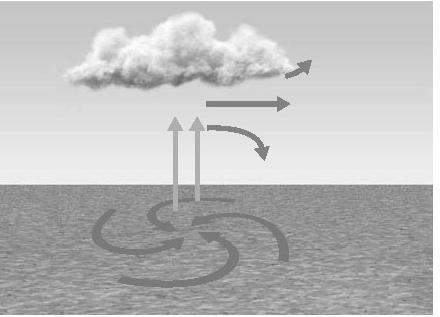
What process is shown in this picture?

a)

Upwelling

b)

Downwelling

21.

During a(n) ____ event, trade winds are much stronger than usual.

a)

El Nino

b)

La Nina

c)

Normal

d)

Partly sunny

22.

During an El Nino, trade winds are typically...

a)

about average

b)

stronger

c)

weaker

23.

The picture represents a(n) ___ event.

a)

El Nino

b)

La Nina

c)

Non-El Nino (normal conditions)

24.
El Nino occurs when the tropical ocean waters are warmer in which ocean?
a)
Atlantic
b)
Indian
c)
Pacific
d)
Arctic
25.

Hurricanes move in opposite directions in the northern and southern hemispheres due to ___________________.

a)

El NIno

b)

The Coriolis Effect

c)

La Nina

d)

upwelling

26.

La Niña is characterized by ______________ of the Western Pacific Ocean.

a)

a warming

b)

a cooling

c)

average temperatures

27.

Which weather conditions are associated with El Nino?

a)

increased temperature, increased precipitation

b)

decreased temperature, increased precipitation

c)

increased temperature, decreased precipitation

d)

decreased temperature, decreased precipitation

28.

During years of La Nina, which weather patterns are likely in Texas?

a)

warm and wet

b)

cold and wet

c)

cold and dry

d)

warm and dry

29.

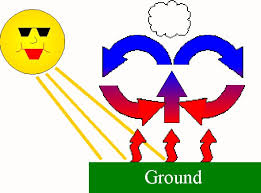
A normal convection current occurs when

a)

Warm air gets trapped under cold air

b)

Warm air rises and cooler air sinks

c)

Cool air rises and warmer air sinks

d)

Cool air rises with the warmer air

30.

During El Nino, what kind of winter would be expected in the Southern United States?

a)

Warmer and drier than usual

b)

Warmer and wetter than usual

c)

Cooler and wetter than usual

d)

Cooler and drier than usual

31.

Which of the following oceans experiences a stronger hurricane season as a result of El Nina?

a)

Atlantic

b)

Indian

c)

Arctic

d)

Pacific

32.

Which of the following oceans experiences a stronger hurricane season as a result of El Nino?

a)

Atlantic

b)

Indian

c)

Arctic

d)

Pacific

33.

Why is upwelling important?

a)

Upwelling regulates ocean temperature

b)

Upwelling provides nutrient rich water that sustains life

c)

Upwelling controls the tides

d)

Upwelling helps sailors to navigate the seas

34.
Hot air rises because...
a)
it is less dense
b)
it is heavier
c)
it is more dense
d)
it contains Helium
35.
The process the causes plate tectonics, wind, and ocean currents is known as...
a)
Radiation
b)
Conduction
c)
Nuclear Energy
d)
Convection
36.
According to the map, which city is likely experiencing warmer weather?
a)
Seattle
b)
Chicago
c)
Boston
d)
San Diego
37.
Which type of weather is Dallas, Texas, likely experiencing?
a)
Thunderstorms
b)
Clear skies
c)
Cold temperatures
d)
Gentle precipitation for days
38.
Which of the following is most likely a cause of hurricanes?
a)
Cooler ocean temperatures
b)
Warmer ocean temperatures
c)
Large ocean waves
d)
Strong ocean currents
39.
A hurricane forms over the Atlantic Ocean. When it hits land and comes ashore, its wind speed decrease significantly.  This happens because the hurricane:
a)
gains more water from the flooded land than the ocean
b)
meets a land breeze
c)
meets a stronger hurricane moving from land
d)
no longer gains energy from warm ocean water
40.
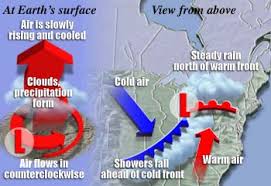
What type of weather usually goes with this symbol?
a)
Clear, sunny skies
b)
Cloudy skies
c)
Hot temperature
d)
Thunderstorms
41.
What type of weather will occur with this symbol?
a)
Thunderstorms, cooler temperatures
b)
Gentle precipitation, warmer temperatures
c)
Sunny skies, warmer weather
d)
Cloudy skies, cooler weather
42.
This is the symbol for a... 
a)
Cold Front
b)
Warm Front
c)
Stationary Front
d)
Occluded Front 
43.
This is the symbol for a... 
a)
Occluded Front
b)
Stationary Front
c)
Warm Front
d)
Cold Front 
44.
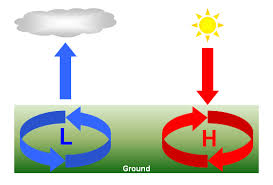
Which type of pressure system is pictured?
a)
high
b)
low
c)
medium
d)
none
45.
What type of weather would you expect with the pressure system pictured?
a)
clear
b)
cloudy
c)
severe storms
d)
hot
46.
Which term describes a circulation of air or water that is caused by uneven heating?
a)
convection current
b)
conduction current
c)
radiation current
d)
emission current
47.
____________ air sinks/falls because it is ____________dense.
a)
Cold, More
b)
Warm, Less
c)
Cold, Less
d)
Warm, More
48.
____________ air rises because it is ____________dense.
a)
Cool, Less
b)
Warm, Less
c)
Cold, More
d)
Warm, More
49.
The place where two air masses meet.
a)
air mass
b)
air pressure
c)
water cycle
d)
front
50.
When air pressure is high, what type of weather do we experience?
a)
sunny and clear
b)
rainy and cloudy
51.
When air pressure is low, what type of weather do we experience?
a)
sunny and clear
b)
rainy and cloudy
52.

During the winter months, which phenomenon would cause a location near the coast of North Carolina to have warmer temperatures than a location further inland?

a)

El Nino

b)

La Nina

c)

Jet Stream

d)

Gulf Stream

53.
The Gulf stream carries _____________ water from the east coast of The United States to the West coast of Europe.
a)
Cold
b)
Warm 
c)
Freezing
d)
Fresh
54.
What process brings the deep cold ocean currents up to the surface?
a)
Conduction
b)
Global Wind Patterns
c)
Upwelling
d)
Temperature and salinity
55.
Air moves from _______ pressure to _______ pressure.
a)
Low, High
b)
High, Low
c)
Warm, Cold
d)
Cold, Warm
56.
Currents that occur at or near the surface of the ocean are called 
a)
Deep Currents
b)
Convection Currents
c)
Surface Currents
d)
Wave Currents
57.
Surface currents are mainly caused by
a)
The Coriolis Effect
b)
Cold and Warm Water
c)
Convection
d)
Wind
58.
Upwelling provides _________ for many sea organisms.
a)
Water
b)
Nutrients
c)
Air
d)
Heat
59.
When a warm air mass gently slides on top of a cold air mass, and you have drizzly rain and then warmer weather, what type of front is it?
a)
warm front
b)
cold front
c)
occluded front
d)
stationary front
60.
A front is
a)
where warm air is cooling at earth's surface
b)
a line where hot and cold air are separating
c)
a line where two different air masses meet
d)
where cold air is rising and forming rain clouds
61.
Which system results in rainy or stormy weather?
a)
high pressure
b)
low pressure
c)
hurricane
d)
weather system
62.
Which system results in drier, fairer weather?
a)
high pressure
b)
low pressure
c)
hurricane
d)
weather system
63.
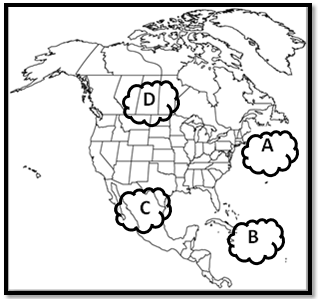
Which type of air would you find at air mass D?
a)
cold, dry
b)
warm, humid
c)
warm, dry
d)
cold, humid
64.

Water in the ocean is always

a)

Moving

b)

Still

c)

Warming up

d)

Cooling down

65.

Currents are affected by winds and

a)

teachers

b)

shape of continents

c)

seasons

d)

fate

66.

Water flowing in a continuous path through the ocean is called

a)

the Coriolis Effect

b)

an ocean highway

c)

an ocean current

d)

an ocean river

67.

The warm, strong current off the coast of Florida is the

a)

North Equatorial Current

b)

East Australian Current

c)

Gulf Stream

d)

California Current

e)

Brazil Current

68.

Delta and Alpha are the same distance from the equator, and they are both near the ocean. Using the information in the map, how does the air temperature of Delta compare to the air temperature of Alpha? Delta is.....

a)

the same as Alpha. Both locations are the same distance from the equator. The winds push the ocean water, and it turns to follow the coast in both locations, so the same amount of energy is transferred to the air.

b)

warmer than Alpha. Moving air with a lot of energy turns and follows the coast toward Delta; moving air with only a little energy turns and follows the coast toward Alpha.

c)

warmer than Alpha. The winds push ocean water that turns and follows the coasts. Energy is transferred from the ocean to the air at Delta and energy is transferred from the air to the ocean at Alpha.

69.

Ocean currents bring warm water from the equator towards Earth's

a)

continents

b)

poles

c)

southern hemisphere

d)

equator

70.

If two places are the same distance from the equator then they will always have the same air temperature!!

a)

True the location on the equator determines temperature of the air

b)

False, it depends on ocean currents and winds and how much energy is transferred

c)

Maybe? I don't know? I didn't pay attention in class all unit. Sorry ;-(

71.

Heat transfer is really neat! It always goes from

a)

hot to cold

b)

cold to hot

c)

top to bottom

d)

bottom to top

72.

Warm water is _____ dense and _____ than cold water

a)

more; heavier

b)

more; lighter

c)

less; heavier

d)

less; lighter

73.

Currents release thermal energy, which can affect a location's

a)

oxygen

b)

climate air temperature

c)

sunlight

d)

longitude

74.

Ocean currents transport thermal energy and _____ around the world.

a)

air

b)

sunlight

c)

matter

d)

fresh water

75.

When the air temperature over the land is warmer than the nearby ocean temperature, energy is transferred from the _____ to the _____.

a)

water; air

b)

water; sun

c)

air; sun

d)

air; water

76.

Isumi and San Luis Obispo are the same distance from the equator, and they are both near the ocean. Using the information in the map, how does the air temperature of Isumi compare to the air temperature of San Luis Obispo? Why?

The air temperature at Isumi is

a)

warmer than San Luis Obispo. The winds push ocean water that turns and follows the coasts. Energy is transferred from the ocean to the air at Isumi and energy is transferred from the air to the ocean at San Luis Obispo.

b)

warmer than San Luis Obispo. The winds push ocean water that turns and follows the coasts. A lot of energy is transferred from the ocean to the air at Isumi; only a little energy is transferred from the ocean to the air at San Luis Obispo.

c)

warmer than San Luis Obispo. Moving air with a lot of energy turns and follows the coast toward Isumi; moving air with only a little energy turns and follows the coast toward San Luis Obispo.

d)

the same as San Luis Obispo. Both locations are the same distance from the equator. The winds push the ocean water, and it turns to follow the coast past both locations, so the same amount of energy is transferred to the air.

77.

Energy is transferred from the ocean to the air when the ocean is warmer and from air to ocean when the air is

a)

warmer

b)

colder

c)

same

78.
In an ocean, warm water moves __________ and cold water moves ____________.
a)
Down, Up
b)
Up, Down
79.
During convection, more dense currents _________ and less dense currents _________.
a)
sink, rise
b)
rise, sink
80.
Where does the initial source of energy come from that creates winds?
a)
the moon
b)
the sun
c)
the Earth's surface
d)
the rotation of the Earth
81.
Warm air rises and the cool air sinks demonstrates this type of heat transfer. 
a)
conduction
b)
convection
c)
radiation
d)
Insolation 
82.
Convection currents in the atmosphere create what? 
a)
wind
b)
steam
c)
ocean current
d)
volcanoes
83.
Convection can only occur in_________
a)
gases and solids
b)
solids and liquids
c)
liquids and gases
d)
solids and plasma 
84.

Water particles ____________ as they gain kinetic energy and push farther apart.

a)

compress

b)

expand

c)

circulate

d)

get smaller

85.

Convection happens only in

a)

gases

b)

fluids

c)

solids

d)

all of the above

86.

Less dense air will

a)

rise

b)

sink

c)

have equalibrium

87.
Hot matter is _________ dense and ___________
a)
less, sinks
b)
less, rises
c)
more, sinks
d)
more, rises
88.
Cold air sinks because...
a)
It is less dense
b)
It is more dense
89.
Convection can be described as
a)
The process of heat sinking
b)
The process of heat transferring from one object to another
c)
The process of plants making food from the sun
d)
The process of heat rising
90.
The molecules in the air are ________ when the temperature is hot.
a)
moving rapidly and are spread apart
b)
moving slowly and are close together
c)
not moving
d)
there are no air molecules
91.
Warm air _________ and cool air ___________.
a)
rises/sinks
b)
sinks/rises
92.
Land heats up and cools down faster than water.
a)
True
b)
False
93.

All stars begin their life as a

a)

Main Sequence

b)

Nebula

c)

Protostar

d)

Black Dwarf

94.
A gigantic explosion that causes the death of a large star is called
a)
pulsar
b)
red giant 
c)
supernova
d)
black hole
95.
The core of a Red Giant collapses and becomes a ___________________.
a)
White Dwarf
b)
Blue Supergiant
c)
Red Supergiant
d)
Black Hole
96.

The stage after the main sequence star:

a)

red giant

b)

nebula

c)

white dwarf

d)

black dwarf

97.

When nebula is big and hot enough is collapses on itself and ...................... is made

a)

white dwarf

b)

supernova

c)

protostar

d)

planetary nebula

98.
In this stage, a star spends most of its life. Hydrogen is fused into helium at a temperature of millions of degrees.
a)
nebula
b)
protostar
c)
main-sequence
d)
supergiant
99.
This stage is made by densely packed neutrons and sometimes spins and blinks and is called a pulsar
a)
Supernova
b)
White dwarf
c)
Black hole
d)
Neutron star
100.
When a star's gravitational pull is so strong that not even light can escape, it's called a what?
a)
Black hole
b)
Supernova
c)
White dwarf
d)
Nebula
101.

How does a star produce elements heavier than iron (Fe)?

a)

heat

b)

supernova

c)

rapid rotation

d)

nuclear fusion

102.

A stellar nebula is made up of...

a)

clouds of gas

b)

clouds of gas and dust

c)

stars

d)

planets

103.
What is the correct order for the life cycle of our star the sun?
a)
nebula, fusion stage, red giant, black dwarf, white dwarf,
b)
nebula, fusion stage, red giant, white dwarf, black dwarf
c)
nebula, fusion stage, super red giant, black dwarf, white dwarf,
d)
nebula, fusion stage, red giant, super nova, black hole
104.
What stage fills in the blank. Nebula --> Main sequence --> red giant --> ______________ --> white dwarf --> black dwaft
a)
supergiant
b)
planetary nebula
c)
black hole
d)
supernova
105.
Which of the following is NOT a final stage of a star. 
a)
black hole
b)
black dwarf
c)
neutron star
d)
red giant
106.
All H-R diagrams show what about stars?
a)
size and mass
b)
brightness and temperature
c)
name and location
d)
fusion of elements
107.
A star is born when it begins...
a)
nuclear fusion
b)
nuclear abrasion
c)
chemical reaction
d)
nuclear fission
108.
The path a star takes during its life cycle depends solely on its _____.
a)
temperature
b)
luminosity
c)
mass
d)
location
109.
What type of stars burn Hydrogen as fuel?
a)
Main Sequence
b)
Red Giants
c)
White Dwarfs
d)
Red Supergiants
110.
We consider these stars 'dead' because they no longer are carrying out fusion in their cores.
a)
White Dwarfs
b)
Red Dwarfs
c)
Red Giants
d)
Brown Dwarfs
111.
Which star on the main sequence will stay on the main sequence the longest because it burns fuel much slower?
a)
Red Dwarfs
b)
Blue Giants
c)
White Dwarfs
d)
Red Giants
112.
A medium-mass star like our sun is expected to live for __________ years.
a)
10 Billion
b)
10 Thousand
c)
10 Million
d)
10 trillion
113.
What causes tectonic plates to move along the Earth's surface?
a)
wind
b)
ocean currents
c)
convection in the mantle
d)
expansion of the Earth
114.
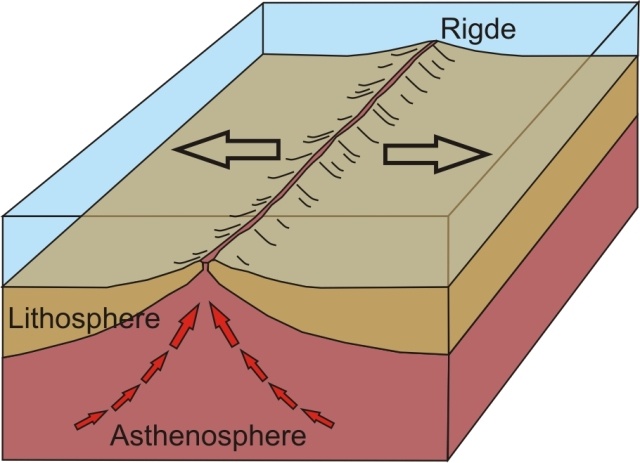
What type of boundary occurs when two plates move away from each other?
a)
transform
b)
subduction
c)
convergent
d)
divergent
115.
What forms at a divergent boundary between two oceanic plates?
a)
rift valley
b)
mountain
c)
mid-ocean ridge
d)
trench
116.
Which type of crust is more dense?
a)
oceanic
b)
continental
c)
divergent
d)
pizza
117.
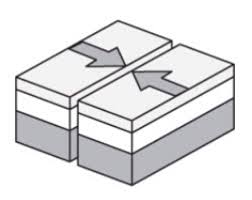
What type of boundary occurs when two plates move toward each other?
a)
convergent
b)
divergent
c)
transform
d)
lateral
118.
What forms at a convergent boundary between a continental plate and an oceanic plate?
a)
volcanoes
b)
rift valleys
c)
faults
d)
mid-ocean ridges
119.
A rift valley occurs at a ____________ boundary.
a)
divergent
b)
convergent
c)
transform
d)
horizontal
120.
What is the process in which hot molten rock rises, then cools and sinks back to the core?
a)
plate tectonics
b)
continental drift
c)
convection
d)
divergence
121.
A trench forms at a _________ boundary.
a)
convergent
b)
divergent
c)
transform
d)
vertical
122.
Mountains form at a ___________ boundary.
a)
transform
b)
divergent
c)
convergent
d)
subduction
123.
What type of boundary occurs when two plates slide past each other?
a)
divergent
b)
transform
c)
lateral
d)
convergent
124.
A fault forms at a _________ boundary.
a)
transform
b)
divergent
c)
horizontal
d)
convergent
125.
What type of boundary is shown at A?
a)
transform
b)
convergent
c)
divergent
d)
subduction
126.
What is happening at point B?
a)
subduction
b)
a divergent boundary
c)
convection
d)
an earthquake
127.
What is the process in which two plates move toward each other but one sinks under the other?
a)
subduction
b)
convection
c)
divergence
d)
transformation
128.
What kind of plate boundary is shown here?
a)
divergent
b)
convergent
c)
transform
d)
subducting
129.
What kind of plate boundary is shown here?
a)
divergent
b)
convergent
c)
transform
d)
submergent
130.
What kind of plate boundary is shown here?
a)
divergent
b)
convergent
c)
transform
d)
strike slip
131.
What geologic feature/event you be most likely to find at a transform boundary?
a)
Earthquakes
b)
Volcanoes
c)
Mountains
d)
Rift Valleys
132.
What geologic feature/event would you most likely to find at a divergent boundary between two pieces of oceanic crust?
a)
Rift Valley
b)
Mid-Ocean Ridge
c)
Island Arc
d)
Flat land
133.
What geologic feature/event would you most likely to find at a divergent boundary between two pieces of continental crust?
a)
Mid-Ocean Ridge
b)
Mountain
c)
Rift Valley
d)
Island Arc
134.
What geologic feature/event would you most likely to find at a convergent boundary between two pieces of continental crust?
a)
Volcano
b)
Mountain
c)
Rift
d)
Island Arc
135.
A subduction zone is formed...
a)
when one tectonic plate sinks below another
b)
at every type of convergent plate boundary
c)
at every type of divergent plate boundary
d)
at transform boundaries
136.
Name the boundary
a)
convergent boundary
b)
divergent boundary
c)
transform boundary
d)
sergent boundary
137.

The area around the pacific plate where boundaries form is called...

a)

death ring

b)

fire zone

c)

ring of fire

d)

zone of fire

138.
The San Andreas Fault in California is an example of a ________.
a)
divergent boundary
b)
convergent boundary
c)
transform fault
d)
subduction zone
139.
Mountains form from ...
a)
plates sliding past one another
b)
collision of plates
c)
plates moving away from each other
140.
Oceanic crust is
a)
Younger and less dense than continental crust
b)
Thinner, younger and more dense than continental crust
c)
Older, thicker and less dense that continental crust
d)
Bigger and younger than continental crust
141.
What would you be most likely to find at a divergent boundary between two pieces of oceanic crust?
a)
Rift
b)
Mid-Ocean Ridge
c)
Island Arc
d)
Flat land
142.
What would you be most likely to find at a convergent boundary between a continental and oceanic plate?
a)
Mountains
b)
Volcanoes
c)
Mid-Ocean Ridge
d)
Rift
143.
What would you be most likely to find at a transform boundary?
a)
Earthquakes
b)
Volcanoes
c)
Mountains
d)
Rift
144.
When an underwater earthquake causes a giant wave to come ashore, that wave is known as a...
a)
seismic wave
b)
shearing
c)
focus wave
d)
tsunami
145.
Earthquakes are caused by...
a)
seismic gaps
b)
sudden movement of water
c)
too much drilling along plate boundaries
d)
sudden movements of rock along a fault
146.
The area where two tectonic plates meet.
a)
mantle
b)
focus
c)
plate boundary
d)
convection
147.

Which star stage does our Sun belong to?

a)

Supergiant

b)

Giant

c)

Main Sequence

d)

White Dwarf

148.

Which star stage is generally the HOTTEST?

a)

Supergiant

b)

Giant

c)

Main Sequence

d)

White Dwarf

149.

Which star stage is generally the COOLEST?

a)

Supergiant

b)

Giant

c)

Main Sequence

d)

White Dwarf

150.

what are hr diagrams?

a)

something for math

b)

a graph about stars

c)

a way to classify stars

d)

i dont know

151.

what color stars are the coolest?

a)

red

b)

white

c)

blue

d)

yellow

152.

what color stars are the hottest?

a)

red

b)

blue

c)

orange

d)

green

153.

what are the three main details stars are plotted on hr diagrams for?

a)

color,brightness,and temperature

b)

brightness,color, and size

c)

color,temperature,and size

154.
The distance that light travels in one year...
a)
Light year
b)
Quantumyear
c)
Stellar-year
d)
1 million kilometers
155.
A large cloud of gas and dust in interstellar space; the predecessor to stars...
a)
Constellation
b)
Black hole
c)
Nebula
d)
Galaxy
156.
Which star is the coldest?
a)
Yellow Star
b)
Red Star
c)
Orange Star
d)
Blue Star
157.
In the diagram given, what happens as we move to the left?
a)
Stars Get Larger
b)
Stars get Colder
c)
Stars get hotter
158.
Compared to the rest of the stars, our sun is considered...
a)
Extremely Large and Cold
b)
Small with a medium temperature
c)
Medium size with medium temperature
159.
Red stars are the _____________.
a)
hottest
b)
coolest
c)
biggest
160.
Blue stars are the _____________.
a)
hottest
b)
coolest
c)
smallest
161.
Stars produce
a)
Heat 
b)
light 
c)
both heat and light 
162.
What determines the color of a star? 
a)
It's size
b)
It's temperature
c)
It's composition
d)
They are all the same color 
163.
As you move from the bottom to the top of the H R diagram the __________ changes.
a)
Temperature
b)
Luminosity or Brightness