wayground logo

Free Printable Worksheets

Font size

S
M
L
XL
Worksheets

Year 8 end of year practice quiz

Total questions: 161

Worksheet time: 3hrs 42mins

Name
Class
Date
1.
Which nutrient provides the most amount of energy per gram?
a)
Carbohydrate
b)
Fats
c)
Protein
d)
Vitamin
2.
Define the term 'balanced diet'.
a)
A diet containing some nutrients in the correct proportions.
b)
A diet containing most nutrients in the correct proportions.
c)
A diet containing none nutrients in the correct proportions.
d)
A diet containing all nutrients in the correct proportions.
3.
Which food contains carbohydrates?
a)
Fish
b)
Pasta
c)
Egg
d)
Carrot
4.
Jerry wants to build up his muscles, which food group intake he should increase ? 
a)
Carbohydrates
b)
Fats
c)
Proteins
d)
vitamins
5.
Which component of a healthy, balance diet is responsible for providing energy before an event?
a)
Fats
b)
Proteins
c)
Carbohydrates
d)
Vitamins
6.

Which of the following foods is a good source of protein?

a)

Fruit

b)

Salad

c)

Butter

d)

Meat

7.

Fruit and vegetables are a good source of ?

a)

Vitamins

b)

Minerals

c)

Both of the above

8.

Which of the following foods is a good source of carbohydrates?

a)
b)
c)
d)
9.

What group do these foods belong to?

a)

Sugars and Fat

b)

Dairy

c)

Carbohydrates

d)

Proteins

10.

Eating too much sugary food causes,

a)

Tooth decay

b)

High on energy

c)

Health probems like diabetes, heart problems and cancer.

d)

All of the above

11.

Sugars and fats must be a very small propotion of a balanced diet.

a)

True

b)

False

12.

What does the body use carbohydrates for?

a)

Carbohydrates enable the tranport of essential nutrients in the body.

b)

Carbohydrates improve digestion.

c)

Carbohydrates are used by the body for growth.

d)

Carbohydrates provide the body with a source of energy.

13.

Which of the following statements is true?

a)

A balanced diet should not include anything sweet.

b)

Pasta and vegetables are enough to provide a balanced diet.

c)

A balanced diet must include carbohydrates, fats, proteins, minerals, vitamins, water and fibre.

d)

A balanced diet should not include any fats.

14.

What function to be precise of protein?

a)

Provide energy

b)

For growth and repair the cell

c)

Maintain health

15.

What will happen if we lack/ deficiency of vitamin C?

a)

Blindness

b)

Scurvy

c)

Rickets

16.

Vitamin D is needed for

a)

Eyesight

b)

Stopping scurvy

c)

Growing bones

d)

Haemoglobin

17.

Vitamin A is important for

a)

Eye sight

b)

Bones

c)

Building body mass

d)

Connective tissue

18.
What is the state symbol for a gas?
a)
(G)
b)
(g)
c)
(l)
d)
(aq)
19.
What is the state symbol for a liquid?
a)
(G)
b)
(g)
c)
(l)
d)
(aq)
20.
What is the state symbol for a solid?
a)
(S)
b)
(s)
c)
(sl)
d)
(aq)
21.
What is the state symbol for a solution?
a)
(S)
b)
(s)
c)
(sl)
d)
(aq)
22.

Which of the following the most reactive in dilute acid

a)

magnesium

b)

calcium

c)

aluminum

d)

zinc

23.
Metals that react quickly/strongly with water and acids are called?
a)
Reactive
b)
Unreactive
c)
Dangerous
d)
Corrosive
24.
What are the reactants for the reaction of metal with water?
Metal + water ---> metal hydroxide + hydrogen
a)
Metal
b)
Water
c)
Metal and water
d)
Metal hydroxide and hydrogen
25.
What are the products for the reaction of metal with water?
Metal + water ---> metal hydroxide + hydrogen
a)
Metal
b)
Water
c)
Metal and water
d)
Metal hydroxide and water
26.
What metal hydroxide is produced when magnesium reacts with water?
a)
Copper hydroxide
b)
Magnesium oxide
c)
Magnesium
d)
Magnesium hydroxide
27.
What gas is produced when sodium reacts with water?
a)
Hydrogen
b)
Carbon dioxide
c)
Carbon monoxide
d)
Water vapour
28.

If potassium reacts with water what are the 2 products of the reaction?

a)

potassium hydroxide + oxygen

b)

potassium hydroxide + hydrogen

c)

potassium + hydrogen oxide

d)

Potassium hydroxide + hydrogen oxide

29.
The alkali metals are in group 1, on the far left of the periodic table. Which of these is NOT an alkali metal?
a)
Lithium
b)
Iron
c)
Potassium
d)
Francium
30.
How can you tell that a metal is reacting with water?
a)
Colour change
b)
Bright light
c)
Fizzing
d)
It gets colder
31.

Aluminium is more reactive than ....

a)

Calcium and Zinc

b)

Sodium and Gold

c)

Magnesium and Copper

d)

Lead and Iron

32.

Choose the correct sequence.


.............. , ............ , .........

----------------------------------->

Reactivity towards oxygen increases

a)

Silver , Copper , Tin

b)

Iron , Lead , Mercury

c)

Magnesium , Aluminium , Calcium

d)

Iron , Carbon , Lead

33.

What is a solvent

a)

A liquid that will dissolve a solid solute

b)

Another word for solution

c)

A thing that make drinks change colour

d)

Usually the solid about to be dissolved

34.

The ___ is the thing being dissolved.

a)

solute

b)

solvent

c)

mixture

d)

solution

35.

The ___ is the thing being dissolved.

a)

solute

b)

solvent

c)

mixture

d)

solution

36.

The substance being dissolved in a solution is the?

a)

solution

b)

solute

c)

solvent

d)

mixture

37.

The substance in which a solute is dissolved is a?

a)

solution

b)

solvent

c)

alloy

d)

mixture

38.
Solutions are composed of __________ .
a)
salts and solutes
b)
solvents and salts
c)
solutes and alloys
d)
solutes and solvents
39.
If I dissolve sugar in water, what is the solute?
a)
Water
b)
Hydrogen
c)
Sugar
d)
Carbon
40.

If I dissolve carbon dioxide in water, what is the solvent?

a)

Carbon Dioxide

b)

There is no solvent

c)

Oxygen

d)

Water

41.

If I dissolve sugar in water, what is the solution?

a)

water

b)

sugar

c)

sugary water

d)

none of the above

42.

Define the term soluble.

a)

Can dissolve in water

b)

Cannot dissolve in water

c)

Partially dissolves in water

43.

If I dissolve salt in water, what is the solute?

a)

water

b)

salty water

c)

none of the above

d)

salt

44.

Define the term insoluble.

a)

Can dissolve in water.

b)

Cannot dissolve in water.

c)

Partially dissolves in water.

45.

Is water the only solvent that can dissolve solutes?

a)

Yes

b)

No

46.
Magnetic field lines are closet together at the __________.
a)
poles
b)
lines
47.
Magnets can interact without touching.
a)
True
b)
False
48.
Magnetic field lines always cross.
a)
True
b)
False
49.
Where is the force of attraction the strongest on a magnet?
a)
at the poles
b)
in the middle
c)
above the magnet
d)
below the magnet
50.

The entire region surrounding a magnet is known as the:

a)

Magnetic Domain

b)

Lodestone

c)

A Compass

d)

Magnetic Field

51.
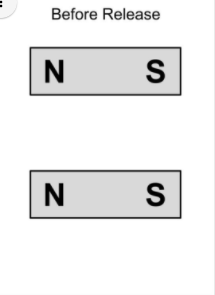
What will happen when these magnets are brought close together?
a)
They will attract each other.
b)
They will repel each other.
c)
Both magnets will turn to the left
d)
Both magnets will turn to the right
52.
If two magnets come together what is it called?
a)
Repel
b)
Force
c)
Attract
d)
None of the Above
53.
If 2 magnets push away from each other what is it called?
a)
Attract
b)
Iron
c)
Repel
d)
None of the above
54.
Can the North and North poles attract?
a)
Yes
b)
No
55.
Which way will the magnets move after they are released?
a)
Towards each other
b)
Away from each other
c)
Not enough information
56.
What is a switch's function in a circuit?
a)
to make the current hotter or colder
b)
turn on and off the flow of current
c)
the pathway that current flows
d)
to add more power to the circuit
57.
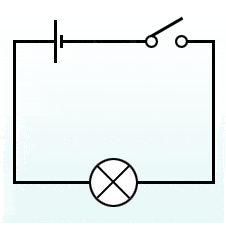
this circuit is .....?
a)
open
b)
parallel
c)
closed
d)
The cutest little circuit evah!
58.
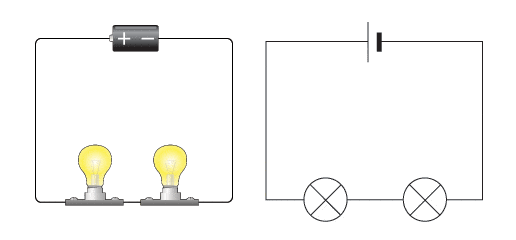
Which one will still function if one light bulb goes out?
a)
A-Series
b)
B-Parallel
c)
A-Parallel
d)
B-Seriese
59.
Security alarms are made of _______ circuits because they turn on when the circuit is broken.
a)
Parallel
b)
Series 
c)
Fancy 
60.
If I add more light bulbs to a series circuit what happens?
a)
The current speeds up and the lights get brighter
b)
The current slows down and the lights dim lower
c)
The current speeds up and the lights dim lower
d)
The current slows down and the lights get brighter
61.
What kind of circuit is this?
a)
series
b)
parallel
62.
In what part of the cell does photosynthesis occur?
a)
Nucleus
b)
Chloroplast
c)
Epidermis
d)
Vacuole
63.

Stomata are made of specialized cells called ______ which surround a tiny pore/opening

a)

stoma

b)

guard cells

c)

dermal cells

d)

diffusion channels

64.

The main function of stomata is to

a)

capture sunlight

b)

protect leaves from insects

c)

allow gases to move rapidly in/out of leaves

d)

release sugars into the atmosphere

65.

Carbon dioxide levels on Earth

a)

are decreasing with the burning of more fossil fuels

b)

do not affect climate

c)

have changed over time

d)

are about 79% of our atmosphere

66.

Which of the following can be used to best directly estimate past carbon dioxide levels of Earth's atmosphere?

a)

the number of stomata found in fossils of trees

b)

the current levels of nitrogen in the atmosphere

c)

the current pH of the ocean

d)

the structure of the bark in fossilized trees

67.

A stoma is

a)

an opening

b)

a clot

c)

a cell that captures light energy

d)

a water tube

68.

Impure Hydrogen burns with

a)

pop sound

b)

blue flame

c)

pop sound as it contains impurities.

69.
What is the test for Oxygen gas?
a)
Litmus paper
b)
Glowing splint
c)
"Pop" sound
d)
Red flame
70.

What is the test for hydrogen?

a)

turns limewater cloudy

b)

relights a glowing splint

c)

bleaches damp litmus paper white

d)

makes a squeaky pop

71.
The physical separation of mixtures into individual components is..
a)
chromatography
b)
opacity 
c)
latent
d)
trace evidence 
72.

Ink can be separated by a method of -----------------------------------------------

a)

distillation

b)

filtration

c)

chromatography

d)

sedimentation

73.
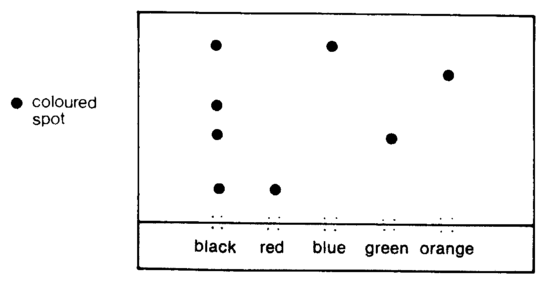
On the chromatogram given -------------- is mixture.
a)
red
b)
orange
c)
green
d)
black
74.
A pure substance shows ------------------ spot on chromat gram
a)
0
b)
1
c)
2
d)
3
75.
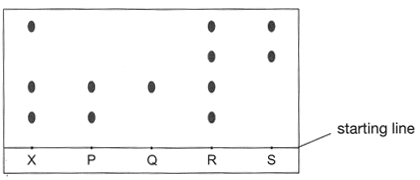
The diagram below shows a chromatogram obtained when a sample X was analysed together with four other known dyes P, Q, R and S. Dye Q was known to cause cancer. Which of the following dye(s) is/are safe for use?
a)
P only
b)
S only
c)
P and S
d)
P and X
76.
technique that separates out liquids by boiling then cooling them down
a)
distilation
b)
distillation
c)
distalation
d)
distallation
77.

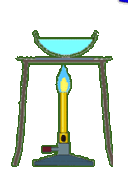
Which one of the following is the name for separation technique in the picture below

a)

distillation

b)

filtration

c)

evaporation

d)

chromatography

78.

Dyes in water soluble markers may be separated by means of

a)

Distillation

b)

Filtration

c)

Chromatography

d)

Evaporation

79.

Which separation technique is shown below

a)

filtration

b)

crystallization

c)

sublimation

d)

evaporation

80.

How many inks are pure?

a)

0

b)

1

c)

4

d)

3

81.
Simple distillation is best for separating a liquid from a solution. It is similar to evaporation, but the vapor is collected by condensation.
What is the difference between evaporation and distillation?
a)
the vapor is collected by freezing
b)
the vapor is collected by filtration
c)
the vapor is collected by condensation
d)
the vapor is collected by heat transfer
82.
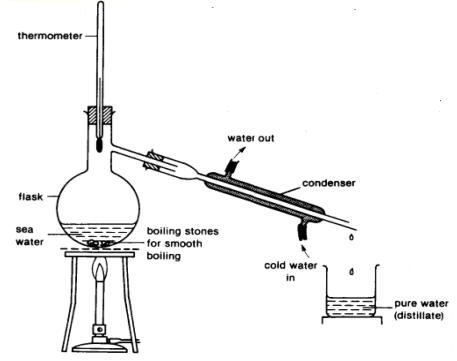
Fractional distillation is similar to simple distillation. It is best for separating a solution of two liquids. (liquids that dissolve in each other). Fractional method takes advantage of the different boiling points of the two liquids. Fractional distillation takes a bit more time than the simple distillation.
Fractional distillation takes less time than the simple distillation.
True or False?
a)
False
b)
True
83.

What is the name of this separation technique?

a)

Simple distillation

b)

Fractional distillation

c)

Boiling

d)

Evaporation

84.

Can be beaten into thin sheets

a)

Ductile

b)

Sonorous

c)

Malleable

d)

Flexible

85.

Can be drawn into wires

a)

Ductile

b)

Sonorous

c)

Malleable

d)

Flexible

86.

When you hit it, it rings like a bell.

a)

Ductile

b)

Sonorous

c)

Malleable

d)

Flexible

87.

Can bend easily without breaking

a)

Ductile

b)

Sonorous

c)

Malleable

d)

Flexible

88.

Another word for shiny

a)

Ductile

b)

Sonorous

c)

Malleable

d)

Lustrous

89.

The only 3 magnetic metals are:

a)

Iron

b)

Cobalt

c)

Magnesium

d)

Nickel

90.

Metals are poor conductors of electricity

a)

True

b)

False

91.

Metals are good conductors of heat

a)

True

b)

False

92.

Most metals are brittle

a)

True

b)

False

93.

The chemical symbol for iron

a)

Ir

b)

Fe

c)

I

d)

Fn

94.

The only liquid metal at the room temperature

a)

Francium

b)

Sodium

c)

Mercury

d)

Cobalt

95.

Chemical symbol for Gold

a)

Go

b)

G

c)

Au

d)

Mn

96.

Which one is not a metal?

a)

Magnesium

b)

Nickel

c)

Mercury

d)

Nitrogen

97.

Which one is not a metal?

a)

Magnesium

b)

Nickel

c)

Mercury

d)

Nitrogen

98.

Which one is NOT a property of most metals?

a)

Ductile

b)

Malleable

c)

Magnetic

d)

Sonorous

99.

The majority of elements in the periodic table are

a)

metals

b)

non-metals

100.

Metals are poor conductors of heat

a)

true

b)

false

101.

The property of metals that describes their excellent ability to pass on electrical charge

a)

thermal conductor

b)

malleable

c)

sonorous

d)

electrical conductor

102.

Most metals can be stretched into long wires. What is the name of this property of metals?

a)

ductile

b)

malleable

c)

brittle

d)

sonorous

103.
The picture shows an electrical circuit. This circuit is a series circuit because: 
a)
It has 3 light bulbs.
b)
The same current flows through all three light bulbs.
c)
It uses a single battery.
d)
The electrical current is divided between the three light bulbs.
104.
This is an example of a ______ circuit
a)
Series
b)
Parallel
c)
Open
d)
Dihexihedral
105.
What kind of circuit is this?
a)
Series
b)
Consecutive
c)
Parallel
d)
Training
106.
What kind of circuit is this?
a)
Series
b)
Consecutive
c)
Parallel
d)
Training
107.
This circuit has more than one loop. When one light goes out, the others stay on. 
a)
closed circuit
b)
series circuit
c)
parallel circuit
d)
open circuit
108.
Which of the two circuits would have the brightest bulbs? 
a)
A
b)
B
109.
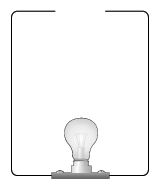
This circuit won't work. What essential part is missing from this circuit?
a)
resistance
b)
source of electric current
c)
conductor
d)
ammeter
110.
The flow of electricity through a conductor is called...
a)
resistance
b)
voltage
c)
current
d)
source of electric current
111.
This measures the speed of the current in a circuit
a)
voltage
b)
ammeter
c)
switch
d)
resistance
112.
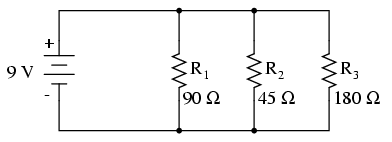
Which circuit (s) are parallel?
a)
A
b)
A and B
c)
B and C
d)
C
113.
If I add more light bulbs to a series circuit what happens?
a)
The current speeds up and the lights get brighter
b)
The current slows down and the lights dim lower
c)
The current speeds up and the lights dim lower
d)
The current slows down and the lights get brighter
114.

Which of the following vitamins play a very key role in eyesight including night vision and color recognition?

a)

a. vitamin A

b)

b. vitamin B

c)

c. vitamin K

d)

d. all of the above

115.

Which if the following foods are rich in Vitamin A?

a)

a. milk fortified with vitamin A

b)

b. liver

c)

c. orange fruits and vegetables (like cantaloupe, carrots, sweet potatoes)

d)

d. all of the above

116.

Which of the following is NOT a B Vitamin?

a)

a. B 1

b)

b. B 12

c)

c. B 36

d)

d. Folid Acid

117.

Which of the following foods are a good source of Vitamin B?

a)

a. whole grains, such as wheat and oats

b)

b. fish and seafood

c)

c. eggs , dairy products, like milk and yogurt

d)

d.all the above

118.

This vitamin is important for keeping body tissues, such as gums and muscles in good shape. It is also a key if you get a cut because it helps you heal. This vitamin also helps your body resists infections like cold.

a)

a. vitamin A

b)

b.vitamin C

c)

c. vitamin D

d)

d. vitamin K

119.

You might end up with very weak bones without sufficient quantities of this Vitamin

a)

a. vitamin B

b)

b. vitamin C

c)

c. vitamin D

d)

d. vitamin K

120.

Vitamin D is abundant in the following foods:

a)

a. milk fortified with vitamin D

b)

b. fish

c)

c. egg yolks

d)

d. all the above

121.

Can you identify this Vitamin? This vitamin maintains a lot of your body's tissues, like the ones in your eyes, skin and liver. It protects your lungs from becoming damaged by polluted air and is important for the formation of red blood cells.

a)

a. vitamin K

b)

b. vitamin E

c)

c. vitamin C

d)

d. vitamin A

122.

Who helps clot the bleeds?

a)

a. vitamin A

b)

b. vitamin C

c)

c.vitamin E

d)

d.vitamin K

123.

Different types of Vitamins are:

a)

a. fat-soluble

b)

b. water-soluble

c)

c. both A and B

d)

d. none of the above

124.

Vitamin C is present in:

a)

a. tomatoes

b)

b. papaya

c)

c. guava

d)

d. all of the above

125.

Name the vitamin which are essential for the health of the brain?

a)

a. vitamin B6

b)

b. vitamin B9

c)

c. vitamin B12

d)

d. all the above

126.

Which of the following foods are rich in Vitamin K

a)

a. leafy green vegetables

b)

b. dairy products, like milk and yogurt

c)

c. soybean oil

d)

d. all of the above

127.
The vitamin that aides in strengthening bones and teeth is:
a)
vitamin D
b)
calcium
c)
phosporus
d)
vitamin A
128.

What increases the surface area of the small intestine?

a)

duodenum

b)

villi

c)

ileum

d)

pancreas

129.

What is the purpose of the villi? (select all that apply)

a)

increase the surface area

b)

chemically break down food

c)

absorb nutrients into the bloodstream

d)

mechanically break down food

130.

Which part of the digestive system follows the small intestine?

a)

large intestine

b)

stomach

c)

liver

d)

pancreas

131.

Which structures increase the surface of the gut?

a)

Lacteal and villi

b)

Villi and microvilli

c)

Intestinal glands and microvilli

d)

Capillaries and membrane proteins

132.

Involuntary muscle contractions which move a bolus through the gastrointestinal tract are called

a)

mastication

b)

peristalsis

c)

defecation

d)

chyme

133.

Hydrochloric acid is secreted in the _______________ .

a)

oesophagus

b)

stomach

c)

large intestine

d)

small intestine

134.

Most nutrient absorption occurs in the ________________ .

a)

mouth

b)

stomach

c)

large intestines

d)

small intestines

135.

Identify the organ that produces bile.

a)

pancreas

b)

liver

c)

gall bladder

d)

large intestines

136.

Which of the following is the correct order for the major parts of the gastrointestinal tract?

a)

oesophagus, stomach, large intestine, small intestine, mouth

b)

mouth, stomach, oesophagus, large intestine, small intestine

c)

mouth, small intestine, stomach, oesophagus, large intestine

d)

mouth, oesophagus, stomach, small intestine, large intestine

137.

Protein is broken down into ______________ before they are asborbed into the small intestines.

a)

fatty acids

b)

amino acids

c)

citric acid

d)

hydrochiloric

138.

____________ in the pancreatic and intestinal juice completes the digestion of fats.

a)

Amylase

b)

Renin

c)

Pepsin

d)

Lipase

139.

Carbon monoxide is:

a)

A poisonous gas that is colorless, odorless, and tasteless

b)

A product of fuel burning appliances

c)

Dangerous when inhaled because it displaces oxygen in the blood, depriving vital organs of oxygen

d)

All of the above

140.

Symptoms of carbon monoxide poisoning include all of the following except:

a)

Headaches

b)

Drowsiness

c)

Talkativeness

d)

Nausea

141.

What sorts of symptoms may you have when effected by carbon monoxide

a)

None at all (straight death)

b)

Sore aches and coughs

c)

Heart aches

d)

Acidity

142.

What sorts of symptoms may you have when effected by carbon monoxide

a)

None at all (straight death)

b)

Sore aches and coughs

c)

Heart aches

d)

Acidity

143.

What happens when carbon monoxide bind with your haemoglobin?

a)

Sore throats

b)

Blocked nose

c)

Oxygen connotations be spread across the body

d)

Rashes on your skin

144.
What are the reactants for the reaction of metal with water?
Metal + water ---> metal hydroxide + hydrogen
a)
Metal
b)
Water
c)
Metal and water
d)
Metal hydroxide and hydrogen
145.
What gas is always produced when a metal reacts with water?
a)
Oxygen
b)
Carbon dioxide
c)
Hydrogen
d)
Carbon monoxide
146.

What are the reactants if sodium hydroxide and hydrogen are made?

a)

Sodium + oxygen

b)

Sodium + hydrochloric acid

c)

Sodium + sulfuric acid

d)

Sodium + water

147.

In this chemical reaction, which is the product/s?

Magnesium + Oxygen --> Magnesium oxide

a)

magnesium

b)

magnesium and oxygen

c)

magnesium oxide

d)

oxygen

148.

magnesium + oxygen --> magnesium oxide

If you started with 5g of magnesium and 2.5g of oxygen, what mass of magnesium oxide would be produced?

a)

5g

b)

2.5g

c)

7.5g

d)

10g

149.
Which of the following is the product of the reaction of aluminium and oxygen?
a)
aluminium oxide.
b)
metal oxide
c)
aluminium ore
d)
aluminium and oxygen
150.

What is the scientific term given when something burns?

a)

a fuel

b)

flammable

c)

combustion

d)

heating

151.
How are metal oxides formed?
a)
When metals react with oxide.
b)
When metals react with water.
c)
When metals react with air.
d)
When metals react with oxygen.
152.
Ms Jo Jo rubbed two balloons with a piece of wool. What will happen when the balloons are brought near each other?
a)
The balloons will repel each other.
b)
The balloons will attract each other.
c)
The balloons will become positively (+) charged.
d)
The balloons will pop.
153.
What types of charges attract?
a)
Positive and Positive
b)
Positive and Neutral
c)
Negative and Neutral
d)
Positive and Negative
154.
What charge does a proton have?
a)
negative (-)
b)
positive (+)
c)
neutral or no charge (0)
155.
What charge does an electron have?
a)
negative (-)
b)
positive (+)
c)
neutral or no charge (0)
156.
What happens when you touch a metal doorknob after rubbing your shoes on the carpet?
a)
The doorknob sends a burst of electric current into your body
b)
Millions of electrons go from your finger into the doorknob
c)
The doorknob sends millions of electrons into your finger
d)
our finger becomes negatively charged
157.
Which of the following is caused by static electricity?
a)
a stove getting hot when it is turned on
b)
a magnet being attracted to a refrigerator
c)
a lightning strike during a storm
d)
a light bulb coming on when a switch is turned on
158.
What is static electricity caused by?
a)
A balance of power
b)
A balance of positive and negative charges
c)
. An imbalance of positive and negative charges
d)
An imbalance of protons and neutrons
159.
The girl's hair and the comb are attracting  one another.  The hair and the comb have
a)
opposite charges
b)
like charges
160.

Lightning occurs because ___.

a)

the negative charges at the bottom of clouds are attracted to the positive charges on the ground.

b)

the positive charges at the bottom of clouds are attracted to the negative charges on the ground.

c)

the positive and negative charges inside clouds are attracted to each other

d)

All of these reasons are correct.

161.
What method of static charging is shown in this picture
a)
Polarization
b)
Friction
c)
Induction
d)
Conduction