Worksheets
Dynamic Earth Reteach Unit 4
Total questions: 164
Worksheet time: 2hrs 27mins




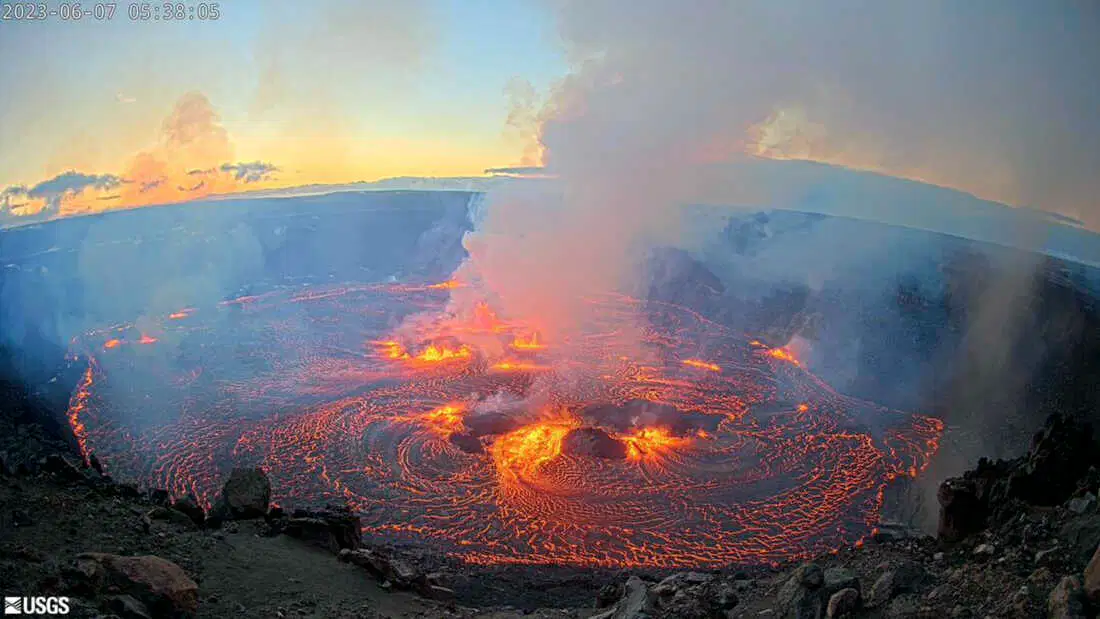
Mt. Kilauea erupts continuously. What stage of it's life cycle is it likely in?
Active
Dormant
Extinct


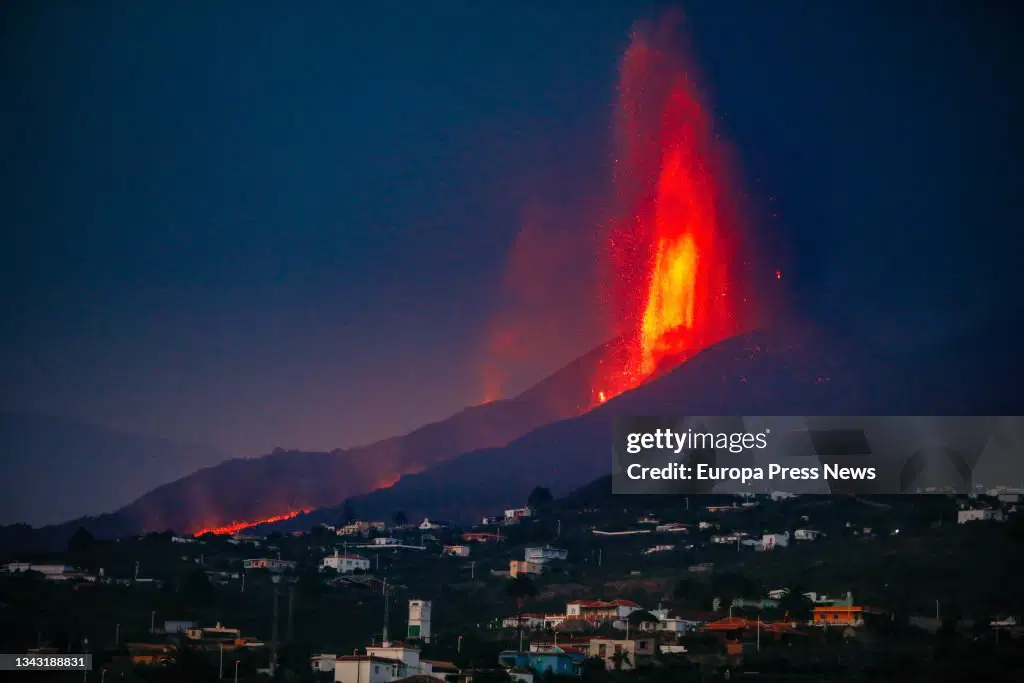

Mt. Kilauea erupts continuously. Why stage of it's life cycle is it likely in?
Active
Dormant
Extinct
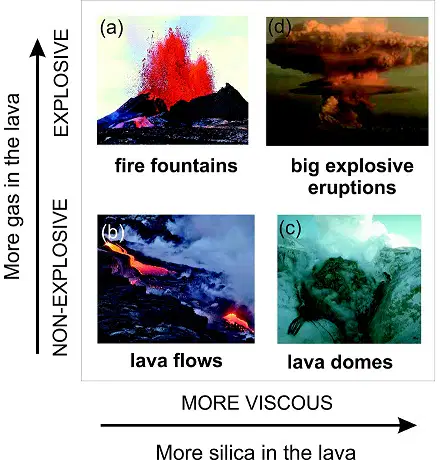
Which 2 properties of magma determine the type of eruption?
Amount of iron and viscosity
Amount of iron and shearing
amount of silica and viscosity


What does this map show?
There are no predictable patterns to earthquakes.
There is a pattern to global earthquakes.


Which can cause an earthquake?
Seismographs
Plate Movement
P Waves

Which feature most likely formed when these two plates collided into each other?
An ocean
a desert
a glacier
a mountain

The strength and size of an earthquake is measured using the ..........
Seconds
Richter Scale

What is a volcano?
Any tall mountain
A place where magma erupts
A body of water that can explode
An event where the ground shakes

This type of volcano is large and erupts violently and explosively. It causes a lot of damage.
Shield volcano
Composite or stratovolcano
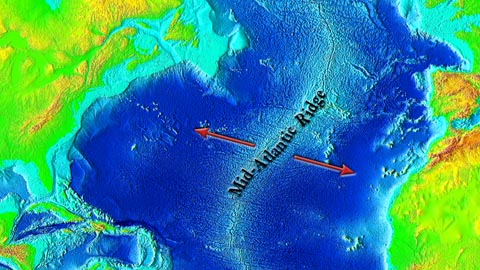

Magma is .............. that can come to the Earth's surface through a volcanoe.
A liquid rock
A solid rock


The formation of the Hawaiian Islands is one example of
volcanoes forming over a hot spot
volcanoes forming along a plate boundary
the Ring of Fire


The location underground, where magma is stored before an eruption is called the ... (labeled T)
Vent
Pipe
Magma Chamber
Lava room
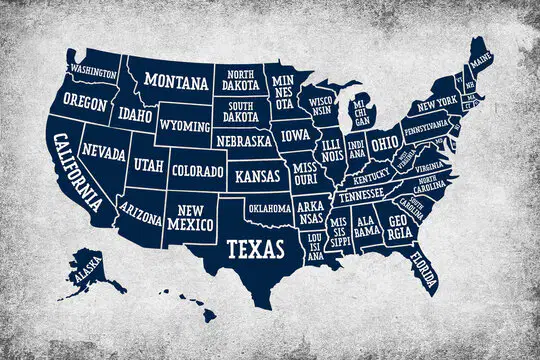
Which U.S. State has the most Earthquakes and Volcanoes?
Alaska
Hawaii
California
Massachusetts
What type of stress in normally associated with convergent boundaries?
faulting
tension
shear stress
compression
At a divergent boundary, ____________ stress is the most likely to occur.
faulting
tension
shear stress
compression
What can cause a chain of volcanic islands to form far from plate boundaries?
rifting
folding
hot spots
subduction

The diagram shows rock that is being deformed by one type of stress. What type of stress is shown in the diagram?
faulting
tension
shear stress
compression

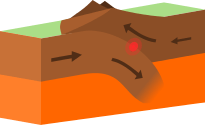
This diagram shows a subduction zone. What type of plate boundary is shown in the image?
divergent boundary
convergent boundary (Oceanic-Continental)
divergent boundary
convergent boundary (Continental-Continental)
A __________________ forms when two tectonic plates move away from each other.
divergent boundary
transform boundary
convergent boundary
What event is associated with the activity at a transform boundary when there is a sudden release of energy?
volcano
earthquake
mountain ranges
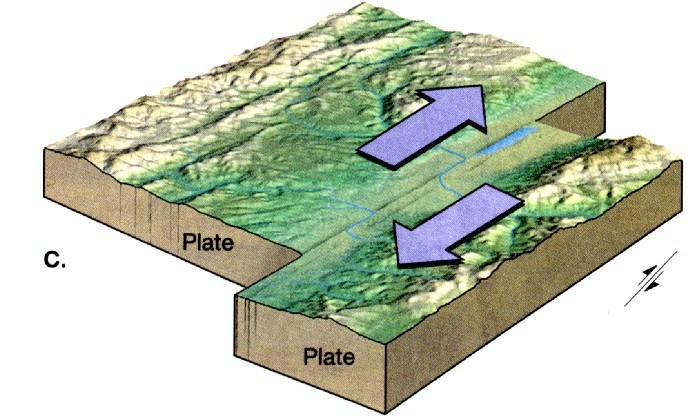
What type of stress is normally associated with transform boundaries?
tension
shear stress
compression
vertical stress
__________ is a stress that squeezes or shortens materials.
compression
tension
shear stress
_____________ is a stress that lengthens a material or pulls a material apart.
compression
tension
shear stress
_______________ is a stress that causes material to twist or become distorted.
compression
tension
shear stress

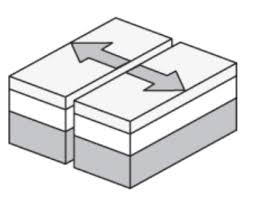
What type of plate boundary is shown in the picture?
Convergent
Divergent
Transform

What type of plate boundary is shown in the picture?
Convergent
Divergent
Transform

What type of plate boundary is shown in the picture?
Convergent
Divergent
Transform
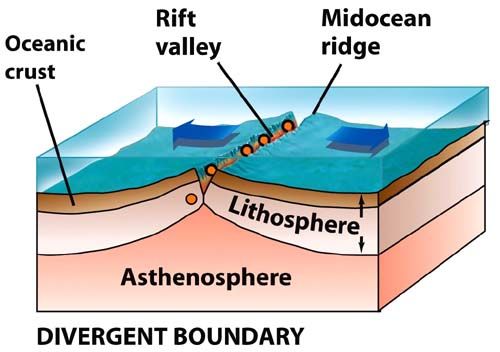
What landform would you most likely find at a divergent boundary between two pieces of oceanic crust?
Rift Valley
Mountain
Mid-Ocean Ridge
Volcano
A hot spot is located at the boundary of a plate
true
false
What geologic feature will occur at a hot spot ?
volcano
folded mountain
deep sea trench
crevasse
A prime example of an area over a hot spot is :
Japan
the Andes Mountains
the East African Rift
the Hawaiian Islands
What area of the continental United States is over a hot spot ?
the Florida Everglades
the Grand Canyon
Yellowstone National Park
New York City
Tsunamis are caused by
underwater disturbances such as earthquakes, landslides, and volcanoes.
wind and the gravitational pull of the moon.

What causes a tsunami?
shaking of the water during an earthquake or volcano
Seismic energy released by tectonic plates
a really big boat

Which of these boundaries is responsible for creating volcanic arcs?
Continental - Continental Convergence
Oceanic - Continental Convergence
Mid Ocean Ridges
Oceanic - Oceanic Convergence

When one tectonic plate is pulled under another and into the mantle, it's called:
A Subduction Zone
A Transform Boundary
A Ridge
A Folded Mountain

In what type of boundary is the only feature created going to be Mountains?
Oceanic to Oceanic Convergence
Oceanic to Continental Convergence
Rift Valleys
Continental to Continental Convergence

When a divergent boundary happens under continental crust, it's called a:
Rift Valley
Block Mountain
Folded Mountain
Mid-Ocean Ridge

When a divergent boundary occurs underneath the ocean, it's called a:
Rift Valley
Mid-Ocean Ridge
Subduction Zone
Fault Block Mountain

New oceanic crust (sea floor) is created at this boundary.
Convergent Oceanic
Divergent Oceanic
Divergent Continental
Transform

What two crustal features occur near every subduction zone?
Rift Valleys and Mid Ocean Ridges
Volcanoes and Rift Valleys
Mid Ocean Ridges and Trenches
Volcanoes and Trenches
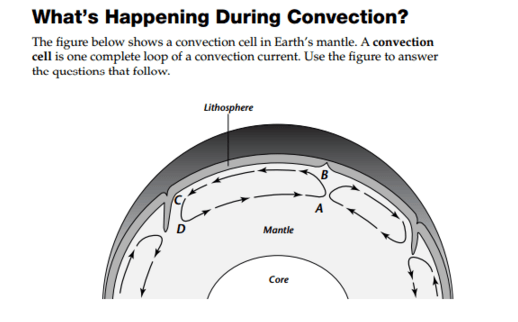
What is happening in the mantle that helps move the tectonic plates?
Convection
Radiation
Condensation
Conduction
The two types of crust are _______ and _______.
oceanic, continental
land, Pangaea
continental, volcanic
core, mantle
Oceanic crust is usually _____ dense than continental crust
less
more

Which city on the map is most likely to experience a major earthquake?
Paris
New York
Juneau
Rio de Janeiro
When this occurs, new crust is added to the ocean floor
sea-floor spreading
convergent boundary
transform boundary

This diagram shows rock being transformed by one type of stress. What type of stress is being shown?
Compression
Tension
Shear stress
Fault
What is the cause of volcanoes that are formed far away from a plate boundary?
subduction
hot spot
folding
rifting
When volcanic islands are created by a hotspot, where is the oldest volcanic island?
right above the hotspot
close to the hotspot
furthest away from the hotspot
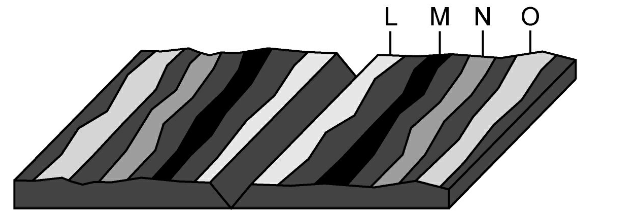
Where would the oldest rock be found?
L: white line, closest to ridge
M: Dark black line - 2nd from middle of ridge
N : light gray line-3rd from middle of ridge
O: white line , farthest from ridge
Folded mountains are created when....
Two continental plates collide
Two oceanic plates pull apart
An Oceanic plate subducts under a Continental Plate
Two continental plates pull apart

This land formation occurs at a Continental-Continental divergent boundary.
mid ocean ridge
deep ocean trench
pacific hot spot
rift valley
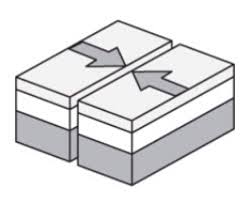


This layer is only 5-50km thick
Mantle
Inner core
Crust
Core
This layer is mostly basalt rock
Earth's Crust
Continental Crust
Oceanic Crust
Mantle
True or False: The mantle is the largest layer of the Earth
True
False
True or False: The oceanic crust and continental crust are a part of the Mantle
True
False
This layer is composed of silicate rocks that are rich in magnesium and iron
Crust
Inner Core
Mantle
Outer Core
True or False: The Earth's crust is made up of Land and the part under the ocean.
true
false
The process of convection currents happen at this layer
Oceanic Crust
Mantle
Asthenosphere
Inner Core
This layer is about 2,300km thick and is the second largest layer
Inner core
mantle
Outer core
Crust
True/False: The Earth's magnetic field is created because the magma moves around the outer core
True
False
The cooler rock of the mantle is located ___________
Near the top of the mantle
Near the bottom of the mantle
These are waves of energy caused by earthquakes and other rock movement
P-waves
Electromagnetic waves
Seismic waves
Seismographs
This layer is a solid ball of metal
Inner Core
Outer Core
Mantle
This layer has an average temperature of 4,000-5,000 degree celsius
Mantle
Inner Core
Outer Core
Crust
True/False: Seismic waves can pass through every layer of the Earth
True
False
True/False: The oceanic crust is older than the continental crust
True
False
This layer is made of mostly granite rock
Crust
Oceanic Crust
Continental Crust
Mantle
This layer is the largest layer of the Earth and is about 2,890 km thick.
Crust
Inner Core
Mantle
Outer Core
True/False: The mantle has two layer within it called the asthenosphere and lithosphere
True
False
This layer is weaker and less rigid (plasticity, like silly putty)
Lithosphere
Crust
Mantle
Asthenosphere
True/False: The crust, mantle, and core are the three compositional layers of the Earth.
True
False
True/False: The Earth is divided up into five mechanical layers--lithosphere, asthenosphere, mesosphere, outer and inner core
True
False
This layer is made up of liquid iron and nickel
Inner Core
Outer Core
Mantle
Lithosphere
This layer in the crust is mostly made of basalt rock
Outer Core
Crust
Continental Crust
Oceanic Crust
This layer is composed of silicate rocks that are rich in magnesium and iron
Lithosphere
Mantle
Asthenosphere
Continental crust
This layer has an average temperature between 5,000-6,000 degree celsius
Mantle
Crust
Inner Core
Outer Core
This layer is plastic like and makes the crust move and crash into each other
Lithosphere
Mantle
Asthenosphere
Outer Core
These layers are in the upper part of the Mantle
Oceanic and Continental
Asthenosphere and Lithosphere
Inner and Outer
True/False: discontinuity relates to explaining the layers of the Earth.
True
False

Which layer contains the ground we walk on?
atmosphere
lithosphere
hydrosphere
mesosphere
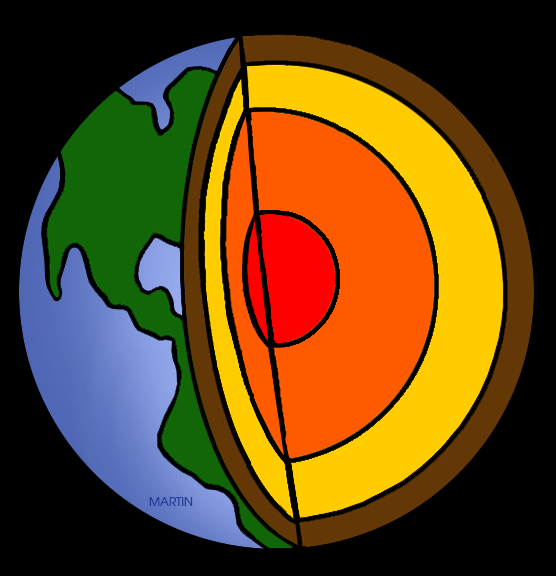
Which layer is shown in red?
crust
mantle
outer core
inner core
Which layer is shown in orange?
crust
mantle
outer core
inner core
Which layer is shown in yellow?
crust
mantle
outer core
inner core
Which layer is shown in brown?
crust
mantle
outer core
inner core

Which shows the order of the layers from COOLEST to HOTTEST?
crust, mantle, outer core, inner core
inner core, outer core, mantle, crust
crust, outer core, inner core, mantle
Trick question! All of the layers are the same temperature!
Which layer is made of "flowing" solid rock (think clay or pudding)?
crust
mantle
outer core
inner core