wayground logo

Free Printable Worksheets

Font size

S
M
L
XL
Worksheets

8th Grade MCA Review from 7th grade topics

Total questions: 159

Worksheet time: 1hrs 29mins

Name
Class
Date
1.

The following test design was developed by researchers:


A Sleep Study


Select a volunteer to participate in the study Ask the volunteer to read a short story just before going to sleep Give the volunteer a multiple-choice test on the short story the following day. Record the test results.


The biggest problem with this experiment's design is that:

a)

the test results were recorded

b)

the volunteer went to sleep

c)

the study was done overnight

d)

only one volunteer participated

2.

The main function of leaf cells is

a)

movement

b)

reproduction

c)

photosynthesis

d)

disease-fighting

3.

A student has drawn the diagram below in science class.


The student has most likely drawn the diagram to

a)

illustrate a food chain

b)

attempt to classify organisms

c)

determine the number of organisms in a population

d)

represent different stages in the life cycle of an organism

4.

A scientist crossed a pea plant that produces yellow peas with wrinkled seeds and a pea plant that produces green peas with smooth seeds. The resulting offspring were yellow peas with smooth seeds, indicating that

a)

offspring acquire traits randomly

b)

offspring never inherit traits from their parents

c)

offspsring inherit traits from both parents

d)

offspring inherit traits from only one parent

5.

What percentage of its chromosomes does a sperm cell contribute to a new embryo?

a)

25%

b)

50%

c)

75%

d)

100%

6.

Which of the following is the result of a chemical change?

a)

Ice

b)

Rust

c)

Sawdust

d)

Salt Water

7.

A factory near the Big River operates every day of the week. Residents to the east of the river frequently complain of sore eyes while residents to the west of the river rarely have problems. What conclusion best fits this information?

a)

It rains less often on the east side of the river than it does on the west side

b)

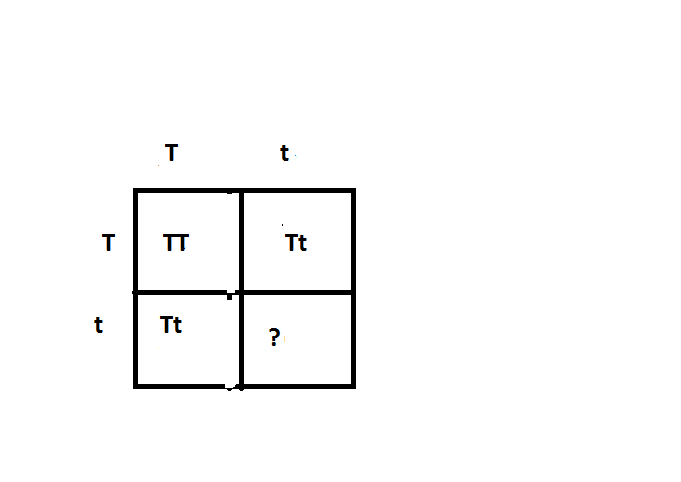
It rains more often on the east side of the river than it does on the west side

c)

Smoke from the factory is being carried by winds coming from the east

d)

Smoke from the factory is being carried by winds coming from the west

8.

Which of the following is the best way for scientists to get information about the evolutionary relationships of different organisms?

a)

examining their habitat

b)

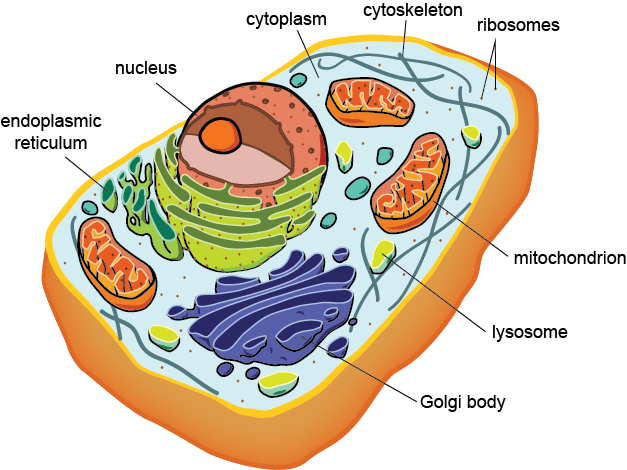
observing how long they live

c)

comparing their physical structures

d)

determining how many offspring they produce

9.

Which of the following is most likely to disrupt the natural balance in an ecosystem

a)

introduction of a non-native species

b)

reduced daylight hours during winter

c)

preventing the cutting of trees in forests

d)

riverbank erosion resulting from springtime flooding

10.

The Percula clownfish can often be seen hiding in the tentacles of the poisonous Carpet anemone. Clownfish are covered with a slime layer that protects them from the poisonous tentacles of the Carpet anemone. These tentacles keep clownfish safe from predators. Bits of food from the clownfish’s meals provide the Carpet anemone with food. What type of relationship do the clownfish and the Carpet anemone share?

a)

parasitic

b)

competative

c)

predator-prey

d)

mutually beneficial

11.

The graph above shows the range of tolerance to temperature for 4 (four) species of freshwater fish. Which species is most likely to survive large variations in temperature?

a)

1

b)

2

c)

3

d)

4

12.

A student pours vinegar and oil into the same bottle. The two substances separate and the oil floats on top of the vinegar. What causes this separation?

a)

The oil is less dense than the vinegar

b)

The vinegar is a liquid and the oil is a solid

c)

The vinegar was poured in first and stays on the bottom

d)

The volume of the oil is less than the volume of the vinegar

13.

Which of the following shows the spider’s correct place in the food chain?

a)
b)
c)
d)
14.

Which of the organisms in a food web produces its own food?

a)

invertebrate

b)

Plants / Vegetation

c)

small fish

d)

ducks

15.

Which of the following is in the correct order from smallest to largest?

a)

Cell, Tissue, Organ, Organ System, Organism

b)

Organ, Organ System, Organism, Tissue, Cell

c)

Cell, Organ, Tissue, Organ System, Organism

d)

Organism, Organ System, Organ, Tissue, Cell

16.

Group of similar organisms of the same species in the same area =

a)

Population

b)

Community

c)

Organism

17.

Which is not an abiotic factor in a prairie evironment:

a)

Deer

b)

Sunlight

c)

Oxygen

d)

Clouds

18.

Water bottle rockets are made by adding water to a bottle and pumping air into it. Some of the air that is pumped into the bottle dissolves in the water. What type of change happens when air dissolves in water?

a)

Chemical

b)

Color

c)

Molecular

d)

Physical

19.

As a student pumps air into a bottle, the distance between air particles:

a)

Increases

b)

Decreases

c)

Stays the same

20.

What three substances do plants need to make sugars during photosynthesis?

a)

Water

b)

Oxygen

c)

Carbon Dioxide

d)

Energy

21.

Students use yellow pea seeds for a growth project. They divide the seeds into two groups. One group of yellow pea seeds receives half as much water as the other group. After 1 month, the group of plants that received less water are shorter than the other group of plants.


Which of the following are changed variables?

a)

Amount of water

b)

Amount of light

c)

Height of plant

d)

Size of container

22.

Students use yellow pea seeds for a growth project. They divide the seeds into two groups. One group of yellow pea seeds receives half as much water as the other group. After 1 month, the group of plants that received less water are shorter than the other group of plants.


Which of the following are measured variables?

a)

Amount of water

b)

Amount of light

c)

Height of the plant

d)

Size of the container

23.

Students use yellow pea seeds for a growth project. They divide the seeds into two groups. One group of yellow pea seeds receives half as much water as the other group. After 1 month, the group of plants that received less water are shorter than the other group of plants.


Which of the following are variables that are kept the same?

a)

Amount of water

b)

Amount of light

c)

Height of the plant

d)

Size of the container

24.
Which box has a higher density?  
a)
Box A
b)
Box B
c)
cannot be determined
d)
they are the same
25.
A pure substance that cannot be separated into simpler substances by chemical or physical means.  
a)
Element
b)
Compound
c)
Mixture
d)
Chemical
26.
Carbon Dioxide is a ______ 
a)
compound 
b)
element 
c)
mixtures 
d)
atom
27.

Which of the following represents an element?

a)

H2O

b)

Na

c)

NaCl

d)

CaCO3

28.
A combination of substances that are not chemically combined is called a(n)____________. 
a)
mixture
b)
compound
c)
physical
d)
Element
29.
What is a change in the size, shape, or state of matter that does not change it into a new kind of matter?
a)
energy
b)
physical change
c)
chemical change
d)
energy transformation
30.
Food digested in the stomach
a)
physical change
b)
chemical change
31.
One cup of water is left outside for two days when it was checked there was only half a cup left. What happened?
a)
evaporation; chemical change
b)
condensation; physical change 
c)
evaporation; physical change
d)
condensation; chemical change
32.
The number of protons in a neutral atom is equal to the number of?
a)
neutrons
b)
electrons
33.
Which action involves a chemical change?
a)
adding sugar to tea
b)
making ice cubes
c)
baking a cake
d)
cutting wrapping paper
34.
How many different types of atoms are found in the element gold?
a)
2
b)
4
c)
1
d)
3
35.
Cactus. Is it a.....
a)
Producer
b)
Consumer
c)
Decomposer
36.
Fungi. Is it a...
a)
Producer
b)
Consumer
c)
Decomposer
37.
All the living parts of an ecosystem
a)
biotic
b)
abiotic
c)
cell
d)
atom
38.

All members of one kind of organism that live in the same area

a)

population

b)

microorganism

c)

community

d)

organism

39.
Is sunlight a biotic or abiotic factor?
a)
biotic
b)
abiotic
40.
This animal is an .......
a)
Producer
b)
Consumer
c)
Decomposer
41.

What level of consumer would the deer be?

a)

Primary

b)

Secondary

c)

Tertiary

42.
This tree is a......
a)
Producer
b)
Primary Consumer
c)
Secondary/Tertiary Consumer
d)
Decomposer
43.
Which of the following is a herbivore?
a)
cricket
b)
frog
c)
hawk
d)
shrew
44.

What might occur when a carnivore is removed from the food web?

a)

A) Nothing. Organisms cannot impact things below them on the energy pyramid.

b)

B) Herbivores like rabbits may overpopulate.

c)

C) Plants will be eaten too much by the herbivores.

d)

D) both B and C might occur.

45.
Which represents the largest group in a food web?
a)
carnivores
b)
omnivores
c)
herbivores
d)
producers
46.
What does a food web represent?
a)
All connections of energy flow throughout all organisms in a habitat.
b)
The specific ways that mutualism is carried out.
c)
A single pathway or energy flow between organisms. 
d)
How carnivores get their food. 
47.

A tick and a dog have this type of relationship.

a)

mutualism

b)

commensalism

c)

parasitism

48.

A flea on a dog is

a)

competition

b)

predation

c)

commensalism

d)

parasitism

49.
A frog eats a fly. The frog and fly are demonstrating ________.
a)
mutualism
b)
competition
c)
predator/prey
d)
parasitism
50.
How many herbivores are in this web?
a)
1
b)
2
c)
3
d)
4
51.
Which of the following statements correctly identifies a predator-prey relationship in this food web? 
a)
the herring is the predator and the tuna is its prey
b)
the blue crab is the predator and the sea otter is its prey
c)
the shark is the predator and the tuna is its prey
d)
the baleen whale is the predator and the killer whale is its prey
52.
A student thinks that two trees in the woods have grown from seeds produced by the same parent tree. Which of the following observations provides the best evidence to support the student’s idea?
a)
Both trees have broken branches.
b)
Both trees have grass growing beneath them.
c)
Both trees have white flowers with five petals.
d)
Both trees have holes made in their bark by birds.
53.
Which of the following processes makes it possible for plants to use energy from sunlight to produce their own food?
a)
metamorphosis
b)
photosynthesis
c)
pollination
d)
reproduction
54.
Which part of a plant is most responsible for using energy from the Sun to produce food for the plant?
a)
flower
b)
leaf
c)
root
d)
stem
55.

A species of bird migrates from South America across the Atlantic Ocean to its summer breeding ground in northern Canada. The birds stop on the east coast of the United States to eat the eggs of horseshoe crabs. The migration route of these birds is shown on the map below.


Which of the following changes would most threaten this species of bird with extinction?

a)

less rainfall in South America

b)

longer summers in North America

c)

increased sizes of horseshoe

crab eggs

d)

lower populations of

horseshoe crabs

56.

An illustration of a bacterium is shown

below.

Based on the illustration, which of the following can be concluded about the bacterium?

a)

It is unable to move.

b)

It is made up of one cell.

c)

It is missing genetic material

57.

The diagram below represents a cycle in an ecosystem

Which of the following do the arrows most likely represent?

a)

heat

b)

nutrients

c)

sunlight

d)

water

58.

A species of moth in England has both a light-colored form and a dark-colored form.

In the mid-1800s, the percentage of dark-colored moths increased in areas where black soot from factories covered the trees. The soot in these areas has decreased in more recent times as a result of pollution laws.

Which of the following statements describes what has most likely happened to the moth populations in these areas?

a)

The moth populations went

extinct

b)

The moth populations migrated

south.

c)

The percentage of light-colored

moths in the populations decreased.

d)

The percentage of dark-colored

moths in the populations decreased

59.

A scientist is comparing two body cells

of a multicellular organism. Which of

the following is most likely identical?

a)

shape of cell walls

b)

number of mitochondria

c)

shape of cell membranes

d)

number of chromosomes

60.

Which of the following combinations is

a mixture rather than a compound?

a)

oxygen and nitrogen in air

b)

sodium and chlorine in salt

c)

hydrogen and oxygen in water

d)

nitrogen and hydrogen in ammonia

61.
What is the original source of almost all energy in most ecosystems?
a)
carbohydrates
b)
sunlight
c)
water
d)
carbon
62.
symbiotic relationship in which both organisms benefit
a)
competition
b)
Mutualism
c)
nitrogen fixation
d)
energy pyramid
63.
A living relationship between two species in which one organism is harmed is called...
a)
mutualism
b)
commensalism
c)
parasitism
d)
niche
64.
The image provided is an example of a(n):
a)
Carnivore
b)
Herbivore
c)
Producer
d)
Autotroph
65.
The image provided is an example of a(n):
a)
Producer
b)
Autotroph
c)
Consumer
d)
Insect
66.
An illustration that uses arrows to show the many possible directions in which matter and energy can pass through the organisms in an ecosystem.
a)
Food chain
b)
Food web
c)
Energy Pyramid
d)
Succession Map
67.
The nonliving aspects of an ecosystem.
a)
Abiotic factors
b)
Biotic factors
68.
The living portions of the ecosystem.
a)
Biotic factors
b)
Abiotic factors
69.
A collection of organisms that belong to different populations but all live in the same area and interact with one another.
a)
Population
b)
Ecosystem
c)
Community
d)
Ecosphere
70.
A place where an organism lives.
a)
Terrain
b)
Habitat
c)
Community
d)
Population
71.
A collection of organisms that make up a community as well as all of the nonliving aspects of the environment.
a)
Population
b)
Community
c)
Habitat
d)
Ecosystem
72.
Organisms that can capture energy from inorganic, nonliving sources.
a)
Producers
b)
Consumers
c)
Detritivores
d)
Carnivores
73.

Organisms that feed on both producers and other consumers.

a)

Carnivores

b)

Omnivores

c)

Herbivores

d)

Detritivores

74.
The general name for organisms like animals and fungi that get their energy from eating other organisms.
a)
Producers
b)
Consumers
c)
Detritivores
d)
Carnivores
75.
True or False:  It is possible for a carnivore to be a producer.
a)
False
b)
True
76.
What cell part is NOT found in all cells?
a)
Cell Wall
b)
Cell Membrane
c)
Cytoplasm
d)
Genetic Material
77.
If a species cannot adapt to their environment they may ...
a)
be killed by disease
b)
experience predation
c)
become extinct
d)
experience increased competition
78.
Natural selection relies on the fact that offspring must compete for...
a)
Predators
b)
Resources
c)
Carbon dioxide
d)
Oxygen
79.
The basic unit of structure and function in an organism.
a)
cell
b)
nucleus
c)
cytoplasm
d)
chromosomes
80.
Which of the following statements is not part of the cell theory?
a)
Cells are the basic unit of structure and function in all living things.
b)
All cells are produced from other cells.
c)
Only animal cells are composed of cells.
d)
All living things are composed of cells.
81.
sexual reproduction produces offspring that is identical to the parents
a)
true
b)
false
82.
Production of an offspring through the combination of egg and sperm
a)
sexual reproduction
b)
fertilization
c)
diploid cell
d)
haploid cell
83.
T - tall and t = short
In the punnett square below, what belongs in the missing square
a)
tt
b)
Tt
c)
Bb
d)
TT
84.

The man who studied genetics and is called the father of genetics is:

a)

Watson

b)

Crick

c)

Mendel

d)

Darwin

85.
Genotype refers to the ...
a)
physical expression of the genes
b)
the possible combination of alleles in a gene
c)
whether an allele is dominant or recessive
d)
how an organism will appear
86.
Squidward has light blue skin, and his genotype for this trait is Bb. Would Squidward be considered a purebred or hybrid for light blue skin?
a)
Purebred
b)
Hybrid
87.
An offspring will receive how many alleles from each parent to determine a specific trait?
a)
one
b)
two
c)
three
d)
five
88.
Which of the following is a phenotype?
a)
BB
b)
Bb
c)
bb
d)
Blue eyes
89.
What is a phenotype
a)
The genetic make up (code)
b)
The physical trait
90.
The burning of wood is a physical change
a)
true
b)
false
91.
What charge does an electron have?
a)
positive
b)
negative
c)
neutral
92.
What is mass?
a)
the force of an object caused by gravity
b)
the amount of space something takes up
c)
the amount of matter in an object
d)
how fast something is moving
93.
What is the function of the nucleus within a cell?
a)
Containing a cell's DNA and acting as the cell's "brain"
b)
Manufacturing proteins
c)
Completing photosynthesis
d)
Storage space
94.
Where do plants receive the energy necessary to carry out photosynthesis?
a)
Heat from the sun
b)
Gamma radiation
c)
Light from the sun
d)
Wind
95.
Besides energy from the sun, what else does a plant require to complete photosynthesis?
a)
Wind energy
b)
Oxygen and carbon dioxide
c)
Oxygen and water
d)
Water and carbon dioxide
96.

Plants use photosynthesis to make

a)

water

b)

sunlight

c)

carbon dioxide

d)

sugar

97.
having two of the same genes for the trait (sometimes called purebred).
a)
homozygous
b)
hetrozygous
c)
protein
d)
chromosome
98.

What is one basic function of the vacuoles?

a)

circulating oxygen

b)

producing food

c)

controlling cell processes

d)

storing food and water

99.
All cells need energy to function.  Which cell organelle is responsible for producing energy in the cell?
a)
chloroplasts
b)
mitochondria
c)
nucleus
d)
vacuoles
100.
What is the function of a cell wall?
a)
to protect and support the cell
b)
to perform different functions in each cell
c)
to prevent water from passing through it
d)
to prevent oxygen from entering the cell
101.

Click on the two organelles that are found in plant cells but not in animal cells

a)

nucleus

b)

cell wall

c)

chloroplast

d)

vacuole

e)

mitochondria

102.
Salt water is:
a)
A Compound
b)
An element
c)
A mixture
d)
An atom
103.
Spaghetti and meatballs is an example of a:
a)
compound
b)
element
c)
mixture
d)
molecule
104.
15. gold
a)
A. MIXTURE
b)
B. COMPOUND
c)
C. ELEMENT
105.
Baking soda (NaHCO3)
a)
A. MIXTURE
b)
B. COMPOUND
c)
C. ELEMENT
106.
What is a pure substance made of two or more elements that are chemically combined called?
a)
A. element
b)
B. compound     
c)
C. mixture
d)
D. solution
107.
A mixture can be separated by ________ means. 
a)
physical
b)
chemical
108.
A new substance is formed when you are working with compounds because a _________ reaction occurs. 
a)
physical
b)
chemical
109.
A _________ is a substance made of two or more DIFFERENT elements chemically combined. 
a)
mixture
b)
compound
c)
substance 
110.
True or false: NO new substance is formed in a mixture.  
a)
True
b)
False
111.
Element or Compound?
Salt (NaCl)
a)
Element
b)
Compound
112.
Is salt dissolving in water a physical or chemical change?
a)
Physical
b)
Chemical
113.
Is melting iron a physical or chemical change?
a)
Physical
b)
Chemical
114.
Is sour milk a physical or chemical change?
a)
Physical
b)
Chemical
115.
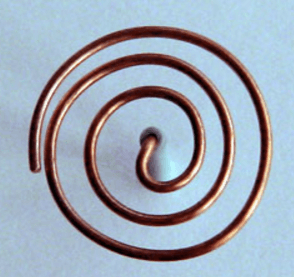
Is bending copper wire a physical or chemical change?
a)
Physical
b)
Chemical
116.
When baking soda and vinegar mix it creates a bubbly mess. Is this a chemical or physical change?
a)
Physical
b)
Chemical
117.
A nail rusting
a)
Chemical Change
b)
Physical Change
118.
Freezing water
a)
Chemical Change
b)
Physical Change
119.
If plants are exposed to sunlight, then they will grow taller.
What part of the scientific method is this an example of?
a)
Procedure
b)
Hypothesis
c)
Question
d)
Results
120.
Anything that can change in an experiment.  There are three types of these in an experiment.
a)
variables
b)
constant
c)
independent
d)
dependent
121.
An experiment is performed on plants to see how different liquids affect plant growth. Each plant in the experiment is given a different liquid: water, apple juice, or milk. What variables should be kept constant/controlled? 
a)
type of plant, flower pot,  soil, and amount of sunlight
b)
water, apple juice, milk
c)
only the amount of sunlight
d)
type of plant only
122.
What is being kept constant?
a)
how fast the water boils
b)
amount of water
c)
temperature of stove
123.
This variable in an experiment is the one being deliberately changed by the scientist. 
a)
dependent variable
b)
independent variable
c)
data
d)
control group
124.
What is the main difference between the offspring produced by sexual reproduction and asexual reproduction?
a)
Offspring produced sexually receive genetic material from one parent.
b)
Offspring produced by sexual reproduction receive genetic material from two parents.
c)
Offspring produced by sexual reproduction receive genetic material from two parents.
d)
Asexual and sexual reproduction are the same thing.
125.

Why does every animal in an ecosystem rely on producers?

a)

producers start all food chains

b)

producers break down dead waste

c)

producers eat consumers

d)

producers recycle

126.
Tortoises are turtles that live mostly on land. Marine turtles are turtles that spend nearly all their lives in the sea. Over time, marine turtles have developed adaptations that help them survive in their environment. These adaptations are different from the adaptations that tortoises have developed. Which of the following describes an adaptation of marine turtles that makes them different from tortoises?
a)
Marine turtles are cold blooded.
b)
Marine turtles lay eggs on land.
c)
Marine turtles have a protective shell.
d)
Marine turtles have legs shaped like flippers.
127.
A bird has just hatched from an egg. Which of the following stages most likely comes next in the life cycle of the bird?
a)
birth
b)
death
c)
growth 
d)
reproduction
128.
Which of the following characteristics is a lion least likely to pass on to its offspring?
a)
colors of its fur
b)
length of its tail
c)
scars on its leg
d)
size of its body
129.
What portion of the cell cycle involves the actual dividing?
a)
interphase
b)
mitosis
c)
Gap 1
d)
Gap 2
130.
All living things do which of the following?
a)
Chemosynthesis
b)
Respiration
c)
photosynthesis
d)
all of the answers
131.
Oxygen exits and carbon dioxide enters the leaf at the ...
a)
xylem
b)
phloem
c)
pores
d)
stomata
132.
Brown fur color is dominant over black fur color. Which of the following is the actual genotype of ALL of the offspring in the next generation of this cross for fur color?
AA x aa
a)
AA
b)
Aa
c)
aa
d)
brown fur
133.
Which is the correct phenotype for this organism?
a)
BB
b)
blue
c)
green
d)
bb
134.
Tt is-
a)
homozygous dominant
b)
homozygous recessive
c)
heterozygous
d)
none of these
135.

Katydids are insects that live on plants. Their bodies are adapted to look like leaves. Which of the following best explains why katydids adapted this trait?

a)

Katydids with this trait were better able to make their own food.

b)

Katydids with this trait were better able to store nutrients and hibernate.

c)

Katydids with this trait were better able to blend into their environment and survive.

d)

Katydids with this trait were better able to communicate with other insects around them.

136.

Which of the following animal behaviors most likely helps to change an open meadow area into an area with many trees?

a)

A. deer feeding on new plant growth in the area each spring

b)

B. beavers creating ponds in the area by damming up streams

c)

C. rabbits digging burrows underground and loosening up hard soil

d)

D. squirrels burying seeds for winter and leaving them in the ground

137.

A crop of corn plants is genetically modified so that the plants produce a natural pesticide. People are concerned that these corn plants might transfer modified genetic material to other plants.

Which of the following is the best way to further modify the plants to prevent them from transferring their genetic materials to other plants?

a)

changing the plants so they do not

make pollen

b)

changing the plants so they do not

harm insects

c)

changing the plants so they cannot

produce nutrients

d)

changing the plants so they cannot

be easily identified

138.

Wolves kill many elk every year and often attack old, sick, and injured members of a herd. Which of the following best describes the role of the wolves in the wolf-elk relationship?

a)

competitor

b)

host

c)

parasite

d)

predator

139.
The changes an organism make to its behavior or body structure to be better suited for survival in an environment. 
a)
Adaptation
b)
Behavior
c)
Fossil
d)
Nutrient
140.
All living organisms (biotic factors) in an area as well as its physical environment (abiotic) functioning together form _____
a)
adaptation
b)
fossil
c)
ecosystem
d)
ecology
141.
This provides information about the history of life on earth and how organisms lived and evolved over time.
a)
fossil data
b)
fossil evidence
c)
fossil  record
d)
remains of fossil
142.
A species whose numbers are so small that the species is at risk of extinction. 
a)
Encountered specie
b)
Endangered species
c)
Fossil specie
d)
New specie
143.

The death of every member of a species

a)

fossil

b)

endangered

c)

evolution

d)

extinction

144.
The process in which organisms that possesses the most desirable traits and genes will  be successful in surviving and producing the next generation.
a)
Adaptation
b)
Natural Selection
c)
Artificial Selection
d)
Selection
145.
Process in which certain organisms are chosen based on their genotype and phenotype to produce offspring with the desirable traits
a)
Selection
b)
Artificial selection
c)
Natural selection
d)
Evolution
146.
Natural differences in traits within members of a specie. 
a)
Adaptation 
b)
Behavior
c)
Natural Selection
d)
Genetic Variation
147.

What kind of research / study would a scientist NOT do to answer a question they have?

a)

Conduct a controlled experiment.

b)

Do a field study.

c)

Review previous studies and compile results.

d)

Conduct an experiment with many different variables.

148.

A form of reproduction where the offspring are exact copies of a parent.

a)

Sexual Reproduction

b)

Cloning

c)

Selective Breeding

d)

Artificial Insemination

149.

A trait that always shows itself in an offsprng.

a)

Dominant Trait

b)

Recessive Trait

c)

Inherited Trait

150.

A giraffe that has a short neck compared to all the other giraffes in its herd would be an example of a:

a)

Mutation

b)

Variation

c)

Vestigial Struture

d)

Analogous Structure

151.
 Viruses are considered to be nonliving  because _________
a)
they are not made of cells
b)
they cannot reproduce on their own
c)
they cannot make proteins
d)
all of the above
152.
How does antibiotic resistance show evidence of evolution?
a)
Mutations in bacterial cells have resistance to antibiotics, bacteria offspring then gain resistance.
b)
All bacteria go extinct. A new dominant bacteria has resistance to antibiotics.
c)
Mutation in bacterial cells have resistance to antibiotics, bacteria offspring loose resistance.
d)
Viruses and bacteria fought for dominance in precambrian time.  Bacteria won and is more resistant to anibiotics.
153.

Match the term with the correct definition.

Bacteria is:

a)

A reproductive process that involves only one parent and produces offspring that are genetically identical to the parent.

b)

A single-celled organism that lack a nucleus, and can be harmful or helpful to us.

c)

A reproductive process that involves two parents who combine thier genetic material to produce offspring genetically unique.

d)

An organism that can make its own food.

154.
A disease causing organism is known as a 
a)
pathogen
b)
poison
c)
vaccine
155.
Is the following disease caused by a bacteria or virus?
The Flu (Influenza)
a)
Bacteria
b)
Virus
156.
All bacteria are harmful to humans.
a)
True
b)
False
157.
What is a way to become immune to a disease without first having the disease?
a)
antibiotics
b)
Anti-retroviral drugs
c)
Vaccinations
d)
Exposure Therapies
158.
Medicine that stops the growth and reproduction of bacteria.
a)
pathogens
b)
flagella
c)
antibiotics
159.
Bacteria can be helpful by ___________.
a)
helping us digest food
b)
making cheese
c)
breaking down dead organisms
d)
all of these