wayground logo

Free Printable Worksheets

Font size

S
M
L
XL
Worksheets

Science 8 Midterm Study Guide

Total questions: 161

Worksheet time: 2hrs 2mins

Name
Class
Date
1.
What word describes the Moon’s path around Earth?
a)
Orbit
b)
Rotation
c)
Photoperiod
d)
Scale factor
2.
How long does the Moon’s full cycle take? (How long from a new moon to the next new moon?)
a)
1 year (365.25 days)
b)
24 hours
c)
About 1 month (28.5 days)
d)
6 months
3.
What does WAXING mean?
a)
the Moon's light appears to be getting smaller
b)
More than 50% of the Moon is lit from our perspective
c)
the moon's light appears to be getting larger
d)
Less than 50% of the Moon is lit from our perspective
4.
What does WANING mean?
a)
the Moon's light appears to be getting smaller
b)
More than 50% of the Moon is lit from our perspective
c)
the moon's light appears to be getting larger
d)
Less than 50% of the Moon is lit from our perspective
5.
What does CRESCENT mean?
a)
the Moon's light appears to be getting smaller
b)
More than 50% of the Moon is lit from our perspective
c)
the moon's light appears to be getting larger
d)
Less than 50% of the Moon is lit from our perspective
6.
What does GIBBOUS mean?
a)
the Moon's light appears to be getting smaller
b)
More than 50% of the Moon is lit from our perspective
c)
the moon's light appears to be getting larger
d)
Less than 50% of the Moon is lit from our perspective
7.
How much of the Moon is almost always illuminated by/reflecting light from the Sun?
a)
all of it
b)
none of it
c)
it is impossible to tell
d)
about 1/2
8.
What is one major effect the Moon has on Earth?
a)
seasons
b)
rise and fall of oceans (tides)
c)
ocean waves
9.
This diagram correctly shows the motions of orbits of the Earth and Moon (true or false).
a)
True
b)
False
10.
Why do we see phases of the Moon?
a)
The phases are caused by the tilt of Earth on its axis as it orbits the Sun
b)
The phases are caused by a changing photoperiod and angle of sunlight
c)
The phases are caused by the position of the Moon in its orbit around Earth
d)
The phases are caused by shadows of solar system objects blocking part of our view of the Moon
11.
Day and night are caused by:
a)
Earth orbiting the Sun every 365.25 days
b)
Earth rotating every 24 hours
c)
Moon orbiting Earth every 28.5 days
12.
1 year is caused by:
a)
Earth orbiting the Sun every 365.25 days
b)
Earth rotating every 24 hours
c)
Moon orbiting Earth every 28.5 days
13.

How long after a NEW Moon will a FULL Moon occur?

a)

1 week

b)

2 weeks

c)

3 weeks

d)

about 1 month

14.

How long after a NEW Moon will another NEW Moon occur?

a)

1 week

b)

2 weeks

c)

3 weeks

d)

about 1 month

15.
The Sun is important because:
a)
It provides light/heat for Earth
b)
Provides vitamin D
c)
Holds the solar system objects in orbit
d)
All of these
16.
The Earth moving around the Sun every 365.25 days is an example of ROTATION (true or false):
a)
True
b)
False
17.
The Earth spinning on its axis every 24 hours is an example of ROTATION (true or false):
a)
True
b)
False
18.
The Earth moving around the Sun every 365.25 days is an example of REVOLVING (true or false):
a)
True
b)
False
19.
The Earth spinning around its axis every 24 hours is an example of REVOLVING (true or false):
a)
True
b)
False
20.
What is the equator?
a)
The path the Moon follows to orbit the Earth
b)
Place on Earth which gets 0 and 24 hour photoperiods
c)
0° latitude; divides northern and southern hemisphere
d)
Geographic north on Earth
21.
More hours of direct sunlight on Earth causes:
a)
higher temperatures and summer
b)
lower temperatures and winter
c)
consistent photoperiod and autumn
d)
consistent photoperiod and spring
22.
Less hours of indirect (weaker) sunlight on Earth causes:
a)
higher temperatures and summer
b)
lower temperatures and winter
c)
consistent photoperiod and autumn
d)
consistent photoperiod and spring
23.
Seasons are opposite in the different hemispheres (northern has summer; southern has winter) because of Earth's TILT (true or false):
a)
True
b)
False
24.
Earth's orbit around the Sun looks like this diagram and the changing distance between the Earth and Sun is the MAIN cause of seasons (true or false):
a)
True
b)
False
25.
Earth's orbit around the Sun looks like this diagram and Earth's tilt is the MAIN cause of seasons (true or false):
a)
True
b)
False
26.
This diagram shows the correct scaled distances between the Sun, Earth, and Moon (true or false):
a)
True
b)
False
27.
What is gravity?
a)
A force that pulls all objects to the center of Earth
b)
A force that holds solar system objects in their place in our solar system
c)
An attractive force the pulls all objects with mass together
d)
All of these
28.
The Earth pulls on the Sun and the Sun pulls on the Earth (relative to their masses and distance apart) to keep the Earth in orbit (true or false):
a)
True
b)
False
29.
What TWO variables is gravity affected by?
a)
Mass and weight
b)
Distance and weight
c)
Mass and volume
d)
Mass and distance
30.
As you travel to the Sun, your weight would increase because the Sun's mass is very large, causing its gravitational pull to increase (true or false):
a)
True
b)
False
31.
As you travel farther from a planet, the gravitational force gets weaker, causing your weight to become less (true or false):
a)
True
b)
False
32.
Your mass changes as you travel to different solar system objects because the amount of matter in you changes (true or false):
a)
True
b)
False
33.
Scale FACTOR is:
a)
the collection of 8 planets and their moons in orbit around the Sun (held by Sun’s gravity).  Also- asteroids, meteoroids, and comets!
b)
the number that real life dimensions are MULTIPLIED by to give the changed dimensions of the model
c)
A model that shows a real object with all dimensions REDUCED or ENLARGED equally.
34.
Why is it so tough to build a model of the solar system that uses the same scale factor for SIZES of the planets in our solar system  and the DISTANCES between them?
a)
You would need about 7 miles of open space
b)
If you try to do it on paper for distance, the sizes would be microscopic
c)
both of these answers
35.
Scientists use scale models to study/observe/research and share information about a topic that might be too small or too large to otherwise be able to study (true or false):
a)
True
b)
False
36.

How are the particles organized in a SOLID?

a)

loose

b)

tightly packed

c)

free (no organization)

37.

How are the particles organized in a LIQUID?

a)

loose

b)

tightly packed

c)

free (no organization)

38.

How are the particles organized in a GAS?

a)

loose

b)

tightly packed

c)

free (no organization)

39.

A SOLID'S volume is:

a)

defined (does not change with container)

b)

determined by the container it is in

40.

A SOLID'S shape is:

a)

defined (does not change with container)

b)

determined by the container it is in

41.

A LIQUID'S shape is:

a)

defined (does not change with container)

b)

determined by the container it is in

42.

A LIQUID'S volume is:

a)

defined (does not change with container)

b)

determined by the container it is in

43.

A GAS'S volume is:

a)

defined (does not change with container)

b)

determined by the container it is in

44.

A GAS'S shape is:

a)

defined (does not change with container)

b)

determined by the container it is in

45.

Condensation is:

a)

heat energy added to change a solid into a liquid

b)

heat energy removed to change a gas to a liquid

c)

heat energy added to change a liquid to a gas

d)

heat energy removed to change a liquid into a solid

46.

Evaporation is:

a)

heat energy added to change a solid into a liquid

b)

heat energy removed to change a gas to a liquid

c)

heat energy added to change a liquid to a gas

d)

heat energy removed to change a liquid into a solid

47.

Sublimation is:

a)

heat energy added to change a solid into a gas

b)

heat energy removed to change a gas to a liquid

c)

heat energy added to change a liquid to a gas

d)

heat energy removed to change a liquid into a solid

48.

Deposition is:

a)

heat energy added to change a solid into a gas

b)

heat energy removed to change a gas to a liquid

c)

heat energy added to change a liquid to a gas

d)

heat energy removed to change a gas into a solid

49.

To be matter, a substance needs:

a)

to be made of atoms

b)

to have mass

c)

to have volume

d)

to have a defined shape

50.

What is an element?

a)

two chemically joined substances

b)

molecules that have broken down

c)

unique type of atom

51.

19 represents what in the image above?

a)

atomic number

b)

chemical symbol

c)

atomic mass

d)

element name

52.

"K" represents what in the image above?

a)

atomic number

b)

chemical symbol

c)

atomic mass

d)

element name

53.

39.098 represents what in the image above?

a)

atomic number

b)

chemical symbol

c)

atomic mass

d)

element name

54.

"Potassium" represents what in the image above?

a)

atomic number

b)

chemical symbol

c)

atomic mass

d)

element name

55.

The atomic number of an element:

a)

is unique to each element

b)

defines the number of neutrons

c)

defines the number of protons

d)

can change depending on the state of the element

56.

Protons are:

a)

positive/in the nucleus

b)

positive/outside the nucleus

c)

negative/in the nucleus

d)

negative/outside the nucleus

e)

neutral/in the nucleus

57.

Neutrons are:

a)

positive/in the nucleus

b)

positive/outside the nucleus

c)

negative/in the nucleus

d)

negative/outside the nucleus

e)

neutral/in the nucleus

58.

Electrons are:

a)

positive/in the nucleus

b)

positive/outside the nucleus

c)

negative/in the nucleus

d)

negative/outside the nucleus

e)

neutral/in the nucleus

59.

The shaded area in the periodic table above indicates:

a)

metalloids

b)

non-metals

c)

metals

60.

The elements that are uncolored (white) in the periodic table above are:

a)

metalloids

b)

non-metals

c)

metals

61.

The gray shaded elements in the periodic table above are:

a)

metalloids

b)

non-metals

c)

metals

62.

Atoms are made of:

a)

cells

b)

mostly empty space

c)

molecules

d)

subatomic particles

63.

In the chemical reaction above the large "2"s represent:

a)

subscripts and show number of atoms

b)

reactants

c)

products

d)

coefficients and show the number of molecules

64.

In the chemical reaction above the small "2"s and "4" represent:

a)

subscripts and show number of atoms

b)

reactants

c)

products

d)

coefficients and show the number of molecules

65.

In the chemical reaction above the CH4 and 2O2 represent:

a)

subscripts and show number of atoms

b)

reactants

c)

products

d)

coefficients and show the number of molecules

66.

In the chemical reaction above the 2H2O and CO2 represent:

a)

subscripts and show number of atoms

b)

reactants

c)

products

d)

coefficients and show the number of molecules

67.

An example of a characteristic property is:

a)

color

b)

shape

c)

mass

d)

density

68.

Why is volume NOT a characteristic property?

a)

it is not always possible to measure volume

b)

it is not unique to a substance so cannot be used to identify it

c)

gases don't have volume

69.

Natural means:

a)

made in nature

b)

made by humankind by a chemical change

70.

Synthetic means:

a)

made in nature

b)

made by humankind by a chemical change

71.
The basic unit of matter is
a)
a mixture
b)
a substance
c)
an atom
d)
a compound
72.
A substance that contains only one type of atom is a(n)
a)
compound
b)
element
c)
heterogeneous mixture
d)
homogeneous mixture
73.
The smallest unit of an element that still has the properties of that element is?
a)
a substance
b)
a mixture
c)
a compound
d)
an atom
74.
Which of these is a pure substance?
a)
bread
b)
table salt
c)
garden soil
d)
sea water
75.
Which of these is an example of a molecule?
a)
a small nugget of pure gold
b)
the smallest grain of salt in a salt shaker
c)
 a small drop of sugar water
d)
two oxygen atoms joined to a carbon atom
76.
Which of these is a mixture?
a)
Uncooked chocolate chips and cookie dough blended together with a spoon.
b)
Distilled water
c)
A nugget of gold
d)
A molecule of Oxygen
77.
The smallest unit of a compound that still has the properties of that compound is?
a)
an atom
b)
a molecule
c)
a mixture
d)
a substance
78.
Two or more elements chemically combined:
a)
an atom
b)
a compound
c)
a mixture
d)
a pure substance
79.
This picture represents which of the following?
a)
Element
b)
Compound
c)
Mixture
80.
This picture represents which of the following?
a)
element
b)
compound
c)
mixture
81.
This picture represents which of the following?
a)
element
b)
compound
c)
mixture
82.

Examples are diamonds (C) and Uranium (U)

a)

elements

b)

mixtures

c)

compounds

83.

These are found on the Periodic Table.

a)

elements

b)

mixtures

c)

compounds

84.
This picture represents which of the following?
a)
element
b)
compound
c)
mixture
85.
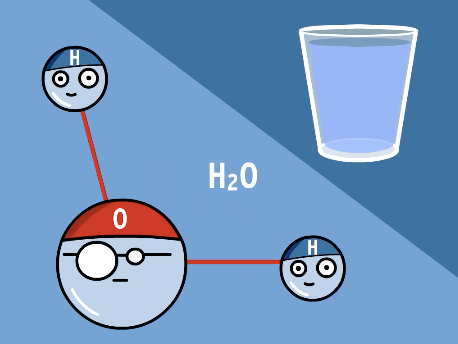
What is water?
a)
element
b)
compound
c)
mixture
86.

A substance that cannot be broken down into any other substance by ordinary chemical means is called —

a)

molecule

b)

mixture

c)

element

d)

compound

87.
Two or more physically combined substances form —
a)
a compoud
b)
an acid
c)
an element
d)
a mixture
88.
NaHCO3 is an example of —
a)
an abbreviation
b)
a compound
c)
a mixture
d)
an element
89.

What is an example of a mixture?

a)

Table salt

b)

Salt water

c)

Oxygen

d)

Air

90.
A substance made of only one type of atom is called —
a)
an element
b)
a mixture
c)
a compound
d)
a salt
91.
Which of the following is a way in which elements and compounds are similar?
a)
Elements and compounds are pure substances.
b)
Elements and compounds are both made up of different kinds of atoms.
c)
Elements and compounds can both be broken down by physical means.
d)
Elements and compounds are listed on the periodic table.
92.
What is an example of an element?
a)
Oxygen
b)
Pure water
c)
Air
d)
Table salt
93.
Two or more substances in the same place but NOT chemically combined or in a specific ratio is called —
a)
a compound 
b)
a pure substance
c)
an element
d)
a mixture
94.
DIFFERENT kinds of atoms chemically combined to form a substance are
a)
Mixture
b)
Element
c)
Compound
d)
Substance
95.
Salt is a(n)
a)
element
b)
compound
c)
mixture
96.
This contains a variety elements and compounds that ARE NOT chemically combined.
a)
Water
b)
Mixture
c)
Elements
d)
Compounds
97.
A pure substance that cannot be broken down into other substances by chemical or physical means. 
a)
compound          
b)
atom
c)
mixture 
d)
element
98.
Classify the picture with the correct label.
a)
Element
b)
Compound
c)
Mixture of Elements and Compounds
d)
Mixture of Elements
99.
Classify the picture with the correct label.
a)
Compounds
b)
Mixture of Elements
c)
Mixture of Compounds
d)
Mixture of Elements & Compounds
100.
What is H2SO4 
 made up of?
a)
2 hydrogen, 1 sulfur, 4 oxygen
b)
1 hydrogen, 2 sulfur, 4 oxygen
c)
2 hydrogen & 4 sodium
d)
1 hydrogen & 6 sodium
101.

What makes elements and compounds different from mixtures? Elements & compounds-

a)

have a constant composition (pure substances)

b)

are made of gases

c)

Will not change when heated

d)

conduct electric current

102.

What is the relationship between molecules and atoms?

a)

Molecules are combinations of two or more atoms.

b)

Molecules are the parts that make up atoms

c)

Molecules are the gaseous parts of atoms

d)

Molecules are atoms that have a positive charge

103.

Mixtures are different than pure substances because mixtures-

a)

have lower boiling points

b)

can be separated physically

c)

are less dense than pure substances

d)

contain only one type of atom

104.

Beatriz wants to make a mixture out of her bowl of blueberries. Which of the following would turn her bowl of blueberries into a mixture?

a)

adding more blueberries to the bowl

b)

adding raspberries to the bowl

c)

cutting up the blueberries

d)

mashing the blueberries

105.

Humans absorb oxygen from the air they breathe in and exhale carbon dioxide gas, CO2. Carbon dioxide gas is

a)

an element made of carbon and oxygen atoms.

b)

a solution made of carbon and oxygen atoms.

c)

a compound of carbon and oxygen atoms.

d)

a mixture of carbon and oxygen atoms.

106.
a)
Element
b)
Compound
c)
Mixture of compound and element
d)
Mixture of two elements
107.
Which of the following is not a compound?
a)
HCl
b)
Cl
c)
NaCl
d)
CO2
108.
Which of the following represents an element?
a)
H2O
b)
H2
c)
NaCl
d)
CaCO3
109.
How many elements are represented in the compound?
Na2CO3
a)
1
b)
2
c)
3
d)
4
110.
An element is made up of only one kind of _____.
a)
isotope
b)
plastic
c)
atom
d)
metal
111.
Is burning wood a chemical or physical change?
a)
chemical
b)
physical
112.

Is glass breaking a chemical or physical change?

a)

chemical

b)

physical

113.
Is hammering wood together to build a house a chemical or physical change?
a)
chemical
b)
physical
114.

Is a a rusting bicycle a chemical or physical change?

a)

cheical

b)

physical

115.
Is melting butter for popcorn a chemical or physical change?
a)
chemical
b)
physical
116.
Is spoiling food a physical or chemical change?
a)
phyiscal
b)
chemical
117.
Is mixing lemonade powder with water a physical or chemical change?
a)
physical
b)
chemical
118.
Is mowing the lawn a phyiscal or chemical change?
a)
physical
b)
chemical
119.
Is corroding metal a chemical or physical change?
a)
physical
b)
chemical
120.
Is bleaching your hair a physical or chemical change?
a)
physical
b)
chemical
121.
Are fireworks exploding a physical or chemical change?
a)
phyiscal 
b)
chemical
122.
Is a strong gaseous odor coming from the fridge a chemical or physical change?
a)
Chemical
b)
physical
123.
what is the definition of chemical change?
a)
any change that results in the formation of new chemical substances. 
b)
changing clothes
c)
matter cannot be created or destroyed, only change form
d)
changes affecting the form of a chemical substance, but not its chemical composition.
124.
which one is the definition of chemical property?
a)
a property or characteristic of a substance that is observed during a reaction where the chemical composition of a substance is changed
b)
any change that results in the formation of new chemical substances
c)
combustibility
125.
what is the definition of physical change?
a)
any change that results in the formation of new chemical substances. 
b)
rusting
c)
changes affecting the form of a chemical substance, but not its chemical composition.
d)
any property that is measurable, whose value describes a state of a physical system
126.
which one is a physical change?
a)
evaporation
b)
energy
c)
sublimation
d)
evaporation and sublimation
127.
what is digestion?
a)
body function
b)
chemical change
c)
physical change
128.
Which of the following is a sign that a chemical reaction has occurred?
a)
change in shape
b)
melting
c)
formation of a gas
d)
dissolving
129.
a copper penny turning greenish after a few years.
a)
Chemical Change
b)
Physical Change
130.
Baking a cake by mixing flour, sugar, chocolate powder, eggs, and milk, and then heating them in the oven.
a)
Chemical Change
b)
Physical Change
131.
The Law of Conservation of Mass proves that -
a)
the number of atoms in a chemical reaction does not change
b)
there are more atoms on the reactant side than the product side
c)
there are more atoms on the product side than the reactant side
d)
the mass of the product will not equal the reactants
132.

What kind of change occurs if matter changes in amount, size, or shape?

a)

substance change

b)

chemical change

c)

physical change

d)

elemental change

133.

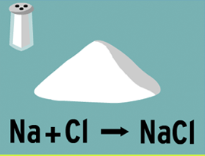
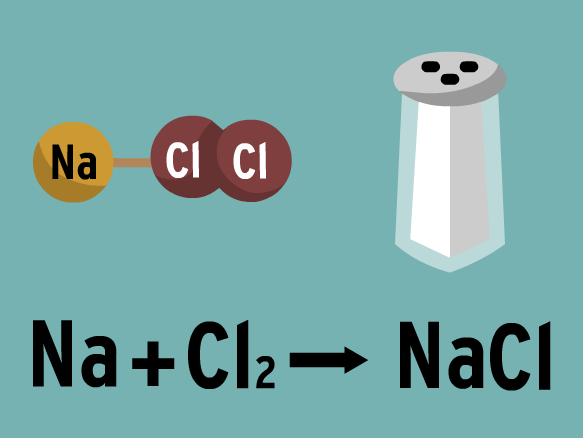
When sodium and chlorine combine to form sodium chloride, sodium chloride is the:

a)

Originator

b)

Reactant

c)

Product

d)

Produce

134.

4 grams of hydrogen and 32 grams of oxygen will combine to form:

a)

36 grams of water

b)

28 grams of hydroxide

c)

32 grams of oxygen

d)

36 grams of deuterium

135.

In a chemical reaction, 4 grams of sodium must combine with how many grams of chlorine to produce 10 grams of table salt?

a)

4 grams

b)

6 grams

c)

8 grams

d)

10 grams

136.
Students react baking soda & vinegar.
Which of the following would provide the evidence that the number of atoms present before a chemical reaction is equal to the number of atoms present after the chemical reaction?
a)
The mass of the plastic bag, baking soda, and vinegar before the reaction was equal to the mass after the reaction.
b)
Bubbles were produced during the reaction, which meant that a gas was being produced.
c)
The plastic bag did not change in any way, indicating that it was not involved in the reaction.
d)
The mass of the baking soda was exactly equal to the mass of the vinegar used to create the chemical reaction.
137.
The total amount of matter (atoms) before and after a chemical reaction remains the same.
a)
True
b)
False
138.
Suppose a reaction were to happen in an open container in a lab. During the reaction, the scientist observes the chemicals bubble and produce a gas. During the analysis the scientist notices that the reactants weighed 20 g when he started, and the product weighed 18 g. Explain what happened.  
a)
His chemical reaction defied the law of conservation of mass
b)
The product destroyed mass during the reaction
c)
The reactants created matter during the reaction
d)
The gas that was produced was not able to be weighed since the container was open.  
139.
How much does a 5 gram Hershey's kiss weigh after it is melted in the microwave?
a)
5 grams
b)
3 grams
c)
7 grams
140.
The Law of Conservation of matter states that the total amount of matter ______________ after it undergoes change.
a)
disappears
b)
stays the same
c)
weighs less
d)
explodes
141.

Based on the Law of Conservation of Matter, describe the relationship between the mass of the reactants and the mass of the products.

a)

The mass of the products is always greater than the mass of the reactants.

b)

The mass of the reactants is less than the mass of the products.

c)

The mass of the reactants equals the mass of the products.

d)

The mass of the reactants is greater than the mass of the products.

142.

Which picture below would correctly demonstrate the Law of Conservation of Matter if this picture is the reactants?

a)
b)
c)
d)
143.

In this chemical equation , the 2 in front of the 2O2 and the 2 in front of the 2H2O are called the...

a)

Products

b)

Reactants

c)

Coefficient

d)

Subscript

144.

In this chemical equation ,the small numbers dropped down below the letters like the 4 in CH4 are known as the

a)

Products

b)

Reactants

c)

Coefficient

d)

Subscript

145.

If you have 15 grams of Baking Soda and 20 grams of Vinegar as products, what would you expect the mass of your reactants to be?

a)

15 grams

b)

20 grams

c)

5 grams

d)

35 grams

146.

How many Carbons are on EACH side of the chemical reaction?

a)

1

b)

3

c)

4

d)

5

147.

There are 4 hydrogens in the products of the equation. How many hydrogens would you expect in the reactants?

a)

1

b)

3

c)

4

d)

5

148.
The purpose of photosynthesis is ...
a)
to make glucose
b)
to break glucose
c)
to capture energy from the sun
d)
to change carbon dioxide
149.
What gas is released into the air during photosynthesis?
a)
carbon dioxide
b)
oxygen
c)
water 
d)
glucose
150.
What does the picture show?  
a)
carbon dioxide molecule
b)
glucose
c)
water molecule
d)
oxygen molecule
151.
What does the picture show?  
a)
carbon dioxide molecule
b)
oxygen molecule
c)
water molecule
d)
glucose molecule
152.
Which statement about photosynthesis is correct?
a)
Plants get the energy they need for photosynthesis from water.
b)
Plants get the energy they need for photosynthesis from soil.
c)
Plants get the energy they need for photosynthesis from sunlight.
d)
Plants do not require energy to perform photosynthesis.
153.
Which of these is NOT A TRUE statement about why photosynthesis is important:
a)
It captures and makes the sun's energy available to all species
b)
It turns deadly COinto Oxygen for us to breath
c)
It helps plants create energy to send to rest of food chain
d)
It makes the water for our planet
154.
Which of the following is the correct equation for PHOTOSYNTHESIS?
a)
6CO2 + 6H2O --> 6O+ C6H12O6
b)
6CO+ C6H12O6 + 6H2O --> O
c)
6O2 + 6H2O --> 6CO+ C6H12O6
d)
C6H12O6 + 6O2 ---> 6H2O + 6CO2 
155.
What is the ultimate ORIGINAL source of energy for living things
a)
Sugar
b)
Sun
c)
Moon
d)
Carbon Dioxide
156.
What are the products of photosynthesis?
a)
water and carbon dioxide
b)
oxygen and glucose
c)
oxygen and carbon dioxide
d)
oxygen and water
157.

Digestion in which foods are physically broken down into smaller pieces is ______________

a)

Chemical

b)

Mechanical

158.

Digestion in which chemicals produced by the body break food into smaller chemical building blocks.

a)

Mechanical

b)

Chemical

159.
Which is NOT a function of the Digestive System?
a)
To rid the body of solid waste
b)
Absorb nutrients for energy & growth
c)
Break down nutrients from food
d)
Pump blood around the body
160.
Enzymes (chemicals) in your saliva help break down food while chewing.  This is...
a)
Mechanical digestion
b)
Chemical digestion
161.

What is the main purpose of the digestive system ?

a)

to protect your organs

b)

to provide you with nutrients and energy

c)

to pump blood and transport oxygen through your boby

d)

to control breathing