
 Worksheets
Yr7 revision
Total questions: 164
Worksheet time: 2hrs 14mins

evaporating dish
watch glass
mortar and pestle
funnel


Scissors
beaker tongs
forceps
tweezers

iron ring
ring stand
face mask
Bunsen burner stand
evaporating dish
watch glass
mortar and pestle
funnel

Beaker
Conical Flask
Volumetric Flask
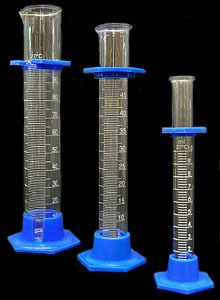
Graduated Cylinder

Watch glass
Porcelain Plate
Crucible
Evaporating Dish

Iron Ring
Clay Triangle
Wire Gauze
Heatproof Mat

Bunsen Burner
Ignition Tube
Flame Tester
Test Tube

Erlenmeyer Flask
Long Cylinder
Measuring Cylinder
Beaker

Scoop
Tongs
Forceps
Spatula

Conical Flask
Funnel
Pipette
Dropper
I would use a _________ ________ to measure 27mls of water.
(a)
Why do we need to know how to draw science equipment in 2D?
What piece of lab equipment would we use to protect the bench from heat?

What is used to measure (but not precise), heat, and mix large amounts of liquids?
beaker
flask
test tube
graduated cylinder

What equipment allows you to see small objects?
beaker
compound light microscope
flask
test tube

What equipment allows you to measure liquid's volume and measures in milliliters?
test tube
beaker
flask
graduated cylinder

Which equipment holds, measures, and mixes liquids (not a precise measurement), and measures in milliliters?
flask
test tube
beaker
graduated cylinder

Which equipment measures temperature in liquid or gas, and measures in degrees Celsius?
hot plate
beaker
thermometer
bunsen burner

Which equipment heats liquids and some stir liquids?
beaker
graduated cylinder
flask
hot plate

Which equipment holds specimens so that you can look at them closely under the microscope?
hot plate
slide
test tube
dropper

Which equipment holds liquids and allows reactions in a small space?
test tube
hot plate
dropper
beaker

Which equipment heats objects with an open flame?
hot plate
thermometer
bunsen burner
beaker

Which equipment allows you to drop a small amount of liquid?
dropper
test tube
graduated cylinder
flask

What does it mean when you see this lab safety symbol?
wear safety goggles
working with fire
working with electricity
working with chemicals
working with sharp objects

What does it mean when you see this safety symbol?
wear goggles
working with electricity
working with glassware or chemicals
working with sharp objects
working with fire

What does it mean when you see this lab safety symbol?
wear goggles
working with fire
working with sharp objects
working with chemicals
working with sharp objects

What does it mean when you see this lab safety symbol?
working with glassware/chemicals
wear goggles
working with sharp objects
working with electricity
working with chemicals

What does it mean when you see this lab safety symbol?
working with sharp objects
working with electricity
working with glassware/chemicals
wear goggles
working with chemicals

What does it mean when you see this lab safety symbol?
wear goggles
working with fire
working with electricity
working with sharp objects

One litre = ________ millilitres?
10
100
1000
50

How would I measure medicine?
millilitres
litres
kilolitres
socks

How many millilitres in half a litre?
100ml
200ml
50ml
500ml

500ml is what fraction of one litre?
half
one quarter
one eighth
one tenth

The image shows what volume?
100ml
500ml
250ml
one litre

I record the colour of a Frank Green drink bottle.
The type of data collected is...?
quantitative
qualitative
accurate
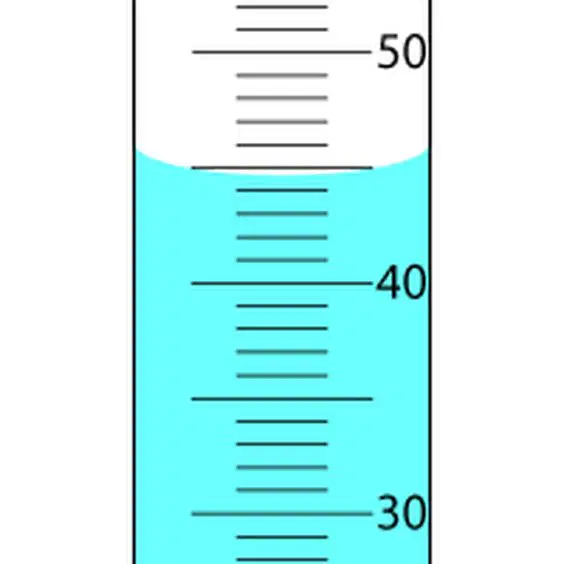
A student measures this and says it is 46mL
Their measurement is....?
accurate
inaccurate
A student measures this and says it is 46mL
Their measurement is....?
accurate
inaccurate

I record the weight of a Frank Green drink bottle.
The type of data collected is...?
quantitative
qualitative
accurate
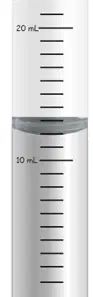
Read this accurately.
The volume of water is....
10.5mL
15mL
120mL
12mL

Read the following chart and answer the question that follows.
The volume of the liquid in graduated cylinder B is:
182 mL
193 mL
182 grams
92 mL


The volume of the liquid in the container above is about--
400 mL
600 mL
800 mL
1000 mL


What is the volume of the liquid in the picture
35 mL
35 grams
35 cm3
35 L
What is the volume of the liquid in the picture
35 mL
35 grams
35 cm3
35 L
What is the curved area of liquid in a graduated cylinder called?
Miscus
Meniscus
Minced
Misses
What is the curved area of liquid in a graduated cylinder called?
Miscus
Meniscus
Minced
Misses
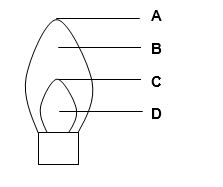
The gas should be turned on ____________ lighting the match.
Before
After
The gas should be turned on ____________ lighting the match.
Before
After
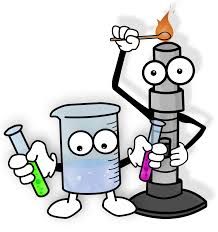
What do you call the part of the burner that "twists" ?
Base
Collar
Cylinder
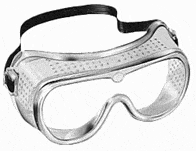
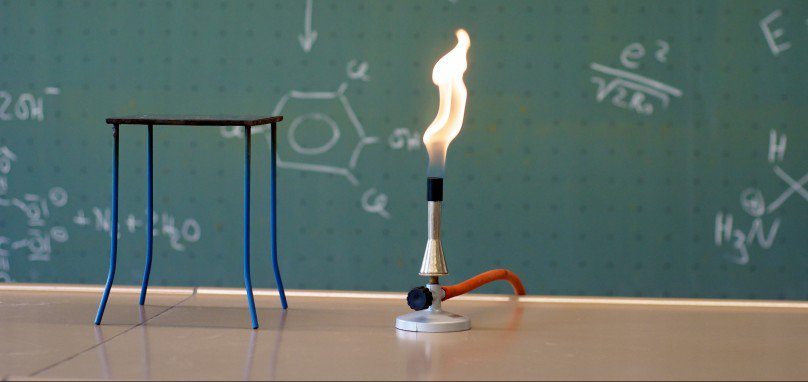
To produce the most heat, you should twist the collar until you see ______
A dark blue cone
An orange cone
A yellow cone
A light blue cone
To produce the most heat, you should twist the collar until you see ______
A dark blue cone
An orange cone
A yellow cone
A light blue cone
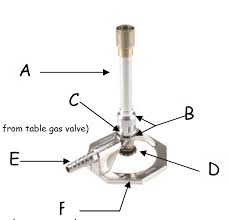
Name this part of the Bunsen Burner: A
Barrel
Collar
Air Hole
Base
Name this part of the Bunsen Burner: A
Barrel
Collar
Air Hole
Base

Air hole closed means __________ safety flame and air hole open means _________ heating flame.
Yellow, blue
Blue, yellow
Blue, orange
Yellow, green
Air hole closed means __________ safety flame and air hole open means _________ heating flame.
Yellow, blue
Blue, yellow
Blue, orange
Yellow, green
During an experiment, a bunsen burner is placed on:
Gauze mat
The laboratory bench
A heatproof mat
Tripod
The different parts of a bunsen burner include:
Barrel, collar, air hole, gas hose and base
Barrel, collar, air vent, gase hose and base
Barrel, collar, air vent, gas hose and bottom
Barrel, neck, air hole, gas hose and base
When you lift a bunsen burner, you hold it from the:
Barrel
Gas hose
Base
Collar
Air hole closed means __________ safety flame and air hole open means _________ heating flame.
Yellow, blue
Blue, yellow
Blue, orange
Yellow, green
All matter is made up of tiny _______________
energy
particles (atoms and molecules)
bits
antimatter
All matter is made up of tiny _______________
energy
particles (atoms and molecules)
bits
antimatter
The particles of ___________________ are tightly packed.
solids
liquids
gases
none
The particles of ___________________ are tightly packed.
solids
liquids
gases
none
The particles of liquids can:
vibrate
move past each other
both
none
The particles of liquids can:
vibrate
move past each other
both
none


Name the separation technique
Centrifuge
Bunsen burner
Distillation
Evaporation
Name the separation technique
Centrifuge
Bunsen burner
Distillation
Evaporation

Name the separation technique
Filtration
Evaporation
Distillation
Separation
Name the separation technique
Filtration
Evaporation
Distillation
Separation
True or false: Sieving can be used to separate a mixture with two solid components of different sizes
True
False
True or false: Sieving can be used to separate a mixture with two solid components of different sizes
True
False
Air hole closed means __________ safety flame and air hole open means _________ heating flame.
Yellow, blue
Blue, yellow
Blue, orange
Yellow, green
A mixture of __________ and __________ burn at the top of the barrel to produce a flame
Air, carbon dioxide
Gas, carbon dioxide
Gas, air
Air, helium

Combination of two or more different kinds of substances that keep their own physical properties and can be easily separated.
Solution
Mixture
Solubility
Miscibility
Combination of two or more different kinds of substances that keep their own physical properties and can be easily separated.
Solution
Mixture
Solubility
Miscibility
The substance that does the dissolving
Solute
Solvent
Solution
Miscibility
The substance that does the dissolving
Solute
Solvent
Solution
Miscibility
What is solubility?
different materials placed together but keeping their own properties
a mixture in which substances spread out evenly and will not settle
the degree to which a material will dissolve in another substance
the substance in a solution that has the greatest amount
the substance in a solution that has the least amount
Which process would you use to separate solid particles from larger particles in a mixture with filter paper in a funnel to trap solids so that the liquids will pass through.
Chromatography
Magnetic Attraction
Filtration
Floatation
Sifting
Which process would you use to separate smaller solid particles from larger solid particles. A mixture of different sized solids is put into a container that has a screen material at the bottom with certain sized holes in it. The smaller particles go through the screen and the larger ones do not.
Evaporation
Magnetic Attraction
Filtration
Floatation
Sifting
Which is an example of a mixture?
a salad
an orange
sand
nuts
In a solution of saltwater, what is the solvent?
salt
water
ice
the glass
In a solution of saltwater, what is the solvent?
salt
water
ice
the glass

Sand and gravel may be separated from each other through using..
a filter funnel
a sieve
an evaporating basin
a distillation
Which of the following is true about solutions?
The particles of the solute become very small
Evaporation can be used to separate solutions
The substance spreads out evenly
All of these options are true
True or False? A solution can be made by combining vegetable oil and water.
True
False

The Tyndall Effect is not visible in which of the following?
Solution
Suspension
Colloid
Heterogeneous Mixture

What kind of mixture is shown in the picture?
Homogeneous
Heterogeneous

What kind of mixture is shown in the picture?
Homogeneous
Heterogeneous
Freshly brewed black coffee
Heterogeneous
Homogeneous
Lucky Charms
Heterogeneous
Homogeneous
Dirt
Heterogeneous
Homogeneous
M&Ms
Heterogeneous
Homogeneous

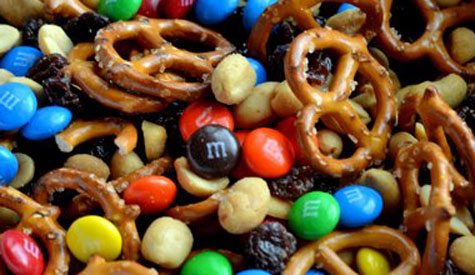


Refer to the picture shown. What kind of mixture is it?
Homogenous Mixture
Heterogenous Mixture
A mixture in which its composition is the same throughout the mixture and it cannot easily be identified nor separated
Homogenous Mixture
Heterogenous Mixture
Water and Sugar Mixture are what kind of mixture
Homogenous Mixture
Heterogenous Mixture
Which is not a separation technique?
Filtrating
Distillating
Evaporating
Dissolving
Solutions are made up of...?
Solutes and insolubles
Solubles and solutes
Solutes and solvents
Solubles and solvents
If something is insoluble in water, it will not...
Separate after distillation
Dissolve in water
Dissolve in anything except water
Separate after filtration
If something is insoluble in water, it will not...
Separate after distillation
Dissolve in water
Dissolve in anything except water
Separate after filtration
In a solution of saltwater, what is the solute?
Water
Saltwater
Salt
There is no solute, it is insoluble
In a solution of saltwater, what is the solute?
Water
Saltwater
Salt
There is no solute, it is insoluble
Which part of a filtration is the "filtrate"?
The filter paper
The solid material left in the funnel
The liquid that has gone through
The conical flask
What are the three types of mixtures?
Suspension, colloid and solution
Solution, solute and solvent
Colloid, insoluble and soluble
Distillate, colloid and suspension
How could you increase the concentration of a solution?
Add more solute
Add more solvent
Remove some solute
Remove some solvent
What words should be used to describe the concentration of a solution?
Weak and strong
Concentrated and dilute
Dilute and strong
Distillate and concentrated
What words should be used to describe the concentration of a solution?
Weak and strong
Concentrated and dilute
Dilute and strong
Distillate and concentrated
When no more solid can be dissolved in a solution, it is now...?
Unsaturated
Full
Saturated
Soaked
When no more solid can be dissolved in a solution, it is now...?
Unsaturated
Full
Saturated
Soaked
Distilled water is a pure substance, but tap water is not. Why?
Distilled water has separated all the non-water molecules out
Distilled water only contains water molecules.
Tap water contains other particles.
Tap water is a mixture.
When something is insoluble in solution, it forms a...?
Problem
Precipitate
Pretty big mess
Particle

