
 Worksheets
Yr7 Resources
Total questions: 160
Worksheet time: 3hrs 3mins
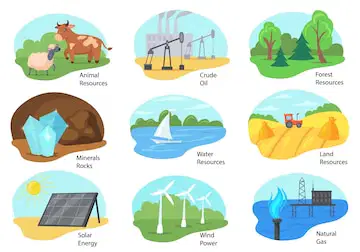
Which option is an example of a renewable energy source?
metals
minerals
wind
fossil fuels
Which option is an example of a renewable energy source?
metals
minerals
wind
fossil fuels

Why is the sun a renewable energy source?
Why is the sun a renewable energy source?
What natural resource is used to make t-shirts?
cotton
metal
plants
wood
What items are made from metal? (more than one answer)
coins
books
paper clips
shopping bag
scissors
Natural gas, coal and oil are types of...
wood
plants
fossil fuels
food sources
Natural gas, coal and oil are types of...
wood
plants
fossil fuels
food sources
Natural gas, coal and oil release energy.
True
False
A resource that we can use more than once is called a _____ resource.
Renewable
Nonrenewable
Reusable
Recyclable
A resource that we can use more than once is called a _____ resource.
Renewable
Nonrenewable
Reusable
Recyclable
Which of the following is NOT a natural resource
iPads
Trees
Wind
Fossil fuels
True or False: It is possible to make more nonrenewable resources in our lifetime.
True
False
What is deforestation?
Cutting down trees in a forest.
Planting new trees on empty land.
Using trees to produce oxygen.
Looking for new types of medicine in a forest.
Which of the following is a renewable resource?
Solar power
Wood from trees
Oil used for gasoline
Coal that powers a factory
Where are fossil fuels found?
In the Earth
In the forest
In animals
In the atmosphere
Fossil fuels are produced over _____ of years.
Hundreds of millions of years
Thousands of years
hundreds of years
every year
Fossil fuels are produced over _____ of years.
Hundreds of millions of years
Thousands of years
hundreds of years
every year
What do we need to use solar power for our electricity?
Solar panels
Sun panels
Solar engines
A sun motor
Which of these is the most sensible way to conserve natural resources?
Walk or ride your bike when you can, instead of driving in the car.
Stop using all electricity.
Never ride in the car.
Don't use any products made from trees.
How does recycling conserve resources?
It allows us to reuse things instead of making new ones.
It means there will be less garbage trucks driving around.
We can recycle everything, even food!
There will be no more trash at the dump.
All of the following are nonrenewable resources EXCEPT
coal
animals
petroleum (oil)
natural gas
A resource that is not easily replaced...
Renewable
Nonrenewable
Plants
Animals
Any useful material that is found in nature:
Natural Resource
Human Resource
Plants
Fossil fuels
Fossil fuels are nonrenewable because...
they are used to produce heat
they take a long time to be replenished
they can be found underground
they produce pollution
What does conserving resources mean?
Using as many of the resources as you can
Wasting resources
Saving resources and using them wisely
Using a lot of resources
Which answer describes the difference between renewable and nonrenewable resources?
A renewable resource is a resource that is scarce while a nonrenewable resource is a resource that is abundant.
A renewable resource is a resource that is abundant while a nonrenewable resource is a resource that is scarce.
A renewable resource is a resource that is being used up faster than it is being replaced while a nonrenewable resource is a resource that is constantly supplied.
A renewable resource is a resource that is constantly being supplied while a nonrenewable resource is a resource that is being used up faster than it is being replaced.

What was the most widely used NONRENEWABLE resource in 2009?
Natural gas
Biomass
Petroleum
Hydropower

What was the most widely used RENEWABLE resource in 2017?
Coal
Petroleum
Hydroelectric
Biomass
What determines if a resource is renewable or nonrenewable?
The rate at which they are replenished
The cost of the resources
How much pollution it causes
How the resource will be used
A resource that is not easily replaced...
Renewable
Nonrenewable
Plants
Animals
Fossil fuels are nonrenewable because...
they are used to produce heat
they take a long time to be replenished
they can be found underground
they produce pollution
Which answer describes the difference between renewable and nonrenewable resources?
A renewable resource is a resource that is scarce while a nonrenewable resource is a resource that is abundant.
A renewable resource is a resource that is abundant while a nonrenewable resource is a resource that is scarce.
A renewable resource is a resource that is being used up faster than it is being replaced while a nonrenewable resource is a resource that is constantly supplied.
A renewable resource is a resource that is constantly being supplied while a nonrenewable resource is a resource that is being used up faster than it is being replaced.
Which answer describes the difference between renewable and nonrenewable resources?
A renewable resource is a resource that is scarce while a nonrenewable resource is a resource that is abundant.
A renewable resource is a resource that is abundant while a nonrenewable resource is a resource that is scarce.
A renewable resource is a resource that is being used up faster than it is being replaced while a nonrenewable resource is a resource that is constantly supplied.
A renewable resource is a resource that is constantly being supplied while a nonrenewable resource is a resource that is being used up faster than it is being replaced.
What was the most widely used NONRENEWABLE resource in 2009?
Natural gas
Biomass
Petroleum
Hydropower
What was the most widely used NONRENEWABLE resource in 2009?
Natural gas
Biomass
Petroleum
Hydropower

What process is happening step A?
transpiration
evaporation
condensation
accumulation
What process is happening step A?
transpiration
evaporation
condensation
accumulation

The process in which water vapor is released into the atmosphere through plants.
evaporation
transpiration
condensation
precipitation

The process by which molecules of water vapor become liquid water.
transpiration
evaporation
condensation
accumulation
The process by which molecules of water vapor become liquid water.
transpiration
evaporation
condensation
accumulation

In order for evaporation to occur, liquid water must change state into a ___________.
gas
solid
plasma
In order for evaporation to occur, liquid water must change state into a ___________.
gas
solid
plasma

In order for condensation to occur, water vapor (gas) must change state into a _________.
solid
liquid
gel
What process is happening step B?
transpiration
precipitation
condensation
What process is happening step B?
transpiration
precipitation
condensation

What step of the water cycle is happening in arrow D?
Condensation
Evaopration
Run off
What step of the water cycle is happening in arrow D?
Condensation
Evaopration
Run off

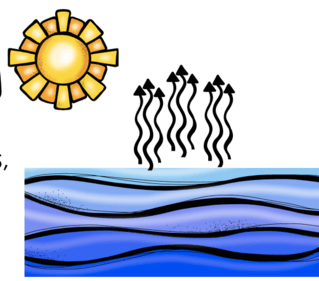

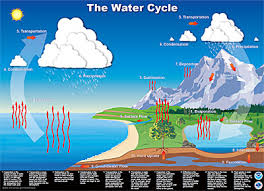


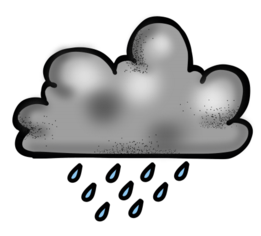
What part of the water cycle does this picture show?
condensation
precipitation
evaporation
transpiration
What part of the water cycle does this picture show?
condensation
precipitation
evaporation
transpiration
What is evaporation?
The part of the water cycle when the sun heats up water, turning it from a liquid into water vapour or steam. It rises from the ground into the air.
The part of the water cycle when the water vapour in the air gets cold. The water turns back into a liquid and forms clouds.
The part of the water cycle when clouds get heavy and can no longer hold the liquid water. This causes the water to fall from the sky to the earth as rain, snow, sleet, or hail.
What is evaporation?
The part of the water cycle when the sun heats up water, turning it from a liquid into water vapour or steam. It rises from the ground into the air.
The part of the water cycle when the water vapour in the air gets cold. The water turns back into a liquid and forms clouds.
The part of the water cycle when clouds get heavy and can no longer hold the liquid water. This causes the water to fall from the sky to the earth as rain, snow, sleet, or hail.
What is condensation?
The part of the water cycle when the sun heats up water, turning it from a liquid into water vapour or steam. It rises from the ground into the air.
The part of the water cycle when the water vapour in the air gets cold. The water turns back into a liquid and forms clouds.
The part of the water cycle when clouds get heavy and can no longer hold the liquid water. This causes the water to fall from the sky to the earth as rain, snow, sleet, or hail.
The part of the water cycle when the water soaks into the ground.
What is condensation?
The part of the water cycle when the sun heats up water, turning it from a liquid into water vapour or steam. It rises from the ground into the air.
The part of the water cycle when the water vapour in the air gets cold. The water turns back into a liquid and forms clouds.
The part of the water cycle when clouds get heavy and can no longer hold the liquid water. This causes the water to fall from the sky to the earth as rain, snow, sleet, or hail.
The part of the water cycle when the water soaks into the ground.
What is precipitation?
The part of the water cycle when the sun heats up water, turning it from a liquid into water vapour or steam. It rises from the ground into the air.
The part of the water cycle when the water vapour in the air gets cold. The water turns back into a liquid and forms clouds.
The part of the water cycle when clouds get heavy and can no longer hold the liquid water. This causes the water to fall from the sky to the earth as rain, snow, sleet, or hail.
The part of the water cycle where the trees release vapour from their leaves.
What is precipitation?
The part of the water cycle when the sun heats up water, turning it from a liquid into water vapour or steam. It rises from the ground into the air.
The part of the water cycle when the water vapour in the air gets cold. The water turns back into a liquid and forms clouds.
The part of the water cycle when clouds get heavy and can no longer hold the liquid water. This causes the water to fall from the sky to the earth as rain, snow, sleet, or hail.
The part of the water cycle where the trees release vapour from their leaves.
When water condenses, the liquid water forms ______________.
water vapour
steam
air
clouds
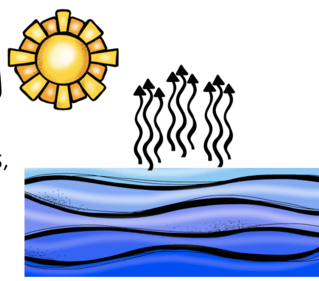
Evaporation happens when the sun ___________ water and turns it into vapour.
cools
heats up
freezes
lights up


In the water cycle, what is the term for surface water being heated by the sun, rising and turning from a liquid to gas?
Precipitation
Condensation
Evaporation
Groundwater flow
Surface runoff
How much of Earth's surface is covered by water?
3%
50%
70%
85%
Precipitation includes rain and snow.
False
True
The water that was around when many hundreds of years ago___________.
Is gone,and has been for a long time
Is about half way gone
Is the same water we use today
Would be really dirty if it were still around
Water that falls from clouds to Earths surface
Water Cycle
Precipitation
Evaporation
Water Vapor
Why is the water cycle referred to as a 'closed system'?
The movement of surface water down slopes (e.g. mountains).
Evaporation
Groundwater
Condensation
Runoff
The changing of water vapour into droplets of liquid water in the form of dew, fog or clouds is called (a) .
What does the water cycle show?
How waste water is purified so that it's safe to drink
How water moves around between the atmosphere, oceans, rivers and land
How water gets into our homes
Which of these is a store within the water cycle?
Precipitation
Evaporation
Ice caps
In the water cycle, what is the term for water droplets increasing in size, becoming heavy and falling to the earth’s surface as a liquid?
Evaporation
Precipitation
Infiltration
Condensation
What is Hydro electric power
Power made from fire
Power made from wind
Power made from water
Power made from the sun
What is Hydro electric power
Power made from fire
Power made from wind
Power made from water
Power made from the sun
True or False
Hydroelectricity is renewable
True
False
What else does hydro energy provide and improve
Flood control
irrigation
navigation
All of the above
It harness power from water flowing under pressure
(a)
storage of water
(a)
storage of water
(a)
structure built to enclose the reservoir
(a)
structure built to enclose the reservoir
(a)
pipes that carry water to turbine
(a)
pipes that carry water to turbine
(a)
What are the two functions of dam
(a)


Electricity transfers ______ from place to place.
energy
matter
both of these
none of these
How is Electricity Generated?
By the use of turbines
by the use of electricity
by the use of sub stations
by the use of transmission lines
How is Electricity Generated?
By the use of turbines
by the use of electricity
by the use of sub stations
by the use of transmission lines

Which of the following is utilised to generate electricity in a hydro electric power plant?
Nuclear
Water
coal
Fossil Fuel
Which of the following is utilised to generate electricity in a hydro electric power plant?
Nuclear
Water
coal
Fossil Fuel

How do Solar power plant produce electricity?
the sunlight turns the turbines
the solar panels collect the light coming from the sun.
the steam from the sunlight rotates the turbines
it doesn't happen at all.

How does the powerplant produce electricity?
the thunder hit the transmission line and it produce electricity
the water/steam turns the turbines and generate electricity
the substation generate the electricity
none of the above
How does the powerplant produce electricity?
the thunder hit the transmission line and it produce electricity
the water/steam turns the turbines and generate electricity
the substation generate the electricity
none of the above

Super heated steam is used to turn a ______________?
Transformer
Battery
Turbine
Toothed Gear


Which type of renewable energy is currently creating the most electricity generation?
geothermal
hydroelectric
solar
wind
Which one of the energy sources listed below is renewable?
coal
biomass
natural gas
petroleum oil
Solar cells operate by converting
heat to electrical energy
light to electrical energy
biomass to electrical energy
thermal to electrical energy
What type of energy comes from heated groundwater
hydro-electric
geothermal
biomass
solar
Biofuel is best described as energy produced from
a hydrogen cell
burning coal
plant matter
crude oil
Coal, petroleum, natural gas, and propane are fossil fuels. They are called fossil fuels because:
they are burned to release energy and they cause air pollution
they were formed from the buried remains of plants and tiny animals that lived hundred of millions of years ago
they are nonrenewable and will run out
they are mixed with fossils to provide energy
The forms of renewable energy that would be available in Victoria's inland region are
Wind, tidal, wave, hydro-electric
Solar, hydro-electirc, biomass, tidal
Wind, solar, hydrro-electric, biomass
Solar, goethermal, wave, biomass
Global warming focuses on an increase in the level of which gas in the atmosphere?
ozone
sulfur dioxide
carbon dioxide
nitrous oxide
Global warming focuses on an increase in the level of which gas in the atmosphere?
ozone
sulfur dioxide
carbon dioxide
nitrous oxide
Resources that are not able to be reproduced as quickly as they are used are called _____.
Renewable resources
Non-renewable resources

Coal is burned to heat water so that the _______ can turn turbines.
Fire
Steam
Gorillas
Wind

What are fossil fuels?
Solar, Wind, Hydro
Coal, Solar, Natural Gas
Coal, Oil, Natural Gas

Natural Gas is a __________ energy resource.
Renewable
Non-renewable
Natural Gas is a __________ energy resource.
Renewable
Non-renewable

Oil is a __________ energy resource.
Renewable
Non-renewable
Oil is a __________ energy resource.
Renewable
Non-renewable
Why are fossil fuels considered non-renewable resources if they are still forming beneath the surface today?
They are being formed as a type of methane which we cannot use.
They are being formed too far beneath the surface.
We are depleting the fossil fuels much faster than they can form.

Natural Gas is a __________ energy resource.
Renewable
Non-renewable
Natural Gas is a __________ energy resource.
Renewable
Non-renewable

Energy that uses heat that comes from within the earth is called
Geological
Hydroelectric
Geothermal
Geographic
Energy that uses heat that comes from within the earth is called
Geological
Hydroelectric
Geothermal
Geographic

Hydro Power is a __________ energy resource.
Renewable
Non-renewable
Hydro Power is a __________ energy resource.
Renewable
Non-renewable
Fossil Fuels are...?
A group of energy resources that were formed from ancient plants and organisms
A type of petrol used to power dinosaur cars.
An energy resource that can be quickly and easily replaced.
One ADVANTAGE of using fossil fuels is that:
They are better for the environment.
They can produce extremely high amounts of energy.
They contribute to the greenhouse effect.
They will never run out.
One ADVANTAGE of using fossil fuels is that:
They are better for the environment.
They can produce extremely high amounts of energy.
They contribute to the greenhouse effect.
They will never run out.
What is one DISADVANTAGE of using fossil fuels?
Fossil fuels will never run out.
Fossil fuels are very efficient forms of energy and are readily available, making them cheaper.
Burning fossil fuels contributes to the greenhouse effect which causes global warming.
Fossil fuels are better for the environment.
What is one DISADVANTAGE of using fossil fuels?
Fossil fuels will never run out.
Fossil fuels are very efficient forms of energy and are readily available, making them cheaper.
Burning fossil fuels contributes to the greenhouse effect which causes global warming.
Fossil fuels are better for the environment.
What is one DISADVANTAGE of using fossil fuels?
Fossil fuels will never run out.
Fossil fuels are very efficient forms of energy and are readily available, making them cheaper.
Burning fossil fuels contributes to the greenhouse effect which causes global warming.
Fossil fuels are better for the environment.
One ADVANTAGE of using fossil fuels is that:
They are better for the environment.
They can produce extremely high amounts of energy.
They contribute to the greenhouse effect.
They will never run out.
What is one ADVANTAGE of using renewable resources?
They will never run out.
They are more expensive.
They are bad for the environment.
What is one ADVANTAGE of using renewable resources?
They will never run out.
They are more expensive.
They are bad for the environment.
What is one ADVANTAGE of using renewable resources?
They will never run out.
They are more expensive.
They are bad for the environment.
What is one DISADVANTAGE of using renewable resources?
They are not as efficient as burning fossil fuels.
They will eventually run out.
They are cheaper and better for the environment.
What is one DISADVANTAGE of using renewable resources?
They are not as efficient as burning fossil fuels.
They will eventually run out.
They are cheaper and better for the environment.
What is one DISADVANTAGE of using renewable resources?
They are not as efficient as burning fossil fuels.
They will eventually run out.
They are cheaper and better for the environment.
Which of the following make up fossil fuels?
Oil
Coal
Gas
All of the above

