
 Worksheets
6th Grade Science Review
Total questions: 157
Worksheet time: 3hrs 53mins


Destructive
Constructive

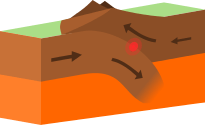

What is the process by which rock is broken into fragments called sediments?
Deposition
Erosion
Weathering
Igneous Rock
Rock that forms when pressure and heat change existing rock.
Igneous Rock
Sedimentary Rock
Metamorphic Rock
Rock Cycle
The process by which igneous rocks are formed...
heat and pressure
melting and cooling and crystallizing
compaction and cementation
weathering and erosion
When weathering breaks rocks into pieces, what do we call those smaller pieces?
The process by which sediment is moved from one place to another.
weathering
Uplift
Deposition
Erosion
This process changes rocks to magma.
melting
cooling and crystallizing
weathering and erosion
heat and pressure
This process takes sediments and changes them to sedimentary rock.
weathering and erosion
compacting and cementing
heat and pressure
melting
Heat and pressure create this type of rock.
igneous
sedimentary
metamorphic
sediments
This process changes magma into igneous rock.
weathering and erosion
melting
heat and pressure
cooling and crystallizing
What is the energy source for igneous rocks to form?
Earth's hot interior
the sun
gravity
magnetism
What is the energy source for sedimentary rocks to form?
Earth's hot interior
gravity and the sun
the moon
magnetism
What is the energy for metamorphic rocks to form?
earth's hot interior
gravity
the sun
magnetism
How would an igneous rock become sedimentary?
weathering, erosion, deposition then compacting and cementing
melting then cooling and crystallizing
heat and pressure
melting then weathering and erosion
How would a sedimentary rock become an igneous rock?
weathering and erosion
melting then cooling and crystallizing
heat and pressure
compacting and cementing
What is magma called when it is above ground?
magma
sediments
lava
metamorphic
Where do metamorphic rocks form?
underwater
near volcanoes
deep underground
in the air
Where do igneous rocks form?
underwater
deep underground
in the air
near volcanoes
Where do sedimentary rocks form?
underwater
deep underground
near volcanoes
in the air

What kind of bone is shown?
Long bone
Short bone
Flat bone
Irregular bone

What kind of bone is shown?
Long bone
Short bone
Flat bone
Irregular bone
A bone-dissolving cell is called
osteogenic cell
osteoclast
osteoblast
osteocyte
A bone-forming cell is called
osteogenic cell
osteoclast
osteoblast
osteocyte
A bone cell
osteogenic cell
osteoclast
osteoblast
osteocyte
Which of the statements is true?
Adults have red marrow in every bone
Children have yellow marrow
Children have red marrow in all their bones
None of the above
The process of producing of red & white blood cells from red bone marrow is
Suturing
Ossification
Hematopoiesis
Storing minerals
What is the name of the bone making up the upper part of the leg?
Radius
Tibia
Femur
Fibula
The patella is located in the
Knee
Foot
Ear
Elbow
How many bones are there in the adult human body?
326
216
206
196


This body system moves oxygen around the body.
circulatory system
respiratory system
excretory system
nervous system
This body system takes in oxygen.
circulatory system
digestive system
respiratory system
reproductive system
This system provides your body with nutrients.
excretory system
immune system
circulatory system
digestive system
This system removes waste from your body.
circulatory system
excretory system
respiratory system
nervous system
This system sends signal to the other systems.
reproductive system
circulatory system
nervous system
respiratory system
This system creates offspring.
circulatory system
excretory system
nervous system
reproductive system
This system takes care of pathogens to maintain homeostasis.
endocrine system
nervous system
immune system
circulatory system
This system creates new blood cells.
skeletal system
muscular system
nervous system
circulatory system
This system protects your organs.
skeletal system
muscular system
circulatory system
nervous system
Oxygen is circulated through the body to the cells.
circulatory & digestive
circulatory & respiratory
immune & circulatory
circulatory & nervous
The rib cage protects the lungs.
skeletal & circulatory
skeletal & muscular
respiratory & circulatory
skeletal & respiratory
Involuntary muscles help food move through the digestive tract.
digestive & circulatory
digestive & muscular
excretory & digestive
immune & digestive
The brain regulates the breathing rate.
nervous & respiratory
nervous & circulatory
nervous & musculoskeletal
nervous & digestive
Blood carries digested nutrients to the cells.
circulatory & excretory
circulatory & respiratory
circulatory & digestive
circulatory & immune
Oxygen is carried to the developing fetus.
reproductive & nervous
reproductive & digestive
respiratory & reproductive
circulatory & reproductive
White blood cells are carried to the site of an infection.
circulatory & nervous
immune & circulatory
immune & digestive
skeletal & immune
The kidneys filter the blood to determine the proper amount of salt and water.
excretory & muscular
excretory & circulatory
excretory & digestive
excretory & immune
After running, increased body heat causes your to sweat.
muscular & excretory
respiratory & nervous
skeletal & nervous
musculary & respiratory
The brain regulates the position of the body by controlling muscles.
respiratory & muscular
nervous & circulatory
nervous & skeletal
muscular & nervous
The brain controls circulation.
nervous & respiratory
circulatory & respiratory
circulatory & nervous
digestive & immune

What is weather?
When it is freezing cold all year round.
The conditions of the atmosphere (air/sky) over a short period of time.
The speed in which the wind travels.
The atmosphere (air/sky) over long periods of time.

What is climate?
The conditions of the atmosphere (air/sky) over a short period of time.
The changing of weather throughout the day.
The way in which we feel when it is hot or cold.
The atmosphere (air/sky) over long periods of time.
The temperature is measured in units of
degree Celsius
degree Fahrenheit
Percentage
Both degree Celsius and degree Fahrenheit
The degree of hotness or coolness of a substance or the environment is
Temperature
Precipitation
Humidity
Wind
The concentration of water vapour in the air is called
Temperature
Precipitation
Humidity
Wind
The boundary between cold and warm air masses is called a ____.
front
storm
climate
flood
The interaction of air, water, and ____ causes weather.
the Sun
humidity
land
wind
____ forms when the air temperature is below freezing and water vapor changes directly to solid.
Rain
Snow
Sleet
Hail

What type of front does this symbol indicate?
Warm Front
Cold Front
Stationary Front
Occluded Front
The direction of the symbol indicates the
strength of the front
type of front
direction of air movement
Cold air is more dense than warm air and sinks.
True
False
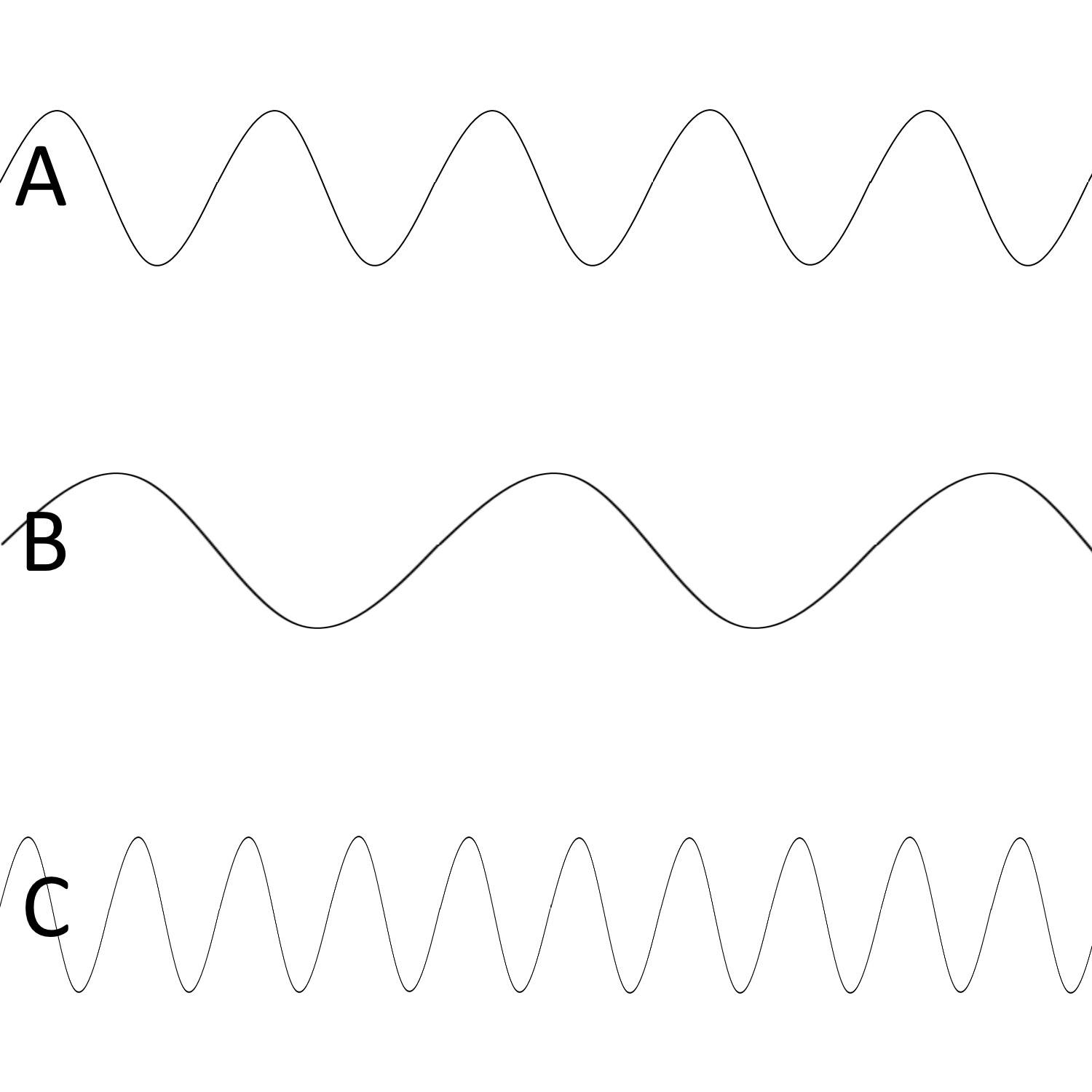

how fast do electromagnetic waves travel through the vacuum of space?
they don't
250,000,000 m/s
the speed of light
100mph
what affects the speed of a wave?
the medium it travels through
amplitude
plasma
what is a wave?
A disturbance that transfers energy from one place to another
A disturbance that transfers matter from one place to another
energy that makes particles move
any type of matter that vibrates back and forth
the top or high point of a wave is called?
crest
crown
trough
gutter
the bottom or low point of a wave is called?
crest
crown
trough
gutter
what kind of waves need a medium to travel through?
electromagnetic waves
mechanical waves
surface waves
particle waves
what kind of waves do NOT need a medium to travel through?
electromagnetic waves
mechanical waves
surface waves
particle waves
sound is caused by
vibrations
magic
the speed of light
reflection
as the wavelength of a wave increases its frequency also increases
true
false
waves with higher frequencies transmit more energy
true
false
What is the electromagnetic spectrum ?
a model mr vena made
the range of wavelengths that electromagnetic radiation extends.
all the ranges of sound
a list of electrical and magnetic facts
What part of the electromagnetic spectrum can we see?
Infrared Rays and ultraviolet rays
Visible Light
x rays
gamma rays
What is the shortest wavelength of the Electromagnetic Spectrum?
x-rays
gamma rays
uv light
infrared light
What is the most dangerous type of waves of the spectrum?
radio
ultra violet
gamma ray
visible light
Which part of the EM Spectrum has high enough energy to cause damage to eyes and skin, an even cancer.
visible light
ultra violet
radio
infrared
What color is an object that absorbs all the colors in the light spectrum?
rainbow
white
black
not visible
Both light and sound can be reflected
true
false
Sound is a mechanical wave and requires a medium to travel through.
true
false
How would you design an model to represent waves? (min 4 sentences)
Water currents that flow from the equator to the poles move heat from warmer climates to colder ones are an example of which transfer of heat?
Conduction
Convection
Radiation
When a volcano erupts, hot molten rock can come to Earth’s surface. This lava burns or melts most things it touches. The lava is so hot it can set a tree on fire even if the tree is several feet away from it. This phenomenon is caused by the process of...
Conduction
Convection
Radiation
On a sunny beach, the sand becomes hot enough to be uncomfortable to your bare feet. However, if a wave washes over the hot sand, the cooler water removes heat from the sand by the process of
Conduction
Convection
Radiation
The total kinetic and potential energy of all particles in an object is called...
mechanical energy
kinetic energy
potential energy
thermal energy
The energy that is transferred from a warmer object to a cooler object is called...
thermal energy
heat
force
temperature
The thermal energy of an object changes when heat is transferred
True
False
____________ is a measure of the average kinetic energy
heat
thermal energy
temperature
________ is the transfer of energy from one particle of matter to another within an object or between two objects in direct contact
Conduction
Convection
Radiation
__________ is a type of heat transfer that occurs through the movement of fluids, which can be solid liquid or gas.
Conduction
Convection
Radiation
__________ is the transfer of energy by electromagnetic waves
Conduction
Convection
Radiation
The law of conservation of energy applies to everything - even when energy transforms
True
False
Even though thermal energy moves (transfers) from one place to another, it is always conserved within a system
True
False
When cooking a pizza in an oven, the oven loses energy and so does the pizza
True
False
________ are materials that conduct heat well, like metals and tile flooring.
conductors
insulators
_________ are materials that do not conduct heat well, like wool blankets or wood
conductors
insulators
Energy is not created or destroyed, it is transferred to objects or transformed into other forms of energy
True
False
Temperature scale used most often in Science
Celsius
Farenheit
Kelvin
Mrs. Cordt’s class is studying evaporation. They place salt water in a container. They leave the container open for 3 weeks and observe the amount of water each day. What is the dependent variable?
salt
type of container
surface on which it is placed
amount of water in the container

Maria’s class is studying the water cycle. Maria draws a diagram of the cycle shown below.
condensation
evaporation
infiltration
precipitation
The people of Lave Havasu rely on runoff flowing into a lake to meet their water needs. They are concerned that there is less water in the lake this year than in the previous year. How can they collect data to test if their concerns about the lake’s water level are valid?
measure the lake’s water density
measure the lake’s current height a given location and compare it to the height at the same location the previous year
measure the temperature of the air to determine how fast the water is evaporating
measure the amount of rainfall in the city using rain gauges and compare it to last year

The fifth-grade class is studying the water cycle. Mrs. Montano draws a model of the cycle as shown in the figure below. The arrows indicate the direction of water movement within this water cycle model.
What can the class conclude about the oceans’ role in the water cycle?
The oceans play a key role in the water cycle as a source and a storage unit of water.
The role of oceans is not as important as that of glaciers and ice sheets.
The role of oceans is not very important because of their high salt content.
The oceans’ role in the water cycle is not as important as the role of lakes and rivers that store fresh water.
Xander is making a model to show how water can evaporate from the ocean. Xander filled a round tray with water. What should Xander do next to complete his model?
Place a heat lamp above
the tray.
Stir the water in the tray each day.
Reduce the temperature of
the water.
Add extra water to the tray each day
Water on Earth constantly moves between Earth’s surface and its atmosphere. How does water enter the atmosphere?
through runoff
through evaporation
through precipitation
rough condensation
Water exists in various states as it passes through the water cycle. Which form of water is the most abundant at any time in the water cycle?
frozen ice
water vapor
liquid salt water
liquid fresh water

On Earth, water is stored in many places. Some places store more water than others do. Look at the table below.
Which place stores most of the water on Earth?
oceans
atmosphere
surface water
icecaps and glaciers

The diagram below shows the water cycle. At which point does precipitation happen?
1
2
3
4
Water moves through the water cycle again and again over time. However, water may spend more time in storage during certain stages of the water cycle. Which of the following statements is most accurate?
The air does not store any water
The clouds do not store any water
Glaciers store water for a short time.
Aquifers store water for a long time.
Water is constantly returning to the atmosphere from Earth’s surface. Where on Earth does most evaporation take place?
soil
oceans
mountain ice
bodies of fresh water
Oceans receive freshwater from precipitation and rivers. Yet ocean levels do not change very much from these actions. Why are ocean levels not greatly affected?
Water is constantly seeping underground in the ocean.
Water is constantly evaporating over the ocean’s surface.
Water is constantly flowing back into rivers from the oceans.
Water is constantly deposited back on land through ocean wave action.

A large hill or mountain where magma erupts on the surface is called a......
volcano
earthquake
hurricane
flood

A sudden and violent shaking of the ground caused by movements within the earth's crust
volcano
earthquake
hurricane
flood

A huge storm with high wind speeds that forms over an ocean
volcano
earthquake
hurricane
flood

A large amount of water that covers the land.
volcano
earthquake
hurricane
flood
Earthquakes and volcanoes are most likely to happen along.....
state lines
horizons
plate boundaries

In the United States, hurricanes strike states along the __________ Ocean.
Pacific
Atlantic
Indian
Arctic

Volcanoes in the states Oregon and Washington occur because.....
of the San Andreas fault
the Juan De Fuca plate is subducting below the North American plate
there is a hot spot below them

According to the graph, the most tornadoes happened in which month?
January
May
September
November

According to the data, which of these states had the most tornadoes in 2020?
Mississippi
Florida
North Carolina
Kansas
This type of flood is the most likely to occur suddenly, without warning, and cause the death of humans.
wide range flood
flash flood
drought
What is the name of a massive wave that is caused by an earthquake under the ocean?
tornado
tsunami
hurricane
rip tide
Which of these can NOT be predicted at least 1 day ahead of time?
Large Regional Flood
Hurricane
Earthquake
Which of these can be predicted at least 1 day ahead of time?
Large Regional Flood
tornado
Earthquake
tsunami
Which of these can NOT be predicted at least 1 day ahead of time?
Large Regional Flood
Hurricane
tsunami
Which of these can be predicted at least 1 day ahead of time?
Hurricane
tornado
landslide
tsunami
A massive wave caused by an underground earthquake.
landslide
tsunami
hurricane
flood
A large amount of land that slides down a slope is called.....
landslide
tsunami
hurricane
earthquake

