
 Worksheets
Science QA Review #2
Total questions: 158
Worksheet time: 2hrs 35mins
What is the net force on an object if two forces of 5 N and 3 N are acting in the same direction on it?
2 N
8 N
15 N
0 N
Which of the following forces is responsible for keeping a book at rest on a table?
Gravity
Friction
Magnetism
Normal force
Compare the potential energy of a stretched rubber band to its kinetic energy when released.
Potential energy is greater than kinetic energy.
Potential energy is equal to kinetic energy.
Potential energy is less than kinetic energy.
They are unrelated.
Describe how energy is conserved in a roller coaster ride.
Energy is lost as the ride progresses.
Energy is transformed from potential to kinetic and back.
Energy is only in the form of kinetic energy.
Energy is only in the form of potential energy.
Calculate the net force on an object if a 10 N force is applied to the right and a 4 N force is applied to the left.
6 N to the right
14 N to the right
6 N to the left
14 N to the left
Identify the force that acts against the motion of a sliding object.
Gravity
Friction
Magnetism
Applied force
Explain how gravitational potential energy changes as a ball is dropped from a height.
It increases as the ball falls.
It decreases as the ball falls.
It remains constant.
It is converted into chemical energy.
Describe the energy transformation in photosynthesis.
Chemical energy to light energy
Light energy to chemical energy
Kinetic energy to potential energy
Potential energy to kinetic energy
A box is pushed with a force of 20 N to the right and 20 N to the left. What is the net force?
40 N to the right
0 N
40 N to the left
20 N to the right
Which force is responsible for pulling objects towards the Earth?
Friction
Magnetism
Gravity
Normal force
Compare the kinetic energy of a moving car to its potential energy when parked on a hill.
Kinetic energy is greater when moving.
Potential energy is greater when parked.
Both energies are equal.
Kinetic energy is greater when parked.
Explain how energy is conserved in an electrical circuit.
Energy is created in the circuit.
Energy is destroyed in the circuit.
Energy is transformed from electrical to other forms.
Energy remains only as electrical energy.
Determine if the forces are balanced or unbalanced: A 15 N force to the right and a 10 N force to the left.
Balanced
Unbalanced
Neither
Cannot be determined
Which force is used to lift an object against gravity?
Friction
Magnetism
Applied force
Normal force
Explain the difference between elastic potential energy and chemical potential energy.
Elastic is stored in stretched objects; chemical is stored in bonds.
Elastic is stored in bonds; chemical is stored in stretched objects.
Both are stored in stretched objects.
Both are stored in chemical bonds.
Describe how energy is conserved in a food web.
Energy is lost at each trophic level.
Energy is transferred and transformed between organisms.
Energy is only in the form of chemical energy.
Energy is only in the form of kinetic energy.


This photo represents...
Air resistance
water resistance
friction force between 2 solid bodies
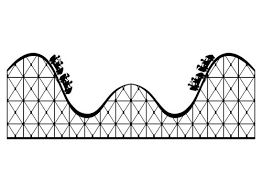
When a roller coaster is at the bottom of a hill it has
high potential energy
high kinetic energy
low kinetic energy
equal amounts of kinetic and potential energy

Click the dot that has the greatest kinetic energy.
Label the ball's energy state:
Mostly GPE but some KE
All GPE
All KE
Half and half

(a) is where KINETIC energy is the HIGHEST and POTENTIAL energy is the LOWEST.
(b) is where KINETIC energy is the LOWEST and POTENTIAL energy is the HIGHEST.
At what position would a cyclist have the LEAST kinetic energy?
At what position would a cyclist have the LEAST potential energy?
At what position would a cyclist have the MOST kinetic energy?
A change that results in the formation of new chemical substances
chemical change
physical change
Most chemical changes cannot be reversed.
True
False


The formation of a solid when two liquids combine is called?
Solidification
Freezing
Precipitate
Solubility
The following are examples of evidence of a chemical reaction....
ice melting into a liquid
condensation
endothermic reaction
change in color, production of gas bubbles
Which is NOT evidence of a chemical change?
Unexpected color change
gas produced
breaking
light produced
Which is NOT evidence of a chemical change?
Unexpected color change
gas produced
melting
temperature change
Which of the following options provides evidence of a CHEMICAL change?
Wood is burned releasing ash and smoke
Rocks separate when soil is sifted
Boiling water bubbles when heated
Salt dissolves in water
A new substance is formed during which type of change?
Physical Change
Chemical Change

What is the net force and direction?
107 N -->
107 N <--
63 N -->
63N <--

What is the net force of this diagram?
63N -->
63N <--
37N -->
37N <--

What is the net force of this diagram?
200N -->
200N <--
100N <--
100N -->

What is the net force of this diagram?
160N <--
160N -->
80N -->
80N <--

What is the net force of this diagram?
23N -->
23N <--
43N -->
43N <--

What is the net force of this diagram?
37N -->
37N <--
63N <--
63N -->

What is the net force of this diagram?
37N up
37N down
13N down
13N up

What is the net force of this diagram?
36N up
36N down
109N up
109N down

What is the net force of this diagram?
223N up
223N down
23N up
23N down

What is the net force of this diagram?
100N <--
100N -->
30N <--
30N -->

The net force was (a) (b) and Mr. (c) 's class won!


When energy changes from one form to another, we call it a _______________.
transformation
creation
expiration
compilation


Which 2 types of energy does the object in the image use?
Electric and Thermal
Nuclear and Elastic
Chemical and Mechanical
Sound and Elastic

This type of energy is the energy of moving molecules
Thermal Energy
Radiant Energy
Electrical Energy
Nuclear Energy

This type of energy is related to the movement of light.
Nuclear Energy
Thermal Energy
Radiant Energy
Electrical Energy

Natural gas and coal are two sources of this type of energy
Chemical Energy
Radiant Energy
Thermal Energy
Nuclear Energy
A swing has potential energy if
it is sitting still
moving at a constant speed
accelerating at a fast pace
using multiple units of kinetic energy
What energy transformations take place when a battery operated radio is in use?
electrical to chemical to sound
thermal to nuclear to electrical
chemical to electrical to sound
chemical to sound to thermal
According to the Law of Conservation of Energy, energy cannot be ______ or _______
destroyed, determined
created, nuclear
destroyed, remade
created,destroyed

What type of energy is represented in the picture?
potential
chemical
thermal
mechanical
Turning on a lamp is an example of energy transformation from electrical to 3 forms of energy. Which of these is NOT created by the lamp?
thermal
electrical
chemical
electromagentic
Which of the following transfers occurs when food is digested?
Chemical to mechanical
Mechanical to thermal
Mechanical to solar
Chemical to thermal
Plants turn_______ energy into _______ energy for food.
thermal, mechanical
radiant, chemical
electromagnetic, light
potential, kinetic
Gravitational potential energy depends on the______ and ______ of the object.
force, energy
speed, height
mass, speed
height, mass

The roller coaster cart has the most gravitational potential energy at position
Z
Y
W
X
Electrical energy in motion is what type of energy?
potential electrical energy
kinetic electromagnetic energy
kinetic electrical energy
potential electromagnetic energy
The picture shows a microwave oven. As a microwave oven is operated, electrical energy is transformed into all types of energy Except-
light
thermal
mechanical
solar
Electromagnetic energy is also referred as three other types of energy EXCEPT-
radiant
solar
electrical
light
On a rollercoaster, where is maximum kinetic energy?
At the top of the big hill
At the bottom of a big hill
On the way up a big hill
At the top of the hill ,where the car stops for a brief moment
Which of the following energy transformations occur when a lamp that is plugged in the wall outlet is working properly?
electrical to light
chemical to light
chemical to electrical
electrical to thermal
Which of the following device transforms electrical energy into mechanical energy?
a fan
a manually operated pencil sharpener
an apple ipod
a apple iPhone X

What type of energy transformation in an electric hot plate is plugged in?
electrical to light
mechanical to electrical to light
thermal to mechanical to light
electrical to thermal

The roller coaster cart has the most kinetic energy at position
X
W
Y
Z
Energy stored in the nucleus of an atom. Also known as atomic energy is
electrical energy
thermal energy
element energy
nuclear energy
A hairdryer converts-
chemical to electrical
electrical to thermal
electrical to solar
thermal to mechanical to light
What type of energy transformation occurs when a hawk eats a mouse then uses the energy from the mouse to fly?
mechanical to potential
mechanical to chemical to thermal
chemical to mechanical
chemical to thermal to kinetic

Matter is made up of tiny particles called _____________ .
particles
atoms
cells
dots

Matter is anything that has
mass and volume
volume
mass
____________ is the amount of matter in an object.
volume
matter
mass
_______________ is the amount of space something takes up.
mass
matter
volume

What state of matter is found in stars, lightning, and fluorescent lights?
solid
liquid
plasma
gas

Has no definite shape
Has no definite volume
fast moving particles that are far apart
solid
liquid
gas

Has definite volume
Takes the shape of its container
particles slide past each other at medium speed
solid
liquid
gas

Has definite shape and volume
Particles packed close together and vibrate slowly
solid
liquid
gas

Solid changing to a liquid
freezing
condensation
melting
evaporation

Liquid changing to a solid
melting
freezing
evaporation
boiling

Liquid changing to a gas (from the surface of the liquid)
evaporation
boiling
freezing
melting

Gas changing to a liquid
melting
freezing
condensation
evaporation

Liquid changing to gas (from inside the liquid)
boiling
evaporation
condensation
freezing

Solid changing to a gas
sublimation
freezing
melting
condensation

Gas changing to a solid
sublimation
deposition
freezing
melting

The freezing point and the _____________ point of a substance are the exact same temperature.
cooling
melting
boiling
starting

Water's freezing point
0° C
100 ° C
32 ° C
15 ° C

Water's boiling point
0° C
100° C
212° C
70° C

Dry ice is the solid form of _____________
Carbon Dioxide
Helium
Air
Nitrogen
Matter changes state when energy is added or removed.
True
False
On the Periodic Table of Elements, which 2 elements are most likely to have similar physical properties?
Li and Na
Fe and Zn
N and Ar
Xe and Mg
Which of these are characteristics of He?
brittle and can break easily, and dull
good conductor of heat and electricity
malleable
shiny
The element Si is grouped in the Periodic Table with Metalloids. Based on this what do you know about Silicon?
It is very has a very shiny surface only
It is very malleable and ductile only
It can be a good conductor and a little bit of an insulator too.
An unknown substance is dull and brittle. Which of these might fit this profile?
Hydrogen
Chlorine
Silver
Iron
Which of the following is not a distinctive property of a metalloid?
acting as a semiconductor
being a solid at room temperature
rarely reacting to form compounds
A group of elements have a lot of luster, conductivity, and are not brittle. What are they classified as?
metals
nonmetals
metalloids
Where are the rare earth metals located on the Periodic Table?
At the very top
On the left hand side
On the right hand side
At the very bottom
Which products are produced from rare earth metals? Choose 2!
batteries
cell phones
processed foods
What does the term luster mean?
the way light reflects off the surface
the way a substance can be hammered into a shape
the way a substance conduct electricity
Which type of elements shares qualities of both metals and nonmetals?
metalloid
metal
nonmetal
Select TWO characteristics that describe Oxygen.
Used as a gas in hospitals
metal
nonmetal
used for structural support in machinery and cars
What is the Periodic Table of Elements?
A list of all known compounds
A table in which all the known elements are arranged by properties and are represented by chemical symbols
A chart of all chemical reactions
A diagram of which molecules are solids, liquids and gasses+what temperature they change at
What is a physical property?
A characteristic that changes the substance
A property that can be observed without changing the substance
A chemical reaction
A type of energy
What is a conductor?
A material that blocks electricity
A substance that allows heat or electricity to pass through
A type of insulator
A chemical compound
What does density refer to?
The color of a substance
The mass of a substance in a given volume
The temperature of a substance
The speed of a reaction
What is ductility?
The ability to conduct electricity
The ability to be stretched into thin wires
The ability to reflect light
The ability to dissolve in water
What is an element?
A mixture of different substances
A pure substance made of one kind of atom
A type of molecule
A chemical reaction
What is an insulator?
A substance that allows electricity to pass through
A substance that does not allow heat or electricity to pass through
A type of metal
A chemical compound
What does luster describe?
The weight of a substance on the periodic table
How metallic or non-metallic something is
The temperature of a substance
The density of a substance
What is malleability?
The ability to conduct heat
The ability to be reshaped without breaking
The ability to dissolve in water
The ability to reflect light
What is matter?
Anything that has mass and takes up space
A type of energy
A chemical reaction
A type of molecule
What are metalloids?
Elements that are only metals
Elements with properties of both metals and nonmetals also known as semi-metal
Elements that are gases also known as semi- metals
Elements that are liquids
What are metals typically known for?
Being gases
Being poor conductors of electricity
Being shiny, malleable, and good conductors of heat and electricity
Being brittle
What are nonmetals typically like?
Shiny and malleable
Not shiny, not malleable, and poor conductors of heat and electricity
Good conductors of electricity
Solid and metallic
What is a semiconductor?
A substance that conducts electricity at high temperatures not at low temperatures
A type of insulator
A metal that conducts electricity at all temperatures
A substance that conducts electricity at low temperatures not at high temperatures
What are rare earth elements used for?
Never Making jewelry
Always Building houses
Mostly Technological devices
Sometimes Cooking utensils
Hydrogen
H
Hy
He
O
Oxygen
Ox
O
G
H
Gold
G
Go
Au
Gd
Nitrogen
N
Ni
Nt
Nn
Sulfur
Su
Sf
S
Sl

What is the atomic number?
2
He
Helium
4.003
Chlorine
Cl
Ch
C
Cn

What is the name of the element?
He
2
4.003
Helium
Neon
N
No
Ne
Nn
Potassium
P
Po
K
Pm

What is the atomic mass?
He
2
4.003
Helium
Lead
L
Ld
Pb
Le

What is the symbol for this element?
He
Helium
4.003
2
Boron
B
Br
Bo
Bn

