
 Worksheets
Enviro A Final Exam Review
Total questions: 158
Worksheet time: 3hrs 7mins
The four factors that contribute to the formation of fossil fuels are
energy, sunlight, food and water
natural gas, oil, and coal
organic matter, temperature, time and temperature conditions
plastic, medicine, cosmetics and jewelry

The fossil fuel represented in this picture is _____.
coal
petroleum
crude oil
natural gas

The fossil fuel represented in this picture is ____.
coal
natural gas
petroleum
crude oil

The fossil fuel represented in this picture is _____.
coal
petroleum
natural gas
nuclear
Natural gas and petroleum were both formed _____.
in swamp lands.
under ancient seas.
on the surface of the oceans.
underground.
Coal was formed ______.
under ancient seas.
in swamps and marshes.
in caves.
under oceans.
What conditions are needed to form coal?
Heat and pressure
Heat
Moisture and pressure
Cool and moist
What happens to fossil fuels to create electricity?
They are stored
They are burned
They are melted
They are frozen
What does non-renewable mean?
Something that lasts forever
Something that can be renewed
Something that will eventually run out
Something that has run out
In a power station, what causes the turbine to turn?
Heat
Gas
Air
Steam

What is the function of a cooling tower?
Let air in
Allow evaporation of water
Cools steam to condense back to water
Let air out

The liquid form of fossil fuels is ___.
coal
oil/petroleum
natural gas
gasoline
The gas form of fossil fuels is ____.
oil/petroleum
natural gas
coal
heat
The solid form of fossil fuels is _______.
petroleum
crude oil
natural gas
coal



When the Ozone Layer loses Ozone what happens to organisms on the earth's surface?
They are exposed to Smog
Nothing happens
They are exposed to Acid Rain
They are exposed to Ultraviolet B Radiation
Select the natural form of air pollution.
CFC's
Burning Fossil Fuels
Forest Fires
Paints and Solvents
A type of pollution found both indoors and outdoors, which includes pollen, dander, soot, carbon, and dust.
Water droplets
Allergens
Particulate matter
Combustibles
Which of the following is NOT a primary pollutant?
nitric oxides
smog
sulfur dioxide
volatile organic compounds
Which of the following is an example of a primary pollutant?
Acid rain
Ozone
Carbon monoxide
Asbestos
What is the major cause for air pollution?
deforestation
oil spills
transportation
cigarretes
Which pair below are the two main sources of air pollution in urban (populated) areas?
vehicles, volcanoes
vehicles, industries
Industries, agriculture
All of the above
Which is true of air pollution and human health?
Years of research link air pollution to lung diseases, birth defects, and cancer
Air pollution is commonly listed as a cause of death.
None of the health effects of air pollution are reversible.
Healthy adults are most affected by air pollution.
The following ailments are long-term effects of air pollution EXCEPT
emphysema. (hardening of lungs)
lung cancer.
headaches.
heart disease.
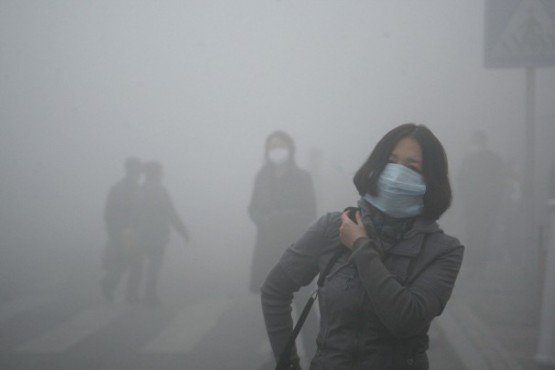
Chlorofluorocarbons is represented by the abbreviation _________________.
CFC
ChFC
Chl
hydrocarbons
In the 1970's scientists began investigating the chemical reactions that caused the destruction of the ozone in the upper atmosphere. Which of the following was a result of their investigations?
Global positioning technology was invented. (GPS)
Research on a reusable space shuttle was started.
Alternatives to ozone depleting aerosols were invented because of the Montreal Protocol.
Plastic bags were invented as an alternative to paper bags.
Which of the following would be a way to reduce air pollution?
Carpooling to and from school and school activities.
Leaving your computer on all the time.
Keeping the AC running at your house while you are gone on vacation.
Burning all your trash and recycling paper products.
Exhaust from vehicles is one of the largest forms of air pollution. What can communities do to reduce air pollution from vehicles?
Fine people that own cars.
Encourage people to walk, ride a bike, or carpool.
Charge more money to buy a car.
Air pollution causes all of the following, except
holes in the ozone layer
increased particles in the air
acid rain
healthy air to breath
smog
What is the main cause of air pollution?
plowing fields and releasing dust
using solar power
burning fossil fuels
using water power
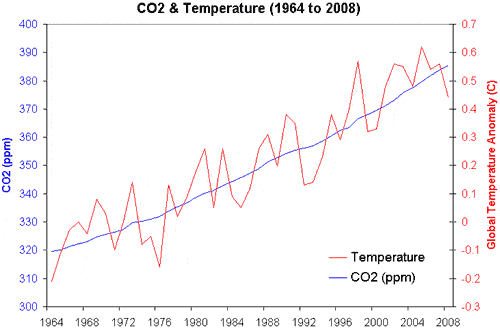


Why are too many greenhouse gases bad for the environment?
They cause trees to die.
They release heat and will be the cause of the next ice age.
They trap heat in our atmosphere causing the planet to warm up.
They are fossil fuels which pollute our environment.
All living things on Earth are made of carbon. When we burn __________ _________ we release the carbon that had been trapped for millions of years into the atmosphere, creating CO2.
global warming
fossil fuels
banned plastics
giant cars
When the earth is covered by glaciers, what is this known as?
Ice age
Hot age
Cold age
Freezing age

Each one of these gases is a greenhouse gas, except which one?
carbon dioxide
water vapor
oxygen
methane
Sea level is expected to rise because of warmer climate due to the following
humans are moving water from lakes to oceans
glaciers and ice sheets melt
it is only raining over the oceans

Trees are so important to our environment because they absorb which greenhouse gas?
methane
carbon dioxide
water vapor
oxygen
Which of the following is NOT an effect of Climate Change?
Polar ice caps will melt.
Coastal regions will be covered with rising sea levels.
Some areas will experience serious droughts
The Earth's rotation will slow down and eventually stop
Which of these is NOT a fossil fuel?
oil
natural gas
coal
wood
When did CO2 levels in the atmosphere start to rise?
In the 1800s during the Industrial Revolution
In the 1600s during the Industrial Revolution
In the 1200s during the Crusades
In the 1000s during the Middle Ages
What is fossil fuel?
A change in a region's weather conditions
Energy source formed from the remains of living organisms
A gradual increase in the temperature of Earth’s atmosphere
When gases trap energy from the sun and hold the heat

Burning fossil fuels produce what?
hydrogen
oxygen
carbon dioxide

If we did not have greenhouse gases, the temperature would be __________________________.
freezing!
hotter
How do plants help remove carbon dioxide?
They make more of it so we need to cut all the trees down
They take it out of the atmosphere through photosynthesis and make oxygen
They give it to their animal friends
They steal our oxygen and carbon dioxide
Which of these cities has seen the most drastic effects of climate change already?
New York City, New York
Denver, Colorado
Ft. Worth, Texas
Phoenix, Arizona

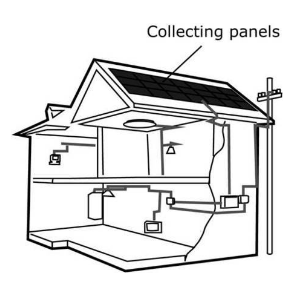
Which alternative energy source does this house use?
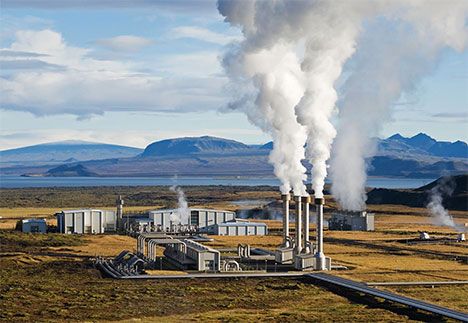
All of the following are considered renewable energy sources EXCEPT –
Wind
Coal
Biomass
Solar
Which one of these is NOT a type of renewable energy?
solar
wind
biomass
nuclear

Why is solar energy considered renewable energy?
It's cheaper than fossil fuels
The sun's energy would not run out for billions of years
Solar energy recharges batteries
It releases a lot of air pollution
Renewable energy resources produce less_____________ than fossil fuels.
pollution
money
wind
light
Choose THREE benefits of using nuclear power
no CO2 emitted to the atmosphere to cause global warming
no fossil fuels are burned
there is no waste with nuclear power
it provides a large amount of electricity
the waste stays radioactive for thousands of years


Why do water sources need to be conserved?
We have an unlimited amount of fresh water.
Pollution reduces the amount of usable water.
Because we need to save it for the whales
We cannot drink water from sea/ocean because it is?
bitter
salty
creepy
tangy
True or False: It isn't important to save water because there are a lot of water on Earth.
True
False
Why is clean water important?
All life on Earth depends on clean water to live and grow.
We need clean water for recreational activities.
We need bodies of water for transportation
We need water to regulate the temperature on Earth.
What is the main cause of water pollution?
invasive species
animals
plants and insects
human impact and decision making
What percentage of the earth's water is salt water?
3%
25%
71%
97.5%
Most of the world’s freshwater is trapped where?
Glaciers and Ice Caps
Lakes, Rivers and Streams
Groundwater
Atmosphere
Which of the following is NOT a source of nitrates and phosphates into a river?
Fertilizers
Animal waste
Wastewater
Burning fossil fuels
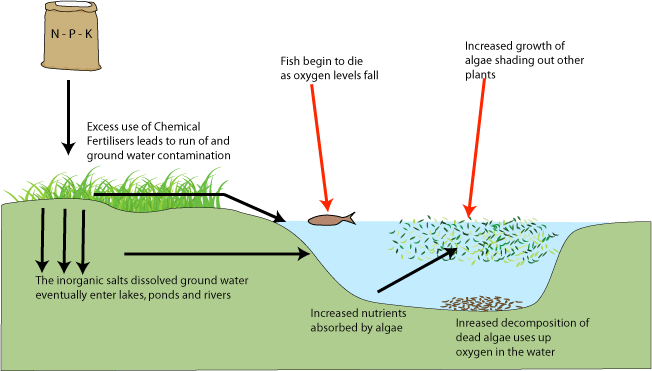
An increase in the amount of nutrients in a lake is known as
calcification
cellular respiration
eutrophication
photosynthesis
True or False: Fertilizers used for growing crops always stay within the boundaries of the farm.
True
False
True or False: Wastewater can be treated so that it is drinkable.
True
False
Q8. Water conservation is ____________ .
Practice of wasting water.
Practice of saving water by the various methods such as ground water harvesting.
Practice of using water efficiently and reduce unnecessary water usage.
None of the above
Runoff means...
water vapor cooling to form clouds
water running downhill
water falling from the sky
water heating up and rising as gas
What can happen to fish when there is not enough oxygen in the water?
They can suffocate
They can't float
They can't see.
Nothing. Fish don't need oxygen.
An underground water supply is...
erosion
river
water shed
aquifer
Which of the following is not a natural cause of water pollution?
Volcanoes
Animal waste
Oil spills
Silt from storms and floods
What percentage of the earth's surface is water?
0%
50%
71%
100%
What is the water division of earth
ocean water 97.5%, freshwater frozen as ice 1.5% and freshwater 1%
ocean water-47%, freshwater 50%, freshwater frozen as ice 3%
ocean water 1%, freshwater frozen as ice-90%, freshwater 9%
freshwater-33.33%, freshwater frozen as ice 33.33%, ocean water 33.33%
Why is plastic used so extensively?
Because it is durable
Because it is strong
Because it is cheap
All of the above
Why is plastic dangerous for animals?
*** choose all that apply***
They can be trapped in plastic things.
They can choke with small plastic pieces and die.
They can eat plastic which fills their stomaches and they die of starvation because they don't feel hungry.
Plastic is not so dangerous for animals.

What does this symbol on a plastic container mean?
It is specially for pets.
It can be recycled easily.
You shouldn't put food or drink in it.
Why recycling can't win with plastic pollution?
*** choose all that apply***
Because recycling is wrong
Because people produce too much plastic to recycle it all.
Because not every plastic can be recycled.
Because not many people recycle rubbish.
How can we help to reduce plastic pollution?
We should use paper/cloth bags.
We should use less plastic.
We should refill our drinking bottles not buy new ones.
We should avoid (unikać) plastic or styrofoam containers.
All answers are correct.
Most plastic waste is collected and recycled.
No, 90% of trash is put in landfills or thrown into oceans.
Yes, that's why we should recycle.
What do scientists call plastics when they break down into tiny pieces?
Microtrash
Microplastics
Microparticles
Macroplastics
What happens to plastic waste?
It is a biodegradable material so it eventually disintegrates
It never fully goes away, it just breaks into little pieces
There is no such thing as plastic waste, all plastic is recycled
It is dumped in the ocean for fish to eat
Plastic isn't only found in the ocean. What percentage of the world's sea birds have plastic rubbish in their guts?
60%
70%
80%
90%
Where does the majority of plastic waste end up?
Oceans
Burned for energy
Landfills
Recycled
What percent of its plastic does the US recycle?
9%
35%
50%
75%
What are plastics made of?
Coal
Oil and Natural Gas
Limestone
Of the five known ocean garbage patches which is the largest?
Indian Ocean Garbage Patch
North Atlantic Garbage Patch
Mediterranean Sea Garbage Patch
The Pacific Garbage Patch
How much time does it take for a plastic bottle to decompose?
around 450 years
around 50 years
around 200 years
around 5 years
Which continent does most of the plastic go to?
North America
South America
Europe
Asia
How does plastic trash cause marine life and sea birds to starve?
They mistake plastic for food, which clogs their stomachs and doesn't leave any room for real food.
Plastic takes up space in the water so marine animals have no place to live.
The plastic in the ocean is so dense that the marine life cannot find food easily.
Plastic doesn't cause marine life or sea bird to starve: they're smart enough to know the difference between plastic and food.

Why Is The Ocean Important?
Because it looks good
Because it provides us with food,plants and oxygen
Because it produce fresh water
Because you can swim in it

By what year is it estimated that we will have more plastic in the ocean than fish?
1999
2050
2030
2023

Saying "no" to a plastic straw in the restaurant is a good example of ... (indicate one of the strategies)
Refuse
Reuse
Recycle
Recover

Using a bamboo toothbrush instead of a plastic one is a good example of... (indicate one of the strategies)
Reduce
Reuse
Recycle
Recover

"I have 3 linnen bags that I use to put my groceries in each time I go to the supermarket". This is a good example of... (indicate one of the strategies)
Reduce
Reuse
Recycle
Recover
Examples of plastic pollution? (Select all that apply)
Plastic bottles
microbeads
Drink lids
Straws
Grocery bags

What are the three Rs
regain
reduce
reuse
recycle
Plastic bags can be harmful to sea turtles because... (Select all that apply)
they think it is food
they eat it
they can get trapped in it
they are not harmful
Why do animals in the ocean and sea birds eat plastic in the first place?
The plastic tastes better than their normal food source.
The plastic looks like their normal food source.
The plastic is easier to digest than their normal food source.
The plastic has more nutritional value than their normal food source.
Humans are also ingesting plastic that has ended up in the ocean. How is this possible.
The tiny plastic particles in the ocean end up coming through the faucets in our sinks once the salt water is converted to fresh water.
The fish in the ocean eat the plastics and humans eat the fish, causing the toxic chemicals from the plastics to spread from the fish to humans.
Humans are mistaking plastics in the ocean for food just as the marine life and sea birds are.
All of the above.


If you choose to take reusable bags to the grocery store instead of getting the plastic bags provided, you have _______ the waste you generate.
Reduced
Reused
Recycled
Reversed
What does RECYCLING mean?
throw away
give things to other people
make new things out of old ones
using things again and again
What does "reduce" mean?
use more
use less
make new things
save the Earth
What does "reuse" mean?
use less
use more
use again
don't use
A ____________ is a waste disposal facility where wastes are put in the ground and covered each day with a layer of dirt, plastic, or both.
landfill
incinerator
compost heap
aquifer
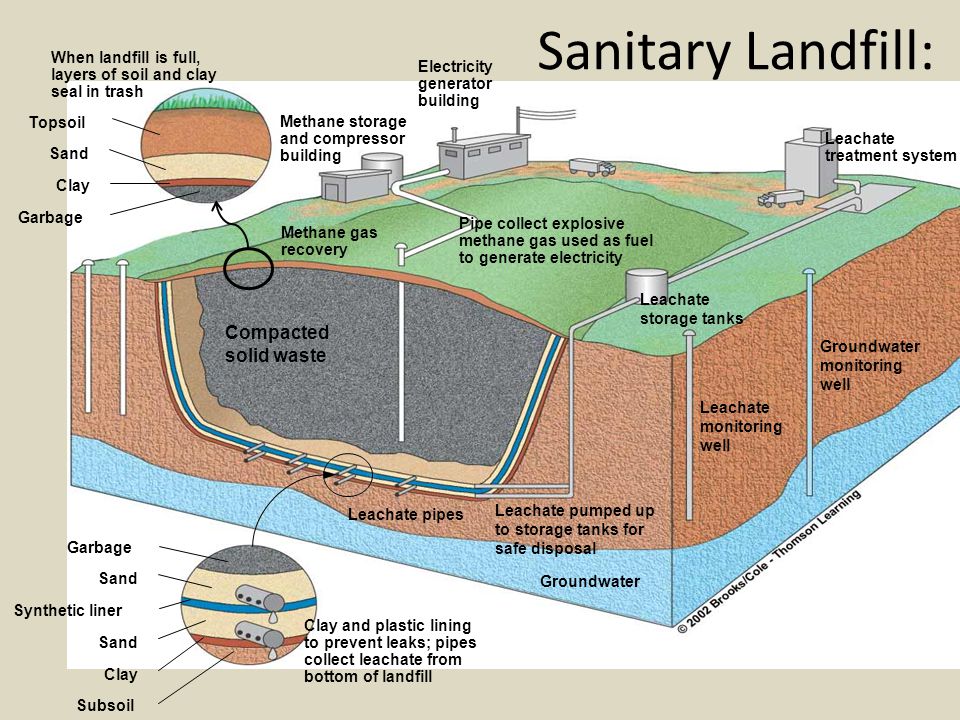
Where would you expect to find the greatest concentration of leachate?
at the bottom of the landfill
at the top of the landfill
throughout the landfill
leachate is not created in a landfill
As rain falls on a landfill, it sinks through the Municipal Solid Waste (MSW = garbage), picking up pesticides, heavy metals and organic compounds. This liquid is called
leachate
methane
garbage soup
liners

In a landfill, waste is covered with soil every day to reduce the impact of
rats, seagulls and smells
methane, leachate and litter
leachate, rats and groundwater pollution
surface water pollution and air pollution
Which of the following is the primary method of waste disposal in the U.S.?
Incineration
Landfills
Composting
Recycling
Which compound is a flammable gas produced by landfills?
carbon dioxide
methane
sulfur dioxide
nitrogen oxides
When the landfill has reached its capacity (is completely full), the waste is covered with ________________ and another plastic shield
dirt
paper
clay
cement
Compost helps . . .
reduce waste in landfills.
enrich soils to make healthier gardens.
increasing microbial growth into the soil.
all of the above.
Organic matter you should never put in your compost is . . .
eggshells
cardboard
bones, meat, or fish scraps
shredded paper
What is composting?
biological decomposition of organic matter to enrich the soil
creation of a synthetic, chemical fertilzer
creation of a healthy, organic soup using leftover food
dumping all organic matter into a pile and letting it rot


Eggshells can be composted
True
False

Plastic can be composted
True
False

Fruit and fruit scraps can be composted
True
False

I can compost pizza
yes
no

