
 Worksheets
Intro to Biosphere (Ecology), Evolution, and Community Ecology
Total questions: 155
Worksheet time: 2hrs 58mins
Abiotic parts of an ecosystem are
Living
Non-living
Alive
Observable with human eye
Biotic parts of an ecosystem are
Living
Non-living
Green
Multi-cellular
Which of the following is ABIOTIC
Plants
Animals
Sunlight
Algae
Which of the following is BIOTIC
Car
Bacteria
Table
Water
Ecology is the study of
interactions between non-living things and their relationship with the sun
interactions between living things and their relationship with the environment
interactions between non-living things and their relationship with the environment
interactions between living things and their relationship with each other
An ecosystem
is a community of organisms and their environment.
is made of both biotic and abiotic factors
can come in many shapes and sizes
All answers are true
An ecosystem needs both abiotic and biotic factors to survive
True
False
An individual plant, animal or single-celled bacteria
Organism
Species
Population
Biome
Closely related organisms that can reproduce
Organism
Population
Species
Pride
All the populations of different species that interact in an ecosystem
Population
Species
Community
Ecosystem
The Amazon Rainforest is an example of a
Biosphere
Biome
Population
Species
Which one of these is NOT one of Earth's spheres?
Atmosphere
Biosphere
Urbansphere
Geosphere

Hot Soup
Abiotic
Biotic

Leaf
Abiotic
Biotic

Electric Car
Abiotic
Biotic

Sea Sponge
Abiotic
Biotic

Mold on your cheese
Abiotic
Biotic

Clouds
Abiotic
Biotic

A Clown Fish lives in an anemone to protect it from predators. The anemone is the fish's
Biome
Species
Habitat
Food

Giraffes' long necks help them reach leafs at the top of trees. This is an example of a
Habitat
Population
Niche
Species

Each organism has a relationship with every element of its environment.
True
False
A habitat is ___________________.
the place or kind of place in which an animal or plant naturally lives.
is how plants produce their own food.
is an animal that only eats meat.
the place where only one animal lives.
A niche ________________.
is the function that an organism performs in the food web of that community.
includes everything else the organism does and needs in its environment.
is specific to each individual animal and plant.
All of the above.
An organism’s habitat provides _____________________.
food, water, shelter, and space.
food, water, and clothes.
only food.
video games, ninjas, and baked beans.
A squirrels niche would be _________________.
hunting prey and providing meat for other squirrels.
searching for fish to eat in the ocean.
staying busy storing nuts and seeds for winter.
help decompose other animals and plants.
A squirrels habitat would be _____________.
Ocean
Arctic
Forest
Dessert
A whale's niche would be which of the following?
eating plankton and krill.
eating sharks and dolphins.
eating hamburgers and fries.
eating other whales.
What is a niche?
Where an organism lives.
An organisms role, or job, within its ecosystem.
What an organism eats.
What is a Niche of a honeybee?
Pollenating Flowers
A Honeycomb
Eating other insects.
Swimming.

What is shown in the image?
Habitat
Niche

What is shown in the image?
Habitat
Niche

What is shown in the image?
Niche
Habitat
The place where an organism lives within an ecosystem is its-
habitat
niche
biome
ecosystem

What are humans?
Autotrophs
Heterotrophs
Which category of organism cannot make its own food?
Autotroph
Heterotroph

What is a worm?
autotroph
heterotroph

What is asparagus?
autotroph
heterotroph

What is a lily pad?
autotroph
heterotroph
Select the AUTOTROPHS


Which of the following organisms recycle materials from dead organisms and their waste products?
autotrophs
heterotrophs
scavengers
decomposers
Organisms that only eat producers
Herbivores
Carnivores
Scavengers
Omnivores
Organisms that only eat consumers
Herbivores
Carnivores
Scavengers
Omnivores
Organisms that eat both producers and consumers
Herbivores
Carnivores
Scavengers
Omnivores
Heterotrophs can eat
plants
meat
plants and meat
sunlight energy
Click all examples of heterotrophs
plants
animals
bacteria
some types of fungi and protists
What is the name of the process that autotrophs or producers use to make food?
cellular respiration
photosynthesis
photo respiration
cellularsynthesis
During gestation (pregnancy), a developing male pig had a change in his genetic code. The result was that he to produce less nitrogenous solid waste.
Genetic Drift
Non-random mating
Mutation
Natural Selection
All of the genetic information found in a population.
population
genetic drift
evolution
gene pool

Bats are common in Texas, especially in rocky regions. Bats with longer hang claws have demonstrated higher fitness because of their ability to cling to rock while resting. This adaptation is becoming more frequent in the population. What mechanism of evolution is this?
Natural Selection
Non-random mating
Gene Flow
Genetic Drift
The formation of a new species is called
Natural selection
Struggle for existence
Speciation
Darwinism
A new river forms and splits two populations, causing ______________ speciation
Sympatric
Allopatric
Extreme
Convergent
The emergence of a mountain range is an event that would lead to _______________ speciation
Allopatric
Sympatric
Temporal
Behavioral
The emergence of new rivers or streams is a type of ____________ isolation.
Temporal
Mechanical
Behavioral
Geographic
When the Grand Canyon in Arizona formed, two populations of one squirrel species were separated by the giant canyon. This is an example of _____________ speciation.
Allopatric
Sympatric
Simple
Divergent
Different finch populations lived on separate islands with different environments. They evolved to best adapt to those particular environments and can no longer mate. What type of speciation is this?
Allopatric
Sympatric
Temporal
Mechanical
There are two main ways that speciation happens naturally. Both processes create new species by reproductively isolating populations of the same species from each other. What are these two types of isolation?
geographical and behavioral
geographical and complex
behavioral and complex
locational and geographical

In which type of interaction does one animal eat another for energy and nutrients?
Competition
Parasitism
Predation
Mutualism

Hermit crabs live in shells made and then abandoned by snails. This relationship neither helps nor harms the snails. Which interaction is this?
Parasitism
Mutualism
Commensalism
Competition

Ostriches and Gazelles feed next to each other. They both watch for predators and alert each other to danger. Since the visual abilities of the two species are different, they can each identify threats the other animal would not as readily see. What type of interaction is this?
Parasitism
Mutualism
Commensalism
Competition

Mistletoe extracts water and nutrients from the spruce tree to the trees detriment (causing harm). What type of interaction is this?
Parasitism
Competition
Commensalism
Mutualism

Sloth's and monkeys share the same tropical habitat. Deforestation is occurring limiting the space for these 2 species. What will now occur between the 2 species?
Mutalism
Commensalism
Predation
Competition
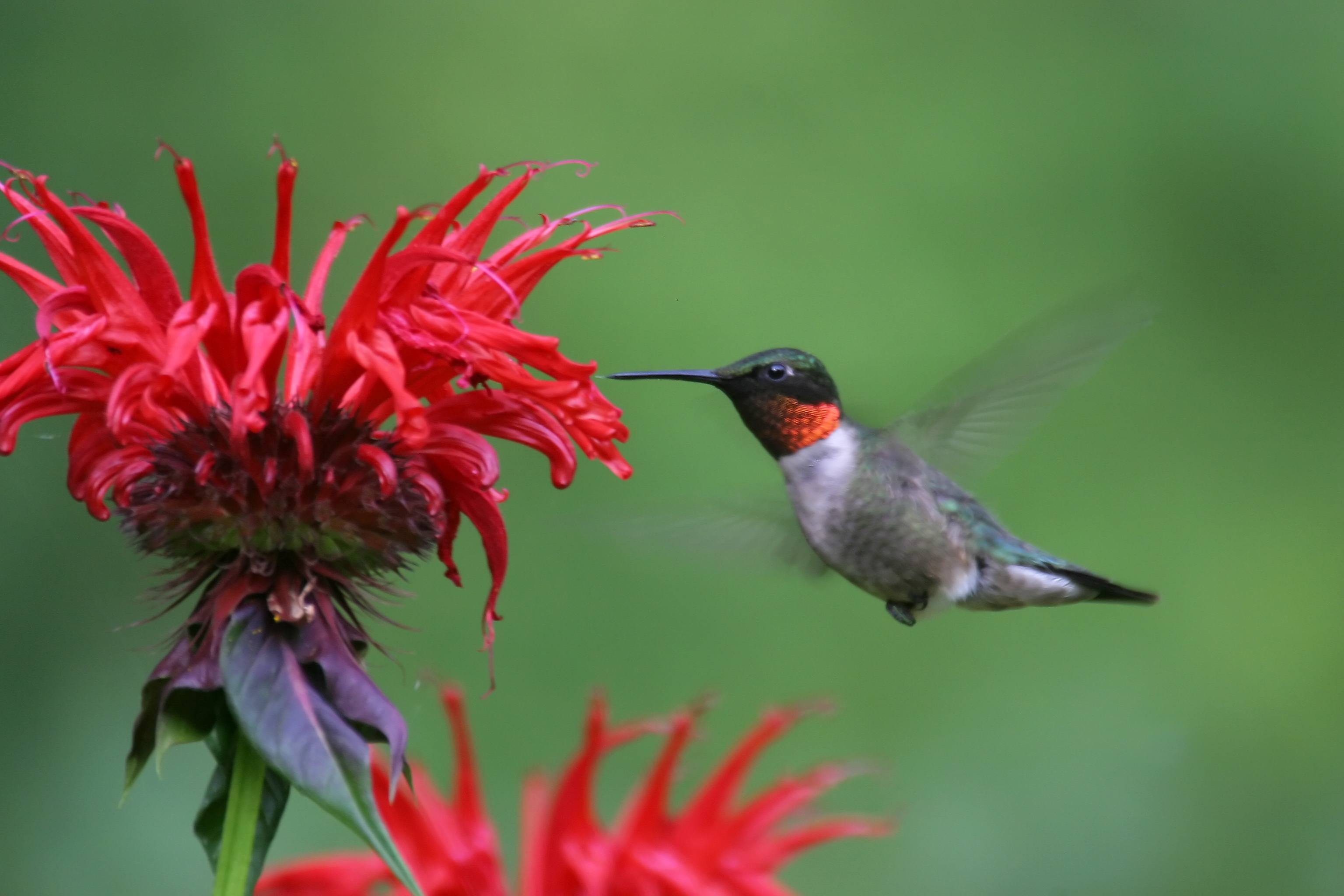
Hummingbirds feed on nectar from flowers. The flowers are pollinated by hummingbirds as they move from flower to flower. This is an example of
commensalism
mutualism
parasitism
predation

Rabbits and deer eat lettuce leaves from a garden.
What ecological interaction describes the relationship between rabbits and deer?
Mutualism
Competition
Commensalism
Predation


Fleas living within a mammal's fur describes this type of relationship:
Competition
Mutualism
Predation
Parasitism

Parasites and predators help maintain ecosystem stability because...
They increase the population of all organisms so ecosystems become diverse
They decrease the population of certain organisms to ensure no species overpopulates
They increase the survival of all species
Any of the above are possible

This type of interaction occurs when 2 organisms live closely together for survival.
Symbiosis
Competition
Predation
Cymbalosis
_______ occurs when two organisms are trying to acquire or get the same resources.
Symbiosis
Competition
Predation
Collaboration
_______ occurs when 1 organisms kills and eats another for food.
Symbiosis
Competition
Predation
Collaboration
A lion kills and eats a zebra. This is an example of
Symbiosis
Competition
Predation
Two male deer fight over a female. This is an example of
Symbiosis
competition
predation
The Gobi fish and shrimp live closely together. The nearly blind shrimp keeps a burrow for it and the Gobi fish to live. The Gobi warns the shrimp of predators. The shrimp lets the fish live in the burrow. This is an example of
mutualism
commensalism
parasitism
Hermit crabs use the shells of dead snails for homes. What type of interaction is this?
mutualism
commensalism
parasitism
Tapeworms enter the body of their host. They live by taking nutrients from the host organism. This is an example of
mutualism
commensalism
parasitism
A type of symbiosis in which both species benefit is called...
mutualism
commensalism
parasitism
A type of symbiosis in which one species benefits and the other is not affected is...
mutualism
commensalism
parasitism
A type of symbiosis in which one species benefits and the other is harmed or killed...
mutualism
commensalism
parasitism

The top predator in an ecosystem
Apex Predator
Prey
Producer
Primary consumer

An organism that can make its own food using chemosynthesis or photosynthesis.
Producer
Consumer
Predator
Omnivore

An organism that obtains energy by feeding on other organisms
Consumer
Producer
Autotroph
Prey

Each step in a food chain or food web
Trophic level
Adaptations
Link
Ecological pyramid
Name the Trophic Levels
Producers
Primary Consumer
Secondary Consumer
Tertiary Consumer
Quaternary Consumer

The total mass of living tissue within a trophic level
Biomass
Trophic levels
Ecological pyramid
Biomagnification

A diagram that shows the biomass of organisms at each trophic level
Ecological pyradmid
Food chain
Food web
Carnivores

The organisms that eat producers are called.....
Primary consumers
Producers
Secondary consumers
Tertiary consumers

The organisms that eat the secondary consumers are called.....
Producers
Tertiary consumers
Secondary consumers
Primary consumers


What is this called?
Food Web
Food Chain
Trophic Level


How is a food web different from a food chain?
Foods webs contain only producers, not consumers.
Food webs do not include decomposers.
Food webs contain many different,linked food chains.
Food webs exist in aquatic environment;food chain exist in terrestrial environment
How are primary consumers different from secondary consumers?
Primary consumers eat only plants;secondary consumers eat other consumers.
Primary consumers eat other consumers;secondary consumers eat only plants.
primary consumers eat plants and other consumer;secondary consumers eat plants and decompose matter
Primary consumers eat plants and decompose matter ;secondary consumers consumers eat plants and other consumers.

Which level of an energy pyramid has the largest populations of organisms?
Producers
Primary Consumers
Secondary consumers
Tertiary Consumers
If a keystone species is removed from an ecosystem, it can destroy the balance of that ecosystem.
True
False
True or False? In an ecosystem, energy is transferred between species when one species eats another species.
True
False
In a healthy ecosystem, which trophic level should have the most energy?
Producers
Primary Consumers
Secondary Consumers
Tertiary Consumers

If the mouse population becomes sick and decreases, which statement about the food web will be true?
The grass population will decrease.
The hawk population will increase.
The grass population will increase.
The wildflower population will decrease.
True or False? There cannot be more than one keystone species in an ecosystem.
True
False
In a food web, the process of __________ returns any remaining energy to the soil.
decomposition
respiration
digestion
ingestion

At each trophic level, energy is lost as heat from metabolic processes. How much energy is transferred from one trophic level to the next?
5% of energy is transferred to the next level.
10% of energy is transferred to the next level.
15% of energy is transferred to the next level.
20% of energy is transferred to the next level.

A species that is very sensitive to environmental changes and can help humans identify if the habitat is suffering.
indicator
umbrella
predator
mutualist

A species that plays a critical role in the health, maintenance, growth, or definition of an ecosystem.
keystone
invasive
engineer
predator

How did the absence of wolves in Yellowstone National Park affect the behavior of elk?
Elk became more cautious and nomadic
Elk became less cautious and settled in one place
Elk started hunting wolves
Elk migrated to a different habitat

What happened to the grey wolf population in Yellowstone National Park in the early 1930s?
Their numbers increased significantly
Their numbers remained stable
Their numbers dropped to zero
Their numbers doubled

What happened to the trees and plants in Yellowstone National Park when the elk population increased?
The trees and plants flourished
The trees and plants declined
The trees and plants remained the same
The trees and plants migrated to a different area

