
 Worksheets
Ecosystem Stability
Total questions: 153
Worksheet time: 2hrs 10mins
Both species benefits by the very close interaction
Mutualism
Commensalism
Parasitism
Predator/Prey
One species benefits and the others is harmed by living on or inside the host
Parasitism
Commensalism
Mutualism
Symbiosis
One species benefits and the other is unaffected
Mutualism
Commensalism
Parasitsim
Symbiosis
Relationship between a bear and a fish:
Parasitism
Predator/Prey
Symbiotic
Commensalism
Level of interactions between the biotic and abiotic factors in a community:
Community
Ecosystem
Biome
Biosphere
Sort which factors in an ecosystem are biotic or abiotic.
A clam's shell
Bacteria
A family of birds
Amount of rainfall
Fossils
Temperature
Areas on earth are characterized by having similar climate, animals, and plants. What are these areas called?
Community
Biome
Biosphere
Ecosystem
Which level of Ecology includes the all parts of Earth that support life?
Biome
Biosphere
Ecosystem
Ecology
All the different organisms that live in a specific area are part of a:
Biosphere
Community
Ecosystem
Biome
Similar organisms that are able to breed with eachother
Community
Species
Population
Ecosystem
Organisms that feed on recently dead organisms:
Detritivore/Detrivore
Omnivore
Carnivore
Decomposer
Organisms that eat both plants and other animals or insects.
Carnivore
Omnivore
Detritivore
Herbivore.
Bacteria and fungi break down organisms into organic matter. What type of consumer?
Scavenger
Carnivore
Herbivore
Decomposer
Organisms that eat plants for energy.
Carnivore
Omnivore
Decomposter
Herbivore
There are usually no more than four trophic levels in a food chain. Why?
Energy gets lost (metabolism) and too many links cannot be supported.
Energy is gained (metabolism) and too many links cannot be supported.
There are not very many animals on earth.
What type of organisms make their own food using the sun's energy?
Decomposer
Autotroph
Omnivore
Carnivore
In a food chain, what is the role of the plant?
Consumer
Heterotroph
Producer
Primary consumer
What is the main way energy is lost in a food chain?
It gets lost in the woods.
It is lost as energy goes back to the sun.
It is lost as heat during cellular respiration.
It gets lost as atmospheric heat.
When two animals fight for a mate:
Symbiosis
Parasitism
Commensalism
Competition
Place the levels of organization in order (smallest > largest).
Organelle
Cell
Tissue
Organ
Organ System
An energy pyramid shows the loss of energy at each trophic level. Why is energy not really lost?
Some energy is converted into waste and heat energy.
Some energy goes back to the sun.
Some energy is recycled.
All energy gets transfered to the next organism.
How much energy is passed on from one trophic level to the next?
80%
10%
50%
none
How does the amount of energy change as it moves up an energy pyramid?
Stays the same
Decreases
Increases
What branch of biology that deals with the interactions among organisms and between organisms and their environment?
Biology
Ecology
Immunology
Environmentology

Removing which organism would have the largest effect on the ecosystem?
Hawk
Fox
Frog
Grass
If hawks were removed from this food web it would become ____________ stable
Identically
Less
More
What, if added to this food web, would COMPETE with the primary consumers for resources?
Coyote
Mountain lion
Deer
What things could make this ecosystem LESS stable?
A disturbance that leads to ecological succession
An invasive species
Humans doing things to conserve the native habitat
Which organisms have the MOST energy?
Tertiary consumers
Primary consumers
Producers

Which organism would be a PRIMARY consumer?
Grass
Antelope/deer thing
Lion
If you started with 13,000 KJ of energy- which trophic level would get 130 KJ of energy?
What are important organisms for decomposition AND nitrogen fixation in ecosystems?
Bacteria
Plants
Fungus
Consumers
Match the following human impacts to the correct cycle
Greenhouse gasses are trapped in the atmosphere, leading to temperature increases. Deforestation leads to increases in ocean concentrations.
Carbon
The burning of fossil fuels and addition of fertilizers to crops can cause dead zones in the ocean
Nitrogen
Improperly disposed of trash can end up in rivers and ultimately the ocean
Water (hydrologic)
Match the following levels of organization to their descriptions
An individual
Species (organism)
A group of the same species that live in the same area
Population
All the BIOTIC things in an area
Community
The BIOTIC and ABIOTIC things in an area
Ecosystem
The entire Earth as a whole
Biosphere
Relationship in which one organism BENEFITS and one NEITHER BENEFITS NOR IS HARMED (a)
Relationship in which one organism BENEFITS and one IS HARMED (b)
Relationship in which one organism KILLS AND EATS ANOTHER (c)
Relationship in which BOTH ORGANISMS BENEFIT (d)
Relationship in which two organisms FIGHT FOR LIMITED RESOURCES (e)
Disease
Food availability
Drought
Flood
Where on this graph is "carrying capacity" located?
Who in this food chain is responsible for returning nutrients to the soil for plants to use?
Water is lost to the abiotic parts of the biosphere from the biotic parts by _____.
precipitation
photosynthesis
transpiration
infiltration
Nitrogen is released to the abiotic parts of the of the biosphere from the processes of death and ____.
decay by bacteria
infiltration of the groundwater
runoff
lightning in the storm and clouds
Carbon dioxide in the atmosphere enters the biotic parts of the biosphere through _____.
burning of forests
photosynthesis
combustion of fossil fuels
all of these
cougars are predators that often eat weakened or diseased animals. this is a description of the ___ of cougars.
habitat
community
niche
none of these
An ecologist who studies how several species in an area interact with one another and with the abiotic parts of the environment is interested in the biological organization level called a(n) _____.
organism
population
community
ecosystem
Parasitism, mutualism, and commensalism are examples of _______.
food chains
food webs
symbiosis
trophic levels
Both the alga and the fungus are benefited from their relationship in a lichen. This relationship is one of ______.
coomensalism
mutualism
parasitism
symbolism
Before plants can reuse many organic materials, the materials must be broken down by _______.
parasites
viruses
decomposers
scavengers
study of how living things relate to each other and their environment
evolution
ecology
parasitology
ethology
relationship between organisms in which both organisms benefit
parasitism
commensalism
symbolism
mutualism
network of interconnected food chains
ecosystem
food web
trophic levels
biological community
relationship between organism in which one organism benefits and the other is neither harmed or benefited
parasitism
mutualism
commensalism
symbolism
simple model for showing how matter and energy move through an ecosystem
food web
trophic levels
food chain
habitat
The place where an organism spends its life.
niche
habitat
biolgical community
ecosystem
manufactures food using energy from the sun or from chemical compounds
autotroph
heterotroph
scavenger
decomposer
step in the passage of energy and matter through an ecosystem
food chain
trophic level
habitat
niche
obtains energy and nutrients from autotrophs
chemotroph
heterotroph
anerobe
parasite
A niche is ________________.
The biotic and abiotic factors in an ecosystem.
The roll we had with our meal.
The habitat of an organism.
The role (job) of an organism in an ecosystem.
Which choice best describes a producer?
An organism that does not eat.
An organism that uses moonlight to directly make its own food.
An organism that uses sunlight directly to make its own food.
An organism that gets it food from other organisms.
Which definition best defines consumer?
Organisms that do not eat or drink.
Organisms that eat producers or other organisms.
Organisms that only drink water.
Organisms that eat sunlight.
True or false: An ecosystem with high genetic diversity is healthier than an ecosystem with low genetic diversity.
True
False
Species richness is
a measure of how all of the individual organisms in an ecosystem are balanced between the different species.
the total number of different species found in an ecosystem

Based on the graph shown, what is the effect of removing a keystone species on an ecosystem?
richness oscillates between extremes
richness stabilizes
richness increases
richness decreases


The variety of life in an ecosystem.
Pioneer Species
Biodiversity
Abiotic Factors
Producers

The population limit in an ecosystem due to limited resources or predators.
Biodiversity
Biotic factors
Abiotic factors
Carrying capacity

The things that limit population increases. Predators, food shortages, water shortages, light shortages.
Biodiversity
Abiotic Cyles
Limiting Factors
Pioneer Species

The ability to reproduce under ideal conditions, enough space, food, water, lack of predators.
Primary Consumers
Pioneer Species
Biotic Potential
Abiotic Factors

Populations that are introduced to an area and “take over.”
Abiotic Population
Biotic Potential
Native Species
Invasive species

The ability of an ecosystem to stay stable and recover quickly after a disturbance.
Ecosystem Instability
Ecosystem Stability
Biotic Potential
Biodiversity

A biological community that includes various species and their physical environment (Biotic and Abiotic Factors).
Pioneer Species
Ecological Potential
Ecosystem
Ecological Impact

Any single living individual, and can refer to a single human, animal, plant, protista, bacteria, or fungi.
Organ System
Biome
Population
Organism

Organisms who are members of the same species in an ecosystem.
Population
Community
Organism
Biodiversity
Which of the following is an abiotic factor?
Grass
Spider
Turtle
Rock

What type of growth is demonstrated in the graph?
Exponential
Carrying capacity
Linear
Negative
Leveling off of the population after the maximum number the environment can support has been reached.
Exponential
Carrying capacity
Linear
Negative
Which of the following would likely be a limiting factor to a population?
Abundance of food
Living near a water source
Presence of a natural predator
Multiple sources for shelter
Which of the following demonstrates population growth when there is limited available water in an area?


Habitat availability increases for a population. How would the carrying capacity of the prey change?
The carrying capacity would increase as more resources become available.
Carrying capacity occurs independent of factors in the environment.
The carrying capacity would decrease as more resources became available.
The carrying capacity is set in an environment and cannot change.

When Yellowstone National Park was created in the late 1800s, wolves were on the decline. The last wolves in Yellowstone were killed in 1926, but in the 1800s, there were between 100-160 wolves in the park. In 1995, gray wolves were reintroduced to the park.
Which graph (drawn in red) below shows a prediction of how the population would change if there was less water available in the ecosystem?


There would be no change to carrying capacity.

What is an effect of too much deforestation?
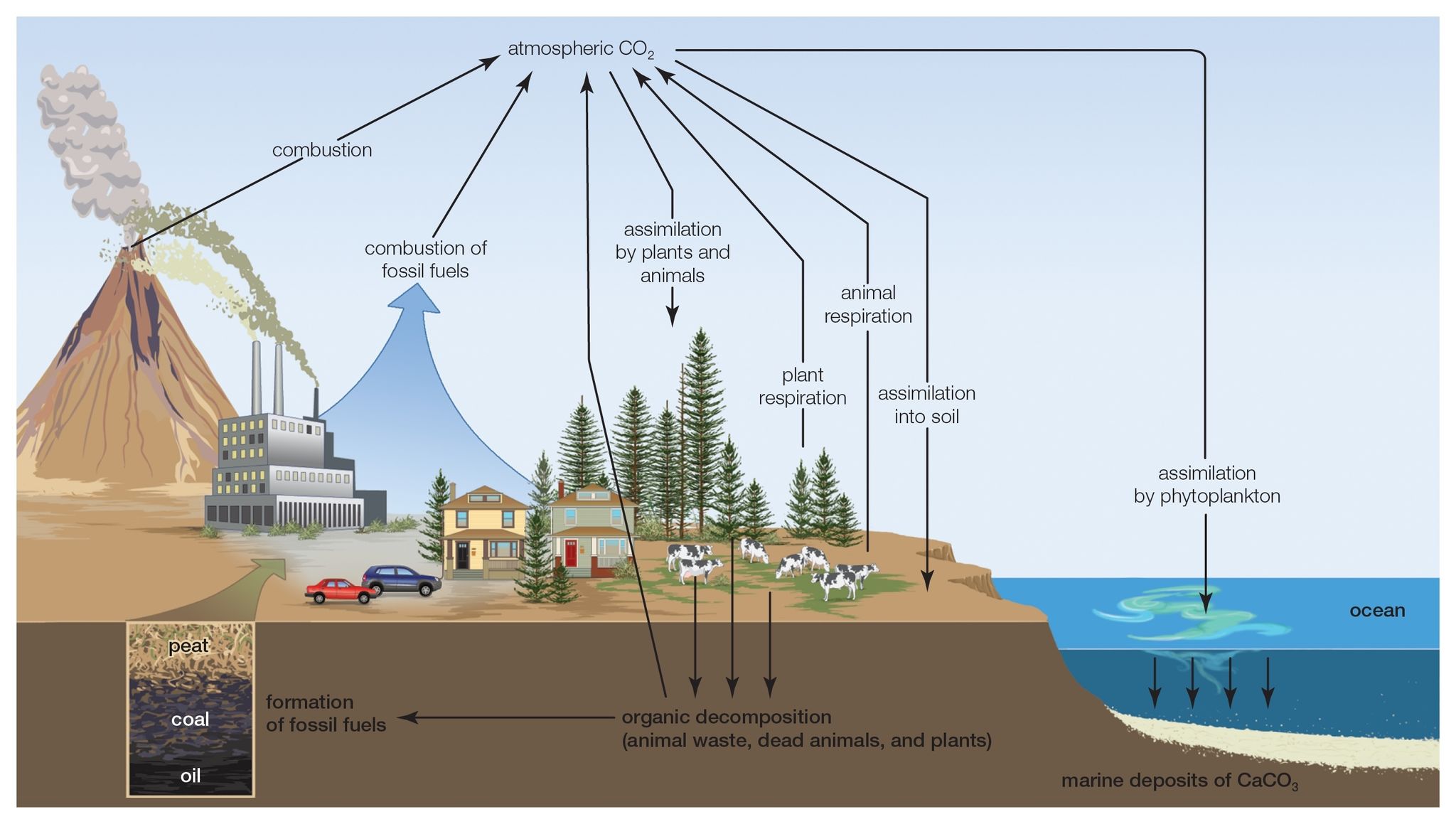
Increase CO2 in the atmosphere
Too much Nitrogen in the soil
Decrease in CO2 in the atmosphere
Increase in fish in the ocean.

A mongoose eating ticks off a warthog, or a starling eating ticks off a cow are examples of what type of symbiotic relationship?
Cooperation
Parasitism
Commensalism
Mutualism
The maximum population size of a species that the environment can sustain:
Prey
Decomposer
Carrying Capacity
Commensalist

An organism that helps to recycle nutrients within an ecosystem by eating dead or decaying organisms, such as a mushroom, is a:
Predator
Autotroph
Producer
Decomposer
Which term describes this statement: All the populations of all the different species that live together in a particular area
Mutualism
Community
Commensalism
Predator/Prey

Organisms of two species using the same limited resource and having a negative impact on one another, such as hyenas and lions both hunting zebra, represent what type of relationship?
commensalism
predator-prey
mutualism
competition
In a predator-prey relationship, when the population of the predator increases, the population of the prey will ____________.
Increase
Remain Stable
Decrease
Change unpredictably

An organism that obtains energy from consuming the bodies of other organisms is known as a:
Mutualist
Autotroph
Producer
Heterotroph
Which of the following is true about competition?
Controls population size
Ensures everyone eats
Keeps everyone happy
Is only between 2 males

The non-living part of the natural environment where an animal, plant or other organism lives…
niche
habitat
community
ecosystem
biosphere

This is the job or role of a specific organism within its habitat...
producer
prey
carnivore
niche
photosynthesis

This is transferred between organisms in a food chain and is represented by arrows…
nutrients
photosynthesis
niche
energy
food web


The diagram shows part of an aquatic food web for a stable lake ecosystem in Connecticut. What is the source of energy for the algae?
waves
sunlight
bacteria
rotifers, water fleas and tadpoles

There would be more food for secondary consumers.
The number of primary consumers would increase.
The number of plants would increase.
The number of secondary consumers would increase.
All energy on Earth ultimately comes from what source? (a)


Which of the following is a food chain in the food web?
Rabbit, mountain lion, fox
Grass, grasshopper, frog, snake, hawk
Grass, caterpillar, robin, mountain lion
Tree, deer, mountain lion, fox

A food web is a single linear path showing the flow of energy from one organism to another. It is not an interconnected relationship diagram of organisms in a community.
TRUE
FALSE

Match the following:
Producer/Autotroph
Plant
Secondary Consumer
Bird
Tertiary Consumer
Snake
Top Predator
Owl
Herbivore
Grasshopper


Which is a SECONDARY CONSUMER in this food web?
Snake
Mouse
Grass
Wildflowers

Match the following.
Producer
Makes its own food
Consumer
Consume other organisms for food
Decomposer
Breaks down dead organisms into nutrients
keystone species
a system of interlocking and interdependent food chains.
All the living organisms that inhabit an environment
A series of steps in which organisms transfer energy by eating and being eaten
a species on which other species in an ecosystem largely depend, such that if it were removed the ecosystem would change drastically.

A species that plays a critical role in the health, maintenance, growth, or definition of an ecosystem.
keystone
invasive
engineer
predator
One of the defining characteristics of a (a) species is that it fills a critical (b) role that no other (c) can. Without them, the entire (d) would radically change-or cease to (e) altogether.

Place the energy in the correct order from the bottom of the pyramid to the top.
100 kg, 10000 kg, 1 kg
1 kg, 10 kg, 100 kg, 1000 kg
1000 kg, 100 kg, 10 kg, 1 kg
10 kg, 100 kg, 1000 kg, 1 kg
Which of the following is not a possible process that results in ammonification?
photosynthesis
decomposition
nitrogen fixation
fertilizer production
What happens to carbon during the process of photosynthesis?
CO2 is released by plants
CO2 is taken up by plants
organic carbon is taken up through plant roots
carbon is lost through heat
All the gases surrounding Earth are known collectively as the...
hydrosphere
biosphere
atmosphere
lithosphere
The process of breathing in oxygen and releasing carbon dioxide into the air (or water) is...
Assimilation
Decomposition
Photosynthesis
Respiration
Which of the following best describes weathering and erosion?
when it rains on rocks
decay of dead organisms
break down of rocks that wash into the water
when a volcano erupts
Which of the following best describes the Greenhouse Effect?
when solar radiation reflects off the atmosphere
heat is retained in Earth's atmosphere by greenhouse gases
plants grow better when a greenhouse is filled with CO2
when solar radiation hits Earth's surface directly
Which gas is most abundant in the atmosphere?
carbon dioxide
methane
nitrous oxide
nitrogen gas
Which of the following does NOT release carbon dioxide into the atmosphere?
volcanic activity
respiration
photosynthesis
fossil fuel combustion
The most abundant Greenhouse Gas in the atmosphere is...
carbon dioxide
nitrogen gas
nitrate
oxygen
The process of making nitrites and nitrates is...
denitrification
nitrogen fixation
nitrification
ammonification
What does denitrification do?
converts fixed nitrogen into nitrogen gas
converts nitrogen gas into fixed nitrogen
makes nitrates
makes ammonia
The process that releases carbon and nitrogen into the soil through decay is...
erosion
photosynthesis
decomposition
assimilation
Which of the following would not be included in the hydrosphere?
ocean
trees
surface water
groundwater

How does carbon in a grass plant get into a lion?
The lion eats an antelope that ate the grass
Carbon from grass doesn't end up in a lion.
The lion absorbs the carbon given off by transpiration
The lion breathes in carbon given out by the plant


features of environment that are alive or were once alive
biotic
abiotic
inbiotic
biography

How nitrogen is "fixed" into useable form for plants
only through action of bacteria
only through lightning
through action of bacteria & lightning
through photosynthesis

What part of the carbon cycle is represented by cow releasing CO2 back into the atmosphere?
photosynthesis
decomposition
respiration
combustion
Biodiversity, aka biological diversity, usually refers to
the same species in a general location
the number of different species in a given area
the number of animal species in a given area
the number of plant species in a given area
Which applies to this environmental problem:
Humans produce an excessive amount of artificial light which can interfere with natural cycles of light/dark in an environment and can confuse animals.
Habitat Loss
Invasive Species
Pollution
Population Growth
Over-exploitation
How is the current decline in biodiversity different from the previous mass extinctions that Earth has experienced?
It is happening much more slowly
This time it is not really happening
It is made worse by an asteroid hitting Earth
This is being caused by humans
The excessive use of species that have economic value is known as
pollution
habitat destruction
over - exploitation
climate change
What is an invasive species?
An organism that is new to an environment that has positive effects on the environment.
An organism that is native to an environment that has negative effects on the environment.
An organism that is new to an environment that has negative effects on the environment.
An organism that is native to an environment that has positive effects on the environment.
Which applies to this environmental problem:
The zebra mussel is outcompeting native species and causing damage in the Missouri River.
Habitat Loss
Invasive Species
Pollution
Population Growth
Over-exploitation
Which applies to this environmental problem:
As more people are added to the Earth, more resources are required to meet their needs.
Habitat Loss
Invasive Species
Pollution
Population Growth
Over-exploitation
Which applies to this environmental problem:
The albatross are dying from eating plastic items that look like food.
Habitat Loss
Invasive Species
Pollution
Population Growth
Over-exploitation
Which applies to this environmental problem:
Shark fin soup is consumed by millions of people in South East Asia.
Habitat Loss
Invasive Species
Pollution
Population Growth
Over-exploitation
True or False: Human beings are wiping out species much faster than nature creates them, causing what scientists call a "6th extinction"
true
false
If a scientist in New Zealand was studying how a group of herbivores interacted with a group of omnivores, and all of their abiotic surroundings, what level of ecology would she be studying? (a)
If there are 100 KJ of energy available at the secondary consumer level, how many KJ of energy are available at the producer level?
(a)

