
 Worksheets
Astronomy Review
Total questions: 150
Worksheet time: 4hrs 3mins


What is the theoretical origin of the universe called?


All stars begin in a __________?
Main Sequence (Average)
The direction of the life cycle of a star depends on a star's...?

When a large cloud of gas and dust (a nebula) begins to contract because of gravity, this is formed.
protostar
main sequence star
planetary nebula
13.8 billion years ago
13 million years ago
12.3 billion years ago
12.8 million years ago

What elements are stars primarily made of?
N, C, O
H, Au
H, He
Cl
What are colored lights seen in the Earth's sky caused by particles from the sun interacting with the magnetosphere called?
solar flares
sunspots
prominences
auroras
What is the mass energy conversion used by stars where two nuclei are combined to make one known as?
fission
fusion
plasma
light year

What is the actual cause of these beautiful Northern Lights?
Some particles from the sun interact with the gases in our atmosphere.
Lighting flashes through really big rainbows.
A magnetic field explodes during a snowstorm.


When an ambulance move TOWARD you it sounds ________ pitched.
high
low
normal
What are reasons why a star could appear really bright? (mark all that apply)
The star is relatively far away
The star is relatively close
The star is very big
Very massive stars eventually collapse into what final star remnant?
Red giant
Black hole
White dwarf
Protostar
Eclipses do not occur every month because the Moon's
orbit is inclined to Earth's orbit
period of revolution is 27.3 days
period of rotation and period of revolution are the same
rate of rotation is 15º each hour
The passage of the Moon into Earth's shadow causes a
lunar eclipse
New Moon
solar eclipse
Full Moon

Based on the data, what day and approximate time experienced the highest tide?
July 12 at 8:30 am
July 12 at 9:10 pm
July 13 at 3:10 am
July 13 at 9:20 am

Based on the data, the next high tide occurred at approximately
4 pm on July 13
4 pm on July 14
10 pm on July 13
10 pm on July 14

Which inference about tides is best made from the given graph?
The tidal change is a random event.
The tidal change is cyclic.
The hourly rate of tidal change is always the same.
The rate of tidal change is greatest at high tide.

Approximately how many days occur between the first-quarter phase and last-quarter phase?
7 days
15 days
29.5 days
365.25 days

Which statement best explains why the same side of the Moon is always viewed from Earth?
The Moon does not rotate as it revolves around Earth.
The Moon’s period of rotation equals Earth’s period of rotation.
The Moon’s period of rotation equals Earth’s period of revolution around the Sun.
The Moon’s period of rotation equals the Moon’s period of revolution around Earth.
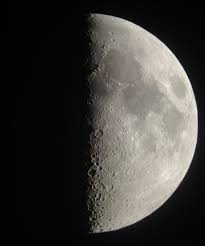
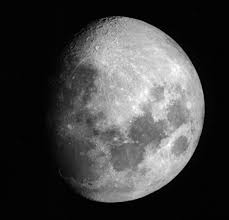
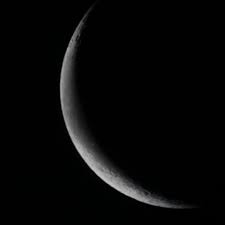
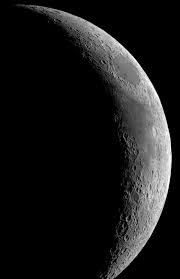
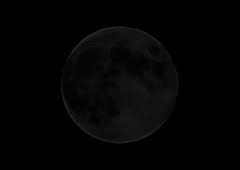
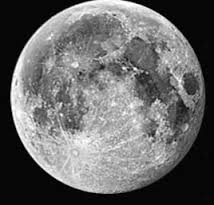
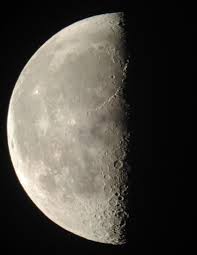

The Moon formed as a result of a collision between an asteroid and Earth.
True
False
A[n] ___________ tide occurs when the sun, Earth, and the moon are inline.
spring
high
low
neap


This model is showing us a...
lunar eclipse
solar eclipse
phases of the moon
earth eclipse

If you look up at the sky and see this, you are witnessing a....
solar eclipse
total eclipse
lunar eclipse
jupiter

If you are looking up at the sky and see this, you are looking at a....
solar eclipse
total eclipse
lunar eclipse
jupiter
What is rotation?
the time it takes for earth to travel around the sun (takes 365 days)
turning
the time it takes for earth to spin around 1 time (takes 24 hours)
another word for revolution
How long does it take for earth to revolve around the sun?
24 hours
365 days
100 days
365.25 days
What causes earth's seasons?
being really close or really far away from the sun
the sun getting brighter and dimmer
earth's tilt and position around the sun
What shape is earth's orbit around the sun?
circle
oval
ellipse
Earth traveling around the sun is called a....
a year
rotation
revolution
orbit
If an ellipse is really narrow/almost a straight line, this ellipse is...
not very eccentric
very eccentric
This is the point that is always directly above the observers head
180 degrees
Zenith
North Celestial Pole
The Sun
The name of the north star
(a)
The reason for the temperature changes during the seasons is
The Earth is closer to the Sun in the summer and farther in the winter
The axis is tilted toward the Sun in the summer making us closer to the Sun
The axis is tilted toward the Sun in the summer giving us more direct sunlight
We are opposite of the southern hemisphere
What would happen if there wasn't a tilt on the Earth? Mark all that apply
The temperatures would be the same all year round at your latitude much like fall and spring
The seasons would be more extreme, hotter summers and colder winters
There would be 12 hours of day and 12 hours of night everyday of the year.
The Sun would rise in the west and set in the east
What causes the Sun to appear to move around us during the day?
The orbit of Earth around the Sun
The tilt of the Earth's axis
The rotation of the Earth on its axis
The Sun is rotating around us because Earth is in the center


Which of these is an example of Apparent motion?
Riding on your bicycle
feeling that your train is moving, but its actually the other train moving
pushing a trolley until it rolls
stopping a car in front of the trafiic light.

Stars in the northern sky seems to circle around _________, the North star.
Polaris
Sirius
Mars
Why do we not see the same stars in the sky every night?
Stars disappear and then reappear at random times.
Stars are moving at a fast pace and it's hard to see them.
The Earth revolves and rotates so we are always facing different stars.
The earth moves on a line through the universe so its like riding in an airplane across the country.
What is apparent motion
The way something appears or seems to stay in place.
The way something appears or seems to move.
The way a a spacecraft moves through space.
How things move in zero gravity.

In New York State, solar noon occurs when the
Sun is at its highest altitude
Sun is directly overhead
clock reads 12 pm
observer's shadow is longest

Which letter correctly shows how surface winds are deflected due to Earth's rotation?
A
B
C
D

The Coriolis Effect provides evidence that the
Earth rotates on its axis
Moon spins on its axis
Moon orbits the Earth
Earth revolves around the Sun

How many degrees is the Earth tilted on its axis?
0 °
23.5 °
66.5 °
90 °

Approximately how many degrees does the Earth revolve around the Sun in one day?
1 °
15 °
24 °
360 °

Which model of our solar system is shown in the following diagram?
geocentric
heliocentric
biocentric
lunacentric

Which model of our solar system is shown in the following diagram?
geocentric
heliocentric
biocentric
lunacentric

What is the latitude of this person?
38° N
38° S
52° N
52° S

What is the latitude of this person?
43° N
43° S
47° N
47° W

What is the latitude of this person?
66.5° S
66.5° N
23.5° N
23.5° S

What is the altitude of Polaris to an observer at location C?
30°
40°
20° N
10°
Which photograph of star trails was taken by an observer facing directly north in New York State?


The accopanying diagram shows the latitude-longitude grid on thr Earth model. Points A and B are locations on the surface. On Earth, the solar time difference between point A and point B would be
1 hour
5 hours
12 hours
24 hours
To an observer on Earth, how many degrees does the Sun appear to move across the sky in 4 hours?
96 degrees
60 degrees
48 degrees
4 degrees

At which position of the Sun was the shortest shadow cast in the following diagram?
A
B
C
D

At which position along the Sun's apparent path did the observer have the longest shadow?
1
2
3
4
Between the orbits of what two planets is the asteroid belt located?
The asteroid belt is located between the orbits of Earth and Mars.
The asteroid belt is located between the orbits of Jupiter and Saturn.
The asteroid belt is located between the orbits of Saturn and Uranus.
The asteroid belt is located between the orbits of Mars and Jupiter.
Because Pluto has not cleared its orbital path of debris, it was reclassified from a planet to a . . .
asteroid.
meteor.
moon.
dwarf planet.
Which of the following is NOT considered a terrestrial-planet?
Mars
Venus
Neptune
Mercury
The largest of the terrestrial planets is
Jupiter
Earth
Mars
Uranus
How does the diameter of the terrestrial and Jovian planets compare?
The diameters of the Jovian planets are much larger.
The diameters of the terrestrial planets are much larger.
All but one of the terrestrial planets have diameters about equal to the diameters of the Jovian planets.
All but one of the Jovian planets have diameters about-equal to the diameters of the terrestrial planets.
One reason that life as we know it is unlikely to exist on Venus is because
the surface temperature is too high.
the surface temperature is too low.
the surface has too much ice covering it.
there is no atmosphere.
Which of the Jovian planets have rings?
only Saturn and Jupiter
Saturn, Jupiter, Uranus, and Neptune
only Saturn and Neptune
only Saturn, Jupiter, and Uranus
Which planet has the lowest surface temperature of any planet and an atmosphere comprised mostly of nitrogen?
Jupiter
Saturn
Neptune
Uranus
Which of the following is true about comets?
The orbits of comets do not take them past the Jovian planets.
Comets are held together by frozen gases.
All comets have long tails made of vaporizing gases.
The Oort cloud of comets is found between Neptune and Pluto.
large hard rocky objects orbiting between Mars and Jupiter are called ______.
Meteors
Meteorites
Asteroids
Comets
Objects made of ice and rocks that orbit the sun with very elliptical orbits, disappearing beyond the planets for many years at a time, and then reappear passing by the sun are called ________
Asteroids
Comets
Minor Planets
Meteors
The main difference between a meteoroid and an asteroid is...
What they are made of
Their size
The speed they travel
Where they are located
The main difference between meteroids, meteors and meteorites is...
What they are made of
Their size
The speed they travel
Where they are located

What is the relationship between nucleosynthesis and the life cycle of stars?
Nucleosynthesis occurs only in the final stages of a star's life, producing elements that are not significant for the universe's chemical diversity.
Nucleosynthesis occurs at different stages of a star's life, producing elements that contribute to the universe's chemical diversity.
Nucleosynthesis is unrelated to the life cycle of stars and occurs randomly in space.
Nucleosynthesis only happens in supernova explosions and has no impact on the life cycle of stars.
Explain the term 'nucleosynthesis'.
The process by which new atomic nuclei are created from pre-existing nucleons.
A method of synthesizing nucleotides in a laboratory setting.
The breakdown of atomic nuclei into smaller particles.
The formation of molecules from atomic nuclei.
What role does helium play in nucleosynthesis?
Helium is a product of hydrogen fusion in stars and can further fuse to create heavier elements.
Helium is the primary fuel for nuclear fusion in all stars.
Helium is a byproduct of carbon burning in supernovae.
Helium does not play any significant role in nucleosynthesis.
What is the significance of iron in a star's lifecycle?
It allows the star to shine brighter for longer periods.
When a star accumulates too much iron, it can no longer sustain fusion and will eventually die.
Iron helps in the formation of new stars.
Iron is a byproduct of the star's fusion process.
What is the primary outcome of Supernova Nucleosynthesis?
The creation of light elements like hydrogen and helium.
The creation of heavy elements like gold and uranium.
The destruction of all elements in the universe.
The formation of black holes and neutron stars.
Low mass stars such as our SUN get swollen and expand into __________ after using up the hydrogen in their core.
red giants
supergiants
white dwarfs
protostars
This is a high mass (LARGE) star that is expanding and using energy at a fantastic rate
Red giant
Supergiant
White dwarf
Supernova

Which description is considered most accurate regarding what actually happened during the Big Bang?
Two galaxies collided causing an immense explosion as stars crashed into one another
All of what would become the universe was concentrated in a single small point, or singularity, which rapidly expanded into what is now stars, planets, galaxies, matter, and energy.
All matter emerged from a massive black hole at the center of the universe.
Parts of the sun were ripped off by massive internal explosions and were thrown into space where they cooled to become other things, like plants, comets, and other galaxies.
The Big Bang Theory is the most widely accepted theory about the origin of the universe.
true
false

Galaxies that are REDSHIFTED are:
actually BLUE
really NEAR earth
invisible or not visible
moving AWAY from us.

Most distant galaxies show a RED SHIFT. This is considered EVIDENCE that the universe is ___.
getting cooler
expanding
condensing into a small point
swirling around

A galaxy showing BLUE SHIFT is ___.
very cold
moving TOWARDS OR TO us
dying
about to supernova

The CMB (Cosmic Background Radiation) is:
the remaining energy from the big bang.
incredibly cool.
a cloud of light
only located in certain places in the universe.
Which path of the Sun most closely matches the start of summer season in Chicago?
Which path shows the apparent motion of the Sun on the first day of winter in Chicago?

At noon in June, the Sun is (a) in the sky compared to (b) .
higher
lower
December
August

In Chicago, on December 21, the sun will set in the
(a) .
East
West
southwest
northwest
On June 21, the direction of sunrise is (a) .
West
East
North-East
South-East
Which of the following is NOT considered a terrestrial-planet?
Mars
Venus
Neptune
Mercury
The largest of the terrestrial planets is
Jupiter
Earth
Mars
Uranus
How does the diameter of the terrestrial and Jovian planets compare?
The diameters of the Jovian planets are much larger.
The diameters of the terrestrial planets are much larger.
All but one of the terrestrial planets have diameters about equal to the diameters of the Jovian planets.
All but one of the Jovian planets have diameters about-equal to the diameters of the terrestrial planets.
One reason that life as we know it is unlikely to exist on Venus is because
the surface temperature is too high.
the surface temperature is too low.
the surface has too much ice covering it.
there is no atmosphere.
The closer the eccentricity is to 1
the more elliptical the orbit will be
the rounder (more circular) the orbit will be

