

wayground logo

Free Printable Worksheets

Font size

S
M
L
XL
Worksheets

Keira Tucker Makeup Assignment

Total questions: 148

Worksheet time: 2hrs 43mins

Name
Class
Date
1.
Where does the Krebs Cycle take place?
a)
mitochondria
b)
chloroplast
c)
cytoplasm
d)
nucleus
2.

Where does Glycolysis occur inside the cell? (first step in the overall process)

a)

Cytoplasm

b)

Mitochondria

c)

Chloroplast

d)

Nucleus

3.

What are the products (what is released) of cellular respiration? (Mark all of them!)

a)

oxygen

b)

glucose

c)

carbon dioxide

d)

water

e)

ATP (energy)

4.

What are the reactants (taken into) of cellular respiration? (Mark all of them!)

a)

oxygen

b)

glucose

c)

carbon dioxide

d)

water

e)

energy

5.

Which of the following structure is where cellular respiration (Kreb's Cycle and Electron Transport Chain) occurs in the cell?

a)

nucleus

b)

cytoplasm

c)

mitochondria

d)

vacuoles

6.

What is the correct equation for cellular respiration?

a)

6O2 + C6H12O6 -> 6CO2 + 6H2O + Energy

b)

6O2 + C6H12O6 + Energy -> 6CO2 + 6H2O

c)

6CO2 + 6H2O -> 6O2 + C6H12O6 + Energy

d)

6CO2 + 6H2O + Energy -> 6O2 + C6H12O6

7.

Cellular Respiration's goal is to

a)

make water

b)

make ATP

c)

make glucose

d)

make oxygen

8.

What type of respiration requires oxygen?

a)

Aerobic

b)

Anaerobic

9.

How many ATP are produced in aerobic respiration?

a)

2

b)

33

c)

4

d)

36

10.

What is the name of the energy produced during cellular respiration?

a)

ATP

b)

NADH

c)

FADH2

d)

glucose

11.

Which stage of the cellular respiration process produces the most ATP?

a)

Glycolysis

b)

Acetyl CoA

c)

Kreb's Cycle

d)

Electron Transport Chain

12.

Which is a product of glycolysis?

a)

2 molecules of pyruvic acid

b)

1 molecule of glucose

c)

NAD+

d)

oxygen

13.

How many ATP molecules are synthesized from 4 ADP molecules?

a)

2

b)

4

c)

6

d)

1

14.

Where does the pyruvic acid produced by glycolysis go next?

a)

the Calvin Cycle

b)

the electron transport chain

c)

the Krebs Cycle

d)

back through the glycolysis process

15.

Glycolysis is the second stage of cellular respiration.

a)

True

b)

False

16.

Glycolysis requires oxygen

a)

True

b)

False

17.

Which of these is broken down into pyruvic acid?

a)

glucose

b)

oxygen

c)

water

18.

After the NAD+ receives electrons, what does it change to?

a)

ATP

b)

NADH

c)

ADP

19.

During glycolysis, glucose is broken down into how many molecules of pyruvic acid?

a)

2

b)

3

c)

4

d)

1

20.

Glycolysis has a net gain of how many ATP molecules?

a)

2

b)

4

c)

6

21.

How many ATP molecules are required to start glycolysis?

a)

Four

b)

Three

c)

Two

d)

One

22.

Finish the phrase: “As the bonds in glucose are _______ and rearranged, energy is __________.”

a)

broken, released

b)

built, trapped

c)

broken, trapped

d)

built, released

23.

Which of these is a reactant of glycolysis?

a)

pyruvic acid

b)

oxygen

c)

glucose

24.

Glycolysis DOES NOT need ATP to occur.

a)

True

b)

False

25.

Glycolysis has the potential to produce lots of energy very quickly.

a)

True

b)

False

26.
What is the function of ATP in living things?
a)
provides energy for cells
b)
stores genetic information
c)
provides structure in the nucleus
27.
Which structures shown in the Figure make up the ADP molecule?
a)
A and B
b)
A, B and C
c)
A, B, C, and D
d)
C and D
28.
What does the "TP" in ATP stand for?
a)
2 phosphates
b)
tri (3) phosphates
c)
Two proteins
d)
tri (3) proteins
29.
Which of the following can be compared to a battery in need of recharging?  (empty wallet)
a)
ADP
b)
ATP
c)
Ribose
d)
Adenosine
30.
What are the parts of the ATP molecule?
a)
adenine, thylakoids, stroma
b)
stroma, grana, chlorophyll
c)
adenine, ribose, phosphate groups
d)
NADH, NAHPH, FADH
31.
Which bond of the ATP molecule is broken in order to release energy?
a)
A
b)
B
c)
C
d)
D
32.
Which structures shown in the Figure make up the ATP molecule?
a)
A and B
b)
A, B and C
c)
A, B, C, and D
d)
C and D
33.
Using the figure, which parts of the molecule must the bonds be broken to form an ADP molecule?
a)
A and B
b)
B and C
c)
C and D
d)
all of the above
34.
Which of the following results in the storage of energy in terms of the ATP/ADP cycle?
a)
The breaking of the bond between the 5-carbon sugar and the 1st phosphate group
b)
The addition of a phosphate group
c)
The removal of a phosphate group
d)
The addition of glucose 
35.
Where is the energy stored in ATP molecules
a)
In the Ribose Sugar
b)
In the Adenine group
c)
In the Phosphate bonds
d)
In the Bank
36.

Which is a product of glycolysis?

a)

2 molecules of pyruvic acid

b)

1 molecule of glucose

c)

NAD+

d)

oxygen

37.
Where does the Krebs Cycle take place?
a)
mitochondria
b)
chloroplast
c)
cytoplasm
d)
nucleus
38.

Where does Glycolysis occur inside the cell? (first step in the overall process)

a)

Cytoplasm

b)

Mitochondria

c)

Chloroplast

d)

Nucleus

39.

What are the products (what is released) of cellular respiration? (Mark all of them!)

a)

oxygen

b)

glucose

c)

carbon dioxide

d)

water

e)

ATP (energy)

40.

What are the reactants (taken into) of cellular respiration? (Mark all of them!)

a)

oxygen

b)

glucose

c)

carbon dioxide

d)

water

e)

energy

41.

Which of the following structure is where cellular respiration (Kreb's Cycle and Electron Transport Chain) occurs in the cell?

a)

nucleus

b)

cytoplasm

c)

mitochondria

d)

vacuoles

42.

What is the correct equation for cellular respiration?

a)

6O2 + C6H12O6 -> 6CO2 + 6H2O + Energy

b)

6O2 + C6H12O6 + Energy -> 6CO2 + 6H2O

c)

6CO2 + 6H2O -> 6O2 + C6H12O6 + Energy

d)

6CO2 + 6H2O + Energy -> 6O2 + C6H12O6

43.

Cellular Respiration's goal is to

a)

make water

b)

make ATP

c)

make glucose

d)

make oxygen

44.

What type of respiration requires oxygen?

a)

Aerobic

b)

Anaerobic

45.

How many ATP are produced in aerobic respiration?

a)

2

b)

33

c)

4

d)

36

46.

What is the name of the energy produced during cellular respiration?

a)

ATP

b)

NADH

c)

FADH2

d)

glucose

47.

Which stage of the cellular respiration process produces the most ATP?

a)

Glycolysis

b)

Acetyl CoA

c)

Kreb's Cycle

d)

Electron Transport Chain

48.
____________________ provides the energy necessary for photosynthesis.
a)
water
b)
sunlight
c)
glucose
d)
soil
49.
The ____________ is the most photosynthetic part of a plant.
a)
leaf
b)
flower
c)
roots
d)
stem
50.
the products of photosynthesis are...
a)
glucose and sunlight
b)
carbon dioxide and water
c)
glucose and chlorophyll
d)
oxygen and glucose
51.
Glucose is a ...
a)
sugar
b)
carbohydrate
c)
source of quick energy
d)
all are correct
52.
The formula for glucose is...
a)
C12 H22 O11
b)
NaCl
c)
NaOH
d)
C6 H12 O6
53.
The reactant of photosynthesis are...
a)
sunlight and chlorophyll
b)
glucose and oxygen
c)
carbon dioxide and water
d)
sunlight and water
54.

Foods synthesized in the process of Photosynthesis by plants is stored as

a)

Starch

b)

Protein

c)

Vitamins

d)

Fats

55.

What is the purpose of photosynthesis?

a)

To release energy

b)

To create glucose

c)

To grow

d)

To get oxygen for respiration

56.

Which of these is the correct equation for photosynthesis?

a)

O2 + C6H12O6 --> CO2 + H2O

b)

O2 + CO2 --> C6H12O6 + H2O

c)

CO2 + H2O --> C6H12O6 + O2

57.

What is the compund that plants use to absorb the energy from sunlight?

a)

Carbon dioxide

b)

Chlorophyll

c)

Nitrogen

d)

H2O

58.

In what organelle of plant cells does photosynthesis occur?

a)

mitochondria

b)

centrioles

c)

chloroplast

d)

ribosomes

59.
What role do pigments play in photosynthesis?
a)
Make plants green, which is calming
b)
Capture sunlight
c)
Absorb water in roots
d)
Take in CO2
60.
a)
Grana
b)
Thylakoid
c)
Stroma
d)
Jelly Filling
61.
a)
Flapjack Stack
b)
Grana
c)
Thylakoid
d)
Stroma
62.
a)
Inner Membrane
b)
Outer Membrane
c)
Thylakoid Membrane
d)
Frog Skins
63.
a)
Stroma
b)
Thylakoid
c)
Skittle
d)
Grana
64.
a)
Outer Membrane
b)
Inner Membrane
c)
Thylakoid Membrane
d)
Peanut Butter Layer
65.
What are electron carrier molecules?
a)
Molecules that transfer high energy electrons to other molecules
b)
Molecules that carry energy from one reaction to another
c)
Molecules that make ATP
d)
Molecules that have little dogs that fit in their purse
66.
Where does the light independent reaction take place?
a)
Matrix
b)
Stroma
c)
Thylakoid membrane
d)
Cytoplasm
67.
Which of the following molecules is not needed for the Calvin Cycle?
a)
CO2
b)
ATP
c)
NADPH
d)
H2O
68.
What is the function of ATP in living things?
a)
provides energy for cells
b)
stores genetic information
c)
provides structure in the nucleus
69.
Which structures shown in the Figure make up the ADP molecule?
a)
A and B
b)
A, B and C
c)
A, B, C, and D
d)
C and D
70.
What does the "TP" in ATP stand for?
a)
2 phosphates
b)
tri (3) phosphates
c)
Two proteins
d)
tri (3) proteins
71.
Which of the following can be compared to a battery in need of recharging?  (empty wallet)
a)
ADP
b)
ATP
c)
Ribose
d)
Adenosine
72.
What are the parts of the ATP molecule?
a)
adenine, thylakoids, stroma
b)
stroma, grana, chlorophyll
c)
adenine, ribose, phosphate groups
d)
NADH, NAHPH, FADH
73.
Which bond of the ATP molecule is broken in order to release energy?
a)
A
b)
B
c)
C
d)
D
74.
Which structures shown in the Figure make up the ATP molecule?
a)
A and B
b)
A, B and C
c)
A, B, C, and D
d)
C and D
75.
Using the figure, which parts of the molecule must the bonds be broken to form an ADP molecule?
a)
A and B
b)
B and C
c)
C and D
d)
all of the above
76.
Which of the following results in the storage of energy in terms of the ATP/ADP cycle?
a)
The breaking of the bond between the 5-carbon sugar and the 1st phosphate group
b)
The addition of a phosphate group
c)
The removal of a phosphate group
d)
The addition of glucose 
77.
Where is the energy stored in ATP molecules
a)
In the Ribose Sugar
b)
In the Adenine group
c)
In the Phosphate bonds
d)
In the Bank
78.
The ____________ is the most photosynthetic part of a plant.
a)
leaf
b)
flower
c)
roots
d)
stem
79.
____________________ provides the energy necessary for photosynthesis.
a)
water
b)
sunlight
c)
glucose
d)
soil
80.
the products of photosynthesis are...
a)
glucose and sunlight
b)
carbon dioxide and water
c)
glucose and chlorophyll
d)
oxygen and glucose
81.
Glucose is a ...
a)
sugar
b)
carbohydrate
c)
source of quick energy
d)
all are correct
82.
The formula for glucose is...
a)
C12 H22 O11
b)
NaCl
c)
NaOH
d)
C6 H12 O6
83.
The reactant of photosynthesis are...
a)
sunlight and chlorophyll
b)
glucose and oxygen
c)
carbon dioxide and water
d)
sunlight and water
84.

Foods synthesized in the process of Photosynthesis by plants is stored as

a)

Starch

b)

Protein

c)

Vitamins

d)

Fats

85.

What is the purpose of photosynthesis?

a)

To release energy

b)

To create glucose

c)

To grow

d)

To get oxygen for respiration

86.

Which of these is the correct equation for photosynthesis?

a)

O2 + C6H12O6 --> CO2 + H2O

b)

O2 + CO2 --> C6H12O6 + H2O

c)

CO2 + H2O --> C6H12O6 + O2

87.

What is the compund that plants use to absorb the energy from sunlight?

a)

Carbon dioxide

b)

Chlorophyll

c)

Nitrogen

d)

H2O

88.

In what organelle of plant cells does photosynthesis occur?

a)

mitochondria

b)

centrioles

c)

chloroplast

d)

ribosomes

89.
What role do pigments play in photosynthesis?
a)
Make plants green, which is calming
b)
Capture sunlight
c)
Absorb water in roots
d)
Take in CO2
90.
a)
Grana
b)
Thylakoid
c)
Stroma
d)
Jelly Filling
91.
a)
Flapjack Stack
b)
Grana
c)
Thylakoid
d)
Stroma
92.
a)
Inner Membrane
b)
Outer Membrane
c)
Thylakoid Membrane
d)
Frog Skins
93.
a)
Stroma
b)
Thylakoid
c)
Skittle
d)
Grana
94.
a)
Outer Membrane
b)
Inner Membrane
c)
Thylakoid Membrane
d)
Peanut Butter Layer
95.

What color is chlorophyll?

a)

Green

b)

Blue

c)

Red

d)

Purple

96.
Which terms best describe heterotrophs?
a)
Plants; producers
b)
Animals; producers
c)
Plants; consumers
d)
Animals; consumers
97.
Which terms best describe autotrophs?
a)
Plants; producers
b)
Animals; producers
c)
Plants; consumers
d)
Animals; consumers
98.

Main products of the Calvin Cycle

a)

Oxygen, NADP+, ADP

b)

Glucose, CO2, ADP

c)

ADP, NADP+, Glucose

d)

ATP, NADPH, Oxygen

99.

The Calvin Cycle occurs in the

a)

Thylakoid

b)

Grana

c)

Inner membrane of chloroplast

d)

Stroma

100.

5 carbon sugar that combines with CO2 in the Calvin Cycle

a)

3-PGA

b)

G3P

c)

RuBP

d)

Glucose

101.

The six carbon sugar initially made in the Calvin Cycle is unstable and breaks into two molecules of

a)

ATP

b)

G3P

c)

RuBP

d)

3-PGA

102.

Tiny pores on the underside of leaves

a)

Stroma

b)

Stomata

c)

Thylakoids

d)

Chloroplasts

103.

Plants can close their stomata when the temperature is hot

a)

To prevent water loss

b)

To prevent loss of oxygen

c)

To prevent loss of carbon dioxide

d)

To bring in more carbon dioxide

104.

Which of the following is a way to increase the rate of photosynthesis?

a)

Increase oxygen levels

b)

Decrease CO2 levels

c)

Increase light intensity

d)

Decrease water level

105.

Which is not a C4 plant?

a)

Cactus

b)

Corn

c)

Sugar cane

d)

Crab grass

106.

Which of the following is a CAM plant?

a)

Corn

b)

Sugar cane

c)

Crabgrass

d)

Pineapple

107.

Which of the following is true of the Light Reactions?

a)

carbon dioxide and energy (ATP and NADPH) are used to make organic compounds

b)

energy is absorbed from sunlight and converted to chemical energy stored in ATP and NADPH

c)

Occurs in the stroma

d)

Occurs in the cytoplasm

108.

Which of the following is true of the Calvin Cycle?

a)

carbon dioxide and energy (ATP and NADPH) are used to make organic compounds

b)

energy is absorbed from sunlight and converted to chemical energy stored in ATP and NADPH

c)

Occurs in the thylakoid

d)

Occurs in the cytoplasm

109.

Rate of photosynthesis ________ as light intensity _________

a)

increases, increases

b)

decreases, increases

c)

increases, decreases

110.

Increasing carbon dioxide can increase photosynthesis, but only to a maximum rate because

a)

There are not enough RuBP molecules

b)

Oxygen cannot leave fast enough

c)

Large amounts of CO2 cannot fit in the chloroplast

d)

Calvin cycle can only go as fast as the light reactions

111.

Increasing temperature can speed up photosynthesis to a certain point.

a)

True

b)

False

112.

Temperatures that are too high can slow photosynthesis because

a)

stomata stay open

b)

enzymes are ruined

c)

there is not enough CO2

d)

there is too much water

113.

Tiny pores on the underside of leaves

a)

Stroma

b)

Stomata

c)

Thylakoids

d)

Chloroplasts

114.

Plants can close their stomata when the temperature is hot

a)

To prevent water loss

b)

To prevent loss of oxygen

c)

To prevent loss of carbon dioxide

d)

To bring in more carbon dioxide

115.

Main products of the Calvin Cycle

a)

Oxygen, NADP+, ADP

b)

Glucose, CO2, ADP

c)

ADP, NADP+, Glucose

d)

ATP, NADPH, Oxygen

116.

The Calvin Cycle occurs in the

a)

Thylakoid

b)

Grana

c)

Inner membrane of chloroplast

d)

Stroma

117.

5 carbon sugar that combines with CO2 in the Calvin Cycle

a)

3-PGA

b)

G3P

c)

RuBP

d)

Glucose

118.

The six carbon sugar initially made in the Calvin Cycle is unstable and breaks into two molecules of

a)

ATP

b)

G3P

c)

RuBP

d)

3-PGA

119.

Which of the following is a way to increase the rate of photosynthesis?

a)

Increase oxygen levels

b)

Decrease CO2 levels

c)

Increase light intensity

d)

Decrease water level

120.

Which is not a C4 plant?

a)

Cactus

b)

Corn

c)

Sugar cane

d)

Crab grass

121.

Which of the following is a CAM plant?

a)

Corn

b)

Sugar cane

c)

Crabgrass

d)

Pineapple

122.

Which of the following is true of the Light Reactions?

a)

carbon dioxide and energy (ATP and NADPH) are used to make organic compounds

b)

energy is absorbed from sunlight and converted to chemical energy stored in ATP and NADPH

c)

Occurs in the stroma

d)

Occurs in the cytoplasm

123.

Which of the following is true of the Calvin Cycle?

a)

carbon dioxide and energy (ATP and NADPH) are used to make organic compounds

b)

energy is absorbed from sunlight and converted to chemical energy stored in ATP and NADPH

c)

Occurs in the thylakoid

d)

Occurs in the cytoplasm

124.

Rate of photosynthesis ________ as light intensity _________

a)

increases, increases

b)

decreases, increases

c)

increases, decreases

125.

Increasing carbon dioxide can increase photosynthesis, but only to a maximum rate because

a)

There are not enough RuBP molecules

b)

Oxygen cannot leave fast enough

c)

Large amounts of CO2 cannot fit in the chloroplast

d)

Calvin cycle can only go as fast as the light reactions

126.

Increasing temperature can speed up photosynthesis to a certain point.

a)

True

b)

False

127.

Temperatures that are too high can slow photosynthesis because

a)

stomata stay open

b)

enzymes are ruined

c)

there is not enough CO2

d)

there is too much water

128.
____________________ provides the energy necessary for photosynthesis.
a)
water
b)
sunlight
c)
glucose
d)
soil
129.
The ____________ is the most photosynthetic part of a plant.
a)
leaf
b)
flower
c)
roots
d)
stem
130.
the products of photosynthesis are...
a)
glucose and sunlight
b)
carbon dioxide and water
c)
glucose and chlorophyll
d)
oxygen and glucose
131.
Glucose is a ...
a)
sugar
b)
carbohydrate
c)
source of quick energy
d)
all are correct
132.
The formula for glucose is...
a)
C12 H22 O11
b)
NaCl
c)
NaOH
d)
C6 H12 O6
133.
The reactant of photosynthesis are...
a)
sunlight and chlorophyll
b)
glucose and oxygen
c)
carbon dioxide and water
d)
sunlight and water
134.

Foods synthesized in the process of Photosynthesis by plants is stored as

a)

Starch

b)

Protein

c)

Vitamins

d)

Fats

135.

What is the purpose of photosynthesis?

a)

To release energy

b)

To create glucose

c)

To grow

d)

To get oxygen for respiration

136.

What is the compund that plants use to absorb the energy from sunlight?

a)

Carbon dioxide

b)

Chlorophyll

c)

Nitrogen

d)

H2O

137.

Which of these is the correct equation for photosynthesis?

a)

O2 + C6H12O6 --> CO2 + H2O

b)

O2 + CO2 --> C6H12O6 + H2O

c)

CO2 + H2O --> C6H12O6 + O2

138.
If the environment gets cold, we will often shiver in order to:
a)
keep body temperature the same as the external temperature
b)
decrease body temperature
c)
increase body temperature
d)
regulate blood pressure
139.
The "cause" for something to happen is the
a)
response
b)
effect
c)
stimulus
d)
homeostasis
140.
The "effect" of a given stimulus is the...
a)
response
b)
stimulus
c)
cause
d)
result
141.
The two types of feedback systems that help organisms maintain homeostasis are:
a)
positive and negative 
b)
receptor and effector
c)
static and dynamic
d)
minor and major
142.
Maintaining body temperature is an example of a:
a)
negative feedback loop
b)
positive feedback loop
143.

What is the point of a feedback loop?

a)

To provide the body with more energy

b)

To provide the body with more food

c)

To make sure the conditions in the body are always changing

d)

To make sure the conditions in the body remain stable
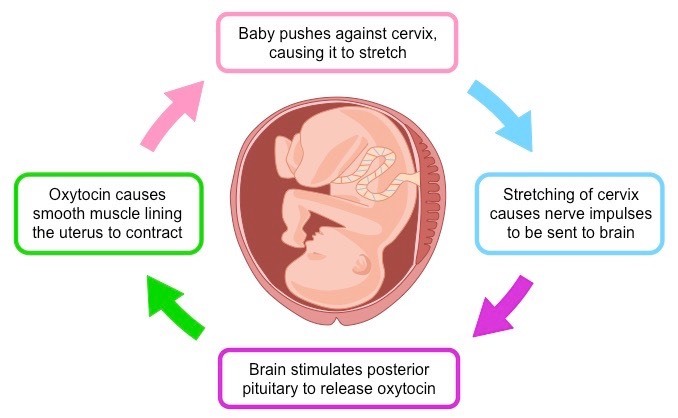
144.
The process of childbirth is an example of:
a)
negative feedback loop
b)
positive feedback loop
145.

What type of feedback loop is shown?

a)

negative

b)

neutral

c)

positive

146.
Failure to maintain homeostasis could result in:
a)
lack of internal balance
b)
eventual death
c)
difficulty carrying on metabolism 
d)
all three
147.
Negative Feedback Loops:
a)
amplify processes
b)
prevent small changes from getting larger
c)
are initiated during childbirth
d)
are found only in plants
148.

Groups of cells with similar functions.

a)

Organs

b)

Molecules

c)

Tissues

d)

Organelles
