
 Worksheets
ES 1st Nine Weeks Test Review
Total questions: 142
Worksheet time: 2hrs 42mins
Which of these problems could happen if we don't look after the resources we have?
Loss of animal homes
Climate change
Increase in pollution
All of the above

An accurate definition of Sustainability is
meeting population needs
meeting the needs of the present without compromising the ability of future generations to survive
meeting the needs of the future without worrying about todays
meeting the food needs of animals
Sustainability of the natural environment includes protecting natural resources like
Water, sunlight, wind
Trees, sunlight, soil
Buildings, waste, trees
Water, trees, soil

The estimated time-frame for plastic to fully biodegrade is . . . ?
0 - 250 years
250 - 500 years
500 - 750 years
750 years - never
The natural environment exploited by humans leads to.............
Change in habitat
Change in ecosystem
Environmental degradation
Changes in environment
Bhopal gas tragedy occurs in which year?
1982
1983
1984
1985
An example of Environmental sustainability is
deforestation
environmental degradation
recycling
footprint
Which of the following is/are the main factor(s) responsible for the rapid rate deforestation?
Rapid growth of population in the developing countries
Extension of agriculture and grazing lands
Rising demand for lumber, timber, paper, fuel-wood and charcoal, and other forest products.
All of the above
Can be traced back to the point of origin.
Point Source Pollution
Non-point source pollution
Cannot easily be traced to the source of the pollution.
Point Source Pollution
Non-point source pollution

Sewage
Point Source
Non-point source
What are considered "the commons"
Common house hold items like knifes, spoons, and forks.
A renewable resource owned by no one and available for use by anyone at little or no charge
A field where college students can sit outside in between classes
The "Tragedy of The Commons" is...
An economic issue where people do not have enough money to buy basic needs so they resort to stealing and breaking the law.
A type of play where someone tragically dies or gets killed.
Economic issue where individuals tend to take advantage of the natural resource and it becomes unavailable for everyone.
Which of the following is an example of a solution to the tragedy of the commons?
Improving literacy among urban populations
Raising tax rates for large corporations
Inventing stronger antibiotics
Passing a law to set limits for fishermen
The ____________________ school, led by naturalist John Muir, wanted wilderness areas on some public lands to be left untouched.
conservationist
preservationist
reservist
integrated
Roosevelt
Which of these Environmental Founders is credited with bringing the Preservationists and Conservationists together with a "duel approach"?
Rachel Carson
Aldo Leopold
John Muir
Theodore Roosevelt
George Perkins Marsh
Which Conservationist first questioned the idea that America's resources were inexhaustable?
Aldo Leopold
Theodore Roosevelt
John Muir
James Perkins Marsh
Rachel Carson
Whose influential book Silent Spring heightened public awareness of pollution problems and led to the regulation of several dangerous pesticides.
Aldo Leopold
Theodore Roosevelt
Rachel Carson
John Muir
James Perkins Marsh
Who was the Most Quoted Voice in the history of conservation, and in their writings, laid the groundwork for the field of environmental ethics?
Aldo Leopold
James Perkins Marsh
John Muir
Theodore Roosevelt
Rachel Carson
When is Earth Day?
April 22
June 22
August 22
December 22
What is the purpose of Earth Day?
To raise awareness about environmental issues
To celebrate Earth by giving it a party
To pollute more than average
To give thanks to the founder
EPAs primary goals include:
enforce environmental standards
conduct research
combat pollution
develop new policies
all of the above
In December 1970, EPA Agency officially opened in D.C.
true
false
I do not know
all of the above
In the ______________, there was a backlash against environmental laws and regulations, led by some who argued that environmental laws were hindering economic growth.
1970s
1980s
early 20th century
1600s
Research by social scientists suggests that it takes ____ of the population of a community, a country, or the world to bring about major social and environmental change.
1%
5–10%
about one-third
about half
85%
Which of the following is not the biotic component of ecosystem
Herbivores
Consumers
Soil
Decomposer
All the above
Biotic can be defined as
the living parts of an environment
non-living parts of an environment
rocks and water
snakes and water
Why are plants considered as producers?
Plants convert energy from the sun into chemical energy in the form of glucose (food).
Plants produce root crops that supply carbohydrates to animals.
Plants provide vegetable for animals and human consumption.
Plants produce fruits that can be eaten by animals.
Animals that eat a variety of meats, fruits, and vegetables are
producers
Carnivores
omnivores
herbivores

In any food chain, the first trophic level is occupied by:
Herbivores
Secondary consumer
Producers
Keystone species

What is an ecosystem??
A group of organism of one species
All the living and non-living things that interact in an area
The study of the interaction between living organism and their environment
Soil, water, air and sunliight
A food chain and food web represents which level of the ecology model?
biome
ecosystem
community
population
Which food chain is correct?
a. Plant -> carnivore -> herbivore -> omnivore -> predator
b. Plant -> herbivore -> omnivore -> carnivore -> predator
c. Producer -> omnivore -> herbivore -> omnivore -> predator
d. Producer -> carnivore -> carnivore -> omnivore -> predator
A
B
C
D
How would you label the robin in the food chain below?
Oak tree → Caterpillar → Robin → Hawk
producer
secondary consumer
primary consumer
herbivore
The percentage of Nitrogen in the atmosphere
a. 21% c. 78%
b. 80% d. 79%
A
B
C
D
All of the nitrogen cycle processes are performed by
decomposers
plants
animals
bacteria
Why is carbon such an important element?
carbon is a key element in producing electricity
without carbon the Sun would run out of energy
carbon is the central element to all living organisms
All of the above
Which part of the carbon cycle involves animals breathing in oxygen and out carbon dioxide?
combustion
respiration
photosynthesis
decay
Which part of the carbon cycle occurs when plants convert sunlight and C02 into oxygen and sugar?
combustion
decay
respiration
photosynthesis
How has man influenced the carbon cycle and increased the amount of carbon in the atmosphere?
burning oil
burning coal
cutting down trees
all of the above
What is the difference between populations and communities?
A population is the different communities together in an ecosystem.
A community is the different populations together in an ecosystem.
A community is made of the same species within an ecosystem.
A population is a number of organisms of the same species within an ecosystem
Which of the following is NOT true about food webs?
Energy transfers from predator to prey
Arrows signify the movement of energy to consumer
There can be many consumers that eat a to a producer
There can be many producers that get eaten by a consumer
Which classification gets energy from decomposition of dead organisms?
Herbivore
Carnivore
Omnivore
Detritivore
Herbivores are referred to as ________ consumer.
Secondary
Primary
Tertiary
A carnivore is referred to as a ________ consumer.
Producer
Primary
Secondary
Organisms only hold on to _____ percent of the energy they ingest.
100
10
25
55

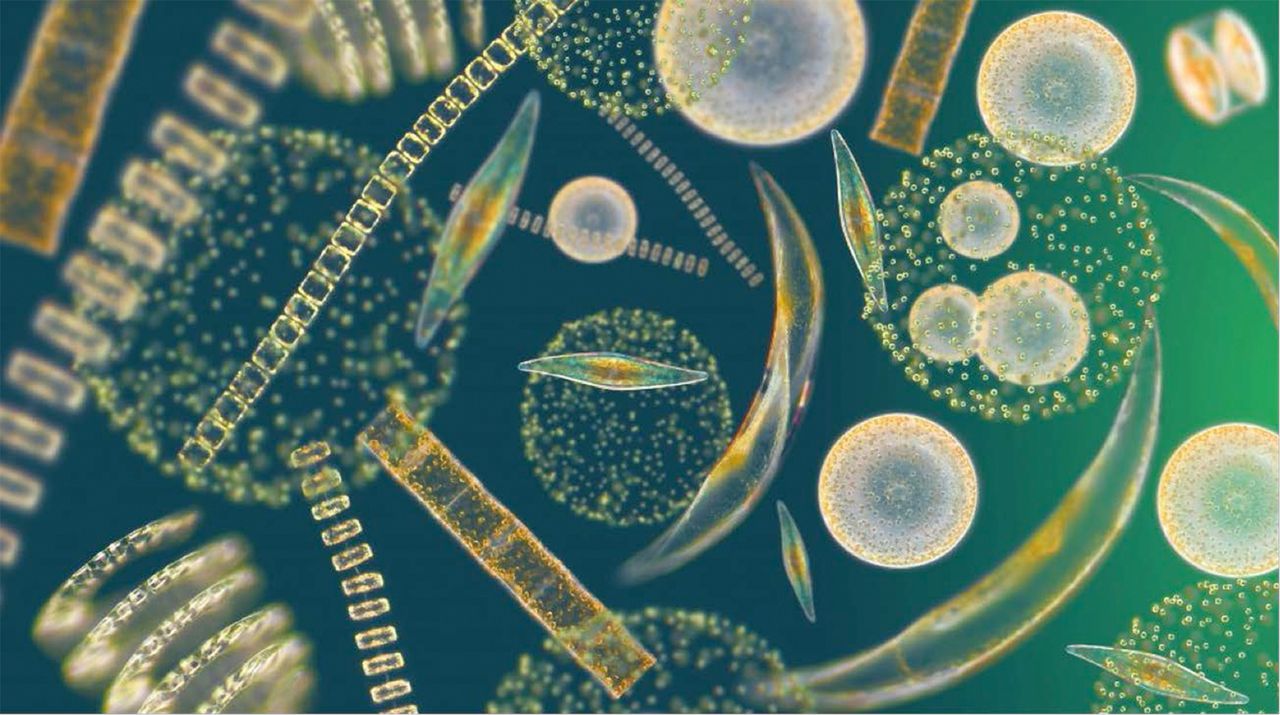
The 1st law of Thermodynamics
Energy can not be created or destroyed. It just changes forms.
Energy can only be created by the sun
Some energy is lost to the environment.
How do phosphates enter the soil and become available for plants to use?
Photosynthesis
From fertilizers and rocks being broken down
From the atmosphere

What is the largest reservoir for nitrogen?
the ocean
rocks and minerals
the atmosphere
bacteria
the variety of life in the world or in a particular habitat or ecosystem
biodiversity
demography
carrying capacity
poaching
Which kind of diversity allows organisms on earth to adapt to and survive many changing environmental conditions?
genetic diversity
species diversity
functional diversity
ecosystem diversity
Which habitat has the greatest species richness?
boreal forest
savannah
short-grass prairie
tropical rainforest

Having more diversity allows organisms and environments to...
Respond to changes better
Evolve and Adapt at a slower rate
Become extinct
All of these are correct

What actions decrease biodiversity?
Pollution
Overpopulation
Habitat Destruction / Loss
Monocrop Farming / Mining / Overfishing / Over hunting
All of these are correct
The variety of life in the world or in a particular habitat or ecosystem
Biodiversity
Demography
Carrying capacity
Poaching

Food Web B is an example of...
Low biodiversity and low sustainability. If the producer dies then all the food web will suffer.
High biodiversity and high sustainability. If an organism is removed the food web will continue with no effect.

This type of organism east a wide variety of food and can live in a variety of environments
Generalist Species
Specilaist Species
Invasive species
Native species
A Giant Panda has a highly specialized diet and can only live in very specific habitats. It can be considered a
general species
niche
invasive species
specialist species

Invasive species [more than 1 answer]
take over the habitat of other organisms
increases the populations of native organisms
destroy/decrease biodiversity
improves/increases biodiversity
cause the populations of native organisms to decrease

A species that is so important to an ecosystem, its removal would impact other trophic levels greatly.
invasive
keystone
endangered
indicator
The role or job an organism has in an ecosystem
indicator
habitat
niche
keystone
A species whose presence or absence tells scientists about the conditions or changes of the ecosystem
parasite
keystone
endemic
indicator

One of the biggest ways that a species evolves is because some organisms with some traits survive and reproduce better than others. This process is known as
natural selection
convergent evolution.
coevolution
sexual selection
Individuals that are well adapted to their environment will survive and produce
fewer mutations
more offspring
stronger gene
better traits
Which of the following best describes primary succession?
Volcano wipes out ecosystem that gradually grows back from ash covered soil
Volcano creates a new island of rock that must break down to form an ecosystem
Forest fire burns down forest that must bounce back over time
Tornado destroys a crop that must slowly grow back over time.
Which of these is NOT an example of interspecific competition?
Oysters and barnacles competing for settling space on the rocky shore
Goats and sheep in the same paddock competing for grass
Ferns and kawakawa competing for shaded locations in a forest
Stags competing for mates
The ecological role an organism performs in their specific environment is considered the organism's...
Habitat
Population
Biome
Niche
a relationship between two species in which both species compete for limited resources such that both species are negatively affected by the relationship
Symbiosis
interspecific competition
species richness
species-area effect
the differentiation of niches that enables similar species to coexist in a community
character displacement
climax community
resource partitioning
pioneer species

A symbiotic relationship where both organisms benefit.
mutualism
commensalism
parasitism
predation
A symbiotic relationship where one organism benefits and the other is unharmed.
commensalism
mutualism
apex predator
parasitism
A symbiotic relationship where one organism benefits and the other is harmed.
parasitism
mutualism
commensalism
predation
One organism hunts and eats another organism.
predation
mutualism
carnivore
parasitism
This occurs when niches overlap between species and they have to compete for resources.
competition
interspecific
parasite
intraspecies
A ________________ is the natural home or environment of a plant, animal, or other organism.
habitat
symbiosis
food chain
intraspecies

Leeches are organisms that live in ponds and feed on the blood of fish and other animals. They produce enzymes which cause the animal on which they feed to continue bleeding even after the leech is done feeding. What type of relationship does this describe?
mutualism
commensalism
parasitism
intraspecies

Sharks consume (eat) smaller fish they catch in the ocean. Frogs catch and eat flying insects in ponds. What type of relationship is this?
mutulism
predation
parasitism
interspecific
The Gobi fish and shrimp live closely together. The nearly blind shrimp keeps a burrow for it and the Gobi fish to live. The Gobi warns the shrimp of predators. The shrimp lets the fish live in the burrow. This is an example of
mutualism
commensalism
parasitism
Hermit crabs use the shells of dead snails for homes. What type of interaction is this?
mutualism
commensalism
parasitism
What is a limiting factor?
Factors that always increase a population
Factors that always decrease a population
Resources that are unlimited
Factors/resources that limit how many organisms can live in an area at the same time
Which of these factors do not respond to the density of a population in an ecosystem?
Density Dependent Limiting Factors
Density Independent Limiting Factors
Herbivory Effect
Competition


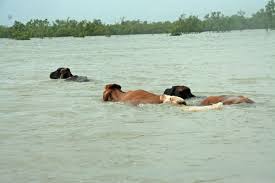
A lion and a cheetah attempt to occupy the same niche. The more aggressive lion survives; the cheetah does not.
Density-Dependent: Competition
Density-Independent: Competition
Density-Dependent: Predator-Prey
Density-Independent: Predator-Prey
Long life span
K-selected
r-selected
many years to reach reproductive maturity
K-selected
r-selected
many offspring
K-selected
r-selected
substantial parental care is given
K-selected
r-selected
population growth rate is fast
K-selected
r-selected
mice
K-selected
r-selected
elephant
K-selected
r-selected
mosquitos
K-selected
r-selected
primates
K-selected
r-selected


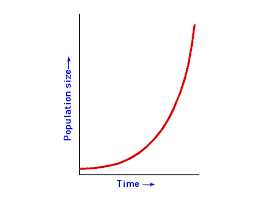

In logistic growth, where is competition for resources highest
During the beginning of population growth
As the population is increasing exponentially
When the population has reached its carrying capcity
______________ means moving into a population.
Immigration
Emmigration
Plantation
Repopulation
Which contribute to a positive population growth?
immigration
positive birth rate
emigration
positive death rate
A group of animals from the same species living in the same area is called a
population
group
habitat
ecosystems

