
 Worksheets
Review
Total questions: 161
Worksheet time: 2hrs 56mins

Net force is a combination of all ________ acting on an object.
forces
speeds
accelerations
velocities


An object's inertia is effected by its mass.
The resistance of an object to any change in its motion is called ______________________.
inertia
friction
gravity
weight
An object's inertia is effected by its mass.

When you throw a ball, what is the force that pulls it back to the earth?
inertia
mass
gravity

Water boils due to what type of heat transfer?
Conduction
Convection
Radiation

A Curling Iron is able to curl hair due to what type of heat transfer?
Conduction
Convection
Radiation

Weather Patterns are able to occur due to what type of heat transfer? (Mark all that apply)
Conduction
Convection
Radiation

What type of heat transfer takes place during Sun Bathing?
Conduction
Convection
Radiation

What type of heat transfer is taking place in the Mantle?
Conduction
Convection
Radiation

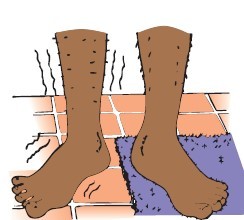
Your feet will burn on hot sand because of this type of heat transfer that is taking place between the bottom of your foot and the sand.
Conduction
Convection
Radiation

What type of heat transfer is taking place in a Lava lamp?
Conduction
Convection
Radiation

What type of heat transfer is taking place when the air gets hot in a toaster?
Conduction
Convection
Radiation

What type of heat transfer is taking place when you Microwave Food?
Conduction
Convection
Radiation

Food remains warm because of the heat lamps above them, this type of heat transfer is called?
Conduction
Convection
Radiation

Hot coffee is stirred with a spoon; the spoon gets hot due to
conduction
convection
radiation

Near the ceiling of a room the air is warmer; the warm air rises because of
conduction
convection
radiation

Some cook pans have cooper on the bottom to heat evenly.
Copper transfers heat to the pan by
conduction
convection
radiation

In a swimming pool, water near the surface is slightly warmer. The warm water rises because of
conduction
convection
radiation

The metal skewer gets so hot that you drop your marshmallow into the campfire because of
conduction
convection
radiation

A huge rock at the state park gets hot during the day. The rock was warmed from the Sun by
conduction
convection
radiation

You lay on a hot rock at night and keep warm from the rock by
conduction
convection
radiation

A piece of cheese that melts as heat is transferred from the meat to the cheese is an example of what?
Radiation
Conduction
Convection

Taking a hot air balloon ride is an example of what?
Radiation
Conduction
Convection

Taking a trip to the beach and falling asleep under the sun, resulting in a sunburn is an example of what?
Radiation
Conduction
Convection
True or False
Heat transfer is the transfer of heat from cooler objects to warmer objects.
True
False
Conduction is how heat passes through objects by...
Fluids
Direct Contact
Empty Space
Convection is how heat transfers through...
Fluids
Direct Contact
Empty Space
Radiation is how heat transfers through...
Fluids
Direct Contact
Empty Space

What is the circular motion of hot air rising and cold air sinking?
Radiation
Convection Currents
Electromagnetic Waves
Conduction
True or False
The hotter the temperature the faster the molecules move around.
True
False
What is the measure of how hot or cold something is?
Thermometer
Temperature
Thermal Energy

Xavier runs during gym class. He runs 100 meters in 10 seconds. What is his speed in meters per second?
15 m/s
10 m/s
5 m/s
12 m/s

In a Fall Trip, the 6th grade students drove to Austin, which is 180 miles away. It takes them 3 hours to get there. What was the bus's speed in miles per hour?
60 mph
50 mph
30 mph
55 mph

Beyonce hits a volleyball to Cardi. The ball travels 16 meters in 8 seconds. What is the speed of the ball in meters per seconds?
3 m/s
5 m/s
2 m/s
4 m/s

You need to get to science class in 90 seconds after leaving Ms. William's class, which is 45 meters away. In order not to be tardy, how fast do you need to travel to make it on time in meters per seconds? (HINT: double check your placement in the formula for this problem)
5 m/s
0.5 m/s
0.2 m/s
10 m/s

Jay-Z is driving a remote control car down the hallway. The car goes 60 meters in 15 seconds. What is the car’s speed in meters per second?
3 ms
6 m/s
5 m/s
4 m/s

Pancho runs the first 1600 meters of a race in 200 seconds. What is his speed in meters per second?
5 m/s
9 m/s
8 m/s
10 m/s

Drake rides his skateboard 1500 meters in 15 minutes. How fast did Drake go in his skateboard in meters per minute?
110 m/m
120 m/m
50 m/m
100 m/m

A comet travels 30,000 kilometers in 15 minutes. What is the speed of the comet in kilometers per minute?
2,200 km/m
1,000 km/m
2,000 km/m
1,800 km/m

If Obama throws the football 55 meters in 5 seconds, what is the average speed of the football in meters per second?
11 m/s
10 m/s
8 m/s
12 m/s

Picasso (Ms.H's dog) runs after a ball that is 45 meters away. It takes him 9 seconds to reach the ball. How fast is Picasso running?
4 m/s
3 m/s
5 m/s
6 m/s

0 meters
Billy runs 400 meters to Andy's house, turns around, and runs 400 meters back home. What is Billy's displacement?
0 meters
400 meters
800 meters
1600 meters
If a puppy runs across a park at a speed of 15 m/s. The puppy has a time of 5 seconds. How far did the puppy run?
75 m
30 m
45 m
105 m
Bill runs 400 meters to Andy's house, turns around, and runs 400 meters back home. What is Bill's distance?
A car drives 84 meters forward and then stops. It's displacement and distance would be the same.

16m
speed in a given direction
velocity
average speed
instantaneous speed
speed
Which of the following is an acceptable velocity measurement?
25 m/s North
25 m/s
25 m
25 m North
Juan rode his bike 35 miles west of his house.
Distance
Displacement
Distance
Displacement
The airplane flew 300 miles.
Distance
Displacement
Distance
Displacement

Which is true about this graph?
The displacement of the object is 200 m
The distance traveled by the object is 200 m
The distance traveled by the object is 0m
The displacement of the object is 0 m
Four students created different tables with examples of distance, displacement, velocity and speed. Which data table has the examples correctly labeled?


Determine if this statement describes Speed, Velocity, Distance or Displacement.
Speed
Velocity
Distance
Displacement

Determine if this statement describes Speed, Velocity, Distance or Displacement.
Speed
Velocity
Distance
Displacement
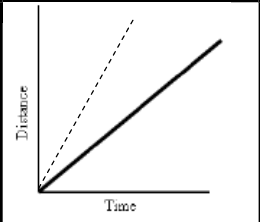

What does this picture tell you about the line?
The person is moving slowly
The person is getting closer to his destination
The person is mobile (Moving)
The person is stationary (Not Moving)

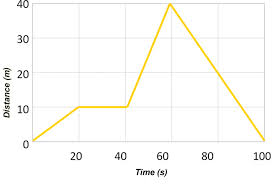

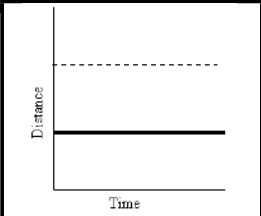

Which graph shows a car traveling at a constant speed?

None of these graphs


What was occurring from point B to point C?
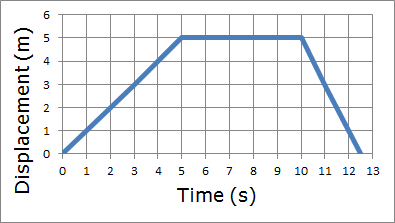
Which of these graphs do not show the object staying still?


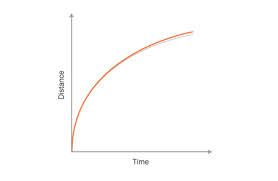

The word "stationary" means...
moving towards
moving away
moving
not moving
Match the description to the graph:
"The car is stopped."

A student walks 2.0 km in a time of 30 minutes. The student then stop for 15 minutes to eat a snack then travels 1.0 km in 15 minutes.
Which graph shows the journey described?
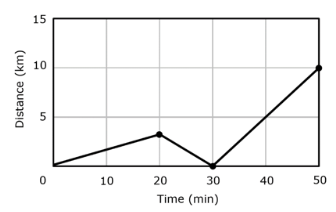
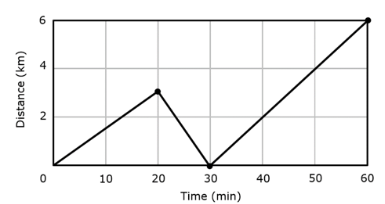
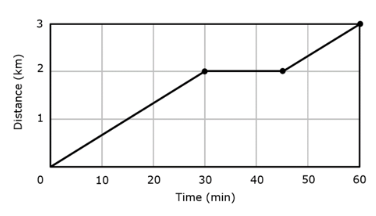
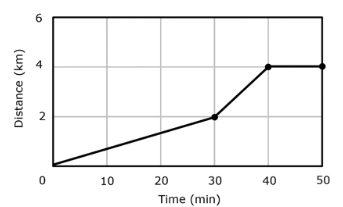

Edward drove 80 miles from his home to London.
He stopped and visited his friend Nicola on the way. Here is the distance-time graph for the journey.
How far was Edward from home when he visited Nicola?
30 miles
40 miles
10 miles
45 miles

Edward drove 80 miles from his home to London.
He stopped and visited his friend Nicola on the way.
Here is the distance-time graph for the journey.
How long did Edward stop for?
2 hours
1 hour
1.2 hours
1.5 hours

Anne cycles from Bristol to Salisbury.
The diagram shows the distance-time graph of her journey.
What is Anne's speed for the first two hours of her journey?
40 mph
30 mph
20 mph
10 mph

Anne cycles from Bristol to Salisbury.
The diagram shows the distance-time graph of her journey.
How far from Bristol is Anne at 8:00?
15 miles
20 miles
10 miles
40 miles
Match the description to the graph:
"The car is stopped."
Match the description to the graph:
"The car is traveling at a constant speed."
Match the description to the graph:
"The car is coming back."

Segment A-B The bus is _________________.
at rest
returning (to original position)
moving forward
Segment C-D The bus is _________________.
at rest
returning (to original position)
moving forward
Which of the graphs shows that one of runners started in the same place?


In which of the following graphs below did one runner overtake (run past) the other?


Match the description to the graph:
"The car is slowing down."

Describe the motion in the graph:
Constant Speed (positive slope)
Stopped (at rest)
Acceleration (increasing speed)
Return Home (negative slope)

Describe the motion in the graph:
Constant Speed (positive slope)
Stopped (at rest)
Acceleration (increasing speed)
Return Home (negative slope)
A measurement of how fast an object is moving with direction
Velocity
Speed
Vector
Acceleration
What was occurring from point B to point C?
Which of these graphs do not show the object staying still?

Which is faster?
walking
skating
biking

Which scene matches the graph?
Jonathon walked to his girlfriends house - stayed a while then walked home
Justice rode her bike to the mall
Yeshua walked home from school
Another word for equilibrium could be ___________ or ____________.
equal
balanced
uneven
move
transfer
What occurs when thermal equilibrium is reached within a system?
The system cools down rapidly.
Heat transfer stops completely.
All substances within the system have the same temperature.
Thermal energy flows in the opposite direction.
Which of the following best describes how thermal energy moves in a predictable pattern within a closed system until thermal equilibrium is reached?
It always moves from cooler to warmer areas.
It moves randomly within the system.
It moves from warmer to cooler areas until equilibrium.
It remains stagnant and doesn't move.
If you heat one end of a metal rod, how does the thermal energy move through the rod to reach thermal equilibrium?
Through radiation only.
Through convection only.
Through conduction only.
Through a combination of conduction and convection.
What term describes the transfer of thermal energy from warmer objects to cooler objects when they come into contact?
Conduction
Radiation
Convection
Insulation
If you place a hot cup of coffee on a cold kitchen counter, which process allows the coffee to cool down as it transfers heat to the counter?
Conduction
Radiation
Convection
Insulation

Radiators are heading devices that are commonly found in older homes. When water in the radiator is heated, the surrounding air is also heated. In a closed room with a hot radiator, how does the thermal energy move to reach equilibrium within the room?
Through conduction
Through radiation
Through convection
Through insulation
In a well-insulated house on a hot summer day, what happens to the thermal energy inside the house?
It escapes to the outside.
It stays in the same place without moving.
It moves from cooler rooms to warmer rooms.
It moves from warmer rooms to cooler rooms until equilibrium is reached.
When you place an ice cube in a glass of warm water, how does the thermal energy transfer occur to reach thermal equilibrium?
Through conduction only.
Through convection only.
Through radiation only.
Through a combination of conduction and convection.
In a house, what is the purpose of insulation in terms of thermal energy transfer?
To promote rapid heat loss.
To enhance radiation.
To minimize heat transfer.
To encourage conduction.
If you added a can of Coke (20oC) to a fridge (5oC), at what temperature would heat stop moving?
when the coke is at 10 degrees and the fridge is at 5 degrees.
When the coke is at at 6 degrees and the fridge is at 6 degrees
When the coke is at at 5 degrees and the fridge is at 15 degrees
When the coke is at at 20 degrees and the fridge is at 5 degrees
If you added ice (0oC) to a glass of water (15oC) how would the heat move between the ice & water?
from the ice to the water
from the water to the ice
Two objects have different temperatures. Object A has a temperature of 42 degrees and Object B is 37 degrees. Which direction should the energy transfer between Objects A and B?
From Object A to Object B
From Object B to Object A
Energy will not transfer
Energy will transfer both directions
Transfer of thermal energy, in a liquid or gas, in which the warmer substance risesand the cooler substance sinks; forms a current.
Thermal Energy
Conduction
Convection
Radiation
The condition where two substances in physical contact with each other exchange no heat energy. They are said to be the same temperature.
Thermal Energy
Cooler to Warmer
Energy Transfer
Thermal Equilibrium
Two objects have different temperatures. Object A has a temperature of 42 degrees and Object B is 37 degrees. Which direction should the energy transfer between Objects A and B?
From Object A to Object B
From Object B to Object A
Energy will not transfer
Energy will transfer both directions

What happens to the temperature if I add ice cubes to a glass of soda
The heat transfers from the coke to the ice
The heat transfers from the ice to the coke
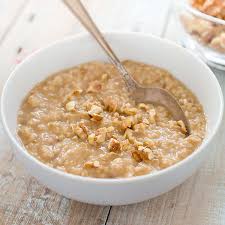
You leave your cold spoon in a hot bowl of oatmeal. What happens after an hour?
The temperature of both the oatmeal and the spoon stay the same
The spoon and the oatmeal become the same temperature
Only the temperature of the oatmeal will change
Only the temperature of the spoon will change
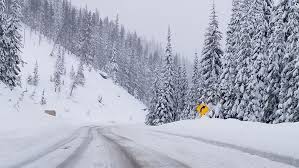
You are walking to school and find a metal earring in the snow. You take the cold earring inside and place it on your desk. What will happen after a while?
The earring will be colder than the desk
The earring and the desk will be colder than room temperature
The desk will be colder than room temperature
Both the earring and the desk will be at room temperature
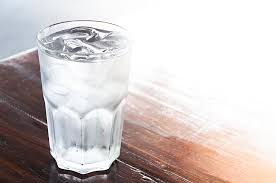
Johnny put ice in his water. Which idea do you think best explains why the water got cold?
The coldness from the ice moved into the water
The coldness and the heat moved back and forth until the water cooled off.
The heat from the water moved into the ice.
The water does not cool of
Energy will always be transferred from the...
hotter sample to the colder sample
colder sample to the hotter sample
Heat always moves from _____________ to ______________.
cold; hot
cold; cold
hot; cold
hot; hot
How does an increase in temperature affect the kinetic energy of particles?
Remains constant
Becomes negative
Increases
Decreases
What happens to the kinetic energy of particles when the temperature decreases?
Increases
Decreases
Becomes negative
Remains constant
Explain the relationship between temperature and kinetic energy using the kinetic theory of matter.
Temperature is directly proportional to the average kinetic energy of the particles in a substance.
Temperature and kinetic energy are unrelated and do not affect each other.
Temperature has no effect on the kinetic energy of the particles in a substance.
Temperature is inversely proportional to the average kinetic energy of the particles in a substance.
At what temperature does water boil and change from a liquid to a gas?
100 degrees Celsius
150 degrees Celsius
0 degrees Celsius
50 degrees Celsius
What is the temperature at which a substance changes from a solid to a liquid called?
Condensation point
Melting point
Freezing point
Boiling point
Describe the kinetic energy of particles in a solid, liquid, and gas at the same temperature.
The kinetic energy of particles in a solid is the highest, in a liquid it is the same as in a solid, and in a gas it is the lowest.
The kinetic energy of particles in a solid is the highest, in a liquid it is lower than in a solid, and in a gas it is the lowest.
The kinetic energy of particles in a solid is the lowest, in a liquid it is higher than in a solid, and in a gas it is the highest.
The kinetic energy of particles in a solid, liquid, and gas is all the same at the same temperature.
How does the kinetic energy of particles change during a phase change?
Remains constant
Becomes zero
Increases
Decreases
What is the relationship between temperature and the average kinetic energy of particles?
Direct relationship
Random relationship
No relationship
Inverse relationship
Describe the phase changes that occur when the temperature of a substance is increased.
It goes through phase changes such as melting, vaporization, and sublimation depending on the substance.
The substance changes color but does not change phase
The substance remains in the same phase regardless of the temperature
It turns into a gas, then a liquid, and finally a solid

