wayground logo

Free Printable Worksheets

Font size

S
M
L
XL
Worksheets

STAAR Science Review

Total questions: 159

Worksheet time: 2hrs 59mins

Name
Class
Date
1.

What is a small particle that is known as the basic building block of matter?

a)

molecule

b)

compound

c)

element

d)

atom

2.

Which of the following is the most accurate statement?

a)

everything is both a molecule and a compound

b)

nothing can be both a molecule and a compound

c)

all compounds are also molecules

d)

All molecules are also compounds

3.

Which vocabulary words can be used to describe this image? (check all that apply)

a)

molecule

b)

compound

c)

element

d)

atom

4.

Oxygen, Nitrogen, Hydrogen, and Calcium are all examples of ______________________.

a)

molecules

b)

compounds

c)

atoms

d)

elements

5.

Which one of the following is a compound?

a)

NaCl

b)

O2

c)

Hydrogen

d)

He2

6.

What is a substance with unique physical and chemical properties that can't be reduced by chemical means.

a)

an element

b)

an atom

c)

a molecule

d)

a compound

7.

Molecules and compounds are created when multiple atoms bond together, but how are they different?

a)

Compounds have to have atoms from different elements bonded together

b)

Molecules have to have atoms from different elements bonded together

c)

They are the same and there is no difference

d)

Molecules are building blocks of compounds

8.

What purpose do molecular models, drawings, and diagrams serve? (check all that apply)

a)

They allow us visual representations for things we can't normally see.

b)

They make concepts easier to understand.

c)

They make concepts more difficult to understand.

d)

They serve no purpose.

9.

A(n) ____________ between atoms determine whether they will bond to form a molecule.

a)

attraction

b)

compound

c)

repulsion

d)

bridge

10.

Which of these models can be described as a compound?

a)

water

b)

carbon dioxide

c)

amonia

d)

methane

e)

All of them are compounds

11.

Which of these is only a molecule and not a compound?

a)

a

b)

b

c)

c

d)

d

12.

Which of the following is different from the rest of the group? (choose the answer that best applies)


Nitrous Oxide (N₂O)

Ozone (O₃)

Carbon Dioxide (CO₂)

Dihydrogen Monoxide (H₂O)

a)

Ozone (O₃)

b)

Nitrous Oxide (N₂O)

c)

Carbon Dioxide (CO₂)

d)

Dihydrogen Monoxide (H₂O)

13.

Which of the following answers correctly organizes the following terms in order of smallest to largest?

atoms

substances

subatomic particles

compounds

a)

subatomic particles, atoms, compounds, substances

b)

atoms, substances, subatomic particles, compounds

c)

compounds, substances, subatomic particles, atoms

d)

substances, atoms, compounds, subatomic particles

14.

In a ball and stick model, what does the stick represent?

a)

An attraction between atoms

b)

A physical piece of matter

c)

An extension of an atom that connects to other atoms

d)

An additional atom that’s been converted into a bridge.

15.
How many elements are in C6H12O6?
a)
1
b)
2
c)
3
d)
4
16.
How many atoms of carbon (C) are in C6H12O6?
a)
3
b)
6
c)
12
d)
24
17.
Element or compound?
H2O
a)
element
b)
compound
18.
Which is the correct formula for:
 three hydrogen (H)
one sulfur (S)
four oxygen (O)
a)
H3SO4
b)
HSO4
c)
H4S3O
d)
H2O
19.
Which of the following is a compound?
a)
Co
b)
O2
c)
C
d)
CO2
20.
The red numbers in the image below represent ________
a)
subscripts
b)
coefficients
c)
I don't know, and don't want to try
d)
None of the answers are correct
21.
The blue numbers in the image below represent ________
a)
I don't know, and don't want to try
b)
coefficients
c)
subscripts
d)
none of the answers are correct
22.
How many atoms are there TOTAL in:
H2SO4
a)
6
b)
5
c)
7
d)
3
23.
How many Sodium (Na) are in 6NaCl?
a)
1
b)
12
c)
6
24.
The blue atoms are called 
a)
metals
b)
nonmetals
c)
metalloids
d)
noble gases
25.
The atoms along the staircase are called 
a)
metals
b)
nonmetals
c)
metalloids
d)
noble gases
26.

Elements on the right side of the periodic table are called....

a)

metals

b)

non-metals

c)

metalloids

d)

yo mama

27.
The substances at the beginning of a chemical equation are called the ____
a)
product
b)
yield
c)
chemical symbol
d)
reactants
28.
In this image, the symbols to the right of the arrow (in black) are called the_______.
a)
Products
b)
Reactants
c)
Subscripts
d)
Coefficients
29.
Na + MgF2 -->  NaF + Mg
What are the reactants?
a)
Na + MgF2
b)
Na
c)
NaF + Mg
d)
NaF
30.
NH3 ---> N2 + H2
What are the products?
a)
N2 + H2
b)
N2
c)
H2
d)
NH3
31.
Sodium Hydroxide dissolves in water
a)
Chemical Change
b)
Physical Change
32.
A pellet of sodium is sliced in two
a)
Chemical change
b)
Physical Change
33.
Hydrochloric acid reacts with potassium hydroxide to produce a salt, water,and heat.
a)
Chemical Change
b)
Physical Change
34.
Iron rusts.
a)
Chemical change
b)
Physical Change
35.
Evaporation
a)
Chemical Change
b)
Physical Change
36.
Ice Melting
a)
Chemical Change
b)
Physical Change
37.
Milk Sours
a)
Chemical Change
b)
Physical Change
38.
Pancakes cooking on a griddle
a)
Chemical Change
b)
Physical Change
39.
Which of the following is a Physical Property 
a)
Toxicity
b)
Flammability
c)
Malleability
d)
Reactivity
40.
Evidence of a physical change.
a)
New substance
b)
Shape Change
c)
Light produced
d)
Gas released.
41.
Any change in the state of matter of a substance is a...
a)
Physical Change
b)
Chemical Change
42.

Which law of motion predicts that a moving hockey puck will continue to move in the same direction at the same speed unless acted upon by another force?

a)

Newton's First Law of Motion

b)

Newton's Second Law of Motion

c)

Newton's Third Law of Motion

d)

Newton's Law of Universal Gravitation

43.

Which law explains the relationship among mass, force and acceleration?

a)

Universal Law of Gavitation

b)

Newton's First Law of Motion

c)

Newton's Second Law of Motion

d)

Newton's Third Law of Motion

44.

According to Newton's Third Law of Motion, if Mike pushes down on the springboard to being his dive, what is the reaction force?

a)

Mike splashing into the water

b)

The springboard pushing Mike into the air

c)

The height of the water when Mike enters the water

d)

The sound the board makes as he pushes into the air

45.

To make an object move you must first apply ---

a)

an opposing force

b)

an unbalanced force

c)

a stationary force

d)

a vertical force

46.

a force is best defined as ---

a)

the application of weight

b)

a push or pull that is exerted on matter

c)

the flow of electric charges

d)

a bond in which electrons are shared

47.

The force of an object, with a certain mass accelerating at a certain rate, can be determined by using the equation below.


force = mass x acceleration


Which object would have the greatest force?

a)

A 5 kg object accelerating at 10 m/s

b)

A 5 kg object accelerating at 20 m/s

c)

a 20 kg object accelerating at 4 m/s

d)

a 20 kg object accelerating at 3 m/s

48.

Which of these would be different for an object if measured on the Earth and on the Moon?

a)

Mass

b)

Weight

c)

Volume

d)

Density

49.

Ana pushed on a big rock in her back yard. She was unable to get it to move because she did not -

a)

apply enough force

b)

have a good grip on the rock

c)

have enough mass

d)

weigh enough

50.

Many bicycles use a hand brake to control their speed. When the brake is engaged, a rubber pad presses against the tire. What force of motion does the hand brake rely upon to slow the bicycle?

a)

Gravity

b)

Friction

c)

Electricity

d)

Magnetism

51.

In a head-on collision, a person who is not wearing a seat belt continues to move forward at the original speed of the car because of -

a)

weight

b)

mass

c)

gravity

d)

inertia

52.
What type of tides would this arrangement of earth-moon-sun create?
a)
neap tide
b)
spring tide
c)
new moon tide
d)
full moon tide
53.
What type of tide would this arrangement of earth-moon-sun create?
a)
full moon tide
b)
new moon tide
c)
neap tide
d)
spring tide
54.
During which two moon phases do Spring Tides take place?
a)
New and Full
b)
1st and 3rd Quarters
c)
Waxing and Waning
d)
1st Quarter and Full
55.
From a New moon to Full moon, what happens to the amount of light we see?
a)
It increases
b)
It decreases
c)
Nothing changes
56.
When the amount of light we see from the moon appears to be shrinking, it is 
a)
Waxing
b)
Waning
c)
Gibbous
d)
Crescent
57.
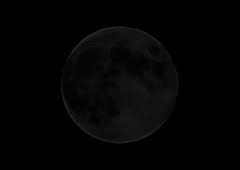
Name the moon phase
a)
waning crescent
b)
waxing crescent
c)
waning gibbous
d)
waxing gibbous
58.
Name the moon phase
a)
First Quarter
b)
Last Quarter
c)
New Moon
d)
Full Moon
59.
When the moon is in between the earth and the sun it is a
a)
New Moon
b)
Full Moon
c)
First Quarter
d)
Third Quarter
60.
Waxing means...
a)
Growing
b)
Dying
c)
Losing light
d)
Moving
61.
Which season is taking place in the Northern Hemisphere in Position 4?
a)
Winter
b)
Spring
c)
Summer
d)
Fall
62.
Name the phase of the moon for letter a
a)
First Quarter
b)
Last Quarter
c)
Waxing Gibbous
d)
Waning Gibbous
63.
At position A, which hemisphere would have summer?
a)
Northern hemisphere
b)
Southern hemisphere
64.
The term equinox means....
a)
equal amount of day light and equal amount of night
b)
Equal amount of winter and summer
c)
Equal amounts of hot dogs for everyone
d)
The longest day of the year
65.
What happens when the area in which you live tilts away from the sun?
a)
It is summer.
b)
It is spring.
c)
It is winter.
d)
It is fall.
66.
Why do we experience the changing of the season on the earth?
a)
distance from the sun
b)
rotation of the earth
c)
change in solar output
d)
tilt of the earth's axis
67.
Period of 24 hours or the time it takes Earth to make one complete spin on its axis
a)
Rotation
b)
Compass
c)
Sundail
d)
Movement
68.
Why does the area around the equator stay the same temperature all year?
a)
The equator rotates slower than the poles.
b)
The equator remains the same distance from the sun.
c)
The equator always receives direct sunlight.
d)
The equator has 18 hour days.
69.

In the summer, many people enjoy going to the beach. There is a beautiful beach in Argentina, which is located in the Southern Hemisphere. Which diagram shows the position of Earth when it is summer in Argentina?

a)

A

b)

B

c)

C

d)

D

70.
According to this Hertzsprung-Russell Diagram which stars are brightest?
a)
Purple
b)
Red
c)
Blue
d)
Yellow
71.
Black Holes are thought to be remnants of ______________ explosion.
a)
Death Star
b)
The Big Bang Theory
c)
Supernova
d)
Planetary Nebula
72.
Hertzsprung-Russell Diagram shows the correct order of decreasing surface temp for stars is?
a)
Red, Yellow, White, Blue
b)
Red, Yellow, Red, Yellow
c)
Blue, White, Yellow, Red
d)
Blue, Red, White, Yellow
73.
The shape of our Milky Way galaxy can be classified as ____________.
a)
Spiral
b)
Elliptical
c)
Irregular
d)
French
74.

The Sun's position in the Milky Way galaxy is on the _______ of a spiral away from the center.

a)
Center
b)
Edge
c)
Middle
d)
Outside
75.
Huge clouds of dust and gas are called
a)
Star
b)
Nebulae
c)
Neutron Star
d)
Comets
76.
What is a light year?
a)
A unit of time
b)
The time light takes to travel though a vacuum in one year.
c)
10 thousand meters
d)
How far light travels through the vacuum in one year.
77.
Which stars have the highest surface temperature?
a)
Yellow
b)
Red
c)
Blue
d)
Orange
78.
Betelgeuse is classified as a ____________ star.
a)
Supergiant
b)
Giant
c)
White Dwarf
d)
Main Sequence
79.
Our Sun is a ______________ star.
a)
Blue 
b)
Main Sequence
c)
Yellow
d)
Orange
80.
Which type of stars belong in spectral class K and have the lowest luminosity?
a)
White Dwarf
b)
Giants
c)
Main Sequence
d)
Supergiants
81.
The stars with the lowest temperature are ________________.
a)
Orange
b)
Red
c)
Blue
d)
White
82.
What property of a light wave changes to cause a blue or red shift?
a)
Trough
b)
Amplitude
c)
Wavelength
d)
Speed
83.
Luminosity measures a star's _____________________.
a)
Color
b)
Temperature
c)
Brightness
84.
What information can the Electromagnetic Spectrum help you obtain from stars?
a)
Distance
b)
Temperature
c)
Chemical Composition
d)
All of them.
85.
A massive star could become a ______.
a)
Neutron Star
b)
Red Giant
c)
White Dwarf
d)
Average Star
86.
A huge collection of stars is a?
a)
Universe
b)
Galaxy
c)
Movie
d)
Nebulae
87.
Scientist that believe in the Big Bang Theory think that the universe was once much ____________.
a)
smaller and cooler
b)
brighter and larger
c)
heavier and darker
d)
denser and hotter
88.
Which type of galaxy has the highest percentage of old stars?
a)
Elliptical
b)
Irregular
c)
Spiral
d)
Hollywood
89.
What color are the brightest stars on the main sequence?
a)
Red
b)
Yellow
c)
Blue
d)
White
90.
This image represents this type of boundary
a)
divergent
b)
transform
c)
convergent
d)
tectonic
91.
This is the theory that states that all the continents started as a single massive continent and have been MOVING apart for over 200 million years and the man that proposed it.
a)
The Big Bang Theory, Einstein
b)
The Pangea Theory, Hutton
c)
The Tectonic Plate Theory, Darwin
d)
The Continental Drift Theory, Wegner
92.
This is the driving force behind the movement of tectonic plates.
a)
Mantle convection currents
b)
Oceanic convection currents
c)
Atmospheric convection currents
d)
Solar convection currents
93.
The rocks closer to the mid-oceanic ridge are younger than the rocks further away from the mid-oceanic ridge.
a)
True
b)
False
94.
The movement of plates at a divergent boundary
a)
move towards each other
b)
slide past each other
c)
move up and down
d)
move away from each other
95.
San Andreas Fault formed at this type of boundary-
a)
Transform Boundary
b)
Convergent Boundary
c)
Divergent Boundary
d)
Hot Spot
96.
Same rocks in Texas as those in Antarctica, this is proof of-
a)
coastal erosion
b)
plate tectonics
c)
ocean currents
d)
glacial melting
97.
Mid Ocean Ridge forms at type of boundary-
a)
Transform Boundary
b)
Convergent Boundary
c)
Divergent Boundary
d)
Hot Spot
98.
Himilayan Mountains
a)
converging continent to continent
b)
earthquake in subduction zone
c)
converging ocean to continent
d)
transformational
99.
This is an example of -
a)
convergent
b)
divergent
c)
transform
100.
This is an example of -
a)
convergent
b)
divergent
c)
transform
101.
This is an example of -
a)
convergent
b)
divergent
c)
transform
102.
What is the elevation of point B?
a)
800 ft
b)
850 ft
c)
900 ft
d)
1000 ft
103.
Fossils, landforms, glaciers, and puzzle were all evidence of-
a)
big bang theory
b)
tectonic plate theory
c)
sea floor spreading theory
d)
volcanic theory
104.
In which direction is Mill River flowing?
a)
Southeast
b)
Southwest
c)
Northeast
d)
Northwest
105.
What is the elevation of Y?
a)
Between 120-140 meters
b)
Between 100-120 meters
c)
Between 140-160 meters
d)
Between 80-100 meters
106.
The distance from D to E is...
a)
A little over 2 km
b)
A little over 3 km
c)
A little over 4 km
d)
A little over 5 km
107.
If we were in a plane, Path B --> C is about the same distance as path E --> N. But, which path is the easier walk? 
a)
B --> C is the easier walk
b)
E --> N is the easier walk
c)
B --> C and E --> N are the same walking distance
108.
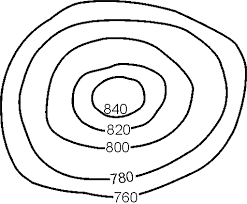
Determine the contour interval:
a)
5 m
b)
10 m
c)
15 m
d)
20 m
109.
What is the difference in elevation between Point X and Point Y?
a)
120 m
b)
240 m
c)
360 m
d)
340 m
110.
Provided is a satellite image of a glacier as it moves down a mountain and into the bay.
What is the general direction of movement of the glacier?
a)
North
b)
South
c)
East 
d)
West
111.
Daily temperature, daily rainfall, daily amount of sunshine
a)
Weather
b)
Climate
112.
______ is the average pattern for weather over a long period of time.
a)
climate
b)
weather
c)
forecast
d)
sunlight
113.

Which statement describes why the Earth has seasons?

a)

The Earth's axis is titled as it revolves around the sun.

b)

The Earth's distance changes as it revolves around the sun.

c)

The moon revolves around the Earth.

d)

The sun's axis is tilted.

114.

What is the Coriolis Effect?

a)

Deep ocean currents spin clockwise in the northern hemisphere and counterclockwise in the southern.

b)

Surface ocean currents spin clockwise in the northern hemisphere and counterclockwise in the southern.

c)

Deep ocean currents spin counterclockwise in the northern hemisphere and clockwise in the southern.

d)

Surface ocean currents spin counterclockwise in the northern hemisphere and clockwise in the southern.

115.

What is the term used for when water is falling from the sky (rain, snow, or hail)?

a)

evaporation

b)

condensation

c)

transpiration

d)

precipitation

116.

Which of the following can influence wind currents?

a)

Temperature difference between air over land and air over the ocean.

b)

Temperature difference between air in the tropical zone and air in the polar zones.

c)

Temperature difference between air close to the ground and air high up in the atmosphere.

d)

All of the above.

117.

A huge body of air that has similar temperature, humidity, and air pressure at any given height

a)

air mass

b)

front

c)

tornado

d)

hurricane

118.

a boundary between two air masses

a)

air mass

b)

cold front

c)

front

d)

warm front

119.

A small, very intense cyclonic storm with exceedingly high winds, most often produced along cold fronts in conjunction with severe thunderstorms

a)

hurricane

b)

tornado

c)

air mass

d)

cold front

120.

a front where warm air moves over cold air and brings drizzly rain and then are followed by warm and clear weather

a)

warm front

b)

cold front

c)

stationary front

d)

occluded front

121.

A front where cold air moves in under a warm air mass.

a)

warm front

b)

cold front

c)

occluded front

d)

stationary front

122.

A situation in which the surface position of a front does not move

a)

cold front

b)

warm front

c)

stationary front

d)

eye wall

123.

The heating of the Earth's surface and atmosphere from solar radiation being absorbed and emitted by the atmosphere, mainly by water vapor and carbon dioxide

a)

warm front

b)

tropical zone

c)

greenhouse effect

d)

global warming

124.
What type of breeze is created when the land is warmer than the ocean?
a)
Seabreeze
b)
Landbreeze
125.

What type of breeze is created when the sea is warmer than land

a)

landbreeze

b)

seabreeze

126.
Warm air rises because it is __________ dense then cold air.
a)
More
b)
Less
127.

Which ecosystem is probably healthier?

a)

An ecosystem with only a few species of animals

b)

An ecosystem with MANY different animals

128.
An organism that hunts its food
a)
Predator
b)
Prey
c)
Hunter
d)
Gather
129.
An organism that is hunted for food
a)
Predator
b)
Gather
c)
Prey
d)
Hunter
130.
A condition that occurs when two or more organisms compete for the same resources or food within an ecological community
a)
Population
b)
Competition
c)
Ecosystem
d)
Community
131.
The place where an organisms lives
a)
Home
b)
Habitat
c)
Community
d)
Population
132.
Eats plants (example: deer)
a)
Herbivore
b)
Carnivore
c)
Omnivore
d)
Decomposer
133.
Eats other animals (example: tiger)
a)
Herbivore
b)
Carnivore
c)
Omnivore
d)
Decomposer
134.
Eats plants and animals (example: humans)
a)
Herbivore
b)
Carnivore
c)
Omnivore
d)
Decomposer
135.
Autotrophs
- Use sun's energy to make their own food
- Plants (grass)
a)
Herbivore
b)
Consumers
c)
Producers
d)
Scavangers
136.
If a habitat experiences a drought, the available resources will
a)
Increase
b)
Decrease
c)
increase, then decrease
d)
Not Change
137.

Non-living factors in an ecosystem.

a)

biome

b)

biotic

c)

abiotic

d)

habitat

138.
_______ factors are all living things located within an ecosystem.
a)
biotic
b)
abitotic
c)
biome
d)
niche
139.
Which of the following is the smallest unit of life that can carry out all life functions?
a)
the mitochondria
b)
the vacuoles
c)
the nucleus
d)
the cell
140.
Which structures are found in every living cell?
a)
cell membrane and cytoplasm
b)
chloroplasts and mitochondria
c)
a cell wall and nucleus
d)
chloroplasts and cell wall
141.
Which cell structure is found in plant and animals cells and controls what can come into or leave a cell?
a)
cell membrane
b)
cytoplasm
c)
nucleus
d)
vacuole
142.
What is the function of the cell nucleus found in both plant and animal cells?
a)
to produce energy
b)
to control cell activity
c)
to remove waste products
d)
to allow molecules to enter the cell
143.
Cell organelles that are responsible for digesting food, worn out organelles and other cellular wastes are called ___________________.
a)
Mitochondria
b)
Vacuoles
c)
Lysosomes
d)
Chlororplasts
144.
What is one basic function of the vacuoles?
a)
circulating oxygen
b)
producing food
c)
controlling cell processes
d)
storing water
145.
Chloroplasts in plant cells allow the plant to perform a function that animal cells cannot do.  What is the main function of the chloroplasts found in plant cells?
a)
to absorb light energy and manufacture food
b)
to remove waste materials by active transport
c)
to manufacture chemical energy from food
d)
to control the shape of the cell
146.
All cells need energy to function.  Which cell organelle is responsible for producing energy in the cell?
a)
chloroplasts
b)
mitochondria
c)
nucleus
d)
vacuoles
147.
What is the function of a cell wall?
a)
to protect and support the cell
b)
to perform different functions in each cell
c)
to prevent water from passing through it
d)
to prevent oxygen from entering the cell
148.
In what part of the plant cell does the process of photosynthesis take place?
a)
nucleus
b)
mitochondria
c)
chloroplasts
d)
vacuoles
149.
Cells with a nucleus and membrane-bound organelles are called ____________________.
a)
prokaryotes
b)
eukaryotes
c)
bacteria
d)
protists
150.
Which of the following is not part of the cell theory?
a)
cells must contain DNA 
b)
all living things are made from cells
c)
cells can only come from other cells
d)
cells are the basic unit of life
151.
Chloroplasts are organelles that convert light energy to sugars.  These organelles are found only in plants.  Which organelles are found only in animals?
a)
Golgi apparatus
b)
lysosomes
c)
mitochondria
d)
ribosomes
152.
The basic unit of structure and function in a living things.
a)
chloroplast
b)
nucleus
c)
cell
d)
cell membrane
153.
Complex molecule that carries genetic information that defines an organism's traits. It is stored in the nucleus.
a)
DNA
b)
protein
c)
RNA
d)
glucose nucleic acid (GNA)
154.
Natural selection is when ____________ decides who survives and who doesn't
a)
nature
b)
humans
c)
animals
d)
years
155.
What is heredity?
a)
A kind of genetic disorder
b)
The way DNA divides
c)
A trait you inherit from your parents
d)
The passing down of traits from parents to children
156.
What is the relationship between DNA and chromosomes?
a)
Chromosomes are made of DNA
b)
DNA is made of chromosomes
c)
DNA and chromosomes are the same thing.
d)
All of the above are correct
157.
How many pairs of chromosomes exist in each of your cells?
a)
10
b)
12
c)
23
d)
46
158.
Why are your chromosomes arranged in pairs?
a)
Scientists have no idea
b)
Because you get one from your mom and one from your dad
c)
Because pairs can divide easier
d)
Because DNA is awesome
159.
Besides genetics, what other factors are responsible for how you will grow and develop?
a)
How people treat you
b)
How hard you study
c)
Nutrition and environment
d)
What your parents look like