
 Worksheets
Spring Semester Benchmark Review
Total questions: 160
Worksheet time: 4hrs 54mins

If this magma cools and solidifies underground, it will become
intrusive igneous
extrusive igneous
sedimentary
metamorphic
If it remains underground, the magma will
cool quickly
cool slowly
slow cooling underground results in ____
large mineral grains
small mineral grains
glassy texture
gas pockest

this rock cooled and solidified
quickly, on the surface
quickly, in the air
rapidly, in water
slowly, underground
What is the primary process involved in the formation of metamorphic rocks?
Melting and solidification
Heat and pressure
Erosion and deposition
Weathering and compaction
What texture is characterized by the alignment of mineral grains in metamorphic rocks?
Clastic
Foliated
Vesicular
Glassy
What kind of rocks are formed when magma or lava cools?
igneous rocks
sedimentary rocks
metamorphic rock
abandthat rocks
What kind of rocks are formed when small rock particles are compacted and cemented together?
igneous rocks
sedimentary rocks
metamorphic rock
abandthat rocks
What kind of rocks are formed when a rock is exposed to heat, intense pressure, and/or hot chemical fluids to become a different type of rock?
igneous rocks
sedimentary rocks
metamorphic rock
abandthat rocks
Which kind of rocks can become sediments through the process of weathering?
igneous rocks
sedimentary rocks
metamorphic rock
all rocks
What kind of rocks are formed when a rock is exposed to heat, intense pressure, and/or hot chemical fluids to become a different type of rock?
igneous rocks
sedimentary rocks
metamorphic rock
abandthat rocks
Heat from the sun is directly involved in the formation of which of the following?
igneous rocks
sedimentary rocks
metamorphic rocks
sediments

Which of the following would be the correct label for Letter D?
Sediments
Weathering and Erosion
Metamorphic Rocks
Sedimentary Rocks
Which of the following would be the correct label for Letter A?
Sediments
Weathering and Erosion
Metamorphic Rocks
Sedimentary Rocks
Which of the following would be the correct label for Letter C?
Sediments
Weathering and Erosion
Metamorphic Rocks
Sedimentary Rocks
Which of the following would be the correct label for Letter B?
Sediments
Weathering and Erosion
Metamorphic Rocks
Sedimentary Rocks
Which of the following would be the correct label for Letter C?
Sediments
Weathering and Erosion
Metamorphic Rocks
Sedimentary Rocks
What is the SOURCE of energy drives the changes in matter going from C to D?
The Sun
The Earth's Hot Interior
Coffee
Wind and Water
What is the SOURCE of energy drives the changes in matter going from B to A?
The Sun
The Earth's Hot Interior
Coffee
Wind and Water
Which of the following is NOT true about the role tectonic forces play in the rock cycle?
When plates pull apart, rocks melt, and magma forms igneous rock
When plates crash together, rocks are buried and form metamorphic rocks
When plates slide over and under each other, the heat and pressure forms igneous rocks
When rocks push upward and form mountains, the erosion of the mountains can produce sediment
Which statement CORRECTLY describes the rock cycle?
Igneous rock can only form by heat and pressure
Metamorphic rock can only form by crystallization
Magma can only form by compaction and cementation
Sediment can only form by weathering, erosion, and deposition
Water can break down some minerals in a rock, changing them into NEW substances. This process is an example of
mechanical weathering
chemical weathering
Which of the following is an example of chemical weathering?
Water freezes in cracks in a rock, breaking the rock apart
Weak acid breaks down minerals by reacting with them
Plant roots grow and split rock into pieces
An animal kicks a rock down a hill where it hits another rock and shatters
Which of the following is NOT an example of mechanical weathering?
A growing plan root splits a rock
A bear kicks a rock over a ledge, causing it to break
Frozen water in rock cracks breaks the rock apart
Iron minerals in rocks turn brown and crumble
Why do metamorphic rocks rarely contain fossils?
These rocks are formed underwater, and the water dissolves the fossils
The rock formation occurs from extremely hot magma deep inside the crust where organisms do not live
These rocks undergo extremely high pressure or temperature changes when formed, which would destroy fossils
These are usually formed from extremely hot magma or with severe lava explosions, which would destroy fossils
The North American plate and Pacific plates meet at the San Andres Fault in California causing frequent earthquakes. This fault is located at a _____ boundary.
Ridge
Divergent
Convergent
Transform
Which TWO landforms occur when a continental plate and an oceanic plate hit each other?
Volcanoes on land and Volcanic Islands
Volcanoes on land and Deep Sea Trench
Volcanoes on land and Mountains
Rift Valley and Mid Ocean Ridge
How do most mountains form?
Continents collide and fold up on each other
Earth is shrinking and the crust wrinkles up
Ocean plates diverge and fold up on each other
Gravity from the moon pulls sections of the Earth up

What kind of landform is created when a continent starts to get torn apart?
Volcanic Island
Deep Sea Trench
Mid-ocean Ridge
Rift Valley
Mountains
This is where plate material may be destroyed (or recycled) and returned to the mantle.
Converge
Diverge
Transform
This is where new material is added on to plates.
Converge
Diverge
Transform
What forms when two CONTINENTAL plates CONVERGE?
Rift Valley
Mid Ocean Ridge
Mountains
Volcanoes on land and ocean trench

What are these plates doing?
Diverging
Converging
Forming a transform boundary

Study this diagram carefully, noticing the direction of the arrows.The green bars are tectonic plates.What will happen at the place where the star is drawn on this diagram?
The plates will slide past each other (causing a major earthquake)
The plates will hit each other (one will subduct)
The plates will diverge (spread apart)
The Great Rift Valley in Africa and the Mid-Ocean Ridge were all created by this boundary
Divergent
Convergent
Reform
Transform

What geologic process formed the Himalayas?
two continental plates converging
an earthquake in a subduction zone
a tectonic plate moving over a hot spot
movement at a transform fault boundary
All continents once might have been connected in a large landmass called _________________________.
Mantle
Pangaea
asthenosphere
plates
The cycle of magma heating, rising, cooling, and sinking in the mantle is a __________________________________.
convection current
seafloor spreading
drift
lithosphere
Who created the continental drift theory?
Frederick Vine
Alfred Wegener
Lawrence Morley
Drummond Matthews
The three types of plate boundaries are... select all that apply
compressional
convergent
shearing
transform
divergent
What is a subduction zone?
A place where tectonic plates move apart
A place where one tectonic plate slides under another
A place where tectonic plates move horizontally
A place where tectonic plates collide but don’t move
What is a key difference between a volcano that forms above a hot spot and one that forms at a subduction boundary?
Hot spot volcanoes form at plate boundaries.
Subduction boundary volcanoes form in the middle of a plate.
Hot spot volcanoes form over a mantle plume.
Subduction boundary volcanoes form far from plate boundaries.
Where do hot spot volcanoes generally form?
At convergent plate boundaries
In the middle of a plate
Along the subduction zone
At divergent plate boundaries
Which type of plate boundary is most associated with the "Ring of Fire"?
Divergent
Convergent
Transform
Static
Which of the following is the a picture of a ocean to ocean convergent boundary?


None of those show a ocean to ocean convergent
At which boundary is crust DESTROYED (when melting in the mantle!)?
Continent- continent Convergent
Transform boundaries
Subduction zones
All convergent boundaries

What are renewable resources?
Can be replaced in our lifetime through natural processes
Coal, oil and natural gas
Plastic bags
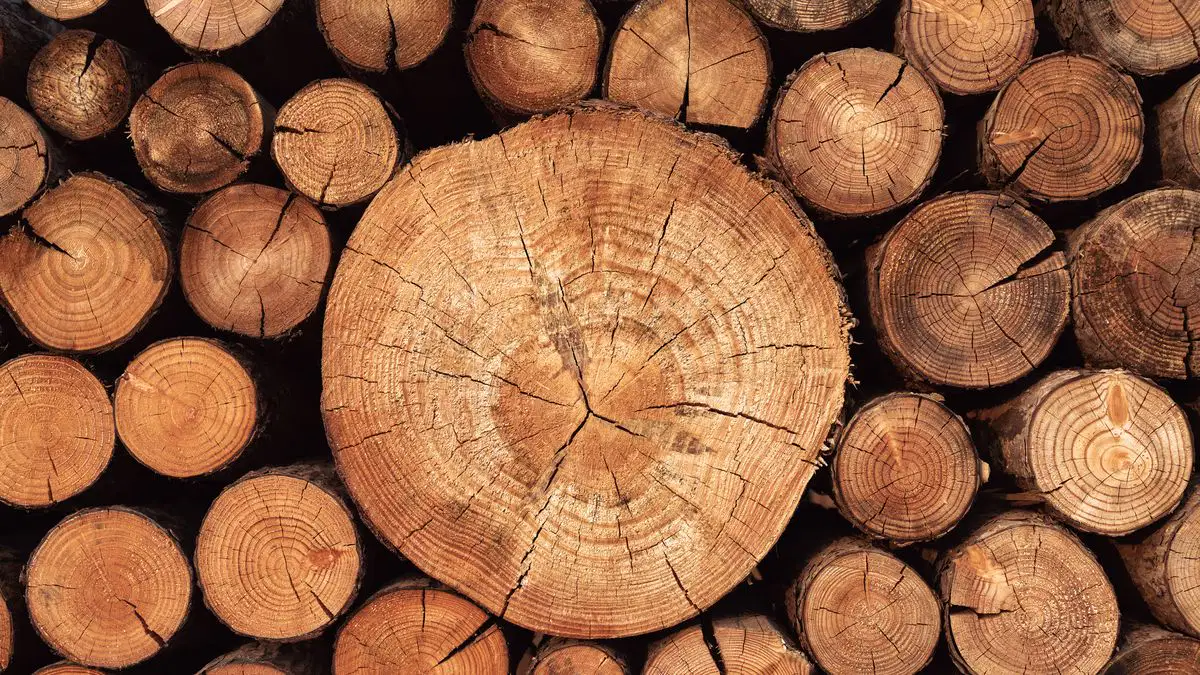
Wood is an example of....
A renewable resource
Used to make plastic
A non-renewable resource

Gasoline and plastic are made from
Plants
Minerals
Oil
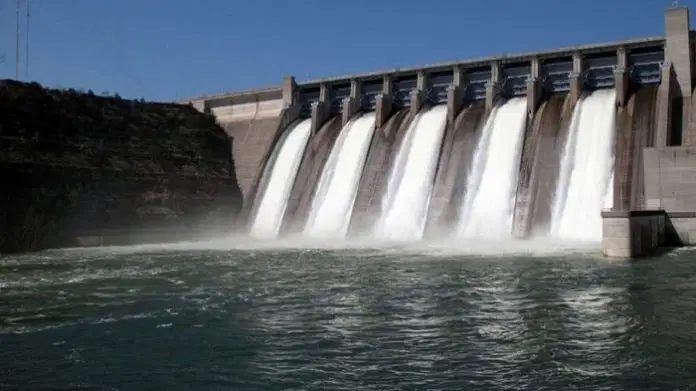
How do hydropower stations generate electricity?
The energy from falling water is used to drive turbines in a power station
The turbines are connected to a generator which produces electrical energy.
These power stations must be at waterfalls or dams because there needs to be a strong flow of water to harness the energy.

Using the map, what region in the United States is the best location to retrieve geothermal energy?
Southern states of the U.S.
Eastern states of the U.S.
Western states of the U.S.
Northern states of the U.S.
Which chart correctly identifies examples of renewable and nonrenewable resources?


Using the graph pictured, the fossil fuel supplying the most energy is...
Natural Gas
Hydroelectric
Petroleum
Coal

Using the graph, how much energy is obtained from fossil fuels?
60%
62.5%
69.5%
70%

Symbiosis is a combination of the words "sym" which means (a) and "bio" which means (b)
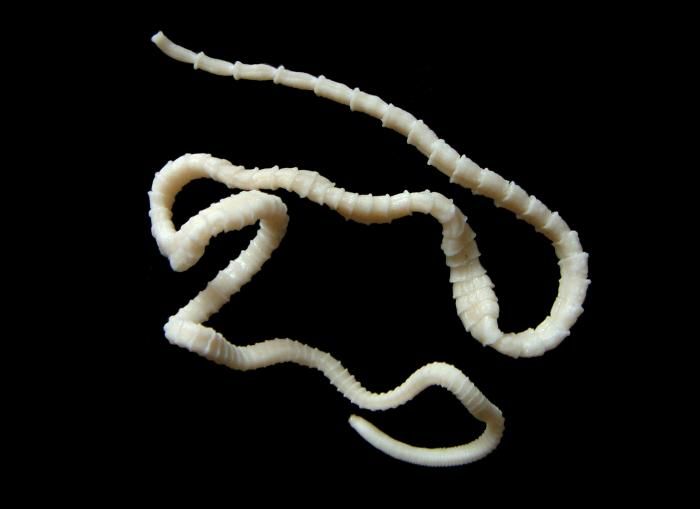
A tapeworm lives in the intestines of animals. It harms the animal it lives in. That means the tapeworm is a (a) and the animal is its (b)
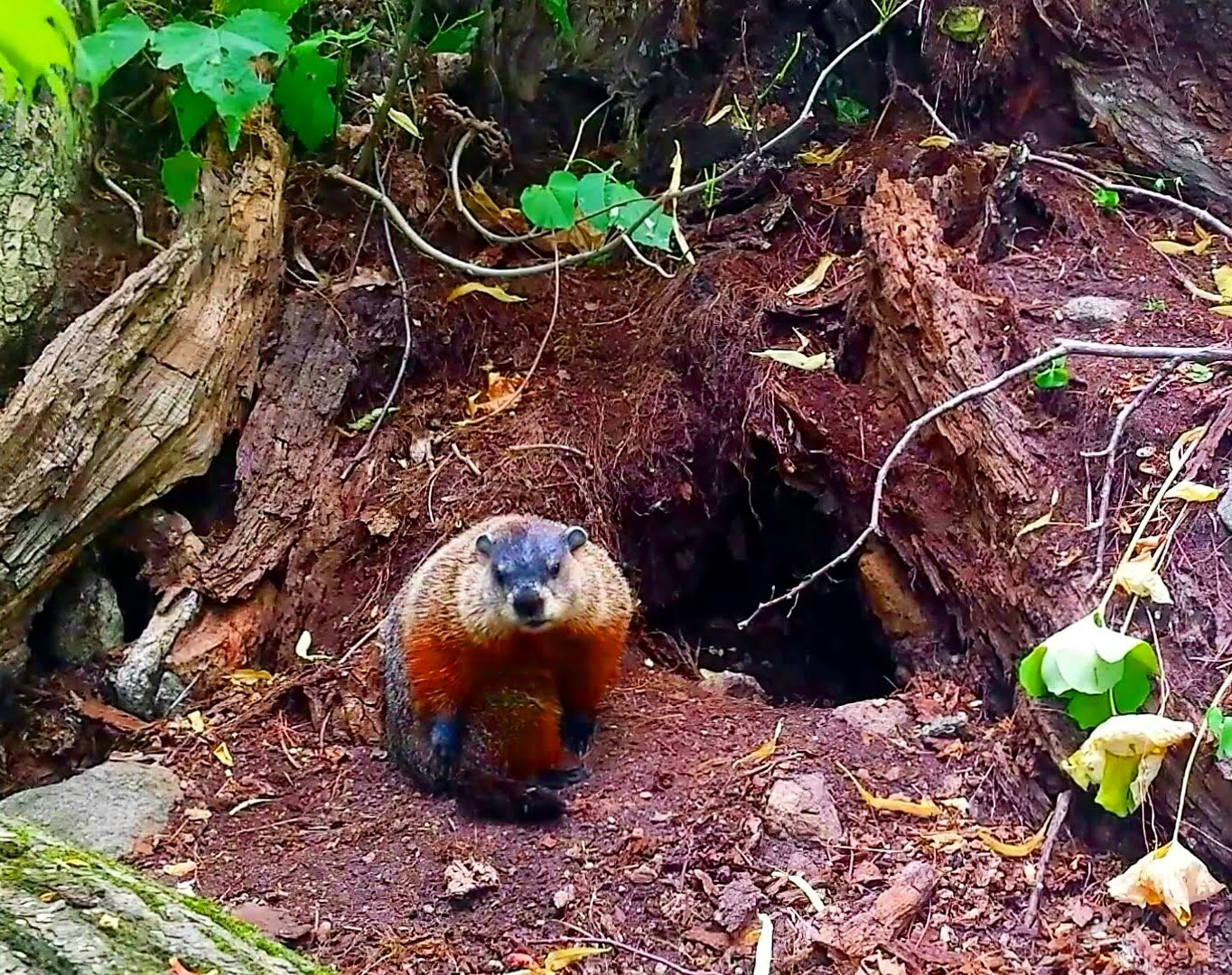

Aphids are tiny insects that live on and eat the leaves of plants, removing vital nutrients from the plants.
Predation
Parasitism
Commensalism
Mutualism
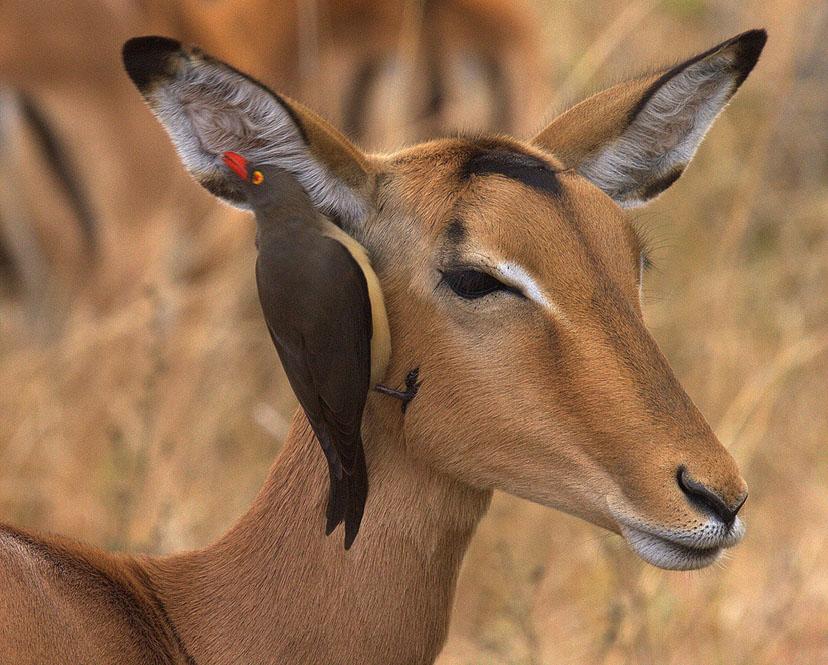

Match these terms
both organisms benefit
one organism harms the other
one benefits; the other doesn't care

Clown fish live among anemones, acting as a lure for the sea anemone's prey. The clown fish get protection and shelter from the anemone. This is an example of which type of symbiosis?
Commensalism
Mutualism
Parasitism
Rocks
Air
Water
Clouds
Dirt
Trees
Bacteria
Fungi
Animals
Berries
What is a limiting factor?
Something that controls the number of individuals that can live.
Something that kills all of the animals so that no one survives.
Some factor that limits how much an animal is liked or viewed
Some factor that is always negative.
Reorder the following from smallest to largest
Species/ Individual
Population
Community
Ecosystem
Biosphere
An ecosystem is made up of (a)
Match the following
Individual/species
One type of living thing
Community
Different species living together
Population
A group of individuals that can breed
Ecosystem
The living and nonliving things in area
Biosphere
The Earth
Animals that are best fit for their environment are able to (a)
Which is a carnivore?


Lion

Giraffe

Kangaroo
Imagine you're on an adventure with Abigail and Aiden, and you discover that both the spider and platypus are (a) creatures of the wild. As you continue your journey, you stumble upon a hidden world where the worms and insects are both (b) .
predator
prey
herbivores
carnivores
omnivores
scavengers
Secondary consumers are always:
omnivores
plants
carnivores
herbivores
Primary consumers are always (a)
herbivores
plants
omnivores
carnivores
A. (a) needs energy from sunlight
B. (b) releases energy
C. (c) happens in roots
D. (d) happens in animals
Photosynthesis
Respiration
Transpiration
Digestion
Predator populations: (a) A. fall before their prey population falls (b) B. tend to be larger than their prey population (c) C. fall when their prey population rises (d) D. fall after their prey population falls
A. fall before their prey population falls
B. tend to be larger than their prey population
C. fall when their prey population rises
D. fall after their prey population falls
A food chain might be: A. lettuce <-- slug <-- hedgehog B. hedgehog --> lettuce--> slug C. lettuce --> slug --> hedgehog D. slug --> lettuce--> hedgehog
A. lettuce <-- slug <-- hedgehog
B. hedgehog --> lettuce--> slug
C. lettuce --> slug --> hedgehog
D. slug --> lettuce--> hedgehog
Food webs: A. are the same as food chains B. show how many animals are at each level in the food chain C. show how food chains are related D. always start with carnivores
are the same as food chains
show how many animals are at each level in the food chain
show how food chains are related
always start with carnivores
A. (a) are always omnivores
B. (b) usually have a smaller population than their prey
C. (c) cannot usually run as fast as their prey
D. (d) usually have eyes on the side of their heads
Lions
Deer
Cheetahs
Rabbits
(a) takes in carbon dioxide
(b) gives off energy
(c) takes in oxygen
(d) happens in the cell vacuole
Photosynthesis
Respiration
Cellular respiration
Metabolism
A food chain might be
? grass<--grasshopper<--field mouse<--owl
? owl<--field mouse<--grasshopper<--grass
? grass-->grasshopper-->field mouse-->owl
? owl-->field mouse-->grasshopper-->grass

This is the largest number of individuals of a population that the environment can support...
carrying capacity
population crash
lag phase
mutualism

What point on the graph represents the carrying capacity?
A
B
C
D

When a population grows past the ecosystem's carrying capacity, what happens to the population?
Continues to grow
The population starts to die off to return to carrying capcity
The population will go extinct due to lack of resources
The population grows then finds a new carrying capacity

In a forest ecosystem, which of the following is the best example of a limiting factor for a rabbit population?
The squirrel population
The amount of sunlight
Amount of grass available
Rabbits have no limiting factors
___________ is the most abundant gas in our atmosphere at 78%.
Oxygen
Carbon Dioxide
Phosphorus
Nitrogen


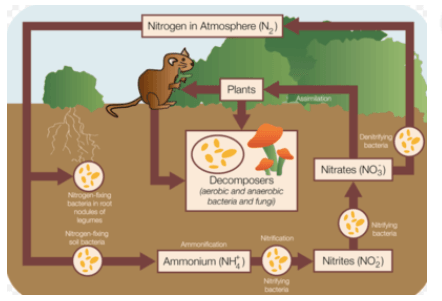
A correct path that nitrogen could take would be
air -> animals -> plants -> bacteria
animals -> air -> bacteria -> plants
bacteria -> air -> plants -> animals
air -> bacteria -> plants -> animals
When water vapor is cooled and forms droplets of liquid water
Condensation
Evaporation
Transpiration
Runoff
Label the parts of the carbon cycle in the picture:
Identify the missing parts of the nitrogen cycle shown in the picture:
Identify the parts of the water cycle in the diagram:
This image shows a

Put in order from MOST to LEAST amount of energy.
Producer
Primary consumer
Secondary consumer
Tertiary consumer
Apex predator

Omnivore

Herbivore

Carnivore

Producer
Correctly label each trophic level

Which scenario would affect the MOST organisms?
All producers die.
All primary consumers die.
All secondary consumers die.
All apex predators die.

___% of energy is passed from one organism to another.
1
10
100
1000

What are the primary producers in this image?
Carrot
Grasshopper
Grain
Grass
Rabbit
What are the primary consumers in this image?
Owl
Grasshopper
Mouse
Bird
Rabbit
What are the secondary consumers in this image?
Owl
Fox
Mouse
Bird
Rabbit
A decomposer is
heterotroph
an organism that breaks down organic materials
autotroph
recycles nutrients

Which of the following is a tertiary consumer in this food web?
Rabbit
Hedgehog
Fox
Bacteria

What would happen to the bird population if mouse population increased?
Increase
Decrease
Stay the same
What is a mouse?

What will most likely happen to the hawks and rodents if the insects were removed?
There will be more hawks and rodents
The rodents will eat more hawks
There will be fewer rodents and hawks
The hawks will eat more rodents
The arrows in a food chain or web represents what?
They point to the organism that is being eaten.
They show what direction the energy is flowing between organisms.
It shows how sunlight flows within an ecosystem.
They represent how water is transferred within a habitat.

What would happen to the blue whale population if the krill population went extinct?
the blue whale population eats other things in the food web
the blue whale population would increase
The blue whale population would remain the same.
the blue whale population would also decrease

This map shows tornado activity in the United States between 1950 and 1998. Based on the data provided by this map, which of the following cities would be most likely to experience a tornado with a rating of F3 or greater in the next year?
Phoenix, Arizona
Topeka, Kansas
Orlando, Florida
Columbia, South Carolina

Chain of events that cause a tsunami
Underwater (Event) Earthquake or Volcanic Eruption.
A wave (bumping up from event) forms 2-3 meters high.
As the wave moves to shallow waters the wave becomes taller.
Water recedes from shoreline.
First wave hits the shore with the most energy while others will continue for hours later.

Where does hurricane Ian hit as a category 4 hurricane?
Mexico
South Carolina
Western Florida
Louisana

The ring of fire is where the pacific plate meets other tectonic plates at a tectonic plate boundary. What are the risks living on the shores of the Ring of Fire? (Select all that apply)
Blizzards
Earthquakes
Volcanoes
Tsunamis
Huge waves of water that crash on shore after under earthquake
Tsunami
A small but severe storm formed over land that usually only last for a few minutes and has extreme winds
Tornado
When Magma beneath the Earth's crust heat and pressure builds and it pushes out
Volcanoe
Huge Spinning storm that form over warm ocean water
Hurricane
Happens when part of the solid ground beneath the surface suddenly shifts
Earthquake

This image is the result of which natural hazard?
Volcanic Eruption
Earthquake
Landslide
Wild Fires
It is caused by lightning and volcanic eruptions in dry areas
Landslides
Floods
Wild Fires
Earthquakes
Natural Hazard _________ are efforts to forecast the occurrence, intensity and effects of natural hazards.
Mitigation
Prediction
Understanding
Choose ALL that apply.
A natural hazard prediction can be IMPROVED by...?
Collecting and analyzing data
Gaining scientific understanding
Using the scientific method
_____________ are used to evaluate the likelihood that a natural hazard will happen in a given place.
Historical data
Current data
Hazard _________ describe efforts to prevent or reduce property damage or loss of life caused by natural disasters.
Mitigation
Prediction
Understanding
Order the following mitigation steps from what is done first to what is done last.
Preparation
Response
Recovery
Organize each definition and example into the correct Mitigation Step
Example: Building codes
educating people on what to expect, what to do, and where to go
providing people with information and services as an event occurs and later
Example: communication via radios and phones
Occurs after a disaster and is the last stage of mitigation
Example: providing temporary shelter and services
(a) are conditions that limit the design or solution that could prevent the solution from being accomplished.
(a) are the conditions, requirements or standards that a solution should meet.
Scenario: a group of scientists wants to capture a deep-sea fish and study it back at the lab. Help the scientist organize their list of criteria and constraints. Remember, the CRITERIA is a should while the CONSTRAINT is a limit.
the capturing device needs to be able to go underwater
the capturing device needs to be able to withstand high pressure
the process must be inexpensive
the materials must be off-the-shelf and easily found
the capturing device should be small enough to be taken diving
What drives technological advances?
Societal Needs
Availability of location
Economic Conditions
What is biodiversity?
Variety of life
All biotic factors in the ecosystem
All abiotic factors in the ecosystem
A group of one species
What is a community?
Multiple populations in an ecosystem
A group of species in a pan ecosystem
All biotic and abiotic factors in a biome
The flow of energy through an ecosystem
What is a population?
All members of a species living in a habitat.
Several species living in a habitat.
All biotic and abiotic factors in a habitat.
The flow of energy through a habitat.
What is the main role of decomposers in an ecosystem?
Provide shelter to other species
Produce energy through photosynthesis
Break down dead organisms and recycle nutrients
Compete with other organisms for resources

Select the best definition for the term 'ecological niche'
The physical space where a species lives
A summation of the relationships and interactions a species has with other biotic and abiotic factors
A representation of what a species preys on, and what preys on it i.e. it's place in a food chain
When a species does a job or function that no other species carries out

When biodiversity increases
Sustainability decreases
Sustainability remains the same
Sustainability also increases
Sustainability becomes greater by 2

What is true about sustainability?
Having a small number of species increases biodiversity
Sustainability is how organisms change over time
Sustainability is how much rainfall and sunlight an ecosystem receives
The more different types of species you have (biodiversity) the better an ecosystem can sustain itself
How are mangroves helpful to people?
reduce the impact of waves and high winds
reducing erosion
creates carbon that is released into the atmosphere
mangroves are a good food source for people
How do mangroves help protect humans from hurricanes and tsunanis?
They release salt into the air, which neutralizes these events.
The birds, animals, and fish in the mangroves get killed instead of the humans.
They absorb up to 90% of the impact of these events.
This statement is false. Mangroves help cause hurricanes and tsunamis.
Why are mangroves important at a GLOBAL scale?
Protect against tropical storms
Carbon sinks
Provide employment
Tourism
what is a mangrove swamp
an area of coastal grassland that is regularly flooded by seawater.
forests which are inundated with freshwater
a tidal wetland dominated by saline trees and shrubs
what kind of weather are mangrove swamps found in
tropical
subtropical
artic
subarctic
What is an invasive species?
An organism that is new to an environment that has positive effects on the environment.
An organism that is native to an environment that has negative effects on the environment.
An organism that is new to an environment that has negative effects on the environment.
An organism that is native to an environment that has positive effects on the environment.
Invasive species alter the ecosystem by _____ in number quickly. This leads to _____ food for the native species.
increasing, less
increasing, more
decreasing, less
decreasing, more
The primary cause of the introduction of invasive species introduction is ---
too much food.
human action.
weather events.
asteroids.
A species indigenous to a certain region or ecosystem naturally is a ---
Native Species.
Accidental Species.
Introduced Species.
Invasive Species.
Invasive species --- [choose 3]
take over the habitat of other organisms.
increases the populations of native organisms.
decrease biodiversity.
increase biodiversity.
cause the populations of native organisms to decrease.

If a new, NON-NATIVE species that eats rabbits was introduced into this food chain, what would probably happen?
the population of rabbits would increase
the population of eagles would increase
the population of eagles would decrease
there would be less sunlight
Invasive species can cause or lead to the --- [choose 2]
increase of native plants and animals.
habitats to be permanently altered.
decrease of invasive plants and animals.
extinction of native plants and animals.

In __________ ___________ areas of bare rock go through population changes that leads to a new ecosystem
Abiotic factors
Secondary Succession
Primary Succession
Climax Communities
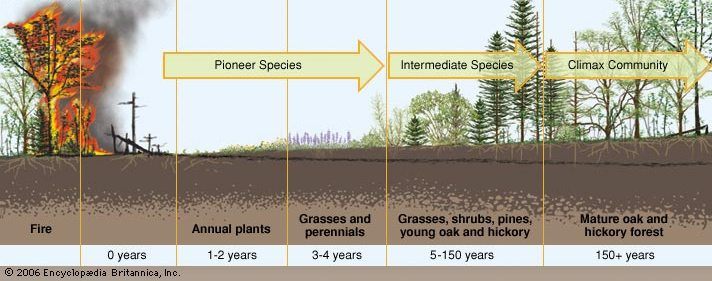
The picture shows what type of succession starting with soil already in place?
primary
secondary
tertiary
quadanary
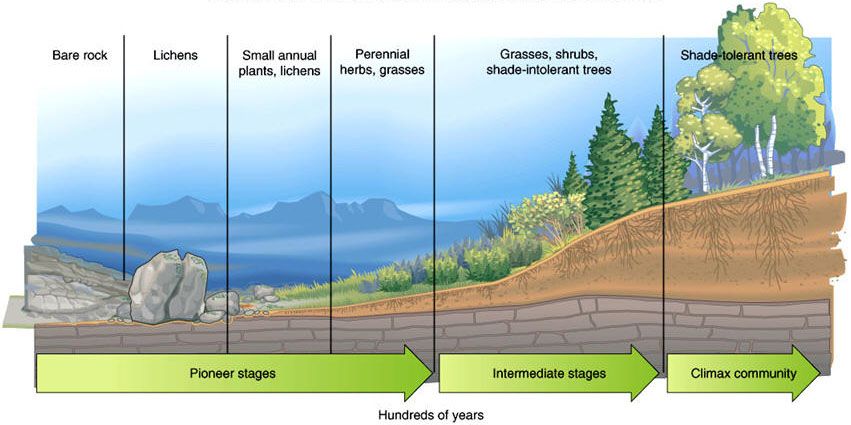
The picture shows what type of succession starting with bare rock?
primary
secondary
tertiary
quadanary
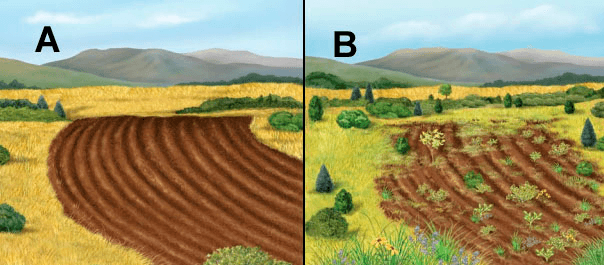

A type of succession where a ecosystem starts with soil, like after a forest fire or farm is called...
primary succession
secondary succession
tertiary succession
variable succession

