wayground logo

Free Printable Worksheets

Font size

S
M
L
XL
Worksheets

Astronomy Final Exam Review

Total questions: 163

Worksheet time: 2hrs 51mins

Name
Class
Date
1.
One rotation of Earth is equal to:
a)
A day
b)
A year
c)
A month
d)
A minute
2.
What causes the moon's phases?
a)
Where you are standing on Earth
b)
The amount of sunlight reflected onto the moon from the sun
c)
The tilt of the Earth
d)
How fast the moon is moving
3.
Select the terrestrial planet.
a)
Saturn
b)
Jupiter
c)
Neptune
d)
Earth
4.
Select the Gas Giant
a)
Mercury
b)
Jupiter
c)
Earth
d)
Pluto
5.
What is the most likely theory that explains how the universe formed?
a)
Solar Nebula Theroy
b)
Giant Impact Theory
c)
Big Bang Theory
d)
Simultaneous Theory
6.
A ________ is the movement of Earth when it travels around the sun.
a)
Revolution
b)
Rotation
c)
Big Bang Theory
d)
Reflection
7.

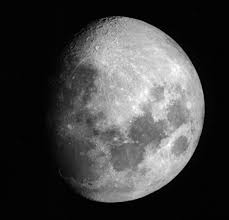
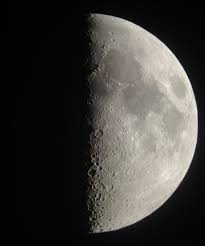
Identify the Moon Phase

a)

Waxing Gibbous

b)

Waning Gibbous

c)

Waxing Crescent

d)

Waning Crescent

8.

Select the description that best describes galaxies

a)

a collection of stars

b)

a collection of stars held together by gravity

c)

a collection of gas and stars held together by gravity

d)

a collection of dust, gas and stars held together by gravity

9.

Order the planets from greatest mass to least mass

a)

Earth, Mercury, Venus, Mars, Neptune, Jupiter, Uranus, and Saturn

b)

Mercury, Venus, Earth, Mars, Jupiter, Saturn, Uranus, and Neptune

c)

Earth, Venus, Mars, Mercury, Jupiter, Saturn, Uranus, and Neptune

d)

Jupiter, Saturn, Uranus, Neptune, Earth, Venus, Mars, and Mercury

10.
Day and night are caused by
a)
the tilt of Earth’s axis.
b)
Earth’s revolution around the sun.
c)
eclipses.
d)
Earth’s rotation on its axis.
11.
One complete revolution of Earth around the sun takes about
a)
one rotation.
b)
one rotation.
c)
one year.
d)
one eclipse.
12.
The phase of the moon you see depends on
a)
where you are on Earth’s surface.
b)
how much of the sunlit side of the moon faces Earth.
c)
how much of the moon’s surface is lit by the Sun.
d)
how much of the moon’s surface is lit by the Sun.
13.
From new moon phase to full moon phase, you see
a)
an increasing amount of the lighted side of the moon.
b)
a decreasing amount of the lighted side of the moon.
c)
the same amount of the lighted side of the moon.
d)
more of the lighted side, then less of the lighted side of the moon.
14.
Tides are caused mainly by
a)
Earth’s rotation on its axis, which causes water to move.
b)
differences in how much the sun pulls on different parts of Earth.
c)
strong winds blowing water onto coasts.
d)
differences in how much the moon pulls on different parts of Earth.
15.
How large is the moon compared to Earth?
a)
about the same diameter as Earth
b)
about one-half the diameter of Earth
c)
about one-fourth the diameter of Earth
d)
about one-eighth the diameter of Earth
16.
Scientists think the moon was formed when
a)
a large object struck Earth, and ejected material from the collision combined.
b)
gravitational forces attracted a moon formed elsewhere in space.
c)
meteoroids collected and solidified within the pull of Earth’s gravity.
d)
gases from Earth escaped from the atmosphere and condensed in space.
17.
Because the moon rotates once for each revolution around Earth,
a)
you see some phases more than others.
b)
a different side of the moon faces Earth each day.
c)
you never see the far side of the moon from Earth.
d)
the far side of the moon is visible only during the full moon phase.
18.
The tendency of a moving object to continue moving in a straight line or a stationary object to remain in place is called
a)
orbital speed.
b)
mass.
c)
inertia.
d)
gravity.
19.
All objects are attracted to each other by the force of
a)
weight.
b)
mass.
c)
inertia.
d)
gravity.
20.
The strength of the force of gravity depends on
a)
the masses of the objects and their speeds.
b)
the masses of the objects and the distance between them.
c)
the weight of the objects and their speeds.
d)
the masses of the objects and their weights.
21.
The different shapes of the moon seen from Earth are called
a)
eclipses.
b)
penumbras.
c)
umbras.
d)
phases.
22.
The temperature of the moon’s surface varies greatly from day to night because the moon has
a)
maria.
b)
no atmosphere.
c)
many craters.
d)
highlands.
23.
Where might water be found on the moon?
a)
in the atmosphere
b)
inside moon rocks
c)
near the poles
d)
in the maria
24.
The phases of the moon depend on how much of the ______ side of the moon can be seen from Earth. 
a)
lighted
b)
far
25.
The planets know as “terrestrial” planets are which?
a)
Venus, Saturn, Jupiter, Neptune
b)
Jupiter, Saturn, Uranus, Neptune
c)
Mercury, Venus, Earth, Mars
d)
Venus, Mars, Jupiter, Saturn
26.
The masses of the planets are recorded in the table.  From this information, which planets are probably included among the “gas giants”?
a)
Earth, Jupiter, Saturn, and Neptune
b)
Mercury, Venus, Earth, and Mars
c)
Jupiter, Saturn, Uranus, and Neptune
d)
Mars and Earth
27.
The planetary systems of Saturn, Uranus, and Neptune are shown.  What can be concluded by looking at these images?
a)
Planets with rings cannot also be orbited by moons.
b)
Most planets can support life.
c)
All planets are the exact same size, shape, and color.
d)
Some planets are orbited by moons and rings.
28.
Which of the following is NOT true of comets?
a)
Has a nucleus composed of ice and rock.
b)
The object has an almost round orbit.
c)
Forms tails in the inner solar system.
d)
Orbits the Sun.
29.
Which of the following is NOT true of asteroids?
a)
Mostly located in the Main Asteroid Belt.
b)
Made of rock and metals.
c)
Has a nucleus composed of ice and rock.
d)
Orbits the Sun.
30.
What shape is the Milky Way galaxy?
a)
Elliptical
b)
Spiral
c)
Irregular
d)
Barred spiral
31.
Approximately how old do scientists estimate the universe to be?
a)
4.6 billion yeards
b)
10 billion years
c)
13.7 billion years
d)
26 billion years
32.
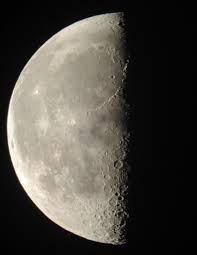
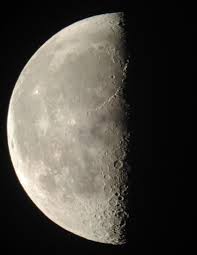
Name the moon phase
a)
First Quarter
b)
Last Quarter
c)
New Moon
d)
Full Moon
33.
The cycle of the moon lasts about a _.
a)
day
b)
year
c)
week
d)
month
34.
The moon ____________ around the Earth.
a)
revoloves
b)
rotates
c)
up
d)
down
35.
What part of the moon do we see from Earth?
a)
all of it
b)
the same side
c)
none of it
d)
only one quarter
36.
Which of the following words describe the phases of the moon?
a)
none, quarter, half, three quarters, full
b)
new, crescent, quarter, gibbous, full
c)
dark, light, half, quarter, blue
d)
first quarter, second quarter, third quarter, fourth quarter
37.

What is the source of the moon's light?

a)

Earth

b)

the sun

c)

the moon

d)

Mars

38.

During which phase does the moon appear as a bright round circle?

a)

First Quarter

b)

New Moon

c)

Third Quarter

d)

Full Moon

39.

The moon phase cycle repeats about every

a)

365 days

b)

20 days

c)

29 days

d)

15 days

40.
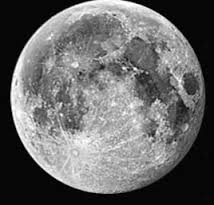
Name the moon phase
a)
waning crescent
b)
first quarter
c)
waning gibbous
d)
waxing gibbous
41.
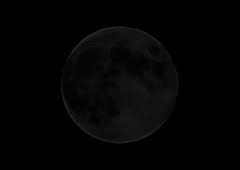
Name the moon phase
a)
First Quarter
b)
Last Quarter
c)
New Moon
d)
Full Moon
42.
Name the moon phase
a)
Waning Crescent
b)
Last Quarter or (third quarter)
c)
New Moon
d)
Full Moon
43.
TRUE or FALSE
We can see the moon during the day. 
a)
True
b)
False
44.
Define Waxing
a)
Moon is increasing and light part appears to be growing
b)
Completely illuminated
c)
dark side is facing earth
d)
Moon is decreasing and light part appears to be shrinking
45.
Define Gibbous
a)
Less than half of moon visible
b)
More than half of moon visible
c)
All of moon visible
d)
None of moon visible
46.
Define Full Moon
a)
None of moon is visible
b)
Half moon phase is visible
c)
Complete moon face is visible
d)
Less Than half of moon is visible
47.
Define New Moon
a)
None of moon is visible from Earth
b)
All of moon visible from Earth
c)
Moon is 1/2 visible from Earth
d)
Moon is more than Half Visible from Earth
48.
Define Quarter Moon
a)
None of moon visible
b)
Less than Half the moon is visible
c)
More than half of moon is visible
d)
Half of the moon is visible
49.
Name this moon phase
a)
Waxing Gibbous
b)
Waxing Crescent
c)
Waning Crescent
d)
Waning Gibbous
50.
Name this moon phase
a)
Waning Crescent
b)
Waxing Crescent
c)
Waning Gibbous
d)
Waxing Gibbous
51.
The phase of the moon that occurs between the sun and Earth
a)
Full moon
b)
Waxing crescent
c)
Waning Crescent
d)
New Moon
52.
In which moon phase, can the moon not be seen at all?
a)
Waning crescent
b)
Full moon
c)
Waxing gibbous
d)
New moon
53.
The 1st Quarter moon is lit on the:
a)
Left Side
b)
Right Side
54.
What is the correct order of the moon phases?
a)
new, full, 1st quarter, 3rd quarter
b)
new moon, 1st quarter, full moon, 3rd quarter
c)
1st quarter, 3rd quarter, new moon, full moon
d)
new, 1st quarter, 3rd quarter, full
55.
Name this moon phase
a)
waning crescent
b)
waxing crescent
c)
waning gibbous
d)
waxing gibbous
56.
Name this moon phase
a)
First Quarter
b)
Last Quarter
c)
New Moon
d)
Full Moon
57.
Name this moon phase
a)
First Quarter
b)
Last Quarter
c)
New Moon
d)
Full Moon
58.
Name this moon phase
a)
First Quarter
b)
Last Quarter
c)
New Moon
d)
Full Moon
59.
Name this moon phase
a)
First Quarter
b)
Last Quarter
c)
New Moon
d)
Full Moon
60.

What is the best definition of gravity?

a)

a property of matter that makes items move

b)

a natural force of attraction exerted by a celestial body on objects that are on or near its surface

c)

an object that makes other objects fall

d)

a property of force that continues to keep objects in motion

61.

Larger masses have a

a)

weaker gravitational force

b)

stronger gravitational force

c)

equal gravitational force

62.

Holds the Earth and other planets in orbit around the Sun.

a)

The Sun's gravitational force

b)

The moon's gravitational force

c)

The Earth's gravitational force

d)

The lack of gravitational force

63.
Because of inertia, a moving object will keep ________.
a)
at rest
b)
moving
c)
in one spot
d)
inertia 
64.
Because of inertia, a resting object will remain at ________.
a)
rest
b)
a constant speed
c)
school
d)
inertia 
65.
Objects with greater _________ also have greater inertia.
a)
speed
b)
mass
c)
temperature
d)
friction
66.

What two forces affect gravity?

a)

mass and inertia

b)

mass and distance

c)

mass and force

d)

mass and weight

67.
What forces cause a planet to orbit?
a)
gravity and orbit
b)
gravity and inertia
c)
gravity and mass
d)
gravity and weight
68.
What would happen to the planets in the solar system if the sun’s gravitational force were to suddenly disappear?
a)
They will stop moving and become static.
b)
They will stop spinning.
c)
They will fly away in straight lines.
d)
They will start moving toward the Sun
69.

As distance between objects increases, the pull of gravity...

a)

increases

b)

decreases

c)

Stays the same

70.

When you travel to a planet, like Jupiter, where the force of gravity is greater than on Earth, _____

a)

You will "weigh more" than on Earth

b)

You will "weigh less" than on Earth

c)

You will have "less mass" than on Earth

d)

You will have "more mass" than on Earth
71.
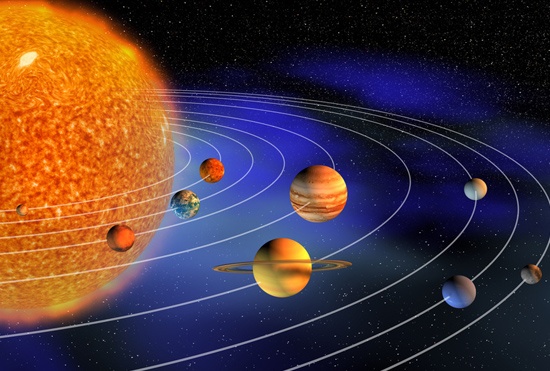
Why do all of the planets orbit the sun rather than Earth?
a)
the sun has more mass
b)
the sun is a star
c)
the Earth is heavier
d)
the sun is in the middle of the milky way
72.

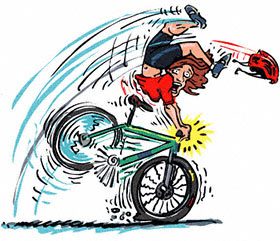
When Sean was riding his bike and braked suddenly, he kept moving forward due to

a)

gravity

b)

friction

c)

inertia

d)

weight

73.

What is the best definition of inertia?

a)

a force that pushes objects down

b)

a property of matter that makes objects stop

c)

a force that keeps objects from breaking down

d)

a property of matter which resists change to the state of motion or rest

74.
Which model has greater gravitational attraction (if any)
a)
Model A
b)
Model B
c)
Both Model A and Model B (same gravity)
75.

What would happen to Earth if there were no inertia?

a)

Earth would crash into the sun

b)

Earth would fly out to space

c)

Earth would collapse

d)

Earth would orbit the moon

76.

What would happen to Earth if there were no gravity?

a)

Earth would crash into the sun

b)

Earth would fly out to space

c)

Earth would collapse

d)

Earth would orbit the moon

77.
Which planet has the greatest attraction to the sun?
a)
Mercury
b)
Venus
c)
Earth
d)
Mars
78.

 
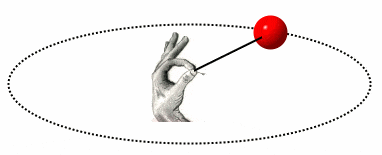
Which force in the Solar System is similar to the tension in the string?
a)
Friction
b)
Inertia
c)
Force
d)
Gravity
79.

Most scientists believe the Big Bang Theory explains which of the following questions?

a)

How our planets and moons formed

b)

How our universe began

c)

How the sun turns hydrogen into helium

d)

How fast light travels through space

80.

Which statement is true?

a)

The galaxies are moving toward us.

b)

The galaxies are moving away from us.

c)

The universe remains static or unchanged in motion.

d)

None of the above

81.

Which elements are most

abundant in the visible

universe?

a)

Hydrogen and Carbon

b)

Carbon and Helium

c)

Hydrogen and Oxygen

d)

Hydrogen and Helium

82.

What does the Big Bang Theory tell us

a)

About the popular television show.

b)

the entire universe was once condensed in the form of primeval atom, or a dense mass.

c)

how the universe began.

83.
The universe is expanding!  This means that:
a)
all of the galaxies are spreading out.
b)
the universe must have started from a single point.
c)
the universe is cooling down.
d)
all of the above.
84.
How long does it take light from our Sun to reach Earth?
a)
3 seconds
b)
8 minutes
c)
57 hours
d)
1 year
85.

The Big Bang Theory is the most widely accepted theory about the origin of the universe.

a)

true

b)

false

86.

Most distant galaxies show a red shift. This is considered evidence that the universe is ___.

a)

getting cooler

b)

expanding

c)

condensing into a small point

d)

swirling around

87.
The Milky Way Galaxy is a 
a)
spiral
b)
lenticular
c)
elliptical 
d)
irregular
88.
What type of galaxy is this?
a)
Spiral
b)
Elliptical
c)
Irregular
d)
Irrational
89.
What type of galaxy is this?
a)
Spiral
b)
Elliptical
c)
Irregular 
d)
Irrational
90.
What is not a galaxy?
a)
Optical Galaxy
b)
Spiral Galaxy
c)
Elliptical Galaxy
d)
Irregular Galaxy
91.
How many stars are in a galaxy.
a)
millions or billions
b)
thousands
c)
hundreds
d)
Ten
92.
What type of galaxy is this?
a)
Spiral
b)
Elliptical
c)
Irregular
d)
Irrational
93.
Place these objects in order from smallest to largest.
a)
Planets, solar system, universe, galaxy
b)
Solar system, planets, galaxy, universe
c)
Planets, solar system, galaxy, universe
d)
Galaxy, solar system, planets, universe
94.
What type of galaxy is this?
a)
Spiral
b)
Elliptical
c)
Irregular
d)
Irrational
95.
What type of galaxy has no defined pattern or shape?
a)
Spiral 
b)
Elliptical
c)
Irregular
d)
Constellation
96.

What galaxy do we live in?

a)

Irregular Galaxy

b)

Spiral Galaxy

c)

Elliptical Galaxy

d)

The toilet

97.

What holds a galaxy together?

a)

pressure

b)

glue

c)

gravity

d)

planets

98.

Which type of galaxy is a flat, rotating disk of billions of stars, gas and dust with a central concentration of stars?

a)

Spiral

b)

Elliptical

c)

Irregular

d)

Triangular

99.

Where are we located within our galaxy?

a)

On one of the spiral arms

b)

On the outer edge

c)

In between 2 of the spiral arms

d)

In the center bulge

100.

The classification of Galaxy is based on its observable characteristics. Which of these characteristics is used to classify galaxies?

a)

shape

b)

temperature

c)

types of forces

d)

chemical elements

101.

Which type of galaxy is shown in the image?

a)

Spiral

b)

Elliptical

c)

Irregular

102.

Which type of galaxy is shown in the image?

a)

Spiral

b)

Elliptical

c)

Irregular

103.

Which type of galaxy is shown in the image?

a)

Spiral

b)

Elliptical

c)

Irregular

104.
Made of ice, dust and gas
a)
asteroid
b)
meteoroid
c)
comet
d)
meteor
105.
Appears as a streak in the sky.
a)
asteroid
b)
meteoroid
c)
comet
d)
meteor
106.
Made of very dense rock and metal that is very different from the rocks that make up the inner planets.
a)
asteroid
b)
meteoroid
c)
comet
d)
meteor
107.
Found in the Oort Cloud
a)
asteroid
b)
meteoroid
c)
comet
d)
meteor
108.
Often called shooting stars.
a)
asteroid
b)
meteoroid
c)
comet
d)
meteor
109.
Made of rocks that are very similar to the rocks that make up the inner planets. 
a)
asteroids
b)
meteoroids
c)
comets
d)
meteors
110.
Sometimes called "dirty snowballs".
a)
asteoids
b)
meteoroids
c)
comets
d)
meteors
111.
Ceres is the largest one of these. 
a)
asteroid
b)
meteoroid
c)
comet
d)
meteor
112.
Piece of rock that burns up as it passes through the earth's atmosphere.
a)
asteroid
b)
meteoroid
c)
comet
d)
metoer
113.
Burns and vaporizes as it nears the sun.
a)
asteroid
b)
meteoroid
c)
comet
d)
meteorite
114.
Piece of a meteoroid that strikes the earth's surface
a)
comet
b)
asteroid
c)
meteor
d)
meteorite
115.

Choose what is being described in each statement by checking the correct box.


Stony or metallic object smaller than planets

a)

Asteroid

b)

Comet

c)

Meteoroid

116.

Complete each statement by checking the appropriate box.


Hale - Bopp is an example of:

a)

Asteroid

b)

Comet

c)

Meteoroid

117.

What is at the middle of a Heliocentric system?

a)

Mars

b)

Moon

c)

Sun

d)

Earth

118.

What is at the middle of a Geocentric system?

a)

Sun

b)

Neptune

c)

Earth

d)

The Universe

119.

Who supported the Geocentric system?

a)

Ptolemy

b)

Aristotle

c)

Copernicus

d)

Galileo

120.

Who proposed the Heliocentric system?

a)

Copernicus

b)

Ptolemy

c)

Aristotle

d)

Galileo

121.

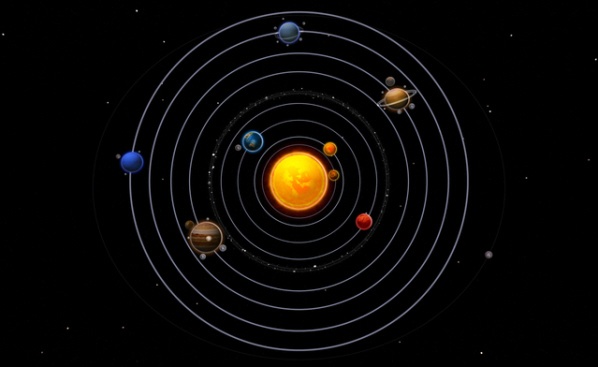
What does the Geocentric system look like?
a)
b)
c)
d)
122.

What does the Heliocentric system look like?

a)
b)
c)
d)
123.

What is the biggest difference between the Geocentric Model and the Heliocentric Model?

a)

the shape of the planets' orbits

b)

the movement of the moon

c)

the center of the solar system

124.

Kepler's first law states that the orbits of the planets are in the shape of a/an...

a)

perfect circle

b)

ellipse

c)

spiral

125.
  What does "geo-" mean?
a)
Earth
b)
sun
c)
Center
126.
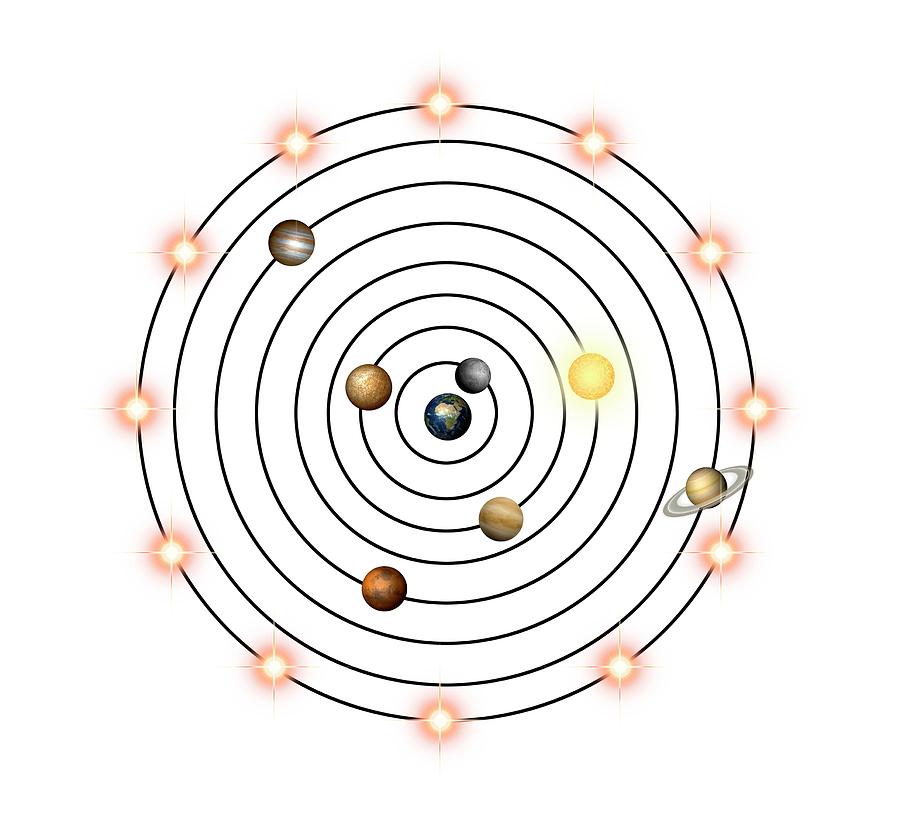
This image shows the:
a)
Geocentric Solar System
b)
Heliocentric Solar System
127.

Whose book was published about the heliocentric model of the universe just after he died?

a)

Ptolemy

b)

Copernicus

128.

Who came up with this model?

a)

Copernicus

b)

Kepler

c)

Galileo Galilee

d)

Ptolemy

129.

Which scientific instrument did Galileo use to change the world?

a)

telescope

b)

spyglass

c)

mirror

d)

magnifying glass

130.

Which object is the center of the solar system according to Galileo?

a)

Earth

b)

Moon

c)

Sun

d)

Neptune

131.

Who supported Copernicus's Heliocentric Model

a)

Galileo

b)

Plato

c)

Ptolemy

d)

No one

132.

Which astronomer first observed the phases of Venus and Jupiter's moons with the help of a telescope?

a)

Gailieo

b)

Aristarchus

c)

Kepler

d)

Aristotle

e)

Copernicus

133.

Who discovered the shape of a planet's orbit is actually an ellipse?

a)

Ptolemy

b)

Copernicus

c)

Kepler

d)

Galileo

134.

Who used a telescope to prove that the Earth could not be the center of the universe?

a)

Ptolemy

b)

Copernicus

c)

Kepler

d)

Galileo

135.
Why did people believe in the Geocentric vs the Heliocentric solar system?
a)
Geocentric system had been around for a LONG time.
b)
People don't like change.
c)
There wasn't enough proof  to support the Heliocentric system.
d)
all of these answers are correct.
136.

What orbits around the center of a Heliocentric system?

a)

All objects in the Solar System but the Sun.

b)

The Milky-way.

c)

The universe.

d)

Sirius, Canopus, Arcturus, Alpha, Centauri, and Procyon.

137.

What is the biggest difference between the Geocentric Model and the Heliocentric Model?

a)

the shape of the planets' orbits

b)

the movement of the moon

c)

the object at the center of the universe

d)

the brightness of the sun

138.
Which planet is closest to the sun?
a)
Earth
b)
Venus
c)
Mercury
d)
Mars
139.
The inner planets are also called...
a)
terrestrial planets
b)
gas giants
140.
The motion of a body orbiting another body in space is called _____.
a)
revolution 
b)
period of revolution
c)
rotation
d)
period of rotation
141.
All the inner planets are
a)
Jovian planets because they are made up of gases.
b)
Terrestrial planets because they are rocky.
142.
The inner planets are closer to the sun so
a)
they take longer to orbit the sun.
b)
they orbit the sun faster.
143.
What are the Inner Planets?
a)
Mercury, Mars, Earth, and Venus
b)
Earth, the Moon, Mars
c)
Neptune, Pluto, Earth
d)
:)
144.
Gas giants
a)
Inner planets
b)
Outer planets
c)
Both
d)
Venus
145.
Located between the inner and outer planets.
a)
Sun
b)
Asteroid belt
c)
Uranus
d)
Moons
146.
Solid, rocky surface
a)
Inner planets
b)
Outer planets
c)
Both
d)
Saturn
147.
The order of the planets is:
a)
Mars,Venus,Earth,
Mercury,Saturn
Jupiter, Uranus, Neptune
b)
Earth,Venus,Mars
Jupiter, Neptune,
Mercury,Saturn,
Uranus
c)
Mercury,Venus,Earth
Mars,Jupiter,
Saturn,Uranus
Neptune
d)
Mercury, Earth, Venus, Mars, Saturn, Jupiter, Neptune, Uranus
148.
The distance between the planets is all the same. 
a)
True
b)
False
149.
What planet is the smallest?
a)
Mercury
b)
Venus
c)
Mars
d)
Jupiter
150.
What is the largest planet?
a)
Jupiter
b)
the moon
c)
Saturn
d)
the Sun
151.
How many outer planets are there?
a)
4
b)
8
c)
9
d)
20
152.
What two planets are closest to the asteroid belt?
a)
Mars & Jupiter
b)
Pluto & Mercury
c)
Earth and Mars
d)
Uranus and Saturn
153.
Have humans walked on any other planet?
a)
Yes
b)
No
154.
What is Earth's nickname?
a)
The Blue Planet
b)
The Green Planet
c)
The Life Planet
d)
The Big Bang
155.

What planets are IN FRONT OF the asteroid belt?

a)

Inner planets

b)

Outer planets

c)

Both

d)

None

156.

Select all that apply to the GAS GIANTS

a)

They all have rings

b)

They are all made of gas

c)

They have a rocky surface

d)

They are very small

157.

Which planets are BEHIND the asteroid belt?

a)

Inner planets

b)

Outer planets

c)

Both

d)

None

158.

Which of the gas giants has the largest rings?

a)

Jupiter

b)

Saturn

c)

Mercury

d)

Neptune

159.
The solar system consists of the sun, smaller objects, and ...
a)
8 planets and their moons
b)
6 planets 
c)
only moons
d)
more than 100 stars
160.
Mars is the 5th planet from the Sun. 
a)
True 
b)
False
161.
Earth is the 3rd planet from the Sun. 
a)
True
b)
False
162.
The 2nd planet from the Sun is...
a)
Venus
b)
Mars
c)
Earth
d)
Pluto
163.
Mercury is the ____ planet from the sun. 
a)
1st
b)
2nd 
c)
3rd
d)
4th