
 Worksheets
Unit 6: Weather Review for Test
Total questions: 161
Worksheet time: 3hrs 47mins
Warm air is ______ dense than cool air. Warm air rises and cool air sinks.
less
more
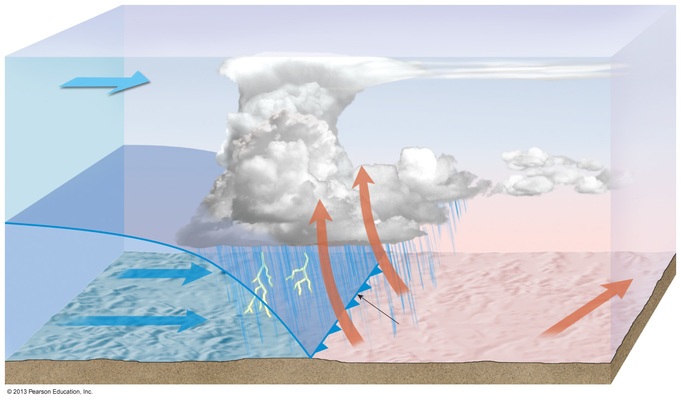


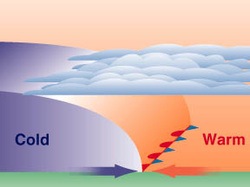
Overcast skies & steady precipitation (snow or rain) is weather you'd see at what type of front?
warm
cold
What type of weather will you see along a cold front?
Thunderstorms
Sunny skies
Gentle rain
No weather

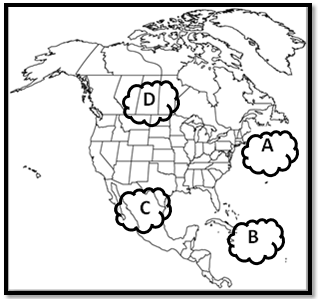
The table shows the air temperature and dewpoint at each of four locations, A, B, C, and D. Based on these measurements, which location has the greatest chance of precipitation?
A
B
C
D
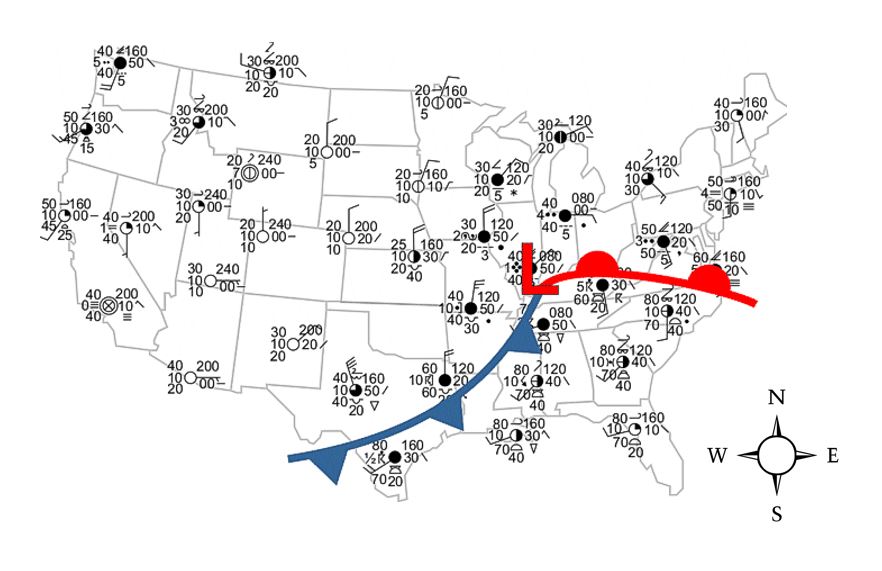

What city will experience decreasing temperatures in the next day?
Denver
El Paso
Memphis
Los Angeles

The Blue H on the weather map indicates
Snow in the areas
High pressure and clear skies
Low pressure

If I see an H on the weather map, it is for...
High Pressure
Low Pressure

If I see an L on the map, it means...
High Pressure
Low Pressure

When there is high pressure on the map, that area will see...
sunny weather
storms--rain, snow, etc.

If I see a L on the map, there will be...
sunny weather
storms--rain, snow, etc.

What direction does weather in the United States move?
East to West
North to South
West to East
South to North
What concept has the definition "the boundary line in the middle of two air masses?"
Air Pressure
Temperature
Thermometer
Front
What concept has the definition "the force of air pressing down on Earth?"
Air Pressure
Temperature
Thermometer
Front
Which is used to measure wind speed


What is considered the driving force for Earth's climate
Rain
Moon phases
Earth Rotation
The Sun

Which best describes this image
Convection Current
Conduction Current
Solar Cycle
Lunar Cycle
Which is the correct about Hurricanes
Hurricanes develop when cold air mixes with warm air
Hurricanes develop when warm air mixes with cold water
Hurricanes develop when warm evaporated water collides with cold air in the tropics
Hurricanes develop when warm air from land moves over to the cold ocean water


wind sock


Low pressure is usually associated with what type of weather
clear, fair
cloudy, rainy
bright blue skies
sunshine
What kind of weather would you experience at a cold front?
Increasing temperatures
Rain showers and storms that last days
A big temperature decrease with unstable weather such as storms
What kind of weather would you experience at a warm front?
Increasing temperatures
Rain showers and storms that last days
A big temperature decrease with unstable weather such as storms

Which cities are experiencing cloudy and RAINY conditions?
San Diego, Richmond and Portland
Portland, San Antonio and Memphis
Fargo, Memphis and Richmond
Wichita, San Antonio and San Diego
How should the citizens of Tallahassee dress the next couple of days?
Due to the approaching cold front, they should dress for cooler, rainy weather
Due to the approaching warm front, they should dress for hot and sunny weather
Due to the approaching warm front, they should dress for cooler, rainy weather
Due to the approaching cold front, they should dress for hot and sunny weather
What cities would look outside and see clear, blue skies?
San Diego and Augusta
Memphis and Fargo
Augusta and Fargo
Fargo and San Diego
Which cities would possibly see snow or show showers due to their temperatures?
San Antonio, Buffalo and Helena
Augusta and Richmond
Helena, Augusta and Buffalo
Just Helena
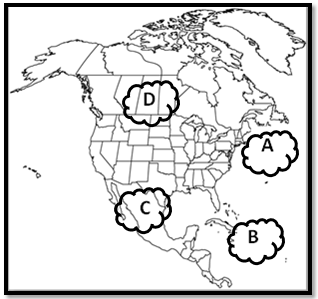
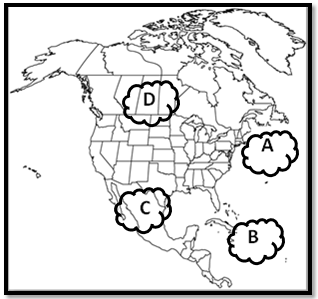


What type of front is moving through North Carolina?
Warm
Cold
Occluded
Stationary
Which weather instrument can help detect tornadoes by using a radio signal that is reflected back?
Weather station
Weather satellite
Weather balloon
Doppler Radar
Which instrument is best at measuring the conditions up through the troposphere?
Weather Station
Weather Satellite
Weather Balloon
Doppler Radar
Which state will experience thunderstorms today?
Texas
North Dakota
Florida
Kansas


What type of weather is expected with H (high pressure) and L (low pressure) areas on the map?
High pressure brings rain, Low pressure brings sunny conditions
High pressure brings clear skies, Low pressure brings clouds and rain
High pressure brings snow, Low pressure brings windy clear skies
High pressure and Low pressure don't have weather conditions

Which conditions bring a thunderstorm?
50% humidity, 65 F air temperature, and a warm front
65% humidity, 70 F air temperature, and a stationary front
99% humidity, 85 F air temperature, and a cold front
10% humidity, 80 F air temperature, and a warm front

What is true about radar and weather satellites?
mountains, valleys, and bodies of water are indicated with the radar and weather satellites
Ocean currents and winds are shown on color maps
satellites take pictures, radar sends signals of precipitation type and location, movement and amount of precipitation shown
color coding of animal herds across the grassland of Central America and South America

What are the conditions for a hurricane?
warm air and windy conditions over middle America
warm air and evaporating water over the ocean
cool air and precipitation over mountainous regions
cool air and snowy conditions in Colorado

What are the conditions of a tornado?
warm air mass pushing cold air mass, light winds, stable air
warm air mass pushing warm air mass, strong winds, stable air
cold air mass pushing cold air mass, light winds, unstable air
cold air mass pushing warm air mass, strong winds, unstable air

What type of front has a cumulonimbus cloud, windy conditions, severe thunderstorm, possible hail and could produce a tornado?
stationary front
occluded front
cold front
warm front
Hurricanes are large, powerful storms that form as they travel over warm ocean waters. What do oceans add to make hurricanes so strong?
salt and water
wind and tides
heat and moisture
waves and floods
Which condition is associated with most warm fronts?
tornado formations
low temperatures
violent air mass collisions
cloud formations bringing precipitation
A high-speed wind, called a jet stream, is moving from the west to the east across the United States. Which characteristic of this jet stream is most important in predicting weather patterns?
The jet stream controls the speed of surface wind.
The jet stream controls the direction of surface wind.
The jet stream separates moist northern air from dry southern air.
The jet stream separates cold northern air from warm southern air.
The sudden discharge of electricity in a storm is referred to as
a storm surge
thunder
lightening
a tropical disturbance

The figure below shows one kind of cloud.
This kind of cloud is tall and wide. Thunderstorms happen when these clouds are in the sky. What kind of cloud is this?
cirrus
cumulus
nimbostratus
cumulonimbus
Which of these most likely causes winds to blow on Earth?
The Earth spins quickly, causing the air to blow around.
The gravity of Earth and the Moon push and pull the air.
Warm air rises and cool air falls toward Earth’s surface.
Ocean waves push air onto the shore and across Earth’s surface.
Which of the following are narrow belts of strong winds found in the upper troposphere?
doldrums
westerlies
trade winds
jet streams
When air is heated, it will most likely
expand and fall
expand and rise
condense and fall
condense and rise
Forms over land by the tropics and gives the area warm/dry weather.
maritime tropical
maritime polar
continental tropical
continental polar
Forms over oceans by the tropics and gives the area wet/warm weather.
maritime tropical
maritime polar
continental tropical
continental polar
Forms over land by the poles and gives the area dry/cold weather.
maritime tropical
maritime polar
continental tropical
continental polar
Forms over the ocean by the poles and gives the area wet/cold weather.
maritime tropical
maritime polar
continental tropical
continental polar


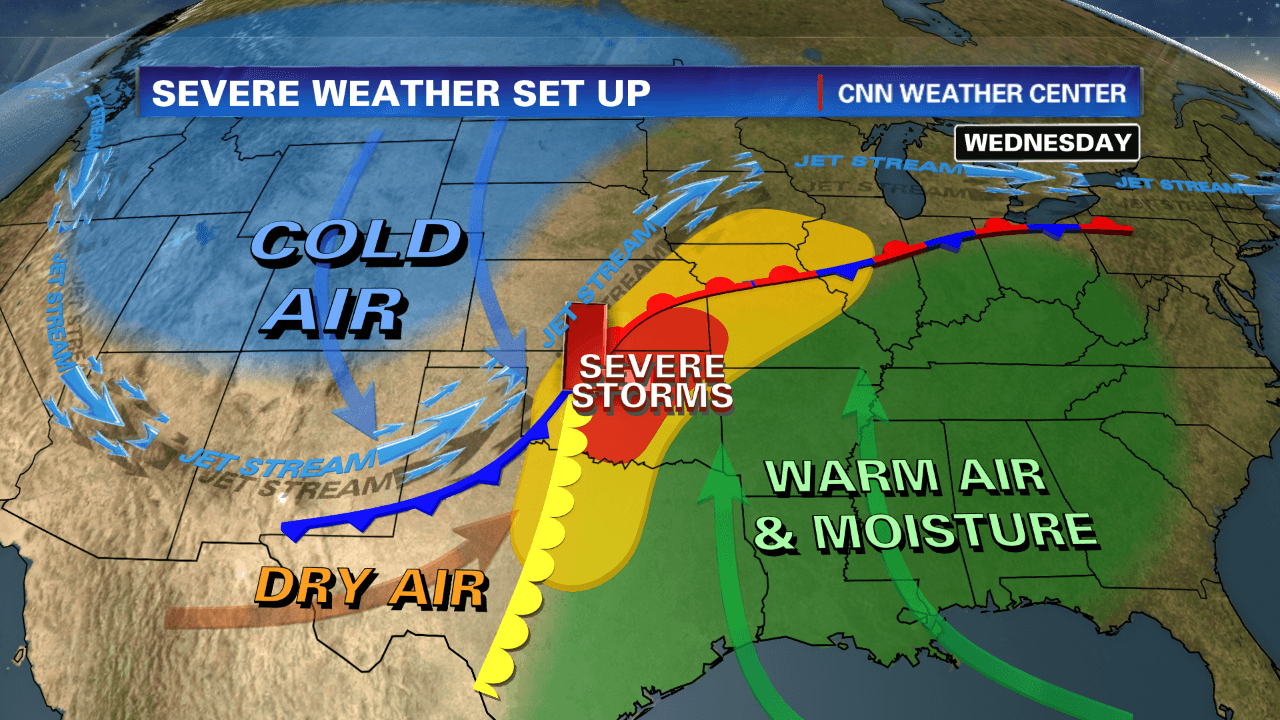


The condition of the atmosphere at a particular time and place is called
convection
climate
weather
radiation

The diagram below shows the water cycle.
At which point does precipitation happen?
1
2
3
4
Which of the following is a cumulus cloud?


Jeff notices that the air pressure is rising. Based on this observation, which type of weather does Jeff expect?
unstable weather
stormy weather
windy weather
fair weather
In order for wind the be created,
(Hint: abcdefg H ijk L mnop
High Pressure moves to Higher Pressure areas
Low Pressure moves to High Pressure areas
High Pressure moves to Low Pressure areas
Low Pressure areas disappear
The analysis of scientific data to predict future weather conditions.
Meteorology
Weather Forecasting
Weather Map
none of the above
A _______is issued when weather conditions that pose a threat to life and property are happening or are about to happen.
A Weather Advisory
A Weather Watch
A Weather Warning
None of the above
A _________________ is a disturbance in the atmosphere which is usually accompanied by rain, thunder, and lightning.
hurricane
thunderstorm
tornado
blizzard
__________________ form over warm, tropical (ocean) water.
Thunderstorms
Tornadoes
Hurricanes
Blizzards
________________ form when warm, moist air meets cool, dry air over dry land.
Thunderstorms
Tornadoes
Hurricanes
Blizzards
Which of these best describes a tornado?
A winter storm that produces frozen precipitation
A rotating funnel-shaped cloud with strong winds and thunderstorms
A severe weather condition with low temperatures and blowing snow
A storm that forms over warm ocean water and has extremely strong winds
Certain storms form over water near the equator, usually between the months of June and November. Warm, moist air rises quickly over the ocean, causing a strong, whirling storm with high winds and heavy rains. This type of storm is known as a ______________.
tornado
hurricane
blizzard
thunderstorm
Lightning is the discharge of static electricity inside or between thunderclouds.
True
False
What are two of the biggest dangers from thunderstorms?
thunder and lightning
lightning and flash floods
tornadoes and thunder
flash floods and heavy rain
Where do tornadoes occur more frequently?
Tornado Alley and Dixie Alley
Indian Ocean and Atlantic Ocean
Fujita Alley and Tornado Alley
Dixie Alley and Bowling Alley
What causes the air to spin?
The land around the tornado
Warm/wet air sinks below the cold/dry air and it is pushed upwards
A cloud reaches down from the sky
Cold/dry air sinks below the warm/wet air and it is pushed upwards
Tropical storms, hurricanes and tornadoes are three types of cyclones.
True
False
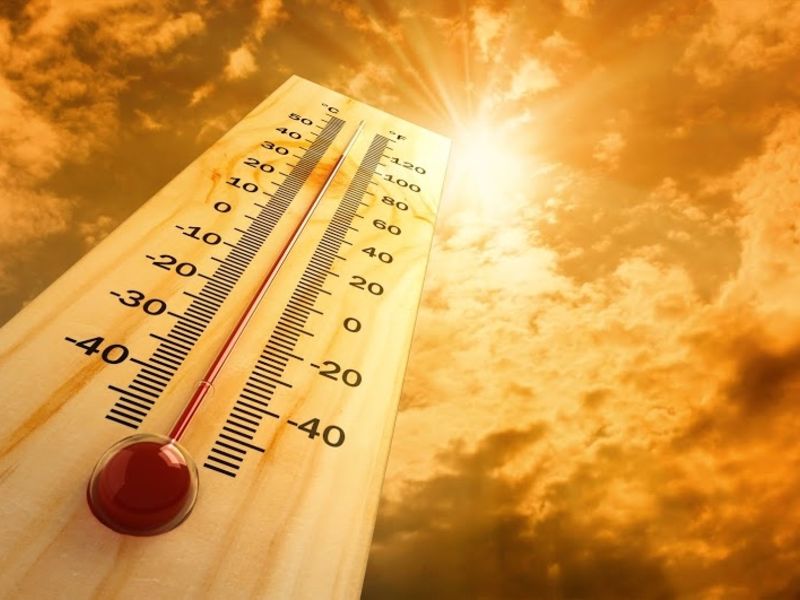
Having dry, hot weather for a long time can cause a —
thunderstorm
drought
flood
tornado
Why does the Earth experience unequal heating?
The oceans are not equally distributed around the Earth.
The Earth's revolution brings it closer to the Sun at certain points during the year.
The Earth's axis is tilted.
The atmosphere is not equally distributed around the Earth.


These clouds are fluffy white clouds that look like cotton balls. These clouds bring good, fair weather.
Cumulus
Cumulonimbus
Cirrus
Stratus
These types of clouds are cumulus clouds that have grown dark ; usually bring severe storms
Cumulus
Cumulonimbus
Cirrus
Stratus
These clouds are smooth gray clouds that block sunlight; can bring light rain and drizzle.
Cumulus
Cumulonimbus
Cirrus
Stratus

These clouds are examples of
Cumulonimbus clouds
Cirrus Clouds
Stratus Clouds
Cumulus Clouds

These clouds are examples of
Cumulus Clouds
Cirrus Clouds
Stratus Clouds
Cumulonimbus Clouds

These clouds are examples of
Stratus Clouds
Cirrus Clouds
Cumulus Clouds
Cumulonimbus Clouds
Blizzards, ice storms, lake effect storms, and nor'easters are all _______________________.
summer storm
winter storms
snow storms
spring storms
This storm is common in certain cold areas where the temperature fall below 20 degrees and there are high winds and snow making it very hard to see.
ice storm
super cell
tornado
blizzard
It is called a ____________ when it forms NORTH of the equator in the WESTERN PACIFIC ocean.
Tornado
Cyclone
Typhoon
78% of the Earth's atmosphere is ___________ and 21% of the Earth's atmosphere is _____________.
Oxygen, Nitrogen
Nitrogen, Oxygen
Nitrogen, Carbon Dioxide
Oxygen, Carbon Dioxide
In what layer of the atmosphere do all weather events occur?
Stratosphere
Exosphere
Mesosphere
Troposphere
As altitude increases, air pressure....
Increases
Decreases
Stays the same
Goes up and down
The ozone layer is a sublayer of the ________ layer.
Troposphere
Stratosphere
Exosphere
Mesosphere
Why is the ozone layer vital to life on Earth?
Planes fly in the ozone layer
It is made up of oxygen (O2)
It shields the Earth from ultraviolet (UV) rays from the sun
It causes clouds to be created
In which layer of the atmosphere do meteors burn up?
Troposphere
Mesosphere
Thermosphere
Exosphere
This layer is the hottest layer of the atmosphere?
Troposphere
Stratosphere
Mesosphere
Thermosphere
What is the order of the layers of the atmosphere, starting with the layer closest to Earth's surface?
Stratosphere, Troposphere, Exosphere, Mesosphere, Thermosphere
Troposphere, Stratosphere, Mesosphere, Thermosphere, Exosphere
Troposphere, Stratosphere, Mesosphere, Exosphere, Thermosphere
Troposphere, Stratosphere, Thermosphere, Exosphere, Mesosphere
Where would there be more pressure?
on top of a roof of a tall building
sitting in this classroom
on top of a mountian
sitting in the top row of a stadium
Which layer of the atmosphere would jets fly in to avoid a thunderstorm?
troposphere
thermosphere
mesosphere
stratosphere

