wayground logo

Free Printable Worksheets

Font size

S
M
L
XL
Worksheets

8th Grade Science Review

Total questions: 164

Worksheet time: 3hrs 17mins

Name
Class
Date
1.

Which organelle produces energy?

a)

Chloroplast

b)

Mitochondria

c)

Nucleus

d)

Ribosomes

2.

Which organelle does photosynthesis take place?

a)

Mitochondria

b)

Nucleus

c)

Cell Membrane

d)

Chloroplast

3.

Which organelle contains DNA and controls the cell?

a)

Endoplasmic Reticulum

b)

Golgi Apparatus

c)

Nucleus

d)

Vesicles

4.

Which organelle controls what goes in and out of the cell?

a)

Cell Membrane

b)

Golgi Apparatus

c)

Mitochondria

d)

Ribosomes

5.

Which organelle produces proteins?

a)

Nucleus

b)

Ribosomes

c)

Mitochondria

d)

Vesicles

6.

Which organelle packages and transports proteins?

a)

Golgi Apparatus

b)

Endoplasmic Reticulum

c)

Vesicles

d)

Cytoskeleton

7.

The cell wall is found only in plant cells

a)

True

b)

False

8.

What do vacuoles do?

a)

store water, food, and waste

b)

create energy

c)

nothing

d)

give the cell its shape

9.
Which of the following are NOT found in animal cells
a)
chloroplasts and cytoplasm
b)
chloroplasts and cell wall
c)
cell wall and cell membrane
d)
mitochondria and nucleus
10.
What kind of transport does not require energy?
a)
Active 
b)
Vacuole 
c)
Passive 
d)
Na/K Pump 
11.
Which of the following is the best example of osmosis? 
a)
NA/K Pump 
b)
Water moving though the cell membrane 
c)
Kidneys 
d)
Photosynthesis 
12.
What is the significance of the cell membrane? 
a)
Provides protection 
b)
Maintains homeostasis 
c)
Give a cell hydrophobic ends
d)
Provides cholesterol 
13.
Which piece of equipment is the best to use to observe the structure of a cell?
a)
magnifying glass
b)
binoculars
c)
telescope
d)
microscope
14.
What organelle is NOT found in animal cells?
a)
chloroplast
b)
cell membrane
c)
nucleus
d)
mitochondria
15.
Which of the following is a fossil?
a)
a plant that has recently died
b)
a group of organisms that can reproduce
c)
a structure or organ that no longer functions
d)
a trace of an organisms that existed in the past
16.
what did Charles Darwin observe in finch populations of the Galapagos Islands off the coast of South America?
a)
different species on different islands
b)
all species on one of the islands
c)
identical species on all the islands
d)
the same species as North America
17.
Mutations are important because they bring about
a)
death of the organism in which they develop
b)
genetic variation needed for a population to evolve
c)
benefits for the individual, not for the population
d)
Hardey-Weinberg equilibrium within a population
18.

What is the term for a feature that allows an organism to survive better in its environemtn?

a)

variation

b)

adaptation

c)

homologous structure

d)

vestigial structure

19.
What is the process in which humans breed organisms for certain traits?
a)
natural selection
b)
inheritance
c)
artificial selection
d)
descent withOUT modification
20.
Some organisms that share a common ancestor have features that have different functions, but similar structures.  These are known as
a)
vestigial structures
b)
analogous structures
c)
homologous structures
d)
fossil structures
21.
The gradual change in species over time is...
a)
Evolution
b)
Nucleotide 
c)
Adaptation
d)
Natural Selection
22.
Who is the father of evolution?
a)
Darwin
b)
Mendel
c)
Newton
d)
Einstein
23.
Genotype refers to the ...
a)
physical expression of the genes
b)
the possible combination of alleles in a gene
c)
whether an allele is dominant or recessive
d)
how an organism will appear
24.
Which of the following is a phenotype?
a)
BB
b)
Bb
c)
bb
d)
Blue eyes
25.
the passing of genetic traits from parent to offspring.
a)
heredity
b)
trait
c)
gene
d)
allele
26.
having two of the same genes for the trait (sometimes called purebred).
a)
homozygous
b)
hetrozygous
c)
protein
d)
chromosome
27.
having two different genes for a trait (sometimes called hybrid).
a)
protein
b)
homozygous
c)
heterozygous
d)
genotype
28.
Two brown eyed parents (Bb) have a baby. What is the chance the baby is blue eyed?
a)
0 %
b)
25%
c)
50%
d)
75%
29.
An allele whose trait only shows up when no dominant allele is present.
a)
hidden allele
b)
dominant allele
c)
recessive allele
d)
present allele
30.
Snapdragon flowers come in red, pink and white.  What type of inheritance is this?
a)
Complete Dominance
b)
Incomplete Dominance
c)
Codominance
d)
Polygenic Inheritance
31.
Which of the following genotypes is a purebred?
a)
Bb
b)
Gg
c)
bb
d)
Dd
32.
If green is dominant over purple, then what is the genotype for this individual?
a)
Purple
b)
Green
c)
GG
d)
gg
33.
I send and receive electrical signals from the brain
a)
Skeletal System
b)
Nervous System
c)
Muscular System
d)
Digestive System
34.
I transport oxygen and nutrients through out the body
a)
Muscular System
b)
Nervous System
c)
Digestive System
d)
Circulatory System
35.
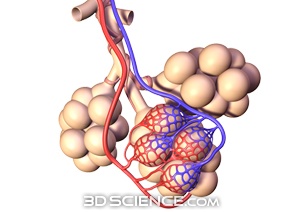
I receive oxygen and remove of carbon dioxide
a)
Heart
b)
Muscular System
c)
Veins 
d)
Respiratory System
36.
I break food down into energy for the body
a)
Stomach
b)
Digestive System
c)
Respiratory system
d)
Lungs
37.
When you breathe, your lungs take in ___ and remove ___. 
a)
air/oxygen
b)
oxygen/carbon dioxide 
c)
carbon dioxide/waste 
d)
waste/air 
38.
This system includes the heart, blood vessels, veins, arteries
a)
respiratory system
b)
circulatory system
c)
nervous system
39.
Disposes of wastes and removes excess water.
a)
Digestive
b)
Circulatory
c)
Excretory
d)
Immune
40.
Antibiotics don't work on virus because
a)
viruses aren't living
b)
viruses reproduce too fast 
c)
viruses are made of cells
d)
viruses don't need to be killed
41.
The thick muscles that make up the heart are the: 
a)
smooth muscles
b)
cardiac muscles
c)
skeletal muscles
42.
Which sequence of complementary DNA bases would pair with this partial strand
ATG TGA CAG?
a)
ATG TGA CAG
b)
TAC ACT GTC
c)
GTA AGT GAC
d)
CAT TCA CTG
43.
Which of the following best describes a DNA molecule?
a)
double helix
b)
contains ribose
c)
made of amino acids
d)
contains uracil
44.
The drawing shows the structure of what molecule?
a)
A DNA molecule
b)
A lipid molecule
c)
A carbohydrate molecule
d)
A protein molecule
45.
Which of the following best describes a DNA molecule?
a)
double helix
b)
contains ribose
c)
made of amino acids
d)
contains Uracil
46.
Guanine bonds with ______________.
a)
Adenine
b)
Guanine
c)
Cytosine
d)
Thymine
47.
Which organelle is DNA usually found in?
a)
cell membrane
b)
vacuole
c)
chloroplast
d)
nucleus
48.
What are the 8 levels of classification of living things from most general to most specific?
a)
domain, kingdom, phylum, class, order, family, genus, species
b)
domain, kingdom, phylum, class, order, family, genius, species
c)
domain, kingdom, phamily, class, order, family, genus, species
d)
domain, king, phillip, class, order, family, genus, species
49.
The scientific name for water bear is Hypsibius dujardini.  What is its genus?
a)
Hypsibius 
b)
dujardini
c)
water 
d)
tardigrade
50.
The scientific name for water bear is Hypsibius dujardini.  What is its species?
a)
Hypsibius 
b)
dujardini
c)
water 
d)
tardigrade
51.
How do scientists organize living things?
a)
by looks
b)
by shared characteristics
c)
by size
d)
by differences
52.
What is the science of organizing, classifying and naming living things.
a)
taxonomy
b)
taxadermy
c)
taxicab
d)
toxicology
53.
What is the science of organizing, classifying and naming living things.
a)
taxonomy
b)
taxadermy
c)
taxicab
d)
toxicology
54.
What is the science of organizing, classifying and naming living things.
a)
taxonomy
b)
taxadermy
c)
taxicab
d)
toxicology
55.
Who is the closest relative to the birds?
a)
crocodiles
b)
sharks
c)
fish
d)
amphibians
56.
Who is the closest relative to the sharks?
a)
crocodiles
b)
sharks
c)
ray-finned fish
d)
amphibians
57.
Who came up with binomial nomenclature?
a)
Aristotle
b)
Mendel
c)
Watson
d)
Linneaus
58.
Which kingdom contains only multicellular autotrophs?
a)
fungi
b)
plant
c)
animal
d)
protist
59.
What do plants and fungi have in common?
a)
They are both autotrophic
b)
They are both unicellular
c)
They both have cell walls
d)
They both are prokaryotes 
60.
What statement would NOT be good for a dichotomous key?
a)
The organism has 1 dorsal fin
b)
The organism is ugly
c)
The organism has leaves in groups of three
d)
The organism has 6 legs
61.

Which organisms can you find living in extreme places such as salt lakes, hot springs and deep sea trenches

a)

bacteria

b)

Plantae

c)

Archea

d)

Protists

62.

Which of the following is an example of a vertebrate animal?

a)

fly

b)

worm

c)

bird

d)

starfish

63.
In the 8 levels of classification which level is the broadest category? 
a)
Kingdom
b)
Family
c)
Species
d)
Domain
64.
What animal is most closely related to the American badger?
a)
Coyote
b)
European otter
c)
Gray wolf
d)
Leopard
65.
To what order does the first organism belong? (red)
a)
Order Diptera
b)
Order Odonata
c)
Order Ephemeroptera
d)
Order Coleoptera
66.
If you were on the moon, there would be a change in your
a)
Weight and mass
b)
weight
c)
Mass
d)
volume
67.
What tool do we use to measure temperature?
a)
Thermometer
b)
Ruler
c)
Balance
d)
Magnifying Glass
68.

What unit is used in science for temperature?

a)

Fahrenheit

b)

Celsius

c)

Both

d)

Nothing

69.

What is used to measure distance

a)

meter stick

b)

thermometer

c)

balance

d)

graduated cylinder

70.

Units to measure distance in science are

a)

meters, centimeters, millimeters

b)

inches, feet, yards

71.

What does a spring scale measure?

a)

weight

b)

distance

c)

length

d)

time

72.

A triple beam balance is used to measure

a)

mass

b)

weight

c)

distance

d)

temperature

73.

A triple beam balance measures objects in

a)

ounces

b)

grams

c)

centimeters

d)

Celsius

74.

What tool is used to measure time?

a)

stop watch

b)

thermometer

c)

meter stick

d)

balance

75.

A graduated cylinder is used to measure

a)

mass

b)

volume

c)

weight

d)

time

76.

The unit of measurement used to measure volume in a graduated cylinder is called

a)

cups

b)

ounces

c)

milliliter

d)

centimeter

77.
What is the volume of the fluid in the graduated cylinder in the image?
a)
400 ml
b)
40 ml
c)
43 ml
d)
4.3 ml
78.

You have a graduated cylinder that contains 50 ml of water. You place a sea shell in the graduated cylinder and the water rises to 60 ml. What is the volume of the seashell?

a)

10 ml

b)

100 ml

c)

115 ml

d)

110 ml

79.

What is the measurement on the triple beam balance?

a)

100 g

b)

140 g

c)

2 g

d)

142 g

80.

The data table below shows that as the pressure of a gas sample was changed, the volume of the gas changed. The pressure was measured in atmospheres (atm) and the volume was measured in milliliters (mL).


According to the data table, as the pressure of the gas increases, the volume of the gas:

a)

decreases

b)

increases

c)

remains the same

81.

How many more average daily calories are needed by a 17 year old male than by a 17 year old female?

a)

300

b)

500

c)

2700

d)

3000

82.

What is the difference between the number of frogs in the pond when the rainfall was 5cm and when the rainfall was 20cm?

a)

20

b)

40

c)

50

d)

60

83.

The graph below shows tidal changes at an ocean beach over a 24-hour time period.


What is the approximate time interval between the two high tides?

a)

6 hours

b)

9 hours

c)

13 hours

d)

24 hours

84.

What is the main purpose of a line graph?

a)

to compare two things

b)

To show change over time

c)

to have an independent variable

d)

so you don't have to read words

85.
Which day of the week had the lowest high and low temperature?
a)
Monday
b)
Thursday
c)
Tuesday
d)
Wednesday
86.
An individual belonging to a specific species
a)
Biotic
b)
Community
c)
Organism
d)
Reptile
87.
All of the living and nonliving things in an area that interact with each other are called a/an ______.
a)
community
b)
habitat
c)
population
d)
ecosystem
88.
An area where an organism finds food, shelter and water in a specific arrangement
a)
niche
b)
biosphere
c)
biome
d)
habitat
89.
The living part of an ecosystem
a)
Biotic
b)
Abiotic
c)
Mother Earth
d)
Flowers
90.
The study of how living things interact with one another and with their environment.
a)
Biology
b)
Lithology
c)
Ecology
d)
Farmacology
91.
Organisms that look similar and can produce fertile offspring
a)
Species
b)
Fish
c)
Community
d)
Trees
92.
Examples of a producer
a)
frog
b)
algae
c)
worm
d)
mouse
93.
Example of a decomposer
a)
fungus
b)
mouse
c)
plants
d)
frogs
94.
A tree is a ....
a)
composer
b)
decomposer
c)
producer
95.
The shrew provides energy for the _______?
a)
cricket
b)
grasshopper
c)
frog
d)
snake
96.
Which of the following is a herbivore?
a)
cricket
b)
frog
c)
hawk
d)
shrew
97.
What is this called?
a)
Food Web
b)
Food Chain
c)
Abiotic Factors
98.
What is this called?
a)
Food Web
b)
Food Chain
c)
Abiotic Factors
99.
A producer is a (n) ______________.
a)
heterotroph
b)
omnitroph
c)
autotroph
d)
oscartroph
100.
All food chains begin with a ____________.
a)
primary consumer
b)
secondary consumer
c)
producers
d)
scavengers
101.
Which best describes what a food chain shows you?
a)
Energy flow through an ecosystem
b)
Food flowing through an ecosystem
c)
Consumers going into other consumers
d)
Who eats who
102.
Another name for a consumer is a
a)
heterotroph
b)
autotroph
c)
producer
d)
plant
103.

How will the presence of power plants burning fossil fuels most likely affect the water cycle?

a)

Sulfur and nitrogen emissions dissolve in rainwater to form acid rain.

b)

Runoff containing emissions causes very large algal blooms in ponds.

c)

Emissions cause the pH of water to change from 5.1 to 8.3.

d)

It will decrease the accumulation of water in the ocean.

104.

List the layers from the outer layer to the center

a)

Mantle, crust, outer core, inner core

b)

Outer core, inner core, mantle, crust

c)

Crust, mantle, inner core, outer core

d)

Crust, mantle, outer core, inner core

105.

Convection currents are in what layer?

a)

Crust

b)

Mantle

c)

Core

106.

The inner core is solid and made mostly of

a)

Iron

b)

iron and molten rock

c)

Nickel and iron

d)

Nickel, iron and magma

107.

Tectonic plates that move apart are

a)

transforming

b)

converging

c)

subducting

d)

diverging

108.

Tectonic plates that move towards each other and collide are

a)

transforming

b)

converging

c)

subducting

d)

diverging

109.

When one tectonic plate one goes under another plate it is

a)

transforming

b)

converging

c)

subducting

d)

diverging

110.

Tectonic plates that slide beside each other are

a)

transforming

b)

converging

c)

subducting

d)

diverging

111.

Igneous rock forms by this process

a)

Compaction and cementation

b)

Heat and pressure

c)

Cooling of magma

d)

Weathering and erosion

112.

Sediments forms by this process

a)

Compaction and cementation

b)

Heat and pressure

c)

Cooling of magma

d)

Weathering and erosion

113.

What does this test measure

a)

Density

b)

Luster

c)

Hardness

d)

Cleavage

114.

Density is the amount of matter (mass) in a given

a)

Volume

b)

Property

c)

Object

115.

Approximately how long does it take from new moon to the next new moon?

a)

24 hourd

b)

365 days

c)

12 days

d)

28 days

116.

How long does it take the Earth to rotate once on its axis?

a)

24 days

b)

365 days

c)

24 hours

d)

28 days

117.

How long does it take for the Earth to Revolve around the Sun?

a)

24 hours

b)

24 days

c)

365 days

d)

28 days

118.

The reason that the Sun appears to rise in the East and set in the West.

a)

Sun revolving around the Earth

b)

Sun rotating on its axis

c)

Earth revolving around the Sun

d)

Earth rotating on its axis

119.

Sun appears to rise in the__________and set in the ________.

a)

West, East

b)

East, East

c)

East, West

d)

West, West

120.

How often do each of these phases of the moon appear?

a)

yearly

b)

monthly

c)

every day

d)

every six month

121.

At what time of the day will a shadow of a lamppost be the shortest?

a)

8 AM

b)

12 PM

c)

6 PM

d)

2 AM

122.

The moon does not produce any light. Yet we can we see the moon in the sky. Why?

a)

Moon reflecting Earth's light

b)

Earth reflecting the Moon's light

c)

Moon reflecting the Sun's light

123.

Which force keeps the planets orbiting the Sun?

a)

Gravity

b)

Magnetism

c)

Wind

d)

Electricity

124.
Water from rain or snow that flows over the surface of the land into streams, rivers, and lakes is called...
a)
accumulation
b)
runoff
c)
ground water
d)
surface water
125.
The process by which plants release water through the pores in their leaves is called...
a)
accumulation
b)
dormancy 
c)
photosynthesis 
d)
transpiration
126.
The transformation of water vapor back into liquid water by cooling is called...
a)
condensation
b)
evaporation
127.
If a rain drop lands in the ocean, it will eventually _______, and return to the clouds.
a)
condense
b)
evaporate
128.
After liquid water turns into water vapor, it goes into the air where it becomes a...
a)
glacier
b)
cloud
c)
surface water
d)
ground water
129.
Any form of water that falls from clouds and reaches Earth's surface as rain, snow, sleet, or hail is called...
a)
surface water
b)
precipitation 
c)
ground water
d)
runoff
130.
What collects in cracks and spaces in the rocks and sediments beneath Earth's surface?
a)
runoff
b)
surface water
c)
ground water
d)
water vapor
131.
The continuous movement of water from Earth's surface to the atmosphere and back again.
a)
water cycle
b)
weather
c)
rock cycle
132.
The mass of air surrounding the Earth.
a)
atmosphere
b)
clouds
c)
water cycle
d)
weather
133.

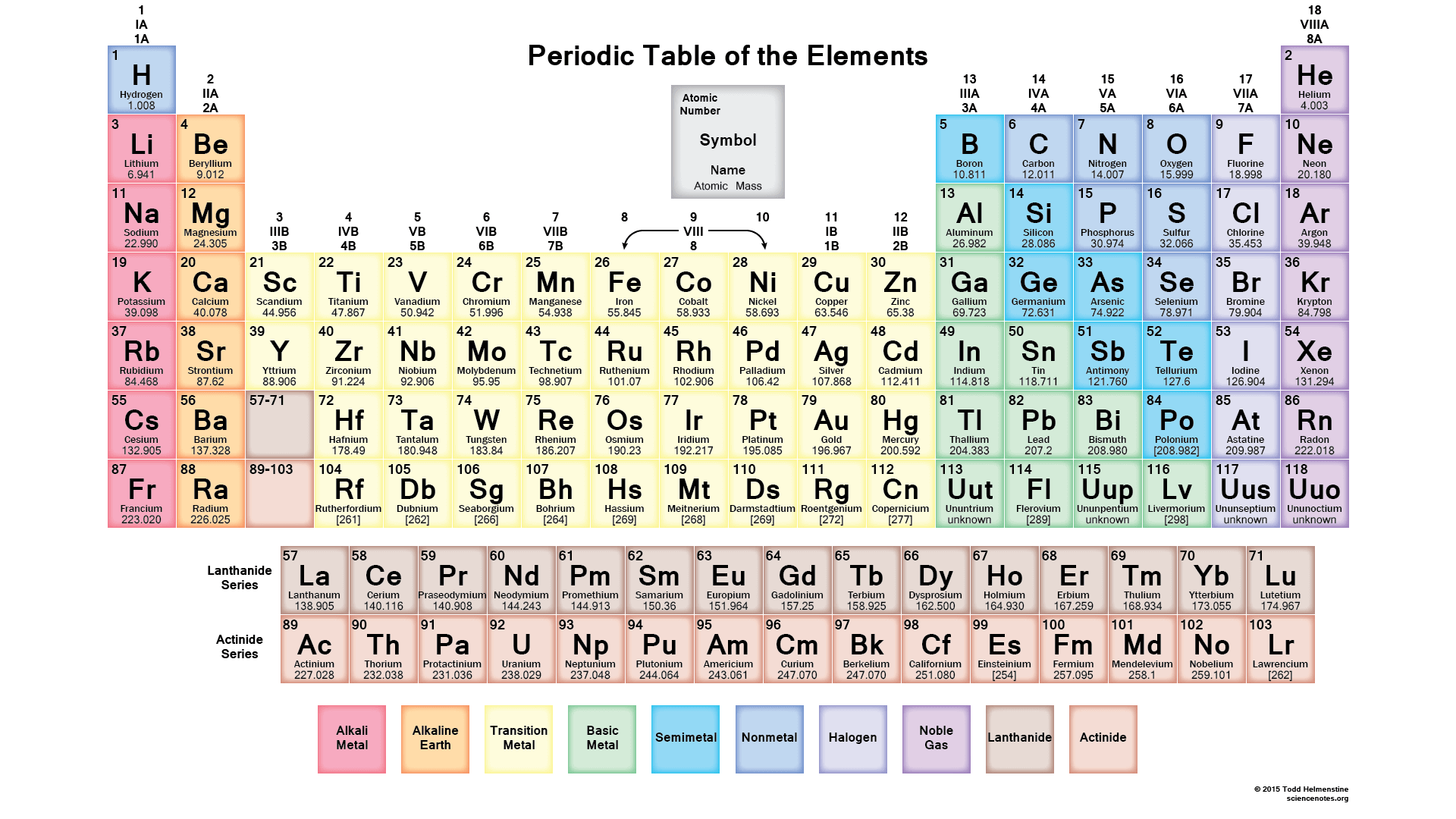
The vertical (up and down) columns in the Periodic Table are called

a)

groups

b)

towers

c)

periods

d)

atomic numbers

134.
The Modern Periodic Table of Elements is arranged by
a)
atomic mass
b)
atomic number
c)
valence electrons
d)
number of isotopes
135.
Sodium (Na) is found in period 
a)
3
b)
2
c)
4
d)
1
136.
Sodium (Na) is found in group 
a)
1
b)
2
c)
3
d)
4
137.
The phases of the moon are __________ because they repeat in a pattern.
a)
periodic
b)
group
c)
awesome
d)
halogens
138.
What does the atomic mass tell you? 
a)
Basically,the number of electrons and protons
b)
The number of neutrons
c)
Basically, the number of protons and neutrons
d)
The number of protons.
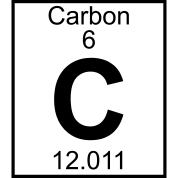
139.
What does the 6 represent?
a)
atomic mass
b)
atomic number
c)
element name
d)
chemical symbol 
140.
What does 12.011 represent?
a)
atomic mass
b)
atomic number
c)
element name
d)
chemical symbol 
141.
What does the C represent?
a)
atomic mass
b)
atomic number
c)
element name
d)
chemical symbol 
142.
These are found on the Periodic Table.
a)
Compounds
b)
Elements
c)
Mixtures
143.
All matter is made of .....
a)
energy 
b)
atoms 
c)
air
d)
chemistry
144.

What happens when two forces act in the same direction?

a)

They cancel each other out.

b)

The stronger one prevails.

c)

Their strengths are added.

d)

Their sum divided by two is the total force.

145.

The greater the mass of an object,

a)

the easier the object starts moving.

b)

the greater its inertia.

c)

the more balanced it is.

d)

the more space it takes up.

146.

The force of gravity on a person or object on the surface of a planet is called

a)

mass.

b)

weight.

c)

terminal velocity

d)

free fall.

147.

The force that one surface exerts on another when the two rub against each other is called

a. c.

b.. d. .

a)

friction.

b)

inertia.

c)

acceleration

d)

gravity

148.

The law of universal gravitation states that any two objects in the uni-verse that have mass, without exception,

a)

attract each other.

b)

repel each other.

c)

combine to provide a balanced force.

d)

create friction

149.

Forces can be added together only if they are

a)

acting on the same object

b)

unaffected by gravity

c)

balanced forces

d)

substantial

150.

According to Newton’s third law of motion, when a hammer strikes and exerts force on a nail, the nail

a)

creates a friction with the hammer.

b)

disappears into the wood.

c)

exerts an equal and opposite force on the hammer.

d)

moves at a constant speed.

151.

The overall force on an object after all the forces are added together is called the

a)

balanced force

b)

unbalanced force

c)

net force

d)

centripetal force

152.

The force of gravity between you and Earth is greater than the force of gravity between you and a car because Earth has more ____________________ than the car.

a)

mass

b)

density

c)

force

d)

friciton

153.

A skydiver with a mass of 70 kg accelerates to Earth at a rate of 9.8 m/s2 due to gravity. What is the force on the skydiver?

a)

79.8 Newtons

b)

7.14 Newtons

c)

0.14 Newtons

d)

68.60 Newtons

154.
Peanut ran 50 meters in 10 seconds.  What was Peanut's average speed?
a)
2 m/s
b)
5 km/h
c)
5 m/s
d)
5 m/s North
155.
The force of __________________ is a type of friction that works against the motion of falling objects.
a)
Terminal Velocity
b)
Gravity
c)
Free Fall
d)
Air Resistance
156.
A force is a ____________________
a)
push or pull
b)
motion
c)
speed
d)
net force
157.
If you traveled to Jupiter, what would change?
a)
Your weight and mass
b)
your weight
c)
your mass
d)
your height
158.

Acceleration equals the change in speed, divided by...

a)

Speed

b)

Distance

c)

Time

d)

Initial Speed

159.

Velocity consists of both...

a)

Time & Distance

b)

Speed & Direction

c)

Time & Direction

d)

Speed & Distance

160.

Any change in position is....

a)

Velocity

b)

Motion

c)

Speed

d)

Acceleration

161.

To find average speed of an object, you must know...

a)

Distance & Time

b)

Distance & Velocity

c)

Time & Speed

d)

Distance & Acceleration

162.

What is speed?

a)

The rate at which an object changes position

b)

The rate at which an object slows down

c)

How fast an object is moving at any given moment

d)

A speedometer

163.

Speed =

a)

Distance ÷ Speed

b)

Velocity ÷ Time

c)

Distance x Time

d)

Distance ÷ Time

164.

Which of the following is NOT an example of acceleration?

a)

A truck slowing down for a stop sign

b)

A motorcycle turning a corner at a consistent speed

c)

A truck driving straight and using cruise control

d)

A plane taking flight