
 Worksheets
8.5ABC Review - Extra Credit
Total questions: 162
Worksheet time: 5hrs 47mins
The smallest particle of an element that cannot be broken down further without changing the properties of the element.
cell
atom
charge
isotope
What is in the center of an atom?
way
structure
cell
nucleus
The area of space surrounding the nucleus.
proton
isotope
electron cloud
neutron
Subatomic particles within the atom.
protons, neutrons, and electrons
neutrons, isotopes, rotopes
protons, botons, critons
neutrons, botons, rotopes
Which subatomic particle does not have an electrical charge and is found inside of the nucleus?
electrons
protons
neutrons
isotopes
Positively charged particles found in
the nucleus of an atom.
electrons
neutrons
isotopes
protons
Negatively charged particles within the electron cloud outside the nucleus.
neutrons
protons
electrons
isotopes
If the number of protons equals the number of electrons in the atom the electrical charge is-
negative
neutral
positive
If there are more protons than electrons, the
atom is ______ charged.
positively
negatively
neutral
If there are more electrons than protons, the atom is _______ charged.
positively
negatively
neutral
Where are electrons found?
proton cloud
nucleus
neutron cloud
electron cloud
_____ have a smaller mass than protons and neutrons.
isotopes
electrons
ions
breons
The three smaller components that make up atoms are
neutrons, protons and ions.
neutrons, electrons and protons.
protons, ions and electrons.
electrons, neutrons and ions.
Which of the following lists the two particles found together inside the nucleus of an atom?
Photons and ions
Neutrons and electrons
Protons and neutrons
Electrons and protons
Which of the following correctly lists the pair of subatomic particles that balance the charge of the atom?
Protons and neutrons
Electrons and neutrons
Protons and electrons
Electrons and ions
What is the charge of a proton?
Negative
Positive
Neutral
What is the charge of a neutron?
Negative
Positive
Neutral
Which subatomic particles are found in the nucleus of an atom?
Protons and Electrons
Protons and Neutrons
Neutrons and Electrons
Protons, Neutrons and Electrons
What best describes the nucleus?
Located in the center of the atom, holds the atom's mass, and is positively charged.
Located in the center of the atom, does not hold the atom's mass and is negatively charged
Located in the center of the atom, holds the atom's mass, and has no charge
Located in the center of the atom, does not hold the atom's mass, and is positively charged.
What best describes a neutron?
It is located outside of the nucleus and has a negative charge
It is located inside of the nucleus and has a positive charge
It is located outside the nucleus and has no charge
It is located inside the nucleus and has no charge
What best describes a proton?
It is located outside the nucleus and has a positive charge.
It is located inside the nucleus and has a positive charge.
It is located inside the nucleus and has no mass
It is located inside the nucleus and has no charge.
What best describes an electron?
It is located outside of the nucleus and has a negative charge
It is located outside of the nucleus and has no charge
It is located inside the nucleus and has a mass
It is located inside of the nucleus and has no mass
Which subatomic particle has a negative charge?
proton
neutron
electron
all of the above
What best describes a proton?
It is located outside the nucleus and has a positive charge.
It is located inside the nucleus and has a positive charge.
It is located inside the nucleus and has no mass
It is located inside the nucleus and has no charge.
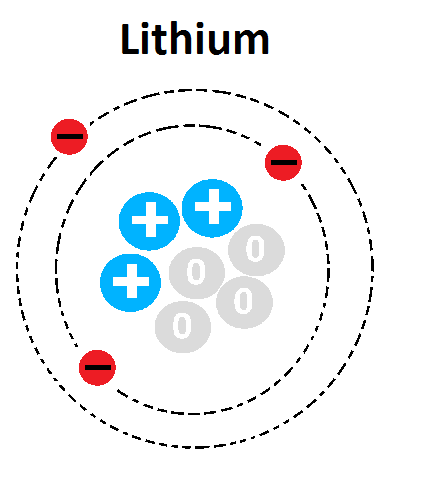
What is the atomic number of this atom?
1
3
4
7

What is the atomic number of this atom?
8
16
24
none of the above

True or False - Protons and Neutrons have about the same mass.
True - They have about the same mass
False - They do not have about the same mass
Which statement correctly describes the location and charge of the neutrons in an atom?
The neutrons are inside the nucleus and have a positive charge.
The neutrons are outside the nucleus and have a neutral charge.
The neutrons are outside the nucleus and have a negative charge.
The neutrons are inside the nucleus and have a neutral charge.
What type of particles are found in the cloud surrounding the atom's nucleus?
Neutral particles and positively charge particles
Positive charge particles only
Negatively charge particles and positively charge particles
Negatively charge particles only
Which of the following best describes a proton?
It has a positive charge and the same mass as an electron
It has a neutral charge and the same mass as an neutron
It has a positive charge and the same mass as an neutron
It has a negative charge and the same mass as an electron


What are valence electrons?
The total number of electrons in an atom
The number of electrons in the outermost shell
The number of electrons in the second shell
The number of protons in the outermost shell


What is the atomic mass of an atom with 32 protons and 31 neutrons?
31
32
62
63
How many neutrons are there for an atom with a mass of 20 and 11 protons?
9
11
20
31
How many protons are there for an atom with 16 neutrons and atomic mass of 33?
16
17
18
33
What is the atomic mass of element 5 if it has 6 neutrons?
5
6
11
30
How many neutrons does element 11 have if it has an atomic mass of 21?
10
11
12
32

The following subatomic particles are in the nucleus.
Protons and nucleus.
Protons and neutrons.
Protons and electrons
Neutrons and electrons

__________ are negatively charged particles that are in the orbitals around the nucleus.
protons
nucleus
neutrons
electrons

A proton has a ___________ charge.
positive
negative
neutral
massive.
An electron has a _________ charge
positive
neutral
negative
massive
A neutron has _________ charge or is ________.
negative ... neutral
positive .... neutral
no .... negative
no ... neutral

A student drew atomic models of four elements.
Based on these drawings, which element is the least reactive?
Neon, because it has two energy levels with eight electrons in the second level
Chlorine, because it has three energy levels with seven electrons in the third leve
Gallium, because it has four energy levels with three electrons in the fourth level
Tin, because it has five energy levels with four electrons in the fifth level

A chemist made the table below to record some atomic properties of four elements.
Based on the information in the table, which conclusion about the chemical reactivity of these elements is valid?
Boron is the most reactive because it has the most protons.
Fluorine is the most reactive because it has 7 electrons in the outer shell.
Silicon is the most reactive because it has an equal number of protons and neutrons
Gallium is the most reactive because it has many more neutrons than protons.

Four students were asked to name the parts of an atom that determine the atom’s identity and chemical properties. The students’ responses are shown in the table below.
Which student’s responses are correct?
Student 1
Student 2
Student 3
Student 4

Tin, Sn, is a soft white metal. It has a low melting point compared with other metals. Tin is widely used as a coating for cans of food. Which statement accurately describes atoms of tin?
Tin atoms have 50 protons.
Tin atoms have five valence electrons.
Tin atoms have 119 neutrons.
Tin atoms have 68 electrons.
The atoms of a certain element each contain 11 protons and 1 valence electron. Which statement correctly identifies this element and describes its chemical reactivity?
The element is fluorine, and it is not very reactive.
The element is sodium, and it is not very reactive.
The element is sodium, and it is highly reactive.
The element is fluorine, and it is highly reactive.
A chemist is identifying the elements present in a sample of seawater. What characteristic of an element’s atoms always determines the element’s identity?
The number of valence electrons
The location of valence electrons
The number of neutrons
The number of protons

A student is studying calcium, a highly reactive element that humans need for strong bones. Which characteristic of calcium is most closely related to its chemical reactivity?
The 20 protons in each atom of calcium
The density of calcium, which is 1 5. g 4 /cm3
The atomic mass of calcium, which is 40.078 amu
The 2 valence electrons in each atom of calcium

How many valence electrons are in an atom of each element in Group 15 in the periodic table?
(answer should be a number only: example- 8)
(a)

Four students were asked to complete a table for a science assignment. Each student selected one chemical element from each of four groups in the periodic table and then classified each element as a metal, a nonmetal, or a metalloid. Which table was completed correctly?


Students were asked to identify the location of elements in the periodic table based on clues printed on game cards.
Based on the data, which periodic table shows the correct location of the four elements?


Which pair of properties describes the elements in Group 18?
They are chemically stable and liquid at room temperature.
They have eight valence electrons and are flammable.
They are magnetic and boil at low temperatures.
They are gaseous at room temperature and chemically stable.

Element R and Element Q have the same number of valence electrons. These elements both have similar chemical behavior, but Element R has fewer energy levels than Element Q.
Which statement best describes the positions of the two elements in the periodic table?
The two elements are in the same group, with Element Q at the top of the group and Element R at the bottom.
The two elements are side by side in the same period, with Element Q to the left of Element R.
The two elements are in the same group, with Element R just above Element Q.
The two elements are in the same period, with Element R the first element in the period and Element Q the last element.

Students in a science class prepared flash cards so that they could quiz one another about the arrangement of the periodic table. One of the flash cards contained information about two elements, Element L and Element M.
The students had to use the information on the flash card to determine possible positions of the two elements on a blank periodic table. Which periodic table has the elements placed in locations that match the information on the flash card?


The periodic table is organized into groups and periods of elements. The characteristics of a certain group of elements are listed below.
Which of these elements is in this group?
Lithium
Strontium
Aluminum
Silicon

Which two elements on the periodic table are in the same period?
Sn and Rb
F and Cl
K and Ba
Se and Te
The number of protons in an atom is equal to the element’s-
mass number
isotope
valence
atomic number
The number of protons + neutron of an atom is-
atomic number
mass number
isotope
valence
Atoms of the same element that have varying numbers of neutrons are-
isotopes
inropes
retopes
coropes
In an atom, electrons are located outside of the nucleus in an-
electron nucleus
rain cloud
electron cloud
dry cloud
An electron cloud is arranged in groups known as-
electron energy
group electrons
isotopes
energy levels/shells
Electrons in an energy level close to the nucleus are _________ in energy than electrons in an energy level further from the nucleus.
higher
lower
The first energy level that is closest to the
nucleus can hold ___ electrons. The next energy levels can hold __electrons.
2,2
8,2
8,8
2, 8
The electrons found in the highest energy level that are furthest from the nucleus in the outermost level are called the ____ electrons.
atomic
valence
energy
isotope
Atoms with _______ electrons in the valence shell (highest level, most outer shell) are the most stable.
6
12
2
8
The smallest particle of an element that cannot be broken down further without changing the properties of the element.
cell
atom
charge
isotope
What is in the center of an atom?
way
structure
cell
nucleus
The area of space surrounding the nucleus.
proton
isotope
electron cloud
neutron
Subatomic particles within the atom.
protons, neutrons, and electrons
neutrons, isotopes, rotopes
protons, botons, critons
neutrons, botons, rotopes
Which subatomic particle does not have an electrical charge and is found inside of the nucleus?
electrons
protons
neutrons
isotopes
Positively charged particles found in
the nucleus of an atom.
electrons
neutrons
isotopes
protons
Negatively charged particles within the electron cloud outside the nucleus.
neutrons
protons
electrons
isotopes
If the number of protons equals the number of electrons in the atom the electrical charge is-
negative
neutral
positive
If there are more protons than electrons, the
atom is ______ charged.
positively
negatively
neutral
If there are more electrons than protons, the atom is _______ charged.
positively
negatively
neutral
Where are electrons found?
proton cloud
nucleus
neutron cloud
electron cloud
_____ have a smaller mass than protons and neutrons.
isotopes
electrons
ions
breons
An element can be identified by its unique number of –
ions.
electrons.
protons.
neutrons.
The reactivity of an atom is determined by –
its number of valence electrons.
the radius of the atom’s nucleus.
its atomic mass of the element.
the orbital path of its electrons.
The smallest particle of an element that cannot be broken down further without changing the properties of the element.
cell
atom
charge
isotope
What is in the center of an atom?
way
structure
cell
nucleus
The area of space surrounding the nucleus.
proton
isotope
electron cloud
neutron
Subatomic particles within the atom.
protons, neutrons, and electrons
neutrons, isotopes, rotopes
protons, botons, critons
neutrons, botons, rotopes
Which subatomic particle does not have an electrical charge and is found inside of the nucleus?
electrons
protons
neutrons
isotopes
Positively charged particles found in
the nucleus of an atom.
electrons
neutrons
isotopes
protons
Negatively charged particles within the electron cloud outside the nucleus.
neutrons
protons
electrons
isotopes
If the number of protons equals the number of electrons in the atom the electrical charge is-
negative
neutral
positive
If there are more protons than electrons, the
atom is ______ charged.
positively
negatively
neutral
If there are more electrons than protons, the atom is _______ charged.
positively
negatively
neutral
Where are electrons found?
proton cloud
nucleus
neutron cloud
electron cloud
_____ have a smaller mass than protons and neutrons.
isotopes
electrons
ions
breons
The three smaller components that make up atoms are
neutrons, protons and ions.
neutrons, electrons and protons.
protons, ions and electrons.
electrons, neutrons and ions.
Which of the following lists the two particles found together inside the nucleus of an atom?
Photons and ions
Neutrons and electrons
Protons and neutrons
Electrons and protons
Which of the following correctly lists the pair of subatomic particles that balance the charge of the atom?
Protons and neutrons
Electrons and neutrons
Protons and electrons
Electrons and ions
How do you find the number of neutrons in an atom?
Mass + Atomic Number
Mass - Atomic Number
For our class APE means-
A Pretty Elephant
A
Pimple
Explodes
Atomic Number =
Protons=
Electrons
For our class, the MAN (like in APE MAN) means-
My
Aunt
Nuts
Mass - Atomic Number =
Neutrons

Based on the data, which number shows the correct location of the element with 2 valence electrons and 3 energy levels.
1
2
3
4

Based on the data, which number shows the correct location of the element with 2 valence electrons and 1 energy levels.
1
2
3
4
Which pair of properties describe the elements in group 18
They have 8 valence electrons and are very reactive
They have 8 energy levels and are stable
They are gases at room temperature and are stable
They are gases at room temperature and very reactive.

Which statement best describes the position of the two elements in the periodic table.
The two elements are in the same period, with Mg the first element in the period table and Ca the last element
The two elements are in the same group, with Mg just above Ca
The two elements are side by side in the same period, with Ca to the left of Mg
The two elements are in the same group, with Ca just below Mg

Which of these elements is in this group?
Lithium
Silicon
Aluminum
Strontium
Which two elements on the periodic table are in the same group?
Na and He
O and C
Li and Ne
He and Ar
Which pair of properties describes the elements in Group 1?
They are chemically stable
They have 8 valence electrons
They are the most reactive metals
They are the most reactive non metals
How many valence electrons are in an element in group 15 in the periodic table?
5
15
7
8

Which two atoms are elements in the same group in the periodic table?
Atom 3 and Atom 4
Atom 1 and Atom 4
Atom 3 and Atom 2
Atom 1 and Atom 2
Which two atoms are elements that belong in period two in the periodic table?
Atom 3 and Atom 4
Atom 1 and Atom 4
Atom 3 and Atom 2
Atom 1 and Atom 2
Based on the data, which number shows the correct location of the element that is brittle and dull.
1
2
3
4
Based on the data, which number shows the correct location of the element that is malleable and a good conductor.
1
2
3
4
______ always gives the identify of the atom.
Protons
Neutrons
Electrons
Elements in the same period/row have the same--
# of valence electrons
# of protons
# of energy shells
# of neutrons
How many periods are on the Periodic Table?
6
7
8
9
The mass of the atom is located ---
in the Nucleus
in the Electron Cloud
protons only
neutrons only
Which element is NOT in Period 3 on the Periodic Table?
Na
Ar
P
Ne
These two subatomic particles contribute to the mass of the atom.
Protons and Electrons
Protons and Neutrons
Electrons and Neutrons
The volume of the atom is located in the --
in the Nucleus
in the Electron Cloud
The atoms of a certain element each contain 18 protons and 8 valence electrons.
What is the element's name?
Argon
Krypton
Neon
Sodium
How many protons will the element in Group 7A, Period 4 have?
9
16
34
35
How many electrons will the element in Group 3A, Period 4 have?
31
13
11
54
What element has similar properties of Cesium (Cs), but a larger atomic mass?
Magnesium (Mg)
Barium (Ba)
Rubidium (Rb)
Francium (Fr)
Elements in the same group/family--
have the same # of valence
behave the same
have the same # of energy shells
are in the same period
How many neutrons will the element in Group 2A, Period 2 have?
2
3
5
6
How many neutrons will an atom of Calcium (Ca) have?
10
14
16
20
These types of elements are BRITTLE and DO NOT conduct electricity.
Metals
Nonmetals
Metalloids
An atom of a certain element has 53 protons, 53 electrons and a mass number of 127.
How many neutrons are in this atom?
64
74
106
180
Which elements have 3 valence electrons?
Scandium
Boron
Aluminum
Lithium
Hydrogen (H) is a --
Metal
Nonmetal
Metalloid
Aluminum (Al) is a --
Metal
Nonmetal
Metalloid
Oxygen (O) is a --
Metal
Nonmetal
Metalloid
Scandium (Sc) and Calcium (Ca) are both in the same group/family.
True
False
An element is shiny, solid at room temperature, and has two valence electrons. Which of these elements could be in this group?
Lithium (Li)
Strontium (Sr)
Aluminum (Al)
Silicon (Si)
Group 8A are called Alkali metals and are the most reactive group.
True
False
The electron cloud contains electrons and --
protons
neutrons
gas and dust
empty space
Which of the following is the best description of an atom?
A core of protons surrounded by electrons
Protons and neutrons grouped in loose arrangements
A core of protons and neutrons surrounded by electrons
Protons, neutrons, and electrons grouped in a solid core
What statement about a proton is correct?
A proton has no electrical charge
A proton has a positive electrical charge
A proton has a negative electrical charge
A proton can have either a positive or a negative electrical charge
A neutral atom is an atom with the same number of:
electrons and neutrons
protons and neutrons
protons and electrons
electrons and valence electrons
the electrons in the electron cloud--
remain in place
move along a pathway
vibrate in place
move about chaotically with no pathway
The atomic number of an atom is determined by the number of --
Protons in the atom's nucleus
Neutrons in the atom's nucleus
Electrons in the atom's electron cloud
Protons and neutrons in the atom's nucleus
Nitrogen has a mass of 14 AMU and 7 protons. How many neutrons does nitrogen have?
21
14
7
8
Valence electrons determine an atom's--
proton number
chemical reactivity
atomic mass
atomic number
Most elements in the Periodic Table are classified as --
Metals
Noble gases
Nonmetals
Reactants
What types of particles are found in the cloud surrounding the atom's nucleus?
Positively charged particles and negatively charged particles
Negatively charged particles only
Neutral particles and positively charged particles
Positively charged particles only
The electrons in the electron cloud
remain in place
vibrate in place
move along a pathway
move about chaotically with no pathway
Which description best describes a Neutron?
positive charge, 1 amu, located in the nucleus
negative charge, 0 amu, located in the electron cloud
neutral charge, 1 amu, located in the nucleus
negative charge, 1 amu, located in the nucleus
Which is NOT found in the nucleus of an atom?
Neutrons
Protons
the mass of an atom
electrons
What do the letters A=P=E represent?
atomic number, protons, electrons
atomic mass, protons, electrons
atomic number, periods, energy shells
atomic mass, periods, energy shells
What do the letters in M-A=N represent?
mass number, atomic number, nucleus
atomic mass, atomic number, neutrons
mass number, atomic mass, neutrons
atomic mass, atomic number, nucleus

