wayground logo

Free Printable Worksheets

Font size

S
M
L
XL
Worksheets

Q3 mini 1 (Life Science)

Total questions: 157

Worksheet time: 2hrs 20mins
Name
Class
Date
1.
When scientists group objects together according to their characteristics, this process is called
a)
fungi
b)
species
c)
protists
d)
classification
2.
Each living creature is grouped into one of six
a)
kingdoms
b)
invertebrates
c)
eubacteria
d)
mammals
3.
The ____________ kingdom includes decomposers , such as mushrooms.
a)
kingdoms
b)
fungi
c)
archaebacteria
d)
nonvascular
4.
Multicellular organisms that use sunlight to create food are grouped into the _____________  kingdom.
a)
plant
b)
animal
c)
fungi
d)
protist
5.
____________________ are vertebrates that are warm-blooded, have hair, and give birth to live young. 
a)
mammals
b)
animals
c)
amphibians
d)
protists
6.
The ________________ kingdom can be divided into two groups; those with backbones and those without.
a)
animal
b)
mammal
c)
vertebrates
d)
invertebrates
7.
Organisms that have backbones are called 
a)
animals
b)
invertebrates
c)
vertebrates
d)
mammals
8.
Organisms that do not have backbones are called
a)
animals
b)
mammals
c)
vertebrates
d)
invertebrates
9.
The smallest groups into which organisms can be classified are called
a)
species
b)
kingdoms
c)
classess
d)
orders
10.
One group of animal vertebrates called ______________ start their lives in the water but move onto land as adults.
a)
amphibians
b)
species
c)
protists
d)
fungi
11.
Three kingdoms that contain cellular organisms are 
a)
eubacteria, fungi and animals
b)
eubacteria, archaebacteria and protists
c)
fungi, eubacteria and plants
d)
amphibians, plants and animals
12.
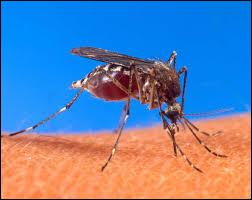
Mosquito  belongs to what kingdom?
a)
Animal Kingdom
b)
Plant Kingdom
c)
Fungi Kingdom
d)
Protista Kingdom
13.
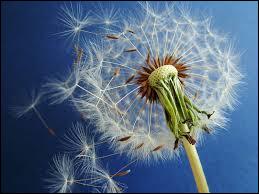
Dandelion, What kingdom does it belongs to?
a)
Plant Kingdom
b)
Animal Kingdom
c)
Fungi Kingdom
d)
Protista Kingdom
14.
Organisms in this smallest taxonomic group share many characteristics.
a)
domain
b)
kingdom
c)
species
d)
class
15.
The science of describing, classifying, and naming living things is called:
a)
Geology
b)
Biology
c)
Taxonomy
d)
Chemistry
16.
An organism made up of more than one cell would be called:
a)
multicellular
b)
unicellular
c)
heterotroph
d)
autotroph
17.
An example of an unicellular organism would be:
a)
monkey
b)
bacteria
c)
spider
d)
human
18.

The scientific name given to an organism is based on binominal nomenclature.

a)

True

b)

False

19.

Naming system developed by Linnaeus

a)

Classification

b)

Binominal Nomenclature

c)

Genus

d)

Taxonomy

20.
The most specific level of classification is 
a)
Domain
b)
Kingdom
c)
Genus
d)
Species
21.
Term given to describe the 2 name naming system is:
a)
dichotmous key
b)
binomial nomenclature
c)
2 scientific names
d)
binomial key
22.
Which is the correct order of The Levels of Taxonomy?
a)
Kingdom, Phylum, Class, Order, Family, Genus, Species
b)
Kingdom, Phylum, Order, Class, Family, Genus, Species
c)
Kingdom, Phylum, Family, Class, Order, Genus, Species
d)
Species, Genus, Family, Class, Order, Phylum, Kingdom
23.
Which of the following organisms are LEAST closely related?
a)
organisms that share a domain
b)
organisms that share a family 
c)
organisms that share a genus 
d)
organisms that share a species 
24.
The scientific name for an organism is made from the:
a)
class and family name
b)
genus and species name
c)
domain and kingdom name
d)
kingdom and phylum name
25.
Cells that do not have a nucleus are called....
a)
eukaryote
b)
prokaryote
c)
unicellular
d)
multicellular
26.
Cells that have a nucleus are called....
a)
eukaryotes
b)
prokaryotes
c)
unicellular
d)
multicellular
27.
What level comes immediately after "order" in the classification levels?
a)
family
b)
genus
c)
phylum
d)
class
28.

Which of the following is NOT a characteristic of all living things?

a)

responds to stimuli

b)

has a brain

c)

reproduces

d)

made of cells

29.
What can an autotrophic organism do that a heterotrophic organism can NOT?
a)
Make their own food 
b)
Have a nuclues
c)
Reproduce through binary fission
d)
They're the same
30.
Largest taxonomic category.
a)
Domain
b)
Phylum
c)
Class
d)
Order
31.
Has to eat other organisms
a)
Heterotroph
b)
Autotroph
c)
Plantae
d)
Linnaeus
32.

May occur in all body cells

a)

mitosis

b)

meiosis

33.

occurs only in reproductive cells

a)

mitosis

b)

meiosis

34.

produces gametes

a)

mitosis

b)

meiosis

35.

a single division

a)

mitosis

b)

meiosis

36.

a double division

a)

mitosis

b)

meiosis

37.

results in 2 identical daughter cells

a)

mitosis

b)

meiosis

38.

results in 4 cells that are different from the first cell and each other

a)

mitosis

b)

meiosis

39.

Ends with the same number of chromosomes- Diploid

a)

mitosis

b)

meiosis

40.

Ends with Half the number of chromosomes in each cell- Haploid

a)

mitosis

b)

meiosis

41.

used for growth and repair

a)

mitosis

b)

meiosis

42.
What process does a multi-cellular organism use to replace its damaged body cells?
a)
mitosis
b)
meiosis
c)
replication
d)
transcription
43.
The cells produced via meiosis are called:
a)
sex cells
b)
somatic cells
c)
body cells
d)
skin cells
44.
Unlike mitosis, meiosis in male mammals results in the formation of
a)
one haploid gamete
b)
three diploid gametes
c)
four diploid gametes
d)
four haploid gametes
45.
Why do we need meiosis?
a)
To double the number of chromosomes going into sex cells
b)
To halve the number of chromosomes going into sex cells
c)
To triple the number of chromosomes going into sex cells
d)
To not change the number of chromosomes going into sex cells
46.
products of meiosis are genetically
a)
different
b)
identical
47.
This picture shows which process? 
a)
mitosis
b)
meiosis
c)
the cell cycle
48.
Human eggs and sperm are _____, and each has ____ chromosomes.
a)
diploid, 23
b)
diploid, 46
c)
haploid, 23
d)
haploid, 46
49.
Why would it be important to replicate DNA before a cell divides in mitosis or meiosis?
a)
In order for genetic information to be transferred into daughter cells.
b)
In order for the cell to be able to increase in size.
c)
In order for the DNA to be contained in the nucleus.
d)
In order for the cell to re-order the DNA sequencing in the new cells.
50.
Meiosis produces different types of cells than mitosis. If there was a "meiosis club," all of these cells could be included EXCEPT
(Which cell type is not produced in meiosis?)
a)
gametes
b)
body cells
c)
sperm cells
d)
egg cells
51.
Mitosis is useful for the creation of new cells which is important for all of the following EXCEPT
a)
organism growth.
b)
repair of damage.
c)
replacement of worn out cells.
d)
generation of gametes.
52.
Meiosis makes sperm and egg cells. In humans, sperm and egg cells each have _____ chromosomes. Therefore a fertilized human egg cell (sperm and egg cell combined) would create a cell with _____ chromosomes.
a)
23, 46
b)
46, 23
c)
2, 4
d)
50, 100
53.
Have you ever heard of a skin graft? Skin cells can be harvested from one area and be grown in order to help burn victims or other skin injuries. Which process would result in the development of more skin cells in this treatment? 
a)
Mitosis
b)
Meiosis
c)
Crossing Over
d)
Interphase
54.
What are chromosomes?
a)
The control center
b)
Condensed chromatin
c)
Handle for spindle fibers
d)
Microtubules
55.
How is the number of chromosomes in a human sex cell different from the number in a human body cell? 
a)
A sex cell has 23 chromosomes and a body cell has 46. 
b)
A sex cell has 46 chromosomes and a body cell has 23.
c)
A sex cell has chromosomes that are half
d)
A sex cell has chromosomes that are twice as long as those in a body cell. 
56.
Dante wants to match the types of cells with how they are produced. Which choice correctly matches a type of cell with how it is produced? 
a)
Egg cell --> meiosis in males 
b)
Sperm cell --> mitosis in males
c)
Body cell --> mitosis in females
d)
Body cell --> meiosis in females
57.
The diagram above shows a human cell. What type of cell is this? 
a)
A reproductive cell (sex cell) made from mitosis 
b)
A body cell made from mitosis 
c)
A body cell made from meiosis 
d)
A reproductive cell (sex cell) made from meiosis
58.
How is meiosis related to sexual reproduction?
a)
Meiosis allows the offspring produced during sexual reproduction to grow and develop.
b)
Meiosis joins together the sex cells during sexual reproduction to produce new offspring
c)
Meiosis produces the sex cells that join to form new offspring during fertilization.
d)
Meiosis produces the body cells that join to form new offspring during fertilization. 
59.
Which of these choices is made from the process of mitosis?
a)
Egg
b)
Sperm
c)
Sex Cell
d)
Skin Cell
60.
Which of these choices is NOT a reason for mitosis taking place in a multi-cellular organism? 
a)
Growth
b)
Repairing Wounds
c)
Asexual Reproduction
d)
Making Sex Cells
61.
Which of these statements is true of asexual reproduction?
a)
It produces offspring genetically identical to each other and requires one parent. 
b)
It produces offspring genetically identical to each other and requires two parents.
c)
It produces offspring genetically different from each other and requires one parent. 
d)
It produces offspring genetically different from each other and requires two parents. 
62.
Which type of reproduction involves two parents and results in offspring that are not genetically identical to either parent? 
a)
Binary fission
b)
Asexual reproduction 
c)
Sexual reproduction 
d)
Vegetative reproduction
63.
A group of scientists test three different types of cells – muscle cells, nerve cells, and skin cells – to find out which cell type goes through the steps of mitosis the fastest. The scientists time 100 cell divisions for each type of cell. The temperature and amount of light is the same for all of the cells. What is a controlled variable (or constant) in this investigation? 
a)
The speed of the divisions 
b)
The types of cells
c)
The temperature
d)
The age of the scientists
64.
Select the best description of a chromosome.
a)
material used to form the cell membrane
b)
tightly wound DNA that is ready for cell division
c)
long, stretched out strands of DNA
d)
molecules that form the sex cells
65.
Which reason BEST explains why reproduction is necessary?
a)
The survival of every species depends on the ability of organisms to reproduce.
b)
Reproduction decreases differences in species
c)
Reproduction creates simpler body structures.
d)
Organisms reproduce so they can move from one ecosystem to another.
66.
A homozygous dominant dog with brown fur is crossed with a heterozygous dog with brown fur. What are the percentages of the possible genotypes?
a)
100% BB
b)
75% BB and 25%Bb
c)
50 % BB and 50% Bb
d)
50% Bb and 50% bb
67.
The man who studied genetics and came up with genetics is
a)
Watson
b)
Crick
c)
Mendel
d)
Darwin
68.
Genotype refers to the ...
a)
physical expression of the genes
b)
the possible combination of alleles in a gene
c)
whether an allele is dominant or recessive
d)
how an organism will appear
69.
Squidward has light blue skin, and his genotype for this trait is Bb. Would Squidward be considered a purebred or hybrid for light blue skin?
a)
Purebred
b)
Hybrid
70.
An offspring will receive how many alleles from each parent to determine a specific trait?
a)
one
b)
two
c)
three
d)
five
71.
Which of the following is a phenotype?
a)
BB
b)
Bb
c)
bb
d)
Blue eyes
72.
What is a phenotype
a)
The genetic make up (code)
b)
The physical trait
73.
the passing of genetic traits from parent to offspring.
a)
heredity
b)
trait
c)
gene
d)
allele
74.
having two of the same genes for the trait (sometimes called purebred).
a)
homozygous
b)
hetrozygous
c)
protein
d)
chromosome
75.
having two different genes for a trait (sometimes called hybrid).
a)
protein
b)
homozygous
c)
heterozygous
d)
genotype
76.
Magda is a tall, 11 year old drummer. She has a scar on her right cheek. She is good at swimming. Which of her traits did Magda most likely inherit?
a)
height
b)
the scar
c)
ability to swim
d)
ability to play drums
77.
Two brown eyed parents (Bb) have a baby. What is the chance the baby is blue eyed?
a)
0 %
b)
25%
c)
50%
d)
75%
78.
G = green, g = yellow
The genotype for a yellow plant is...
a)
GG
b)
Gg
c)
gg
d)
all of the choices result in yellow
79.
An allele whose trait only shows up when no dominant allele is present.
a)
hidden allele
b)
dominant allele
c)
recessive allele
d)
present allele
80.
Two heterozygous (Tt) tall pea plants are crossed. Which describes their offspring?
a)
50% tall and 50% short
b)
75%tall and 25% short
c)
100%short
81.
Which answer best describes codominant alleles?
a)
Both are equally dominant
b)
Both are equally recessive
c)
Neither are dominant or recessive
82.

Define Allele

a)

Different Forms of a gene

b)

The factors that control traits

c)

An organisms physical appearance

83.

Define Gene

a)

The factors that control traits

b)

Organism that has two different alleles for that trait

c)

The likelihood that a particular event will occur

84.

Define trait

a)

The kids

b)

Different physical characteristics

c)

An allele that is covered up

85.

Define Punnet square

a)

The factors that control traits

b)

The chart that shows all genes

c)

A chart that shows all the genetic possibilities and combos

86.

Pick all of the Genotypes

a)

Dimples

b)

Pp

c)

Right handed

d)

YY

87.

Pick the examples of Phenotypes

a)

Straight hair

b)

Brown eyes

c)

Rr

d)

TT

88.
what predicts the outcome
a)
genetic engineering
b)
punnet square
c)
probability
89.
True/False: Different genotypes can code for the same phenotype.
a)
True
b)
False
90.
What does a Punnett Square help you do?
a)
Determine the ratio of phenotypes
b)
Determine the ratio of genotypes
c)
Predict possible traits the offspring will have
d)
All of the above
91.
Purple is dominant to white. A heterozygous purple flower is crossed with a white flower. What are the genotypes and phenotypes of the offspring?
a)
100% Pp (purple)
b)
50% Pp (purple); 50% pp (white)
c)
75% Pp (purple); 25% pp (white)
d)
25% PP, 50% Pp, 25% pp
75% purple, 25% white
92.
Which is the correct phenotype for this organism?
a)
BB
b)
blue
c)
green
d)
bb
93.
What is the genotype for this organism?
(E= 3 eyes, e= 1 eye)
a)
EE
b)
Ee
c)
ee
d)
EE or Ee
94.
Brown fur color is dominant over black fur color. Which of the following is the actual genotype of ALL of the offspring in the next generation of this cross for fur color?
AA x aa
a)
AA
b)
Aa
c)
aa
d)
brown fur
95.
B - black, b - brown.  Two black mice mate and have some black and some brown mice.  What is the genotype of the parents?
a)
BB x Bb
b)
BB x bb
c)
Bb x Bb
d)
Bb x bb
96.
Pairs of genes that control the same trait are known as
a)
allelles
b)
gametes
c)
hybrids
d)
loci
97.
In certain rats, black fur is dominant over white fur. If two rats, both heterozygous for fur color are mated, their offspring would be expected to have 
a)
four different genotypes and two different colors
b)
two different genotypes and three different colors
c)
three different genotypes and two different colors
d)
three different genotypes and three different colors
98.
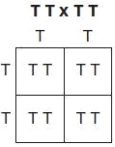
B = brown fur  b = white fur
In the punnett square, what is the probability for white fur? 
a)
0%
b)
25%
c)
50%
d)
75%
99.
Two brown eyed parents (Bb) have a baby. What is the chance the baby is blue eyed?
a)
0 %
b)
25%
c)
50%
d)
75%
100.
Complex molecule that carries genetic information that defines an organism's traits. It is stored in the nucleus.
a)
DNA
b)
protein
c)
RNA
d)
glucose nucleic acid (GNA)
101.
How many alleles (letters) does a child get from each parent for each trait?
a)
1
b)
2
c)
3
d)
4
102.
What you see, or the physical appearance.
a)
Genotype
b)
Phenotype
c)
Homozygous
d)
Heterozygous
103.
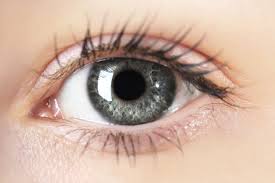
B = brown eyes
b = blue eyes
What is true about these two brothers that have brown eyes?
One has genotype BB the other Bb.
a)
they have same phenotype and genotype
b)
they have different genotypes and phenotypes
c)
they have same phenotype but different genotypes
d)
they have same genotype but different phenotypes
104.
What ratio of the offspring from the cross shown will be homozygous recessive for the  trait of tallness? 
a)
0 in 4
b)
1 in 4
c)
2 in 4
d)
4 in 4
105.
In a pedigree, what shape represents a male?
a)
circle
b)
square
c)
triangle
d)
diamond
106.
What gender has an X and a Y chromosome?
a)
male
b)
female
c)
transgender 
d)
all of the above
107.

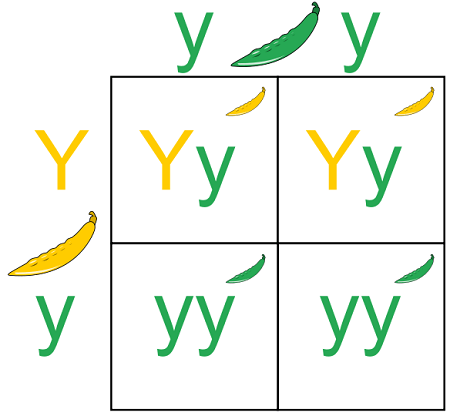
Draw a Punnett Square on Scratch paper! In Pea plants, yellow seeds are dominant to green seeds. If a heterozygous yellow pea plant pollinated a pea plant with green seeds, what is the probability their offspring would be yellow?

a)

0%

b)

25%

c)

50%

d)

75%

e)

100%

108.

Which choice best represents the genotypes of the offspring shown. ?

a)

1 heterozygous: 2 homozygous recessive: 0 homozygous dominant

b)

2 heterozygous: 2 homozygous recessive: 0 homozygous dominant

c)

3 heterozygous: 1 homozygous recessive: 0 homozygous dominant

d)

1 heterozygous: 3 homozygous recessive: 0 homozygous dominant

109.
Which of the following alleles is homozygous (purebred) recessive?
a)
Tt
b)
tt
c)
TT
d)
t
110.

Alternate form of a gene (ex. blue eyes vs brown eyes)

a)

allele

b)

gene

c)

trait

d)

dominant

111.

The father's genotype is __________

a)

homozygous

b)

heterozygous

112.

The passing of traits from a parent to their offspring.

a)

heredity

b)

traits

c)

characteristics

d)

phenotypes

113.
What is a punnett square?
a)
graph used to predict the possible genotypes of offspring in a given cross
b)
a graph used to predict the possible birth rate of offspring.
c)
a graph used to predict the possible behavioral characteristics an offspring could have
d)
None of the above
114.
How many individuals are there in the 3rd generation?
a)
2
b)
3
c)
4
d)
6
115.
What do we use pedigrees for?
a)
To look at families
b)
To make determinations about the offspring
c)
To track traits in families
d)
Nothing
116.
Why do all the daughters in Generation II carry the colorblind gene?
a)
Because mom passed on the gene.
b)
Because dad passed on the X chromosome.
c)
Because their brother has it.
d)
Because their brother gave it to them.
117.
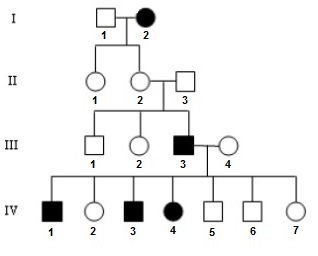
Give the genotype for person III-3
a)
GG
b)
Gg
c)
gg
118.
What does a filled in square represent?
a)
Not affected Female
b)
Not affected Male
c)
Affected Male
d)
Affected Female
119.
How many kids did the mother and father from the first generation have?
a)
2
b)
4
c)
5
d)
6
120.
This pedigree represents the inheritance of hemophilia in this family. How many of the females have the hemophilia trait?
a)
8
b)
5
c)
2
d)
3
121.
What does an open circle represent?
a)
Not Affected Male
b)
Not Affected Female
c)
Affected Male
d)
Affected Female
122.
Is this trait (the shaded individuals) dominant or recessive?
a)
dominant
b)
recessive
123.
What is this?
a)
Pedigree
b)
Karyotype
c)
Venn diagram
d)
Punnett Square
124.
In the second generation-how many people are carriers of the trait?
a)
2
b)
3
c)
5
d)
6
125.
If this pedigree shows a recessive disorder, what MUST the genotype of individual II-3 be?
a)
HH
b)
Hh
c)
hh
d)
None of the above
126.
How many kids did the mother and father from the first generation have?
a)
2
b)
4
c)
5
d)
6
127.
Which individual in the first generation is a carrier?
a)
The male
b)
The female
c)
individual 1
d)
None of the above
128.
How many girls did the mother and father from the first generation have?
a)
2
b)
4
c)
5
d)
6
129.
In a pedigree, what shape represents a male?
a)
circle
b)
square
c)
triangle
d)
diamond
130.
In the second generation-how many people are carriers of the trait?
a)
2
b)
3
c)
5
d)
6
131.
How many individuals are there in the 3rd generation?
a)
2
b)
3
c)
4
d)
6
132.
In the second generation-how many people have the disease or display the physical trait?
a)
2
b)
4
c)
5
d)
6
133.
There are no carriers for Huntington's Disease- you either have it or you don't. Is Huntington's disease caused by a dominant or recessive trait?
a)
Dominant
b)
Recessive
134.
This pedigree represents the inheritance of hemophilia in this family. How many of the females have the hemophilia trait?
a)
8
b)
5
c)
2
d)
3
135.
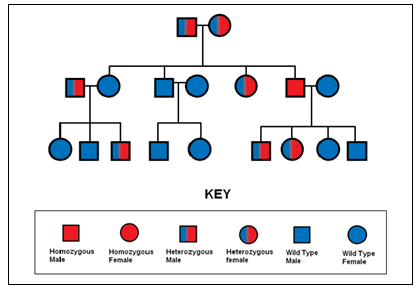
What do half colored symbols represent?
a)
The individual is a carrier (heterozygous).
b)
The individual expresses the trait.
c)
The individual has both recessive alleles.
d)
The individual has both dominant alleles.
136.
How many generations are shown in this pedigree?
a)
1
b)
2
c)
3
d)
4
137.
Examine the pedigree. The allele for the presence of a widow’s peak is dominant. Therefore, we can tell from the chart that in the couple labeled 2:
a)
the male is heterozygous and the female is homozygous.
b)
the male is homozygous and the female is heterozygous.
c)
the male is homozygous and the female is homozygous.
d)
the male is heterozygous and the female is heterozygous.
138.
Why does individual IV-7 have colorblindness?
a)
Because his mom is a carrier.
b)
Because his dad has it.
c)
Because his siblings have it.
d)
Because his uncle has it.
139.
Which individual in the first generation is a carrier?
a)
The male
b)
The female
c)
individual 1
d)
None of the above
140.
What do half colored symbols represent?
a)
The individual is a carrier (heterozygous).
b)
The individual expresses the trait.
c)
The individual has both recessive alleles.
d)
The individual has both dominant alleles.
141.
How many females are in this pedigree?
a)
3
b)
4
c)
6
d)
7
142.
Which gender can be carriers of colorblindness and not have it?
a)
Just males
b)
Just females
c)
Both genders
143.

A scientist uses a computer to make a model of DNA, the genetic material that determines inherited characteristics in living things. DNA is found inside the cells of living things. The model looked like the figure above.

Which of the following is the best reason that a scientist would want to use a model to study DNA?

a)

DNA is very small

b)

DNA is very large

c)

DNA is very rare

d)

DNA does not really exist

144.

Where are the chromosomes found in a eukaryotic cell?

a)

mitochondria

b)

cytoplasm

c)

endoplasmic reticulum

d)

nucleus

145.

Genetic information is stored in ______________.

a)

DNA molecules

b)

RNA molecules

c)

protein molecules

d)

carbohydrate molecules

146.

What percentage of a person’s genes comes from each parent?

a)

100% from the mother

b)

100% from the father

c)

50% from the mother and 50% from the father

d)

The percentage of genes from each parent will vary for each person.

147.

The diagram shows a parent cell containing four chromosomes. Which of the following diagrams shows the resulting cells after this parent cell completes the process of meiosis?

a)
b)
c)
d)
148.

Genetics is the study of ____________, which is defined as __________________________.

a)

heredity, the probability of genotype and phenotypes

b)

heredity, the passing of traits from parents to offspring

c)

reproduction, the passing of chromosomes from parent to offspring

d)

reproduction, the passing of traits from parents to offspring

149.

Ryan notices that his friend’s brothers and sisters are all tall. What is the best explanation for this characteristic?

a)

They have tall parents

b)

They have identical genes.

c)

They eat healthy foods.

d)

They live in the same environment.

150.

An advantage of sexual reproduction over asexual reproduction is that sexual reproduction _____________.

a)

produces offspring that are genetically identical to the parents

b)

produces offspring with more genes than the parents

c)

decreases diversity within the species

d)

increases diversity with the species

151.

Each body cell in a duck has 80 chromosomes. How many chromosomes are in a duck’s sex cells?

a)

40

b)

80

c)

120

d)

160

152.

Which form of reproduction produces offspring identical to their parents?

a)

meiosis

b)

pollination

c)

sexual

d)

asexual

153.

Which of the following organisms does NOT require two parents to reproduce?

a)

1

b)

2

c)

3

d)

4

154.
The yellow part of this picture is DNA. What do you think the turquoise part around it is?
a)
chromosome
b)
gene
c)
DNA
d)
ACTG
155.
What is a gene?
a)
A bundle (like a hot dog bun) that the DNA is packed into
b)
something inside the nucleus
c)
a piece of DNA
d)
all of your DNA
156.
Which sentence is FALSE?
a)
All organisms have 23 pairs of DNA.
b)
Chromosomes are made of genes.
c)
DNA is made out of 4 chemicals: adenine, cytosine, thymine, guanine
d)
DNA is the recipe for life.
157.
The twisted ladder shape of DNA is referred to as a ....
a)
Twizzler candy
b)
twisted ladder
c)
double helix
d)
yo mama