wayground logo

Free Printable Worksheets

Font size

S
M
L
XL
Worksheets

End of Year 8 Revision Quiz

Total questions: 160

Worksheet time: 5hrs 41mins

Name
Class
Date
1.

Why is electrical wiring usually made from copper?

a)

Because copper is shiny

b)

Because copper conducts electricity

c)

Because copper is not magnetic

d)

Because copper insulate electricity

2.

1. Which switch or switches must be closed to make the lamps light?

a)

Only switch 1

b)

Only switch 1

c)

Switches 1 and 2

d)

Switches 1 , 2 and 3

3.

If lamp 1 is unscrewed from its holder, what will happen to lamp 2?

a)

It will get brighter

b)

It will stay the same brightness

c)

It will go out

d)

Nothing will happen

4.

If lamp 2 is unscrewed from its holder, what will happen to lamp1?

a)

It will stay lit

b)

It will go out

c)

It will get dimmer

d)

It will dissapear

5.

A material that does NOT let electricity pass through it is called ...

a)

An electrical conductor

b)

An electrical insulator

c)

An electrical source

d)

An electric appliance

6.
A series circuit has ____ path(s) that the electric current can take. 
a)
One
b)
Two 
c)
Three 
d)
Four
7.
An object through which electrons can easily flow is called a(n) ___________.
a)
Conductor
b)
Insulator
8.
What kind of circuit is this?
a)
series
b)
parallel
9.
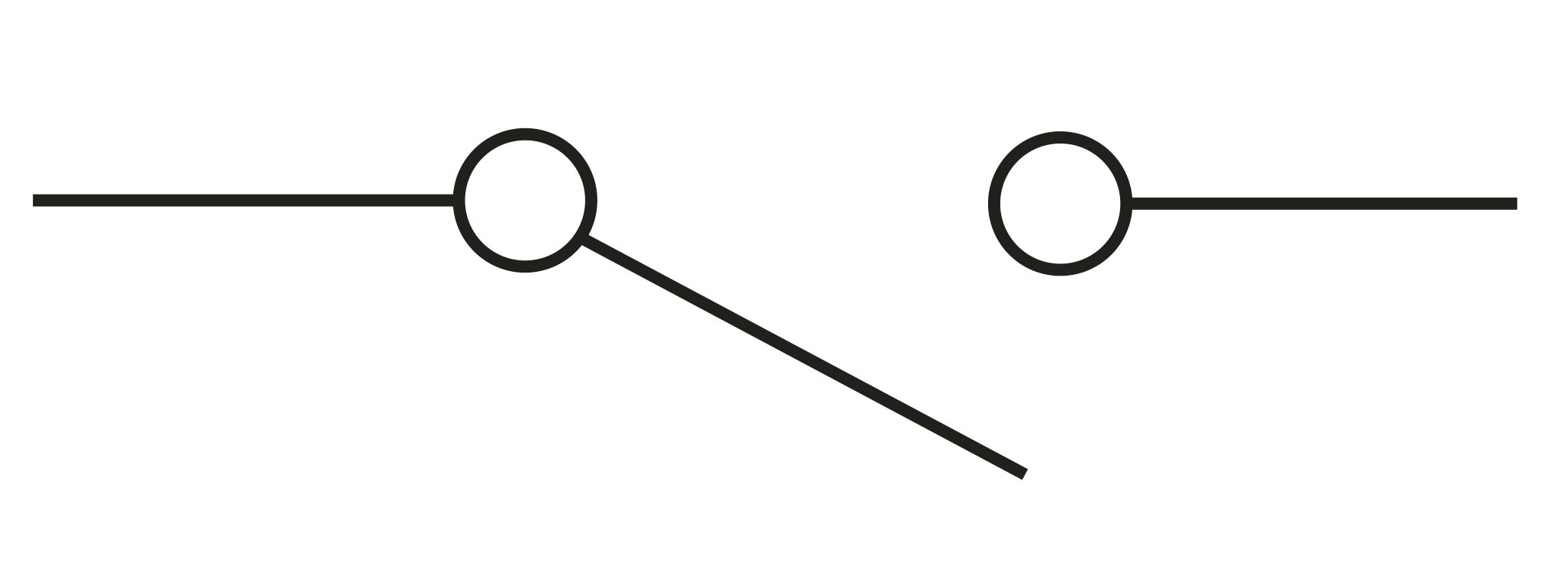
this is the symbol for a _____?
a)
switch
b)
light 
c)
battery
d)
wires
10.
What kind of circuit is this?
a)
Series
b)
Consecutive
c)
Parallel
d)
Training
11.
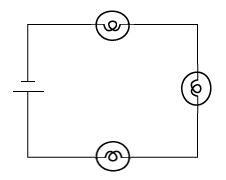
The picture shows an electrical circuit. This circuit is a series circuit because: 
a)
It has 3 light bulbs.
b)
The same current flows through all three light bulbs.
c)
It uses a single battery.
d)
The electrical current has more than one path to flow through
12.
What is a Parallel circuit? 
a)
Has only one path 
b)
Has more than one path 
c)
Allows energy to travel through easily 
d)
Has only one light bulb
13.
What is a switch's function in a circuit?
a)
to make the current hotter or colder
b)
turn on and off the flow of current
c)
the pathway that current flows
d)
to add more power to the circuit
14.
What is a circuit?
a)
A constant flow of electricity 
b)
A path that a current can flow along
15.
what is this symbol for?
a)
light bulb
b)
cell
c)
battery
d)
resistor
16.
This is the symbol for a ...
a)
Bulb
b)
Battery
c)
Horn
d)
Fuse
17.
This is the symbol for a ...
a)
Wire
b)
Battery
c)
Buzzer
d)
Fuse
18.
This is the circuit symbol for ...
a)
an AC current source
b)
a DC current source
c)
an ammeter
d)
a voltmeter
19.
This is the circuit symbol for ...
a)
an AC current source
b)
a DC current source
c)
an ammeter
d)
a voltmeter
20.
This is the circuit symbol for ...
a)
an AC current source
b)
a DC current source
c)
a battery
d)
a single cell
21.
This is the symbol for a _____?
a)
Lamp
b)
Water wheel
c)
Loudspeaker
d)
Motor
22.
a)
Closed switch
b)
Push switch
c)
Trap door
d)
AC Power supply
23.

What is the following symbol represent?

a)

Wire

b)

Resistor

c)

Battery

d)

Switch

24.

Both a plant and animal cells have a cell wall

a)

True

b)

False

25.

What is the power house in the plant and animal cell?

a)

nucleus

b)

mitochondria

c)

Cell membrane

d)

none of the above

26.

What is the large sac that holds food, water, and waste?

a)

Cytoplasm

b)

Vacuole

c)

Nucleus

d)

Mitochondria

27.

Which cell has a cell wall?

a)

Animal Cell

b)

Plant Cell

c)

Both

28.

Which cell has chloroplast?

a)

Plant cell

b)

Animal cell

c)

Both

d)

Neither one of them have chloroplast

29.

What is the cell membrane?

a)

Power House

b)

Its the outer layer of a cell

c)

Large sac that holds food, water, and waste

d)

Jelly like substance

30.

This cell part is in ALL cells. It is the gel-like substance that provides cell shape.

a)

Chloroplasts

b)

Cell membrane

c)

Cytoplasm

d)

Nucleus

31.

Plants perform photosynthesis through this organelle. It captures energy from the sun and uses it to produce food for the cell.

a)

Cytoplasm

b)

Chloroplasts

c)

Cell Wall

d)

Nucleus

32.
The ___________ is the basic unit of life
a)
organ
b)
cell
c)
atom
d)
tissue
33.

Which organelle is unique to plant cells?

a)

a. cytoplasm

b)

b. cell membrane

c)

c. vacuole

d)

d. cell wall

34.

The basic unit of living things is called

a)

nucleus

b)

organism

c)

lysosome

d)

cell

35.

What is the function of the nucleus of an animal cell?

a)

It is the place where energy is produced.

b)

It stores the genetic information, the DNA (chromosomes).

c)

It defends the cell from infections.

d)

It captures sunlight to produce food.

36.
Which of these grouping of elements could have the characteristic of luster (shiny)?
a)
Metal
b)
Nonmetal
c)
metalloids
d)
Both metals and metalloids
37.
Which of these is a property of metals?
a)
It's malleable
b)
It can't conduct electricity
c)
They are used in food
d)
It's very brittle
38.
Good conductor of heat
a)
Metal
b)
Nonmetal
39.
Iron is a good conductor, malleable and magnetic. What type of element is Iron? 
a)
Metal
b)
Nonmetal
c)
Metalloid
d)
Pretty
40.
A student is given a sample of an unknown substance. He is asked to determine if it is classified as a metal, a metalloid, or a nonmetal. He discovered that the unknown element conducted some heat and electricity, had a shiny luster, and broke easily. This element is most likely a 
a)
metal
b)
nonmetal
c)
metalloid
d)
cannot be determined
41.
Which of the following is a property of a non-metal?
a)
Conducts electricity and heats well
b)
Can be hammered into thin sheets
c)
Is brittle and breaks easily
d)
Has a shiny, metallic luster
42.
The word “luster” refers to which property of matter?
a)
The ability to conduct electrical or thermal energy
b)
Capable of being drawn out into thin wires
c)
The way a surface appears when it reflects light
d)
Suitable for being shaped by beating or rolling
43.
Silicon is a semiconductor and has properties of both metals and nonmetals. What type of element is Silicon? 
a)
Metal
b)
Nonmetal
c)
Metalloid
d)
Pretty
44.
´Elizabeth was examining elements and their physical properties. She described an element is her science journal as having no shine, an insulator, and  very brittle. What would this element be a metal, nonmetal, or metalloid?
a)
metal 
b)
nonmetal 
c)
metalloid
45.
If a material can easily be drawn into the shape of a wire, it is
a)
Ductile
b)
Magnetic
c)
Malleable
d)
Reactive
46.
If a substance is magnetic it is most likely a 
a)
metal 
b)
non-metal
47.

Able to be beaten or hammered into shapes

a)

lustre

b)

malleable

c)

brittle

d)

insulator

48.

Carries heat or electiricity

a)

insulator

b)

conductor

c)

lustre

d)

brittle

49.

The shine on metal when light falls on it.

a)

lustre

b)

brittle

c)

malleable

d)

tarnish

50.

Easily breaks into pieces when it falls.

a)

malleable

b)

lustre

c)

ductile

d)

brittle

51.

Attracted to a magnet

a)

lustre

b)

malleable

c)

magnetic

d)

brittle

52.

Which of these objects are manufactured from metals?

a)
b)
c)
d)
e)
53.

Which of these objects are manufactured from non-metals?

a)
b)
c)
d)
e)
54.

Most metals are solid at room temperature

a)

False

b)

True

55.
Which of the following is not a compound?
a)
HCl
b)
Cl
c)
NaCl
d)
CO2
56.
Which of the following represents an element?
a)
H2O
b)
H2
c)
NaCl
d)
CaCO3
57.
Salt water boils and the water completely evaporates, salt (NaCl) is left in the bottom of the beaker. Which of the following is left in the beaker?
a)
Compound
b)
Element
c)
Mixture
d)
None of the Above
58.
What cannot be broken down into other substances?
a)
Compound
b)
Mixture
c)
Solids
d)
Element
59.
What is made up two or more elements that are chemically combined?
a)
Element
b)
Mixture
c)
Compound
d)
Solids
60.
Water (H2O) freezing is an example of:
a)
A chemical change
b)
A physical change
61.
A compound consists of two or more elements bound together.
a)
True
b)
False
62.
Is Iron (Fe) an element or a compound?
a)
Element
b)
Compound
63.

Which is the best description of an element?

a)

A substance that cannot be broken down into simpler substances

b)

A collection of atoms that have different abilities when joined together

c)

A man-made mineral

d)

A mixture of substances

64.

Which one is a compound?

a)

Ni

b)

F

c)

Re

d)

NaCl

65.

How many different elements are in the compound?

a)

12

b)

3

c)

24

d)

6

66.

"Na" is the element's

a)

Chemical Formula

b)

Compound

c)

Name

d)

Chemical Symbol

67.

The place where known elements are represented...

a)

The Period Table

b)

Compounds

c)

Chemical Formula

d)

Graph

68.

A substance that consists of 2 or more different elements is a

a)

element

b)

data table

c)

symbol

d)

compound

69.
A compound is made of ________ atoms. 
a)
big 
b)
similar 
c)
different 
70.
This picture represents which of the following?
a)
element
b)
compound
c)
mixture of elements
d)
mixture of compounds
71.
A combination of particles of one or more substance that are distributed uniformly throughout another substance is a/an
a)
Mixture 
b)
Substance
c)
Solution
72.
The building block of matter is
a)
Mixture
b)
Atom
c)
Element
d)
Substance
73.
Water is an element
a)
true
b)
false
74.
If a spoonful of sugar is mixed in a glass of water, what is the water called? 
a)
solute
b)
solution
c)
solvent
d)
element 
75.
Sugar water is a 
a)
solution
b)
suspension
c)
colloid
76.
WHAT ARE THE 3 MAIN PARTS OF A LEVER?
a)
FOOT, EFFORT, REPORT
b)
FULCRUM, STRUCTURE, EFFORT
c)
FULCRUM, EFFORT, LOAD
77.
3. Which type of lever is this?
a)
First Class Lever
b)
Second Class Lever
c)
Third Class Lever
78.
6. What kind of lever is this?
a)
First Class Lever
b)
Second Class Lever
c)
Third Class Lever
79.
Levers make work ________.
a)
Harder
b)
Easier
c)
Alright
d)
OK
80.

Define Levers

a)

Simple machines that help us apply force

b)

Point on which things rotate or are balanced i.e. joints in the human body

c)

The thing that needs to be moved

d)

The thing that is applied to move the load e.g. muscles

81.

Define Axis/fulcrum/pivot

a)

Simple machines that help us apply force

b)

Point on which things rotate or are balanced i.e. joints in the human body

c)

The thing that needs to be moved

d)

The thing that is applied to move the load e.g. muscles

82.

Define Resistance/load/weight

a)

Simple machines that help us apply force

b)

Point on which things rotate or are balanced i.e. joints in the human body

c)

The thing that needs to be moved

d)

The thing that is applied to move the load e.g. muscles

83.

What type of lever

a)

First Class Lever

b)

Second Class Lever

c)

Third Class Lever

84.

What type of lever

a)

First Class Lever

b)

Second Class Lever

c)

Third Class Lever

85.

Aim of a Second Class Lever

a)

To produce speed and range of motion movements i.e. moving a small resistance/load quickly

b)

To produce force movements so that a large resistance can be moved by a relatively small force

86.

Aim of a Third Class Lever

a)

To produce speed and range of motion movements i.e. moving a small resistance/load quickly

b)

To produce force movements so that a large resistance can be moved by a relatively small force

87.
A ___________ is a bar that pivots on a fixed point. 
a)
wheel and axle
b)
pulley
c)
lever
d)
wheel
88.
How would a screwdriver be used as a lever?
a)
to screw in a screw on a board
b)
to lift the lid off a can of paint
c)
to hit a nail
89.

What is a group of cells that are alike and work together?

a)

a cell team

b)

a tissue

c)

a cell family

90.

A group of tissues that work together is a(n) ______________________.

a)

cell

b)

organ

c)

organ system

91.

Organs that work together are part of a(n) ________________________.

a)

cells

b)

tissue

c)

organ system

92.

The dark structure in the middle of each cell is a

a)

nucleus

b)

lysosome

c)

mitochondria

93.

Muscle tissue is made of ...

a)

muscle cells

b)

skin tissue

c)

stem cells

94.

A specialized cell is a cell that has ...

a)

the ability to divide

b)

a specific role to do

c)

no specific function in the bod

95.

When similar cells group together it is called a tissue

a)

true

b)

false

96.

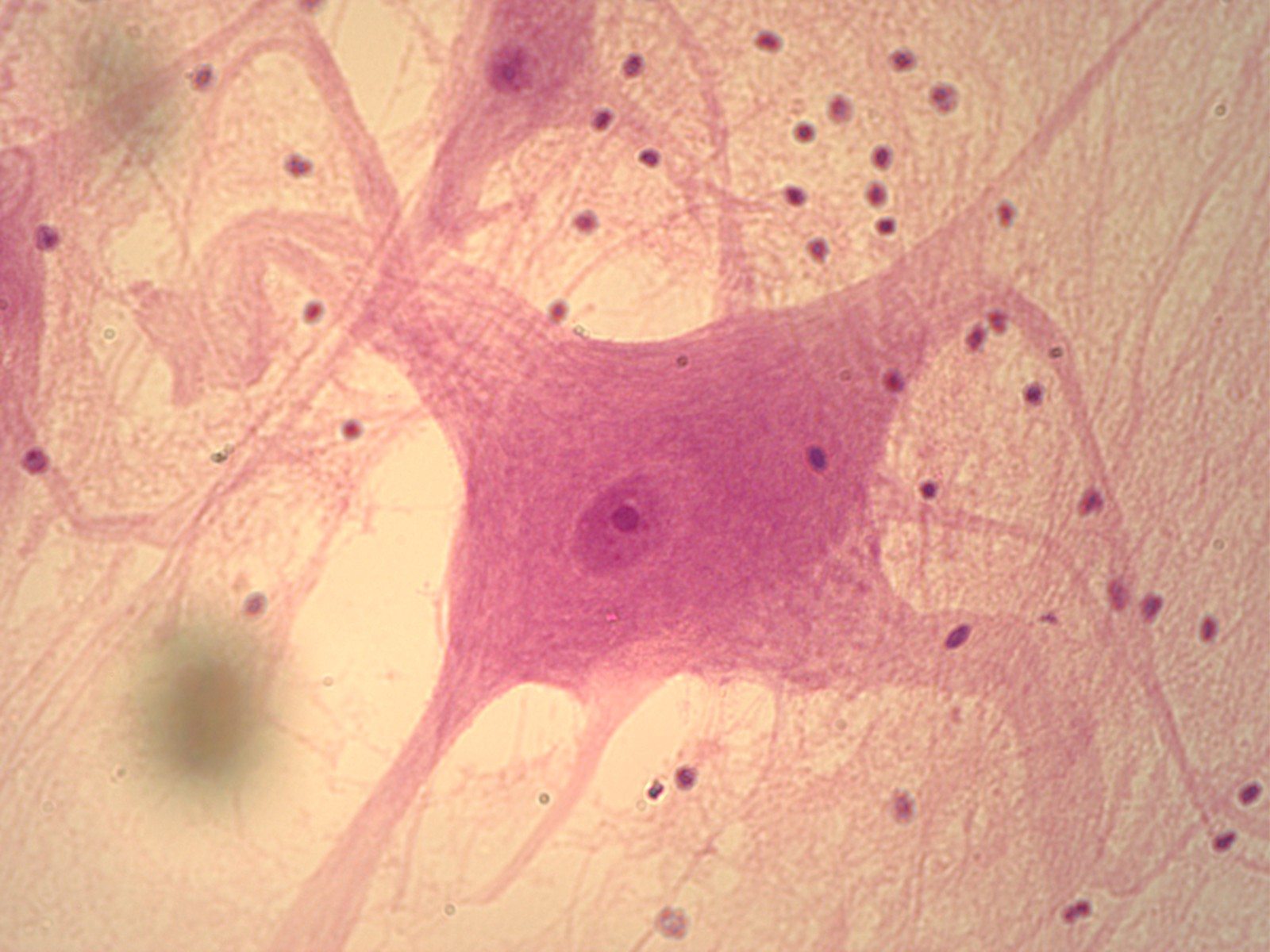
This type of tissue shown in the picture transmits information throughout the body to and from the brain.

a)

Nervous Tissue

b)

Connective Tissue

c)

Muscular Tissue

97.

Which of the following is not one of the four main types of tissues?

a)

Blood

b)

Connective

c)

Epithelial

d)

Nervous

98.

organ systems make up.....

a)

Tissues

b)

Organs

c)

Organ systems

d)

organisms

99.

What is the correct order of organization?

a)

cells->tissue->organs->organ systems-> organism

b)

tissue->cells->organs->organ systems-> organism

c)

organs->organ systems-> organism->cells->tissue

100.
Major organs of the digestive system
a)
Kidneys, nephrons
b)
Stomach, intestines, mouth
c)
Heart, blood vessels, blood
d)
Liver, kidneys, heart
101.
Major organs of the nervous system
a)
Kidneys, nephrons
b)
Stomach, intestines, mouth
c)
Heart, blood vessels, blood
d)
Brain, spinal cord, nerve
102.
Major organs of the skeletal system
a)
Muscles, tendons
b)
Bones, ligaments
c)
Marrow, periostium, nerves
d)
Ribs, quadriceps, femur
103.
Heart, blood vessels, blood
a)
Digestive system
b)
Excretory system
c)
Circulatory system
d)
Immune system
104.
Which organ is this?
a)
Stomach
b)
Liver
c)
Heart
d)
Kidney
105.
What is the function of this organ?
a)
To filter the blood
b)
To pump the blood (which is carrying oxygen) to the rest of the body 
c)
To help you make decisions
d)
To be the command center for all other organs
106.
Which organ is this?
a)
Hearts
b)
Lungs
c)
Bladders
d)
Kidneys
107.
What is the function of this organ?
a)
Pump blood to the rest of the body
b)
Supply the body with oxygen by breathing
c)
Hold urine until its time to pee
d)
Filter and clean the blood by removing waste, creating URINE
108.
Identify this organ.
a)
Small intestine
b)
Bladder
c)
Stomach
d)
Large intestine
109.
The purpose of this organ is to:
a)
Digest food for the first time
b)
Supply the body with blood
c)
Remove water from digested food, bringing it back to the body so we don't get dehydrated
d)
Supply the body with oxygen
110.
Choose the response which correctly identifies the organ seen here.
a)
Spleen
b)
Stomach
c)
Chest muscle
d)
Liver
111.
The job of this organ is to:
a)
Produces bile - this helps break down food. Also eliminates toxins from the blood.
b)
Release insulin to break down sugar
c)
Be the body's first organ to digest food after falling from the esophagus
d)
Supply the body with oxygen
112.
The arrow is pointed at an organ called the _____________.
a)
Bladder
b)
Heart
c)
Trachea (Windpipe)
d)
Lungs
113.
The job of this organ is to 
a)
Supply the body with blood
b)
Digest food
c)
Supply the body with oxygen
d)
Clean and filter the body's blood
114.
This organ is called the ______________. 
a)
Trachea (Windpipe)
b)
Lungs
c)
Esophagus
d)
Mouth
115.
This organ functions by
a)
Bringing blood to the rest of the body
b)
Bringing food to the stomach
c)
Bringing oxygen to the lungs
d)
Connecting the heart to the lungs
116.
What is this organ called?
a)
Stomach
b)
Gut (belly)
c)
Small intestine
d)
Kidneys
117.
The function of this organ is to 
a)
produce gas 
b)
take food from the stomach and do most of the digesting, getting nutrients from the food
c)
Take water out of the digested food to help the person avoid dehydration
d)
Filter the blood in order to make Urine (waste)
118.
This organ is known as the : 
a)
Intestines
b)
Kidneys
c)
Stomach
d)
Liver
119.
The function of this J-shaped Organ is to
a)
Supply the body with oxygen rich blood
b)
Release acid to chemically digest the food that enters into it
c)
Make Urine by filtering the blood
d)
Hold the urine before it is excreted outside the body
120.
The two main functions of bones are
a)
To make blood cells and provide support
b)
to make the body move and provide oxygen
c)
to move blood to the rest of the body and to protect the body
d)
None of these
121.
The skin's function is to 
a)
protect the body against bad things trying to get in
b)
help keep the body warmer or keep it cooler.
c)
Allow us to feel things
d)
All of these are functions of the SKIN
122.
Which organ belongs to the digestive system?
a)
heart
b)
stomach
c)
femur
d)
brain
123.
Which organ belongs to the endocrine system?
a)
pancreas
b)
small intestine
c)
gluteus maximus
d)
spinal cord
124.
Which organ system does the brain belong to?
a)
Reproductive
b)
Cardiovascular
c)
Integumentary
d)
Nervous
125.
Which organ belongs to the reproductive system?
a)
ovaries
b)
spleen
c)
large intestine
d)
liver
126.
Which organ belongs to the reproductive system?
a)
gluteus maximus
b)
humerus
c)
radial artery
d)
testes
127.
Which organ belongs to the respiratory system?
a)
biceps brachii
b)
humerus
c)
stomach
d)
right lung
128.
The ___________ belongs to the integumentary system.
a)
heart
b)
skin
c)
cranium
d)
spinal cord
129.
The veins of the body belong to which organ system?
a)
nervous
b)
lymphatic
c)
digestive
d)
circulatory
130.
Alveoli are microscopic air sacs in the lungs of mammals.  Which statement best describes how the structure of the alveoli allows the lungs to function properly?
a)
they increase the amount of energy transferred from the lungs to the blood.
b)
they incrase the flexibility of the lungs as they expand during inhalation
c)
they increase the volume of the lungs, allowing more oxygen to be inhaled
d)
they incrase the surface area of the lungs, allowing efficient gas exchange
131.
Which places the levels of organization in order from simplest to most complex?
a)
cell, organ, organelle, organ system, tissue, whole organism
b)
whole organism, organ system, organ, tissue, cell, organelle
c)
organelle, cell, tissue, organ, organ system, whole organism
d)
cell, whole organism, organ, tissue, organelle, organ system
132.
the process of breaking down foods into nutrients that the body can use.
a)
chewing
b)
digestion
c)
monogastric
d)
ruminant
133.
What does your Digestive System do?
a)
Your homework
b)
Eat food
c)
Digest the food that you ate and turn it into nutrients and if there is extra parts they throw it away
d)
The answer is nowhere to be found
134.
Name one function of the cardiovascular system
a)
Stores proteins in its cells
b)
Does not allow blood to circulate through the entire body at one time
c)
Carries oxygen, glucose, and other materials to cells 
d)
Makes new blood cells from what we eat
135.
Cells work together to make the following.
a)
tissues
b)
organs
c)
organ systems
d)
organism
136.
When you breathe, your lungs take in ___ and remove ___. 
a)
air/oxygen
b)
oxygen/carbon dioxide 
c)
carbon dioxide/waste 
d)
waste/air 
137.
What is the main function of the nervous system?
a)
clean waste from cells
b)
absorb nutrients for energy
c)
deliver messages to the brain
d)
deliver oxygen to body
138.
Which gases are being exchanged through the respiratory system? 
a)
O2 & CO4
b)
HO2
c)
CO
d)
O2 & CO2
139.

What are the products of the chemical reaction pictured?

a)

CH4 and CO2

b)

CH4 and O2

c)

CO2 and H2O

d)

O2 and H2O

140.

If reactants' mass is 18g , what is the mass of the reactants ?

a)

15

b)

36

c)

81

d)

18

141.
Consider the chemical equation CH4 + 2 O2 → CO2 + 2 H2O. In this equation, CH4 is a
a)
product
b)
reactant
c)
displacement
142.
What is the left part of a chemical equation called?
H2 + O → H2O
a)
Reactants
b)
Products 
c)
Yields 
d)
Chemical Equation 
143.
The reactants are on the left side of the chemical equation.
a)
True
b)
False
144.
In chemical reactions, what does the principle of conservation of mass mean?
a)
Matter is not created or destroyed.
b)
The total mass of the reactants is greater than the total mass of the products.
c)
The total mass of the reactants is less than the total mass of the products.
d)
Matter is not changed.
145.

How many reactants are in A + B ---> C ?

a)

1

b)

2

c)

3

d)

4

146.

How many products are in A + B ---> 2C

a)

1

b)

2

c)

3

d)

4

147.
2H2 + O2 ----> 2H2O What is the product?
a)
------>
b)
2H2O
c)
2H2+ O2
148.

Which compounds are the PRODUCTS of this reaction?

a)

CO2 + H2O

b)

C6H12O6 + O2

c)

C6H12O6 + CO2

d)

H2O + O2

149.

Which are the reactants in the following reaction?

2Mg + O2 ---> 2MgO

a)

2MgO

b)

2Mg +O

c)

2Mg + O2

150.
This appears on the left side of a chemical formula, and represents how many molecules there are. 
a)
An Atom
b)
The Subscript
c)
A Molecule
d)
The Coefficient
151.
This is used to represent the number of each atom being represented. 
a)
A Exponent
b)
The Coefficient
c)
A Molecule
d)
The Subscript
152.
How many TOTAL atoms are on the REACTANT side of this equation?
CH4 + 2O2 → CO2 + 2H2
a)
5
b)
7
c)
9
d)
11
153.

The correct equation for photosynthesis is...

a)

carbon dioxide + oxygen -> glucose + water

b)

Oxygen + water -> glucose + carbon dioxide

c)

glucose + water -> carbon dioxide + oxygen

d)

carbon dioxide + water -> glucose + oxygen

154.

Which of these pairs represents the reactants of photosynthesis?

a)

Oxygen and water

b)

Glucose and oxygen

c)

Water and glucose

d)

Carbon dioxide and water

155.

Which of these pairs represents the products of photosynthesis?

a)

Oxygen and water

b)

Glucose and oxygen

c)

Water and glucose

d)

Carbon dioxide and water

156.

Which of these is a source of carbon used to make glucose?

a)

Oxygen

b)

Sunlight

c)

Carbon dioxide

d)

Water

157.

Which of these enters the plant through pores called the stomata?

a)

Carbon dioxide

b)

Water

c)

Oxygen

d)

Glucose

158.

Which of these exits the plant through pores called the stomata?

a)

Carbon dioxide

b)

Water

c)

Oxygen

d)

Glucose

159.

Which of these is produced from photosynthesis but stored inside the plant?

a)

Carbon dioxide

b)

Water

c)

Oxygen

d)

Glucose

160.
In a chemical reaction, bonds are broken and new bonds are formed that create new substances. The bonds that are broken are called what?
a)
Reactants
b)
Products
c)
Atoms
d)
Catalysts