wayground logo

Free Printable Worksheets

Font size

S
M
L
XL
Worksheets

The Universe Reteach

Total questions: 160

Worksheet time: 3hrs 5mins

Name
Class
Date
1.
Space and all the matter and energy in it.
a)
Space
b)
Solar System 
c)
Universe
d)
Sun
2.
What is a galaxy?
a)
a star and it's surrounding planets
b)
billions of stars held together by gravity
c)
the big bang
d)
a cluster of nebulas
3.
What type of electromagnetic radiation has the longest wavelength?
a)
gamma
b)
x-ray
c)
radio
d)
infrared
4.
What type of electromagnetic radiation has the shortest wavelengths?
a)
microwaves
b)
visible light
c)
ultra violet
d)
x-rays
5.
If a star is moving toward us the spectral lines will be
a)
blue shifted
b)
red shifted
c)
green shifted
d)
pulsating
6.
If a star is moving away from us the spectral lines will be
a)
blue shifted
b)
red shifted
c)
green shifted
d)
pulsating
7.
What element made up about 75% of the early universe
a)
Hydrogen
b)
Helium
c)
Oxygen
d)
Carbon
8.
What is the second most abundant element in the Universe?
a)
Hydrogen
b)
Helium
c)
Cargon
d)
Oxygen
9.
Which is evidence for the Big Bang?
a)
blue shift
b)
cosmic background radiation
c)
black holes
d)
x-rays
10.
Our universe is
a)
expanding, but the pace is slowing
b)
expanding, and the rate is increasing
c)
static and unchanging
d)
contracting
11.
When light waves are moving away from us why are they waves redshifted?
a)
the light waves are stretched
b)
the light waves are squished
c)
they aren't redshifted
12.

Longest Wavelengths and Lowest Frequencies?

a)

Visible Light

b)

Microwaves

c)

X-Rays

d)

Radio Waves

13.

Shorter Waves have ____Energy,Longer Waves___Energy?

a)

Lower,Higher

b)

Higher,Lower

14.

Shortest Wavelength and a Higher Frequency on the Electromagnetic System?

a)

X-rays

b)

Infrared

c)

Visible Lights

d)

Gamma Rays

15.

Order Of the Electromagnetic System?

a)

Radio Waves,Microwaves,Infrared,Visible Light,X-rays,Ultra Violet,Gamma.

b)

Radio Waves,Microwaves,Infrared,Visible Light,Ultra Violet,X-rays,Gamma.

16.

What is the Electromagnetic Spectrum?

a)

A Group of Energy Waves That are Visible to the human Eye.

b)

The name Given to a Group of Waves that mostly are Invisible and can travel through empty Or outer Space.
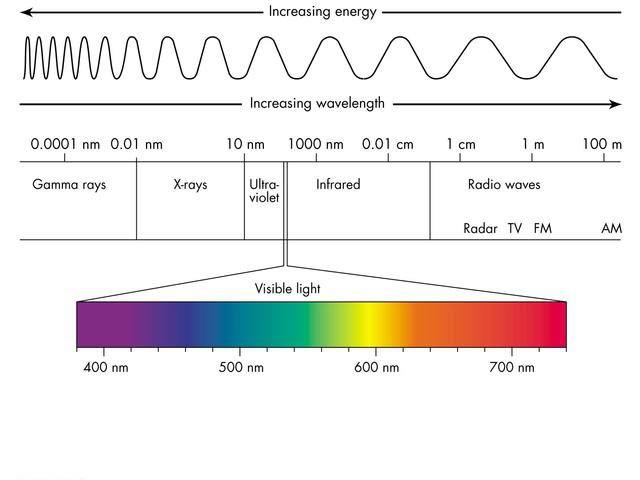
17.

What is the correct order of the visible light spectrum starting with the longer wavelength?

a)

Red, yellow, orange, blue, violet, indigo

b)

Violet, indigo, blue, green, yellow, orange, red

c)

Green, yellow, blue, indigo, red, orange

d)

Red, orange, yellow, green, blue, indigo, violet

18.

What gases are in the unknown mixture? (Line up the emission lines)

a)

Gas B & Gas D

b)

Gas C & Gas B

c)

Gas A & Gas D

d)

Gas D & Gas C

19.
The electromagnetic spectrum includes the complete range of electromagnetic waves placed in order of:
a)
increasing amplitutde
b)
increasing wavelength
c)
increasing frequency
20.

The life cycle of a star begins with which stage?

a)

Stellar Nebula

b)

Protostar

c)

Blackhole

d)

Main Sequence

21.

All stars begin their life in a

a)

Main Sequence

b)

Stellar Nebula

c)

Protostar

d)

Black Dwarf

22.
The life cycles of stars are determined by their:
a)
mass (size)
b)
color
c)
distance from Earth
d)
luminosity
23.
Our sun is currently in what star stage?
a)
Protostar
b)
Nebula
c)
Main Sequence
d)
Red Giant
24.
Most stars are made of which elements?
a)
Hydrogen only
b)
Hydrogen and Lithium
c)
Hydrogen and Sodium
d)
Hydrogen and Helium
25.
When a massive star begins to cool and expand it is known as a _______________.
a)
Blue Supergiant
b)
Red Giant
c)
Red Supergiant
d)
White Dwarf
26.
When the core of a Red Supergiant collapses, a bright event known as a ___________ occurs.
a)
superdupernova
b)
supernova
c)
big bang
d)
black hole
27.
Hotter stars appear to be what color? 
a)
Red
b)
Blue
c)
Yellow
d)
Green
28.
Cooler stars appear to be what color? 
a)
Red
b)
Blue
c)
Yellow
d)
Green
29.
What determines the color of a star? 
a)
It's size
b)
It's temperature
c)
It's composition
d)
They are all the same color 
30.
Larger stars (stars with more mass) have a longer life cycle. 
a)
True
b)
False
31.
A large cloud of gas and dust in outer space ejected by an aging star near the end of its life cycle.
What stage in the life cycle is this describing? 
a)
Main Sequence
b)
Planetary Nebula
c)
Black Hole
d)
Neutron Star
32.
This is an image of the formation of a star, also known as a .... 
a)
Main Sequence
b)
Planetary Nebula
c)
Supernova
d)
Stellar Nebula
33.
In the diagram given, what happens as we move to the left?
a)
Stars Get Larger
b)
Stars get Colder
c)
Stars get hotter
34.
Look at the H-R diagram. Which star is
sort of cool, dim (not too much light), and red?
a)
Betelguse
b)
Sirius B
c)
Procyon B
d)
Barnard's star
35.
Which star has the lowest temperature?
a)
A
b)
B
c)
C
d)
D
36.

Which star is considered a main sequence star?

a)

Vega

b)

Betelgeuse

c)

Pollux

d)

Van Maanan's Star

37.

Which star is considered a dwarf star?

a)

Altair

b)

Procyon B

c)

Deneb

d)

Sirius

38.

What is the Hertzsprung-Russel Diagram?

a)

A map which tells the approximate location of stars in the Milky Way galaxy and their distance from Earth.

b)

A table that alphabetically lists stars by name and includes dates of when the star was first charted.

c)

A chart which organizes stars into categories based on the amount of Hydrogen they burn.

d)

A graph used to classify stars according to their luminosity, color, temperature, and stage.

39.

Luminosity is...

a)

a stars core temperature.

b)

how far the star is.

c)

what color the star is.

d)

how much light a star gives off.

40.
What best describes the doppler effect?
a)
An apparent change in frequency of a wave due to the relative motion between a wave source and an observer
b)
When sound changes pitch
c)
When light changes color
d)
An apparent change in the amplitude of a wave due to the relative motion between a wave source and an observer.
41.
If a star is being observed from Earth and it's light has shifted towards the red side of the electromagnetic spectrum it would be...
a)
Moving towards the Earth
b)
Moving away from the Earth
c)
This is a trick question that cannot be answered
d)
It isn't a star, it is a very large blueberry.
42.
When an ambulance move TOWARD you it sounds ________ pitched. 
a)
high
b)
low
c)
medium
43.

when the frequency is higher what happens to the wavelength?

a)

the wavelength gets longer

b)

The wavelength gets shorter

c)

the wavelength doesn't change

d)

I have no idea

44.

Redshift wavelength

a)

doesn't change

b)

stays the same

c)

Gets longer/increases

d)

gets shorter/decreases

45.
What type of galaxy is this?
a)
Spiral
b)
Elliptical
c)
Irregular 
d)
Irrational
46.
What type of galaxy is this?
a)
Spiral
b)
Elliptical
c)
Irregular
d)
Irrational
47.
What type of galaxy has no defined pattern or shape?
a)
Spiral 
b)
Elliptical
c)
Irregular
d)
Constellation
48.
The type of galaxy that is composed of the older stars and low-mass stars.
a)
Spiral
b)
Elliptical
c)
Irregular
d)
Constellation
49.
The closest star to the sun is the...
a)
Sirius A
b)
Barnard's Star
c)
Luhman16
d)
Proxima Centauri
50.
What are in galaxies?
a)
ice and rock
b)
dust, gas, and stars
c)
stars and ice
d)
water and dust
51.
The Milky Way galaxy is an example of an irregular galaxy
a)
true
b)
false
52.
Why do red-shifted light spectrums from neighboring galaxies  indicate the universe is expanding?
a)
Red light has the shortest wavelength on the visible light spectrum
b)
Red light has the longest wavelength on the visible light spectrum
c)
Red light has both long and short wavelengths on the visible light spectrum
d)
Red light has neither long, not short wavelengths on the visible light spectrum
53.

Why can the apparent magnitude be inaccurate?

a)

It doesn't exist

b)

It may not be brighter compared to another star but instead just closer

c)

It only shows the brightness of stars too far away for humans to detect

d)

the scale is messed up

54.

a measure of how bright a star would be if it were seen from a standard distance

a)

absolute magnitude (brightness)

b)

apparent magnitude (brightness)

c)

astronomical bodies astronomical units (AU)

d)

composition

55.

the brightness of a star as seen from Earth

a)

absolute magnitude (brightness)

b)

apparent magnitude (brightness)

c)

astronomical bodies astronomical units (AU)

d)

composition

56.
Space and all the matter and energy in it.
a)
Space
b)
Solar System 
c)
Universe
d)
Sun
57.
What is a galaxy?
a)
a star and it's surrounding planets
b)
billions of stars held together by gravity
c)
the big bang
d)
a cluster of nebulas
58.
What type of electromagnetic radiation has the longest wavelength?
a)
gamma
b)
x-ray
c)
radio
d)
infrared
59.
What type of electromagnetic radiation has the shortest wavelengths?
a)
microwaves
b)
visible light
c)
ultra violet
d)
x-rays
60.
If a star is moving toward us the spectral lines will be
a)
blue shifted
b)
red shifted
c)
green shifted
d)
pulsating
61.
If a star is moving away from us the spectral lines will be
a)
blue shifted
b)
red shifted
c)
green shifted
d)
pulsating
62.
What element made up about 75% of the early universe
a)
Hydrogen
b)
Helium
c)
Oxygen
d)
Carbon
63.
What is the second most abundant element in the Universe?
a)
Hydrogen
b)
Helium
c)
Cargon
d)
Oxygen
64.
Which is evidence for the Big Bang?
a)
blue shift
b)
cosmic background radiation
c)
black holes
d)
x-rays
65.
Our universe is
a)
expanding, but the pace is slowing
b)
expanding, and the rate is increasing
c)
static and unchanging
d)
contracting
66.
When light waves are moving away from us why are they waves redshifted?
a)
the light waves are stretched
b)
the light waves are squished
c)
they aren't redshifted
67.

Longest Wavelengths and Lowest Frequencies?

a)

Visible Light

b)

Microwaves

c)

X-Rays

d)

Radio Waves

68.

Shorter Waves have ____Energy,Longer Waves___Energy?

a)

Lower,Higher

b)

Higher,Lower

69.

Shortest Wavelength and a Higher Frequency on the Electromagnetic System?

a)

X-rays

b)

Infrared

c)

Visible Lights

d)

Gamma Rays

70.

Order Of the Electromagnetic System?

a)

Radio Waves,Microwaves,Infrared,Visible Light,X-rays,Ultra Violet,Gamma.

b)

Radio Waves,Microwaves,Infrared,Visible Light,Ultra Violet,X-rays,Gamma.

71.

What is the Electromagnetic Spectrum?

a)

A Group of Energy Waves That are Visible to the human Eye.

b)

The name Given to a Group of Waves that mostly are Invisible and can travel through empty Or outer Space.

72.

What is the correct order of the visible light spectrum starting with the longer wavelength?

a)

Red, yellow, orange, blue, violet, indigo

b)

Violet, indigo, blue, green, yellow, orange, red

c)

Green, yellow, blue, indigo, red, orange

d)

Red, orange, yellow, green, blue, indigo, violet

73.

What gases are in the unknown mixture? (Line up the emission lines)

a)

Gas B & Gas D

b)

Gas C & Gas B

c)

Gas A & Gas D

d)

Gas D & Gas C

74.
The electromagnetic spectrum includes the complete range of electromagnetic waves placed in order of:
a)
increasing amplitutde
b)
increasing wavelength
c)
increasing frequency
75.

The life cycle of a star begins with which stage?

a)

Stellar Nebula

b)

Protostar

c)

Blackhole

d)

Main Sequence

76.

All stars begin their life in a

a)

Main Sequence

b)

Stellar Nebula

c)

Protostar

d)

Black Dwarf

77.
The life cycles of stars are determined by their:
a)
mass (size)
b)
color
c)
distance from Earth
d)
luminosity
78.
Our sun is currently in what star stage?
a)
Protostar
b)
Nebula
c)
Main Sequence
d)
Red Giant
79.
Most stars are made of which elements?
a)
Hydrogen only
b)
Hydrogen and Lithium
c)
Hydrogen and Sodium
d)
Hydrogen and Helium
80.
When a massive star begins to cool and expand it is known as a _______________.
a)
Blue Supergiant
b)
Red Giant
c)
Red Supergiant
d)
White Dwarf
81.
When the core of a Red Supergiant collapses, a bright event known as a ___________ occurs.
a)
superdupernova
b)
supernova
c)
big bang
d)
black hole
82.
Hotter stars appear to be what color? 
a)
Red
b)
Blue
c)
Yellow
d)
Green
83.
Cooler stars appear to be what color? 
a)
Red
b)
Blue
c)
Yellow
d)
Green
84.
What determines the color of a star? 
a)
It's size
b)
It's temperature
c)
It's composition
d)
They are all the same color 
85.
Larger stars (stars with more mass) have a longer life cycle. 
a)
True
b)
False
86.
A large cloud of gas and dust in outer space ejected by an aging star near the end of its life cycle.
What stage in the life cycle is this describing? 
a)
Main Sequence
b)
Planetary Nebula
c)
Black Hole
d)
Neutron Star
87.
This is an image of the formation of a star, also known as a .... 
a)
Main Sequence
b)
Planetary Nebula
c)
Supernova
d)
Stellar Nebula
88.
In the diagram given, what happens as we move to the left?
a)
Stars Get Larger
b)
Stars get Colder
c)
Stars get hotter
89.
Look at the H-R diagram. Which star is
sort of cool, dim (not too much light), and red?
a)
Betelguse
b)
Sirius B
c)
Procyon B
d)
Barnard's star
90.
Which star has the lowest temperature?
a)
A
b)
B
c)
C
d)
D
91.

Which star is considered a main sequence star?

a)

Vega

b)

Betelgeuse

c)

Pollux

d)

Van Maanan's Star

92.

Which star is considered a dwarf star?

a)

Altair

b)

Procyon B

c)

Deneb

d)

Sirius

93.

What is the Hertzsprung-Russel Diagram?

a)

A map which tells the approximate location of stars in the Milky Way galaxy and their distance from Earth.

b)

A table that alphabetically lists stars by name and includes dates of when the star was first charted.

c)

A chart which organizes stars into categories based on the amount of Hydrogen they burn.

d)

A graph used to classify stars according to their luminosity, color, temperature, and stage.

94.

Luminosity is...

a)

a stars core temperature.

b)

how far the star is.

c)

what color the star is.

d)

how much light a star gives off.

95.
What best describes the doppler effect?
a)
An apparent change in frequency of a wave due to the relative motion between a wave source and an observer
b)
When sound changes pitch
c)
When light changes color
d)
An apparent change in the amplitude of a wave due to the relative motion between a wave source and an observer.
96.
If a star is being observed from Earth and it's light has shifted towards the red side of the electromagnetic spectrum it would be...
a)
Moving towards the Earth
b)
Moving away from the Earth
c)
This is a trick question that cannot be answered
d)
It isn't a star, it is a very large blueberry.
97.
When an ambulance move TOWARD you it sounds ________ pitched. 
a)
high
b)
low
c)
medium
98.

when the frequency is higher what happens to the wavelength?

a)

the wavelength gets longer

b)

The wavelength gets shorter

c)

the wavelength doesn't change

d)

I have no idea

99.

Redshift wavelength

a)

doesn't change

b)

stays the same

c)

Gets longer/increases

d)

gets shorter/decreases

100.
What type of galaxy is this?
a)
Spiral
b)
Elliptical
c)
Irregular 
d)
Irrational
101.
What type of galaxy is this?
a)
Spiral
b)
Elliptical
c)
Irregular
d)
Irrational
102.
What type of galaxy has no defined pattern or shape?
a)
Spiral 
b)
Elliptical
c)
Irregular
d)
Constellation
103.
The type of galaxy that is composed of the older stars and low-mass stars.
a)
Spiral
b)
Elliptical
c)
Irregular
d)
Constellation
104.
The closest star to the sun is the...
a)
Sirius A
b)
Barnard's Star
c)
Luhman16
d)
Proxima Centauri
105.
What are in galaxies?
a)
ice and rock
b)
dust, gas, and stars
c)
stars and ice
d)
water and dust
106.
The Milky Way galaxy is an example of an irregular galaxy
a)
true
b)
false
107.
Why do red-shifted light spectrums from neighboring galaxies  indicate the universe is expanding?
a)
Red light has the shortest wavelength on the visible light spectrum
b)
Red light has the longest wavelength on the visible light spectrum
c)
Red light has both long and short wavelengths on the visible light spectrum
d)
Red light has neither long, not short wavelengths on the visible light spectrum
108.

Why can the apparent magnitude be inaccurate?

a)

It doesn't exist

b)

It may not be brighter compared to another star but instead just closer

c)

It only shows the brightness of stars too far away for humans to detect

d)

the scale is messed up

109.

a measure of how bright a star would be if it were seen from a standard distance

a)

absolute magnitude (brightness)

b)

apparent magnitude (brightness)

c)

astronomical bodies astronomical units (AU)

d)

composition

110.

the brightness of a star as seen from Earth

a)

absolute magnitude (brightness)

b)

apparent magnitude (brightness)

c)

astronomical bodies astronomical units (AU)

d)

composition

111.
What is the first stage of the life cycle of a star for all stars?
a)
nebula
b)
protostar
c)
main-sequence
d)
red giant
112.
This is a young star that glows as gravity brings it together
a)
Nebula
b)
Protostar
c)
Main-sequence star
d)
Red giant
113.
In this stage, a star spends most of its life. Hydrogen is fused into helium at a temperature of millions of degrees.
a)
nebula
b)
protostar
c)
main-sequence
d)
supergiant
114.
Low mass stars expand into what after using up the hydrogen in their core
a)
red giants
b)
supergiants
c)
white dwarfs
d)
protostars
115.
This stage is when a high mass star explodes
a)
Supergiant
b)
Red giant
c)
Supernova
d)
Black hole
116.
This stage is made by densely packed neutrons and sometimes spins and blinks and is called a pulsar
a)
Supernova
b)
White dwarf
c)
Black hole
d)
Neutron star
117.
When a star's gravitational pull is so strong that not even light can escape, it's called a what?
a)
Black hole
b)
Supernova
c)
White dwarf
d)
Nebula
118.
The most important thing to know about a star is its...
a)
Volume
b)
Mass
c)
Temperature
d)
Age
119.
What is the heaviest element that can be created (through fusion) inside of a Main Sequence Star?
a)
Helium
b)
Hydrogen
c)
Iron
d)
Carbon
120.
What is the biggest difference between a protostar and a main sequence star?
a)
Protostars are more massive than main sequence stars
b)
Protostars do not engage in nuclear fusion
c)
Stars spend far longer in the protostar phase than their main sequence
d)
Protostars are hotter than main sequence stars
121.

How does a star produce elements heavier than iron (Fe)?

a)

heat

b)

supernova

c)

rapid rotation

d)

nuclear fusion

122.

What is the sun made up of?

a)

Hydrogen

b)

Helium

c)

Hydrogen and Helium

d)

None of the Above

123.

A stellar nebula is made up of...

a)

clouds of gas

b)

clouds of gas and dust

c)

stars

d)

planets

124.

Our sun is known as a middle-aged, stable star. Also known as a ____________________.

a)

Gas Giant

b)

Nebula

c)

Pulsar

d)

Main Sequence Star

125.
What is the correct order for the life cycle of our star the sun?
a)
nebula, fusion stage, red giant, black dwarf, white dwarf,
b)
nebula, fusion stage, red giant, white dwarf, black dwarf
c)
nebula, fusion stage, super red giant, black dwarf, white dwarf,
d)
nebula, fusion stage, red giant, super nova, black hole
126.
What stage fills in the blank. Nebula --> Main sequence --> red giant --> ______________ --> white dwarf --> black dwaft
a)
supergiant
b)
planetary nebula
c)
black hole
d)
supernova
127.
Which of the following is NOT a final stage of a star. 
a)
black hole
b)
black dwarf
c)
neutron star
d)
red giant
128.
If you happen to get cross the event horizon into a black hole, your body gets stretched out in a process called________________.
a)
stretch armstrong
b)
singularification
c)
string theory
d)
spaghettification
129.
Can light escape a black hole?
a)
yes
b)
no
130.
The most important thing to know about a star is its...
a)
Volume
b)
Mass
c)
Temperature
d)
Age
131.
As a whole, Giants are considered hotter than White Dwarfs.
a)
True
b)
False
132.
As a whole, Giants are considered hotter than White Dwarfs.
a)
True
b)
False
133.
As a whole, Giants are considered hotter than White Dwarfs.
a)
True
b)
False
134.
In the diagram given, what happens as we move to the left?
a)
Stars Get Larger
b)
Stars get Colder
c)
Stars get hotter
135.
Which star is the coldest?
a)
Yellow Star
b)
Red Star
c)
Orange Star
d)
Blue Star
136.
Which star is the coldest?
a)
Yellow Star
b)
Red Star
c)
Orange Star
d)
Blue Star
137.
Compared to the rest of the stars, our sun is considered...
a)
Extremely Large and Cold
b)
Small with a medium temperature
c)
Medium size with medium temperature
138.
Which category is our Sun located in?
a)
White Dwarfs
b)
Supergiants
c)
Main Sequence
d)
Giants
139.
The category that contains the most stars is...
a)
Main Sequence
b)
Supergiants
c)
Giants
140.
Red stars are the _____________.
a)
hottest
b)
coolest
c)
biggest
d)
brightest
141.
Blue stars are the _____________.
a)
hottest
b)
coolest
c)
smallest
142.
Look at the H-R diagram. Which star is
sort of cool, dim (not too much light), and red?
a)
Betelguse
b)
Sirius B
c)
Procyon B
d)
Barnard's star
143.
Which star has the lowest temperature?
a)
A
b)
B
c)
C
d)
D
144.
Which spectral class does our star, the sun, belong to?
a)
M
b)
K
c)
G
d)
F
145.
What else does the H-R Diagram tell us besides the luminosity and temperature?
a)
Size, color and element make up
b)
Location and distance from Earth
c)
Constellation structures
146.
Lightyear is used by scientist to measure what?
a)
Distance
b)
Time
c)
Energy
147.
Which one is the correct order from hottest to coolest stars?
a)
blue, yellow,orange, red
b)
red, orange, yellow, blue
c)
blue, red, yellow, orange
d)
yellow, blue, orange, red
148.
Which star has the lowest temperature?
a)
A
b)
B
c)
C
d)
D
149.
Look at the H-R diagram. Which star is
sort of cool, dim (not too much light), and red?
a)
Betelguse
b)
Sirius B
c)
Procyon B
d)
Barnard's star
150.

What is the HR diagram?

a)

A diagram that plots stars based on their distance from Earth.

b)

A diagram that plots stars based on the color & size.

c)

A diagram that plots stars based on the brightness & color.

d)

A diagram that plots stars based on the

151.
The brightness of a star as it would be a distance of 32.6 light years from Earth
a)
light year
b)
absolute magnitude
c)
apparent magnitude
d)
parallax
152.
Brightness of a star as seen from Earth
a)
parallax
b)
apparent magnitude
c)
absolute magnitude
d)
spectrum
153.
an apparent shift in the position of an object when viewed from different locations
a)
light year
b)
absolute magnitude
c)
parallax
d)
spectrum
154.
What is magnitude?
a)
the process inside a star that produces the star's energy
b)
term used by scientists to describe a star's brightness
c)
star groupings in space
d)
the process inside a star that produces the star's energy
155.
The brightness of a star we see from Earth is called
a)
absolute magnitude
b)
relative magnitude
c)
apparent magnitude
d)
obvious magnitude
156.
The Big Dipper is part of one of the best-known constellations known as
a)
Orion
b)
Aries
c)
Leo
d)
Ursa Major
157.
the amount of light radiated into space per second by a star
a)
luminosity
b)
apparent magnitude
c)
absolute magnitude
d)
star cluster
158.
Apparent (magnitude) brightness is affected by a star's distance from Earth.
a)
False
b)
True
159.
What measurement do we use to measure distances to a star?
a)
Light Day
b)
Light Year
c)
AU
d)
Kilometer
160.
The table compiles information about the distance of various stars from Earth, their apparent magnitude, and their absolute magnitude.
Which star has the least luminosity?
a)
Sirius
b)
Rigel
c)
Arcturus
d)
Betelgeuse