
 Worksheets
FINAL EXAM REVIEW
Total questions: 165
Worksheet time: 5hrs 13mins
mixtures are different from pure substances because mixtures-
have a lower boiling point
are less dense than pure substances
can be separated by physical means
contain only one atom
heterogeneous mixtures are -
mixtures made of a pure substance
mixtures that can't be separated easily
mixtures that can be called solutions
mixtures that are not uniformed throughout
Which of the following would help a student classify an unknown element as a metal, metalloid, or nonmetal?
measuring conductivity
density
boiling point
observing its color
what PHYSICAL properties are used to classify elements as metal, metalloids, or non-metals
Color, smell, physical state
Reactivity, streak, hardness
Ability to burn, mass, density
Luster, conductivity, malleability

The density of water is 1 g/mL. The density of corn syrup is 1.4 g/mL. Which of the following is the best estimate of the density of dish soap?
4.2
3.5
1.5
1.2
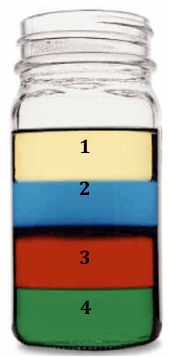
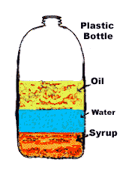
3 liquids were poured into a jar. Liquid A is 4g/ml, Liquid 2 is 8g/ml, and liquid C is 1g.ml. Which is the correct order, from top to bottom, of the column that would form? Drag the labels to put them in the correct order.
B,C,A
C,A,B
B,A,C
A,C,B
Oxygen in the air is taken in by animals on the ground. This is an interaction between which of earth's two spheres
geosphere and hydrosphere
hydrosphere and atmosphere
atmosphere and geosphere
atmosphere and biosphere
Heavy rainfall causes a landslide on the side of a mountain. involves which of earth's two spheres
hydrosphere to geosphere
geosphere and atmosphere
biosphere and hydrosphere
biosphere and atmosphere

structure
energy
weight
density
what state of matter takes the shape of their container
gasses and liquids and solids
gasses and liquids
liquids and solids
solids
Why are plants considered autotrophs
They make their own food
They provide food for others

Which of the following is needed for the process of photosynthesis?
Water
Oxygen
Starch
Carbon dioxide
What is produced as a result of photosynthesis?
glucose and chlorophyll
water and light energy
glucose and oxygen
carbon dioxide and water

What is the evidence that a chemical change has taken place?
gas production
change in energy
change in color
production of a precipitate

Identify the change as physical or chemical
physical
chemical

Identify the change as physical or chemical.
physical
chemical

What is one way in which all living things on Earth are alike?
All living things have hair.
All living things are made of cells.
The cells of all living things have chloroplast.
All living things can move.
The _____________ stores food, water, wastes, and other materials in both plant and animal cells.
Vacuole
Mitochondria
Cytoplasm
Nucleus
What can only be found in plant cells?
Cell membrane
Vacuole
Chloroplast
Mitochondria
What is the main difference between prokaryotic and eukaryotic cells?
Prokaryotic cells are found only in multicellular organisms
Eukaryotic cells are found only in unicellular organisms
Eukaryotic cells have a nucleus and prokaryotic cells do not
Prokaryotic cells have DNA and eukaryotic cells do not
If it is Winter in the Northern hemisphere, what is it in the Southern hemisphere?
Winter
Spring
Summer
Fall
What are the reasons for the seasons?
Earth's tilt and rotation
Earth's rotation and revolution (orbit)
Earth's tilt and revolution (orbit)
Earth's tilt and resolution


What season is it for us in the Northern Hemisphere in the picture?
Summer
Winter
Fall
Spring
Which of the following statements best describes the term photosynthesis?
When plants absorb the energy from the sun.
How plants reproduce.
The process by which plants make their own food.
The process by which animals make their own food.

Which of the following does NOT belong to the cell theory?
all living organisms have the same type of cell
All living organisms are composed of one or more cells
All cells come pre-existing cells
Cells are the basic unit of life
In a eukaryotic cell, where is the DNA located?
In the cell membrane
There is no DNA
In the nucleus
In the cell wall
In a prokaryotic cell, where is the DNA located?
It's stuck to the cell wall for protection
In the nucleus of the cell for protection
In the brain of the cell
It's floating in the center of the cell and has no protection
What type of cells do animals have?
prokaryotic cells
bacteria cells
eukaryotic cells
none of the above

Check the boxes that tell the cell theory.
all organisms are composed of one or more cells
all cells are the basic unit of life
All cells are plant cells
All cells come from pre-existing cells

What do you see?
a prokaryotic cell
the bottom of the ocean
Bacteria
a eukaryotic cell

What do you see?
a white blood cell
an eukaryotic cell
DNA
a prokaryotic cell
one cell
unicellular
multicellular
neither
many cells
unicellular
multicellular
neither
both
bacteria
unicellular
multicellular
neither

Organisms that cannot make their own food and must get energy from eating other organisms are called...
autotrophs
heterotrophs
plants
What do you call organisms that can make their own food for energy?
heterotophs
autotrophs
trophies
What do you call organisms that eat other organisms for energy?
heterotophs
autotrophs
trophies
What are the 3 reactants of photosynthesis? The reactants are the things needed for photosynthesis to occur.
oxygen, glucose, sunlight
sunlight, oxygen, water
water, oxygen, carbon dioxide
carbon dioxide, sunlight, water
What are the 2 products of photosynthesis? The products are the things made in the process of photosynthesis.
water, sunlight
glucose, carbon dioxide
oxygen, glucose
sunlight, oxygen
Which of the following is an example of a chemical change?
water freezes to form ice
sugar dissolves in water
gasoline burns in a car engine
a piece of metal expands when it is heated
Which one shows that a chemical reaction has occurred?
dissolving
melting
formation of a gas
bending

In a ___________change, a substance changes into a new substance.
Physical
Chemical

Arrows in a food web represent...
eating
sunlight
energy
matter
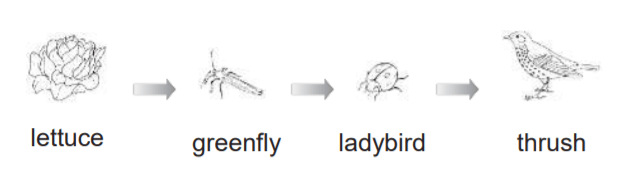
Who is the producer?
lettuce
greenfly
ladybird
thrush

Which list contains only animals that receive energy transferred directly from consumers in this food web?
Red-tailed hawks, snowshoe hares, and caterpillars
Snowshoe hares and caterpillars
Snowshoe hares and shrews
Shrews and red foxes


Which of these completes the food chain correctly?
a rock
a fox
a plant
an egg

Which of these is a possible food chain for this environment?
Sun → grass → fly → frog
frog → fly → grass → Sun
Sun ← grass ← fly ← frog
Sun → fly → frog → snake

Non-Living things that affect the ecosystem
biotic
abiotic
dead
zombies

Living things that affect the ecosystem.
rocks
pokemon
abiotic
biotic
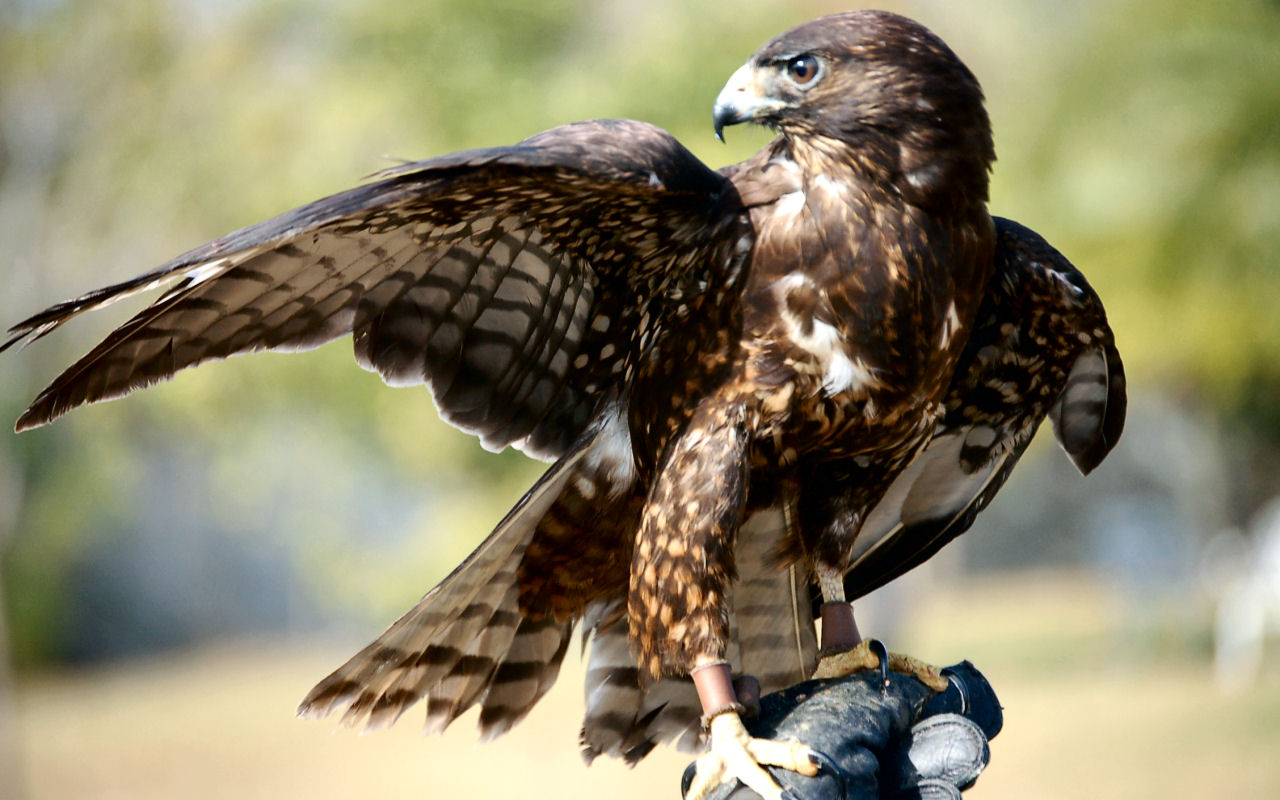
Hawks and brown bears live together in the same habitat. There will be competition between the hawks and the brown bears only if which of the following is true?
Brown bears hibernate during the winter while hawks remain active.
Pesticides in the fish population affect hawks’ eggs and decrease their population.
Both brown bears and hawks feed on the same species of fish.
Both Shanna and Savanna feed on the same species of snakes.

The diagram below shows a sled moving along a smooth, frictionless track. In which sections of the track will the sled experience an unbalanced force?
Sections 1 and 3
Sections 2 and 3
Sections 2 and 4
Sections 3 and 4

Based on the graph. Which surface has the greatest amount of friction.
Surface A
Surface B
Surface C
Surface D
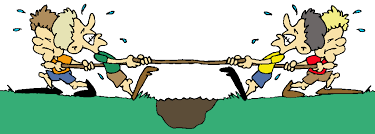
If two people pull on a book but the book doesn't move then which of the following is true?
The forces are balanced, and the net force is zero.
The forces are balanced, and the net force is positive.
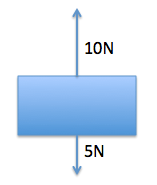
What is the net force on the block?
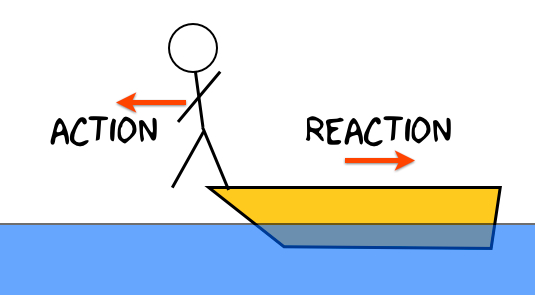
Newtons third law states that every action has an _______ and __________ reaction.
(a)
A cup rests on a table. The force of gravity pulls down on the cup with a force of 66 newtons. What prevents the cup from accelerating downward at 9.8 m/sec.
The table presses back up on the cup with a force greater than 66 newtons.
The table presses back up on the cup with an equal and opposite force of 66 newtons.
The table and the cup together are accelerating downwards at 9.8 m/sec2
The table presses back up on the cup with a force less than 66 newtons.
According to Newton’s third law of motion, if someone steps off a little boat to get on a deck, the boat will slide backward because –
the force that sent the person forward, there is an equal force pushing back on the boat.
the pull of gravity on the person is the same as on the boat, regardless of size.
the mass of the boat is the same as the mass of the person stepping off.
the air resistance on the person is great and the friction on the boat is small

Child At the top of the slide
Child At the bottom of the slide

A package is dropped from an airplane. At which point does the package have the least gravitational potential energy?
Position W: While it is inside the airplane
Position X: The instant it leaves the plane
Position Y: Halfway to the ground
Position Z: When it lands on the ground
Think about a roller coaster or a pendellum ... According to the law of conservation of energy Which of the following is true of the relationship between kinetic and potential energy?
As kinetic energy increases, potential energy increases.
When a system loses kinetic energy, it loses potential energy.
When a system gains kinetic energy, it loses potential energy.
As kinetic energy decreases, potential energy decreases.
Peter piper Pizza has an alien roller coaster ride, it uses electricity to make its motor spin. The ride also has lights, and sound and moves up and down. Which statement below is true about the roller alien ride?
The amount of energy used by the amusement park ride is greater than a waterlog ride at sea world.
The alien ride only uses energy when it has a full group of riders on it.
The amount of energy used by the alien ride is more than the total amount of energy produced as the motor spins.
The amount of electrical energy used equals the total amount of mechanical, sound, and light energy produced.
friction does what to motion?
speeds it up
Accelerates it
slows it down
nothing
magnetic force is a
non contact force
contact force
not a force
doesn't exist
which force pushes down on all things on earth?
magnetic
applied
gravity
spring
Gravitational potential energy is greatest when the object is
At its lowest height
At its highest height
Moving at its fastest speed
moving slowly
A type of forces that can affect objects over a distance.
friction
spring
magnetic
normal
As an object loses potential energy it is gaining ________ energy
Static
No
Potential
Kinetic

If Magnet 1 is moved closer to Magnet 2, Magnet 2 will move. This is because–
magnets can only exert a force on other magnets.
forces can affect objects over a distance.
moving Magnet 1 changed the force needed to move Magnet 2.
objects need to touch each other in order to cause movement
A relationship between two organisms in which one organism benefits and the other is unharmed...
Mutualism
Commensalism
Parasitism

Ostriches and gazelles eat together. They both watch for predators and danger. Since they see things differently, they each can identify threats the other animal may not see. Both species are benefited.
mutualism
commensalism
parasitism

Yucca flowers are pollinated by yucca moths. The moths lay their eggs in the flowers and the eggs hatch. The larvae eat some of the seeds, and spread them around. Both species are benefited.
mutualism
commensalism
parasitism

Mistletoe takes water and nutrients from the oak tree. This is good for the mistletoe but bad for the tree.
mutualism
commensalism
parasitism

Birds build nests out of dead twigs and leaves. They build their nests in living trees. This doesn't hurt the tree.
mutualism
commensalism
parasitism

Predation is similar to _______________ in that both types of relationship benefit one of the interacting species while the other is harmed.
Parasitism
Commensalism
Mutualism
Which of the following best describes a difference between a mutualistic relationship and a parasitic
relationship?
Parasitism harms both organisms, while mutualism harms only one organism.
Parasitism benefits only one organism, while mutualism benefits both organisms.
Parasitism involves only two organisms, while mutualism involves many organisms.
Parasitism continues for many generations, while mutualism is limited to one generation.
Independent variable
Dependent variable
Conclusion

Maya designed an experiment to answer the following question: How does the amount of water given to a lima
bean seed affect how tall it grows?
In this experiment, what variable should Maya CHANGE?
the amount of water
the kind of plant
the type of soil
the amount of sunlight it gets
Esther became interested in insulation while her parent’s new house was being built. She decided to determine which insulation transferred the least heat. She filled each of 5 jars half-full with water.
She sealed each jar with a plastic lid.Then she wrapped each jar with a different kind of insulation. She put the jars outside in the direct sunlight. Later, she measured the temperature of the water in each jar. What is the independent variable?
The type of insulation
The temperature of the water
Number of houses
The amount of sunlight
only 1
The type of variable that responds to the experiment and is what you measure or count to determine if your hypothesis is true.
Thomas tests different types of liquids to see which will grow his plants the most. He has water, soda, milk, and no liquid at all. What is the control group?
the one with water
the one with soda
the one with milk
the one with no liquid
Cindy wanted to find out how the amount of sunlight affects the growth of plants. She placed a tomato plant in 6 identical 10 inch pots with the same amount and type potting soil. She watered them ¼ cup each day. 3 plants were placed under a cardboard box and 3 plants were placed in the sunlight. She measured the growth of the plant each week for three weeks.
What is the dependent variable?
Using the same type of plant
Each plant was placed in a 10 inch pot
The growth of the plant
3 plants in the sunlight and 3 plants under a box

How does the amount of sunlight affect the rate of photosynthesis?
How does the amount of water affect the rate of photosynthesis?
How does the surface area of elodea affect the rate of photosynthesis?
How does the amount of oxygen affect the rate of photosynthesis?
The dependent variable is the
data collected
thing that "I" changing
things that remain the same
time passed
The dependent variable is the
data collected
thing that "I" changing
things that remain the same
time passed
Students observed rust forming on a bar of pure iron. Which of the following provides evidence that the change to the iron bar was a chemical change?
The melting point of pure iron is approximately 1,500°C.
The mass and the volume of the rust can be measured.
The iron bar is able to conduct electricity even after rust forms.
The rust is a new substance that is not pure iron.
Which of the following pieces of information would be most helpful in classifying an organism as multicellular or unicellular?
growth rate
number of cells
how it gets energy
presence of a nucleus
Which of the following is true about the amount of energy that is stored in plant cells during photosynthesis?
It is transformed from from an equal amount of potential chemical energy.
It is transformed from an equal amount of radiant energy from the sun.
It is transformed from a greater amount amount of potential chemical energy.
It is transformed from a greater amount amount of radiant energy from the sun.



Adding thermal energy to a cup of water may cause the particles to _____.
move faster
move closer together
slow down
collide less frequently

Fe3O4
CH4

