wayground logo

Free Printable Worksheets

Font size

S
M
L
XL
Worksheets

Cele STAAR Review - 3

Total questions: 170

Worksheet time: 3hrs 30mins

Name
Class
Date
1.
Day and night on Earth is caused by-
a)
Earth revolving around the sun
b)
Earth rotating on its axis
c)
Moon revolving around Earth
d)
Moon revolving around the sun
2.
Which of the following is an examples of climate?
a)
Today it is hot and sunny in Phoenix, Arizona
b)
Summers are usually mild in Lansing, Michigan
c)
Last week it rained every day in San Antonio, TX
d)
Yesterday was cold and windy in Anchorage, AK
3.
Before the front passed through Houston, the temperature was 14 ⁰C. Which temperature is a reasonable prediction after the front has passed?
a)
26 ⁰C
b)
14 ⁰C
c)
8 ⁰C
d)
16 ⁰C
4.
How many hours does it take Earth to rotate one time?
a)
365 days
b)
1 day
c)
28 days
d)
7 days
5.
All of these are true about the diagram EXCEPT-
a)
Seasons are caused by Earth's tilt as it revolves around the sun
b)
The season shown in the northern hemisphere is winter
c)
The season shown for the southern hemisphere is summer
d)
Seasons on Earth are caused by rotation
6.

What is the net force of this?

<--------8N 4N-------->

a)

4N to the left; balanced

b)

8 N to the right; balanced

c)

4N to the left; unbalanced

d)

4N to the right; unbalanced

7.
A greater applied force is required to move an object with a greater mass than one with a smaller mass.
a)
True
b)
False
8.
What is the process and agent that forms sand dunes?
a)
deposition by water
b)
weathering, erosion by water
c)
deposition by wind
d)
weathering, erosion by glacier
9.
Total distance divided by total time is
a)
average speed
b)
constant speed
c)
instantaneous speed
d)
acceleration
10.

Which of Newton's laws is most clearly illustrated when a magician pulls a tablecloth out from under the dishes without disturbing them?

a)

Inertia

b)

Force = Mass x Acceleration

c)

Action-Reaction

11.

Which law best explains this? Pushing a child on a swing is easier than pushing an adult on the same swing.

a)

Inertia

b)

Force = mass x acceleration

c)

Action-Reaction

12.
What is happening at A?
a)
Stationary
b)
Accelerating
c)
Slower steady speed; moving away from the starting position
d)
Steady speed; returning to start position
13.
Mechanical Energy is transferred to _____ Energy.
a)
Solar
b)
Mechanical
c)
Electrical
d)
Potential
14.
What best describes the energy conversion that occurs when you turn on a flashlight?
a)
electrical to thermal to light
b)
chemical to electrical to light
c)
nuclear to electrical to thermal
d)
kinetic to light to thermal
15.
What is happening at E?
a)
Stationary
b)
Accelerating
c)
Fast steady speed; moving away from the starting position
d)
Steady speed; returning to start position
16.
Which season is taking place in the NORTHERN Hemisphere in Position 3?
a)
Winter
b)
Spring
c)
Summer
d)
Fall
17.
As the Earth rotates, the part of the Earth facing the sun has ________.
a)
an axis
b)
darkness (night)
c)
daylight
d)
winter
18.
What phase comes BEFORE this one?
a)
Waxing Crescent
b)
Waxing Gibbous
c)
Waning Gibbous
d)
Waning Crescent
19.
What phase comes AFTER this one?
a)
Waning Crescent
b)
Waning Gibbous
c)
Waxing Crescent
d)
Third Quarter
20.
As the moon's shape appears to get smaller, we say that the moon is _.
a)
swelling
b)
waxing
c)
waning
d)
disappearing
21.
A collection of stars, dust, and gas bound together by gravity is...
a)
Universe
b)
Solar System
c)
Planet
d)
Galaxy
22.
In the diagram given, what happens as we move to the left?
a)
Stars Get Larger
b)
Stars get Colder
c)
Stars get hotter
23.
A collection of stars, dust, and gas bound together by gravity is...
a)
Universe
b)
Solar System
c)
Planet
d)
Galaxy
24.
Hot clouds of gaseous elements and compounds that act as nurseries for stars
a)
Galaxies
b)
Star
c)
Nebulae
d)
Black holes
25.
Compared to the rest of the stars, our sun is considered...
a)
Extremely Large and Cold
b)
Small with a medium temperature
c)
Medium size with medium temperature
26.
A mid-ocean ridge occurs at a ________ plate boundary.
a)
transform
b)
convergent
c)
divergent
27.
Determine the contour interval:
a)
5 m
b)
10 m
c)
15 m
d)
20 m
28.
What do close contour lines represent on a map?
a)
waterfall
b)
steep area
c)
gradual area
d)
river
29.
Low pressure will usually bring what kind of weather?
a)
Sunny
b)
Calm
c)
Stormy
30.
A _____________ tide occurs when the moon, sun, and Earth are aligned.  This is a period of the highest high tides and lowest low tides.
a)
neap
b)
spring
c)
slack water
d)
ebb
31.
The part of a cell that contains the chromosomes (wound up DNA) in eukaryotic cells.
a)
Chloroplasts
b)
Cell Wall
c)
Nucleus
d)
Homeostasis
32.
The genetic code for all of your traits.
a)
Nucleus
b)
DNA
c)
Chloroplast
d)
Recessive gene
33.
The organelle inside a plant cell that converts sunlight into energy.
a)
Chloroplast
b)
Photosynthesis
c)
Parasite
d)
Cell Wall
34.
The part of a plant cell that is rigid & permeable.
a)
Chloroplast
b)
Turgor Pressure
c)
Cell Wall
d)
Phototropism 
35.
The term used to define a cell that has a nucleus containing DNA.
a)
Prokaryote
b)
Eukaryote
c)
Autotroph
d)
Homeostasis
36.
The building up of an ecosystem after lava or glaciers have left nothing but rock.
a)
Secondary Succession
b)
Primary Succession 
c)
Natural Selection
d)
Adaptation
37.
A cell without a nucleus.
a)
Eukaryotic
b)
Prokaryotic
c)
Heterotroph
38.
Rebuilding an ecosystem after a catastrophic event has occurred and soil is present.
a)
Primary Succession
b)
Secondary Succession
c)
Natural Selection
d)
Adaptations
39.
Behavior patterns, or internal and external structures which allow an organism to survive and reproduce in their environment successfully.
a)
Adaptations
b)
Homeostasis
c)
Recessive traits
d)
Natural Selection
40.
Organisms who make their own energy by taking in light or chemicals.
a)
Heterotroph
b)
Phototropism
c)
Autotroph
d)
Heterotroph
41.
Successful traits are passed onto offspring through natural circumstances. 
a)
Natural Selection
b)
Primary Succession
c)
Secondary Succession
d)
Dominant
42.
The response of a plant due to the stimuli of light energy.
a)
Parasitic
b)
Chloroplast
c)
Photosynthesis
d)
Phototropism 
43.
The organism's ability to maintain equilibrium in their body.
a)
Homeostasis
b)
Heterotroph
c)
Prokaryotic
d)
Autotrophic
44.
A student puts four objects in a bucket filled with water. the objects are listed below.
∎Plastic ball
∎Glass Marble
∎Metal paper clip
∎Wood block
Which two objects are most likely less dense than water?
a)
Wood block and metal paper clip
b)
Plastic ball and glass marble
c)
Metal paper clip and glass marble
d)
Wood block and plastic ball
45.
An atom of a certain element has 36 protons, 36 electrons, and a mass number of 84. At room temperature this element is a very stable gas. How many neutrons are in this atom?
a)
45
b)
46
c)
47
d)
48
46.
What plate boundary feature is also shown?
a)
A ridge formed by an inactive convergent boundary
b)
A valley forming at an active divergent boundary
c)
A fault forming at an active transform boundary
d)
A volcano formed by an active transform boundary
47.
Based on this diagram, how do the characteristics of Star 1 and Star 2 compare?
a)
Star 1 is cooler and less bright than Star 2.
b)
Star 1 is hotter and brighter than Star 2.
c)
Star 1 is cooler and brighter than Star 2.
d)
Star 1 is hotter and less bright than Star 2.
48.
Water with which of these conditions would cause the most competition for resources among all three species of fish?
a)
Very cold, very clear, and very fast
b)
Very warm, very clear, and very slow
c)
Mild temperatures, some suspended particles, flows very fast
d)
Mild temperatures, suspended particles, flows at a medium speed
49.
Which of these elements is in this group?
a)
Lithium
b)
Strontium
c)
Aluminum
d)
Silicon
50.
At which location is the gravitational potential energy of the water the greatest?
a)
Location W 
b)
Location X 
c)
Location Y 
d)
Location Z 
51.
Which area of the coastline has most likely experienced the greatest effect of erosion from waves over hundreds of years?
a)
Area N
b)
Area P
c)
Area S
d)
Area T
52.
Which of these formulas contain equal numbers of nitrogen atoms?
a)
Formulas I and III
b)
Formulas I and IV
c)
Formulas II and III
d)
Formulas I, II, and V
53.
Based on the dichotomous key, in what order should this insect be classified?
a)
Mantodea
b)
Raphidioptera
c)
Coleoptera
d)
Lepidoptera
54.
A basketball with a mass of 0.60 kg is accelerated with a force of 10.8 N. If resisting forces are ignored, what is the acceleration of the basketball to the nearest m/s2?
a)
16 m/s2
b)
17 m/s2
c)
18 m/s2
d)
19 m/s2
55.
Scientists are studying the effects of climate change on the Baltic Sea. Which statement best explains why biodiversity in the Baltic Sea could decrease if these changes occur?
a)
Fewer types of plants and animals are found in warm water than in cool water
b)
 Plants and animals adapted for living in saltwater will grow more slowly in water that has less salt.
c)
Plants and animals adapted for living in saltier conditions will not be able to survive and reproduce.
d)
Animals adapted for living in warm water will eat all the plants and animals adapted for living in cool water.
56.
What lunar phase occurred on July 4, 1776?
a)
Waning gibbous
b)
Waxing gibbous
c)
Waning crescent
d)
Waxing crescent
57.
Aluminum, sulfur, and chlorine are elements found on the periodic table. Tests involving these three elements would show that at normal room temperature —
a)
sulfur is malleable and aluminum conducts electricity
b)
chlorine is malleable and conducts electricity
c)
aluminum is malleable and conducts electricity
d)
all three elements are malleable and conduct electricity
58.
What do these volcanoes indicate about plate tectonics in the region?
a)
The volcanoes form an island arc, indicating a converging plate boundary.
b)
The volcanoes form a line, indicating a diverging plate boundary
c)
Two plates are moving past each other, causing faulting and magma formation.
d)
Two plates are moving apart, creating new seafloor.
59.
The total mass of the cyclist and the bicycle is 100.0 kg. Based on this information, what is the acceleration of the cyclist?
a)
0 6. m6 /s2 backward, because the force of the air slows the cyclist down
b)
0 6. m6 /s2 forward, because the applied force is greater than the force of the air
c)
2 3. m/s2 backward, because the forces are opposite and not equal
d)
2 3. m/s2 forward, because the cyclist’s inertia is greater than the force of the air
60.
Which of the following best describes the velocity of an object?
a)
30 m/s
b)
30 m east
c)
30 m/s east
d)
30 m/s2
61.
A student stands at the point marked X on the topographic map below.
What height in meters must the student climb in order to reach the top of the hill?
a)
245 m
b)
253 m
c)
236 m
d)
260 m
62.
A chemist is identifying the elements present in a sample of seawater. What characteristic of an element’s atoms always determines the element’s identity?
a)
The number of protons
b)
The number of neutrons
c)
The location of valence electrons
d)
The number of valence electrons
63.
 Copper interferes with photosynthesis algae and other aquatic plants.
What would be the most likely result of an accidental spill of these compounds in an aquatic environment?
a)
The fish would grow larger than usual.
b)
The zooplankton population would increase
c)
The plants would increase in size but decrease in number
d)
The plant populations would be reduced.
64.
Based on the law of action–reaction, in what direction will the sled most likely move as the student jumps off?
a)
North 
b)
East
c)
South
d)
West
65.
Tropical rain forests have the greatest biodiversity of any type of land ecosystem. How does biodiversity contribute to the sustainability of an ecosystem?
a)
The presence of more species with different adaptations makes it more likely that some organisms will survive an ecological disaster
b)
Greater genetic variation within species makes it more likely that some individuals will survive a disease outbreak.
c)
The presence of a variety of herbivore species that can feed on a large number of different producer species helps ensure abundant prey for predators in the ecosystem.
d)
All of the above
66.
All living things require oxygen to survive. Where on the periodic table above would you find gases like oxygen? 
a)
section A 
b)
section B 
c)
section C 
d)
section D 
67.
Some elements have properties of metals and nonmetals, which make them useful in electronic devices. Where can these elements be found? 
a)
section A 
b)
section B
c)
section C
d)
section D 
68.
Transition metals are malleable and are found in section B. What is another property of metals in section B? 
a)
conducts heat
b)
liquid state of matter
c)
highly reactive and never found as a pure element 
d)
poor conductors of electricity 
69.
Which two sections of elements are mostly likely to react and form chemical bonds with one another? 
a)
section A and section B 
b)
section B and section C 
c)
section C and section D 
d)
section D and section A 
70.
CH4 +2O2  →  CO2 +2H2
How many different elements are involved in this reaction? 
a)
two 
b)
three 
c)
four
d)
five
71.
CH4 +2O2  →  CO2 +2H2
How many atoms are there on the left side of the equation compared to the right side? 
a)
The left side has more atoms than the right side. 
b)
The right side has more atoms than the left side. 
c)
The left and right side have the same number of atoms. 
d)
It is impossible to know because it depends on the reaction speed. 
72.
CH4 +2O2  →  CO2 +2H2O
How many atoms of hydrogen are involved in this reaction? Record you answer below. 
a)
6
b)
10
c)
4
d)
2
73.
CH4 +2O2  →  CO2 +2H2O
Which of the following lab equipment is necessary when conducting this reaction? 
a)
A filter to safeguard against contaminants in the water used to initiate the reaction. 
b)
A glass beaker to hold the methane gas.
c)
A magnet to ensure the oxygen is free of iron filings. 
d)
A fire extinguisher as a safety precaution since the methane gas is flammable. 
74.
In the hypothetical chemical reaction below, which element will be recombined into two separate atoms of one single element following the reaction?

2AB + C2 
 2CB + 2A 
a)
element A 
b)
element B 
c)
element C 
d)
All of the reactants will recombine into two separate atoms of a single element. 
75.
 In the table above, what would be an appropriate title for column C? 
a)
Metals 
b)
Nonmetals 
c)
Metalloids
d)
Solid Compounds 
76.
When comparing two elements on the periodic table, elements in the same ___________ are most likely to have similar chemical and physical properties. 
a)
group
b)
period
c)
area
d)
section
77.

The shape of a delta can change over time. The size and shape of this delta over time are NOT likely to be changed by -

a)

The amount and size of tides along the shore

b)

The amount and size of sediments carried by the river and streams.

c)

The amount of fishing in the delta

d)

The amount and size of waves from the ocean that reach the shore.

78.

Which shows a person using an alternative energy source to perform a task?

a)
b)
c)
d)
79.

Citizens in a community were surveyed about the type of energy resource they like for a new power plant. The results are shown below. How many citizens chose alternative energy resources?

a)

850

b)

485

c)

365

d)

687

80.
What is the atomic number of an atom with 13 protons, 14 neutrons, and 10 electrons? 
a)
1
b)
13
c)
27
d)
37
81.
What is the mass of an atom with 7 protons, 8 neutrons, and 7 electrons? 
a)
1
b)
7
c)
15
d)
22
82.
This part of the atom has very little mass but takes up most of the space of the atom (contains negatively charged particles).
a)
Positron
b)
Proton
c)
Electron
d)
Neutron
83.
How Many Valence Electrons does this family of elements have?
a)
1
b)
2
c)
3
d)
4
84.
There is competition for resources between:
a)
Brittle Brush and Saguaro Cactus
b)
Armadillo and Peccary
c)
Stomach Worm and Gila Monster
d)
Banded Gecko and Peccary
85.
What does cell theory say?
a)
All Living things are made of cells
b)
All cells come from pre-existing cells
c)
cells are the basic unit of life
d)
All of these answers are correct
86.
What is the average speed walked in the walk-a-thon?
a)
810 m/s
b)
90 m/s
c)
10 m/s
d)
9 m/s
87.
This picture shows the moon and the earth during a _______ Moon and a ______ Tide.
a)
Full....Neap
b)
New...Spring
c)
Full...Spring
d)
New...Neap
88.
Seafloor spreading and rift valleys occur at _________ plate boundaries
a)
Convergent
b)
Divergent
c)
Transform
d)
Subduction Zones
89.
Susan observes two antacid tablets dropped into water. Bubbles immediately form. When will she know the chemical reaction has stopped? 
a)
when the bubbles have completely disappeared
b)
when the temperature of the water begins to decrease 
c)
when a white substance begins to form at the bottom 
d)
when heat is produced from the water 
90.
Even though the Sun has a mass 27 million times greater than the Moon, the Moon has a greater impact on the Earth’s tides. This is because: 
a)
The Moon is much closer to the Earth.
b)
The Moon has more gravitational force than the Sun. 
c)
The Moon is made of solid elements instead of gases. 
d)
The Moon has a faster orbital period. 
91.
What phase of the moon will you see in this situation? 
a)
A
b)
B
c)
C
d)
D
92.
The tilting of the Earth on its axis contributes to: 
a)
the different phases of the moon we see 
b)
the changing of seasons as Earth moves around the Sun 
c)
high and low ocean tides
d)
an increase in the gravitational force from the Sun 
93.
What element is represented in this Bohr Model? 
a)
Carbon
b)
Hydrogen
c)
Aluminum
d)
Lithium
94.
Which is an electron?
a)
A
b)
B
c)
C
95.
What is the atomic number?
a)
The number of protons in an element
b)
The number of neutrons in an element
c)
The number of protons and neutrons.
d)
The number of protons and electrons.
96.
What is found in the nucleus of atoms?
a)
Protons and electrons.
b)
Protons, neutrons, and electrons.
c)
Protons and neutrons.
d)
Neutrons and electrons.
97.
How many valence electrons does Sodium (Na) have?
a)
1
b)
2
c)
3
d)
4
98.
Each row in the periodic table is called a 
a)
group
b)
period
c)
cluster
d)
unit
99.
Each column in the periodic table is called a 
a)
period
b)
group
c)
cluster
d)
unit
100.
Which is the correct formula for:
 three hydrogen (H)
one sulfur (S)
four oxygen (O)
a)
H3SO4
b)
HSO4
c)
H4S3O
d)
H2O
101.
How many elements are in C6H12O6?
a)
1
b)
2
c)
3
d)
4
102.
 Which is NOT an example of chemical change?
a)
production of gas.
b)
change in color.
c)
change in size.
d)
transfer of energy.
103.
Where are the most nonmetals located on the periodic table?
a)
In the bottom row
b)
On the left side and in the middle
c)
On the right side
d)
In the top row
104.
Jack has a rock. The rock has a mass of 14g and a volume of 2cm3. What is the density of the rock?
a)
7 mL
b)
7 g/cm3
c)
28 g/cm3
d)
1/7 g/cm3
105.
The combination of all of the forces acting on an object is called ________________________.
a)
Unbalanced Force
b)
Net Force
c)
Balanced Force
d)
Force
106.
If the forces acting on an object at rest are balanced, what will the object do?
a)
The object will travel in the direction of the greater force
b)
The object will remain at rest
c)
The object will travel in the direction of the opposite force
d)
The object will remain at test
107.
Force is measured in:
a)
Newtons
b)
Jewels
c)
Joules
d)
Fig Newtons
108.
What is speed?
a)
Speed is the time traveled in a certain distance
b)
Speed is the distance an object travels in a given amount of time
c)
Speed is the total distance and direction
109.
Which of the following is an example of acceleration?
a)
A rollercoaster slows down as it travels uphill
b)
A cyclist travels 40 kilometers in 2 hours
c)
A flock of geese flies north at 55 mph 
d)
An athlete can run about 12.5 km/hr 
110.
Inertia is the tendency of an object:
a)
To keep moving
b)
To stay at rest
c)
To resist a change in motion
111.
Which of the following formulas are incorrect?
a)
F=MxA
b)
M= F/A
c)
A= F/M
d)
M= A/F
112.
The shopping charts shown above are pushed down with the same amount of force. Which cart has the greatest change in speed? (click the question to see image)
a)
Tennis racket and ball cart
b)
Variety of sport balls cart
c)
2 bowling balls cart
113.
At which point does the water in the waterfall have the greatest gravitational potential energy? 
a)
Point 1
b)
Point 2
c)
Point 3
d)
Point 4
114.
As the rollercoaster moves from point Z to point Y, the potential energy _________ as the kinetic energy __________.
a)
Increases; increases
b)
Decreases; decreases
c)
Increases; decreases
d)
Decreases; increases
115.
__________ is energy that is stored and available to be used later 
a)
Potential energy
b)
Kinetic energy
116.
____________________________________ is energy that an object has because of its motion. 
a)
Potential Energy
b)
Kinetic Energy
117.
If an object travels 42 meters in 6 seconds, what is its average speed? 
a)
6 m/s
b)
7 m/s
c)
48 m/s
d)
252 m/s
118.
In the graph to the right, how many kilometers has the object moved after 10 minutes?  
a)
1 km
b)
1.5 km
c)
2 km
119.
In the graph to the right, how many kilometers has the object moved after 20 minutes?  
a)
1 km
b)
1.5 km
c)
2 km
120.
In the graph to the right, how many minutes did it take for the object to move 3.5 kilometers? 
a)
10 minutes
b)
20 minutes
c)
30 minute
d)
40 minutes
121.
The graph below shows the speed of a car traveling north over a 16 second time period. Based on the information in the graph, it can be concluded that in the first 8 seconds, the car is 
a)
changing its direction
b)
accelerating at a constant rate
c)
climbing a steep incline
d)
experiencing less and less friction
122.
What type of energy is being converted when a glow stick cracks?
a)
Chemical to light
b)
Light to mechanical
c)
Light to chemical
d)
Chemical to electrical
123.
What type of energy is being converted when a plant goes through photosynthesis?
a)
Chemical to light
b)
Light to mechanical
c)
Light to chemical
d)
Chemical to electrical
124.
Samuel kicks a soccer ball across a grassy field and it eventually comes to a stop. If Newton’s law of inertia is true, why did the ball stop? 
a)
Newton’s law only applies to objects at rest. 
b)
The mass of the ball is not great enough to have inertia. 
c)
Friction with the grass applies a net force on the ball causing it to decrease its speed. 
d)
Gravity slowed the ball until it came to a stop. 
125.
In the case of a car crash, the body’s inertia will continue to carry it in its initial direction. However, if the person is wearing a seatbelt, in which direction will this force act? 
a)
to the right 
b)
to the left 
c)
upward 
d)
downward 
126.
The stars we see at night are: 
a)
in the Milky Way galaxy
b)
in the solar system
c)
in galaxies other than the Milky Way 
d)
both A and C 
127.
Use this model of the Hertzsprung-Russell diagram to answer question. 
An astronomer discovers a new star that is very hot, but not very bright. What type of star did she discover? 
a)
a red giant
b)
a young star on the main sequence 
c)
an old star on the main sequence 
d)
a white dwarf 
128.
 Our Sun is a middle-aged star with an average temperature and brightness. What type of star is our Sun according to the Hertzburg-Russell diagram? 
a)
a white dwarf
b)
a red giant
c)
a star on the upper left portion on the main sequence 
d)
a star in the middle of the main sequence 
129.
Which of the following galaxies is most like our own Milky Way? 
a)
A
b)
B
c)
C
d)
D
130.
As a normal, averaged-size star progresses through its life cycle, what change will it undergo? 
a)
it becomes cooler
b)
it gets smaller
c)
it becomes brighter 
d)
its gravity increases 
131.
Which arrow indicates the cause of day and night on Earth? 
a)
Arrow 1
b)
Arrow 3
c)
Arrow 4
d)
Both Arrow 1 & 4 
132.
Which arrows show the revolution of a body in space? 
a)
Arrows 2 and 3 
b)
Arrows 1 and 2 
c)
Arrows 1 and 3 
d)
Arrows 3 and 4 
133.
 Sarah observes and records these moon phases. 
Which phase will she observe on Night 15? 
a)
A
b)
B
c)
C
d)
D
134.
Which positions of the Moon will produce the highest tides on Earth? 
a)
A and B 
b)
A and C 
c)
B and C 
d)
B and D 
135.
The arctic hare in the picture is shown camouflaged in the snow from possible predators. However, when summer arrives, what trait(s) will allow this hare to avoid predators? 
a)
its long ears for keen hearing and fast hind legs
b)
the ability to eat lots of grass
c)
its relatively small size in comparison with predators 
d)
the thickness of its fur 
136.
In question #1, what would happen if the arctic hare did not have these specific traits? 
a)
The species would become overpopulated. 
b)
The chance of young hares surviving to adulthood and reproducing would be greatly diminished. 
c)
The hare would be a popular target for game hunters. 
d)
All of the above. 
137.
In the graph below, what is a possible reason why the population of “gray” peppered moths in England changed? 
a)
Human pollution during the industrial revolution changed the moths’ natural habitat. 
b)
The number of predators increased. 
c)
The moths’ food source vanished. 
d)
The moths were unable to reproduce. 
138.
The polar bear depends on sea ice in order to hunt for seals. If arctic temperatures increase, what is the long- term outlook for polar bears? 
a)
polar bear population will gradually increase
b)
polar bear population will gradually decrease 
c)
polar bear population will remain unchanged 
d)
polar bears will adapt quickly to new food sources 
139.
What statement best completes the chart  
a)
greater variation in the genes of offspring makes them less susceptible to disease 
b)
allows for rapid reproduction in large numbers 
c)
genetic traits are likely to be an exact match of one the offspring’s parents, but not the other 
d)
provides the ecosystem with more consistency 
140.
The heart pumps blood to the lungs, allowing the blood to become oxygenated and then carrying the oxygen to the cells within the body. This describes a key interaction between what two body systems? 
a)
endocrine and skeletal systems 
b)
circulatory and respiratory systems 
c)
digestive and circulatory systems 
d)
nervous and respiratory systems 
141.
Which of the following characteristics best describe the animal kingdom? 
a)
heterotrophic, prokaryotic, unicellular 
b)
autotrophic, eukaryotic, multicellular 
c)
heterotrophic, eukaryotic, multicellular 
d)
heterotrophic, prokaryotic, multicellular 
142.
In the plant cell below, which arrow is pointed to the organelle that contains the genetic material for inherited traits? 
a)
Structure A 
b)
Structure B 
c)
Structure C 
d)
Structure E 
143.
Cell theory does not include the idea that: 
a)
all living things are made of cells
b)
like cells carry similar functions
c)
cells use energy from food to sustain life 
d)
all cells in all the organisms of the same species carry the exact same genetic traits 
144.
The picture below shows how runoff from an urban location is routed to the ocean. Pollution in the runoff can damage ocean ecosystems. A likely cause of the runoff is: 
a)
larger amounts of farmland to support more people 
b)
pavement and concrete prevents water from entering the groundwater 
c)
increased rainfall in urban areas 
d)
sediments being deposited in the streams and rivers around urban areas 
145.
What season is the Northern Hemisphere experiencing at position 3?
a)
summer
b)
winter
c)
spring
d)
fall
146.
What type of star is hot and dim?
a)
main sequence
b)
supergiants
c)
giants
d)
white dwarfs
147.
What type of geological feature will form at a convergent boundary in the ocean?
a)
mid ocean ridge
b)
volcanic Islands
c)
fault
d)
mountains
148.
What type of geological feature will form at a transform boundary?
a)
fault
b)
rift valley
c)
mountains
d)
mid ocean ridge
149.
What determines an element's identity?
a)
electrons
b)
valence electrons
c)
protons
d)
neutrons
150.
What determines how chemically reactive an element is?
a)
electrons
b)
valence electrons
c)
protons
d)
neutrons
151.
If the same amount of force is applied to a car with a small mass that is applied to a car that is much heavier, what would happen?
a)
the small car will accelerate faster
b)
the small car will accelerate slower
c)
the heavier car will accelerate faster
152.
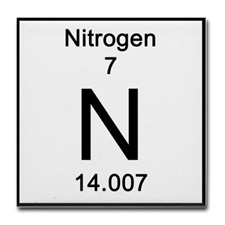
What is the number of protons that the element in this image contain?
a)
14
b)
7
c)
15
d)
18
153.
The positive particles of an atom are called:
a)
electrons 
b)
positrons 
c)
neutrons 
d)
protons 
154.
a)
2
b)
3
c)
5
155.
a)
12
b)
7
c)
8
d)
14
156.
Which subatomic particle(s) surround(s) the nucleus of an atom?
a)
Electrons
b)
Neutrons
c)
Protons and Electrons
d)
Neutrons and Electrons
157.
In a rainforest, giant trees normally live for hundreds of years. However, when they do die and fall to the ground, hundreds of seedlings will compete to take its place. What adaptation is most necessary for a young tree to mature in this environment? 
a)
the ability to grow vertically at a rapid rate 
b)
the ability to establish a deep root system while growing at a slow and steady rate 
c)
the ability to retain water to survive in drought conditions 
d)
the ability to grow narrow, small leaves 
158.
Using the chart below, what would most likely happen if this specific ocean region was overfished by humans? 
a)
decrease in the amount of algae
b)
increase in the shark population
c)
decrease in the activity of marine worms 
d)
decrease in the available energy from the Sun 
159.
Which of the following is an example of selective breeding in order to enhance a particular genetic trait? 
a)
Rabbits with larger back legs and muscles are more adapted to escape predators. 
b)
Eagles with sharp claws are adapted to catching fish from a lake. 
c)
Owls have keen eye sight in order to spot prey at night. 
d)
Horses with fast gallops are chosen to produce offspring equipped for racing. 
160.
What types of particles are found in the cloud surrounding the atom's nucleus?
a)
Positively charged particles and negatively charged particles.
b)
Negatively charged particles only
c)
Neutral particles and positively charged particles
d)
Positively charged particles only
161.
A student draws the odel shown.  Which of these best compares the conditions at Location X and Location Y?
a)
It is day at Location X and night at Location Y.
b)
It is winter at Location X and summer at Location Y.
c)
There are more hours of daylight at Location X than at Location Y.
d)
The moon is brighter when viewed from Location X than when viewed from Location Y.
162.
When a lion eats a zebra and then uses the energy from the zebra to run, the lion's body converts --
a)
chemical energy to mechanical energy
b)
electrical energy to chemical energy
c)
chemical energy to light energy
d)
mechanical energy to chemical energy
163.
When people run long distances, their muscles require increased amounts of oxygen.  Which system is responsible for carrying this oxygen to the muscles?
a)
Nervous
b)
Respiratory
c)
Digestive
d)
Circulatory
164.
Certain species of whiptail lizards have only female individuals and no males.  These lizards reproduce asexually.  What is one advantage of asexual reproduction for these lizards?
a)
A new population can be established by a single individual in a relatively short period of time.
b)
All members of a population are genetically very similar and less able to survive environmental changes.
c)
They are smaller than lizards that reproduce sexually.
d)
They are more likely to develop a variety of tail lengths.
165.
Three cousins have a similar appearance but different face shapes.  Which of these cell components are most involved in determining the basic shape of each girl's face?
a)
Genes, chromosomes, and nucleus
b)
Cytoplasm, chloroplasts, and genes
c)
Vacuoles, nucleus, and chromosomes
d)
Chromosomes, chloroplasts and vacuoles
166.
Scientists recently discovered that rocks collected from the Franklin Mountains in West Texas and rocks collected from mountains in eastern Antarctica were exactly the same age.  Further research showed that the rocks where chemically and geologically the same and came from the same magma source.  This discovery provides evidence of --
a)
coastal erosion
b)
plate tectonics
c)
ocean currents
d)
glacial melting
167.
A released balloon flies across the room. The balloon slows down as the forces become __________. 
a)
balanced
b)
frictional
c)
restricted
d)
unbalanced
168.
Air masses move across Earth's surface because of differences in --
a)
air pressure
b)
rainfall
c)
weather
d)
elevation
169.
Balanced forces would describe objects that_____
a)
move at a constant speed
b)
change speed
c)
travel at a slower speed
d)
change direction
170.
Unbalanced forces describe objects that ___________
a)
travel at a constant speed
b)
travel at a constant velocity
c)
change speed/direction