
 Worksheets
Year 8 Mega Quiz
Total questions: 172
Worksheet time: 2hrs 21mins
What are the rows in the periodic table called?
Groups
Periods
Metals
Non-metals
What are the columns in the periodic table called?
Groups
Periods
Metals
Non-metals
Which group does the element magnesium belong to?
Group 1
Group 2
Group 3
Group 4
Which period does the element magnesium belong to?
Period 1
Period 2
Period 3
Period 4
What are the two main types of atoms in the periodic table?
Metals and Non-metals
Metals and Metalloids
Non-metals and Metalloids
Metals, Non-metals, and Metalloids
Which type of element shows characteristics of both metals and non-metals?
Metals
Non-metals
Metalloids
None of the above
What is a physical change?
A change in state of a substance
A change in the chemical composition of a substance
A change in the physical appearance of a substance
A change in the temperature of a substance
What happens to the particles in a substance when it changes state?
The particles change their chemical composition
The particles change their physical appearance
The particles change their temperature
The particles remain the same but their arrangement and movement change
What causes a change of state in a substance?
An increase in temperature
A decrease in temperature
An increase in pressure
A decrease in pressure
What happens to the kinetic energy of particles when temperature increases?
The kinetic energy decreases
The kinetic energy increases
The kinetic energy remains the same
The kinetic energy becomes zero
What is melting?
The change of a solid to a liquid
The change of a liquid to a gas
The change of a gas to a solid
The change of a liquid to a solid
What is evaporation?
The change of a solid to a liquid
The change of a liquid to a gas
The change of a gas to a solid
The change of a liquid to a solid
What is condensation?
The change of a solid to a liquid
The change of a liquid to a gas
The change of a gas to a solid
The change of a gas to a liquid
What is solidification?
The change of a solid to a liquid
The change of a liquid to a gas
The change of a gas to a solid
The change of a liquid to a solid
What is sublimation?
The change of a solid to a liquid
The change of a liquid to a gas
The change of a gas to a solid
The change of a solid to a gas
What is deposition?
The change of a solid to a liquid
The change of a liquid to a gas
The change of a gas to a solid
The change of a gas to a liquid
What is the melting point?
The temperature at which a liquid turns to gas
The temperature at which a solid turns to liquid
The temperature at which a gas turns to solid
The temperature at which a gas turns to liquid
What is the process called when a substance turns straight from a solid to a gas?
Melting
Evaporation
Condensation
Sublimation
What is the process called when a substance turns straight from a gas to a solid?
Melting
Evaporation
Condensation
Deposition
What are atoms?
Particles that make up matter
Subatomic particles
Pure substances made of one type of atom
Smaller particles within an atom
What are the three subatomic particles that make up an atom?
Protons, neutrons, and electrons
Atoms, molecules, and particles
Elements, compounds, and mixtures
Metals, nonmetals, and metalloids
What is an element?
A pure substance made of only one type of atom
A combination of multiple types of atoms
A molecule made up of one oxygen atom and two hydrogen atoms
A solid made up of only gold atoms
What does the atomic number represent?
The number of protons in the nucleus
The number of electrons in the nucleus
The average number of protons and neutrons in the nucleus
The number of neutrons in the nucleus
How many protons does the element carbon have?
6
2
29
35
How many electrons does the element carbon have?
6
2
29
35
How many neutrons does the element carbon have?
6
2
29
35
Protons are found (a) an atom and they have a (b) charge.
Neutrons are found (a) an atom and they have a (b) charge.
Electrons are found:
Orbiting an atom
In the nucleus of an atom
In the nucleus and orbiting an atom
What charge to elecrons have:
Neutral
Positive
Negative
The atomic number is the number of (a) in the nucleus of the atom. The number of (b) in an atom is the same as the number of protons. The atomic mass is the average number of protons and (c) in the nucleus.
How many protons, neutrons and electrons does a copper atom have?
29 protons
29 electrons
35 neutrons
29 protons
29 electrons
34.55 neutrons
29 protons
64 electrons
64 neutrons
29 protons
29 electrons
34 neutrons
Diffusion occurs when two (a) or two liquids are mixed. This process causes the two substances to mix together (b) , even without (c) .
As gas substances are combined within the same container, the gas particles will (a) move throughout, (b) off each other and the walls of the container, until there is an (c) spread of both gases.
When a liquid dye is added to water, the dye particles will gradually (a) through the water until the solution is a (b) colour
A green powder is heated & a gas is given off while it turns to a black solid. This describes
Physical Change
Chemical Change
Change in State
Change in Temperature
A Chemical Change is also known as what?
Physical Change
Physical Property
Chemical Reaction
Chemical Property
Which of the following could indicate that a chemical change took place?
Change in color
Production of heat
Formation of Gas
All are correct
The difference between a Physical change and a Chemical change is…
Physical change is only a change to the outside appearance.
Chemical change is when matter is changed into something new.
Atoms are rearranged in chemical changes & not in physical.
All are correct.
What does a chemical change result in?
A change in state of the substance (ex. liquid to solid)
A change in texture of the substance.
A change in the way atoms are bonded to each other.
A change in the appearance of the substance.

Identify what type of change happening in the picture below...
Chemical Change
Physical Change
Endothermic Reaction
Exothermic Reaction

Identify what type of change happening in the picture below...
Chemical Change
Physical Change
Endothermic Reaction
Exothermic Reaction

Identify what type of change happening in the picture below...
Chemical Reaction
Physical Change
Change in State
Change in appearance only
Will made toast and buttered it, but then he left the butter out on the warm stove. What kind of change would most likely take place with the butter?
Chemical
Physical
Liquid
Solid
If the chemical properties of a substance remain unchanged & the appearance or shape of an substance changes it is a...
Chemical Change
Physical Change
Both a physical and chemical change.
Neither a physical or chemical change.
Which of the following is an example of a physical change?
A glass falling and shattering on the floor.
Baking a birthday cake.
Burning a piece of paper.
Baking soda and vinegar mixing together.
Which is not a clue that could indicate a chemical change has occurred?
Change in color
Change in shape
Release of energy
Formation of an odor
During Chemical Reactions, the new substances created are called?
Precipitate
Corrosion
Reactants
Products
During Chemical Reactions, the substances that are used are called?
Precipitate
Corrosion
Reactants
Products

Which of these examples is a physical change?


Sugar dissolves in warm water
Physical change
Chemical Change
What type of atoms and how many of each are in the following molecule: C2H4O
One carbon
One Hydrogen
One Oxygen
One carbon
Two Helium
Four Oxygen
Two carbon
Four Hydrogen
One Oxygen
Two carbon
Four Helium
One Oxygen
What type of atoms and how many of each are in the following molecule: C5H11OH
One carbon
Two Hydrogen
One Oxygen
Five carbon
Twelve Hydrogen
One Oxygen
Five carbon
Eleven Hydrogen
One Oxygen
Five carbon
Twelve Helium
One Oxygen
Write the chemical formula for Ammonia, which is a substance containing molecules of one nitrogen and three hydrogen atoms bonded together.
NH
N3H
NiH3
NH3
Copper carbonate (CuCO3) reacts with hydrochloric acid (HCl) to produce copper chloride (CuCl2), water (H2O) and carbon dioxide (CO2).
The reactants in this chemical reaction are (a) and (b)
The products in this reaction are (c) , (d) and (e)

A blender uses electrical energy and produces--
Potential energy.
Kinteic Energy
thermal energy.
Elastic energy.
Energy stored in chemical bonds like food fuel, and batteries
Kinetic Energy
Nuclear Energy
Chemical Energy
Elastic Potential Energy
Which image shows an object that uses thermal energy to operate?


Hairdryer that is plugged into the wall socket uses:
Nuclear Energy
Chemical Energy
Electrostatic Potential Energy
Kinetic Energy

What type of energy transfer is shown in all of the diagrams?
Mechanical work
Electrical work
Heat
Radiation
When a rubber band pulled back the type of energy that is increased is:
Elastic Potential Energy
Kinetic Energy
Gravitational Potential Energy
Chemical Energy
Energy that is stored in the nucleus of an atom is called:
Kinetic Energy
Electrostatic Potential Energy
Chemical Energy
Nuclear Energy
Ryan rubs two sticks together quickly. When he stops rubbing the sticks, he notices that they are warm to touch where he rubbed them. Which type of energy has been produced?
Kinteic energy
Thermal energy
Chemical energy
A blender produces the following waste energy--
Sound and light energy
Sound and heat energy
Light and heat energy
Heat and kinetic energy

When the person swings upwards, which type of energy is increasing?
Chemical energy
Thermal energy
Gravitational potential energy
Kinteic energy
When the person swings upwards, which type of energy is decreasing?
Chemical energy
Thermal energy
Gravitational potential energy
Kinteic energy
Match the energy type with the example:
Thermal Energy
A hot cup of tea, hot bath water, a hot oven.
Kinetic Energy
Cars/trains moving, somebody walking/running.
Gravitational potential
A book on a high shelf, a bird standing on a high branch of a tree.
Elastic potential
A stretched elastic band/spring/hair tie.
Magnetic potential
Two magnets near each other.
Match the following types of energy transfer:
Mechanical work
When a force is applied over a distance.
Electrical work
When charges move through a circuit.
Heat
The transfer of energy from a hotter object to a cooler object.
Radiation
Energy transferred by light (or any electromagnetic wave) and sound.

Use the diagram to complete the sentence: The moving air has (a) . This is transferred to the wind turbine blades through (b) . The wind turbine blades make a generator rotate, which produces (c) .
The Law of Conservation of Energy states that energy (a) be (b) , instead, all energy is (c) to other (d) or types of energy.
When we transfer energy, there is always some energy that does the work we wanted ( (a) ) and some energy that does not do the work we want ( (b) ).
Match the following vocabulary terms and definitions:
Work
The application of force over a distance.
Thermal energy
The energy that is generated by the movement of particles within a substance.
Kinetic energy
The energy an object has because of its motion.
Gravitational potential energy
The energy that an object has due to its height above the ground.
Chemical energy
The energy stored in the bonds between atoms and molecules
Match the following vocabulary terms and definitions:
Energy transfer
The process by which energy is passed from one object to another.
Renewable energy
An energy source that is naturally replaced on a human timescale
Non-renewable energy
An energy source that is not naturally replaced on a human timescale
Energy efficiency
(useful output energy / input energy) x 100.
A person lifts a cup and puts it on top of a shelf. It is now still on the shelf.
The energy type the cup has when it is moving is: (a)
The energy type the energy transferred to is: (b)
The energy transferred by: (c)
What is a physical change?
A change in state of a substance
A change in the chemical composition of a substance
A change in the physical appearance of a substance
A change in the temperature of a substance
What happens to the particles in a substance when it changes state?
The particles change their chemical composition
The particles change their physical appearance
The particles change their temperature
The particles remain the same but their arrangement and movement change
What causes a change of state in a substance?
An increase in temperature
A decrease in temperature
An increase in pressure
A decrease in pressure
What happens to the kinetic energy of particles when temperature increases?
The kinetic energy decreases
The kinetic energy increases
The kinetic energy remains the same
The kinetic energy becomes zero
What is melting?
The change of a solid to a liquid
The change of a liquid to a gas
The change of a gas to a solid
The change of a liquid to a solid
What is evaporation?
The change of a solid to a liquid
The change of a liquid to a gas
The change of a gas to a solid
The change of a liquid to a solid
What is condensation?
The change of a solid to a liquid
The change of a liquid to a gas
The change of a gas to a solid
The change of a gas to a liquid
What is solidification?
The change of a solid to a liquid
The change of a liquid to a gas
The change of a gas to a solid
The change of a liquid to a solid
What is sublimation?
The change of a solid to a liquid
The change of a liquid to a gas
The change of a gas to a solid
The change of a solid to a gas
What is deposition?
The change of a solid to a liquid
The change of a liquid to a gas
The change of a gas to a solid
The change of a gas to a liquid
What is the boiling point?
The temperature at which a liquid turns to gas
The temperature at which a solid turns to liquid
The temperature at which a gas turns to solid
The temperature at which a gas turns to liquid
What is the melting point?
The temperature at which a liquid turns to gas
The temperature at which a solid turns to liquid
The temperature at which a gas turns to solid
The temperature at which a gas turns to liquid
What is the process called when a substance turns straight from a solid to a gas?
Melting
Evaporation
Condensation
Sublimation
What is the process called when a substance turns straight from a gas to a solid?
Melting
Evaporation
Condensation
Deposition
A blender uses electrical energy and produces--
Potential energy.
Kinteic Energy
thermal energy.
Elastic energy.
Energy stored in chemical bonds like food fuel, and batteries
Kinetic Energy
Nuclear Energy
Chemical Energy
Elastic Potential Energy
Which image shows an object that uses thermal energy to operate?
Hairdryer that is plugged into the wall socket uses:
Nuclear Energy
Chemical Energy
Electrostatic Potential Energy
Kinetic Energy
What type of energy transfer is shown in all of the diagrams?
Mechanical work
Electrical work
Heat
Radiation
When a rubber band pulled back the type of energy that is increased is:
Elastic Potential Energy
Kinetic Energy
Gravitational Potential Energy
Chemical Energy
Energy that is stored in the nucleus of an atom is called:
Kinetic Energy
Electrostatic Potential Energy
Chemical Energy
Nuclear Energy
Ryan rubs two sticks together quickly. When he stops rubbing the sticks, he notices that they are warm to touch where he rubbed them. Which type of energy has been produced?
Kinteic energy
Thermal energy
Chemical energy
A blender produces the following waste energy--
Sound and light energy
Sound and heat energy
Light and heat energy
Heat and kinetic energy
(a) is a measure of how much (b) energy an object has. The (c) the temperature of an object, the (d) thermal energy the object has.
When the person swings upwards, which type of energy is increasing?
Chemical energy
Thermal energy
Gravitational potential energy
Kinteic energy
When the person swings upwards, which type of energy is decreasing?
Chemical energy
Thermal energy
Gravitational potential energy
Kinteic energy
Match the energy type with the example:
Thermal Energy
A hot cup of tea, hot bath water, a hot oven.
Kinetic Energy
Cars/trains moving, somebody walking/running.
Gravitational potential
A book on a high shelf, a bird standing on a high branch of a tree.
Elastic potential
A stretched elastic band/spring/hair tie.
Magnetic potential
Two magnets near each other.
Match the following types of energy transfer:
Mechanical work
When a force is applied over a distance.
Electrical work
When charges move through a circuit.
Heat
The transfer of energy from a hotter object to a cooler object.
Radiation
Energy transferred by light (or any electromagnetic wave) and sound.
Use the diagram to complete the sentence: The moving air has (a) . This is transferred to the wind turbine blades through (b) . The wind turbine blades make a generator rotate, which produces (c) .
The Law of Conservation of Energy states that energy (a) be (b) , instead, all energy is (c) to other (d) or types of energy.
When we transfer energy, there is always some energy that does the work we wanted ( (a) ) and some energy that does not do the work we want ( (b) ).
Match the following types of heat transfer:
Conduction
A type of heat that works by the collision of particles.
Convenction
Occurs in liquids and gases, and works by hot particles rising and cool particles falling.
Radiation
A type of heat that transfers thermal energy through infra-red Radiation.
Match the following vocabulary terms and definitions:
Work
The application of force over a distance.
Thermal energy
The energy that is generated by the movement of particles within a substance.
Kinetic energy
The energy an object has because of its motion.
Gravitational potential energy
The energy that an object has due to its height above the ground.
Chemical energy
The energy stored in the bonds between atoms and molecules
Match the following vocabulary terms and definitions:
Energy transfer
The process by which energy is passed from one object to another.
Renewable energy
An energy source that is naturally replaced on a human timescale
Non-renewable energy
An energy source that is not naturally replaced on a human timescale
Energy efficiency
(useful output energy / input energy) x 100.
A person lifts a cup and puts it on top of a shelf. It is now still on the shelf.
The energy type the cup has when it is moving is: (a)
The energy type the energy transferred to is: (b)
The energy transferred by: (c)
Match the following vocabulary terms and definitions:
Compression
A region of a sound wave where the particles are closer together.
Rarefaction
A region of a sound wave where the particles are further apart
Frequency
The number of waves per second. In sound this is the pitch.
Wavelength
The distance between the peaks of consecutive waves.
Sound is energy that is (a) through (b) and is created by the transfer of other energy types into (c) .
Mark the area of rarefaction on the diagram of a sound wave
Mark the area of compression on the diagram of a sound wave
Label the wavelength on the diagram
Label the wavelength on the diagram
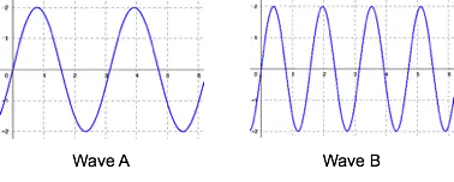
Which of the waves has the highest frequency sound?
Wave A
Wave B
They are both the same
Which of the waves has the loudest volume?
Wave A
Wave B
They are both the same
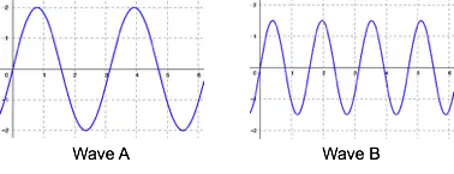
Which of the waves has the loudest volume?
Wave A
Wave B
They are both the same
Which of the waves has the lowest frequency?
Wave A
Wave B
They are both the same
A ship uses sonar to measure the depth of the ocean underneath it by sending out a sound and measuring how long it takes for an echo of the sound to return.
If the speed of sound in the ocean is 1500 m/s and it takes 1 second for the sound to return, how deep is the ocean underneath the ship in metres?
Identify the eardrum on the diagram of the ear
Identify the ear canal on the diagram of the ear
Identify the pinna on the diagram of the ear
Identify the ossiclees on the diagram of the ear
Identify the cochlear on the diagram of the ear
Identify the auditory nerve on the diagram of the ear


How many chambers of the heart are there?
25
4
2
3
Receives blood from the body that is low in oxygen and high in carbon dioxide
Right Atrium
Right Ventricle
Left Atrium
Left Ventricle
Receives oxygen-rich blood from the lungs
Right Ventricle
Left Ventricle
Right Atrium
Left Atrium
Pumps the oxygen-rich blood to all parts of the body
Right Ventricle
Left Ventricle
Right Atrium
Left Atrium
Arteries
carry oxygenated blood to the heart
carry oxygenated blood away from the heart
carry deoxygenated blood to the heart
carry deoxygenated blood away from the heart
Veins
carry deoxygenated blood to the heart
carry deoxygenated blood away from the heart
carry oxygenated blood to the heart
carry oxygenated blood away from the heart
White blood cells
are mostly water and transport substances around the body
carry oxygen around the body
protect the body from disease
clot the blood
Blood is made up of
Plasma
Blood cells - red and white
Platelets
All of the above
the ____ is where the exchange of oxygen and carbon dioxide takes places. The are about 700 million in a pair of lungs.
a condition where the alveoli is infected
cystic fibrosis
pneumonia
asthma
emphysema
Which of these is a feature that alveoli have for efficient gas exchange?
thick walls
thin walls
small surface area

The diagram shows the structure of the human gas exchange system. Name organ P.
alveolus
trachea
bronchus
diaphragm

The two main branches from the trachea are ___________ (one to each lung)?
Bronchi
Alveoli
Capillaries
Bronchioles


Take in air
Remove oxygen
Take in oxygen
Remove Carbon Dioxide
Take in Carbon Dioxide
Remove Waste
Take in waste
Remove air
Thin-walled vessels that allow for the exchange of oxygen and carbon dioxide between blood cells or air sacs in the lungs
Arteries
Veins
Capillaries
Which of the following shows the correct sequence of air passage into the lungs?
trachea → larynx → air sacs → bronchi
larynx → trachea → bronchi → air sacs
air sacs → larynx → trachea → bronchi
larynx → bronchi → trachea → air sacs
When you breathe, your lungs take in ___ and remove ___.
air/oxygen
oxygen/carbon dioxide
carbon dioxide/waste
waste/air
The air sacs that are covered with capillaries where gas exchange takes place
bronchi
lungs
oxygen
alveoli
what type of blood vessel is found around alveoli?
capillaries
pleura
lymphatic nodes
saliva
The diaphragm is:
part of the lungs
a muscle that helps in breathing
a throat muscle
a structure in bones

