
 Worksheets
Tides (6.9B)
Total questions: 174
Worksheet time: 4hrs 4mins
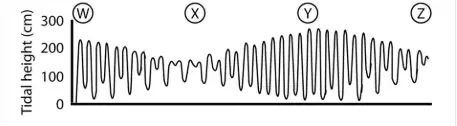
The graph depicts tidal height related to 4 moon phases. At which points in the diagram is the moon experiencing First & Third/Last Quarter phases?
W & Y
Y & Z
W & X
X & Z
What are the 2 main factors that create ocean tides on Earth?
Gravitational forces & rotation of Earth on its axis
Phases of the Moon & distance from the Moon
Distance from the Sun & distance from the Moon
Gravitational forces & rotations of the Moon on its axis
Every 24 hours, a coastal town can expect---
one high tide & one low tide
2 high tides &
2 low tides
1 high tide &
2 low tides
1 high tide, only
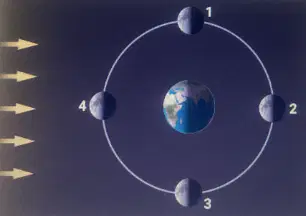
The diagram shows 4 positions of the moon in its monthly orbit around Earth. At which locations of the Moon would the Earth experience a High Tide?
1 & 3
1 & 2
2 & 4
3 & 4
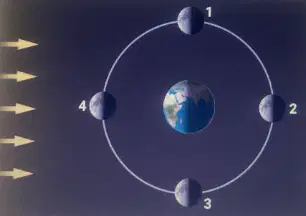
The diagram shows 4 positions of the moon in its monthly orbit around Earth. At which locations of the Moon would the Earth experience a Low Tide?
1 & 2
1 & 3
2 & 4
3 & 4
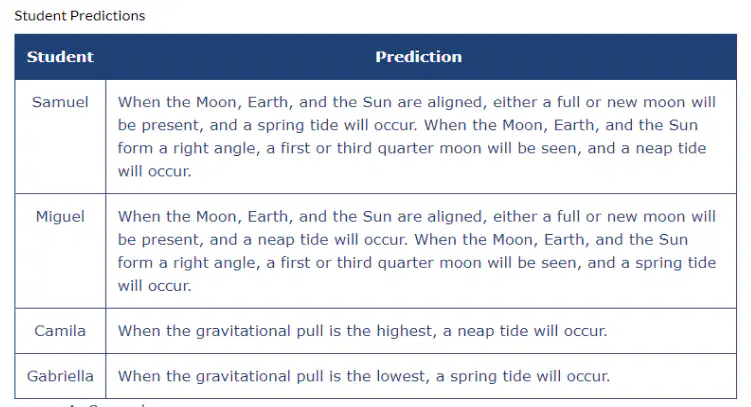
Four students were making predictions on how the positions of the Sun and the Moon and their gravitational forces affect spring and neap tides. Which student made the best prediction?
Samuel
Miguel
Camila
Gabriella
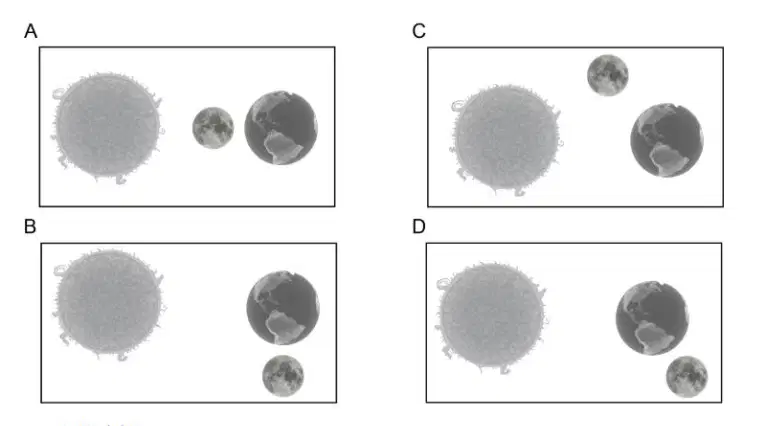
Predict which model would represent the highest high tides and the lowest low tides.
Model A
Model B
Model C
Model D
Which of the following would have the greatest effect on the size of daily tides on Earth?
Slowing the rate of rotation of the Moon.
Increasing the rate of revolution of Earth.
Decreasing the distance between the Moon and Earth.
Increasing the distance between the Moon and the Sun.
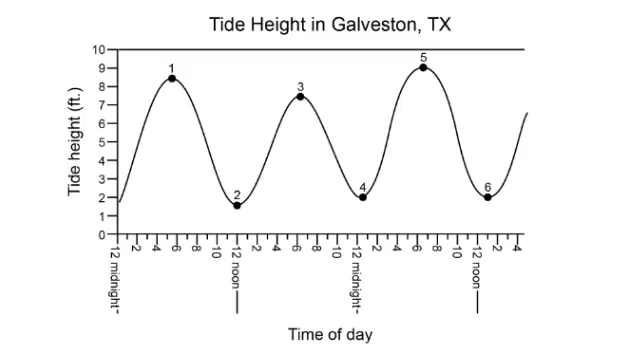
During which positions is Texas either facing the Moon directly or directly facing away?
1, 3, 5
2, 4, 6
2, 3, 4
3, 5, 6
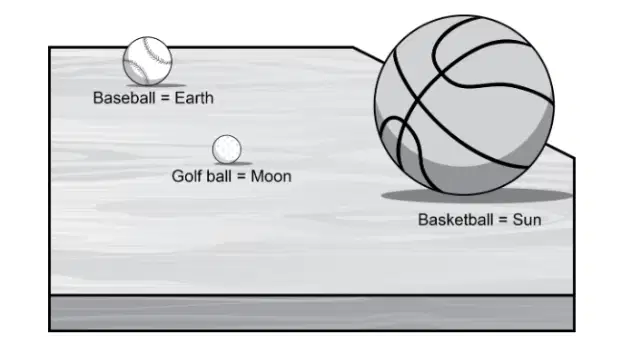
A student built a model of the Earth, Sun, and Moon system using the objects pictured. If the student wants to model the positions of the Sun, Earth, and the Moon during the lowest tides, how should the student arrange these objects?
Place the basketball between the baseball and the golf ball in a straight line.
Place the baseball between the basketball and the golf ball in a straight line.
Place the basketball and golf ball at a 90° angle to one another around the baseball.
Place the golf ball and the baseball at 45° angles on either side of the basketball.
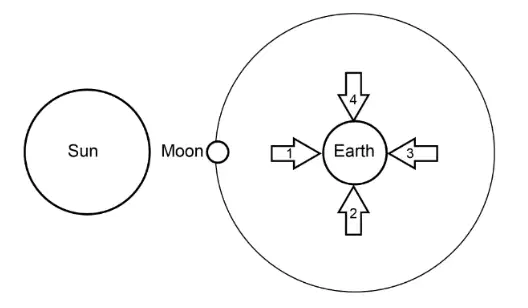
The model shows the positions of the Sun, the Moon, and Earth. Which statements support the model?
Select three correct answers
Points 2 and 4 are experiencing low tides.
Points 1 and 3 are experiencing high tides.
The gravitational attraction between Earth and the Moon is the greatest at point 1.
The gravitational attraction between the Sun and Earth is the greatest at point 3.
Points 2 and 4 are experiencing a spring tide.
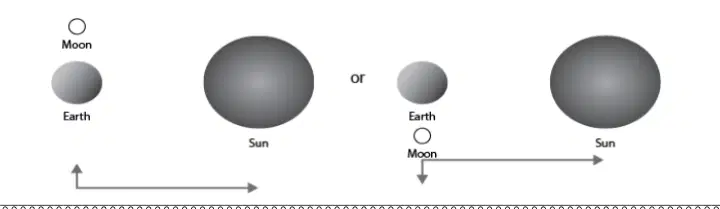
The image shows the positions of Earth, the Sun, and the Moon at a specific time. Use the words shown to accurately complete the sentence.
A _______ tide is shown. This tide has a _______ on ocean tides.
spring
neap
lower gravitational pull
greater gravitational pull
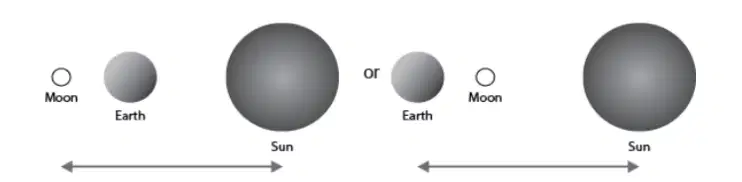
The image shows the positions of Earth, the Sun, and the Moon at a specific time. Use the words shown to accurately complete the sentence.
A _______ tide is shown. This tide has a _______ on ocean tides.
spring
neap
lower gravitational pull
greater gravitational pull
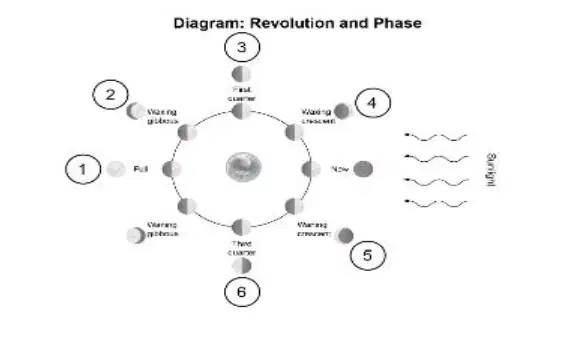
The image provided here shows the various phases of the Moon. Predict the locations in which would you expect to see a neap tide.
3 & 6
1 & 4
2 & 5
1 & 3
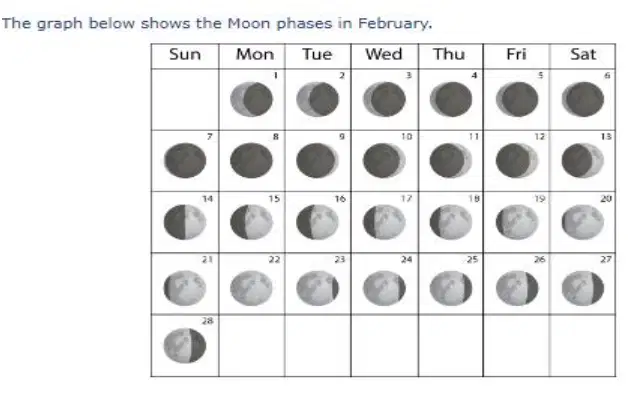
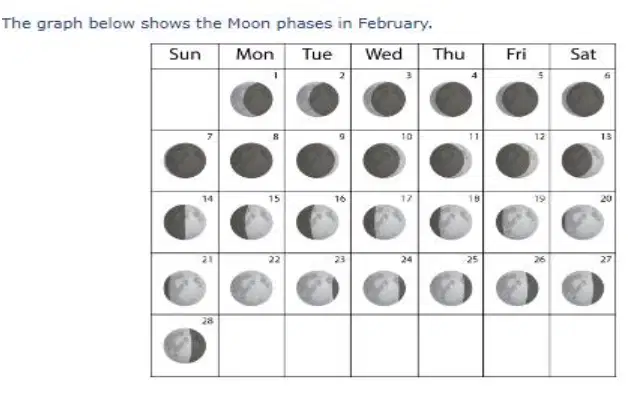
During which two days did you most likely experience a spring tide?
February 8th and February 22nd
February 1st and February 28th
February 14th and February 28th
February 8th and February 14th
Which statement best explains the answer to Part A?
Spring tides occur during quarter moon and new moon.
Spring tides occur during full moon and new moon.
Spring tides occur during both quarter moons.
Spring tides occur only during a full moon.
12 to 12.5 hours

What is a high tide?
Sea pulled TOWARD the moon where Earth is CLOSEST to the moon
Sea pulled AWAY from the moon where Earth is FARTHEST to the moon
Sea pulled AWAY from the moon where Earth is CLOSEST to the moon

What type of tide would this arrangement of earth-moon-sun create?
full moon tide
new moon tide
neap tide
spring tide

What do we call the weak tides that happen when the sun and moon are at right angles to each other?
Neap Tide
Spring Tide
Larger Change
Smaller Change

Ocean waves are primarily caused by ______________.
Winds
Tides
The moon
The sun

What type of tide would this arrangement of earth-moon-sun create?


What do we call the type of tide with small tidal ranges that happen when the sun and moon are at right angles to each other?
Why does a spring tide create much higher tides than normal tidal ranges?
Because the moon and sun are combining their gravitational strength
Because the moon is in its spring position, causing it to create more force
Because it happens during springtime when the water is the lightest
Because this is when the moon grows in size and goes super saiyan

As the _____ revolves around the Earth and Earth rotates, the tidal bulge moves around the Earth.
sun
ocean
Earth
moon

The tidal bulge follows the movement of the _____.
moon
sun
Earth
ocean

What does this illustration tell you about the tides?
There are 4 seasons
There are 4 quarters
There are 2 spring tides and 2 neap tides
The earth is at the top of the illustration

What type of tide does this represent?
Neap
Full
Quarter
Spring

What type of tide does this represent?
Spring
low
Neap
high
The model shows the positions of the Sun, the Moon, and Earth. Which statements support the model?
Select three correct answers
Points 2 and 4 are experiencing low tides.
Points 1 and 3 are experiencing high tides.
The gravitational attraction between Earth and the Moon is the greatest at point 1.
The gravitational attraction between the Sun and Earth is the greatest at point 3.
Points 2 and 4 are experiencing a spring tide.
The image shows the positions of Earth, the Sun, and the Moon at a specific time. Use the words shown to accurately complete the sentence.
A _______ tide is shown. This tide has a _______ on ocean tides.
spring
neap
lower gravitational pull
greater gravitational pull
The image shows the positions of Earth, the Sun, and the Moon at a specific time. Use the words shown to accurately complete the sentence.
A _______ tide is shown. This tide has a _______ on ocean tides.
spring
neap
lower gravitational pull
greater gravitational pull
The image provided here shows the various phases of the Moon. Predict the locations in which would you expect to see a neap tide.
3 & 6
1 & 4
2 & 5
1 & 3
During which two days did you most likely experience a spring tide?
February 8th and February 22nd
February 1st and February 28th
February 14th and February 28th
February 8th and February 14th
Which statement best explains the answer to Part A?
Spring tides occur during quarter moon and new moon.
Spring tides occur during full moon and new moon.
Spring tides occur during both quarter moons.
Spring tides occur only during a full moon.
Spring tides occur when the earth and sun are IN LINE with the new or full moon & Neap tides do not.
Spring tides occur when the moon is in 3rd or 1st quarter phases & Neap tides do not.


At what time did high tide occur on Wednesday afternoon?
1:58 am
7:21 am
1:14 pm
1:57 pm
At what time did low tide occur on Wednesday evening?
1:58 am
7:21 am
1:14 pm
7:23 pm
What causes the rising and falling of the ocean's surface?
The gravitational effects of the Sun and Moon on the Earth
The rotation of the Earth
The wind patterns
The temperature changes
What are the two types of tides that occur daily?
Spring tides and neap tides
High tides and low tides
Full moon tides and new moon tides
First quarter tides and third quarter tides
When do high tides occur along coastlines?
During a new moon
During a full moon
When the Moon's gravity pulls on the Earth's ocean water during a new moon phase or full moon phase.
When the Moon is at right angles to the Sun and Earth
How often does a coastal area experience a high tide?
Every 6 hours and 12.5 minutes
Every 12 hours and 25 minutes
Every 24 hours and 50 minutes
Every 48 hours and 100 minutes
When do spring tides occur?
During a new moon and full moon
During a first quarter moon and third quarter moon
When the Moon's gravity pulls on the Earth's ocean water
When the Moon is at right angles to the Sun and Earth
What is the difference between high tide and low tide during spring tides?
The high tide is higher than normal and the low tide is lower than normal
The high tide is lower than normal and the low tide is higher than normal
The high tide and low tide are at the same level
There is no difference between high tide and low tide during spring tides
When do neap tides occur?
During a new moon and full moon
During a first quarter moon and third quarter moon
When the Moon's gravity pulls on the Earth's ocean water
When the Moon is at right angles to the Sun and Earth
What is the difference between high tide and low tide during neap tides?
The high tide is higher than normal and the low tide is lower than normal
The high tide is lower than normal and the low tide is higher than normal
The high tide and low tide are at the same level
There is no difference between high tide and low tide during neap tides
Why do fishermen study the tides?
To understand the impact of tides on coastal erosion
To improve their quantity of fish caught
To study the effects of tides on marine wildlife
To navigate sea vessels in and out of the harbor
What is the impact of tides on coastal erosion?
Tides cause coastal erosion
Tides prevent coastal erosion
Tides have no impact on coastal erosion
Tides only impact coastal erosion during spring tides
How do hydroelectric dams use tides?
To generate electricity from the constant energy of the moving tidal water
To prevent coastal erosion
To provide nutrients to marine wildlife
To mix colder arctic water with warmer water
How often do tides occur in Earth's oceans?
Once a day
Twice a day
Once a week
Once a month
What is the significance of tides on our daily lives?
Tides have no significance on our daily lives
Tides impact the weather patterns
Tides impact the availability of seafood
Tides impact coastal regions and other locations
What percentage of the Earth is covered by oceans?
25%
50%
75%
100%
What is a high tide?
Sea pulled TOWARD the moon where Earth is CLOSEST to the moon
Sea pulled AWAY from the moon where Earth is FARTHEST to the moon
Sea pulled AWAY from the moon where Earth is CLOSEST to the moon
You visited the beach at 6 AM and it was Low tide. If you return 6 hours later, what tide will you see?
Spring tides occur when the earth and sun are IN LINE with the new or full moon & Neap does not.
Spring tides occur when moon in 3rd or 1st quarter phases & Neap does not.
What is the correct alignment needed for a SPRING tide to occur?
Sun, Earth, Moon
Earth, Sun, Moon
Sun, Moon, Earth
None of these
What do we call the daily difference between high tide and low tide?
Spring Tide
Tidal Range
Low Tide
Neap Tide
A neap tide occurs during which two lunar phases?
Full Mooon and New Moon
Waxing Crescent and Waning Crescent
Waxing Gibbous and Waning Gibbous
1st Quarter and 3rd [Last] Quarter
How many times a day to we experience a change in tidal levels?
1
2
3
4
When sea levels are higher than average what type of tide is occuring?
High Tide
Low Tide
Spring Tide
Neap Tide
When sea levels are lower than average, what type of tide is occuring?
High Tide
Low Tide
Spring Tide
Neap Tide

Explain- What is happening to the sandcastle in the picture?
Nothing will happen to the sandcastle
Some of the sandcastle will be washed away
The sandcastle will be completely washed away
None of the above

Tides are caused by the difference in the gravitational force of the ________ and ________ across the ________.
earth, sun, moon
sun, mars, jupiter
sun, moon, earth
tide, water, sun
The tidal force exerted by the ______ is stronger that the tidal force exerted by the _______.
earth, ocean
sun, moon
moon, stars
moon, sun
____ ____ occur in the spaces between the high tides.
High tides
Medium tides
Low tides
Super tides
As the _____ revolves around the Earth and Earth rotates, the tidal bulge moves around the Earth.
sun
ocean
Earth
moon

Because the tidal bulge follows the moon;s revolution-Many places on Earth experience ___ high tides and ___ low tides each day.
4 and 4
1 and 1
2 and 2
3 and 3

The _____ _____ is the difference between the levels of ocean water at high tides and low tides. That range depends on the sun-Earth-moon;s position.
ocean waves
mountain level
sea level
tidal range

_____ Tides occur when the Sun, the Earth, and the Moon are in a __________ line.
Spring, straight
Neap, straight
High, zigzag
Low, zigzag

_____ ______ occur when the Sun, the Earth, and the Moon are in a ______ degree angle.
Spring tides. 90°
Neap tides, 90°
High tides, 90°
Low tides, 90°
What type of tide does this represent?
Neap
Full
Quarter
Spring
What type of tide does this represent?
Spring
low
Neap
high
A neap tide is a tide with the smallest difference between low and high tides
Neap tides occur twice a month.
Changes in the positions of Earth, the moon, and the sun don't affect the height of high tides during a month.
Tides are not caused by the differences in how much gravity from the moon and the sun pulls on different parts of the Earth.
How many times per day do tides occur?
four times

What causes the rising and falling of the ocean's surface?
The gravitational effects of the Sun and Moon on the Earth
The rotation of the Earth on its axis
The wind patterns
The temperature changes
When do high tides occur along coastlines?
During a new moon
During a full moon
When the Moon's gravity pulls on the Earth's ocean water
When the Moon is at right angles to the Sun and Earth
When do spring tides occur?
During a new moon and full moon
During a first quarter moon and third quarter moon
When the Moon's gravity pulls on the Earth's ocean water
When the Moon is at right angles to the Sun and Earth
What is the difference between high tide and low tide during spring tides?
The high tide is higher than normal and the low tide is lower than normal
The high tide is lower than normal and the low tide is higher than normal
The high tide and low tide are at the same level
There is no difference between high tide and low tide during spring tides
When do neap tides occur?
During a new moon and full moon
During a first quarter moon and third/Last quarter moon
When the Moon's gravity pulls on the Earth's ocean water
When the Moon is at right angles to the Sun and Earth
When do neap tides occur?
During a new moon and full moon
During a first quarter moon and third/Last quarter moon
When the Moon's gravity pulls on the Earth's ocean water
When the Moon is at right angles to the Sun and Earth
What is the difference between high tide and low tide during neap tides?
The high tide is higher than normal and the low tide is lower than normal
The high tide is lower than normal and the low tide is higher than normal
The high tide and low tide are at the same level
There is no difference between high tide and low tide during neap tides
Why do fishermen study the tides?
To understand the impact of tides on coastal erosion
To improve their quantity of fish caught
To study the effects of tides on marine wildlife
To navigate sea vessels in and out of the harbor
What is the difference between high tide and low tide during neap tides?
The high tide is higher than normal and the low tide is lower than normal
The high tide is lower than normal and the low tide is higher than normal
The high tide and low tide are at the same level
There is no difference between high tide and low tide during neap tides
What is the role of tides in mixing colder arctic water with warmer water?
Tides create a bulge of warmer water that mixes with the colder arctic water
Tides create a bulge of colder arctic water that mixes with the warmer water
Tides create circulating currents that mix the colder arctic water with warmer water
Tides have no role in mixing colder arctic water with warmer water
What is the impact of tides on coastal erosion?
Tides cause coastal erosion
Tides prevent coastal erosion
Tides have no impact on coastal erosion
Tides only impact coastal erosion during spring tides
How do hydroelectric dams use tides?
To generate electricity from the constant energy of the moving tidal water
To prevent coastal erosion
To provide nutrients to marine wildlife
To mix colder arctic water with warmer water
What is the significance of tides on our daily lives?
Tides have no significance on our daily lives
Tides impact the weather patterns
Tides impact the availability of seafood
Tides impact coastal regions and other locations
What percentage of the Earth is covered by oceans?
25%
50%
75%
100%
How many times per month does a neap tide occur?

The combined gravitational forces between the sun, moon, and earth result in different ______ _______.
ocean waves
tidal ranges
sea level
sun rays
The _____ _____ is the difference between the levels of ocean water at high tides and low tides. That range depends on the sun-Earth-moon;s position.
ocean waves
mountain level
sea level
tidal range
_____ ______ occur when the Sun, the Earth, and the Moon are in a ______ degree angle.
Spring tides. 90°
Neap tides, 90°
High tides, 90°
Low tides, 90°
What does this illustration tell you about the tides?
There are 4 seasons
There are 4 quarters
There are 2 spring tides and 2 neap tides
The earth is at the top of the illustration
What type of tide does this represent?
Neap
Full
Quarter
Spring
What type of tide does this represent?
Spring
low
Neap
high

Neap tides occur during which two moon phases?
Full moon
Waning gibbous
1st quarter
3rd quarter
New moon
Spring tides occur during which two moon phases?
New Moon
Waxing crescent
1st quarter
3rd Quarter
Full Moon
When the moon pulls on the water on the side closest to it more strongly than the Earth, it creates a
tidal bulge
low tide
tidal wave

