Worksheets
Space
Total questions: 173
Worksheet time: 3hrs 2mins

Which type of apparatus do scientists use to collect visible light and separate it into bands of color seen in the image?
spectroscope
telescope
Seismograph
Space probe

The first major optical space telescope to be put into space was the Hubble Telescope
Hubble Telescope
Mir
James Webb Space Telescope
Voyager

A small robotic space probe that can move about on the surface of a planet or moon is
Orbiter
Rover
Space Station
Apollo

Unmanned space vehicles that take instruments into space to collect data are called
Satellite
Space Shuttle
Rocket
Space Probe
Scientists at NASA are planning a human mission to the space station. Which of these spacecraft would they use to deliver astronauts to the space station?

Space Shuttle

Rover

Space Probe

Satellite

A Telescope that uses a set of lenses to gather and focus light from distant objects is called a
refracting telescope
optical looking device
spectroscope
reflecting telescope

A telescope that uses a curved mirror to gather and focus light from distant objects is called a ____________
reflecting telescope
refracting telescope
spectroscope
optical looking device
All of the following are benefits of unmanned space crafts EXCEPT
instruments can be sent to places humans cannot go
not required to carry luggage (oxygen, water, food)
it can overcome any harsh atmospheric conditions
Analysis time is delayed
What are some useful benefits of satellites? Choose 2.
They take images of celestial objects too distant for humans to explore.
They transport humans to the International Space Station.
They provide television, phone, navigational services, and weather information.
They deliver rovers to distant planets for observation.
They travel to distant planets to test atmospheres.

Space Probe

Space Shuttle

Satellite

Lander/Rover

Rocket

Which is an advantage of a space probe compared to a space shuttle?
Space probes can travel further into space since they are unmanned.
Space probes may need human intervention if problems arise.
Space probes transmit information back to Earth.
Space probes are not able to be used more than once.

What type of space vehicle is shown?
Rover
Satellite
Space Probe
Rocket

What type of space vehicle is shown?
Rover
Satellite
Space Probe
Rocket

Unmanned space vehicles that take instruments into space to collect data are called
Space Probe
Rover
Lander
Shuttle

A small robotic space probe that can move about on the surface of a planet or moon is
Rover
Lander
Rocket
Shuttle

Artificial satellites are launched into space on rockets.
True
False

(a) satellites help us communicate and even observe the distant Universe.

What tool can help us see things that are far away?
telescope
microscope
calculator

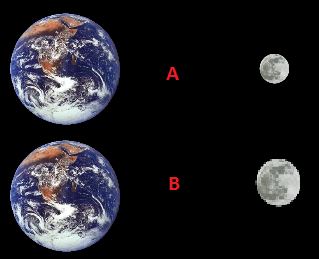
During the moon phases shown in the image Earth will experience a -
Spring Tide
Neap Tide

During the moon phases shown in the image Earth will experience a -
Spring Tide
Neap Tide

During the moon phase shown in the image Earth will experience a -
Spring Tide
Neap Tide

During the moon phase shown in the image Earth will experience a -
Spring Tide
Neap Tide

During the moon phase shown in the image Earth will experience a -
Spring Tide
Neap Tide

During the moon phase shown in the image Earth will experience a -
Spring Tide
Neap Tide
During which moon phases will Earth experience the strongest, or greatest difference between high and low tides?
First Quarter and Full Moon
First Quarter and Last Quarter
New Moon and Full Moon
New Moon and Last Quarter
During which moon phases will Earth experience the weakest, or least difference between high and low tides?
First Quarter and Full Moon
First Quarter and Last Quarter
New Moon and Full Moon
New Moon and Last Quarter
Neap tides occur when the Earth, Sun and Moon are
At a 90 degree angle
In a straight line
Spring tides occur when the Earth, Sun and Moon are
At a 90 degree angle
In a straight line
Which diagram shows the arrangement of the Earth, Sun and Moon during a Neap Tide?


Which diagram shows the arrangement of the Earth, Sun and Moon during a Spring Tide?


What is a high tide?
Sea pulled TOWARD the moon where Earth is CLOSEST to the moon
Sea pulled AWAY from the moon where Earth is FARTHEST to the moon
Sea pulled AWAY from the moon where Earth is CLOSEST to the moon


Wha type of tide would this arrangement of earth-moon-sun create?
full moon tide
new moon tide
neap tide
spring tide



Select the correct order of waves on the EMS from low to high energy
Radio, Micro, Infra, Visible, Ultra, X-ray, Gamma
Gamma, X-ray, Ultra, Vis, Infra, Micro, Radio
Vis, Micro, Infra, Ultra, X-ray, Gamma, Radio
Micro, Radio, Vis, Infra, Ultra, X-ray, Gamma
Which has the LONGEST wavelength and, therefore, the LOWEST frequency/energy
Gamma Rays
Ultraviolet
Visible Light
Infrared rays
Which of the following electromagnetic waves has the lowest frequency?
gamma ray
infrared wave
visible light wave
microwave

Which letter indicates X-rays?
A.
B.
C.
D.

Which letter indicates infrared rays?
A.
B.
C.
D.
Which list places the electromagnetic energies in order from most energy to least energy?
X-ray, Radio, Visible
Ultraviolet, Inferred, Radio
Radio, Visible, Gamma
Visible, Ultraviolet, X-Ray

Which of the following statements can be concluded from the table?
X-Ray waves have a lower frequency than infrared waves.
Microwaves have a smaller wavelength than visible light.
The speed of all electromagnetic waves are equal.
The frequency and wavelengths are equal for each type of radiation.
A gamma ray photon and a microwave photon are traveling in a vacuum. Compared to the wavelength and energy of the gamma ray photon, the microwave photon has a -----?
shorter wavelength and less energy
shorter wavelength and more energy
longer wavelength and less energy
longer wavelength and more energy
Earth’s atmosphere blocks short wavelengths of the electromagnetic spectrum. Which telescopes must be placed in orbit around Earth in order to observe short-wavelength radiation?
Gamma-ray telescopes
Visible-light telescopes
Infrared telescopes
Radio telescopes

The lower the frequency the ______ the energy.
higher
lower
neither, stays the same

Wavelength Not Frequency

Wavelength Not Frequency

Wavelength Not Frequency

Wavelength Not Frequency

Wavelength Not Frequency
Which statement is true?
The galaxies are moving toward us.
The galaxies are moving away from us.
The universe remains static or unchanged in motion.
None of the above
Which elements are most
abundant in the visible
universe?
Helium and Carbon
Carbon and Oxygen
Hydrogen and Oxygen
Hydrogen and Helium
The Cosmic Background Radiation is:
the remaining energy from the big bang.
incredibly hot.
visible to the human eye.
only located in certain places in the universe.
13.7 billion
Most scientists believe the Big Bang Theory explains which of the following questions?
How our planets and moons formed
How our universe began
How the sun turns hydrogen into helium
How fast light travels through space
An infinitely small, infinitely dense, and infinitely hot point that is believed to have existed before the big bang.
Singularity
Antimatter
Little bang
condensation nuclei
The doppler effect is the change in the frequency of waves emitted by a moving object. When the waves being emitted by the object are LIGHT waves, the change in frequency results in a change in __________.
Brightness
Heat
Pitch
Color
A light wave with a higher frequency is going to...
have a lower wavelength
appear red
have a higher wavelength
Move much slower
In regards to sound waves, the doppler effect is going to change the frequency of the wave, resulting in a change in __________.
color
volume
pitch
size
Hydrogen was the first element to be formed after the big bang, because...
It is the simplest element
the temperature at that time was just right for hydrogen
It is used as fuel for stars
it was chosen completely at random
350,000 years after the big bang, gravity pulled all the hydrogen atoms into big balls of gas that ignited under pressure, creating the first __________.
Stars
Planets
Amoebas
Light

From the choices presented - which is the largest object or structure in space?
Earth
The Sun
The Solar System
The asteroid belt

Which object or structure is the smallest?
Earth
Mars
Jupiter
The Solar System

The largest single object in the solar system is ______.
Saturn
Jupiter
Earth
The Sun

The largest structure in the entire Universe is the
Universe itself.
Orion Nebula.
Milky Way Galaxy.
Virgo Supercluster.

What is a "light year?"
a distance of about 6 trillion miles (9.8 trillion km)
the distance traveled by the speed of light in 1 year
the time traveled by the speed of light in 1 year
a distance of about 6 billion miles (9.8 billion km)

Why do astronomers use light years as a measurement?
because miles & kilometers are sufficient
it's an easier way to describe huge distances
it's an easier way to describe large objects such as stars
because distances in space are extremely vast

The Milky Way galaxy is approximately _____ thousand light years in diameter.
1000
10
100
1

It would take a single beam of light about ______ years to travel across the Milky Way.
1 million
10
100,000
1 billion

The visible Universe may contain over _____ trillion galaxies.
100
1
.1
100,000

Which statement best describes constellations?
indecipherable so-called "patterns" that kinda make sense
stars that are fairly close to each other
patterns of stars that resemble animals and/or other objects
pattern of stars in the night sky that reflects a culture

The ecliptic describes the plane (or line) in which the Sun & the planets travel.
True
False

The zodiac constellations include all 88 recognized (western) constellations.
True
False

Polaris is also known as the "north star" and will remain so for the next 13,000 years.
True
False

_______ is/are used to find specific objects and constellations on the celestial sphere.
Right ascension
Azimuth
Celestial coordinates
Declination

Right ascension is a projection of ______ into space; declination is a projection of ______.
the north pole, the south pole
coordinates, azimuth
latitude, longitude
longitude, latitude

What is the difference between the angle of measurement terms azimuth & altitude?
altitude is only used to describe elevation
azimuth is a "side to side" circle; altitude is "up & down"
azimuth is a "up & down" circle; altitude is "side to side"
both are projections of latitude & longitude

The solar day is measured from sunrise to sunrise - while the sidereal day is measured from
star rise to star rise.
day to night & then back again.
sunrise to sunset.
star rise to sunset.

Solstices occur when the Sun reaches the highest & lowest position in the sky. This occurs
about once a year.
around March 21st & Sept. 21st.
very rarely.
around June 21st & Dec. 21st.

Equinoxes occur (around March 21st & Sept. 21st) when the Sun appears to be directly
over the Tropic of Capricorn.
over the Tropic of Cancer.
over the Equator.
between the Earth & Moon.

Earth's seasons are caused by
the precession of Earth's axis.
its distance from the Sun.
wobbles in its orbit and axis of rotation.
its tilt; revolution around the Sun, and spherical shape.
As objects move in space, their wavelengths change. This phenomenon is called the...
Coriolis Effect
Doppler Effect
Movement Effect
Black Hole Effect
The energy left over from the big bang is still detectable. This is a major evidence of the big bang. What is this energy called?
Gravity
Cosmic Background Radiation
Inward Pulling Force
Outward Pushing Force

What energy is the shortest wavelength?
Radio
Infrared
X rays
Gamma

What energy is the longest wavelength?
Radio
Infrared
X rays
Gamma

What color is the shortest wavelength?
Green
Yellow
Blue
Red

What color is the longest wavelength?
Green
Yellow
Blue
Red

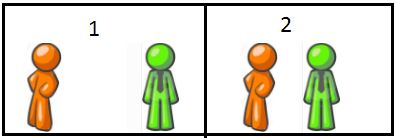
When objects move towards you, the wavelength....
Increases (gets longer)
Decreases (gets shorter)

When objects move away from you, the wavelength....
Increases (gets longer)
Decreases (gets shorter)

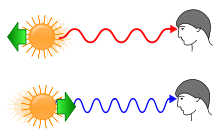
When objects move away from an observer, what color shift is happening?
Red Shift
Blue Shift

When objects move towards the observer, what color shift is happening?
Red Shift
Blue Shift
Doppler Red Shift is a proof that the Big Bang occurred. This helps support the idea that the universe is.....
Expanding
Contracting

When light and sound waves travel away from the observer, what happens to their wavelength?
Increases
Decreases

When light and sound waves travel towards the observer, what happens to their wavelength?
Increases
Decreases
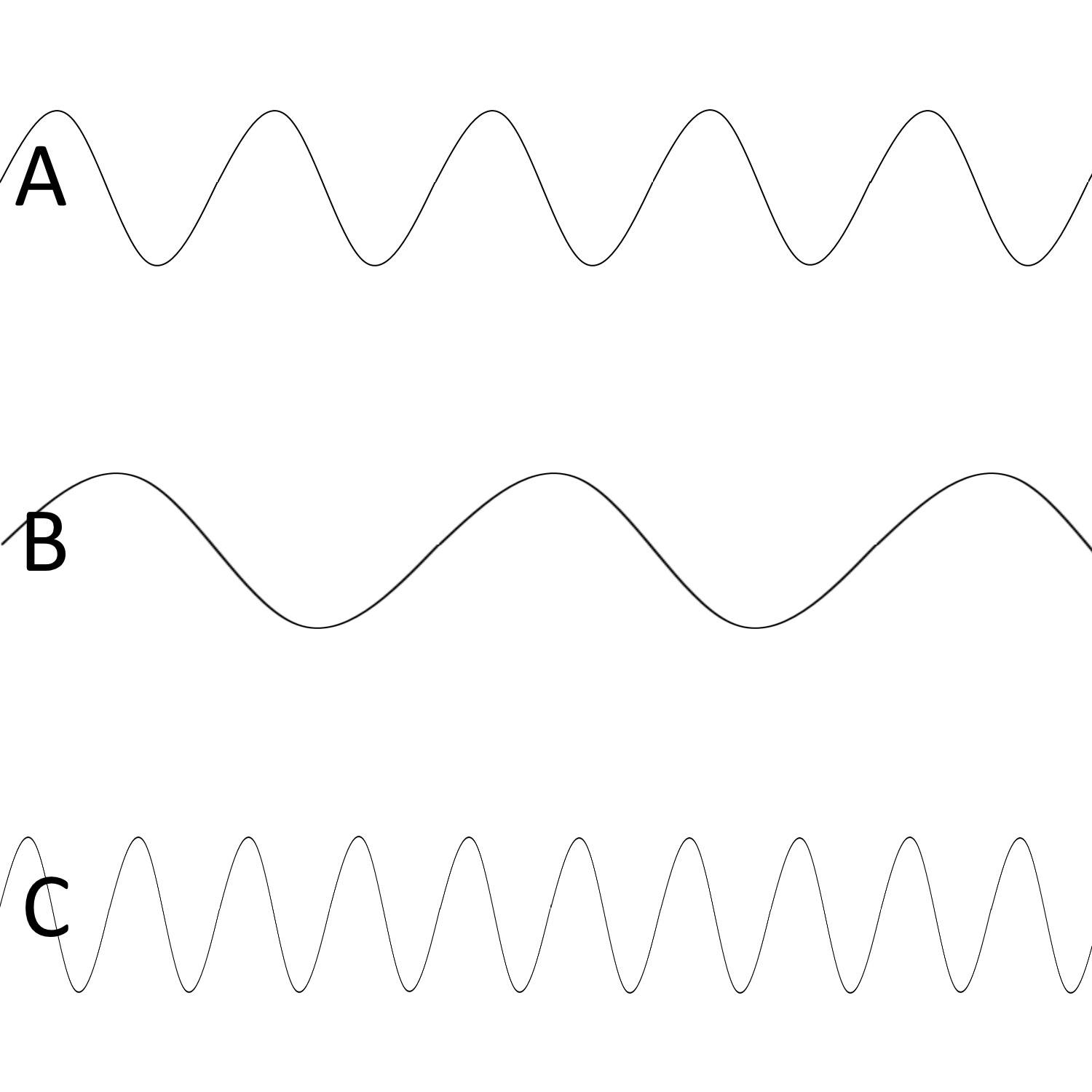
The electromagnetic spectrum is organized by what characteristic?
Wave Height
Wave Amplitude
Wavelength
Wave Density
Visible light is considered the most intense form of electromagnetic energy (colors) because humans can....
Taste it
See it
Feel it
Touch it

The top spectra is the laboratory spectra and is not moving. What type of shift is shown with the bottom spectra and is the object moving towards or away from the observer?
Red Shift
Towards
Red Shift
Away
Blue Shift
Towards
Blue Shift
Away

The top spectra is the laboratory spectra and is not moving. What type of shift is shown with the bottom spectra and is the object moving towards or away from the observer?
Red Shift
Towards
Red Shift
Away
Blue Shift
Towards
Blue Shift
Away

You are the observer looking at the jet. As the Jet takes off, what is happening to the wavelength of sound and the pitch of the sound?
Longer wavelength and getting less loud
Longer wavelength and getting louder
Shorter wavelength and getting less loud
Longer wavelength and getting louder

You are the observer looking at the ambulance. As the ambulance approaches, what is happening to the wavelength of sound and the pitch of the sound?
Longer wavelength and getting less loud
Longer wavelength and getting louder
Shorter wavelength and getting less loud
Shorter wavelength and getting louder

What side of the spectrum is most harmful?
What side of the spectrum is harmless?
Right side is harmful
Left side is harmless
Left side is harmful
Right side is harmless
There is a gravitational force between you and your desk. This gravitational force is very small because _____.
the masses are tiny compared to Earth's mass
it doesn't need to be large
the distance between the objects is small
it is a noncontact force
Mass and weight are different. Mass depends on _____. Weight depends on _____.
gravitational force, the amount of matter
placement, force
force, placement
the amount of matter, gravitational force
Which of the following is most closely related to gravity?
distance
mass
weight
speed
If the mass of one of two spheres increases, how does it affect the gravity between the two spheres?
the gravity increases
the gravity decreases
the gravity fluctuates
the gravity is not affected
Gravity is an example of which kind of force?
contact
noncontact
speed
direction
Gravitational force differs based on two things.
It increases with increasing ___________.
It decreases with increasing __________ .
mass
distance
distance
mass
orbit
displacement
displacement
orbit
An object’s weight is _____ its mass
equal to
less than
proportional to
not related to
A planet is discovered that has twice the mass of Earth but the same gravitational acceleration.
If you weigh 700 N on Earth, on the new planet you would weigh ____ N.
700 N
1400 N
7 N
70 N
Mass varies depending on where the object is located. _______________
True
False
Maybe

This diagram shows three models that represent the gravitational force, F, between objects.
Which model is displaying the most gravitational force of attraction?
Model 1
Model 2
Model 3
This diagram shows three models that represent the gravitational force, F, between objects.
What do the arrows represent in the models?
the mass of the objects
the direction of the force
the direction the object will be pushed
What is the formula to calculate Weight from mass(m) and gravity (g) ?
mass (m) / gravity (g) = weight
mass (m) + gravity (g) = weight
mass (m) - gravity (g) = weight
mass (m) x gravity (g) = weight
What is the definition of Gravity?
the force that resists the sliding motion of two surfaces that are touching
the force of attraction that pulls objects towards each other because of their masses
the speed and the direction of a moving object
the force that pushes perpendicular to the object's surface
Newton's Universal Law of Gravitation claims that the attraction between objects with mass depend on what 2 things?
volume and height
velocity and height
acceleration and mass
mass and distance
Which planet has the weakest gravitational pull?
Earth
Mercury
Jupiter
Venus
Match the following concepts with their correct units
mass
kg
velocity
m/s
acceleration
m/s2
distance
m
Weight
N
On Earth, the gravitational pulls humans towards the center of Earth. What force is acting as gravity's "pair" when someone is standing on the ground?
friction force
normal force
buoyancy force
applied force