wayground logo

Free Printable Worksheets

Font size

S
M
L
XL
Worksheets

Semester Exam Review

Total questions: 175

Worksheet time: 6hrs 35mins

Name
Class
Date
1.
Something that takes up space and has mass.
a)
volume
b)
matter
c)
mass
d)
density
2.
A state of matter that has a definite volume and shape.
a)
solid
b)
liquid
c)
gas
d)
matter
3.
What are the three states of matter?
a)
solid, volume, mass
b)
density, volume, mass
c)
solid, liquid, gas
d)
density, gas, volume
4.
______________ does not have a definite shape or volume.
a)
liquid
b)
solid
c)
gas
5.
The amount of matter something contains is its ______________.
a)
gas
b)
solid
c)
weight
d)
mass
6.
__________ are the building blocks of life.
a)
solids
b)
gases
c)
atoms
d)
nutrients
7.
What is one way matter change states?
a)
matter loses mass
b)
heat is added
c)
it doesn't change
d)
by doing nothing
8.
I am the smallest whole particle of matter. 
a)
atom
b)
compound
c)
molecule
d)
mixture
9.
I am two or more atoms chemically bonded.
a)
atom
b)
compound
c)
molecule
d)
mixture
10.
Which 2 kinds of particles make up the nucleus of an atom?
a)
electrons and neutrons
b)
electrons and nuclei
c)
protons and neutrons
d)
protons and kryptons
11.
Which particle is equal to the Atomic Number?
a)
# of electrons
b)
# of neutrons
c)
# of protons
12.
Which particle carries a negative charge?
a)
protons
b)
neutrons
c)
electrons
13.
A pure substance that cannot be broken down into any other substance by chemical or physical means. There are about 100 of us shown in the Periodic Table. (A specific type of atom.)
a)
compound
b)
mixture
c)
molecule
d)
element
14.
All substances, even solids, have _______________.
a)
electromagnetic radiation
b)
thermal energy
c)
kinetic energy
d)
radio waves
15.
Since the _______________ molecules can move they will take the shape of their container. 
a)
gas
b)
solid
c)
liquid
d)
atom
16.
Increased temperature means greater average energy of motion so most substances _______________ when heated. 
a)
expand
b)
contract
17.
Thermal energy = 
a)
heat
b)
cold
18.

Elements, compounds, and mixtures are all made of

a)

atoms

b)

molecules

c)

compounds

d)

energy

19.

Nitrogen chemically combines with hydrogen to make a new substance. This substance is

a)

an element

b)

a compound

c)

a mixture

d)

your best friend

20.

Two or more substances that are together but NOT chemically combined is a

a)

element

b)

compound

c)

mixture

d)

enigma

21.

Hg is

a)

an element

b)

a compound

c)

a mixture

d)

weird

22.

You have a piece of metal that is an element. Which of the following would best help you identify it?

a)

shape

b)

color

c)

density

d)

a detective

23.

Most elements are

a)

found everywhere

b)

are metals

c)

are non metals

d)

Aggie fans

24.

You find something that is brittle and dull. What type of element is it likely to be?

a)

a metal

b)

a nonmetal

c)

a metalloid

d)

heavy metal

25.

Which of the following is a compound?

a)

Nh

b)

NH3

c)

N

d)

Ni

26.

How many atoms are in a molecule of CaSO4?

a)

4

b)

6

c)

8

d)

10

27.

Why are cooking pots often made of metal?

a)

Because metals are semiconductors

b)

Because metals are usually gases

c)

Because metals are shiny and pretty

d)

Because metals are good conductors of heat

28.

A substance that has luster but is brittle might be a

a)

metal

b)

nonmetal

c)

metalloid

d)

mineral

29.

The compound NH3 contains

a)

1 atom of Nitrogen and 1 atom of Hydrogen

b)

1 atom of Nitrogen and 3 atoms of Hydrogen

c)

3 atoms of Nitrogen and Hydrogen

d)

4 atoms of Nitrogen

30.

_____________ are made up of more than one atom bonded together. They can be very simple or very complex.

a)

molecules

b)

atoms

c)

pure substances

d)

legos

31.

In a solid, the molecules

a)

are widely spaced, move quickly (high energy), no definite volume or shape.

b)

are closely spaced, vibrate in place, definite volume and definite shape.

c)

are spread wider apart, in constant contact, medium amount of energy, have a definite volume but no definite shape.

32.

Matter is anything that -

a)

has mass and volume

b)

is a living organism

c)

is a non-living organism

d)

has height and weight

33.

Which of the following is not a compound?

a)

NaCl

b)

H2O

c)

He

d)

CO2

34.

Vertical columns of elements that DO share chemical properties (react the same) because they have the same number of VALENCE ELECTRONS in their outer shells.

a)

Groups

b)

Periods

35.

Horizontal rows of elements that share the same number of ENERGY LEVELS but DO NOT share chemical properties.

a)

Groups

b)

Periods

36.

The periodic table is arranged by increasing ______ ______, which is equal to the number of protons.

a)

atomic mass

b)

atomic number

37.

As you go down the Periodic Table the size and mass of the atoms _________.

a)

increases

b)

decreases

c)

cannot be determined

38.

The period number tells you the number of ______ _______.

a)

valence electrons

b)

energy levels

39.

The group number tells you the number of _______ ________.

a)

valence electrons

b)

energy levels

40.

The ______ are located on the left side of the zig-zag 'staircase' on the Periodic Table. (except for Hydrogen)

a)

metals

b)

non-metals

c)

metalloids

41.

The ___________ are located on the right side of the zig-zag 'staircase' on the Periodic Table (except for Hydrogen)

a)

metals

b)

non-metals

c)

metalloids

42.

The __________ are touching or bordering the zig-zag 'staircase' on the Periodic Table.

a)

metals

b)

non-metals

c)

metalloids

43.

If an element is in group number 15 you know it has _____ valence electrons.

a)

1

b)

2

c)

5

d)

15

44.

The most ________ group of elements is group number 1 because they can easily give away their one valence electron to have a full valence shell or octet. Group 17 would be next because they can easily receive one electron to have an octet.

a)

stable

b)

reactive

45.

You read the periodic table from left to right starting at the top left corner with Hydrogen, increasing the number of _______ by 1 each time you move over a square.

a)

protons

b)

neutrons

c)

electrons

46.

If an element is in period number 4 you know it has 4 ______ _______.

a)

valence electrons

b)

protons

c)

energy levels

d)

atomic mass units

47.

The most reactive group of metals is in group number _____.

a)

1

b)

2

c)

17

d)

18

48.

The most reactive group of non-metals is group ____.

a)

1

b)

2

c)

17

d)

18

49.
Which element is not a metal?
a)

He

b)
Re
c)
Al
d)
B
50.
what does the 6 represent?
a)
Atomic mass
b)
atomic number
c)
chemical symbol
d)
element name
51.
What does the C represent?
a)
atomic mass
b)
atomic number
c)
element name
d)
chemical symbol 
52.
Beryllium is in group number______.
a)
Group 2
b)
Group 3
c)
Group 4
d)
Group 7
53.
The period for Bromine is ___________.
a)
3
b)
2
c)
4
54.
Which of the following has a full outer level?
a)
Oxygen
b)
Neon
c)
Barium
d)
Carbon
55.
How many electrons does Si contain? (click to see image)
a)
14
b)
28
c)
2
d)
None of these
56.
How many electrons can the first energy level hold?
a)
1
b)
2
c)
8
d)
0
57.
How many electrons can the 2nd and 3rd energy level hold and be stable?
a)
2
b)
8
c)
as many as needed
d)
10
58.
Found in the nucleus of the atom
a)
electrons only
b)
protons only
c)
neutrons and protons
d)
neutrons and electrons
59.
What element is represented in this Bohr Model? 
a)
Carbon
b)
Hydrogen
c)
Aluminum
d)
Lithium
60.
Where are the MOST Reactive metals found?
a)
Family or group 1
b)
Family or group 2
c)
Period 1
d)
Period 2
61.
Why are they called Noble Gasses?
a)
They're neutral
b)
They mix well with other elements
c)
They don't mix well with other other elements
d)
They're very chivalrous
62.
Which two elements act most alike?
a)
Li (Lithium) & Na (Sodium)
b)
Na (Sodium) & Mg (Magnesium)
c)
Li (Lithium) & Be (Beryllium
63.
True or False? Families go across.
a)
True
b)
False
c)
Maybe
64.
True or False? Periods go across.
a)
True
b)
False
c)
Maybe
65.
Energy...
a)
is the ability to do work or cause a change
b)
is all the movement in the universe
c)
cannot be created or destroyed
d)
all of the above
66.
Matter... 
a)
all the material "stuff" in the universe
b)
is anything that has mass and takes up space
c)
cannot be created or destroyed
d)
all of the above
67.
Energy can be classified into these two categories.
a)
Potential and kinetic
b)
Gravitational and elastic
c)
Light and sound
d)
Kinetic and movement
68.
What is kinetic energy?
a)
Thermal energy
b)
Nuclear energy
c)
Energy in motion
d)
Stored energy
69.
What is potential energy?
a)
Thermal energy
b)
Nuclear energy
c)
Energy in motion
d)
Stored energy
70.
Which is an example of kinetic energy?
a)
A book sitting on a shelf
b)
A marble rolling down a ramp
c)
A parked car
d)
An elastic band
71.
Which is an example of potential energy?
a)
A car sitting at the top of a hill
b)
A kite flying in the air
c)
A fox chasing a mouse
d)
A bowling ball rolling
72.
What type of energy is stored inside a battery?
a)
elastic potential energy
b)
gravitational potential energy
c)
chemical potential energy
d)
kinetic energy
73.
Which type of energy is increased when an object is raised above the ground? 
a)
Gravitational potential
b)
Elastic potential
c)
Kinetic
d)
Heat
74.
Which of the following is not a form of potential energy?
a)
Light energy
b)
Gravitational energy
c)
Elastic energy
d)
Chemical energy
75.
What type of energy does this roller coaster car have?
a)
Mostly potential
b)
Mostly kinetic
c)
No energy
d)
Solar energy
76.
Which of the following is NOT a form of kinetic energy?
a)
Mechanical energy
b)
Sound energy
c)
Chemical energy
d)
Light energy
77.
An energy transformation is when...
a)
energy turns into a robot
b)
energy changes from one form to another
c)
energy is created
d)
energy is used up
78.

A material that does not let heat move through it easily is a(n)

a)

heat

b)

energy

c)

conductor

d)

insulator

79.

The energy something has because of its position or condition is

a)

potential energy

b)

kinetic energy

c)

chemical energy

d)

mechanical energy

80.

A material that allows heat to move through it easily is a(n)

a)

heat

b)

energy

c)

conductor

d)

insulator

81.

The energy that moves between objects of different temperatures is

a)

chemical energy

b)

heat

c)

mechanical energy

d)

electrical energy

82.

A form of energy that can be released by a chemical change is

a)

chemical energy

b)

mechanical energy

c)

potential energy

d)

kinetic energy

83.

The ability to cause a change in matter is

a)

heat

b)

temperature

c)

energy

d)

conductor

84.

The total potential energy and kinetic energy of an object is

a)

chemical energy

b)

mechanical energy

c)

electrical energy

d)

static energy

85.

What type of energy causes ice cream to melt?

a)

thermal

b)

Light

c)

sound

d)

Electrical

86.

Which kind of energy occurs due to vibrations?

a)

heat

b)

Light

c)

Sound

d)

Electrical

87.

When you push a stroller, what kind of energy is being used?

a)

thermal

b)

Mechanical

c)

Sound

d)

Light

88.

What type of energy transformation occurs, when a hawk eats a mouse and then uses the energy from the mouse to fly?

a)

mechanical energy to chemical energy

b)

thermal energy to mechanical energy

c)

chemical energy to mechanical energy

d)

mechanical energy to thermal energy

89.

What is the energy transformation that occurs in an electric pencil sharpener?

a)

mechanical energy to electrical energy

b)

electrical energy to mechanical energy

c)

radiant energy to sound energy

d)

chemical energy to mechanical energy

90.

Which object shows an energy transformation from electrical to mechanical?

a)
b)
c)
d)
91.

What type of energy transformation occurs in an electric hot that is turned on?

a)

thermal energy to electrical energy

b)

electrical energy to thermal energy

c)

thermal energy to mechanical energy

d)

mechanical energy to thermal energy

92.

When a car burns gasoline it creates hot air to move the pistons in the engine, which causes the car to move. What energy transformation occur from the fuel to the movement of a car?

a)

thermal energy to mechanical energy

b)

thermal energy to chemical energy to mechanical energy

c)

chemical energy to thermal energy to mechanical energy

d)

chemical energy to electrical energy

93.

What energy transformation occurs as bioluminescent algae glow in the ocean?

a)

Radiant --> Chemical

b)

Thermal --> Radiant

c)

Chemical --> Radiant

d)

Thermal --> Chemical

94.

What energy transformation occurs as as an elephant walks through the savanna?

a)

Thermal --> Chemical + Mechanical

b)

Mechanical --> Chemical + Thermal

c)

Radiant --> Chemical + Mechanical

d)

Chemical --> Mechanical + Thermal

95.

What energy transformation occurs during photosynthesis?

a)

Chemical --> Radiant

b)

Thermal --> Chemical

c)

Radiant --> Chemical

d)

Mechanical --> Thermal

96.

What energy transformation occurs as a mouse produces body heat?

a)

Chemical --> Thermal

b)

Thermal --> Chemical

c)

Electrical --> Thermal

d)

Thermal --> Mechanical

97.
What kind of heat transfer happens when the sun is heating your body?
a)
Conduction
b)
Radiation
c)
Convection
d)
Density
98.
What heat transfer happens when you burn your hand by touching a fire?
a)
Radiation
b)
Conduction
c)
Convection
d)
I don't know!!!!!!!!!!!
99.
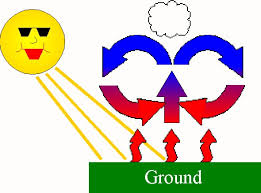
Warm air rises and the cool air sinks demonstrates this type of heat transfer. 
a)
conduction
b)
convection
c)
radiation
d)
Insolation 
100.

Boiling Water

a)

Conduction

b)

Convection

c)

Radiation

101.

Curling Iron

a)

Conduction

b)

Convection

c)

Radiation

102.

Weather Patterns

a)

Conduction

b)

Convection

c)

Radiation

103.

Sun Bathing

a)

Conduction

b)

Convection

c)

Radiation

104.

Lava Lamp

a)

Conduction

b)

Convection

c)

Radiation

105.

Feet on Hot Sand

a)

Conduction

b)

Convection

c)

Radiation

106.

Hot Air in a Toaster

a)

Conduction

b)

Convection

c)

Radiation

107.

Microwaving Food

a)

Conduction

b)

Convection

c)

Radiation

108.

Heat Lamps

a)

Conduction

b)

Convection

c)

Radiation

109.

Cold Pack on Person

a)

Heat is transferred from the cold pack to the person.

b)

Heat is transferred from the person to the cold pack

c)

The cold pack is getting warmer. The person is getting colder.

d)

The cold pack is getting colder. The person is getting warmer.

110.
What is the transfer of heat by direct contact?
a)
conduction
b)
convection
c)
radiation
111.
What is the transfer of heat by movement of liquids or gases?
a)
conduction
b)
convection
c)
radiation
112.
You are stirring a bowl of hot soup with a metal spoon. The spoon starts to feel warmer because of _?_.
a)
conduction
b)
convection
c)
radiation
113.
You buy a lava lamp from the store. As the lamp heats up, blobs of liquid rise to the top then sink back down to the bottom. This process continues because of _?_.
a)
conduction
b)
convection
c)
radiation
114.
You are doing your homework at a desk that is underneath a lamp. You start to feel hotter because of _?_ from the lamp.
a)
conduction
b)
convection
c)
radiation
115.

You are in science class and want to see if the hot plates were used recently. You place your hand near the side of the hot plate. Without touching the hot plate, your hand feels warmer. Heat is transferred to your hand by _?_.

a)

conduction

b)

convection

c)

radiation

116.

State of matter with a definite shape and definite volume.

a)

solid

b)

liquid

c)

gas

117.

State of matter with a definite volume, but no definite shape.

a)

solid

b)

liquid

c)

gas

118.

State of matter with no definite shape and no definite volume.

a)

solid

b)

liquid

c)

gas

119.

Particles are closely spaced.

a)

solid

b)

liquid

c)

gas

120.

Particles vibrate in place and do not change relative positions.

a)

solid

b)

liquid

c)

gas

121.

Particles move relative to each other, but remain in contact with each other.

a)

solid

b)

liquid

c)

gas

122.

Particles are not so closely spaced and slide past each other.

a)

solid

b)

liquid

c)

gas

123.

Particles are widely spaced except when they collide.

a)

solid

b)

liquid

c)

gas

124.

Basic state of matter with the least amount of energy.

a)

solid

b)

liquid

c)

gas

125.

Basic state of matter with an intermediate (medium) amount of energy.

a)

solid

b)

liquid

c)

gas

126.

Basic state of matter with the greatest amount of energy.

a)

solid

b)

liquid

c)

gas

127.

What happens to particles when their temperature increases?

a)

The particles move slower

b)

The particles move faster

c)

The particles lose mass

d)

The particles gain mass

128.

What happens when the speed of particles decreases?

a)

Their temperature decreases

b)

Their temperature increases

c)

Their mass decreases

d)

Their mass increases

129.

When ice sits out on a counter and melts, it is because the ice has...

a)

gained mass

b)

gained energy

c)

lost mass

d)

lost energy

130.

When water sits in the freezer and freezes into ice, it is because the water has...

a)

gained mass

b)

gained energy

c)

lost mass

d)

lost energy

131.

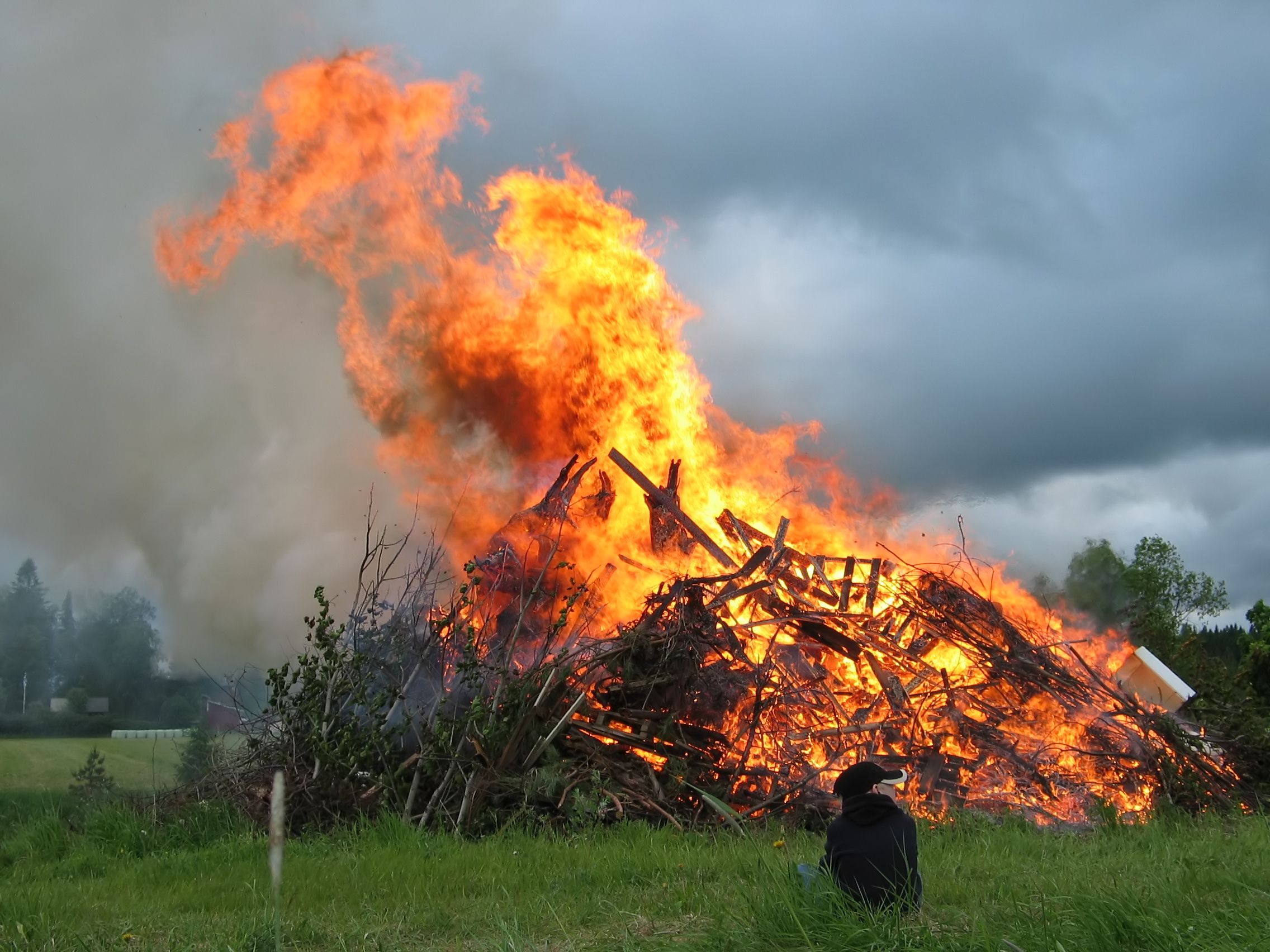
Wood that is burning in a brush pile has heat, and produces ashes.

a)

Physical

b)

Chemical

132.

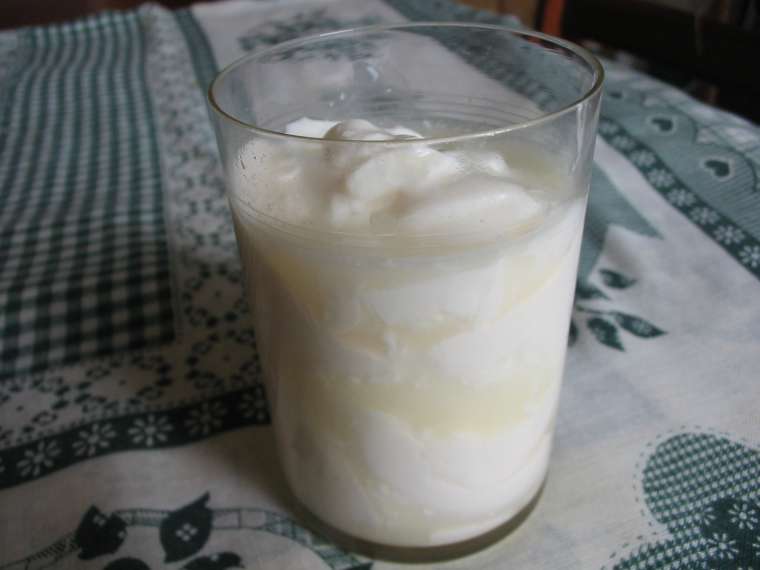
Is milk going sour a physical or chemical change?

a)

Physical

b)

Chemical

133.
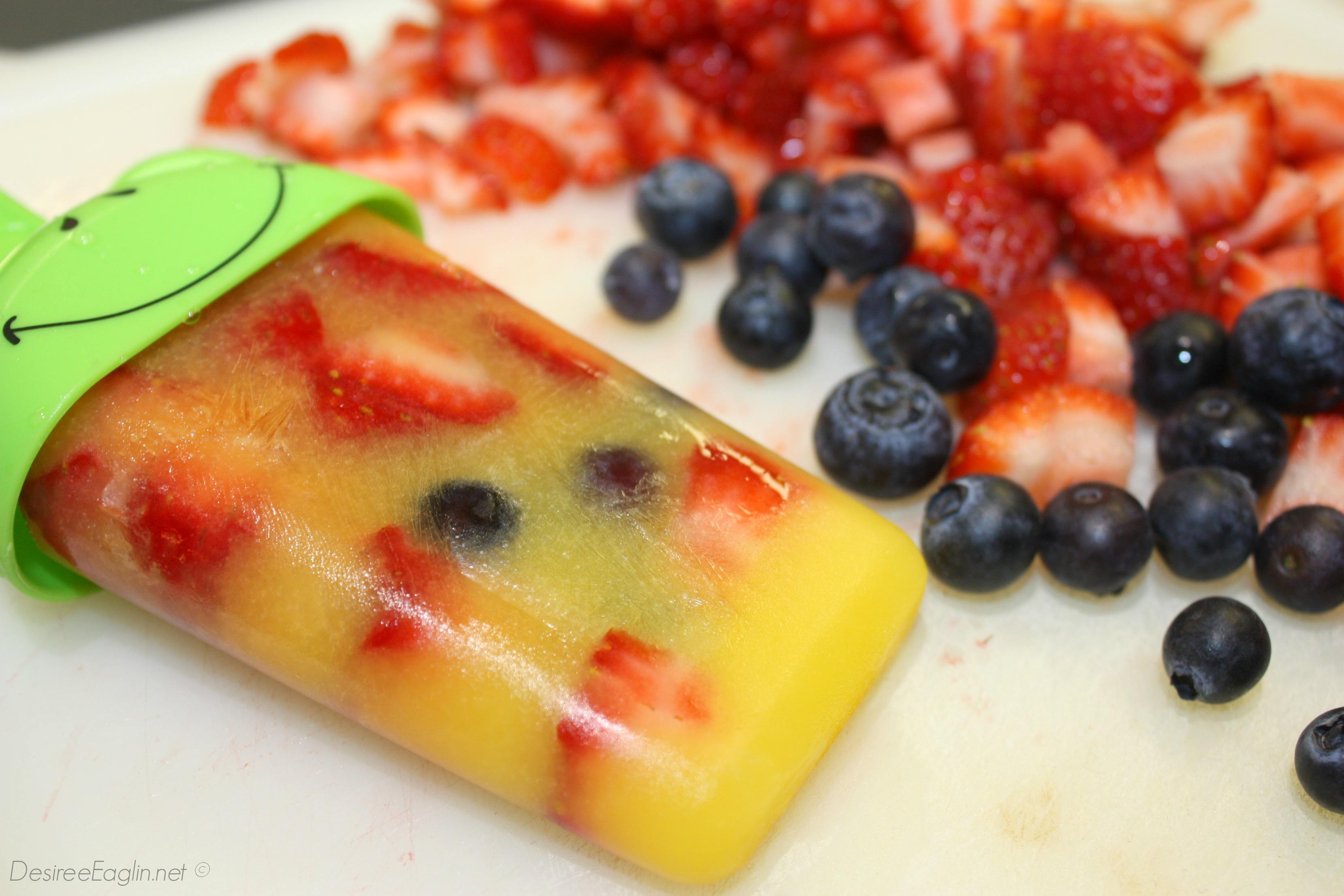
Is freezing juice a physical or chemical change?
a)
Physical Change
b)
Chemical Change
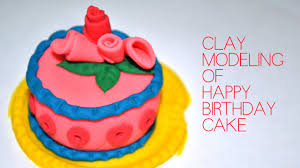
134.
Is this an example of a physical or chemical change? 
a)
Physical because it is a mixture.
b)
Chemical because the parts have changed shape.
135.
Why is this a physical change?
a)
The shape of the clay has been changed.
b)
The clay can be put back into a ball shape instead of a birthday cake.
c)
The clays has not changed chemically.
d)
All are true
136.
A __________ is a mixture that is formed when a solid is dissolved in a liquid.
a)
Chemical compound
b)
Solution
c)
Endothermic reaction
d)
Exothermic reaction
137.
melting ice cream
a)
physical change
b)
chemical change
138.
glass breaking
a)
physical change
b)
chemical change
139.
a rusting bicycle
a)
physical change
b)
chemical change
140.
Blue Color: Chemical or Physical Property
a)
Chemical Property
b)
Physical Property
141.
Flammability (burns): Chemical or Physical Property
a)
Chemical Property
b)
Physical Property
142.
Solubility (dissolves): Chemical or Physical Property
a)
Chemical Property
b)
Physical Property
143.
One cup of water is left outside for two days when it was checked there was only half a cup left. What happened?
a)
evaporation; chemical change
b)
condensation; physical change 
c)
evaporation; physical change
d)
condensation; chemical change
144.
Which one of these is a chemical property?
a)
melting point
b)
boiling point
c)
color
d)
flammability
145.
Which of the following is not a chemical property? 
a)
rusting 
b)
boiling 
c)
rotting 
d)
burning 
146.
Ability to rust is this type of property:
a)
Physical property
b)
Chemical property
147.
Which is NOT a physical property?
a)
odor
b)
reacts with acid
c)
ability to conduct electric current
d)
hardness
148.
Physical properties are
a)
properties that can be observed without changing the identity of the substance
b)
properties that describe how a substance changes into a completely different substance
149.
which one is the definition of chemical property?
a)
a property or characteristic of a substance that is observed during a reaction where the chemical composition of a substance is changed
b)
any change that results in the formation of new chemical substances
c)
combustibility
150.

___________ are the smallest unit of an element that maintains the properties of that element.

a)

Atoms

b)

Elements

c)

Compounds

d)

Mixtures

151.

An _______________ is made up of one or more of the same kind of atom chemically combined.

a)

atom

b)

element

c)

molecule

d)

compound

152.

A ______________ is made up of different kinds of atoms chemically combined.

a)

element

b)

compound

c)

mixture

d)

molecule

153.

A ______________ is made up of different kinds of atoms chemically combined.

a)

element

b)

compound

c)

mixture

d)

molecule

154.

A _____________ contains a variety of elements and compounds that are not chemically combined with each other.

a)

compound

b)

element

c)

molecule

d)

mixture

155.

A __________________ is a substance that has definite physical and chemical properties such as appearance, melting point, and reactivity.

a)

mixture

b)

pure substance

c)

compound

d)

element

156.

True or False: elements AND compounds are pure substances.

a)

True

b)

False

157.

Which of the following is a way we can classify compounds?

a)

by their pH level

b)

as organic or inorganic

c)

by their role in the body

d)

all of these

158.

A ______________ mixture is one that does not have a uniform composition.

a)

heterogeneous

b)

homogenous

c)

pure substance

159.

A _________________ mixture is one where the substances are evenly spread throughout.

a)

heterogeneous

b)

homogeneous

c)

pure substance

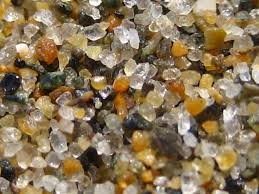
160.
The picture shown here is what type of mixture?
a)
homogeneous
b)
hetergeneous
c)
pure substance
d)
element
161.

Which of these is an element?

a)

Salt (NaCl)

b)

Water (H20)

c)

Oxygen (O)

d)

Carbon Dioxide (CO2)

162.

Which of these is a compound?

a)

Aluminium (Al)

b)

Carbon Dioxide (CO2)

c)

Nitrogen (N)

d)

Sand

163.

Which of these is a mixture?

a)

Laundry Detergent

b)

Salt (NaCl)

c)

Oxygen (O)

d)

Fluorine (Fl)

164.

Air is:

a)

An element

b)

A compound

c)

A mixture

d)

None of these

165.
What is an example of a mixture?
a)
iron
b)
ice
c)
soil
d)
gold
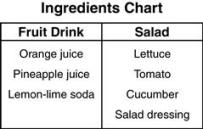
166.
Jorge prepared a drink and salad for dinner. The chart lists the ingredients for both.
Using the information in the chart, which statement is the BEST description of the drink and salad?
a)
The salad and fruit drink are both mixtures.
b)
The salad and the fruit drink are both solutions.
c)
The fruit drink is a mixture because the ingredients can't be separated.
d)
The salad is a solution because the ingredients can't be separated.
167.

Which of the following is classified as a pure substance?

a)

Lemonade

b)

Fruit punch

c)

ketchup

d)

Helium

168.
A mixture that is uniform and well mixed is _____.
a)
homogeneous
b)
hetergeneous
c)
pure substance
d)
compoud
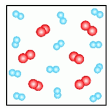
169.
This diagram represents a _____.
a)
pure substance that is a compound
b)
mixture of elements
c)
pure substance that is an element
d)
mixture of compounds
170.

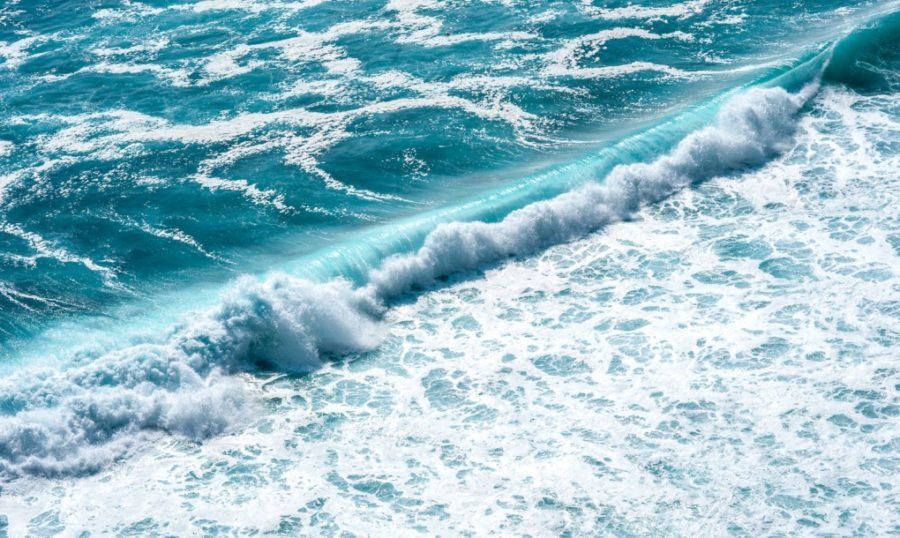
Saltwater

a)

Mixture

b)

Compound

171.

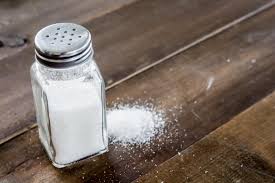
Salt

a)

Mixture

b)

Compound

172.

Sand

a)

Mixture

b)

Compound

173.

Heterogeneous mixture

a)

A mixture with a composition that varies from point to point

b)

A mixture with a uniform composition and appears visually the same throughout
174.

Homogeneous mixture

a)

A mixture with a composition that varies from point to point

b)

A mixture with a uniform composition and appears visually the same throughout

175.

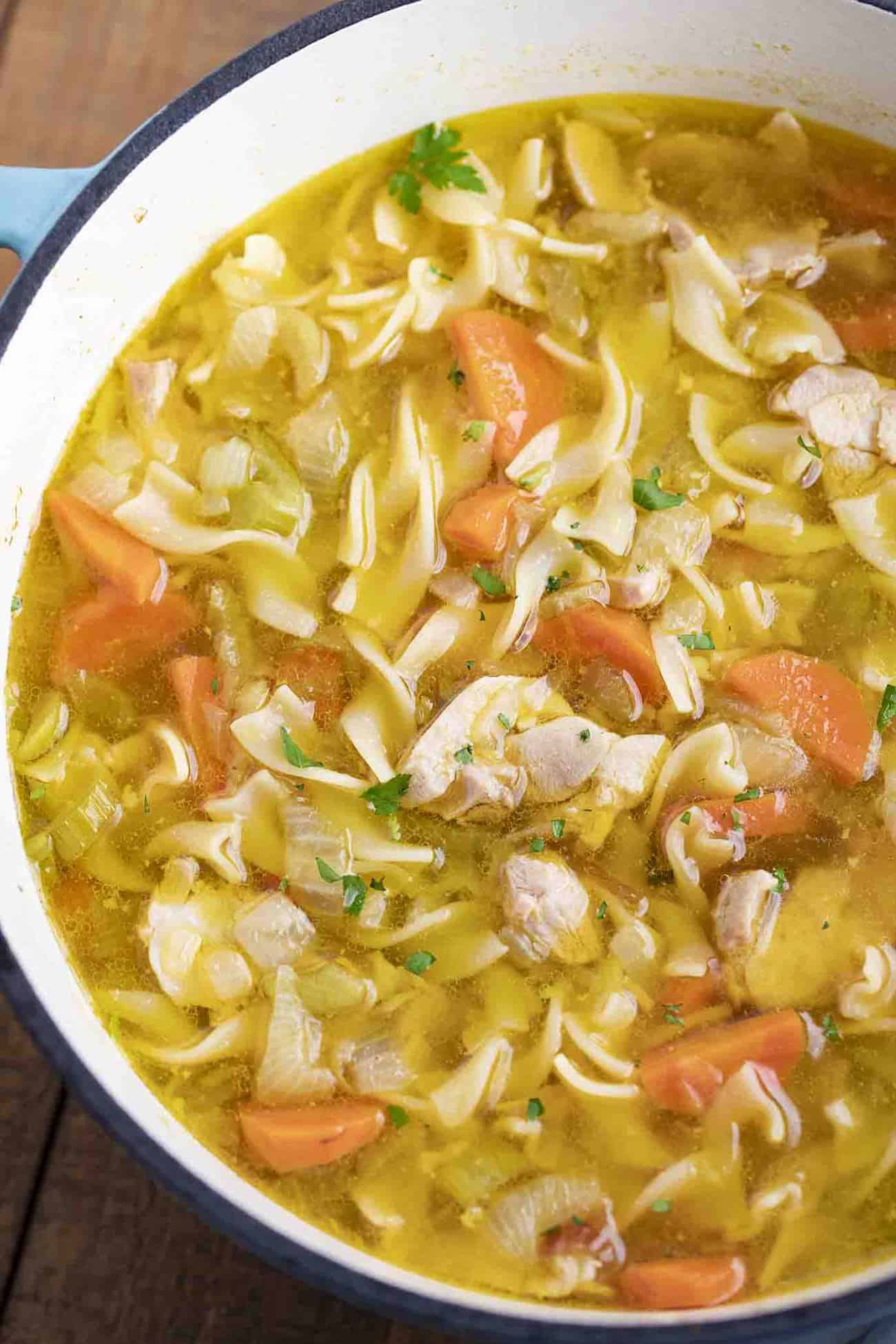
Chicken noodle soup

a)

Homogeneous mixture

b)

Heterogeneous mixture