
 Worksheets
Amoeba Sisters Bio Review (Based on Stroll Through the Playlist)
Total questions: 175
Worksheet time: 2hrs 51mins
The study of life....
biology
chemistry
geology
herpatology
Unicellular means....
made up of many cells
made up of one cell
a small unicorn
no correct answer choice given
Which of the following is in the correct organizational order from smallest to most complex?
no correct answer choice given
organ system--organ--tissue--cell
tissue--cell--organ--organ system
cell--tissue--organ--organ system
To maintain balance...
homeostasis
coolness
pH levels
no correct answer choice given
What is created during photosynthesis?
Chlorophyll
Cell walls
Glucose
Amino Acids
What process breaks down glucose in order to create energy?
Photosynthesis
Cellular Respiration
Circulation
Yes or no: Living things have to reproduce.
yes
no
All living things have some sort of genetic material.
Yes
No
Animals are the only living things that must respond to a stimulus.
Yes
No
Change over time...
reproduction
evolution
satisfaction
photosynthesis
Are viruses alive?
Yes
No
Viruses have the ability to reproduce on their own.
Yes
No
Which of the following is NOT a characteristic of life?
Grow and reproduce
Respond to stimuli
Use energy
Look pretty
I am useful for a fast source of energy
Carbohydrates
Lipids
Proteins
Nucleic Acids
I have involvement in building muscle
Carbohydrates
Lipids
Proteins
Nucleic Acids
If athletes “pasta load,” they consume a lot of me.
Carbohydrates
Lipids
Proteins
Nucleic Acids
I am helpful for long term energy storage
Carbohydrates
Lipids
Proteins
Nucleic Acids
A mutation in DNA would initially start with me.
Carbohydrates
Lipids
Proteins
Nucleic Acids
I make up cell membranes.
Carbohydrates
Lipids
Proteins
Nucleic Acids
I am important for insulation.
Carbohydrates
Lipids
Proteins
Nucleic Acids
I can contain long fatty acid chains.
Carbohydrates
Lipids
Proteins
Nucleic Acids
My category includes genetic material.
Carbohydrates
Lipids
Proteins
Nucleic Acids
I contain elements C, H, and O and have a ring-like structure
Carbohydrates
Lipids
Proteins
Nucleic Acids
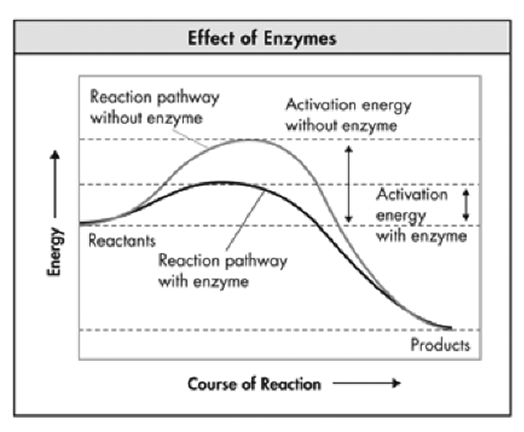
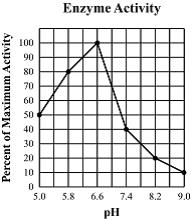
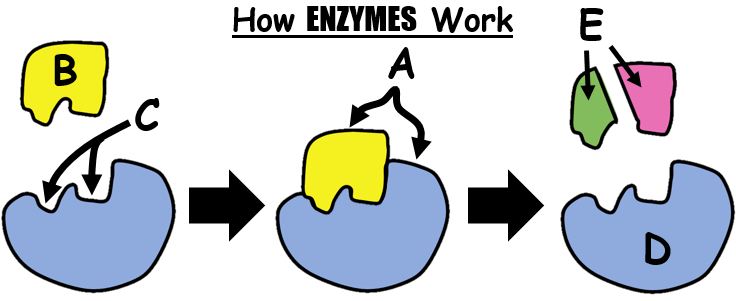
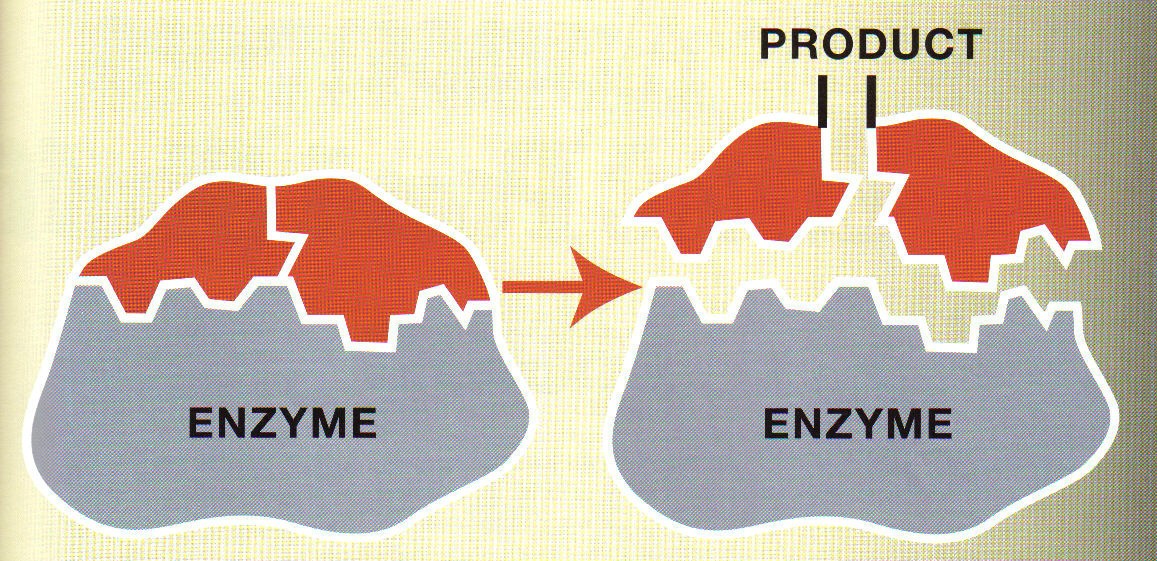
Enzymes, which can speed up reactions, belong in my category.
Carbohydrates
Lipids
Proteins
Nucleic Acids


This cell is a ...
Prokaryotic Cell
Eukaryotic Cell
Which cells contain Ribosomes?
Prokaryotic
Eukaryotic
Both
Which cells have cytoplasm?
Prokaryotic
Eukaryotic
Both
Which cell does NOT have a nucleus?
Prokaryote
Eukaryotes
Which type of cell has DNA IN A NUCLEUS?
Prokaryotic
Eukaryotic
Which type of cell is surrounded by a cell membrane?
Prokaryotic
Eukaryotic
Both
Which type of cell makes up ONLY unicellular organisms?
Prokaryotic
Eukaryotic

Which type of cell is this?
Prokaryotic
Eukaryotic
Which cell is larger?
Prokaryotic
Eukaryotic
Which cell is smaller?
Prokaryotic
Eukaryotic

This is a _________________ cell.
Prokaryotic
Eukaryotic
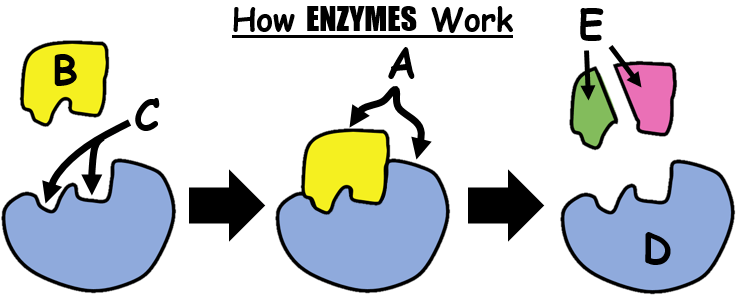
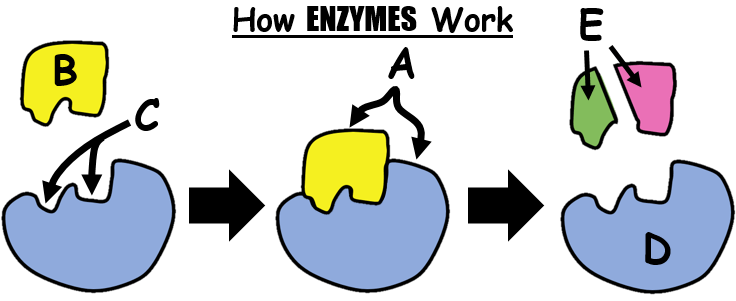
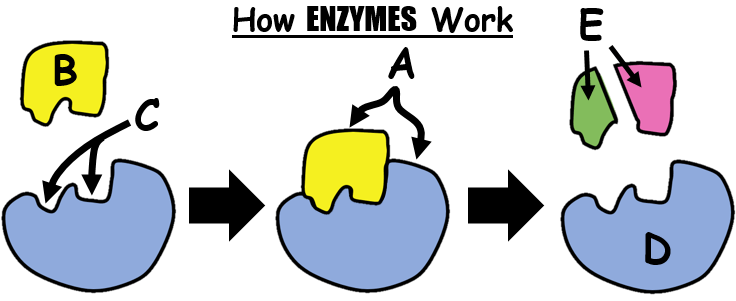
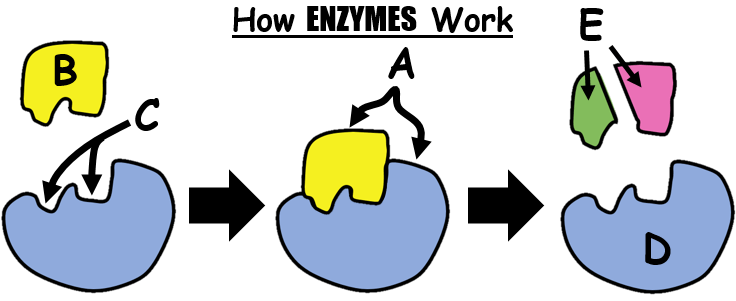

1.) They act like gatekeepers, only let certain things in.
2.) Enzyme receptors embedded in the membrane.
when some molecules can cross the membrane while others cannot.


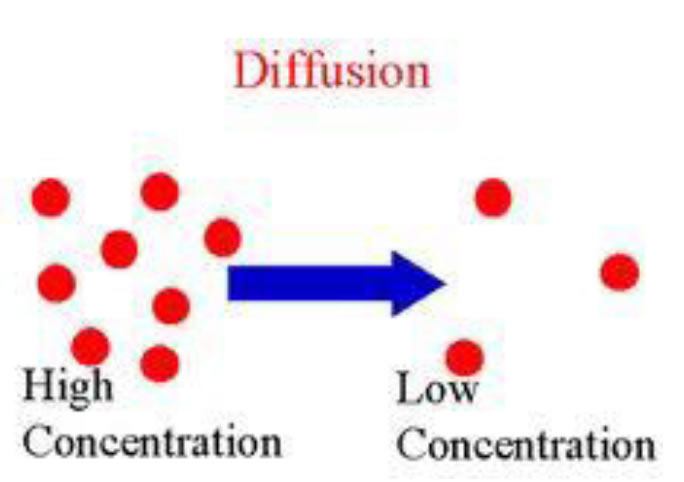
The movement of particles from an area of high to low concentration is known as--
Passive Transport
Active Transport
What is it called when large molecules move across the cell membrane from an area of high concentration to an area of low concentration through a protein channel?
Diffusion
Osmosis
Active Transport
Facilitated Diffusion
How does a cell maintain homeostasis?
By controlling what enters and leaves the cell
Flexibility
Protective barrier
Structure and support
Cell membrane transport that occurs without energy is called--
active transport
endocytosis
passive transport
exocytosis
What is the name of the process in which small molecules move from an area of high concentration to an area of low concentration across the cell membrane
Diffusion
Osmosis
Active Transport
Facilitated Diffusion
When there is an equal number of molecules on the inside and outside of the cell, that is called-
difference
transportation
homeostasis
solution
What is homeostasis?
How the body releases oxygen
Passive transportation
Balance in the body
Active transport
The movement of molecules from low to high is known as
simple diffusion
facilitated diffusion
active transport
osmosis


What is diffusion
The movement of small particles from an area of high concentration to an area of low concentration
The movement of large particles from an area of high concentration to an area of low concentration
The movement of small particles from an area of low concentration to an area of high concentration
The movement of large particles from an area of low concentration to an area of high concentration
Osmosis is the movement of oxygen through a semipermeable membrane.
True
False
The process of osmosis does not require ATP.
True
False
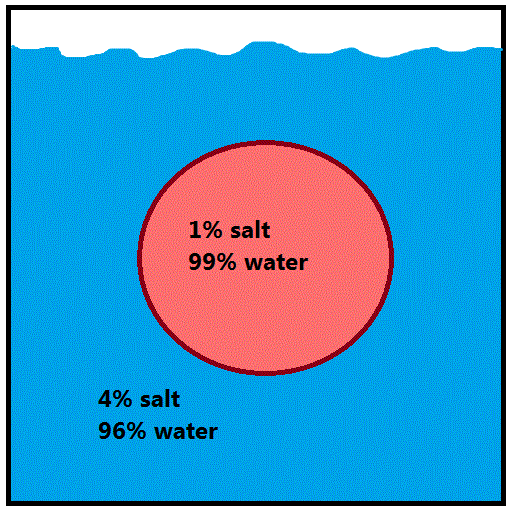
Water moves from an area of high water concentration to an area of low water concentration.
True
False
Which statement is false?
Water always moves to areas of low solute concentration.
Salt is an example of a solute.
A solute is something dissolved in water.
Hypertonic solution
Has a low solute concentration
Has a high solute concentration
Water moves out of this solution
Red blood cells
Burst when they are placed in a hypotonic solution
Burst when they are placed in a hypertonic solution
Shrink when they are placed in a hypotonic solution
What happens you place salt on a plant or a slug?
Water moves out of its cells and it could die.
Water moves into its cells and it could die.
This creates an hypotonic environment and it could die.
What happens when you place a saltwater fish in freshwater?
Water moves out of its cells and it could die.
Water moves into its cells and it could die.
This creates a hypertonic environment and it could die.
Osmosis is the movement of oxygen through a semipermeable membrane.
True
False
Plants are the only organisms that photosynthesize.
True
False
What is the purpose of photosynthesis?
To make ATP.
To make glucose.
To absorb heat energy.
To provide oxygen to humans.
Which is the correct chemical equation for photosynthesis?
C6H12O6 + 6H2O → 6O2 + 6CO2
C6H12O6 + 6O2 → 6H2O + 6CO2
6H2O + 6CO2 + → C6H12O6 + 6O2
6ATP + 6O2 → 6H2O + 6CO2 + C6H12O6
Chlorophyll is a pigment that captures light energy, and it reflects green light.
True
False
Photosynthesis occurs in which organelle?
Mitochondrion
Chloroplast
Ribosome
Chromoplast
Which of the following is false about the light dependent reaction?
It occurs in the thylakoids (pigment pancakes) of the chloroplast.
ATP and NADPH are produced during this reaction.
It occurs in the stroma (the fluid surrounding the thylakoids) of the chloroplast.
Oxygen is released into the atmosphere during this reaction.


Cellular respiration is called an aerobic process because it requires_____
exercise
light
glucose
oxygen
The term "anaerobic" means :
with oxygen.
without oxygen.
alive.
nonliving.
What are the waste products from fermentation? (Choose all that apply)
starch
carbon dioxide
glucose
alcohol
All fermentation produces some amount of alcohol.
true
false
Which best defines heredity?
The passing of traits from parent to offspring.
The passing of traits from offspring to child.
A portion of DNA that codes for a protein.
The building blocks of a gene.
What codes for your traits?
DNA that is found in the rough ER
Proteins found in the nucleus
Proteins found in the cytoplasm
DNA found in the nucleus
Which best describes the structure of DNA?
Single helix
Double helix
Triple helix
A protein complex
DNA stands for
Dioxyribose acid
Deoxygenated acid
Deoxyribonucleic acid
Denucleated acid
DNA belongs to a group of biomolecules called
Proteins
Lipids
Carbohydrates
Nucleic acids
Which best describes DNA?
Its monomers are called amino acids which consist of a sugar, a phosphate, and a carbon base.
Its monomers are called nucleotides which consist of a sugar, a phosphate, and a nitrogen base.
Its monomers are called nucleotides which consist of a sugar, a nitrate, and a phosphorus base.
Its monomers are called monosaccharides which consist of a sugar, a phosphate, and a hydrogen base.
Which part of the DNA molecule determines your traits?
The sequence of the carbon bases
The sequence of the phosphorus bases
The sequence of the nitrogen bases
The sequence of the hydrogen bases
Which statement is true about the four nitrogen bases found in DNA?
Adenine pairs with thymine, and cytosine pairs with uracil
Adenine pairs with guanine, and cytosine pairs with thymine
Adenine pairs with thymine, and cytosine pairs with guanine
Adenine pairs with tryptophan, and cytosine pairs with glycine
What holds the two strands of DNA together?
Carbon bonds
Covalent bonds
Oxygen bonds
Hydrogen bonds
Which statement is false?
The pigment in your eyes is actually a protein.
The main function of a protein is to energize the body.
Not all of the DNA in a cell codes for proteins.
Gene regulation is when genes in a cell “turn on” and “turn off.”
Chromosomes condense
Interphase
Prophase
Metaphase
Anaphase
Telophase
Cells spend 90% of their time in this phase
Interphase
Prophase
Metaphase
Anaphase
Telophase
Splitting occurs and two cells form
Interphase
Mitosis
Cytokinesis
Chromosomes arrive at opposite ends of the cell
Interphase
Prophase
Metaphase
Anaphase
Telophase
Chromosomes line up along the middle of the cell
Interphase
Prophase
Metaphase
Anaphase
Telophase
DNA replication occurs
Interphase
Prophase
Metaphase
Anaphase
Telophase
The sister chromatids separate, and begin to move towards the poles of the cell.
Interphase
Prophase
Metaphase
Anaphase
Telophase
The nuclear membrane disassembles (breaks down)
Interphase
Prophase
Metaphase
Anaphase
Telophase
A nuclear membrane forms around each group of chromosomes
Interphase
Prophase
Metaphase
Anaphase
Telophase
Part of the chromosome where sister chromatids are held together.
Spindle fibers
Centromere
Centrioles
Telomere
Chromosomes consist of DNA and proteins.
True
False
Chromosomes are located in the nucleus of eukaryotic cells.
True
False
There are 48 chromosomes in each human body cell.
True
False
Meiosis is used to produce body cells, and mitosis is used to make sperm and egg.
True
False
___________________ is the result of uncontrolled cell growth.
Down syndrome
Diabetes
Cancer
Sick cell anemia
When and where does DNA replication occur in a eukaryotic cell?
During prophase, in the nucleus
During interphase, in the cytoplasm
During prophase, in the cytoplasm
During interphase, in the nucleus
DNA replication is a semiconservative process. Why?
When DNA replicates, each new DNA molecule contains half of the original molecule.
When cells reproduce, the new cell needs a copy of the DNA.
The two DNA strands do not go in the same direction.
DNA polymerase can only add nucleotides to the 3’ end of the DNA strand.
What is the function of primers?
Gives a place for helicase to start working.
Gives a place for primase to start working.
Gives a place for ligase to start working.
Gives a place for DNA polymerase to start working.
Builds a new strand of DNA
DNA polymerase
Helicase
Ligase
Primase
Single stranded binding proteins
Creates a piece of RNA
DNA polymerase
Helicase
Ligase
Primase
Single stranded binding proteins
Glues DNA fragments together
DNA polymerase
Helicase
Ligase
Primase
Single stranded binding proteins
Unwinds and unzips the DNA
DNA polymerase
Helicase
Ligase
Primase
Single stranded binding proteins
Keeps the DNA strands separated
DNA polymerase
Helicase
Ligase
Primase
Single stranded binding proteins
The nuclei form, cytokinesis occurs, forming four cells
Anaphase 1
Telophase 1
Anaphase 2
Telophase 2
The homologous chromosomes line up side-by-side down the middle of the cell, during mitosis they line up in a single
file line.
Prophase 1
Metaphase 1
Anaphase 1
Telophase 1
The new nuclei form and the cell splits into two
Prophase 1
Metaphase 1
Anaphase 1
Telophase 1
Chromosomes are duplicated
Interphase
Meiosis
Mitosis
Cytokinesis
Spindles form, nuclear membrane breaks down
Prophase 1
Metaphase 1
Anaphase 1
Telophase 1

The chromosomes line up in the middle in a single file line.
Prophase 1
Metaphase 1
Metaphase 2
Anaphase 2
The chromatids are pulled apart by the spindle fibers
Prophase 2
Metaphase 2
Anaphase 2
Telophase 2
The chromosomes condense and thicken, they line up with
their homologous pair and they cross over.
Interphase
Prophase 1
Metaphase 1
Telophase 2
The chromosomes are pulled away from each other by the spindle fibers.
Prophase 1
Metaphase 2
Anaphase 1
Telophase 2

What is number 10?
23
46
92
184

What is number 12?
23
46
92
184

What is number 15?
23
46
92
184

What is number 17?
23
46
92
184
Which two processes creates variety in sperm and egg.
Mitosis and meiosis
DNA replication and synapses
Transcription and translation
Crossing over and independent assortment
This when the spindle fibers do not separate the chromosomes accurately, resulting in a gamete with incorrect chromosome numbers.
Nondisjunction
Disjunction
Meiosis
Translocation

