
 Worksheets
23-24 1st Sem Physical Science REVIEW
Total questions: 171
Worksheet time: 6hrs 35mins
Matter that has its own shape and definite volume.
solid
liquid
gas
plasma
solid
liquid
gas
solid
liquid
gas
Solid
Liquid
Gas
plasma
Which state of matter does not have a definite shape but does have a definite volume?
Solid
Liquid
Gas
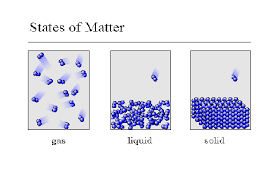
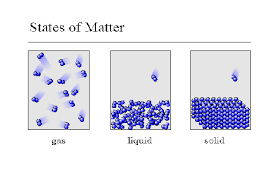
has a definite shape but no definite volume
has a definite volume but no definite shape
has fast-moving particles
___________ is anything that has mass and takes up space.
Molecules
Matter
Volume

Viscosity is defined as a liquids...
Ability to flow
Eagerness to flow
Resistance to flow

Honey has a _____________ viscosity
High
Low
negative
If I HEAT up maple syrup, then the viscosity of the syrup will....
Increase
Decrease
Stay the same

What is an amorphous solid?
solids whose particles are aligned
solid whose particles are not arranged in a particular order
solids that are like water
solids that are like gas
What is a crystalline solid?
solids with irregular patterns
solids with regular patterns
solids that are crystals
lines of crystals on the side of the road
What happens to the particles in gas?
spread out quickly
run into one another
vibrate closely together
slide past each other
What is plasma?
has an indefinite shape and indefinite volume
has a definite shape and indefinite volume
has a definite shape and definite volume
a gas like state of matter where atoms have been stripped of electrons
An uncovered pot of soup is simmering on a stove, and there are water droplets on the wall above the back of the stove. What sequence can you infer has occurred?
melting, then boiling
freezing, then thawing
vaporization, then condensation
condensation, then vaporization

Freezing
Solid to gas
Liquid to solid
Gas to solid

Boiling
liquid to gas
gas to solid
gas to liquid
The slower the particles in a substance move,
the colder it is.
the warmer it is.
the more energy it has.
Liquid to Gas
Condensation
Evaporation
Sublimation
The energy of MOTION is...
chemical energy
radiant energy
potential energy
kinetic energy
It is the amount of matter in an object.
volume
mass
weight
density
Which of the following determines an object’s ability to float in water?
volume
mass
weight
density

What state of matter does the picture below represent?
solid
liquid
gas
plasma
What is matter made up of?
particles that are too large to be seen
tiny butter particles
particles that are too small to be seen
tiny water particles
Reactivity is what type of property?
Physical
Chemical
How tightly packed matter is in an object.
Volume
Density
Mass
Mixture
sharpening a pencil
physical change
physical property
chemical change
chemical property
flammability of a substance
physical change
physical property
chemical change
chemical property
size of an object
physical change
physical property
chemical change
chemical property
freezing point
physical change
physical property
chemical change
chemical property
corrosion (rusting) of a bicycle frame
physical change
physical property
chemical change
chemical property
a burning candle
physical change
physical property
chemical change
chemical property
a change in size, shape, or state of matter
physical change
physical property
chemical change
chemical property
a characteristic that indicates whether a substance can change to another substance
physical change
physical property
chemical change
chemical property

A green powder is heated & a gas is given off while it turns to a black solid. This describes
Physical Change
Chemical Change
Change in State
Change in Temperature
Which of the following could indicate that a chemical change took place?
Change in color
Production of Energy
Formation of Gas
All are correct
The difference between a Physical change and a Chemical change is…
Physical change is only a change to the outside appearance.
Chemical change is when matter is changed into something new.
Atoms are rearranged in chemical changes & not in physical.
All are correct.
What does a chemical change result in?
A change in state of the substance (ex. liquid to solid)
A change in texture of the substance.
A change in the way atoms are bonded to each other.
A change in the appearance of the substance.
Which type of change is most often easily reversed?
Chemical
Physical
Both a physical and chemical change.
Neither a physical or chemical change.

Identify what type of change happening in the picture below...
Chemical Change
Physical Change
Endothermic Reaction
Exothermic Reaction

Identify what type of change happening in the picture below...
Chemical Change
Physical Change
Endothermic Reaction
Exothermic Reaction
If the chemical properties of a substance remain unchanged & the appearance or shape of an substance changes it is a...
Chemical Change
Physical Change
Both a physical and chemical change.
Neither a physical or chemical change.
During Chemical Reactions, the substances that are used are called?
Precipitate
Corrosion
Reactants
Products
During Chemical Reactions, the new substances created are called?
Precipitate
Corrosion
Reactants
Products
The vertical (up and down) columns in the Periodic Table are called
groups
towers
periods
atomic numbers
Elements in a .................. have similar chemical properties.
period
group
row
Which group of the periodic table is composed of inert (not reactive) gases?
answer choices
alkali metals
alkaline earth metals
halogens
noble gases
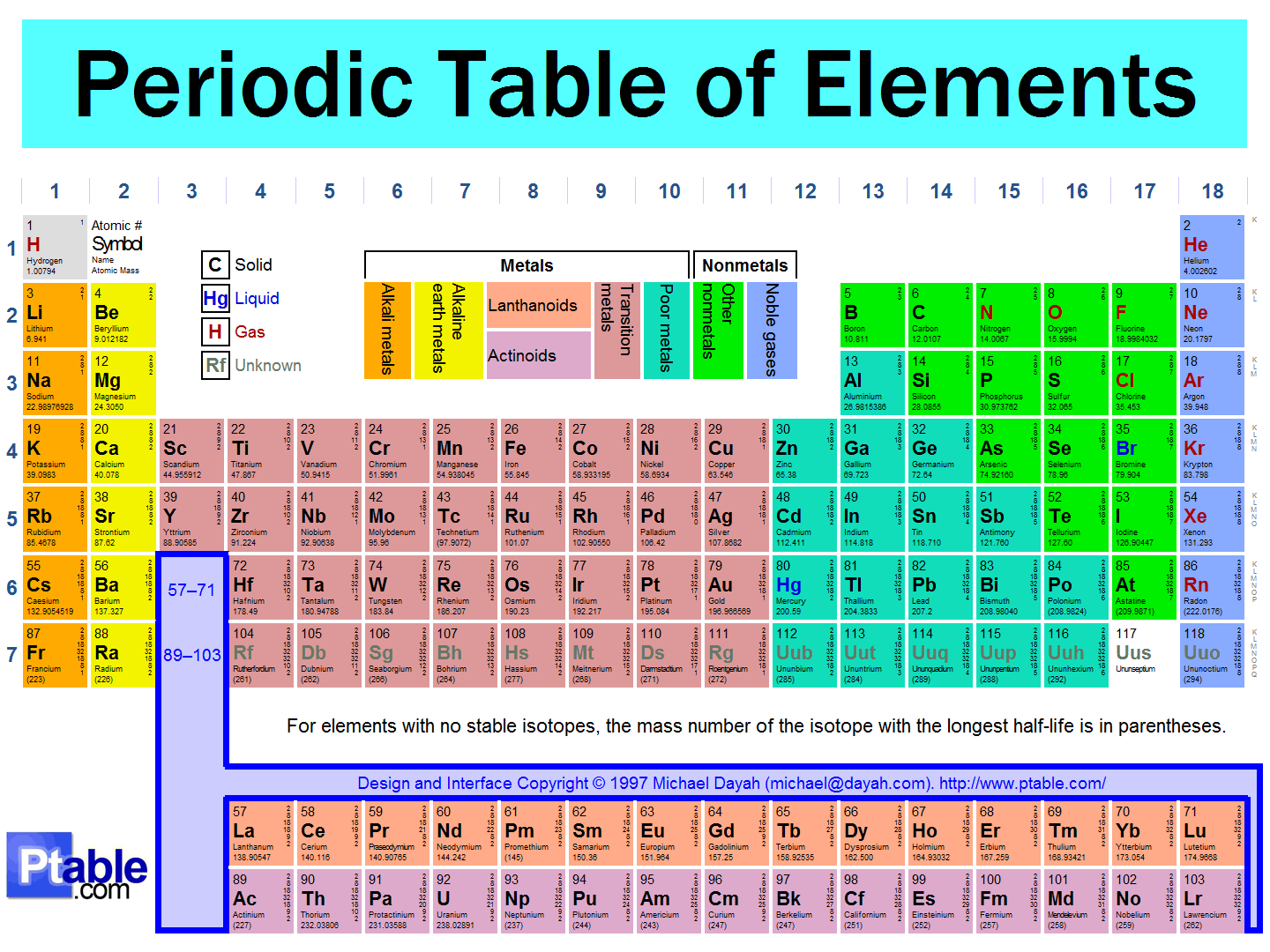

Choose all of the items that are mixtures
NaCl (table salt)
Sulfur
O2
water
Air
Students in Mrs. Clark's science class are investigating a substance that has the following properties
-shiny
-bends easily
-hard, not easily broken
Based on these properties how would you classify the substance?
metal
nonmetal
metalloid
Which best describes the sequence of the elements in Period 5 of the periodic table?
highly reactive gases, relatively nonreactive metals, metalloids, very nonreactive gases, nonreactive nonmetals
highly reactive metals, relatively nonreactive metals, metalloids, reactive nonmetals, nonreactive gases
nonreactive gases, metalloids, nonreactive metals, highly reactive metals, highly reactive gases
nonreactive gases, nonreactive metals, highly reactive metals, metalloids,
reactive nonmetals, reactive gases
Groups run:
up and down
left to right
Periods run:
up and down
left to right
Metals are on the:
Left side
Right Side
Stairstep
Metalloids are on the:
Left side
Right Side
Stairstep
Nonmetals are on the:
Left side
Right Side
Stairstep
A student is studying a mystery substance. It breaks easily. It has a very dull luster. It doesn't conduct any electricity. What is the most likely substance this is?
Metal
Metalloid
Nonmetal
The third substance the student works with is a little brittle. It is just a little shiny. When he tries to conduct electricity through it at first, it doesn't conduct, but upon heating up, it does start to allow electrons to flow. What is the most likely substance type?
Metal
Metalloid
Nonmetal

The majority (most) of the elements are:
metals
nonmetals
metalloids
What does the number of proton tell us?
electrons
atomic number
atomic mass
neutrons
How do you calculate the number of neutrons? *
Mass = Atomic number - Neutrons
Mass - Atomic number = Neutrons
Atomic number = Neutrons

How many protons and electrons does nickel have?
28
58.69

What is the atomic mass?
58.693
28

Who proposed a model with electrons moving in specific layers?
Rutherford
Bohr
Thomson
Dalton
Most metals share four common physical characteristics. Which of the options is not one of the four?
Luster
Conductivity
Ductility
Malleability
Reactivity
Which family of elements reacts violently with water and exposure to oxygen?
alkali metals
alkaline earth metals
lanthanides
actanides
transition metals
Which two families of elements are soft and silvery and have low densities? Choose two.
alkali metals
alkaline earth metals
lanthanides
actanides
transition metals
Which of the following is not true of metalloids?
Silicon and Germanium are common metalloids used in computers.
Metalloids contain properties similar to both metals and nonmetals.
Metalloids are found in a stair step line between metals and nonmetals on the periodic table.
Metalloids are the first choice in building materials.
The periodic table is a chart that organizes the elements based on their atomic properties. Elements in the periodic table are organized according to the periodic law. The periodic law states that chemical and physical properties of elements are periodic functions of their atomic numbers (the number of protons in the nucleus). As the atomic number of elements increases, different elements display similar characteristics at regular intervals.
Periodic law states that elements are arranged _______________________________________________________________.
in alphabetical order.
from largest to smallest.
as periodic functions of their atomic numbers.
there is no rhyme or reason.
It stacks the elements in columns according to the number of valence electrons in an atom of the element. Valence electrons are those in the outermost shell of the atom and the ones that participate in reactions. The number of valence electrons is associated with the element’s reactivity. Elements with the same number of valence electrons behave in a similar way in reactions and so are grouped together in the same column on the periodic table.
What does the amount of valance electrons determine about an element?
Its row in the table.
Its atomic number.
Its atomic mass.
Its reactivity with other elements.
Alkali metals have 1 valence electron, making them highly reactive. With the exception of hydrogen, they tend to be very soft metals with low melting points. Examples include sodium and potassium.
Alkaline earth metals have 2 valence electrons and also are highly reactive and have high melting points. Examples include calcium and magnesium.
Halogens have 7 valence electrons and therefore are highly reactive. They tend to form compounds in nature. Examples include chlorine and fluorine.
Noble gases have a complete outer shell with 8 valence electrons, making them nonreactive. They are typically colorless, odorless gases. Examples include helium, neon, and argon.
Which group is highly reactive with high melting points?
Alkaline metals
Alkaline earth metals
Halogens
Noble gases
The periodic table is further arranged into three major regions, including the metals, metalloids, and non-metals. Metals are on the left of the table; they are shiny and flexible, conduct heat and electricity, and participate in ionic reactions. Non-metals are on the far right of the table; they are dull and brittle, are poor conductors, and typically participate in ionic reactions.
Which one is NOT a major region of elements in the periodic table?
Metals
Mettaloids
Non metals
Gases
Carbon and silicon, however, are examples of non-metals that participate in covalent reactions. Metalloids are located in a zig-zagging line between the two other regions. Metalloids are solid semi-conductors. In contrast to metals and non-metals, metalloids participate in covalent reactions.
Where would you look on the table to find the mettaloids?
In a zigzag line on the right.
In column 17
On the bottom
On the top
The elements in groups 3-12 are called the transition metals. These are similar to the metals in that they are flexible and good conductors but different in that they have unique valence electron structure. They typically form coordinate complexes in which one atom is surrounded by several more in a large complex. Iron, gold, and copper are examples of transition metals.
Which group are the transition metals most like?
Metals, they are flexible and good conductors.
Non metals, they a unique valence electron structure.
Noble gases, they don't want to bond with anything else.
They are like both metals and non metals in some ways.
What are the most common types of inefficiency?
Radiant
Thermal
Electrical
Sound
GPE
When energy is released, it dissappears.
True
False
What energy transformation takes place when you turn on an electric light?
Chemical > light + heat
Chemical > electrical + heat
Mechanical > light + heat
Electrical > light + heat

What kind of energy is being shown in the picture?
Light
Gravitational
Potential
Kinetic

As the ball is dropped, the potential energy decreases while the kinetic energy increases however the amount of energy stays the same.
True
False
Which is the best example of kinetic energy?
A car sitting on top of a hill
A skateboard on the sidewalk
A wagon rolling down a hill
A powerwheel parked in the yard
What is changed to increase the potential energy of an object being dropped?
Temperature
Gravity
Height
Volume

Which two points have the same potential energy?
U & V
S & T
T & X
S & X

What happens as the ball on the pendulum goes from center to the right in the diagram?
Kinetic energy increases while potential energy decreases
Potential energy increases as kinetic energy decreases
Potential energy increases as kinetic energy increases
Potential and Kinetic energy is lost

How does energy change?
The cart has more kinetic energy at the top than when it is going down the hill.
The cart has potential energy at the top while kinetic energy increases going down.
The cart has potential energy that is lost going down the hill.
The cart has kinetic energy at the top of the hill and no potential energy.

How does energy transfer as the ball is bouncing?
Kinetic, Potential, Potential, Kinetic
Potential, Potential, Kinetic, Kinetic
Kinetic, Kinetic, Potential, Potential
Potential, Kinetic, Kinetic, Potential

Before fruit falls from a tree, how does energy flow?
Potential - Kinetic - Sound
Light - Kinetic - Heat
Potential - Sound - Heat
Solar - Kinetic - Heat
A student places an orange on the table then the orange rolls across the table. Which below statement is true?
The orange has potential energy but no kinetic energy at all.
The orange has kinetic energy but no potential energy at all.
The orange has kinetic and potential energy.
The orange has no energy at all.

Which position has the most kinetic energy?
1
2
3
4

Where does kinetic energy transfer to potential energy?
1 to 2
2 to 3
4 to 5
none
What is energy?
moving energy
stored energy
renewable energy
The ability to do work.
Energy due to motion. The faster an object moves, the more _______ energy the object has.
Potential
Kinetic
Mechanical
Chemical
What type of energy is from the sun and carried by ELECTROMAGNETIC RADIATION?
Radiant
Thermal
Chemical
Mechanical
These are examples of radiant energy....
A fire, drying clothes, cooking food
A hammer, windmill, & wrecking ball
The sun, visible light & x-ray
A battery, digestion & burning fuel
________ energy is energy STORED in matter because of its CHEMICAL bonds. It is released during a chemical reaction (change).
Thermal
Radiant
Mechanical
Chemical
These are examples of chemical energy....
A fire, drying clothes, cooking food
A hammer, windmill, & wrecking ball
The sun, visible light & x-ray
A battery, digestion & burning fuel
________ energy is the energy that is possessed by an object due to its motion or due to its position.
Potential
Radiant
Mechanical
Thermal
These are examples of mechanical energy....
A fire, drying clothes, cooking food
A hammer, windmill, & wrecking ball
The sun, visible light & x-ray
A battery, digestion & burning fuel
________ energy is stored energy. Stored chemically in fuel, the nucleus of atom, and in foods.
Thermal
Mechanical
Kinetic
Potential
These are examples of potential energy....
A fire, drying clothes, cooking food
A stretched rubber band & a rollercoaster at the top of a hill
A moving car, running & throwing a ball
A battery, digestion & burning fuel
What energy is the energy of heat, which transfers from hotter objects to colder objects? This energy comes from the motion of atoms and molecules. The faster the particles in an object move, the more ________ energy is produced.
Kinetic
Radiant
Thermal
Chemical
These are examples of thermal energy....
A fire, drying clothes, cooking food
A hammer, windmill, & wrecking ball
The sun, visible light & x-ray
A battery, digestion & burning fuel


This occurs when an object speeds up, slows down, or changes direction.
Speed
Velocity
Acceleration
Another way to explain the speed and direction of a object would be to describe it’s ________
Speed
Velocity
Acceleration
(Final speed - Initial Speed) / time = __________________
Speed
Velocity
Acceleration
If it takes me 10 minutes to walk 1 mile, what is my speed?
10min/mi
10mi/min
1mi/10min
1min/10mi
Velocity = _______________
Speed – direction
Speed + direction
Speed x direction
Speed / direction
You drive 25 miles in 30 minutes. What is your average speed in terms of mi/hr?
25mi/30min
5mi/6min
25mi/hr
50mi/hr
Another word for distance divided by time would be what?
Speed
Velocity
Acceleration

What does the solid line on this graph represent?
Constant speed
Acceleration
Not moving
deceleration
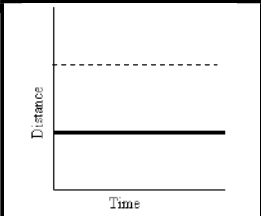
What does the solid line on this graph represent?
Constant speed
Acceleration
At rest
deceleration
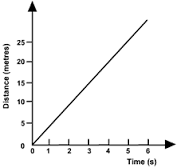
What is the line on this graph showing?
moving away from starting point at a constant speed
moving back towards the starting point at a constant speed
acceleration (getting faster)
deceleration (getting slower)
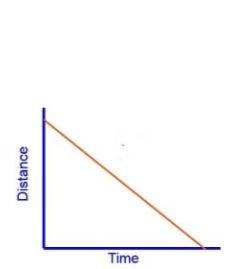
What is this line of this graph showing?
moving away from starting point at a constant speed
moving back towards the starting point at a constant speed
acceleration (getting faster)
deceleration (getting slower)


Describe the object's motion from E to F (TWO Answers):
Speeding Up
Slowing Down
Constant Speed
Not Moving

What law is best described
1st
2nd
3rd
law of motion

What law is best described
A magician pulls a tablecloth out from under dishes and glasses on a table without disturbing them.
Newton's 1st Law
Newton's 2nd Law
Newton's 3rd Law

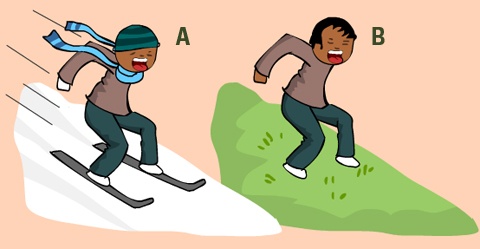
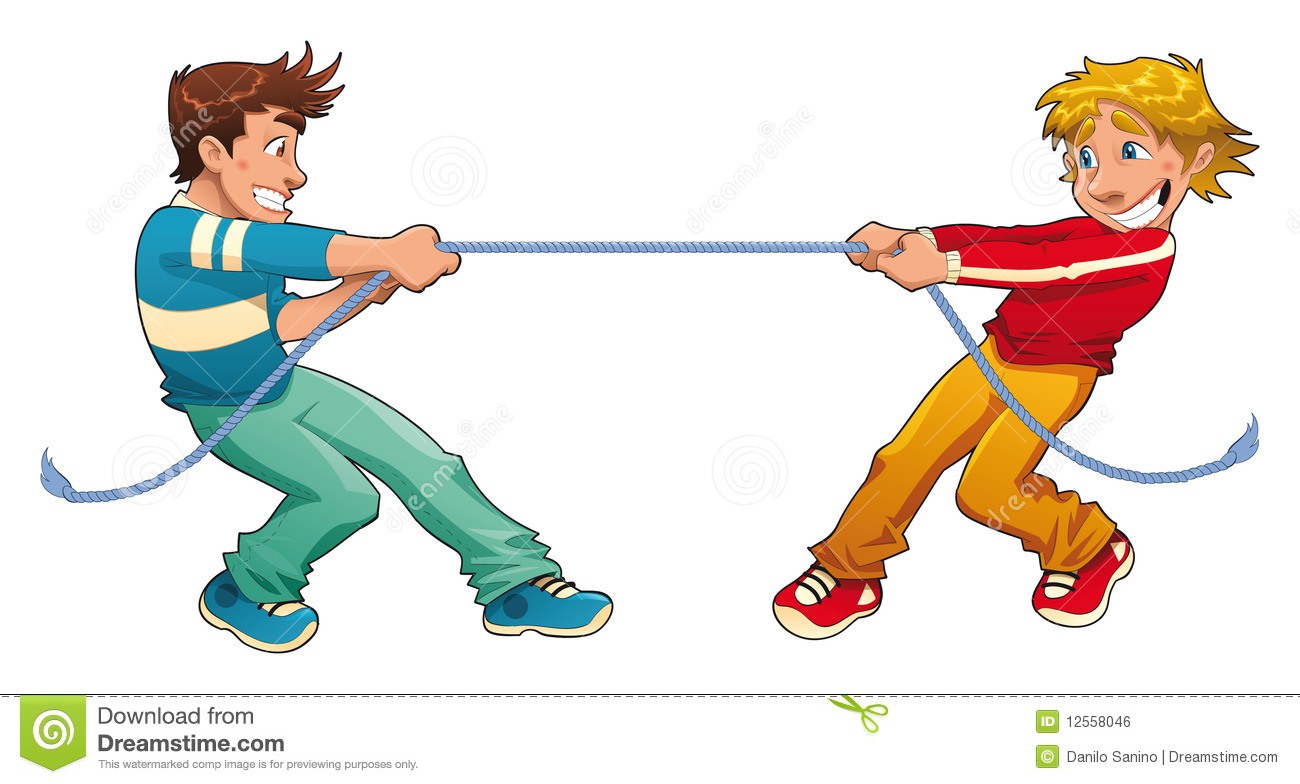

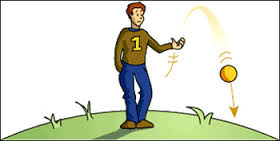
When a student runs and kicks a ball, they have applied an ___________ force to move the ball.
Balanced
Magnetic
Spring
Unbalanced
Which law of motion says that you must push or pull objects harder if they have more mass?
1st
2nd
3rd
4th
8 N to the left , and 4 N to the right. Find the net force. Is this balanced
12 N Right No
4 N Left No
12 N Right Yes
4 N Left Yes

